
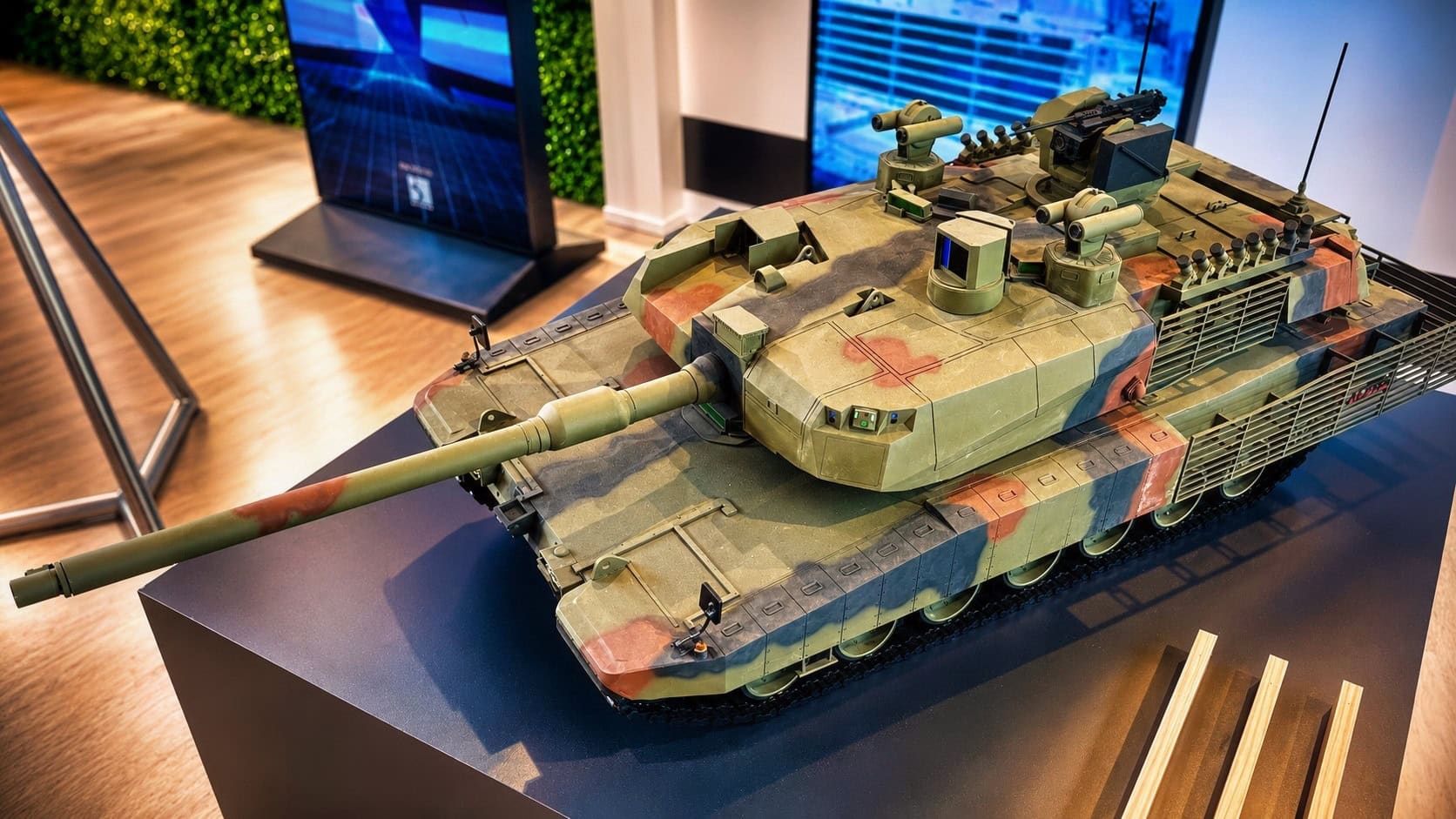
Turkey’s Altay main battle tank took almost two decades to enter service because the country could build nearly every part of a modern tank except the one that matters most — the engine — and when Germany cut off the powerplant Turkey had been counting on, the “national tank” was left without a heart. The Altay was meant to be Turkey’s declaration of defense independence, a domestically designed tank to replace its Cold War Leopards and M60s and end its reliance on foreign armor. It mostly delivered: the hull, the armor, the fire control, and the active protection system are genuinely Turkish. But after Germany embargoed the engine over Turkey’s 2019 incursion into Syria, Ankara had to turn to South Korea to get the tanks moving at all.
Now, finally entering serial production on a Korean engine while Turkey races to finish its own, the Altay is the armor-world proof of the same law running through Turkey’s Kaan fighter, India’s Tejas, and Sweden’s Gripen: you do not own a weapon until you own its engine.
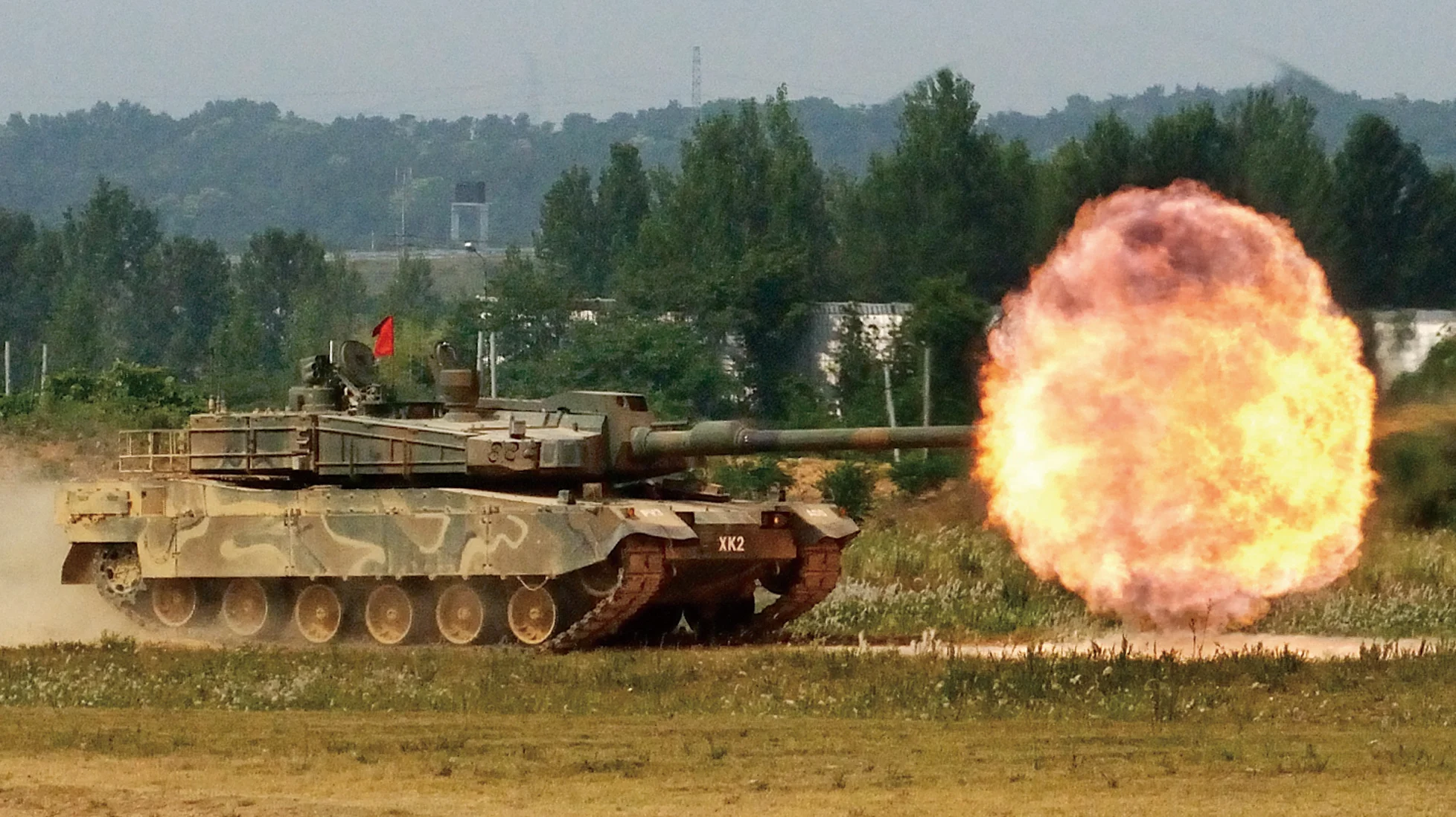
K2 Black Panther, the most expensive tank on Earth.
The Independence Ambition: A National Tank To Replace The Leopards
The Altay grew out of an ambition stretching back to the mid-1990s and Turkey’s National Tank Production Project, whose goal was to give the country the ability to design, build, and maintain its own main battle tanks rather than depend on aging imports.
Turkey’s armored force was built on a mixed fleet of German Leopard 1 and 2A4 tanks and American M60s — including locally upgraded M60T Sabra variants — and every one of them came with foreign strings, subject to the export decisions of the countries that built them. The Altay was meant to cut those strings. It was named for General Fahrettin Altay, a cavalry commander in Turkey’s War of Independence, a choice that signaled exactly what the program was supposed to represent.
The first phase worked. The contract was first signed in 2008, and the Turkish firm Otokar designed and built prototypes, drawing on technology transfer from South Korea’s Hyundai Rotem and its K2 Black Panther tank — so a Korean connection was part of Altay’s design from the very beginning. Those prototypes went through years of grueling trials. The program then took its decisive turn in November 2018, when Turkey awarded the serial-production contract — worth roughly 3.5 billion euros for an initial 250 tanks — not to Otokar but to BMC, a company that would become the center of both the program’s progress and its controversy.
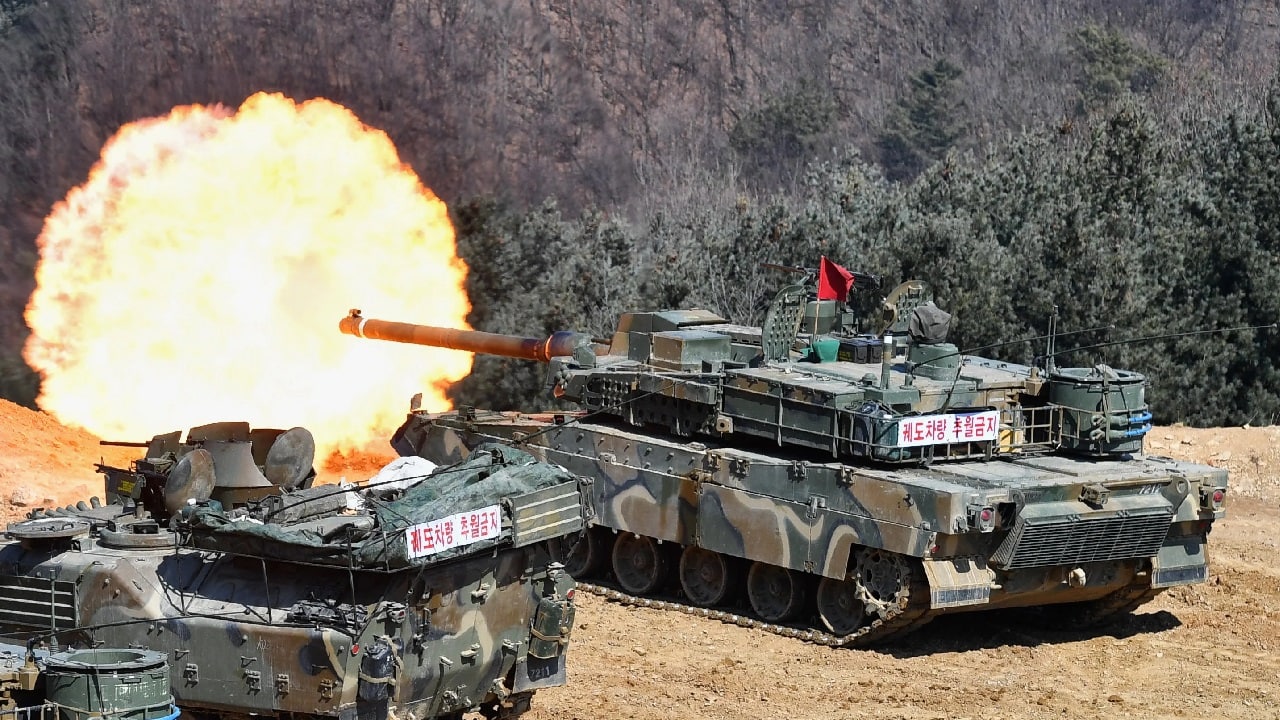
K2 Black Panther. Image Credit: Creative Commons.
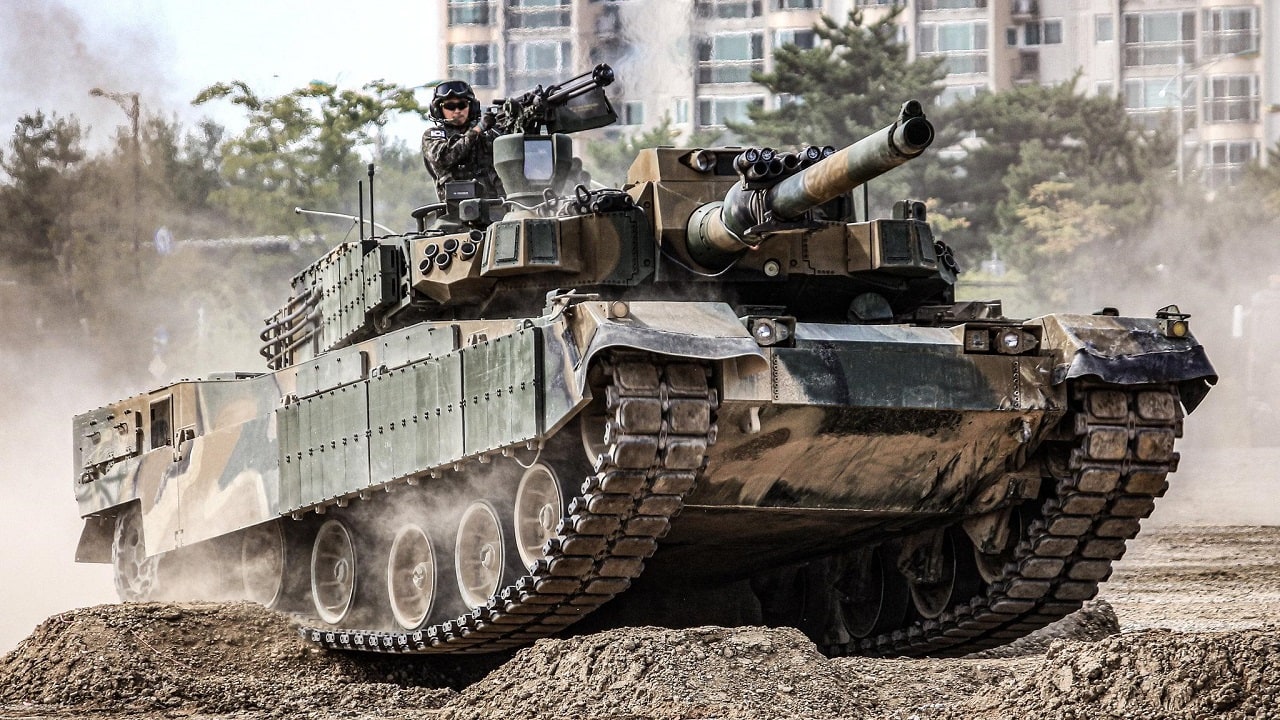
K2 Black Panther. Image Credit: Creative Commons.
The German Embargo: A National Tank With No Heart
The Altay was designed around a German powerplant — a 1,500-horsepower MTU diesel engine paired with a RENK transmission —, and that single dependency nearly sank the entire program. The German defense firm Rheinmetall had even established a joint venture with BMC to produce the tank. But Turkey’s relationship with Germany and the rest of its Western allies deteriorated over Ankara’s military operations in Syria, and Berlin progressively restricted arms exports. The limits tightened from 2016 onward, citing human-rights concerns, and then hardened decisively after Turkey launched its 2019 incursion into northern Syria, when Germany announced it would issue no new permits for military equipment that could be used by Turkey in Syria and France suspended its own exports the same week.
For the Altay, the effect was fatal to the original plan: the engine and transmission became unavailable. The tank Turkey had built to prove its independence could not be mass-produced because it had no powerplant, and the French armor solution Turkey had hoped to use beyond an initial batch fell through for similar political reasons, forcing a domestic armor effort.
As Defense News put it, talks with the German manufacturers failed due to the federal arms embargo, and Turkey was left to salvage its national tank program by looking abroad, to the one country that had solved the same problem and had an engine to sell.
The Korean Rescue: Doosan And An Engine At Last
That country was South Korea. In a deal reached in the fourth quarter of 2021, BMC contracted with the South Korean firms Doosan and S&T Dynamics — now SNT Dynamics — to supply Altay’s powerpack: the Doosan DV27K, a 1,500-horsepower, 27.2-liter twin-turbocharged V12 diesel, paired with the SNT Dynamics EST15K automatic transmission.
To circumvent the German export restrictions, the arrangement reportedly involved “de-Germanizing” components of the power pack. Two Altay prototypes fitted with the Korean powerplant were delivered to the Turkish Land Forces in 2023 for testing, and the transmission supply contract was valued at roughly 200 million euros, with deliveries scheduled to run for years.
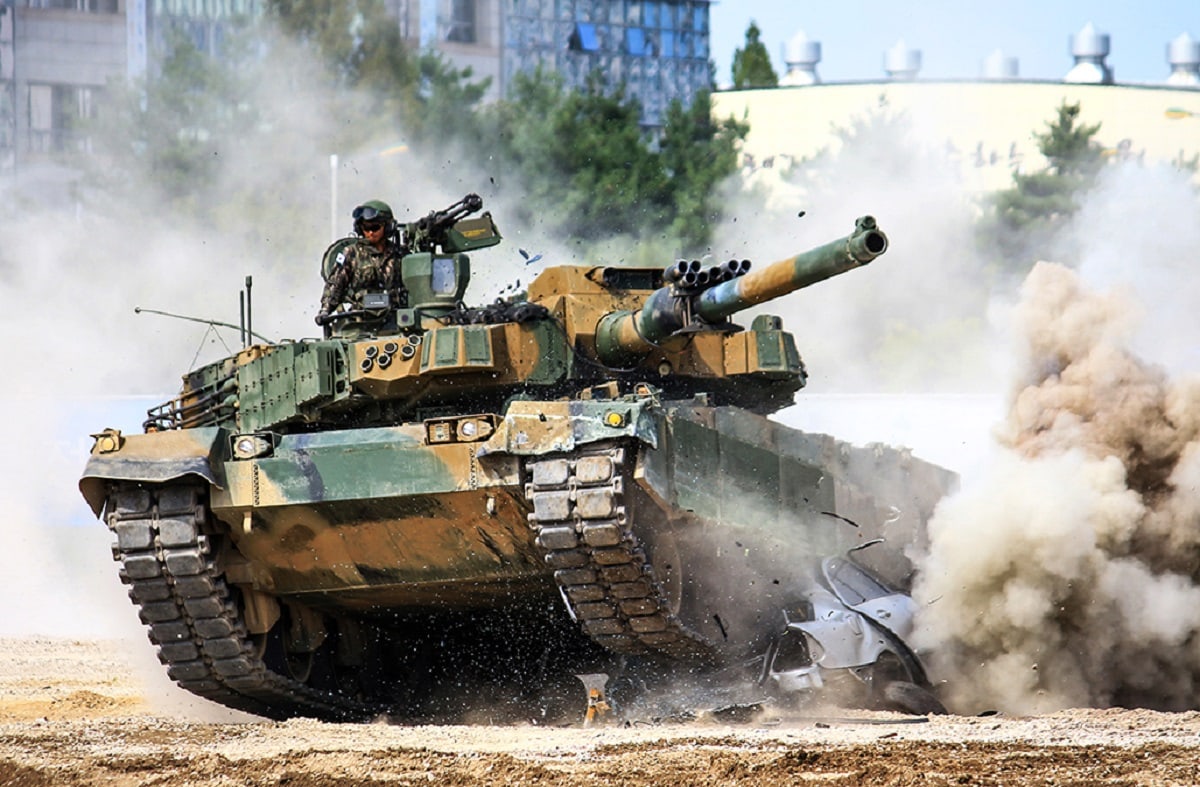
K2 Black Panther. Image: Creative Commons.
As a result, Turkey’s national tank entered production with a foreign engine. Of the 250-tank order, the first 85 — the T1 configuration — are powered by the Korean Doosan powerpack, a workaround that BMC itself framed as the solution to the delays its own domestic engine development had run into.
Turkey had escaped one foreign dependency, on Germany, by substituting another, on South Korea — better, because Seoul was willing to sell where Berlin would not, but still a dependency, and still proof that the airframe was the achievable part while the engine remained the chokepoint.
The Race For BATU: A Sovereign Engine, Nearly There
The Korean engine was always meant to be a bridge, and Turkey has been racing to replace it with its own power plant. BMC’s engine division, BMC Power, has been developing an indigenous 1,500-horsepower powerpack called BATU — engine, transmission, cooling, and exhaust systems — intended to make the Altay genuinely sovereign and, in the words of its promoters, immune to embargoes. That effort has reached a real milestone: the BATU powerpack completed factory acceptance testing in reporting from early 2026, a concrete step beyond the years of development that preceded it, with the engine described as having moved from final testing toward integration.
The plan is for BATU to replace the T2 variant of the tank, with integration into serial production of Altays scheduled to begin around 2028. The math of the order tells the story of a gap genuinely closing: the 85 T1 tanks run on the Korean Doosan engine, while the remaining 165 T2 tanks are slated to roll off the line with the indigenous BATU powerplant.
If that holds, Turkey will have done something most countries chasing defense independence never manage — actually built the engine, not just the vehicle around it. The sovereignty goal is within reach rather than a fantasy, though “sovereign” remains aspirational until BATU is powering tanks in volume rather than passing bench tests.
The Build Curve: Serial Production Begins
The Altay is now, at last, a real production tank. Mass production formally began in September 2025, and on October 28, 2025, the first tanks were handed over to the Turkish Land Forces at a ceremony to open BMC’s new tank plant in the Kahramankazan district of Ankara, with President Recep Tayyip Erdoğan presiding. The delivery schedule runs three tanks in 2025, 11 in 2026, 41 in 2027, and 30 in 2028 to complete the 85-tank T1 batch, with the plant designed to ramp toward roughly 96 tanks a year — Erdoğan put the target at eight Altays and ten Altuğ armored vehicles each month — once fully running.
The tank those lines are producing is a capable, modern design. The Altay weighs roughly 65 tonnes, placing it in the same class as the latest Leopard 2 and M1 Abrams variants, and it is armed with a 120mm L55 smoothbore gun produced by Turkey’s MKE, compatible with NATO-standard ammunition and the indigenous TANOK gun-launched missile.
Its electronics are Turkish through and through: Aselsan’s Volkan fire-control system, the Akkor active protection system designed to defeat incoming anti-tank missiles, and a 360-degree situational-awareness suite. Erdoğan said the tank had passed its testing with more than 1.5 million hours of engineering work, 35,000 kilometers of field trials, and thousands of rounds fired.
The Honest Balance: A Real Tank, A Real Controversy
The fair assessment cuts both ways, and both sides deserve weight. On the credit side, Turkey genuinely did build a largely indigenous main battle tank. The hull, the armor, the fire control, the active protection, and the gun are Turkish, with the foreign content concentrated almost entirely in the propulsion — and even that is now being replaced by a domestic powerpack that has passed its acceptance tests.
The tank is in real serial production, not perpetual prototype limbo, and the sovereignty goal is close. Much of the delay, moreover, was not due to incompetence but to an external political shock: the German embargo was a decision Ankara could not control, and losing its engine supplier midway through a tank program would set back any country.
On the critical side, the program still took roughly seventeen years from the 2008 contract to serial production, and the choice of BMC drew pointed criticism. BMC is owned by a consortium that includes Ethem Sancak, a businessman long identified as a close ally of President Erdoğan, as well as Qatari state investment. Erdoğan publicly thanked Qatar’s deputy prime minister at the induction ceremony.
Critics questioned both whether BMC had the experience to execute a tank program quickly and whether political connections shaped the award, and some pointed to Sancak’s later sale of his BMC shares as a further reason for unease. None of that is proven wrongdoing, and it has to be weighed against the fact that the tank now exists and is being delivered — but the favoritism allegations are part of the honest record of why the Altay’s path was as long and contested as it was.
The Bigger Pattern: The Engine Is The Sovereignty Chokepoint
The Altay is not an isolated case; it is the armored-vehicle instance of a law that has run through nearly every national weapons program over the last decade. Turkey’s own Kaan fighter flies on an American General Electric engine while Ankara works toward an indigenous one. India’s Tejas fighter runs on the GE F404 because India’s domestic Kaveri engine failed to deliver, and its planned successors depend on GE and French engines. Sweden’s Gripen, marketed as the sovereign fighter, runs on a GE engine that hands Washington an export veto. In every case, the country built the airframe or the hull — the achievable part — and stalled on the engine, the part almost no one can build.
The Altay adds a distinct and important wrinkle to that pattern: its block came from Germany, and its rescue came from South Korea, which proves the dependence is not uniquely American. It is structural, a function of how few countries on earth can build a high-performance engine or transmission at all. The clearest illustration is the very tank Turkey turned to for help.
South Korea’s K2 Black Panther hit the same wall — it began production on a German MTU engine because Seoul’s own powerpack was not ready, encountered durability issues with its domestic transmission, used a hybrid Korean engine-and-German transmission arrangement as a stopgap, and only later fielded a fully indigenous powerpack. Korea cleared the engine hurdle the hard way, which is exactly why it had an engine to sell to Turkey. The hull is the part you can build; the engine is the part that decides whether you are actually sovereign.
The Verdict: You Don’t Own A Weapon Until You Own Its Engine
Turkey set out to build a tank that would free it from depending on anyone, and in almost every respect it succeeded — the Altay is a genuinely Turkish machine, modern and capable, now rolling off a Turkish production line.
The exception was the one component that turned out to matter most. When Germany pulled the engine, the national tank stopped being buildable overnight, and Turkey’s declaration of independence had to be rescued by a foreign supplier before it could enter service at all. That is the lesson the Altay shares with the Kaan, the Tejas, and the Gripen, and it is unforgiving: a country does not control a weapon until it controls the engine, because whoever builds the engine can stop the weapon.
What sets Turkey apart is that it is closer than most to actually closing the gap. The BATU powerpack has passed its acceptance tests, the indigenous T2 tanks are scheduled to begin replacing the Korean-powered T1s around 2028, and if that transition holds, the Altay will become one of the few genuinely sovereign main battle tanks built by a country that started without the ability to make its own engine.
Until then, the most advanced symbol of Turkish defense independence will keep rolling out of Ankara on a South Korean engine — a national tank that proves both how far Turkey has come and how hard the last step really is. Turkey learned where the chokepoint was the painful way. It is now spending billions to make sure it never gets caught there again.
About the Author: Harry J. Kazianis
Harry J. Kazianis (@Grecianformula) was the former Senior Director of National Security Affairs at the Center for the National Interest (CFTNI), a foreign policy think tank founded by Richard Nixon based in Washington, DC. Harry has over a decade of experience in think tanks and national security publishing. His ideas have been published in the NY Times, The Washington Post, The Wall Street Journal, CNN, and many other outlets worldwide. He has held positions at CSIS, the Heritage Foundation, the University of Nottingham, and several other institutions related to national security research and studies. He is the former Executive Editor of the National Interest and the Diplomat. He holds a Master’s degree focusing on international affairs from Harvard University.