
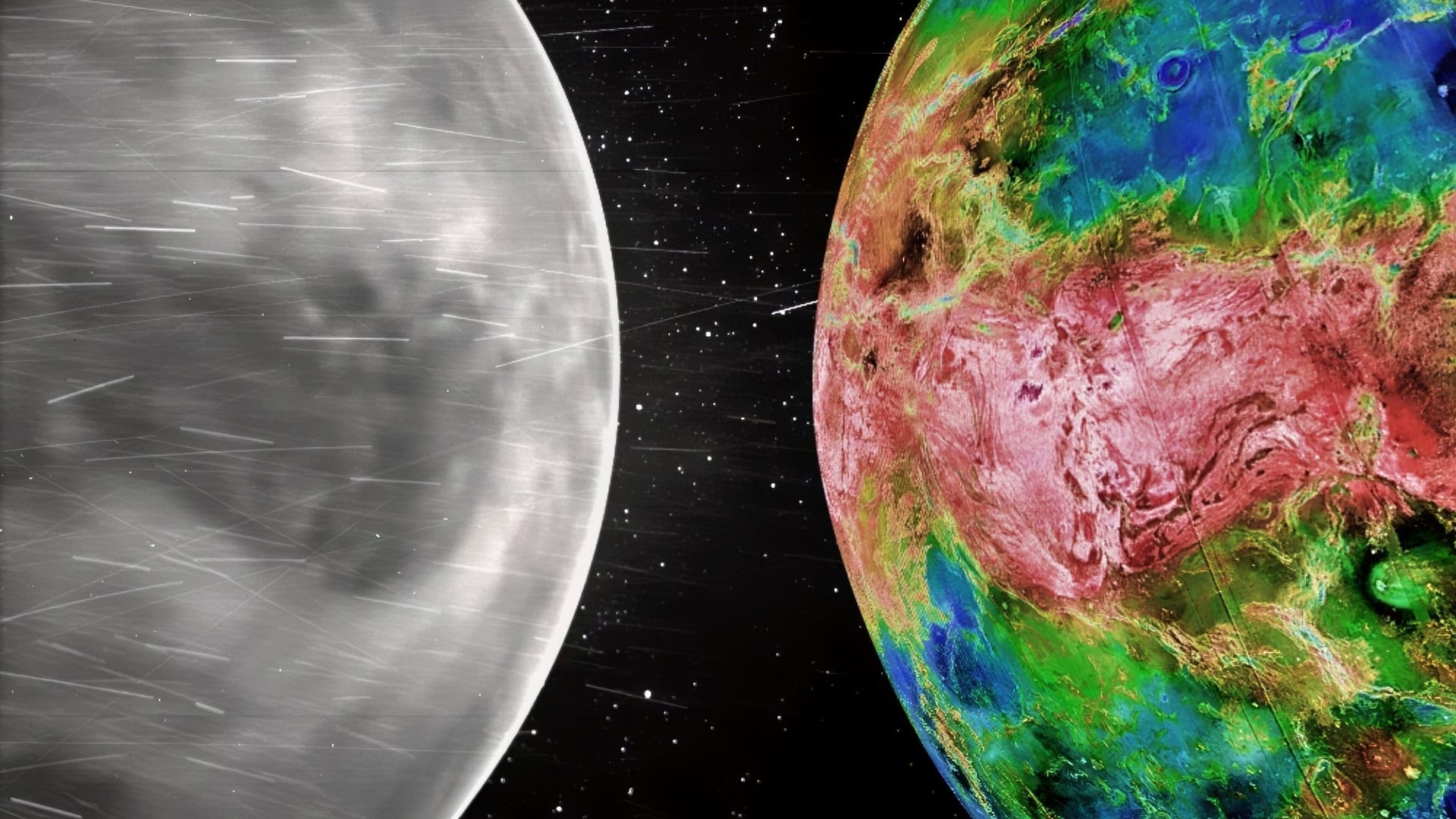
Venus is about the size of Earth and at its closest approach is only 25,000,000 miles away, yet landing there is arguably more difficult than landing on Mars.
While Mars creates problems on account of its atmosphere being so thin, Venus presents almost the opposite situation, which creates an engineering nightmare.
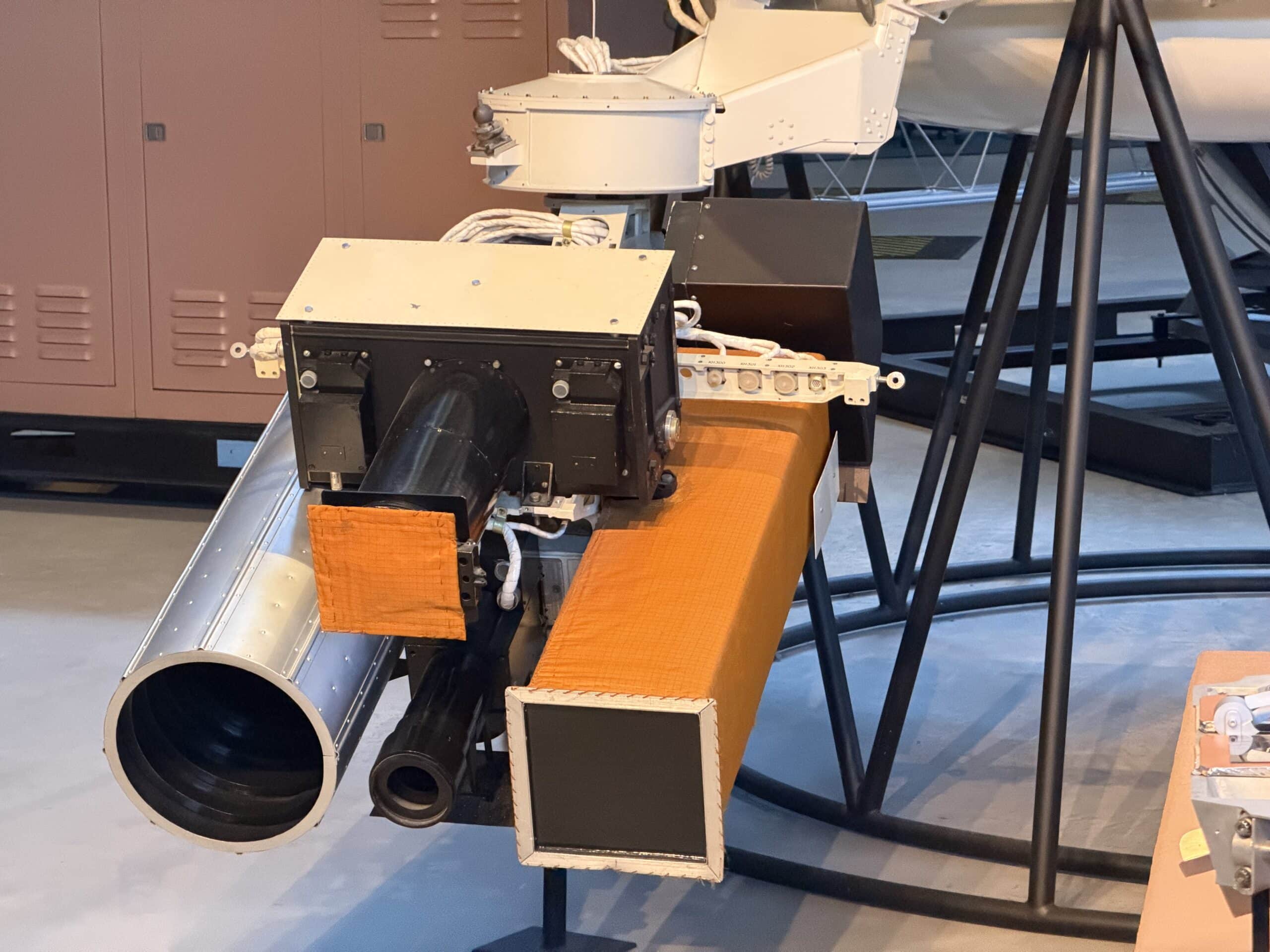
Vega Space Probe 19FortyFive Photo From Smithsonian Taken on June 30 2026
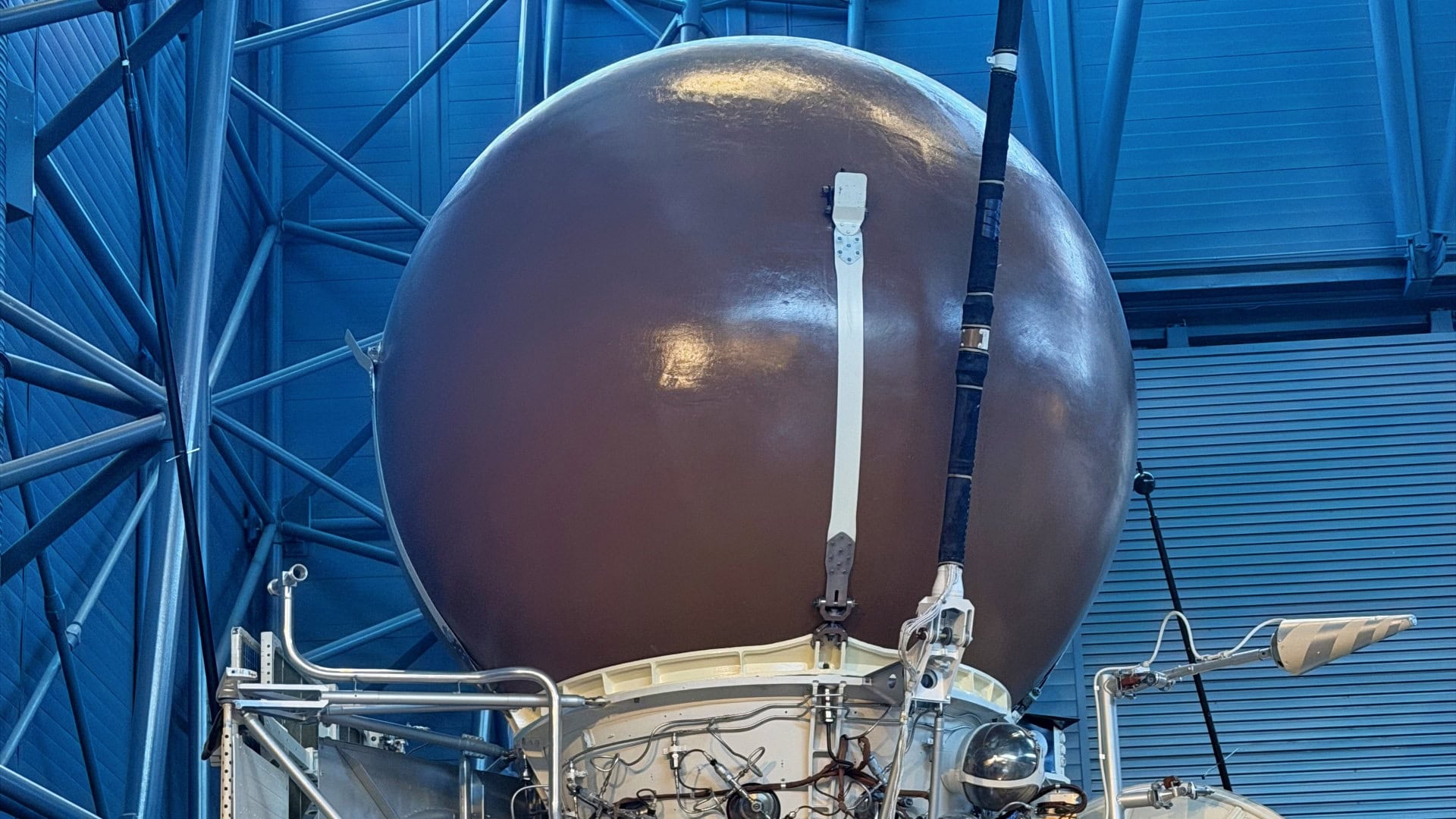
Vega Space Probe 19FortyFive Photo From Smithsonian Taken on June 30 2026
When a spacecraft descends toward Venus, it encounters an increasingly dense carbon dioxide atmosphere, sulfuric acid clouds, enormous pressure, and temperatures capable of destroying conventional electronics.
The surface of Venus is a furnace at about 870°F, with a sea-level atmospheric pressure approximately 92 times that of Earth’s. Standing on the surface of Venus would be comparable to standing 3,000 feet underwater on Earth.
This is why images from the surface of Venus are so rare, despite more than six decades of human planetary exploration.
Why So Hostile
Venus demonstrates exactly what happens when an Earth-sized terrestrial planet develops a radically different climate.
Venus’s atmosphere is approximately 96% carbon dioxide, which produces an extreme greenhouse effect.
It might surprise some people to learn that Venus is hotter than Mercury despite being farther away from the Sun.
On Venus, there is effectively no nighttime relief because the enormous atmosphere transports heat around the planet, keeping surface temperatures brutally high at all times.
Pressure presents another structural challenge; a conventional spacecraft pressure vessel exposed to approximately 92 bar must obviously resist enormous inward-crushing forces.
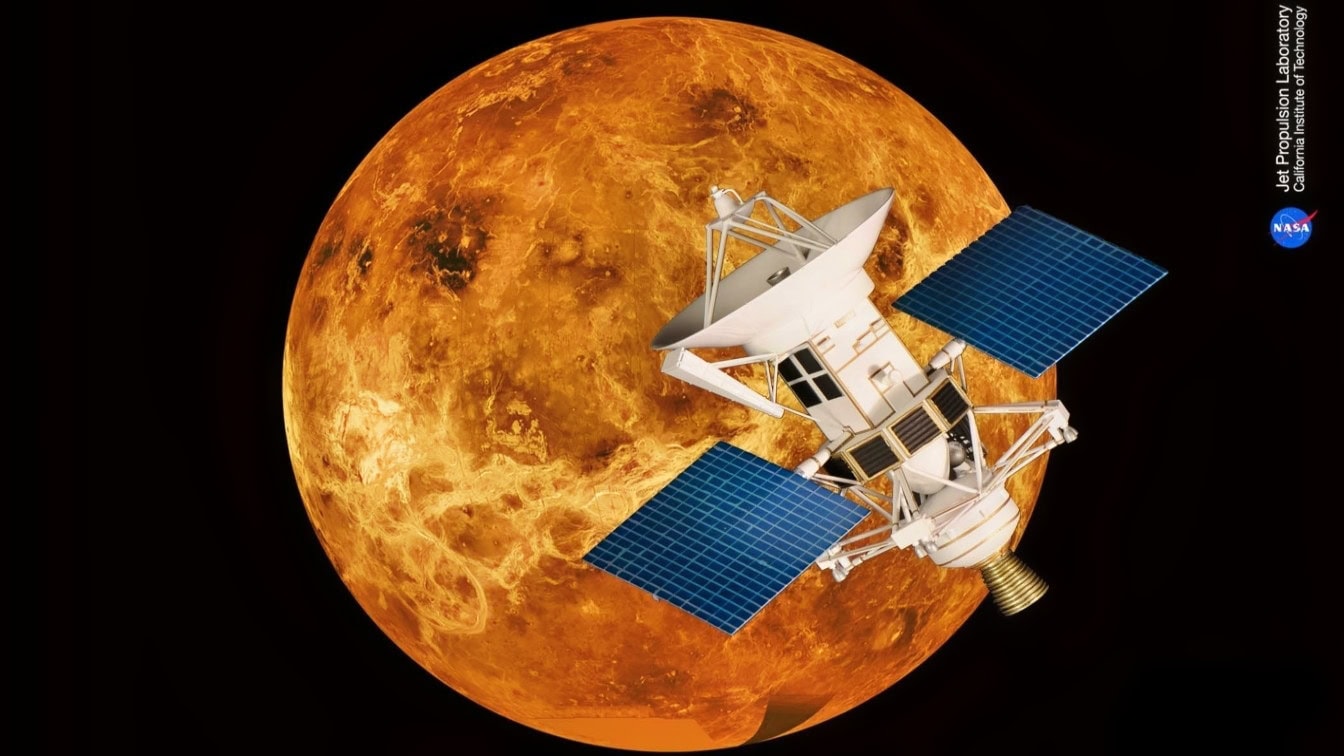
Magellan Venus Mission NASA Photo
This reality is combined with the soaring temperatures.
Aluminum melts at about 660°C, so Venus isn’t hot enough to melt aluminum structures—but conventional electronics fail long before the structural metal melts.
On Venus, semiconductor behavior changes with the temperatures, battery life degrades, lubricants and seals fail, and sensors drift outside operating limits.
It’s a cascading mess that creates an engineering challenge far more difficult than simply keeping the spacecraft intact.
And the Sulfuric Acid
Then there’s the sulfuric acid.
Venus is famous for its acid clouds, which add another complication to exploration.
The major sulfuric acid cloud decks occur roughly 30 to 45 miles above the surface, meaning descending spacecraft must survive exposure during atmospheric entry while keeping sensors, seals, communications, etc. functional.
So the sulfuric acid clouds are not a problem on the surface of Venus, but just to get to the surface—where the temperatures and pressure become the dominant problem—all spacecraft must get through a moat of sorts comprised of sulfuric acid.
Even entry into Venus is difficult.
Soviet Successes
No country has been more successful in exploring the surface of Venus than the Soviet Union, whose Venera program landed multiple probes there.
Of course, earlier attempts to explore the surface failed, demonstrating how little engineers initially understood about Venus.
By the 1970s, however, Soviet engineers had developed increasingly capable landers built specifically to address the planet’s known conditions.
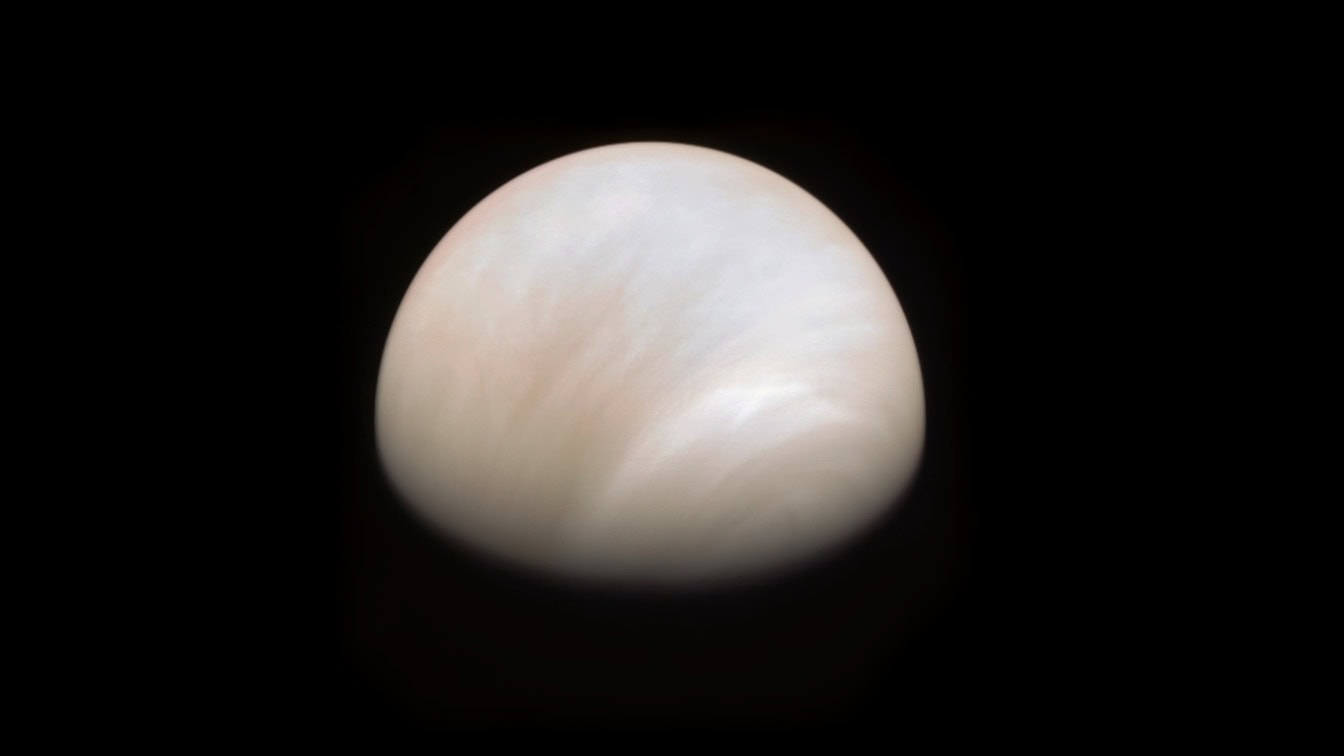
Venus. Creative Commons Image.
Rather than developing lightweight, Mars-style vehicles, Venera landers resembled deep-sea pressure vessels.
Their spherical pressure compartments provided an important geometric advantage, distributing external pressure more evenly across a sphere rather than concentrating it at weak structural points.
Designers learned to use robust materials, heavy insulation, and thermal management techniques to delay inevitable failure caused by extreme heat and pressure.
The engineers knew these machines would not operate indefinitely, or even for very long , yet through ingenuity, they constructed cold-insulated spacecraft that survived just long enough to gather images and scientific data from the surface of Venus.
Landing on Venus
The Soviet Union pulled it off. Venera 7 landed in December 1970, becoming the first spacecraft to successfully transmit data from the surface of another planet.
The Soviet Union didn’t stop there; Venera 9 and 10 returned the first photographs from Venus’s surface in 1975.
Venera 13 and 14 returned color panoramas and conducted experiments on surface material in 1982. And Venera 13 survived for 127 minutes—far longer than planned or expected.
But of course, each and every Venus lander suffered the same fate.
Venus always won in the end, ruining human-made landers with otherworldly heat and pressure.
About the Author: Harrison Kass
Harrison Kass is a writer and attorney focused on national security, technology, and political culture. His work has appeared in Tablet, City Journal, The Hill, The Spectator, and The Cipher Brief. He holds a JD from the University of Oregon and a master’s in Global & Joint Program Studies from NYU. More at harrisonkass.com.