
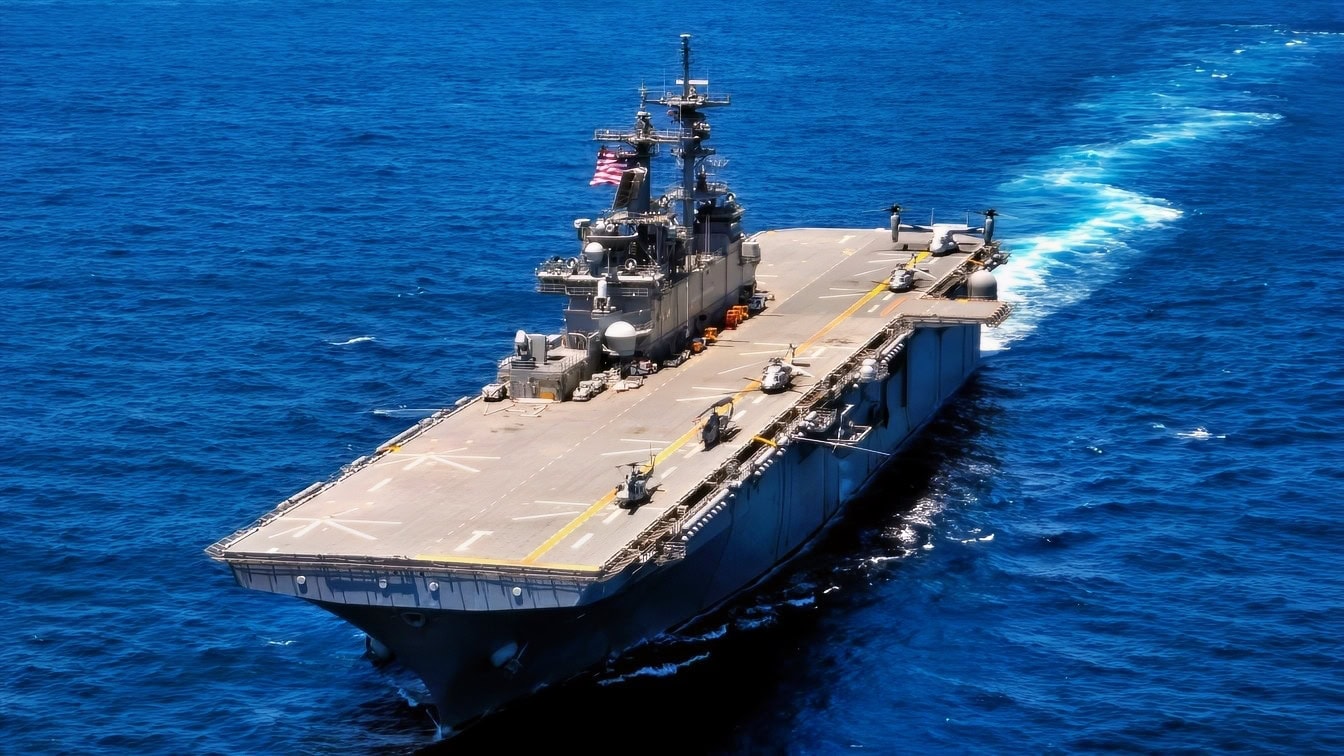
On Friday, the war over the Strait of Hormuz reached a milestone that took four and a half months of some of the most dangerous work in the United States military. Admiral Brad Cooper, the head of Central Command, announced in a video address that American forces have cleared the Iranian sea mines from the strait’s transit routes, an effort led by Navy divers and SEALs against weapons the Islamic Revolutionary Guard Corps laid in the spring.
“The circumstances were challenging and dangerous, to say the least, but we got the job done,” Cooper said in the announcement first reported by Task & Purpose.
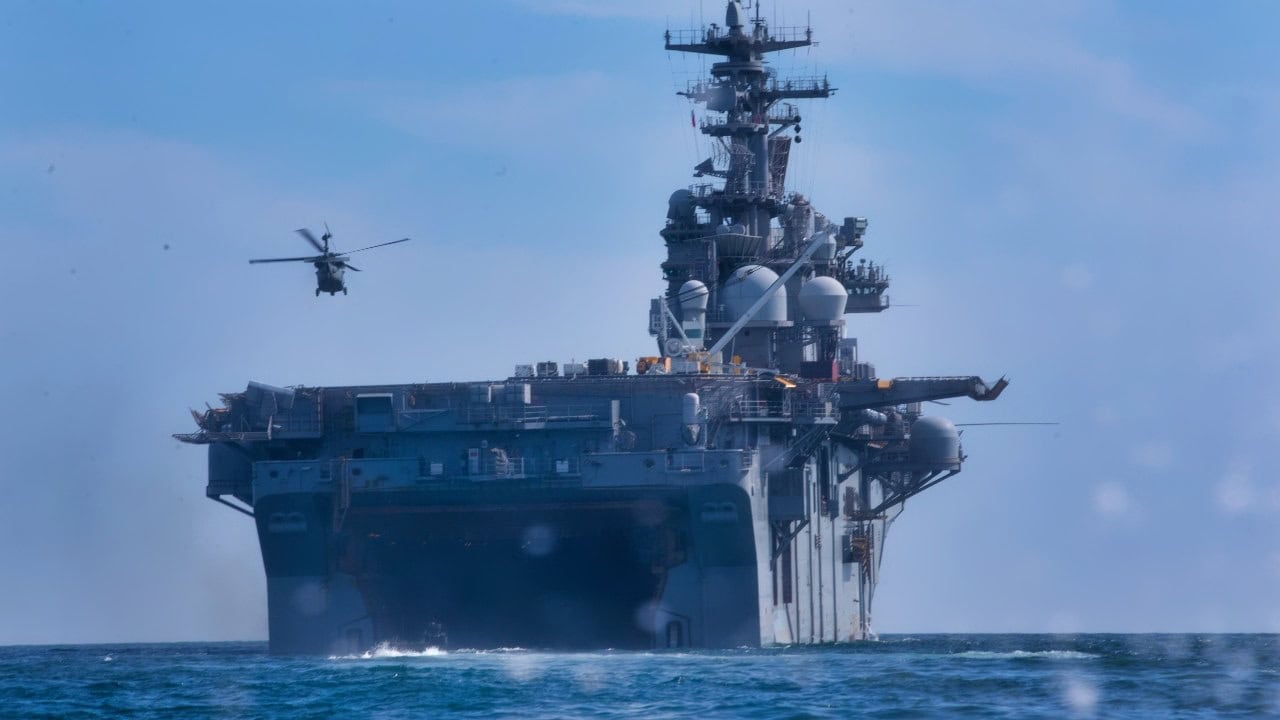
U.S. Marines with Bravo Company, 2d Assault Amphibious Battalion, 2d Marine Division approach the USS Wasp (LHD 1) in assault amphibious vehicles off of Onslow Beach during a three-day ship-to-shore exercise on Camp Lejeune, N.C., June 27, 2020. During the exercise, the Marines conducted amphibious maneuvers and dynamic ship-to-shore operations with the USS Wasp (LHD 1). (U.S. Marine Corps photo by Lance Cpl. Jacqueline Parsons)
The claim arrives with caveats that matter.
Cooper did not say how many mines were removed or disabled, and his declaration covers the two major transit routes, not the whole strait.
President Donald Trump posted this week that all mines are gone from the strait’s international waters. Iran’s deputy foreign minister, Kazem Gharibabadi, said three days before Cooper’s announcement that no one except Iran knows where the mines are.
And the UK Maritime Trade Operations center’s Friday report still charts a known mined area, days after an unidentified projectile struck a tanker on August 26.
Six months into the war, the mines are the story that explains the whole conflict, and the reason begins with what these weapons cost and what they do.
What Was Announced, and What Was Not
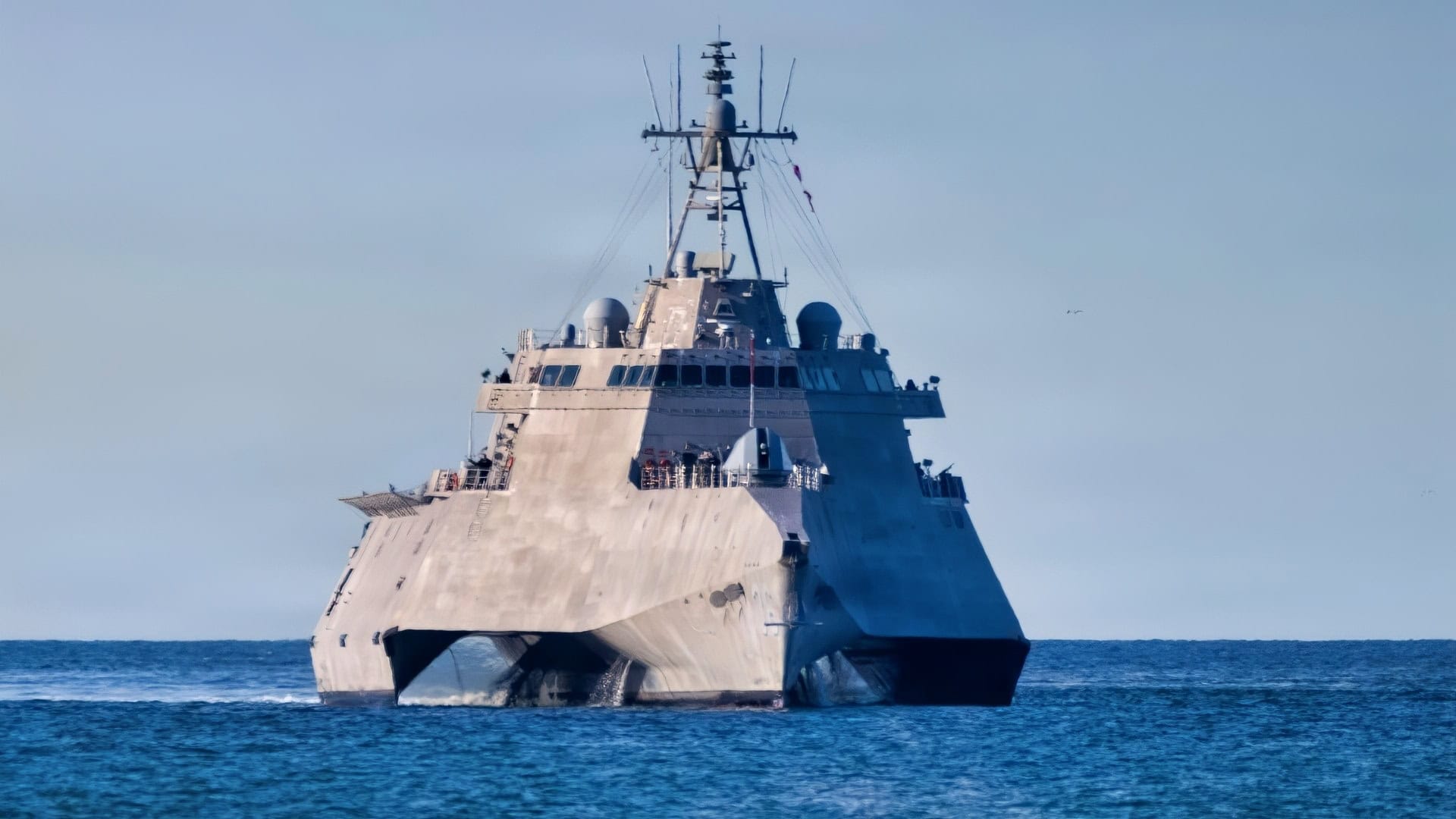
USS Kingsville (LCS 36) sails toward Naval Surface Warfare Center, Port Hueneme Division (NSWC PHD) in California on a recent morning as a flock of brown pelicans flies low over the Pacific Ocean. Homeported in San Diego, LCS 36 is an Independence-variant littoral combat ship that was commissioned in 2024. The arrival marked the ship’s first visit to NSWC PHD, where it underwent a Combat Systems Assessment Team event to ensure combat readiness. Designed to operate closer to shore than guided-missile destroyers and cruisers, USS Kingsville is outfitted for mine countermeasures missions. (U.S. Navy photo by Eric Parsons)
In many respects, the timeline frames the achievement.
Iran began mining the strait’s commercial routes in early April, issued its own mine warning on April 9, and two days later the US Navy sent the destroyers USS Michael Murphy and USS Frank E. Petersen through the strait to open the clearance campaign, followed by underwater drones and a joint force drawn from four services.
Then came months of near silence, which Cooper described as the force working meticulously and quietly, until Friday’s declaration.
What has not changed is the larger confrontation: the American blockade of Iranian ports remains in effect, with more than 20 warships participating, 75 vessels turned away and three disabled since the blockade restarted in July; the 60-day memorandum of understanding lapsed this month; and the last reported American strike on Iran came on July 30.
Clearing the routes, in other words, is a condition for the strait’s revival, not the revival itself, a distinction the Congressional Research Service has framed precisely: closure-like conditions can persist on perception alone, whenever shippers conclude the potential costs outweigh the benefits of transiting, regardless of what Iran’s military does or does not do.

Ecuadorian navy Esmeralda-class missile corvettes BAE Manabi (CM 12) and BAE Loja (CM 16) conduct formation maneuvering alongside Nimitz-class aircraft carrier USS Nimitz (CVN 68) and Arleigh Burke-class guided-missile destroyer USS Gridley (DDG 101), part of Nimitz Carrier Strike Group (NIMCSG), in the Pacific Ocean, April 8, 2026. Nimitz is deployed as part of Southern Seas 2026, which seeks to enhance capability, improve interoperability, and strengthen maritime partnerships with countries throughout the region through joint, multinational and interagency exchanges and cooperation. (U.S. Navy photo by Mass Communication Specialist 3rd Class Gina Gallia)
Why a Few Mines Beat a Fleet
That insight is the entire economics of mine warfare.
A naval mine does not need to sink ships to win; it needs to make insurers doubt, and the doubt does the work. Marine Corps Major General Tracy King put the arithmetic in one sentence: “You only need one mine to make a minefield.”
The record supporting him is the US Navy’s own scar tissue.
Since the end of the Second World War, mines have seriously damaged or sunk nearly four times more American warships than every other weapon combined.
In 1988, a contact mine of First World War design nearly sank the frigate USS Samuel B. Roberts in these same waters, at a repair bill above $90 million; in 1991, a $25,000 Italian-made bottom mine took the billion-dollar Aegis cruiser USS Princeton out of the fight, and more than 1,300 cheap Iraqi mines denied the US Navy command of the northern Gulf and helped cancel an amphibious assault.
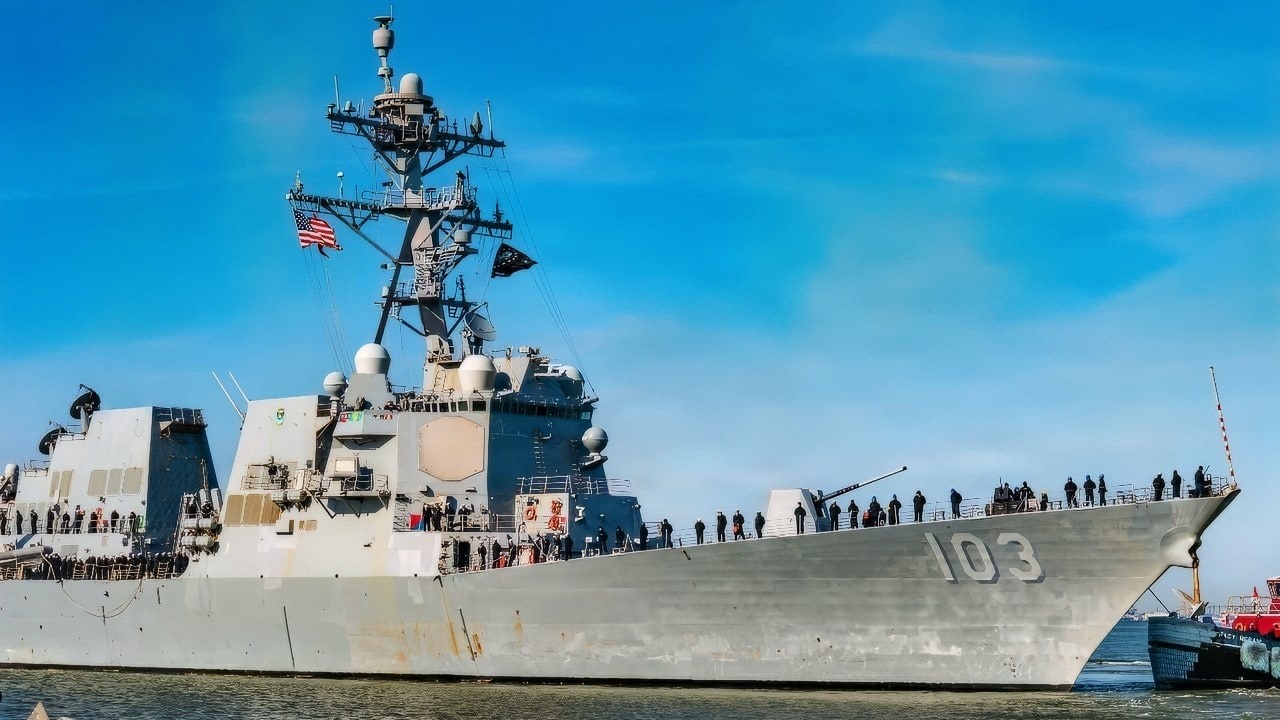
(Feb. 3, 2026) – The Arleigh Burke-class guided missile destroyer USS Truxtun (DDG 103) departed Naval Station Norfolk for a scheduled deployment on Feb. 3, 2026. The ship’s company includes approximately 300 Sailors, with an additional 26 embarked air wing personnel assigned to the “Valkyries” of Helicopter Maritime Strike Squadron 50. U.S. 2nd Fleet, reestablished in 2018 in response to the changing global security environment, develops and employs maritime ready forces to fight across multiple domains in the Atlantic and Arctic in order to ensure access, deter aggression and defend U.S., allied, and partner interests. (U.S. Navy photo by Mass Communication Specialist 2nd Class Derek Cole)
The founding humiliation came at Wonsan in 1950, when 3,000 mines laid in a matter of weeks stopped a 250-ship United Nations task force cold, moving the commander, Rear Admiral Allen Smith, to lament that America had lost control of the seas “to a nation without a navy.”
The Iran war proves how tough this problem is to solve: Mines that cost thousands of dollars apiece helped close a waterway carrying a fifth of the world’s oil, and the Dallas Federal Reserve’s modeling puts the price of that closure at 0.2 percentage points of global GDP if the disruption lasts one quarter, rising toward 1.3 points if it persists for three, before counting the insurance dislocations the model treats as extra.
The asymmetry runs through time as well as money: the mining took days, and the clearing, by forces with air supremacy and no opposing fleet, took four and a half months for two routes.
The Nations Holding the Most
Every navy studying this war already knew the lesson, and none has studied harder than China’s.
Beijing holds the largest naval mine inventory on earth, between 50,000 and 100,000 weapons by the standard estimates, across more than 30 varieties running from simple contact mines to remote-controlled, rocket-rising, and self-propelled types, and the US Naval War College’s own survey of Chinese writings concluded Beijing may be at the cutting edge of mine warfare technology and doctrine.
The scale is operational, not theoretical: analysis of PLA Navy capacity holds that China could seed more than 14,000 mines in as little as two weeks, at rates above 2,000 a day, and American adversaries combined field more than 400,000 naval mines. In a Taiwan war, Chinese doctrine treats mining as a blockade weapon of the first rank, sealing Taiwan’s ports and slowing any American fleet crossing the Pacific, the sea-denial role mines played at Gallipoli a century ago.
Yet the weapon cuts both ways, which is why Taiwan itself invests in mines: a Naval War College simulation of Taiwanese defensive minefields found Chinese clearance operations would take 69 days in the most likely scenario, with a real chance of failing outright, before an invasion fleet could move. Russia’s Black Sea mining and North Korea’s stocks extend the same logic on smaller scales.
Against all of it stands the thinnest part of the US fleet: the Navy retired its last four dedicated Avenger-class minesweepers from Bahrain in September 2025, five months before Iran began mining, and when the war came, the two mine-hunting littoral combat ships assigned to the region were, as this publication reported in March, thousands of miles away in Asia.
Iran demonstrated what a middling power could do with an arsenal CENTCOM ultimately assessed at more than 8,000 mines, some rocket-launched from the coast itself, as this publication documented when the mining began; a great power holding ten times that inventory would present a problem of a different order entirely.
The Strait Today
The reopening, when it fully comes, will be decided as much by underwriters as by admirals.
American forces have escorted tanker convoys moving as much as ten million barrels a day at the effort’s peak, and the site’s own recent accounting of the strait’s condition notes both the genuine progress and how much lifting the phrase under control still does, with traffic below prewar levels and the UKMTO logging incidents into last week.
Friday’s announcement removed a layer of physical danger from two lanes of one strait, at the cost of four and a half months of the hardest work in naval warfare, performed by divers against weapons that cost less than a pickup truck.
About the Author: Harry J. Kazianis
Harry J. Kazianis (@Grecianformula) was the former Senior Director of National Security Affairs at the Center for the National Interest (CFTNI), a foreign policy think tank founded by Richard Nixon based in Washington, DC. Harry has over a decade of experience in think tanks and national security publishing. His ideas have been published in the NY Times, The Washington Post, The Wall Street Journal, CNN, and many other outlets. He has held positions at CSIS, the Heritage Foundation, the University of Nottingham, and several other institutions related to national security research and studies. He is the former Executive Editor of the National Interest and the Diplomat. He holds a Master’s degree focusing on international affairs from Harvard University.

