
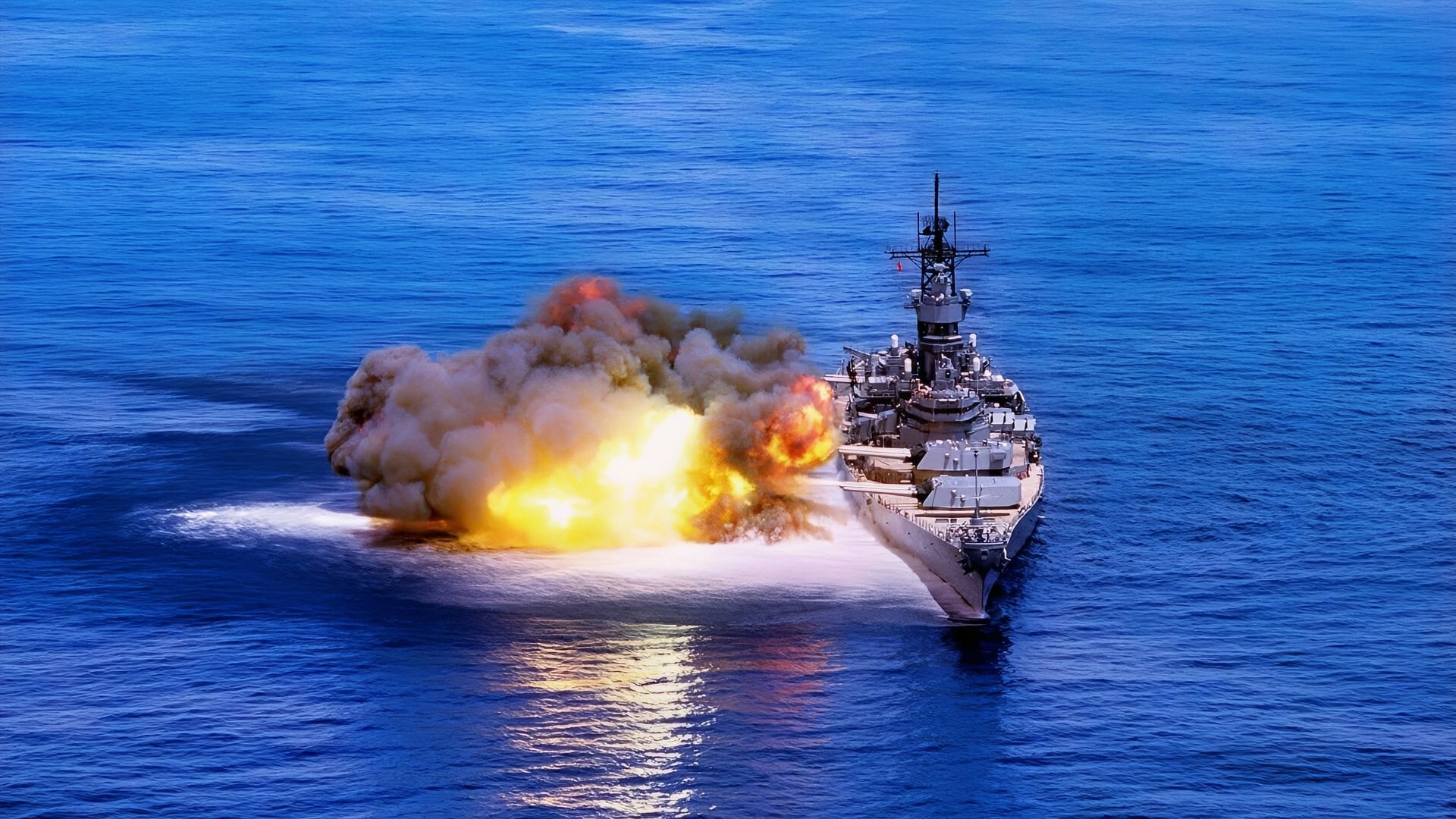
The Trump-class battleship (BBGX/BBGN) is a proposed battleship currently under consideration by the United States Navy.
The ship has generated significant controversy, mainly because of its association with President Trump and the seemingly obsolete nature of battleships/battlecruisers.
The ship is envisioned as a heavy nuclear-powered guided-missile ship, similar to the Soviet Kirov-class battleship, with an extended magazine and high endurance.
The Trump-class is intended to carry the latest and most advanced U.S. weaponry.
There are plans to arm the ships with railguns, directed energy weapons, hypersonic missiles, and more. To be frank, many of these systems are in their infancy or have never been built.
Putting aside the baggage surrounding Trump and the broader discussion surrounding the battleship concept, focus on the ship itself, particularly its armaments.
How feasible is the Trump-class on a purely conceptual level?
Conventional Prompt Strike: Still in Development
One of the many notable armaments on the Trump-class battleship is the inclusion of 12 Vertical Launch Systems (VLS) dedicated to Conventional Prompt Strike (CPS) Missiles.
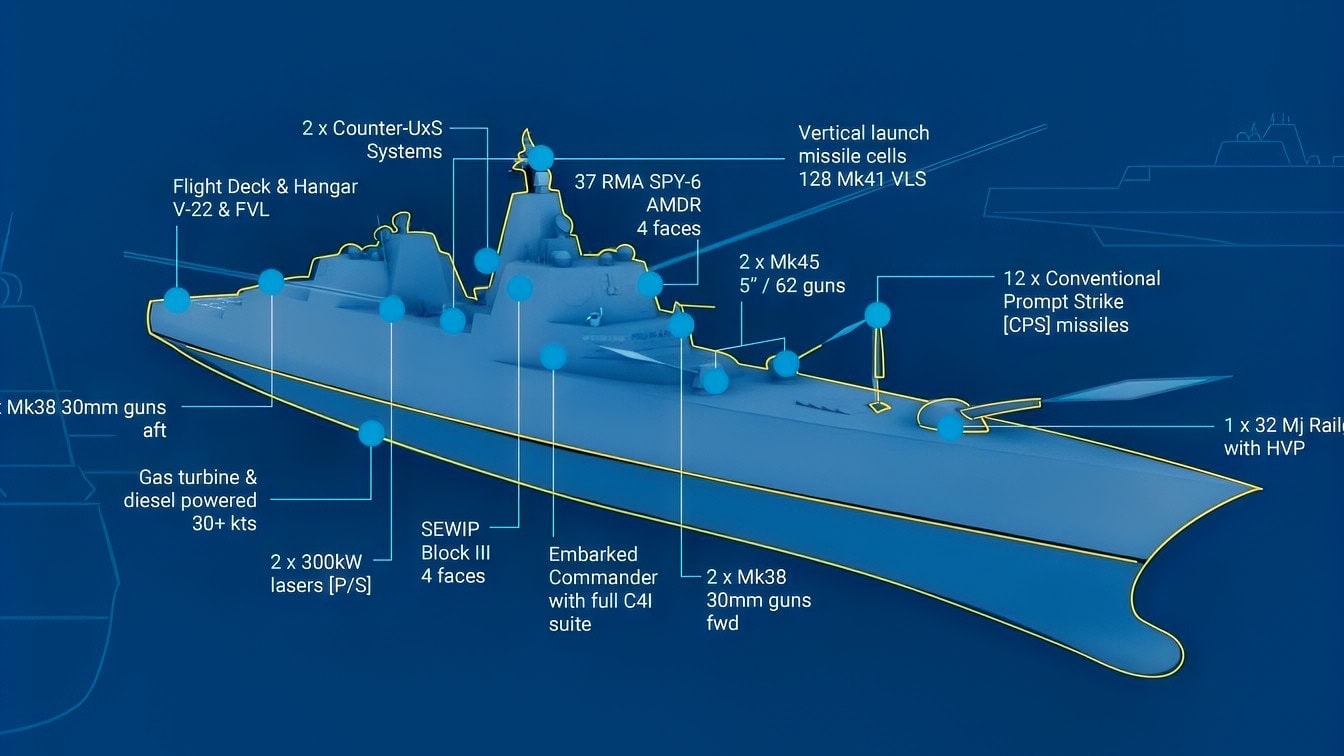
Trump-Class Battleship Creative Commons Image
The CPS program is intended to give decision-makers the option to strike any strategically valuable target worldwide within minutes.
The idea was to give the Navy a conventional hypersonic strike option capable of reaching any target in a short amount of time.
CPS has been in development since the early 2000s and is currently at varying stages of readiness depending on the source.
The 2024 Annual Report from the Office of the Director, Operational Test and Evaluation noted that “insufficient data [is] available to assess operational effectiveness, lethality, and suitability of the Phase 1 CPS prototype.”
Production of CPS missiles is slow and incredibly expensive.
In FY2027, the Navy allocated $1.8 billion to the program, $866 million of which is dedicated to all-up round and advanced payload module development, with another $988 million dedicated to procuring only 16 rounds.
Previously, the Navy allocated funds to deliver 10 rounds in 2024 and 11 rounds in 2025. It is unclear whether Lockheed Martin actually met these goals.
The current state of the CPS program is heavily classified. However, because the Navy is still allocating funds for its development, the missile is not yet ready for operational deployment.
Railguns: Unlikely to Materialize Anytime Soon
Another proposed addition to the Trump-class is a 37-megajoule railgun. Railguns have been a topic of U.S. research since the early 2000s.
The idea is to use electromagnetism to propel a projectile to insanely high speeds.
With a high-mass projectile, a rail gun can, in theory, inflict significant amounts of damage to enemies or be used in missile defense.
According to previous tests conducted by the U.S. Navy, some rounds reached speeds of up to Mach 7 and could be fired at a fraction of the cost of a Tomahawk cruise missile.
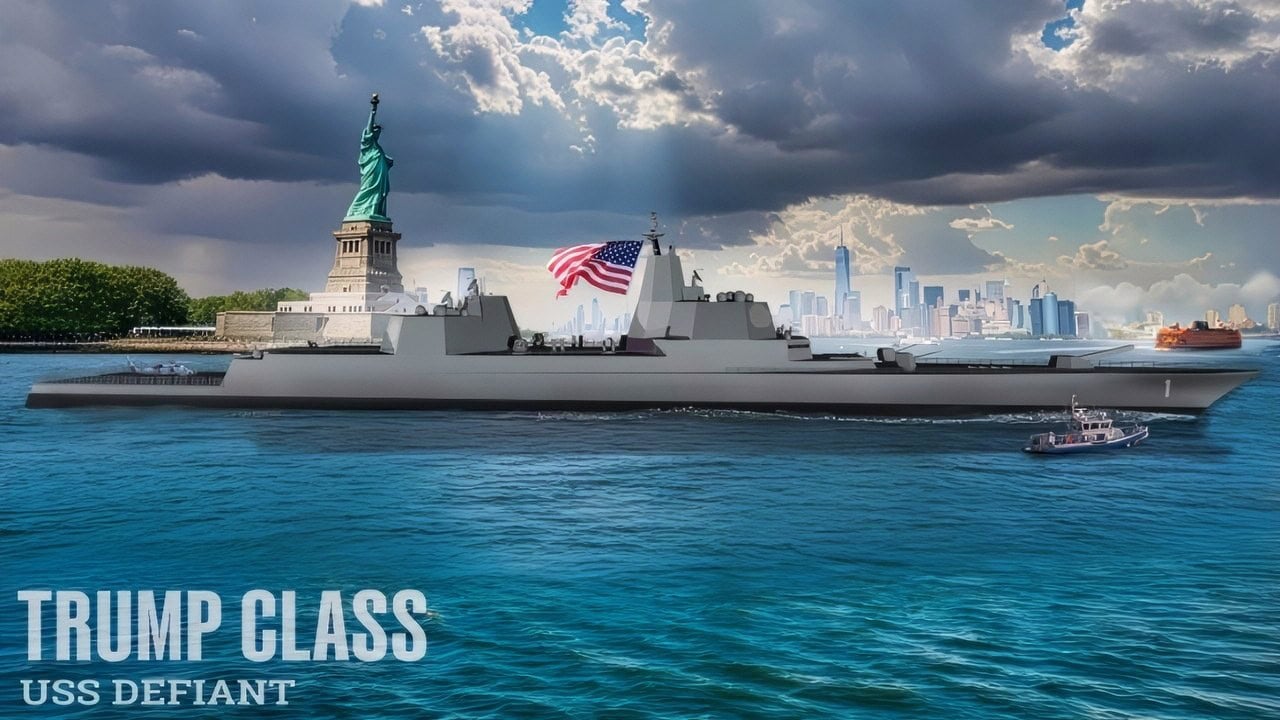
Trump-Class Battleship. Image Credit: Creative Commons/White House.
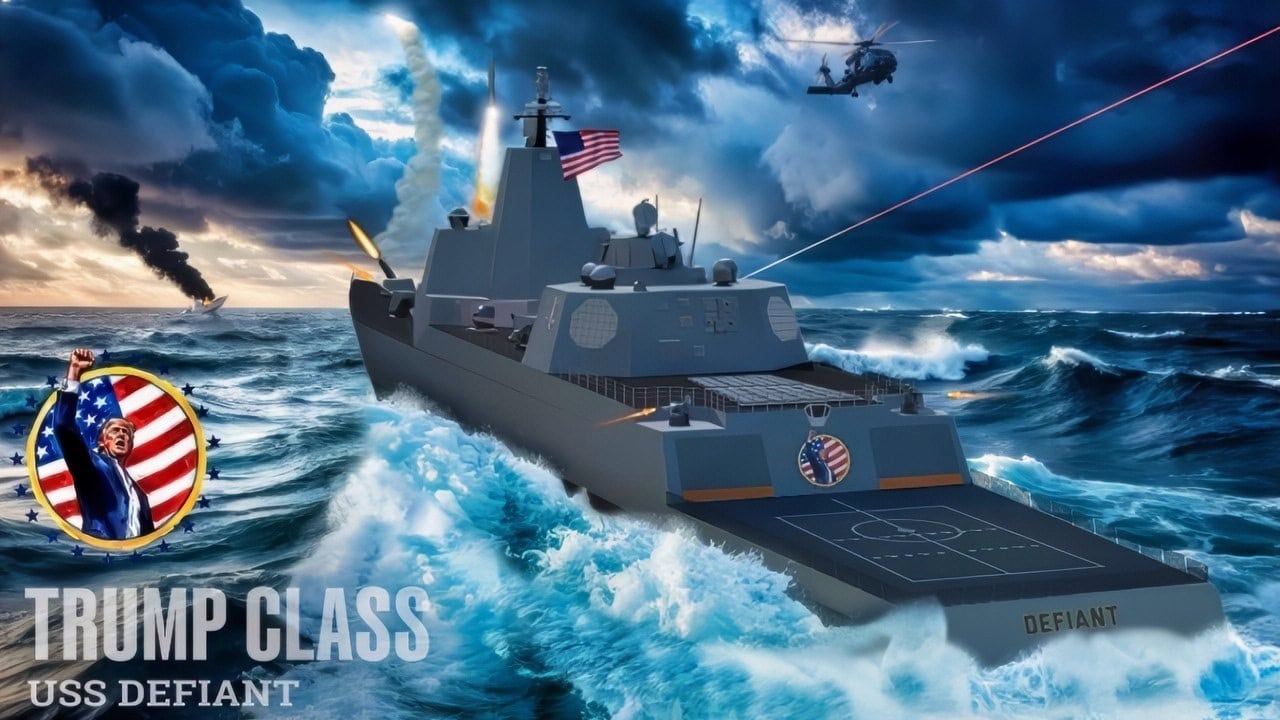
Trump-Class Battleship. Image Credit: Creative Commons/White House Photo.
The main issue with railguns, which the Trump-class could potentially solve, is power output.
Most ships simply do not generate enough electrical power to operate a railgun for extended periods of time.
With a nuclear reactor, however, BBG(X) would generate exponentially more energy than an Arleigh Burke-class destroyer.
Since the 2020s, however, the Navy’s priorities have shifted away from railguns. As of 2020, the Navy had spent $500 million on railgun development over the past 17 years.
In 2021, however, the Navy diverted FY2022 railgun development funds to other projects. According to reports, several technical challenges proved too difficult to overcome.
In particular, the gun’s barrels often wore out after one or two shots, and the rate of fire was deemed too slow to be useful for missile defense purposes.
Instead, the Navy redirected the funds to develop long-range hypersonic missiles, like the aforementioned CPS missile.
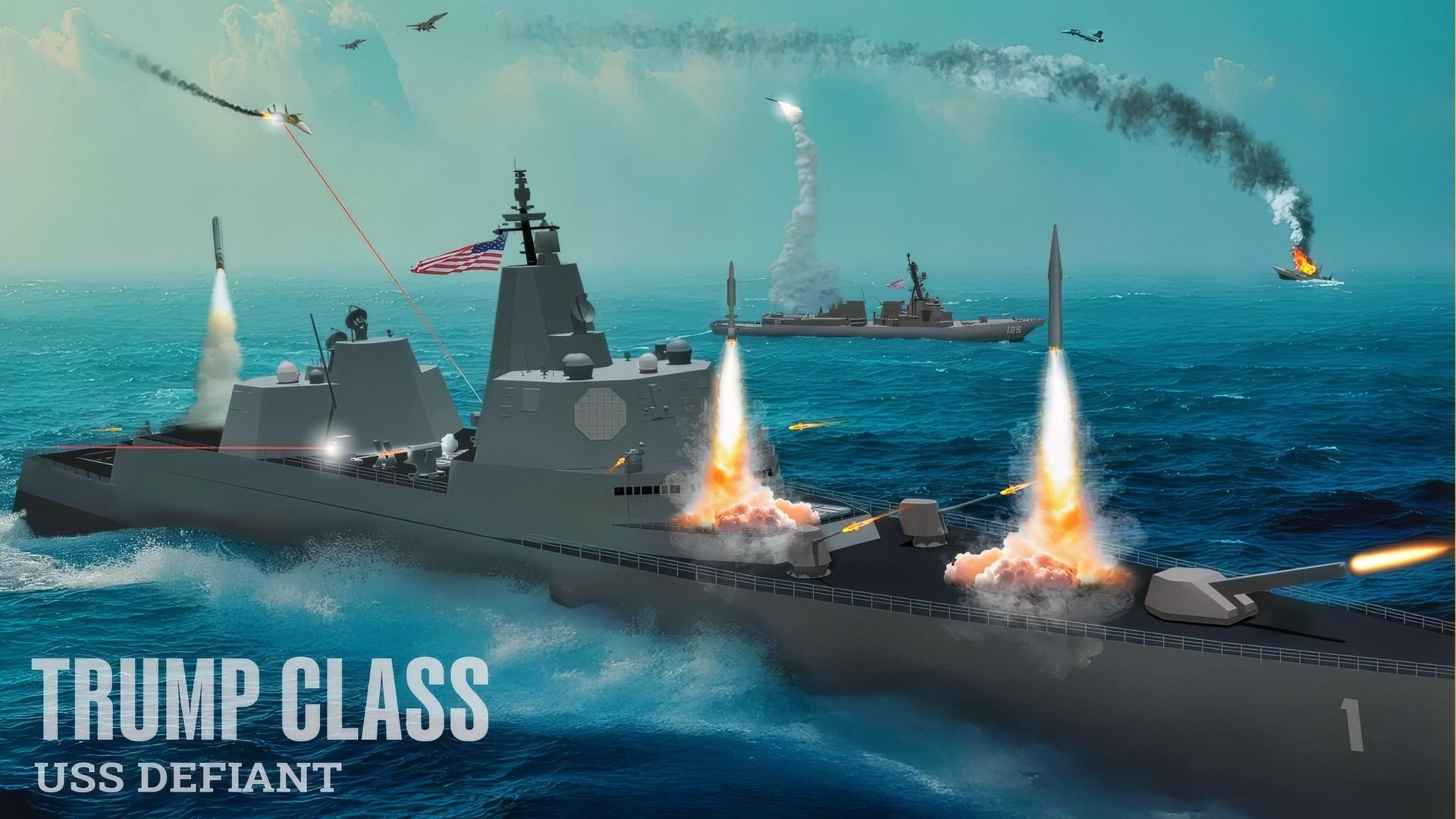
Trump-Class Battleship USS Defiant. Image Credit: Creative Commons.
If the Trump-class battleship were to ever reach the light of day, it would likely do so without a railgun.
According to some reports, however, the railgun project was revived in 2025, apparently because of the Trump-class battleship program.
What Systems Does the U.S. Navy Have Ready?
Another inclusion to the Trump-class is some sort of directed energy weapon (DEW). The U.S. Navy has tested DEWs extensively, and some have even reached operational deployment.
The Trump-class would likely receive a version of the HELIOS (High-Energy Laser with Integrated Optical Dazzler and Surveillance).
HELIOS is a 60-kilowatt laser system by Lockheed Martin.
The system is currently deployed onboard the USS Preble (DDG 88) and has been successfully tested against drones, with plans to test cruise missiles in the future.
DEWs are still new technology and have plenty of room for improvement.
Current DEWs take too long to score a kill against drones, but as the technology matures, hard-kill laser systems will only improve.
Arguably one of the most significant armaments aboard the Trump-class is the inclusion of 128-200 Mk 41 VLS tubes.
The Mk 41 VLS system can be fitted with air-to-air, air-to-surface, and anti-ship missiles of various kinds. While arguably less significant than CPS or the Nuclear-Armed Sea-Launched Cruise Missile (SLCM-N), the Mk 41 is the US Navy’s workhorse.
This extended magazine is one of the strongest arguments in favor of the Trump-class.
The BBG(X) could hold strategically valuable positions while delivering massive firepower without needing to reload as often.
There are certainly many arguments against it, but the Trump-class would still provide plenty of firepower for the U.S. Navy, even without the railgun or CPS.
About the Author: Isaac Seitz
Isaac Seitz, a Defense Columnist, graduated from Patrick Henry College’s Strategic Intelligence and National Security program. He has also studied Russian at Middlebury Language Schools and has worked as an intelligence Analyst in the private sector.