
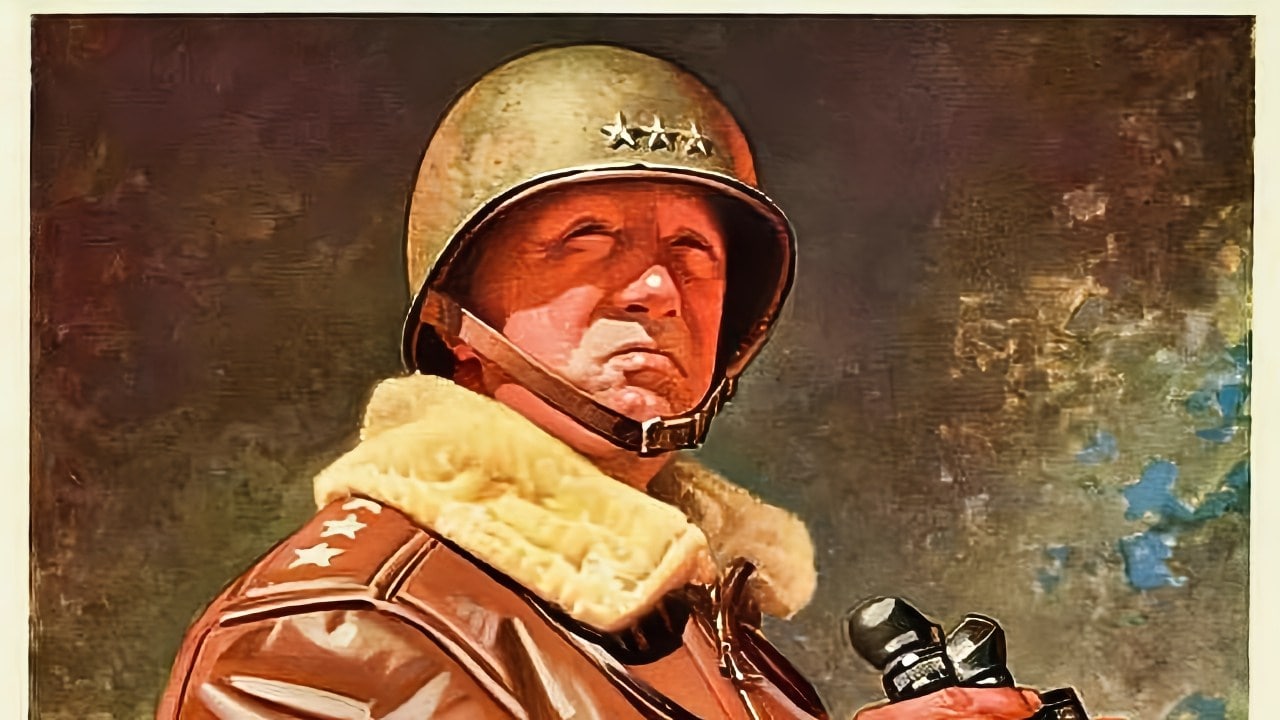
“Never tell people how to do things. Tell them what to do, and they will surprise you with their ingenuity.” The line appears in the “Reflections and Suggestions” section of George S. Patton’s posthumously published War As I Knew It. It captures the command philosophy behind one of America’s most aggressive World War II generals: define the objective, demand speed, and let trained subordinates solve the battlefield problem.
Who Was George Patton?
Patton reached World War II with decades of preparation. A 1909 West Point graduate, he served with John J. Pershing in Mexico, organized an American tank school in France, and was wounded while commanding tanks during the Meuse-Argonne offensive. Those experiences shaped his emphasis on mobility, combined arms, and offensive momentum.
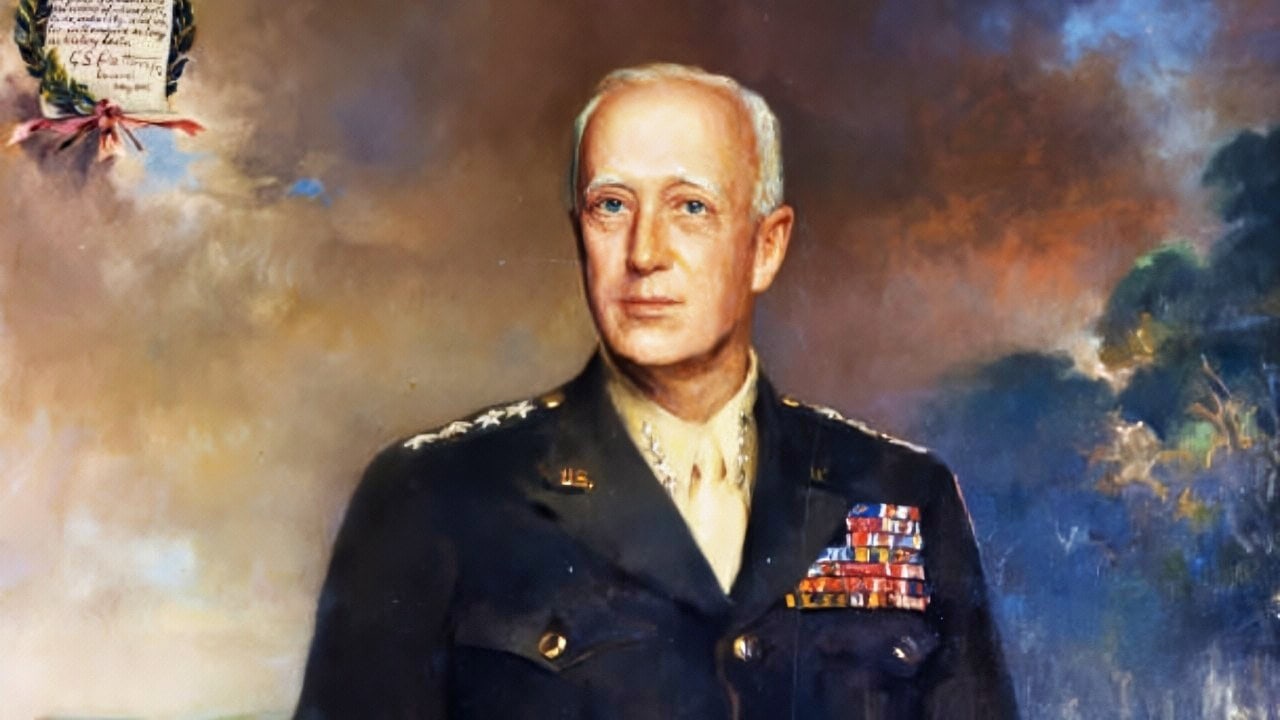
Portrait of Army General Patton. Image Credit: Creative Commons.
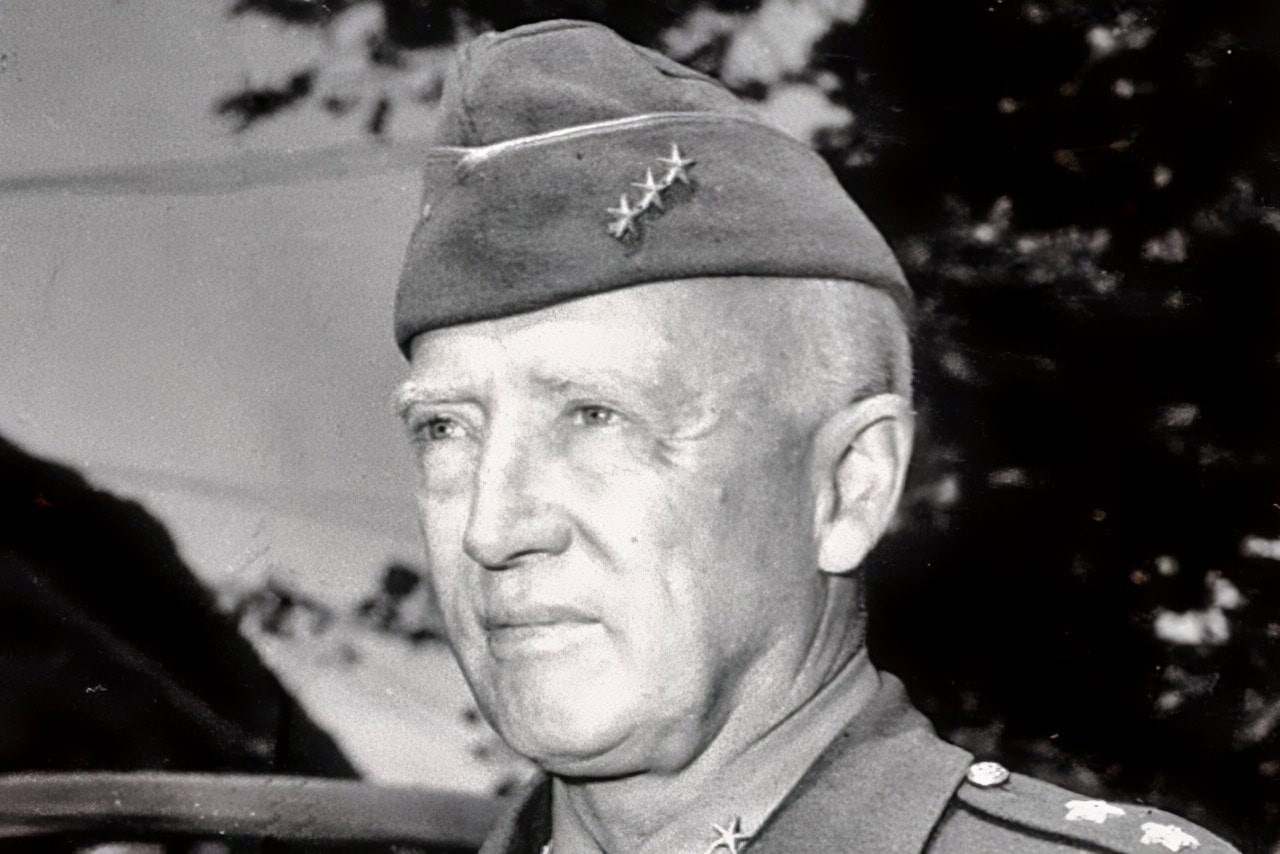
George S. Patton Quote of the Day. Creative Commons Image.
His World War II combat service began with Operation Torch. Patton commanded the Western Task Force, which landed in French Morocco on November 8, 1942, and secured Casablanca after brief fighting with Vichy French troops. His larger test followed the American defeat at Kasserine Pass.
Patton took command of II Corps in Tunisia on March 6, 1943.
He tightened discipline, moved headquarters closer to the front, and restored confidence to shaken formations. At El Guettar on March 23, American troops stopped a German armored counterattack. Omar Bradley replaced him before the final Tunisian advance, but the recovery established Patton as the Army’s most visible armored commander.
Patton’s Sicily Campaign Exposed His Strength and His Cruelty
Patton commanded the Seventh Army during Operation Husky, the July 1943 invasion of Sicily. Assigned to protect the British Eighth Army’s flank, he pushed west, captured Palermo on July 22, and entered Messina on August 17.
The 38-day campaign showed his talent for turning broad orders into rapid movement across difficult terrain.
It also nearly ended his career. Patton struck two hospitalized soldiers suffering from battle fatigue and called them cowards. Dwight D. Eisenhower ordered apologies to the men, medical staff, and Seventh Army formations.
The Sicily hospital incidents exposed the worst side of his demand for toughness: he released initiative in battle yet failed to understand psychological injury in his own ranks.
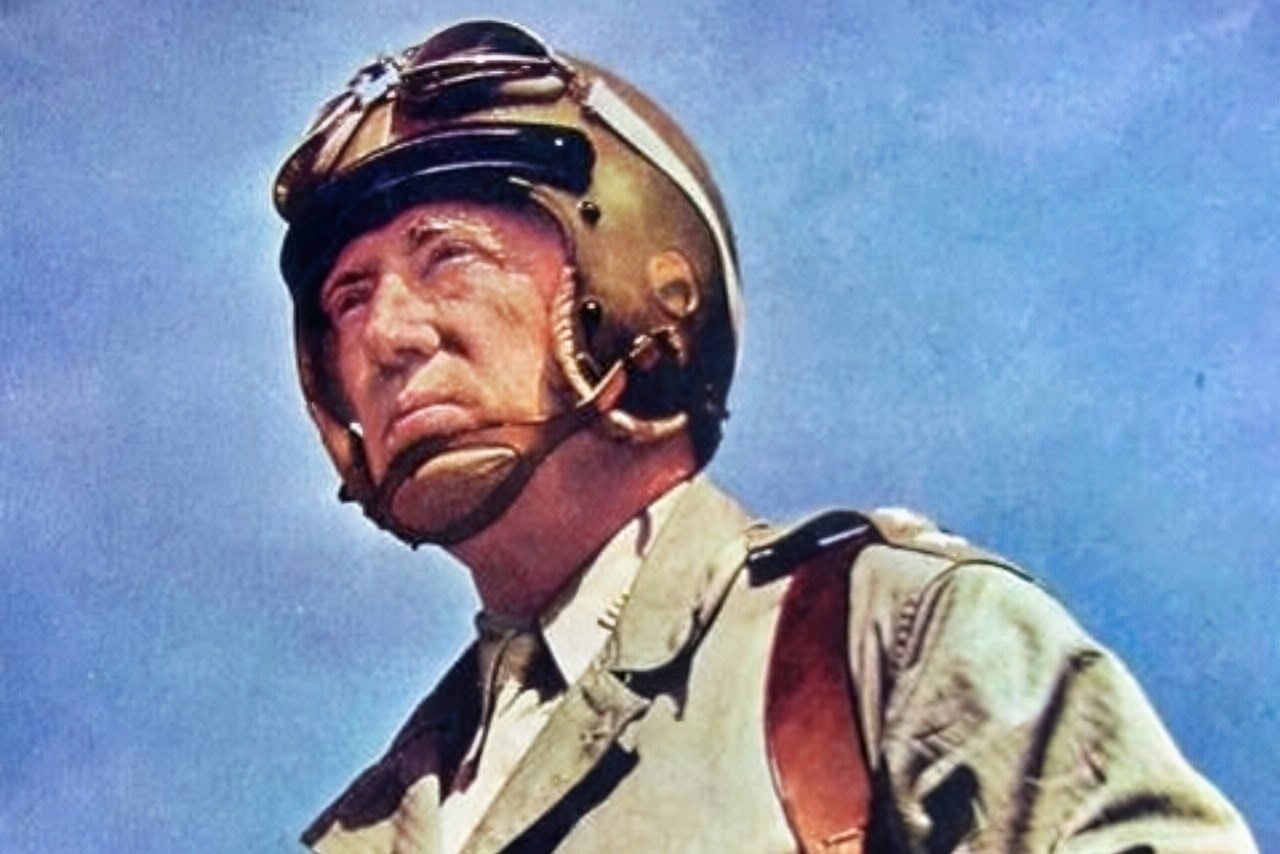
General George Patton of the U.S. Army. Image Credit: Creative Commons.
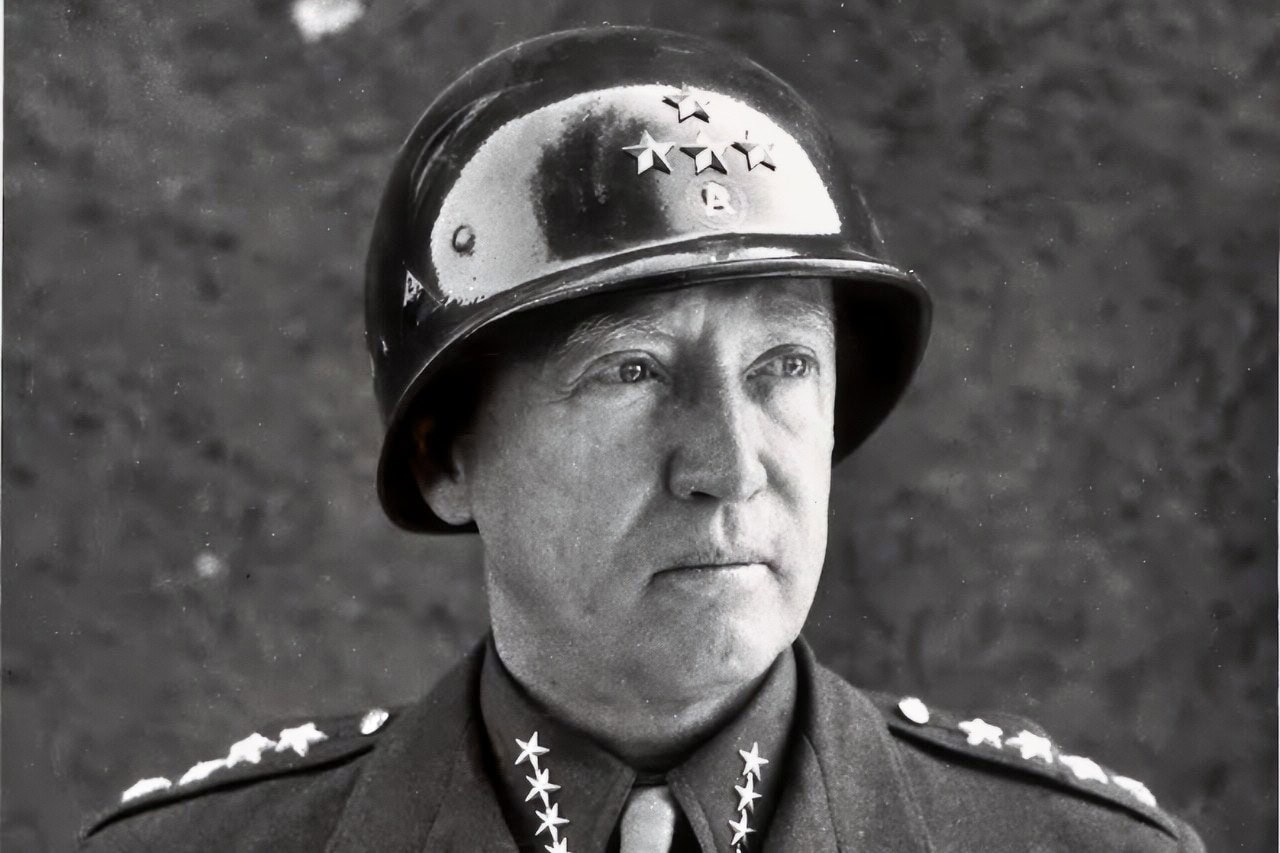
U.S. Army General George Patton
Patton Missed D-Day but Helped Sell the Allied Deception
Patton did not command troops on the Normandy beaches. Operation Fortitude placed him at the center of the fictitious First U.S. Army Group in southeast England. German leaders regarded him as the likely commander of the main invasion and kept forces oriented toward the Pas-de-Calais after June 6. His role in the D-Day deception turned his name into a weapon.
The real Third Army entered combat under Patton on August 1, 1944. It poured through the Normandy breakout, moved into Brittany, and raced east across France. By the end of August, its front stretched about 475 miles from Brest to the Meuse.
Fuel and supply shortages stopped the advance more effectively than German resistance. Patton’s insistence on preparation and disciplined initiative preserved momentum, but no command style filled empty fuel tanks.
In Lorraine, the Third Army defeated a German armored counterattack at Arracourt and then fought through rain, mud, and fortified defenses around Metz. Patton excelled in open maneuver, where subordinate commanders found roads, crossings, and weak points.
When logistics and terrain narrowed his options, his aggression led to costly frontal assaults as well as victories.
Bastogne Became Patton’s Greatest Command Performance
The German Ardennes offensive began on December 16, 1944, while the Third Army faced east. Patton’s staff had already examined contingency plans. After an Allied command meeting, he reoriented the major formations to the north.
Army history records his divisions moving almost 100 miles in bad weather over two days before attacking the German southern flank.
The assault began on December 22. Elements of the 4th Armored Division reached Bastogne on December 26 and opened a corridor to the surrounded defenders. Patton did not rescue the town alone; the 101st Airborne Division, armored units, artillery crews, and other forces had held it under siege. His achievement was moving an army-scale formation onto a new axis while already engaged.
The order defined the objective. Staff officers, engineers, drivers, and combat units supplied the ingenuity.
Third Army crossed the Rhine at Oppenheim in March 1945 and drove into central Germany and Czechoslovakia. Patton also approved the disastrous Task Force Baum raid toward Hammelburg, where his son-in-law was believed to be held prisoner.
Most of the small force was killed, wounded, or captured. Days later, Third Army units liberated Ohrdruf, the first concentration camp encountered by Western Allied troops.
By Germany’s surrender, the Third Army had captured more than 1.25 million prisoners. Those results support the case for Patton as America’s finest open-field army commander. They do not erase the hospital assaults, the Hammelburg raid, or his repeated habit of turning careless words into command crises.
George Patton Died 12 Days After a Car Crash
Victory left Patton in an occupation role he disliked. His resistance to strict denazification and inflammatory public remarks led Eisenhower to remove him from military government and Third Army command.
He finished his career leading the Fifteenth Army, a small headquarters compiling a history of the European war.
On December 9, 1945, Patton’s staff car collided with an Army truck near Mannheim during a pheasant-hunting trip. The other occupants escaped serious injury. Patton broke his neck and was paralyzed from the neck down.
He died in his sleep at an Army hospital in Heidelberg at 5:55 p.m. on December 21, twelve days after the crash.
Patton was buried at the Luxembourg American Cemetery with soldiers killed under the Third Army. He is the only four-star general buried in an American Battle Monuments Commission cemetery.
About the Author: Harry J. Kazianis
Harry J. Kazianis (@Grecianformula) is the former Senior Director of National Security Affairs at the Center for the National Interest (CFTNI), a foreign policy think tank founded by Richard Nixon based in Washington, DC. Harry has over a decade of experience in think tanks and national security publishing. His ideas have been published in the NY Times, The Washington Post, The Wall Street Journal, CNN, and many other outlets worldwide. He has held positions at CSIS, the Heritage Foundation, the University of Nottingham, and several other institutions related to national security research and studies. He is the former Executive Editor of the National Interest and the Diplomat. He holds a Master’s degree focusing on international affairs from Harvard University.

