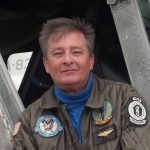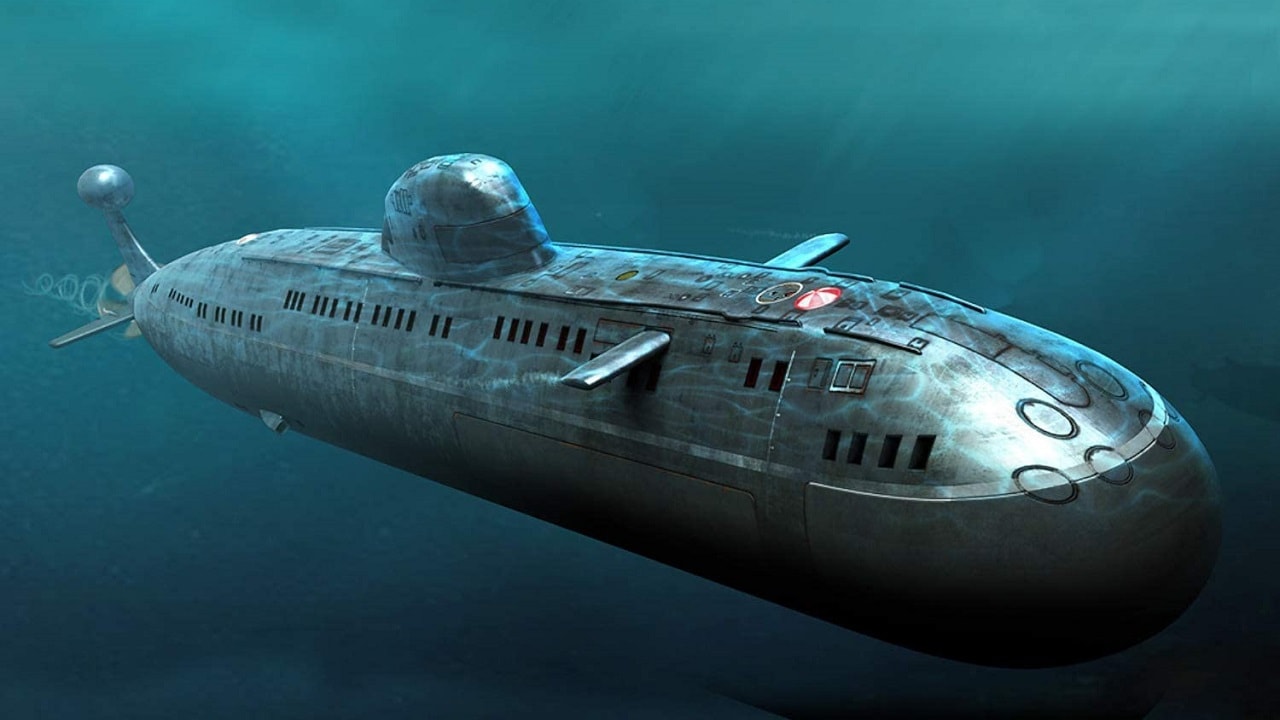
Summary and Key Points: I served as a US Navy Aviation Anti-Submarine Warfare Operator, and I remember being briefed on the Soviet Alfa-class in the early 1980s, right about the time the truth was becoming clear. On paper, it was the most alarming submarine anyone had ever built. Under 2,500 tons on the surface, better than 40 knots submerged, a design depth of 700 to 900 meters, a crew of fewer than 40 who were almost all officers because the boat was so heavily automated, and a hull of titanium alloy that cannot be welded in open air — the Soviets solved that by building an enormous sealed hall, filling it with argon gas, and welding the submarines inside it. The US Navy had nothing that could match any of those numbers.
Anti-Submarine Warfare During the Cold War: I Had a Front-Row Seat
An old adage among fighter pilots like Chuck Yeager and David McCampbell was that your survival and victory in the air depended heavily on your ability to see the other guy before he saw you. With this advantage, you had the initiative. The ability to “Pick The Fight” in terms of when and where you might attack from, or not fight at all and bug out. This formed the basis of what became known as the OODA framework, developed by military strategist John Boyd for air combat: Observe, Orient, Decide, Attack. This is also true of submarines and undersea warfare.
The ability to detect an enemy submarine first while staying undetected yourself allowed you to maneuver your own submarine into the acoustic blind spot or “Baffles” of your target and put a torpedo into him that he wouldn’t even detect until it blew his stern off.
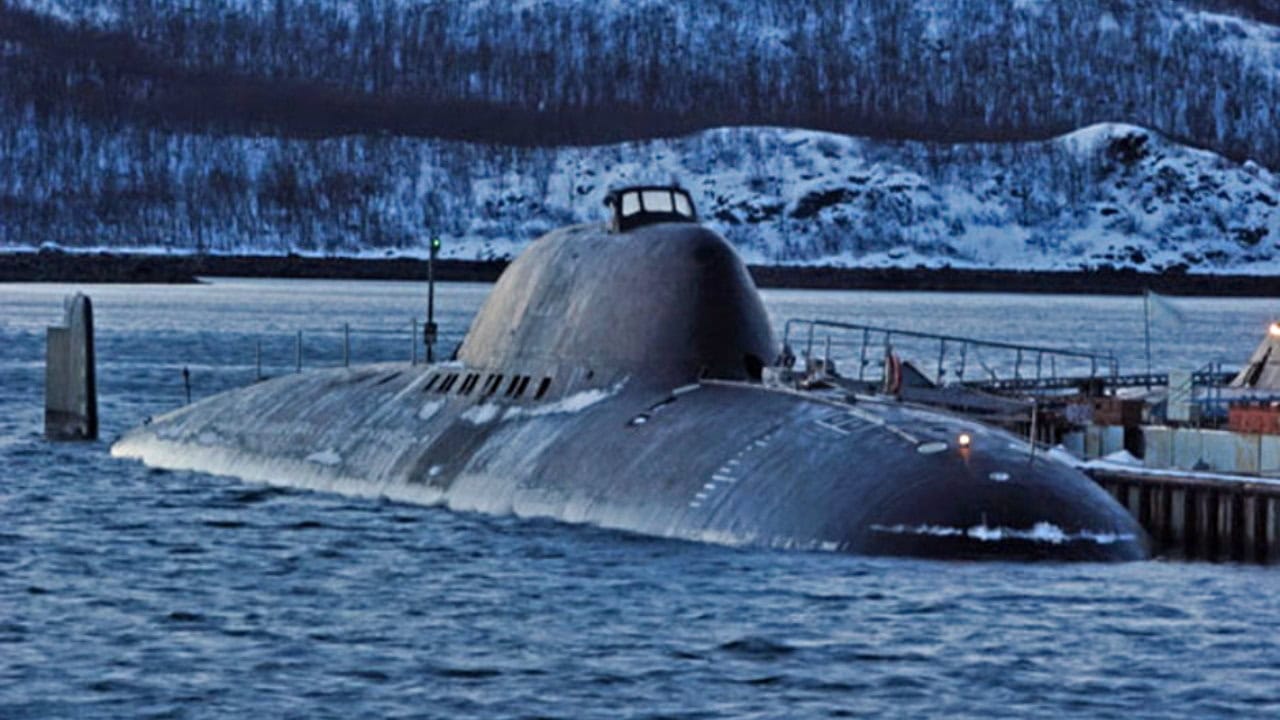
Alfa-Class Russian Navy. Image Credit: Creative Commons.

Alfa-Class Submarine. Image Credit: Creative Commons.
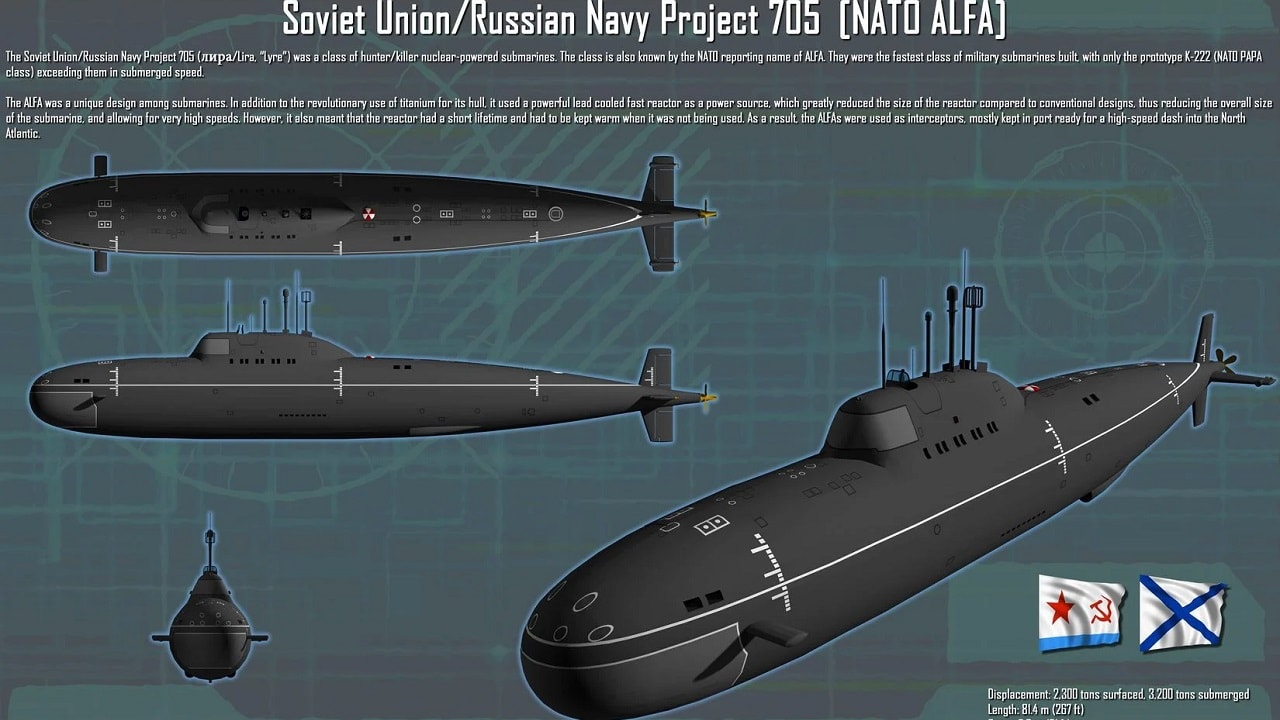
Alfa-Class Submarine. Image Credit: Creative Commons.
Ideally, you’d want to take that shot at the stern of the target at fairly close range.
If he did detect a hot torpedo running up behind him at several miles away, the target would go to max speed and dive for the bottom while dumping bubbling decoys in his wake to try and either confuse the torpedo or outrun it.
During the Cold War, both the US and the Soviet Union poured vast resources into their submarine programs.
Early efforts focused primarily on submarines capable of engaging surface vessels.
This drew on lessons learned during WWII, where German and US submarines played an outsized role in sinking the tonnage of their respective enemies.
US Navy submarines representing just 2% of the personnel in the fleet destroyed fully 55% of the Japanese Navy and 55% of Japan’s merchant fleet.
In terms of casualties, these losses amounted to nearly 100,000 men sunk with them(mostly Japanese sailors and soldiers).
Few people considered submarines attacking other submerged submarines.
The OODA Loop mentioned above for submarines depended heavily on visually calculating the bearing, range, speed, and distance of surface vessels using a periscope.
They then fired a spread of unguided torpedoes at the target, counting on at least one to hit.
Both the US and the Soviets worked on subs that could launch ballistic missiles, with the USSR firing the first missile using a converted diesel submarine as a test bed in 1955.
Thus began a new phase of the arms race, with submarines capable of firing multiple ballistic missiles rather than just one.
In 1958, the US launched the first Ballistic Missile Submarine, the USS George Washington(SSBN-598). This revolution in warfare turned the submarine into a weapon capable of attacking targets far inland.
A sub could now approach an enemy’s shore by stealth and shower it with nuclear warheads at relatively close range.
The Soviets followed suit in 1959 with the launch of their first nuclear-powered SSBN, the K-19(Golf Class).
The threat posed by these new submarines led both sides to scramble to reimagine the submarine’s role in warfare. Developing the Hunter/Killer class became a priority.
A submarine capable of hunting down and killing other submarines.
The technology needed would be twofold.
First, sensors aboard US subs that could detect Russian subs by either active or passive acoustic means, with torpedoes that could track the submarine using its own acoustic sensors or be steered by wire.
Secondly, making our own subs quiet enough that we would hear “Ivan” boring holes in the ocean before he heard us.
In the area of active and passive acoustics, the US took and held an early lead. It developed very sensitive underwater microphones with directional capabilities.
By measuring the differences in volume detected by microphones at some distance from each other, the submarine’s underwater location could be determined, along with good estimates of its course, depth, and speed.
That was enough information to send a torpedo after it. Stringing those microphones along the hull of a submarine could give you a very accurate plot of its position and activity.
The US also developed sound-deadening materials and techniques to make our own submarines quieter underwater.
You cannot make a submarine perfectly silent, but you can reduce the distance at which a microphone can hear its noise.
If the Soviet submarine can be heard from two miles away while the US submarine is only detectable from one-half mile away, you can “see” him first, maneuver into position, and get the first, and hopefully only, shot off.
The Soviets never really got the hang of either of those things.
Their development of passive acoustics lagged far behind the US, and they lacked the engineering capability to quiet their submarines sufficiently to avoid being detected first.
So they adopted a brute force solution.
They made their own submarines faster, able to dive deeper, and built a lot of them.
Meet the Soviet Hot Rod Submarine: The Alfa Class
The ultimate expression of this very Soviet philosophy was the Project 705 Lira, famously known as the Alfa-Class.
This submarine was made entirely of a Titanium alloy that cannot be welded in the open air. The Russians overcame this problem by using a large, sealed building filled with argon gas for the welding work.
On paper, the specs were terrifying to the US Navy: a surface displacement under 2,500 tons, 40+ knots submerged, and a depth rating of 700-900 meters.
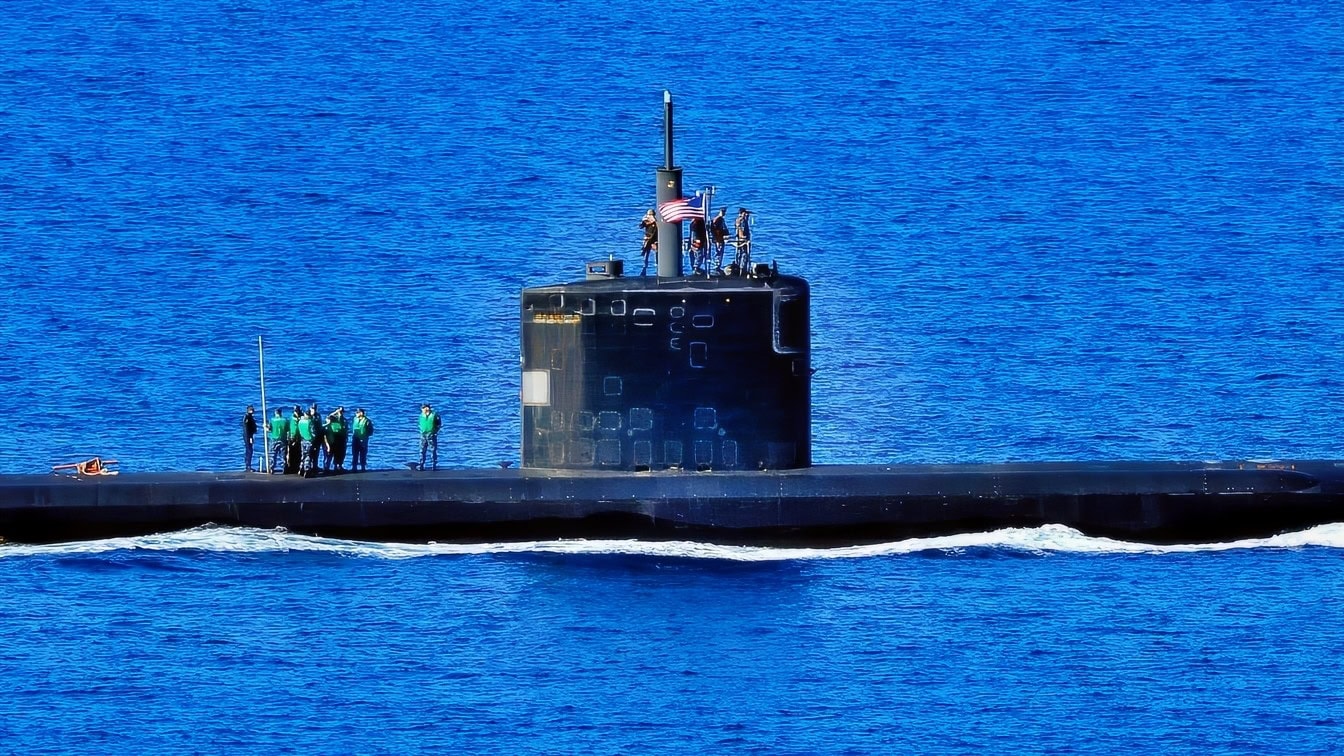
(March 20, 2010) The Los Angeles-class attack submarine USS Annapolis (SSN 760) departs Souda Bay after a routine port visit. (U.S. Navy photo by Paul Farley/Released)
A crew of less than 40, almost all officers, with highly automated control systems. It was the fastest, deepest-diving submarine ever built.
The US had nothing that could even come close.
The reality of the Alfa-class turned out to be much different.
Every time they dove to max depth, X-rays of the hull revealed micro-cracks forming in the titanium.
This eventually limited the max depth to just 400 meters, less than half its design specification.
The Alfa’s lead-bismuth eutectic-cooled nuclear reactor and drive system was incredibly loud underwater.
So its speed was also greatly limited to try to reduce its chances of being detected by a US submarine many miles away.
In the Alfa-class, the Soviets tried to trade off a technological deficit in their sub’s acoustic sensors and quiet operations for high speed and deep diving to avoid detection, and they got neither.
I recall being briefed on this submarine in the early 1980’s when the truth about the supposedly all-powerful Alpha was becoming clear.
Yes, it was the fastest, deepest-diving submarine in the world for a time, and for a very specific reason;
It couldn’t avoid being detected first by the advanced detection gear on a US Los Angeles-class Hunter/Killer, so its best chance was to dive for the bottom and try to outrun the torpedoes chasing it.
And there was not much of a chance that would work.
About the Author: Sean Spoonts
Sean Spoonts is the former Editor-In-Chief of SOFREP.com. He is a military analyst, writer, and commentator whose work has appeared in Newsweek, CNS News, Ukrinform, and various military/veteran media networks and professional publications, including the Military Intelligence Professional Bulletin. He is a U.S. Navy veteran, having served as an Aviation Anti-Submarine Warfare Operator and Search and Rescue Helicopter Aircrewman.