
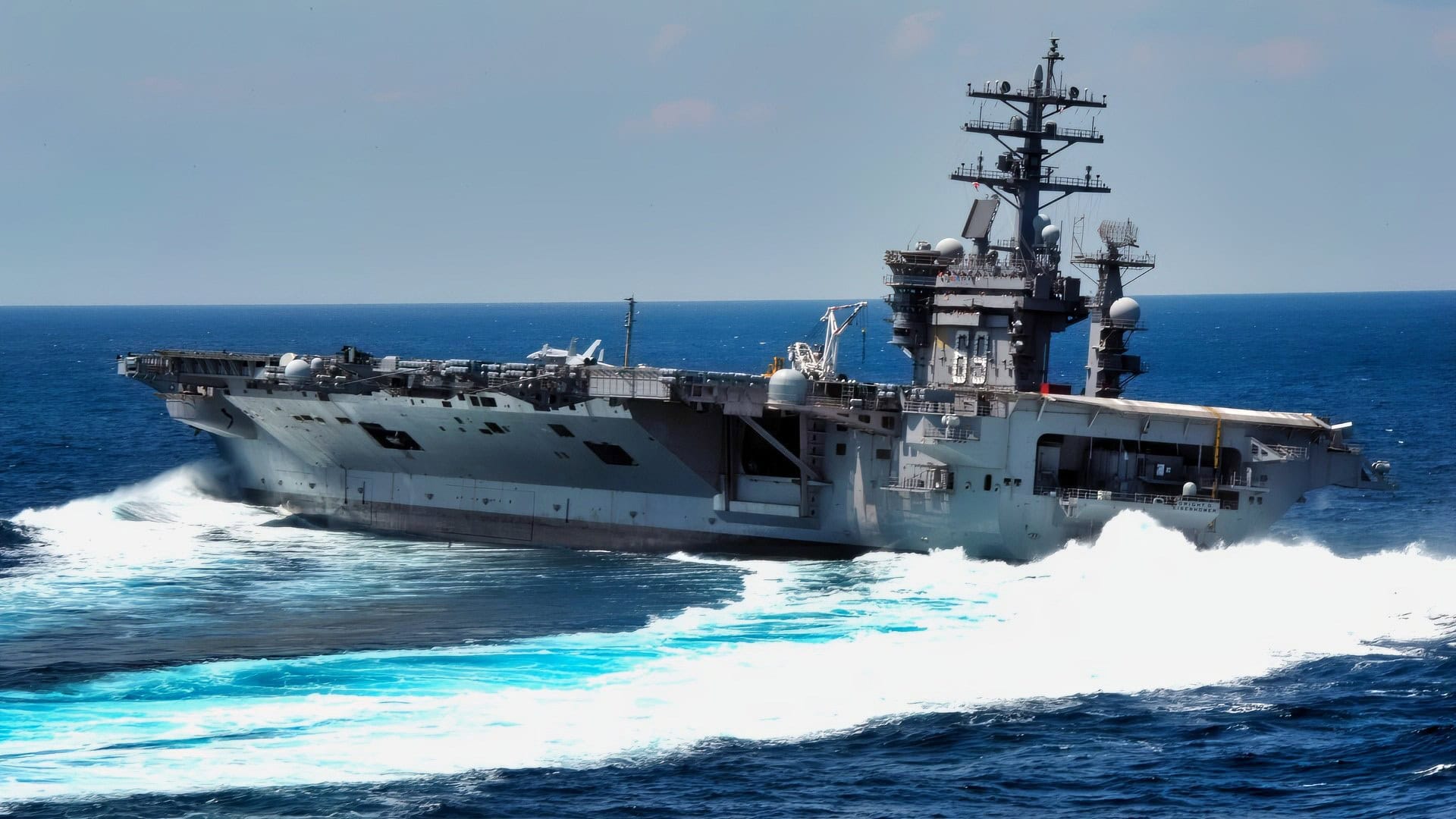
Summary and Key Points: The September 28 mishap aboard USS Dwight D. Eisenhower was a tragedy in which an EA-18G Growler from VAQ-130 was trapped, the arresting gear failed, and the jet rolled into the Atlantic. Both aviators ejected, and HSC-7 recovered them; the team evaluated eight people, and four were flown to Naval Medical Center Portsmouth. Flight operations are suspended, and the Nimitz-class carrier returned to Norfolk, months after a 15-month overhaul, echoing USS Harry S. Truman’s May 2025 Super Hornet loss.
The US Navy’s Aircraft Carrier Troubles Grow
Carrier aviation is controlled violence when landing. Last Monday night, the control part failed.
At about 6:18 p.m. on September 28, an EA-18G Growler from Electronic Attack Squadron (VAQ) 130, the “Zappers,” came aboard the USS Dwight D. Eisenhower off the Virginia coast.
The tailhook did its job.
With nothing left to stop it, the jet rolled off the flight deck and into the Atlantic. Both crew members ejected.
The Navy has since suspended flight operations and ordered the carrier back to Naval Station Norfolk.
According to Naval Air Force Atlantic, “Navy technical experts will inspect the Nimitz-class carrier’s aircraft launch and recovery equipment and complete any necessary maintenance before flight operations resume.”
What Happened On The Deck
An arrested landing is one of the most violent routine events in military aviation.
A Growler weighing well over 40,000 pounds hits the deck at roughly 150 miles an hour, and the tailhook snags one of the cross-deck pendants stretched across the landing area.
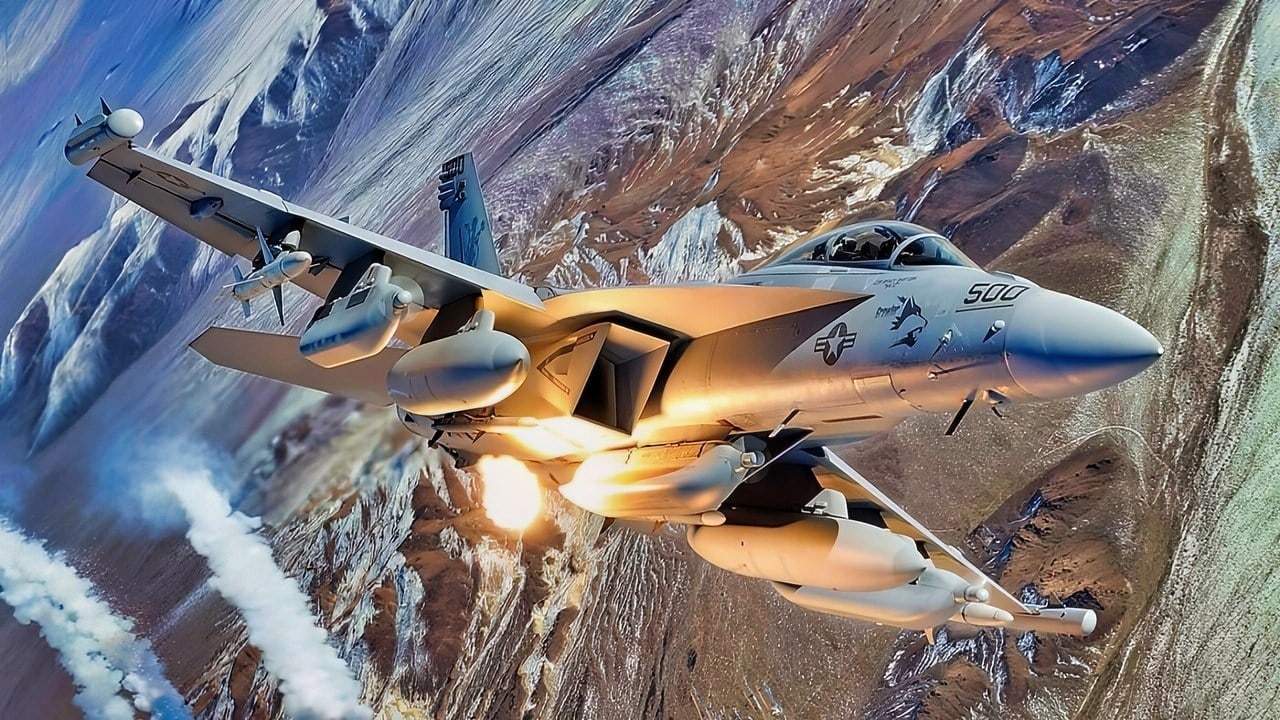
EA-18G Growler Firing Weapons. Image Credit: Creative Commons.
That wire attaches to a purchase cable that runs below deck to a hydraulic arresting engine, which absorbs the energy and stops the jet in a couple of seconds and a few hundred feet.
When it works, it’s routine.
When something in that chain lets go, the aircraft is suddenly at high speed with very little deck left in front of it.
The pilot and electronic warfare officer have a split second to decide whether to try to get airborne again or pull the handles.
The Zappers crew pulled the handles.
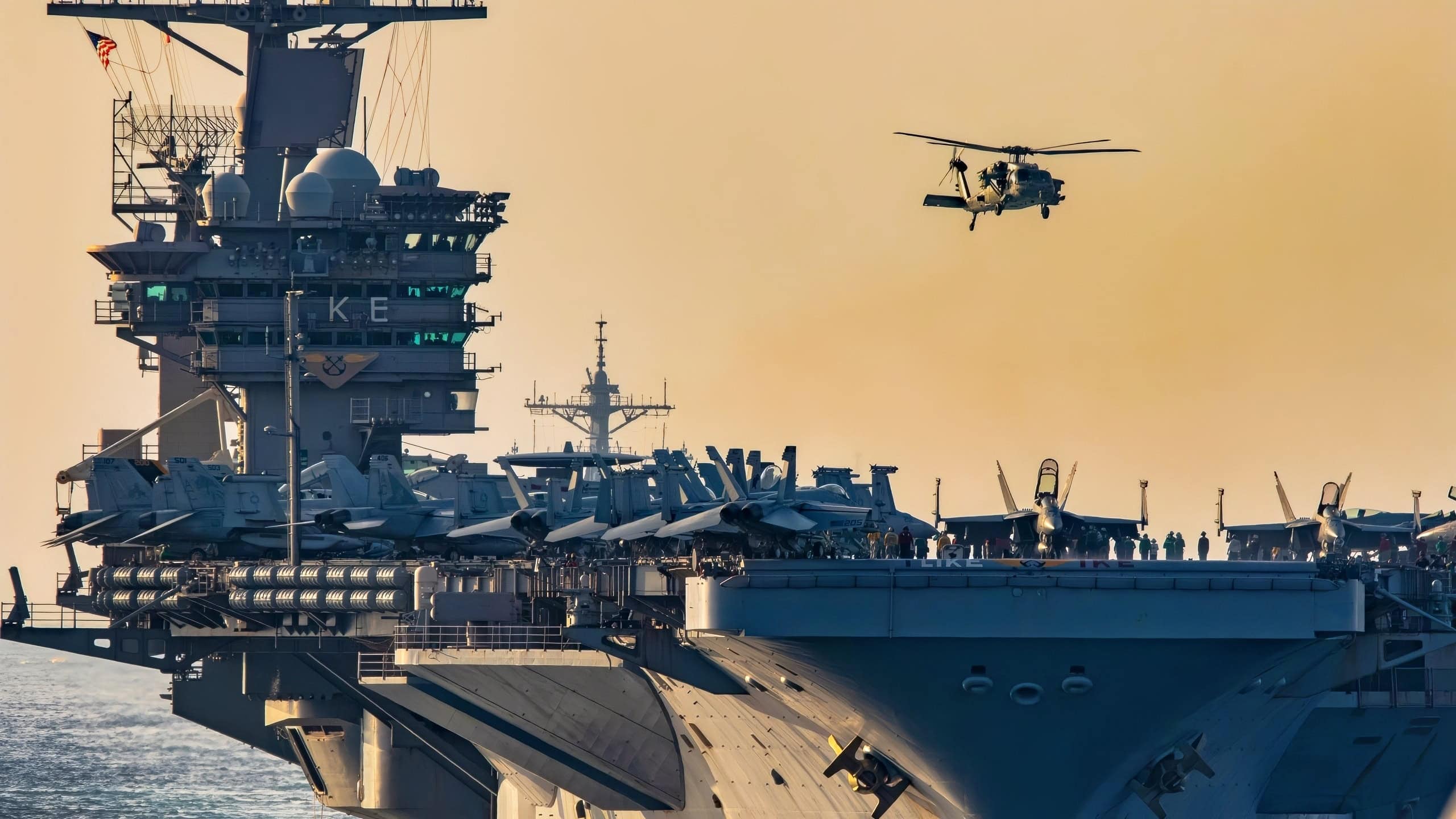
Components of the Dwight D. Eisenhower Carrier Strike Group (IKECSG), guided-missile destroyer USS Stethem (DDG 63) and French Navy frigate FS Languedoc (D 653) transited the Strait of Hormuz. IKECSG is deployed to the U.S. 5th Fleet area of operations to help ensure maritime security and stability in the Middle East Region. (U.S. Navy photo by Electronics Technician 2nd Class Daniel Goodin)
A search-and-rescue helicopter from Helicopter Sea Combat Squadron (HSC) 7 pulled both aviators out of the water and returned them to the ship.
They weren’t the only ones hurt.
Medical personnel evaluated eight people.
The two aviators and two sailors injured on the flight deck were flown to Naval Medical Center Portsmouth for evaluation, and another sailor was taken to a Norfolk-area hospital with non-life-threatening injuries.
The Navy hasn’t said exactly how the flight deck crew were hurt.
However, anyone who has worked around arresting gear knows what a failure under load can do on a crowded deck.
“The cause of the mishap is under investigation,” the Navy said. “Updates will be provided as additional information becomes available.”
The Growler Was An Expensive Loss In Many Ways
Losing any jet hurts. Losing a Growler hurts more.
The EA-18G is the Navy’s only carrier-based electronic attack aircraft.
It’s built on the two-seat Super Hornet airframe, but its job is to jam enemy radars, disrupt communications, and suppress air defenses so strike aircraft can get in and out.
The aircraft cost runs about $67 million, and that’s before you count the jamming pods and mission systems.
That’s a lot of money sitting on the bottom of the Atlantic. However, the bigger issue is inventory.
Growler squadrons are a high-demand, low-density asset, and every air wing needs one.
The Navy can’t just pull a spare off the shelf.
Bad Timing For The Eisenhower’s Workups
This isn’t a deployed carrier in the middle of combat. The Eisenhower is in workups, preparing for a 2027 deployment.
It finished a 15-month maintenance availability at Norfolk Naval Shipyard and completed sea trials in April, then worked through Fleet Replacement Squadron and Training Command carrier qualifications off Virginia and Jacksonville before Carrier Air Wing 3 started coming aboard.
That yard period was supposed to be a success story.
Norfolk Naval Shipyard has pointed to the Ike as proof it can deliver carriers on time, finishing a few days early.
Now investigators will want to know whether this failure traces back to that work, to a component that wore out, or to how the gear was set for that trap.
The feeling here is that the public underestimates how much carrier readiness depends on unglamorous equipment below the flight deck.
None of that is glamorous.
All of it has to work every time.
This Is Not An Isolated Incident
The Ike’s mishap echoes a still-fresh one.
On May 6, 2025, an F/A-18F Super Hornet from VFA-11 went over the side of the USS Harry S. Truman in the Red Sea after the arresting gear failed to stop it.
Both aviators ejected and were picked up by a helicopter from HSC-11 with minor injuries.
It was the third Super Hornet the Truman strike group lost on that deployment.
Two arresting gear failures, two lost jets, two crews forced to eject in a little more than a year.
That should get everyone in naval aviation’s attention.
How Does This Get Fixed?
The Navy says the Eisenhower “remains capable of safely navigating and conducting shipboard operations.” Flight operations, though, will remain paused until investigators inspect and repair the launch and recovery gear.
How long that takes depends on what investigators find.
If it’s an isolated component, the Ike could be back at sea finishing carrier qualifications soon.
If the problem is systemic, it becomes a question for every Nimitz-class carrier using the same gear.
Either way, the Zappers crew is alive because the ejection seats worked when the arresting gear didn’t. The Navy needs to find out why one system failed so the other doesn’t have to bail it out again.
About the Author: Steve Balestrieri
Steve Balestrieri is a National Security Columnist. He served as a US Army Special Forces NCO and Warrant Officer. In addition to writing on defense, he covers the NFL for PatsFans.com and is a member of the Pro Football Writers of America (PFWA). His work was regularly featured in many military publications.