
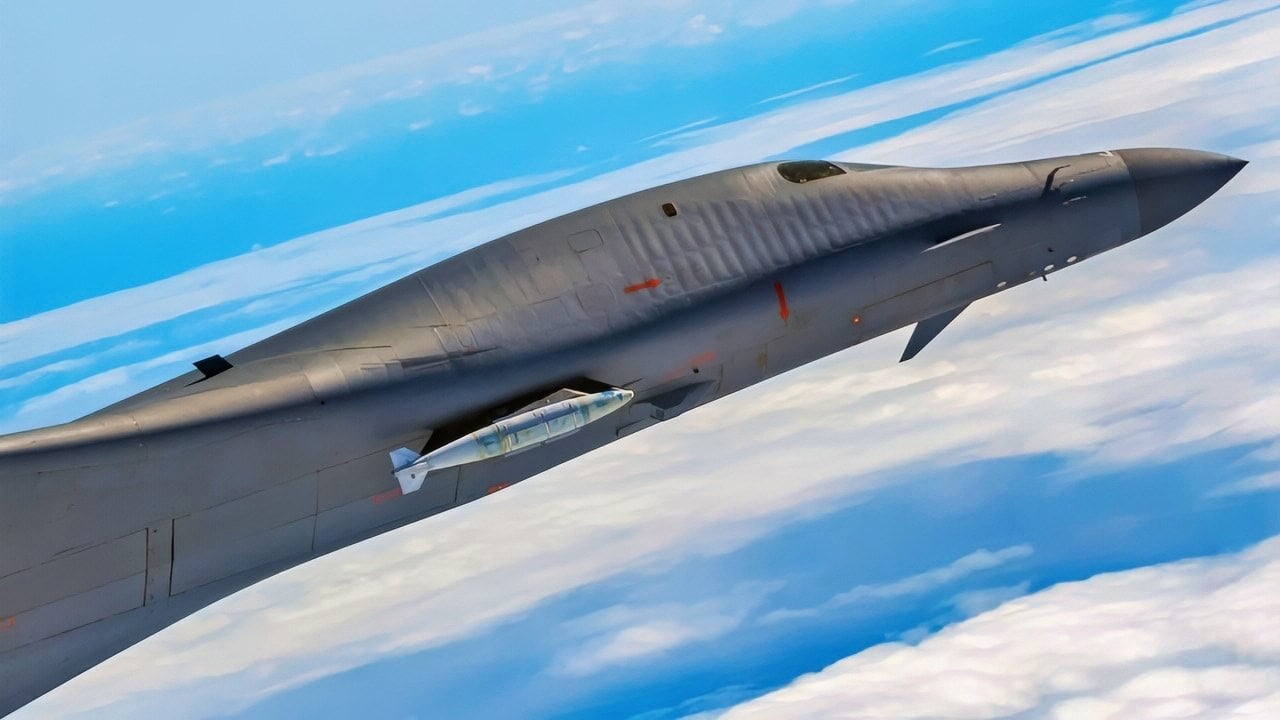
Key Points and Summary – The Air Force is modernizing the B-1B Lancer to keep roughly 45 bombers viable into the 2030s as the B-21 Raider arrives in meaningful numbers.
-The effort builds on earlier mission-system work, adds heavy-stores pylons to broaden stand-off weapons carriage, improves communications and data links, and sharpens defensive avionics to better plug into joint networks.
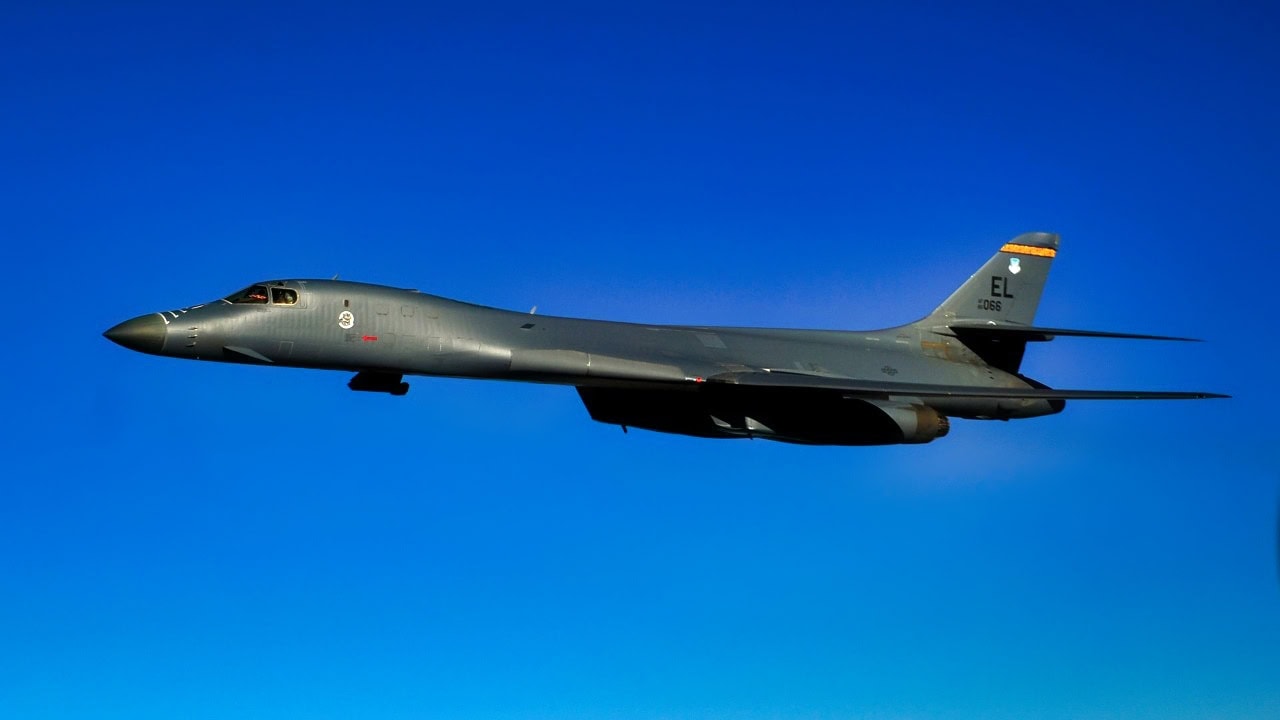
B-1B Lancer Bomber. Image Credit: Creative Commons.
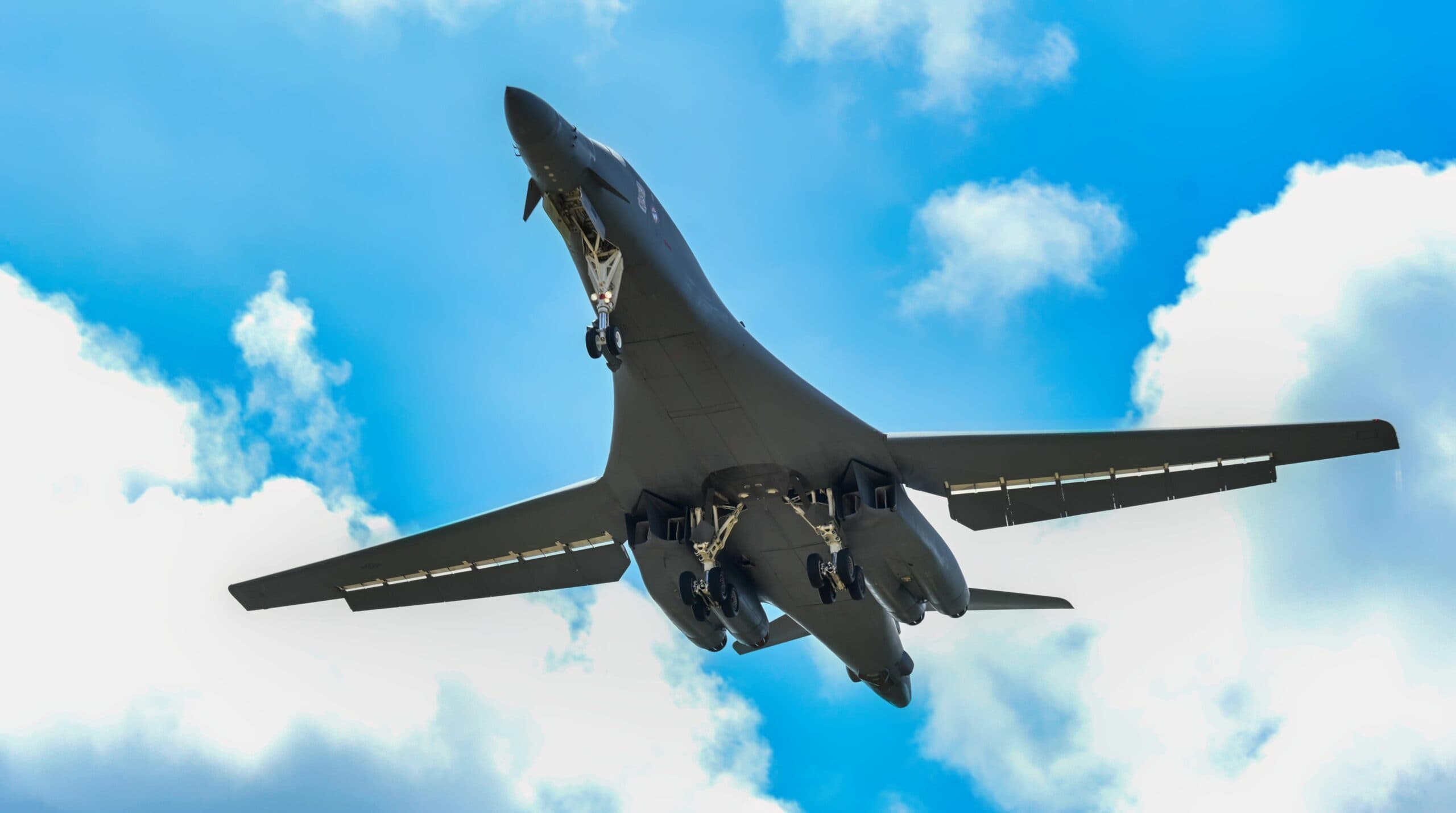
A U.S. B-1B Lancer assigned to the 34th Expeditionary Bomb Squadron, Ellsworth Air Force Base, S.D., ascends into the sky after conducting a “touch and go” maneuver during Bomber Task Force 25-1 at Andersen Air Force Base, Guam, Feb. 24, 2025. Bomber Task Force missions provide opportunities to train and work with our Allies and partners in joint and coalition operations and exercises. (U.S. Air Force photo by Airman 1st Class Alec Carlberg)
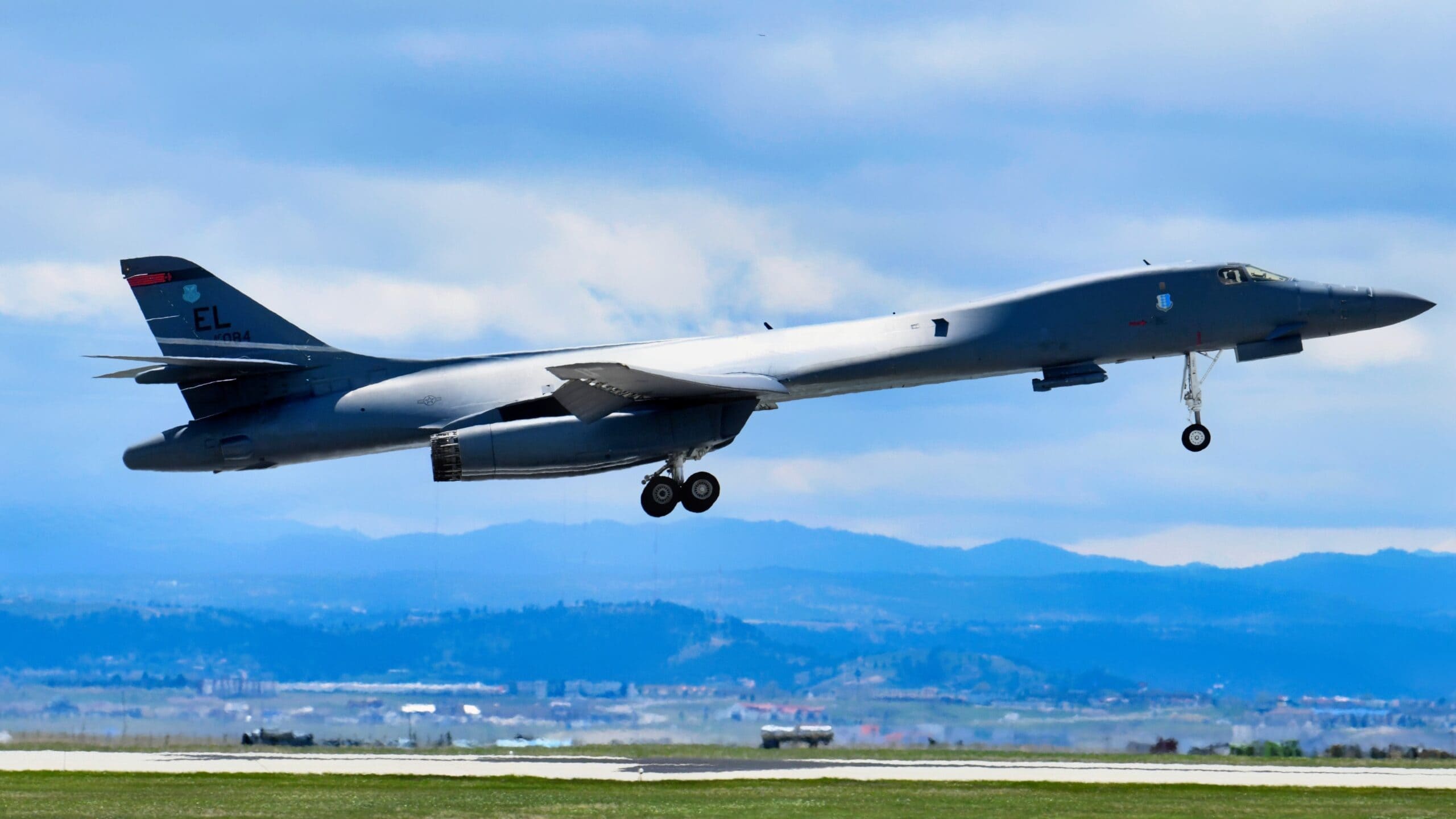
B-1B Lancer Bombers. Image Credit: Creative Commons.
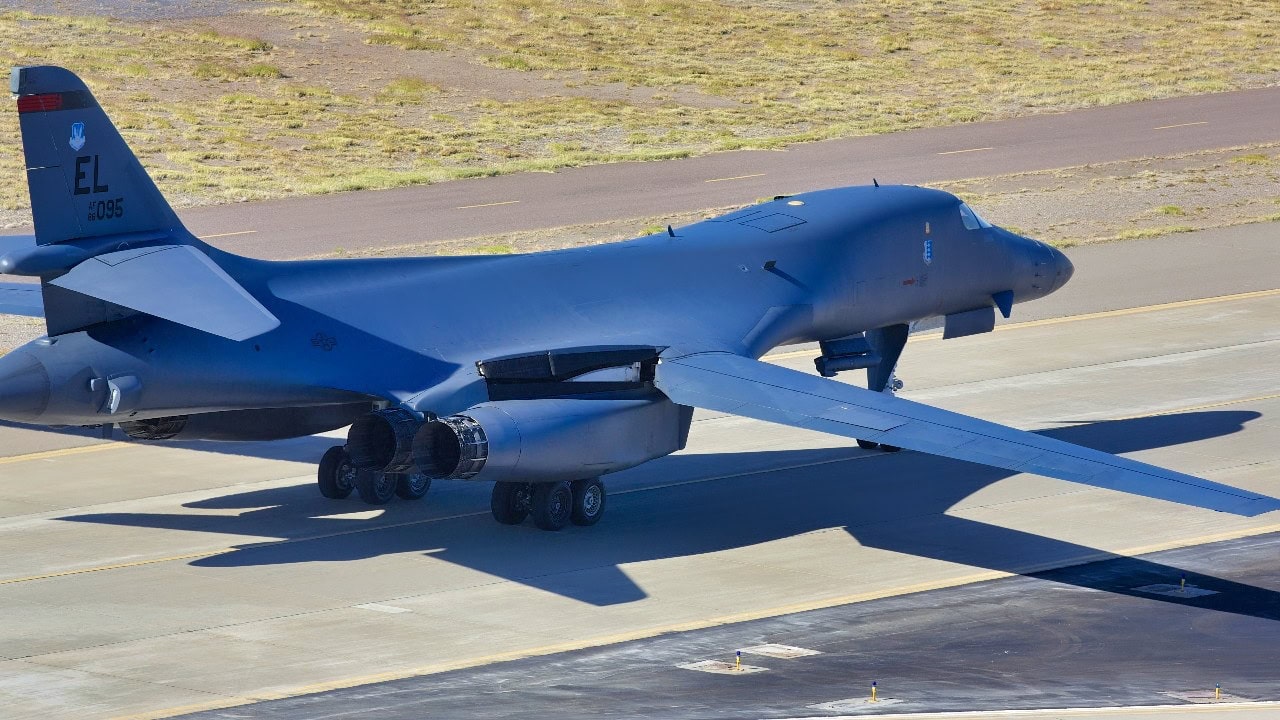
B-1B Lancer Bomber. Image Credit: Creative Commons.
-The near-term logic is avoiding a bomber “bathtub” where legacy aircraft retire faster than replacements field at scale. But the strategic question doesn’t go away: if stealth is the price of entry, the U.S. may need more B-21s sooner.
Why The Air Force Keeps Betting On The B-1B While The B-21 Ramps Up
The U.S. Air Force is pressing ahead with a new phase of modernization for its B-1B Lancer bomber fleet, building on upgrades completed in 2020 under the Integrated Battle Station program and more recent weapons and survivability enhancements intended to keep the aircraft operational into the 2030s as the B-21 Raider begins to enter service.
The B-1B, a supersonic, long-range heavy bomber first delivered in the 1980s, was initially designed as a nuclear platform before being converted to conventional strike roles following Cold War arms treaties.
Today, roughly 45 of these aircraft remain in service – a reduction from the original 100 delivered – with the B-21 slated to gradually replace them in the next decade.
The ongoing upgrades, which include expanded weapons integration, modern communications, defensive avionics improvements, and life-extension work, are intended to keep the B-1b relevant in contested environments while the bomber force transitions to the next generation.
At the same time, the Air Force plans to procure around 100 B-21 Raiders, its future stealth bomber designed for penetrating advanced air defenses.
But does it make sense to continue investing in an aging legacy platform when strategic competition and peer adversary air defenses now demand stealthier, more advanced systems? Or should the Pentagon redirect more resources to accelerate and expand B-21 procurement?
What the B-1B Upgrade Entails and Why the Air Force Says It’s Necessary
The B-1B upgrade effort reflects a push to minimize capability gaps while the B-21 arrives at scale. Among the most notable upgrades is the addition of external heavy-stores pylons designs to expand weapons carriage, allowing the bomber to carry a broader array of stand-off weapons and potentially future hypersonic munitions.
At the same time, the Air Force has pursued modernized defensive avionics, integrated advanced data links, and updated identification systems designed to better operate with joint force networks.
Those upgrades have been paired with sustainment work on aircraft pulled from the boneyard to maintain congressionally required fleet numbers.
Air Force planners argue that the improvements are necessary: without them, the B-1B’s effectiveness against increasingly capable enemy air defenses would erode.
The bomber’s existing payload and range remain assets in the Indo-Pacific and in deterrence missions, particularly where stealth is not strictly a requirement, but firepower is.
Keeping the B-1B viable not only maintains the fleet while the Air Force awaits the arrival of the B-21 Raider, but also hedges against delays or shortfalls in the program; the stealth bomber’s full production and fielding are years away, after all, and procurement hinges on industrial capacity and budgets. Nothing is guaranteed.
The upgrade makes sense for multiple reasons, but perhaps most notably in that without the continued investment, the Air Force would face a near-term “bathtub effect” whereby bomber force levels dip as legacy platforms retire before next-generation replacements become available.
In that sense, a modernized B-1B is a good solution: it helps ensure continuity of long-range strike capability and global deterrence. But there’s more to the story, still.
Why Not Just Buy More B-21 Raiders Instead?
Despite the logic of upgrading the B-1B to manage short-term risks, a compelling case also exists for accelerating and expanding the B-21 Raider force.
The B-21’s stealth design, advanced sensors, and integration with future force networks are explicitly tailored to overcome the most modern and sophisticated integrated air defense systems on the planet – a requirement increasingly central to U.S. global strike strategy.
Unlike the B-1B, whose survivability is limited, the B-21 is built for a new era of distributed operations and advanced threats from peer competitors.
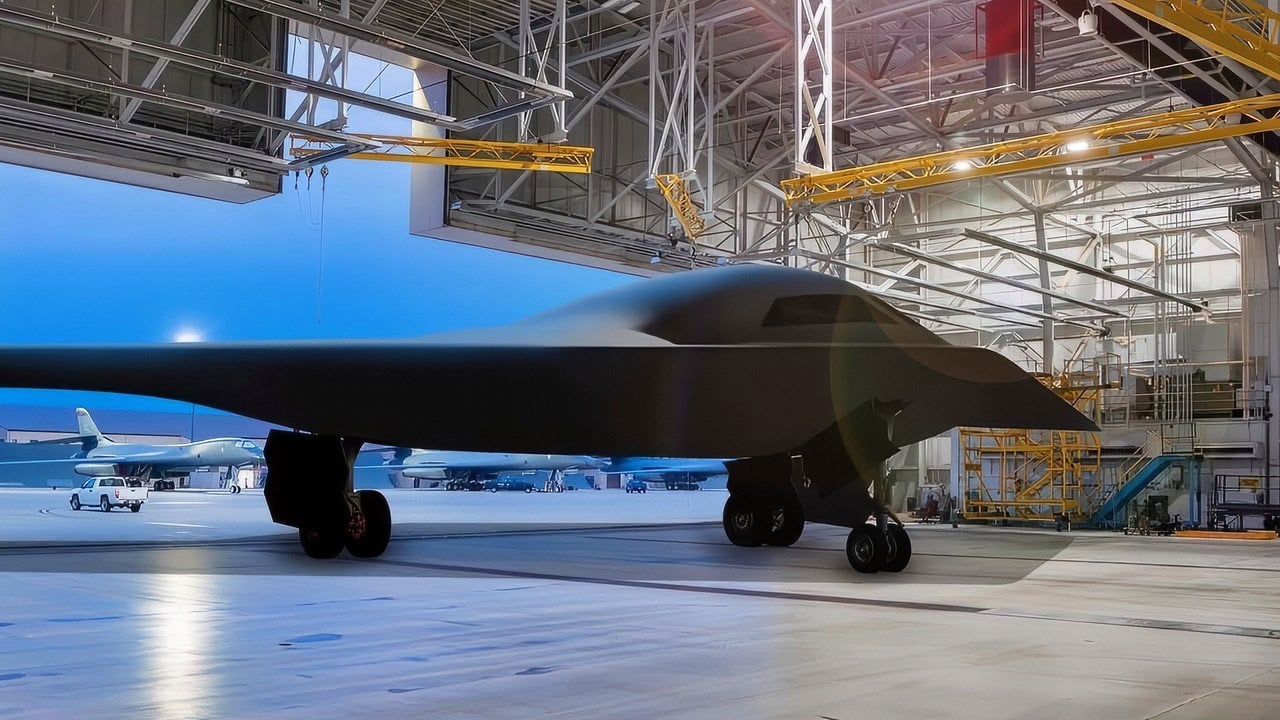
Artist rendering of a B-21 Raider in a hangar at Ellsworth Air Force Base, South Dakota, one of the future bases to host the new airframe. AFCEC is leading a $1 billion construction effort at Ellsworth to deliver sustainable infrastructure to meet warfighter demands for bomber airpower. (U.S. Air Force graphic)
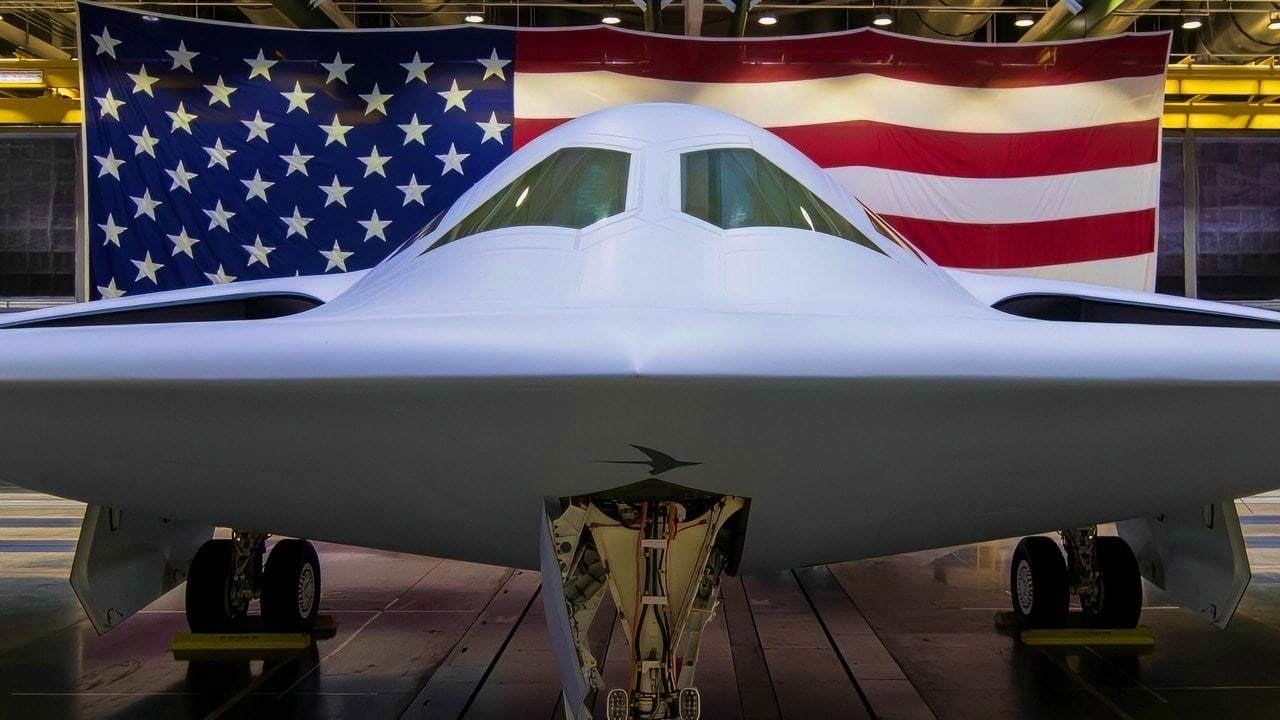
The B-21 Raider was unveiled to the public at a ceremony December 2, 2022 in
Palmdale, Calif. Designed to operate in tomorrow’s high-end threat environment, the B-21 will play a critical role in ensuring America’s enduring airpower capability. (U.S. Air Force photo)
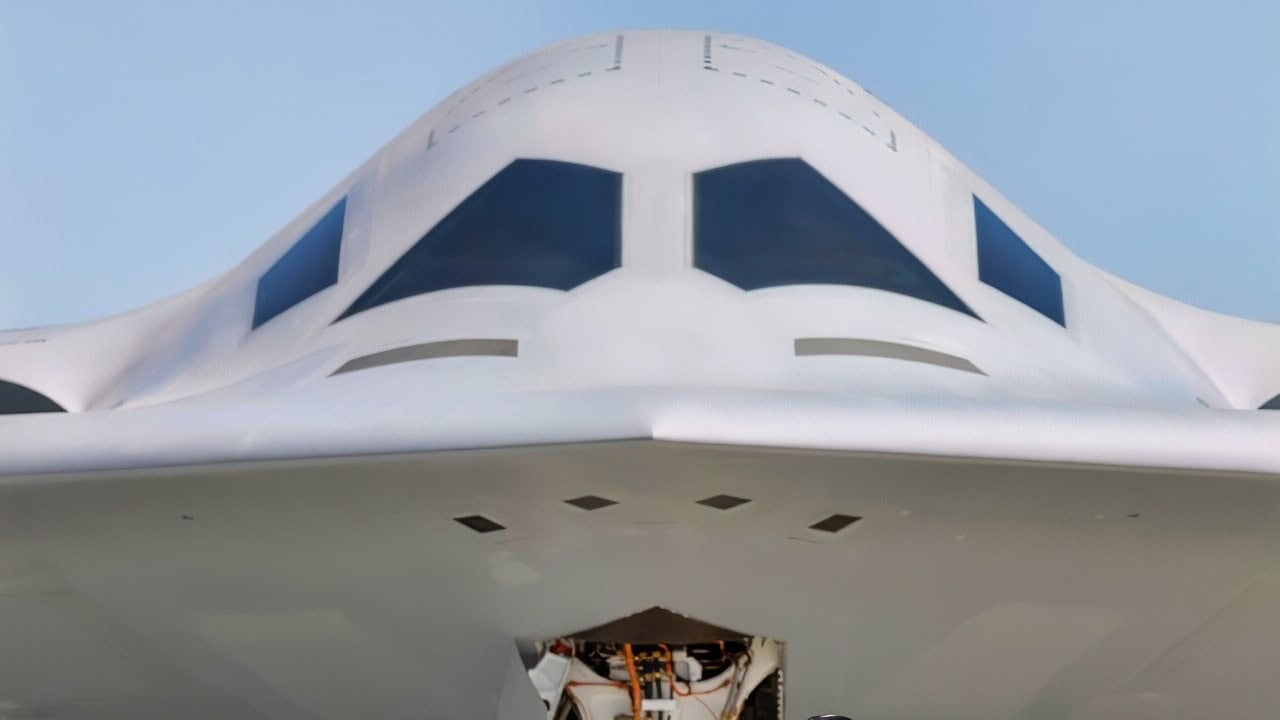
U.S. Air Force Airmen with the 912th Aircraft Maintenance Squadron prepare to recover the second B-21 Raider to arrive for test and evaluation at Edwards AFB, Calif., Sept. 11, 2025. The arrival of a second test aircraft provides maintainers valuable hands-on experience with tools, data and processes that will support future operational squadrons. (U.S Air Force photo by Kyle Brasier)
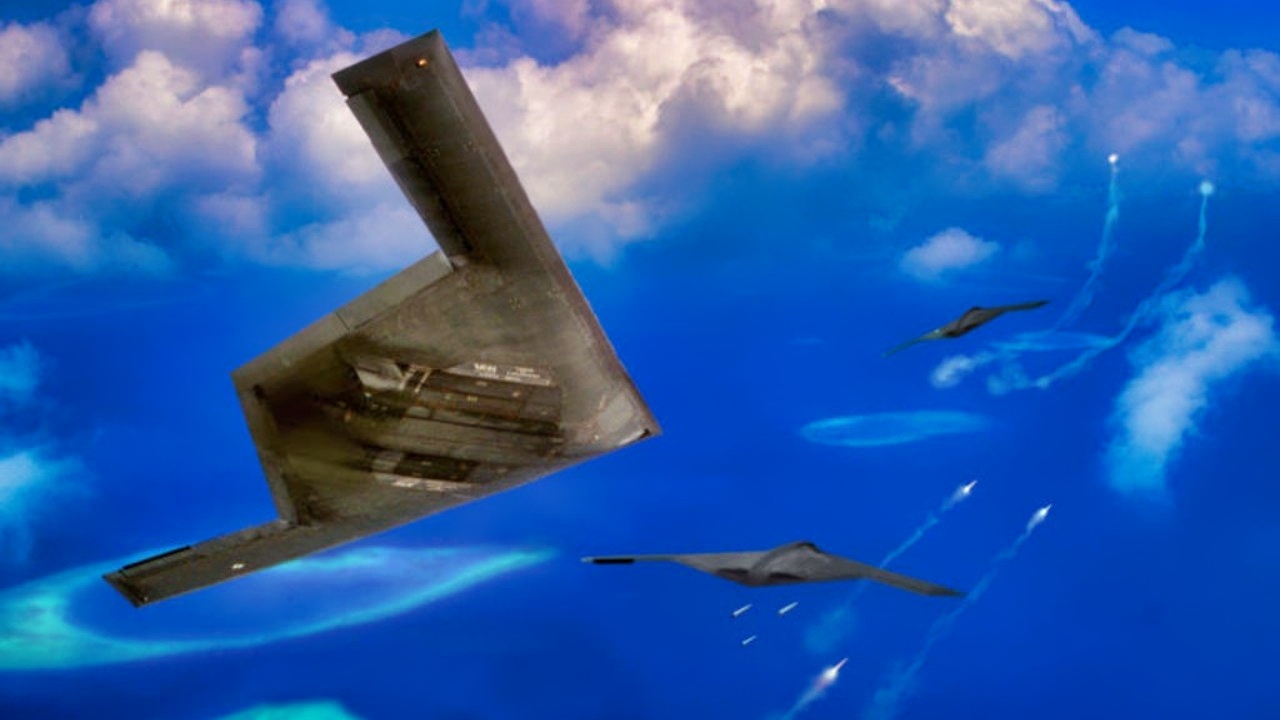
B-21 Raider Bomber. Artist Rendition/Creative Commons.
Yet current procurement plans still only call for roughly 100 B-21s – a number many analysts argue is insufficient for the demands of deterring multiple theaters at the same time. Both analysts and retired senior officers have suggested that numbers closer to 175-200 – or even upwards of 225 – would better align with expected strategic requirements and ensure adequate capacity when serving alongside existing platforms.
Proponents of a larger B-21 fleet also argue that economies of scale and industrial expansion could support increased production, and Air Force leadership has indicated in December 2024 that it would be possible to accelerate build plans if necessary.
The biggest hurdle, however, is money: each B-21 is expensive, with unit costs estimated to be somewhere around $700 million and total program costs likely exceeding $100 billion. Increasing the number of aircraft would mean increasing the total cost – but at the same time, it would prove cheaper than waiting until a gap exists in the future, firing up old production lines, and then building more of a platform that, by then, will have a shorter lifespan than whatever comes after the Raider.
Upgrading the B-1B may be the least risky voice today, and it may actually be necessary given the time it’ll take to field the Raider in large numbers – but it does not resolve the underlying question of force structure tomorrow.
If the B-21 is truly the bomber designed for the threat environment the United States expects to face, the harder – and more consequential – decision will be whether the Air Force is willing to commit to buying many more of them sooner rather than later.
About the Author:
Jack Buckby is a British researcher and analyst specialising in defence and national security, based in New York. His work focuses on military capability, procurement, and strategic competition, producing and editing analysis for policy and defence audiences. He brings extensive editorial experience, with a career output spanning over 1,000 articles at 19FortyFive and National Security Journal, and has previously authored books and papers on extremism and deradicalisation.