
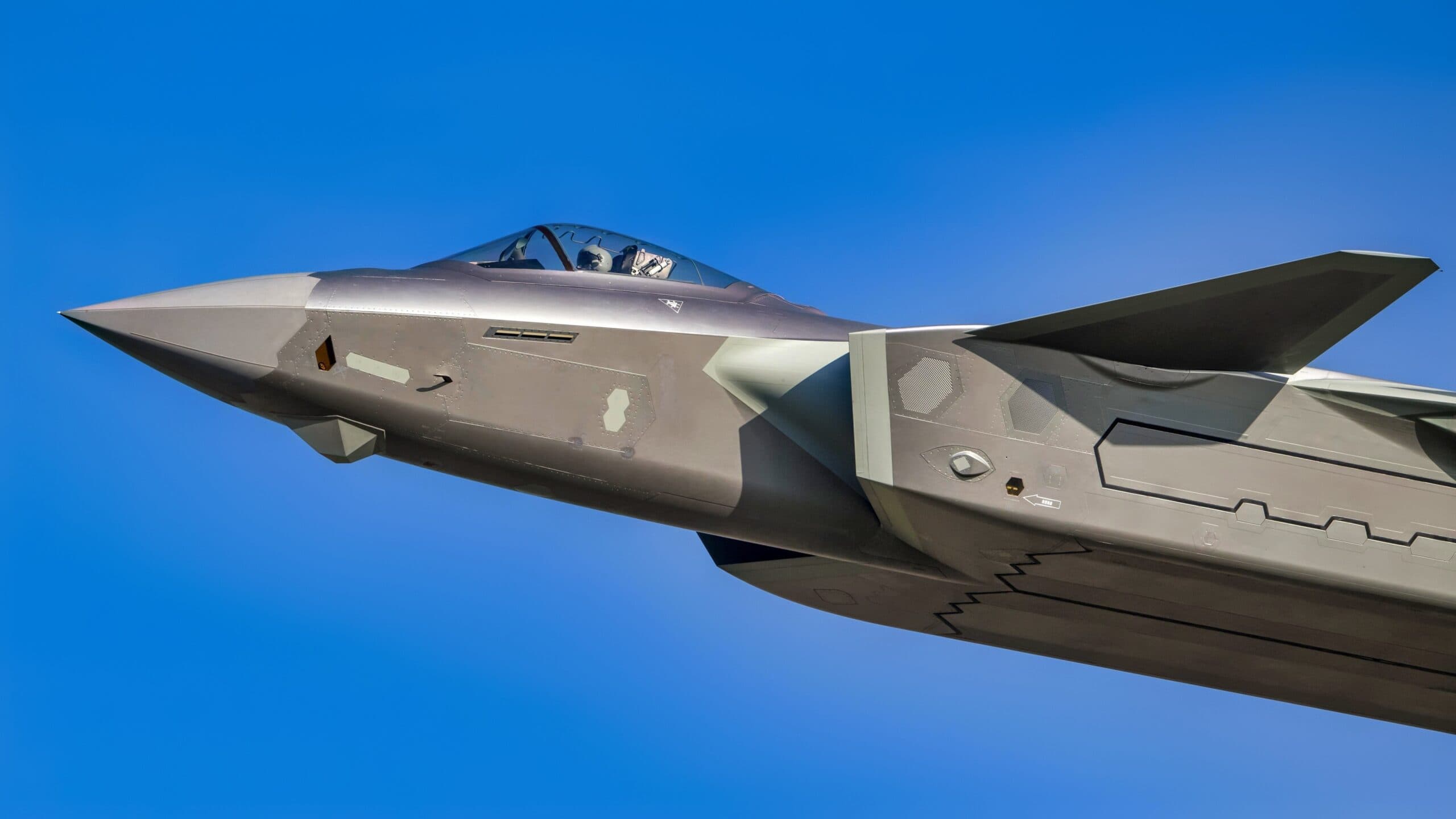
China’s J-20 Could Fly Into The 2050s—Here’s Why The PLAAF Thinks It Can
China has built perhaps 250 to 300 J-20 stealth fighters.
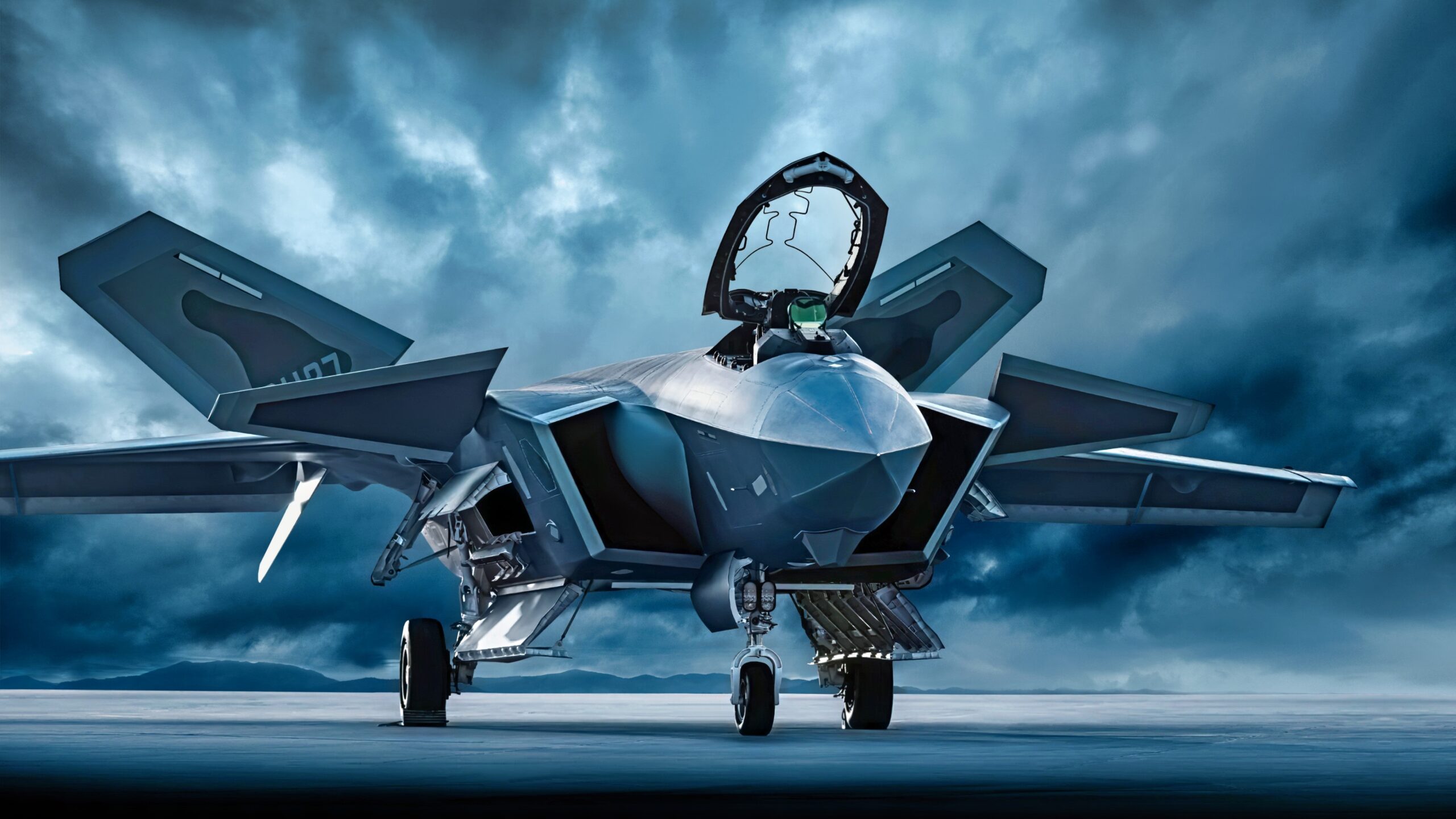
J-20 Fighter 2025 Artist Rendition. Image Credit: Creative Commons.
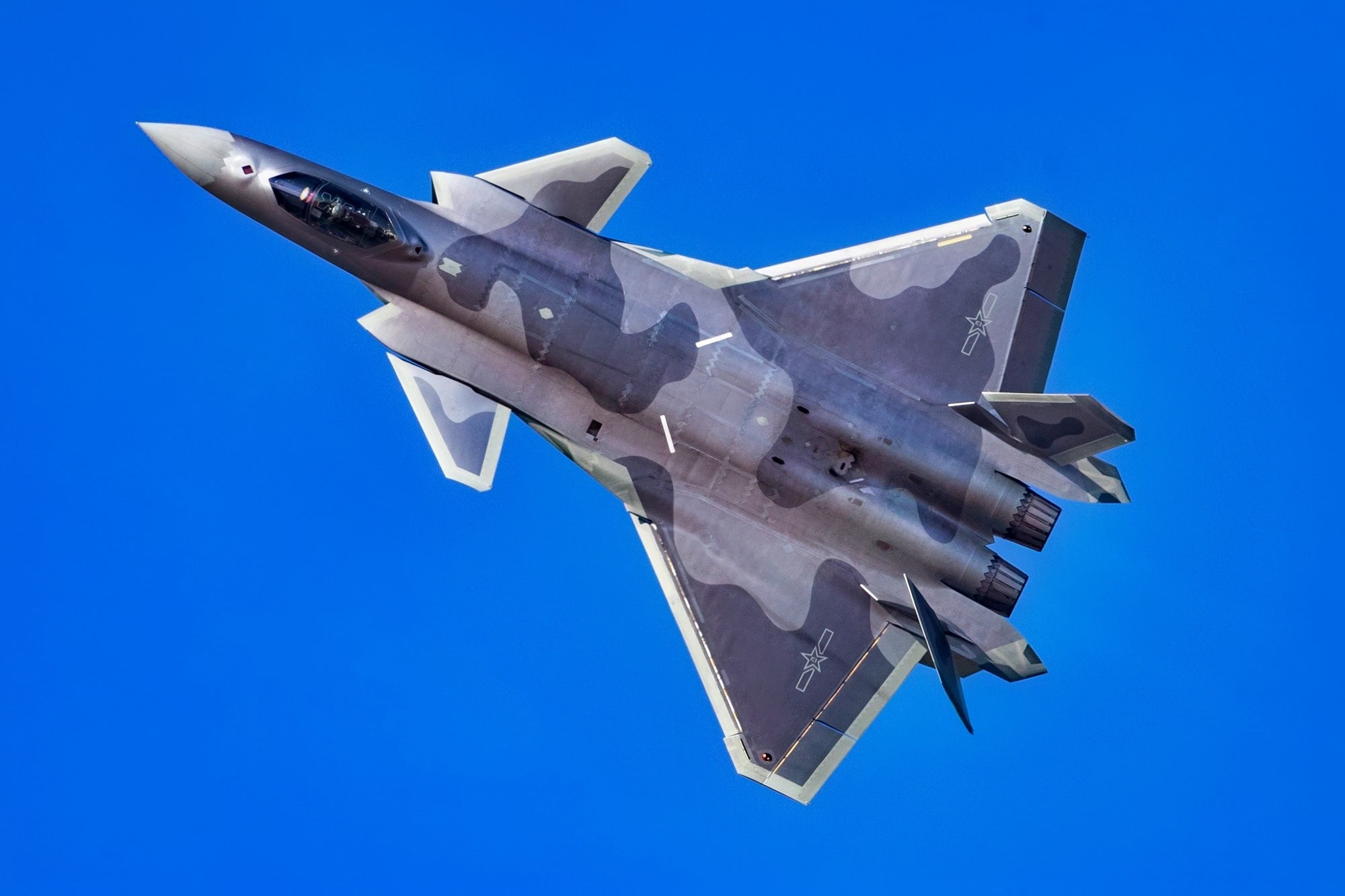
J-20 Fighter from China. Image Credit: Creative Commons.
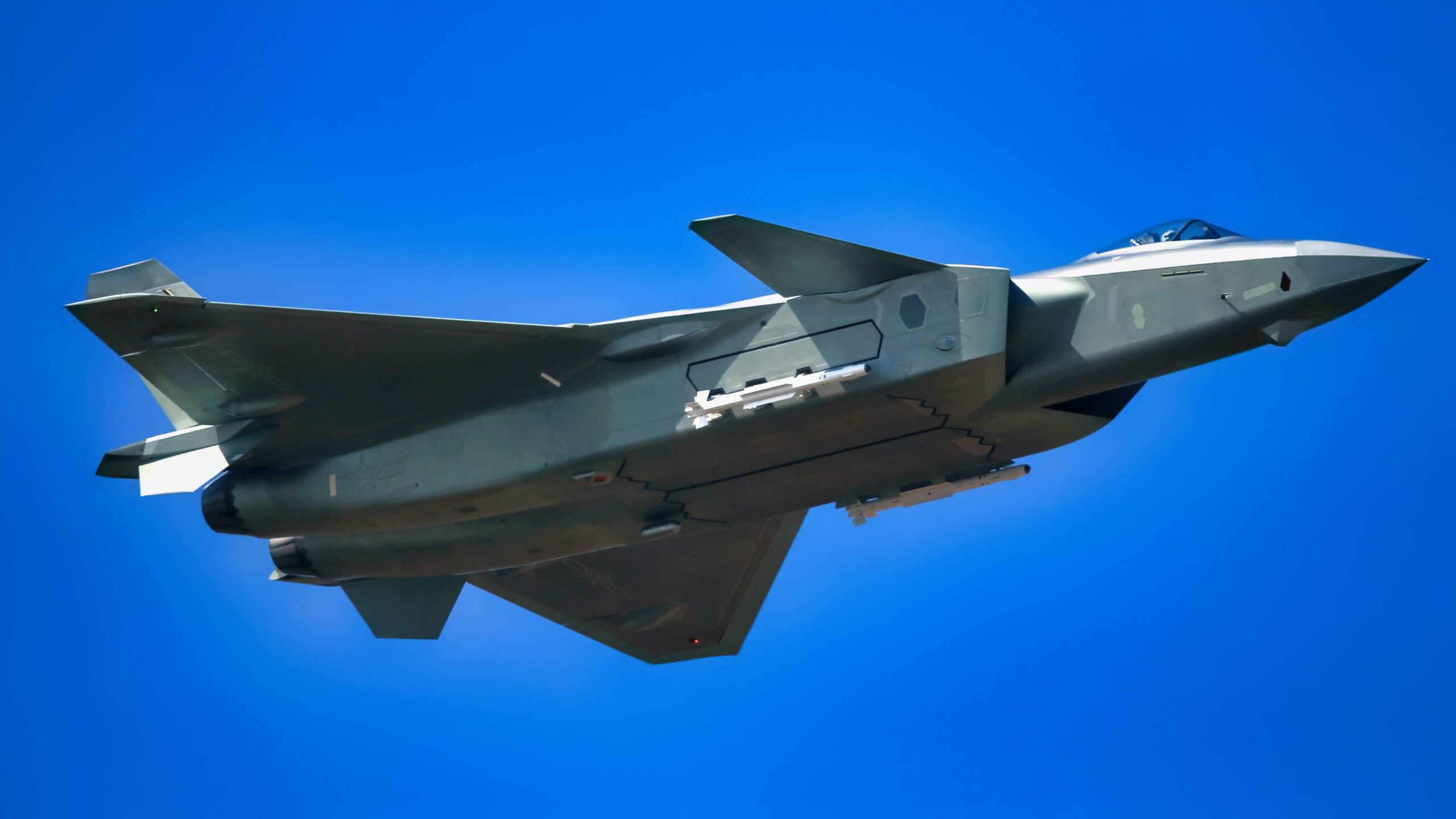
J-20 Fighter. Image Credit: Creative Commons.
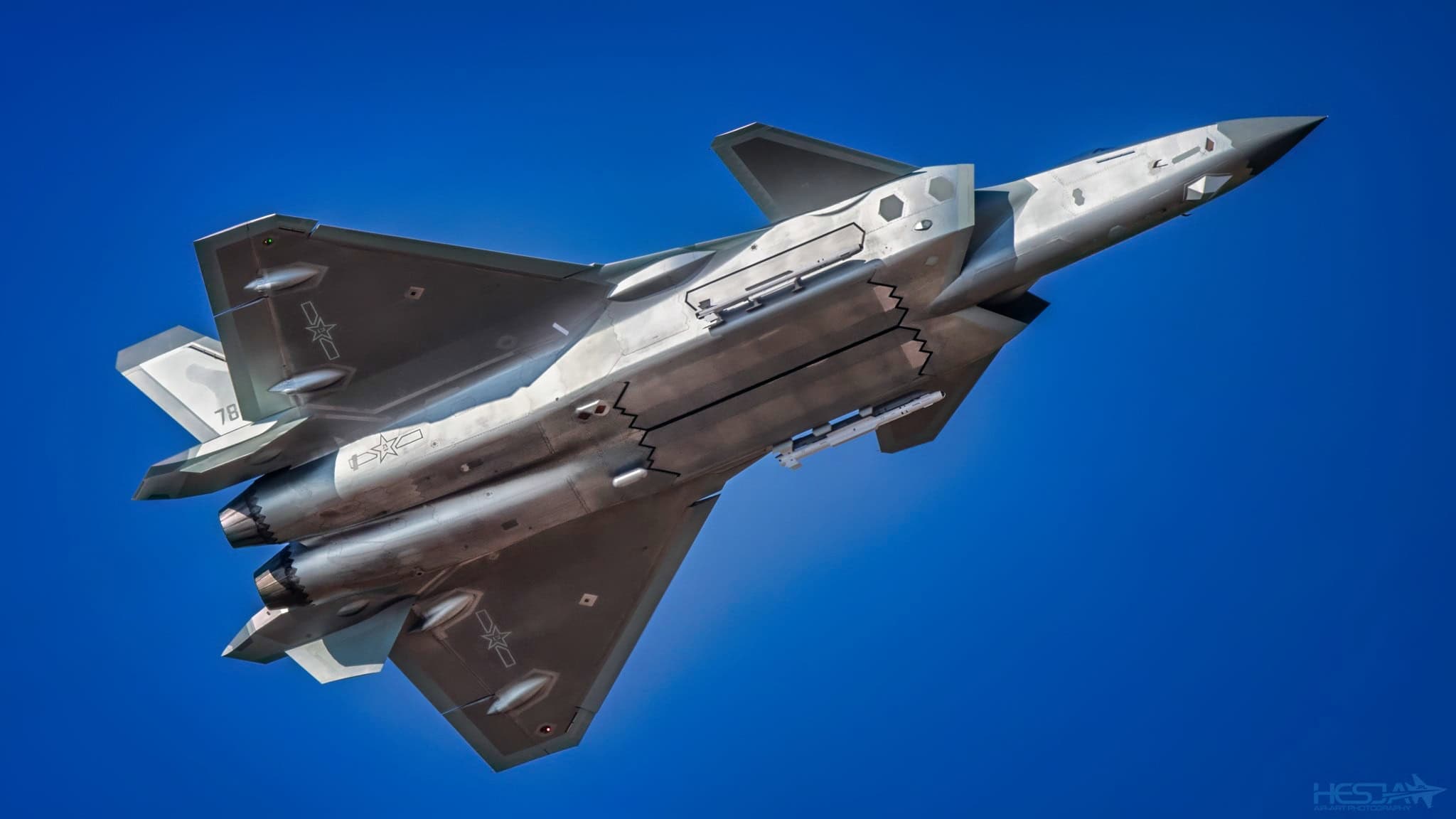
J-20 Fighter from China. Image Credit: Creative Commons.
The fleet continues to expand monthly as more Mighty Dragons come online. This airplane is the answer to the U.S. Air Force’s F-22 and F-35, and like these two American fifth-generation warbirds, the Chinese are ready for the J-20 to serve until the 2050s or 2060s.
The PLAAF Is Ready to Rip
Upgrades to the Mighty Dragon are forthcoming, and the People’s Liberation Army Air Force (PLAAF) is excited.
There will be new radars, ample artificial intelligence in the cockpit, avionics improvements, and new engines.
All of these supplements will make the PLAAF’s fifth-generation airplane relevant for decades.
The Mighty Dragon Has Been In Active Service Since 2011
The J-20, already a fearsome warplane, has been in service for 15 years and is due for a facelift. The jet may not be as stealthy as the F-35 and F-22, but a “super” J-20 is just what the PLAAF needs to have the wherewithal to continue “grey zone” operations against Taiwan.
The J-20 can fly into Taiwan’s Air Defense Identification Zone at will or enforce a no-fly zone against Taipei should there ever be a Chinese blockade or quarantine against the island.
The Heat Is On
Competition from the United States, Japan, and South Korea has spurred the J-20 program to greater heights, especially if the new round of upgrades is successful. The radar detection of the J-20 has been suspect, though.
It is likely not as stealthy as the new PLAAF J-35, but the Mighty Dragon can still outperform many 4th and 4.5-generation airplanes around the world with its super cruise functionality and ability to outmaneuver adversaries in head-to-head matchups.
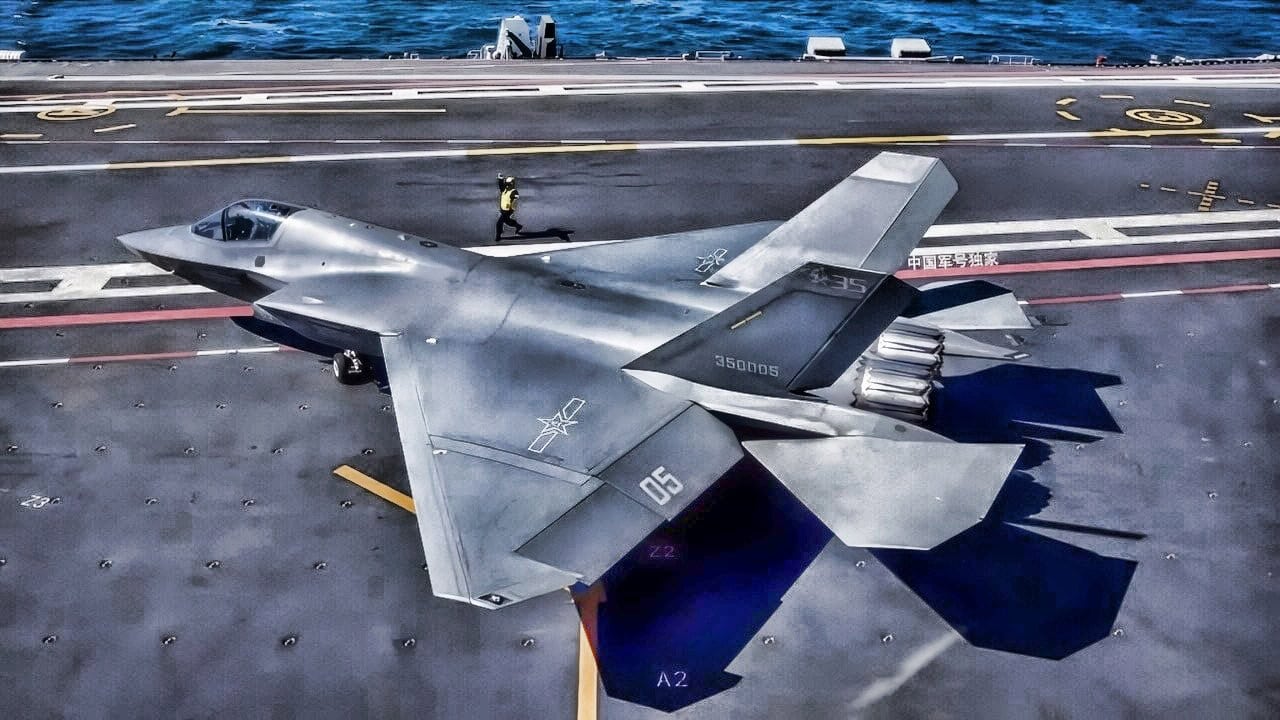
China J-35 Naval Stealth Fighter. Image Credit: PLAN.
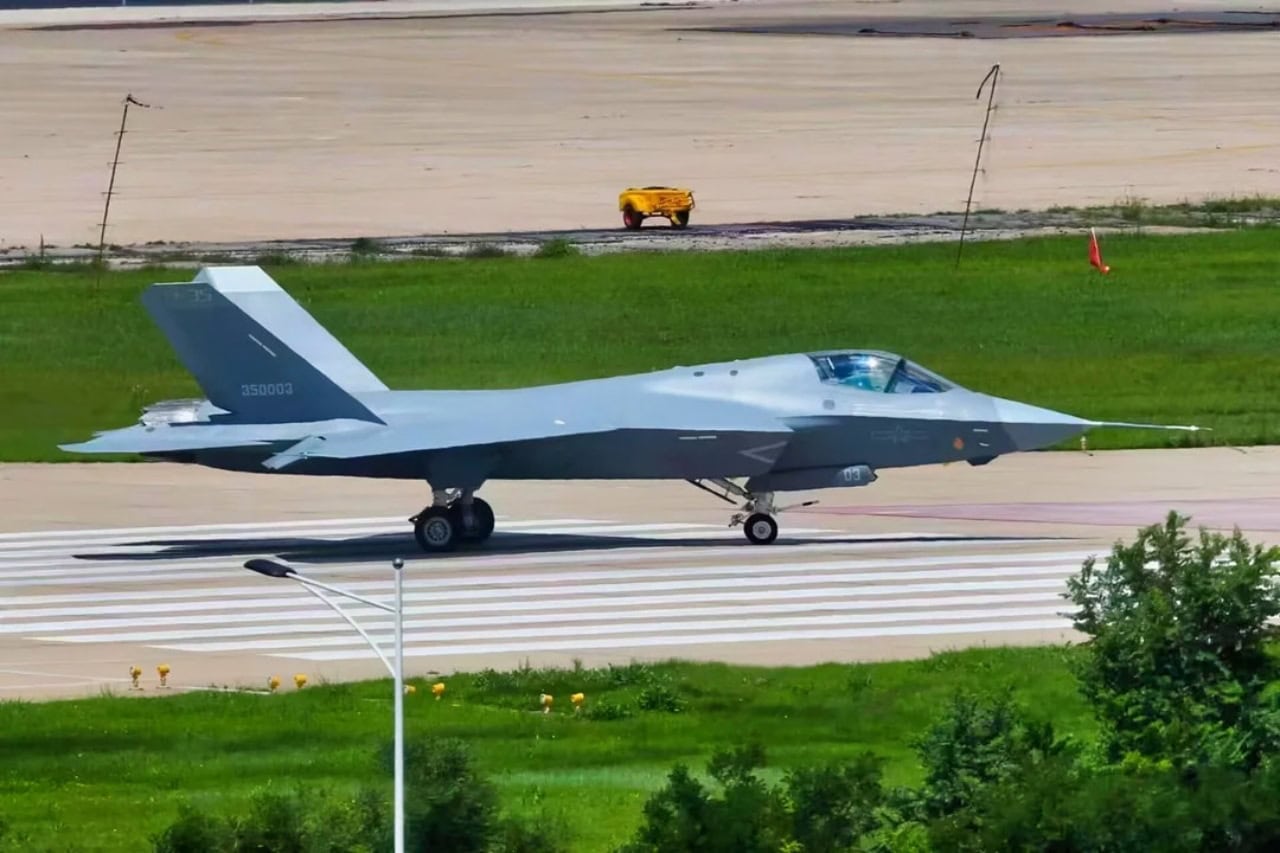
J-35 Fighter. Image Credit: Chinese Internet.
The PLAAF wants to make some internal improvements, though. “It needs to improve the performance of its avionics system, such as its radar and infrared searching and tracking,” defense pundit Zhang Xuefeng told state-run media CCTV, as noted by Interesting Engineering.
The Evolution of Home-built Engines
This will help with situational awareness in dogfights and give the airplane an extra burst of performance when needed against adversaries.
However, the J-20 program had some hiccups at first.
The jet relied on Russian-made Saturn AL-31 engines. This kept the Mighty Dragon from being produced in the numbers that China wanted.
Engineers and technicians were inspired to develop the WS-10C, a homegrown engine. The builders are still not satisfied, and that led to the WS-15 powerplant that most J-20s fly with now.
The Time for AI Is Now
The J-20 will also be upgraded with more robust levels of artificial intelligence in the cockpit. This will make it easier to fly and improve a pilot’s ability to react to dangerous conditions.
“If we equip our J-20s with an AI system in the future, it will be like having an extra assistant, which will enable the aircraft to leverage AI in air combat, particularly in medium-to-long-range and beyond-visual-range (BVR) battles to maximize the aircraft’s performance,” Zhang said.
China Is Excelling With Beyond Visual Range Weapons
It looks like Chinese airplanes can indeed excel at BVR engagements. The much older non-stealth J-10C flown by Pakistan used BVR missiles like the PL-15 to shoot down at least one Indian-flown Rafale last year in a huge dogfight. The Chinese believe the PL-15 can make the Mighty Dragon even more effective.
Don’t Forget the Loyal Wingman
J-20s could also see an unmanned version built in the coming decades, and it should be able to control more Loyal Wingman remotely piloted vehicles, such as the GJ-11 stealth attack drone, to supplement intelligence and surveillance data, fire hypersonic missiles, and jam enemy radar. The United States is forging ahead with its own unmanned tethering as it continues to test Collaborative Combat Aircraft.
Also, the J-20 has a two-seat model called the J-20S. This means a weapons system officer could help operate the Loyal Wingman to further boost its effectiveness. China in the coming decades, will likely work on better stealth coatings so the J-20’s radar evasion capabilities will be improved in the future.
The J-20 Has Staying Power
But is China ready to make the Mighty Dragon relevant for the next several decades? The answer is yes. The J-20 is a reliable platform already. The Chinese are producing at least 100 new fighters a year, so production lines are efficient with ample economies of scale that workers have mastered. The manufacturing capacity has already been optimized, and it will only improve in the future.
The warbird has enjoyed a natural evolution of its engines and internal systems that will continue to evolve as technology improves. It will match the upgrades the F-35 and F-22 are undergoing. The Americans will upgrade, and the Chinese will answer.
That means the J-20 has a long life ahead of it. However, the PLAAF is working on a sixth-generation aircraft. The tailless Chengdu J-36 and perhaps another next-generation model, the J-50, are emerging rapidly. This could mean that China foregoes producing and upgrading additional J-20s and allows the program to finish evolving, with greater emphasis on sixth-generation flight.
But China has the engineering know-how and the ability to keep the Mighty Dragon spitting fire for the next several decades, matching the F-22 and F-35. It will eventually be replaced, but the airplane can keep kicking into the future.
More upgrades will match the Americans’ efforts and could even eclipse the United States, which has yet to place the new F-47 NGAD in flight. Look out for the Mighty Dragon to have a long service life and challenge adversaries in East Asia. This airplane could fly into 2050.
About the Author: Brent M. Eastwood
Author of now over 3,000 articles on defense issues, Brent M. Eastwood, PhD is the author of Don’t Turn Your Back On the World: a Conservative Foreign Policy and Humans, Machines, and Data: Future Trends in Warfare plus two other books. Brent was the founder and CEO of a tech firm that predicted world events using artificial intelligence. He served as a legislative fellow for US Senator Tim Scott and advised the senator on defense and foreign policy issues. He has taught at American University, George Washington University, and George Mason University. Brent is a former US Army Infantry officer. He can be followed on X @BMEastwood.