
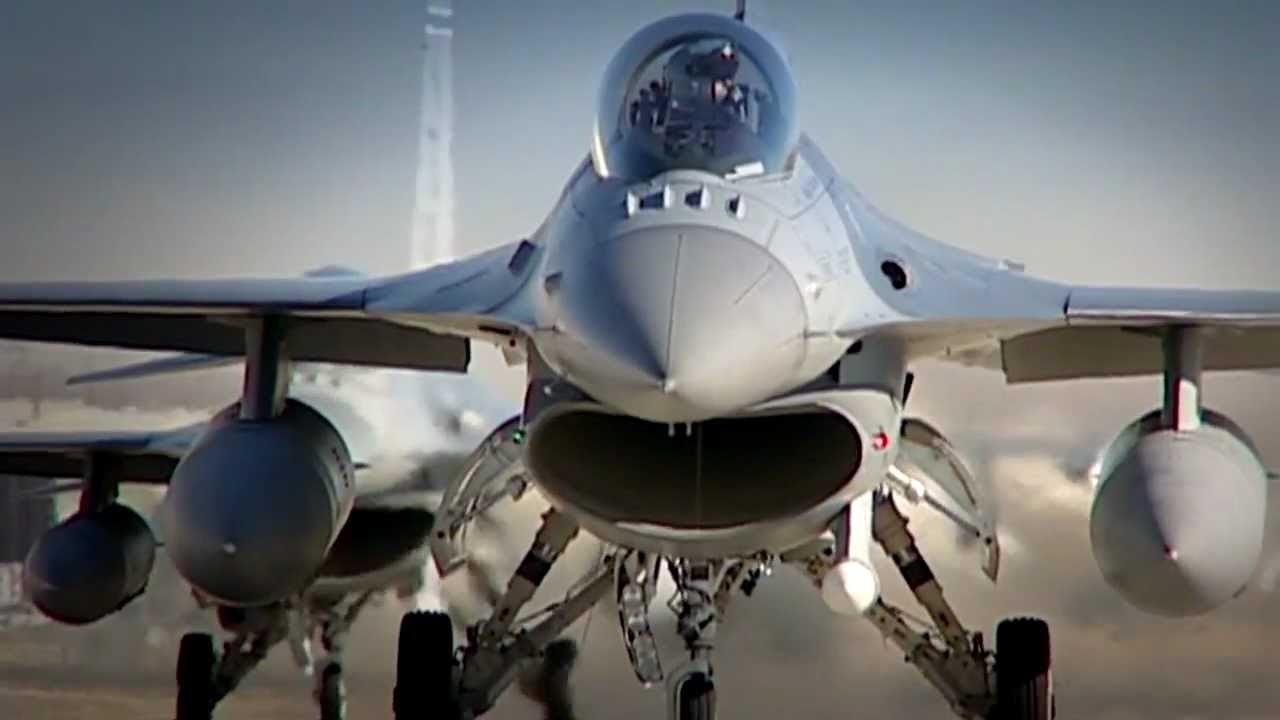
F-16 In Ukraine: Right Jet, Wrong Tactics—How Viper Pilots Rewrote The Playbook
Forty-two years after its maiden flight, the F-16 Fighting Falcon fourth-generation fighter jet continues to prove its worth in combat.
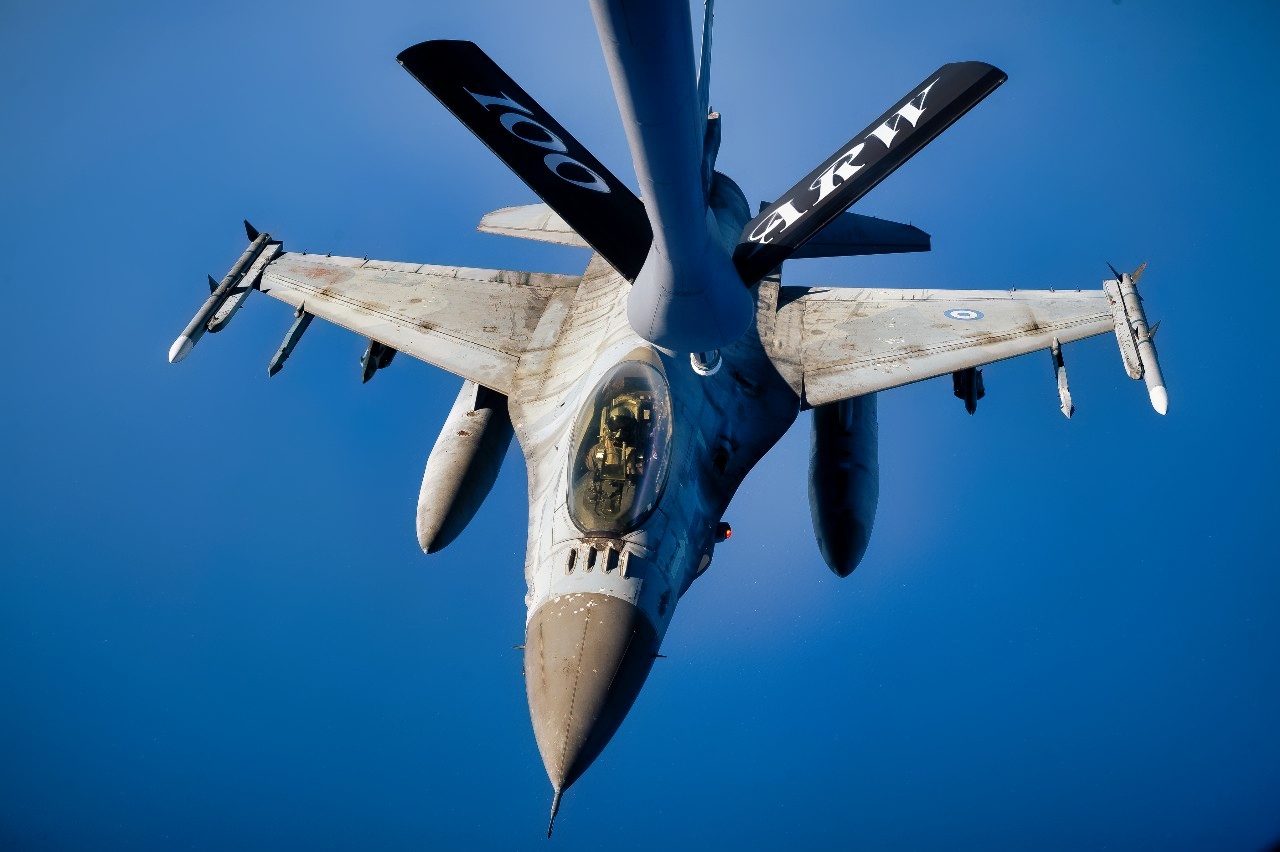
A U.S. Air Force KC-135 Stratotanker aircraft, assigned to the 100th Air Refueling Wing, refuels a Hellenic Air Force F-16 Fighting Falcon aircraft during exercise RAMSTEIN FLAG 2024 while flying over the coast of Greece, Oct. 4, 2024. RAFL24 demonstrates NATO unity and strength, as Allies across the Euro-Atlantic area train side by side in defensive and offensive air operations scenarios in support of the enduring commitment to shared values and ability to adapt to the emerging environment. (U.S. Air Force photo by Senior Airman Edgar Grimaldo)
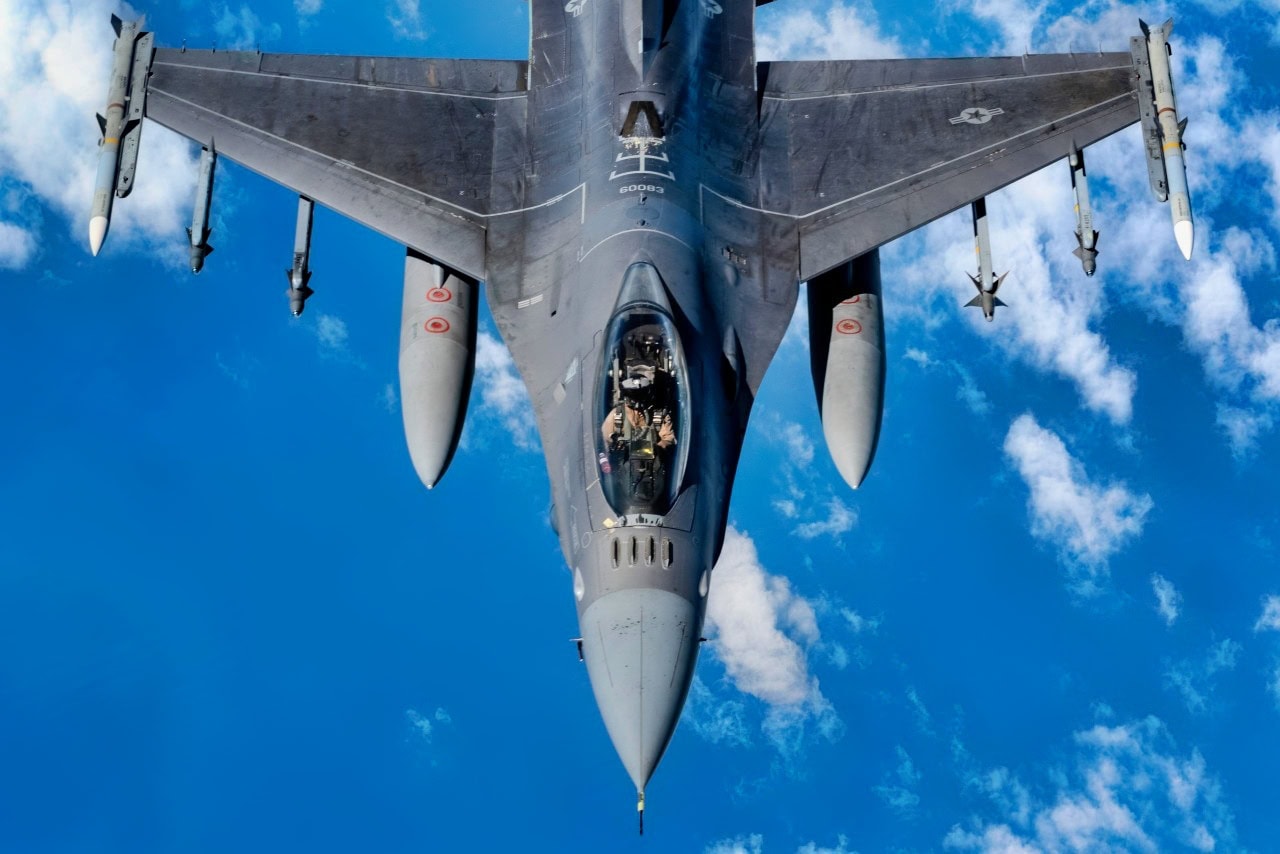
A U.S. Air Force F-16 Fighting Falcon flies a presence patrol over the U.S. Central Command area of responsibility, Feb. 23, 2025. Fighting Falcons fly routine patrols over the AOR to deter aggression and bolster the regional defensive posture. (U.S. Air Force photo by Staff Sgt. Jackson Manske)
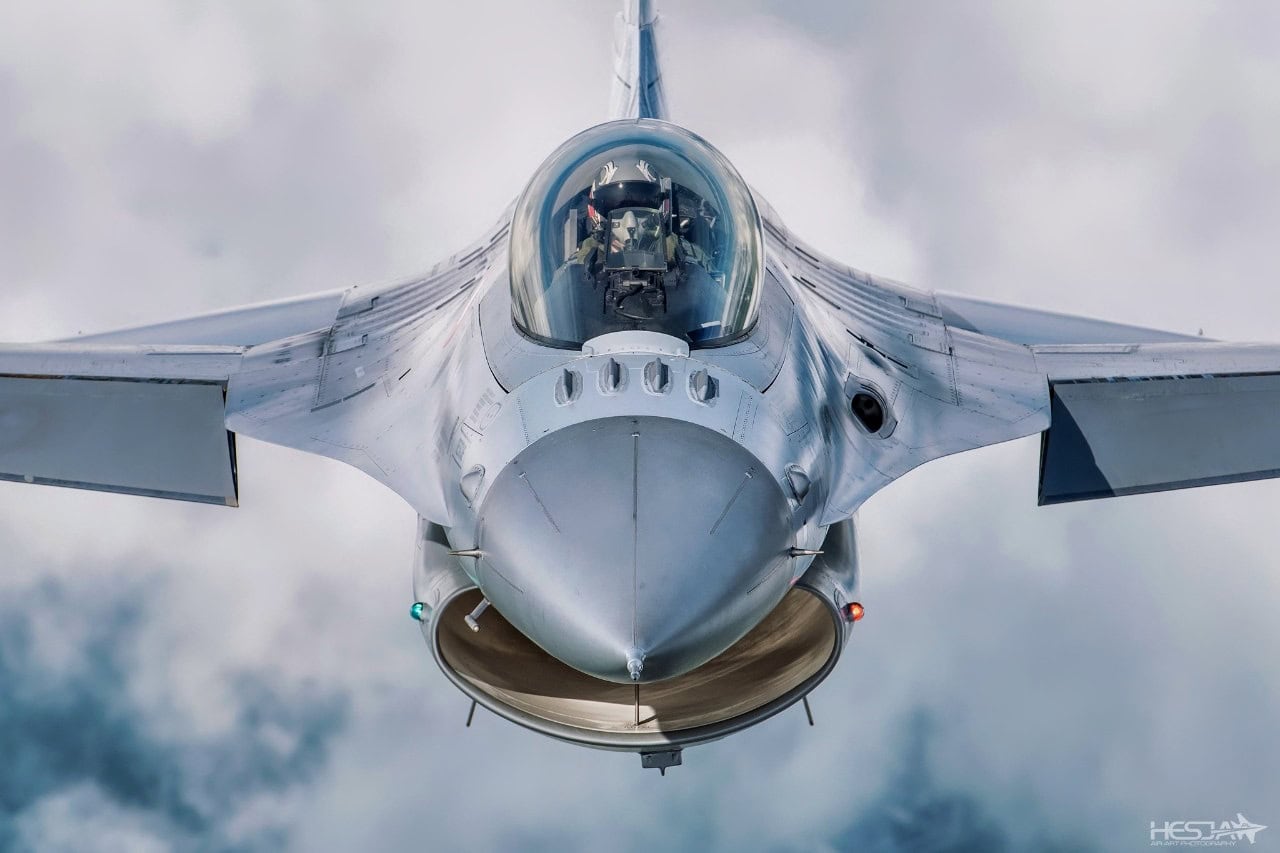
F-16 Fighter. Image Credit: Creative Commons.
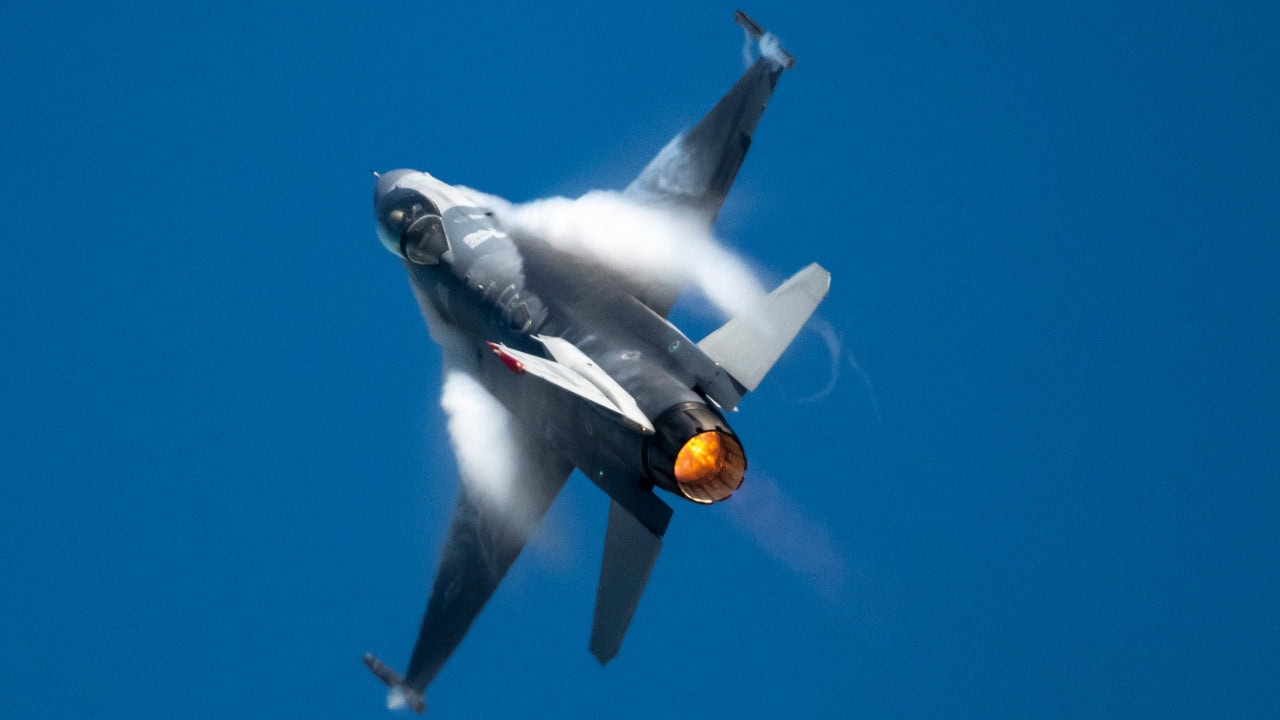
U.S. Air Force Capt. Ethan “Bantam” Smith, Pacific Air Forces F-16 Demonstration Team pilot, conducts a falcon turn during Misawa Air Fest at Misawa Air Base, Japan, Sept. 8, 2024. The demonstration team’s primary mission is to inspire goodwill and promote positive relations between the U.S. and partner nations across the Indo-Pacific region by showcasing displays of F-16 combat prowess and dedication to U.S. Air Force core values. (U.S. Air Force photo by Tech. Sgt. Peter Reft)
Two non-Western nations’ air forces recently put the Viper to good use in the crucible of real-world combat: the post-Saddam Iraqi Air Force in their fight against the Islamic State; and the Air Forces of the Armed Forces of Ukraine in their ongoing fight against Russian autocrat Vladimir Putin’s seemingly endless “special military operation.”
If the Ukrainian Air Force fighter pilots’ experience with the F-16 could be boiled down to a single catchphrase, it would be, “the right plane at the right place at the right time…but with the wrong tactics and training.” In other words, though the Vipers were a truly welcome addition to Kyiv’s fighter fleet, the initial training that Ukrainian fighter jocks received in the West wasn’t quite appropriate to their specific task—so they had to adjust on the fly.
Bottom Line Up Front (BLUF): Ukrainian Viper Drivers Make Adjustments
The inspiration for this article comes from a January 8, 2026 story in Business Insider written by Matthew Loh, who on condition of anonymity interviewed one of Ukraine’s first pilots to train on the F-16.
As this anonymous jet jock told Mr. Loh, “’The tactics that we were taught abroad [in Romania] do not entirely fit the war we have here, because those tactics are also based on wars in which the partners previously took part. And this war is fundamentally different from those wars.’”
This interviewee and his comrades-in-arms had to devise their own tactics: “’How we would destroy cruise missiles, strike drones, how we would fight with the enemy near the line of combat contact.
“When the partners see our effectiveness, they understand how, in our limited conditions, we are able to carry out flights with such effectiveness. And they even, I would say, learn from us. They learn the tactics and adjust the tactics that they taught us when we were abroad.”
Proof of Concept: Scoring 6 and Scoring 1,000 “Points”
For obvious reasons, this Ukrainian Viper driver wasn’t at liberty to go into the exact details of the new tactics he and his fellow pilots developed. But he did share the story of a daring maneuver he recently conducted in the Donbas region.
His three-ship formation had encountered thick and fierce Russian defenses, including surface-to-air missile systems (SAMs) and unspecified air assets, that “‘did not allow us the possibility to approach’ their target.” So instead, they played a deadly clever game of bait-and-switch. “’We drew two missiles from the enemy, because there were two launches from different directions, and we gave the opportunity for our strike aircraft to destroy the target.’”
The entire Ukrainian strike group RTB’d (returned to base) safely after the mission.
Even more impressive was the Ukrainian F-16 pilot who became a national hero on December 13, 2024, when he shot down a record-setting six Russian cruise missiles in a single sortie. He obtained his first four kills with the warbird’s AIM-120 AMRAAMs and AIM-9 Sidewinder short-range infrared (heat-seeking) missiles. The last two targets were bagged with the plane’s 20-mm M61 A1 Vulcan cannon, which went to show, in spite of the claims of some pundits, that a gun is still quite relevant to fighter planes in the 21st century.
As of the beginning of this year, Ukrainian F-16 pilots have claimed 1,000 aerial kills against Russian cruise missiles and one-way attack drones. So far, Ukraine has officially received 44 of the 87 F-16 airframes that European nations have promised to donate to that embattled former Soviet Republic. In other words, they’re literally halfway there, which means there will still be plenty of opportunities for Ukrainian Vipers to add to their tally.
What’s Old Is New Again
As genuinely impressive and admirable as the feats of the cruise missile-killing F-16 drivers of the Ukrainian Air Force have been, the concept of using fighter planes to destroy cruise missiles in air-to-air engagements isn’t that new.
The very first operational cruise missile dates back to World War II—Nazi Germany’s V-1 “buzz bomb.” In sharp contrast to, say, the precision strikes of the Cold War-vintage Tomahawk cruise missile, the Nazis used the buzz bomb as a terror weapon against civilian population centers in Great Britain.
The intrepid fighter pilots of Britain’s Royal Air Force were tasked with blasting the buzz bombs out of the blue and into bits. The two primary platforms they used for doing so were the Gloster Meteor (the Allies’ only operational jet fighter of WWII), which tallied 13 V-1 kills, and the prop-driven, all-wood de Havilland Mosquito, which fatally stung 600 of the buzz bombs.
About the Author: Christian D. Orr, Defense Expert
Christian D. Orr is a Senior Defense Editor. He is a former Air Force Security Forces officer, Federal law enforcement officer, and private military contractor (with assignments worked in Iraq, the United Arab Emirates, Kosovo, Japan, Germany, and the Pentagon). Chris holds a B.A. in International Relations from the University of Southern California (USC) and an M.A. in Intelligence Studies (concentration in Terrorism Studies) from American Military University (AMU). He is also the author of the newly published book “Five Decades of a Fabulous Firearm: Celebrating the 50th Anniversary of the Beretta 92 Pistol Series.”