
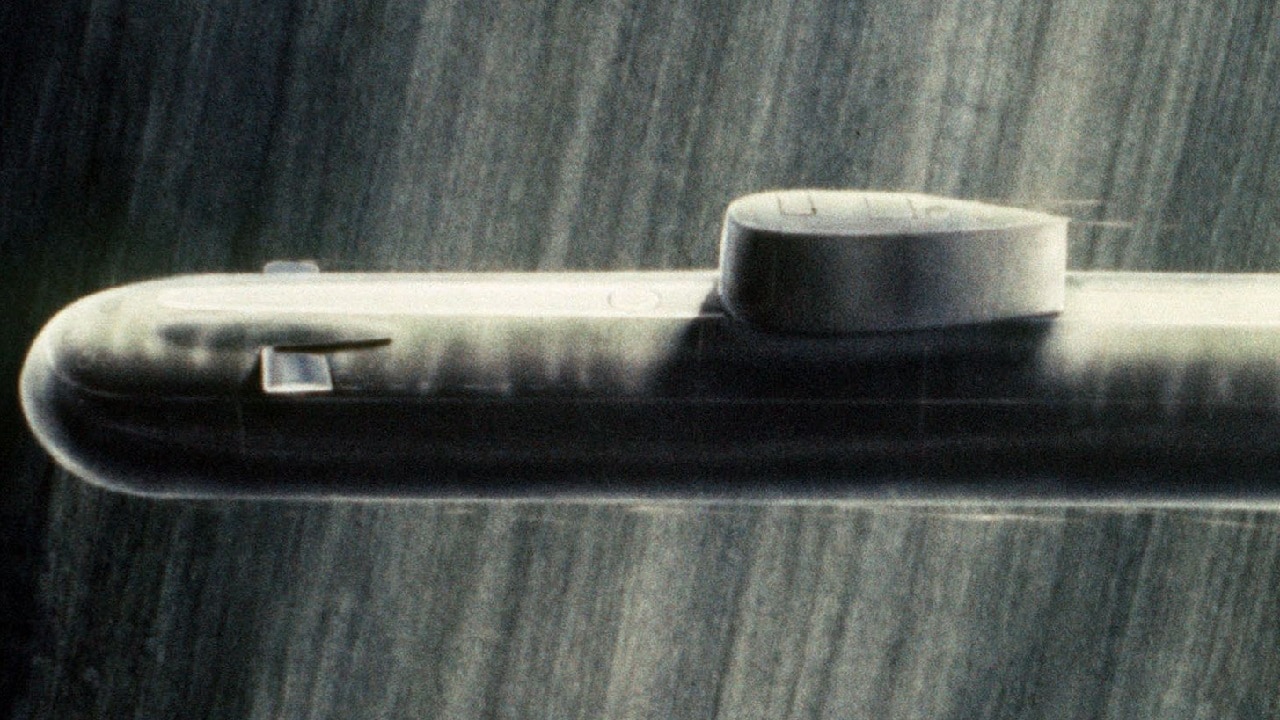
Summary and Key Points: On April 7, 1989, the Soviet Union’s advanced titanium-hulled attack submarine K-278 Komsomolets (Mike-class) sank in the Norwegian Sea after a catastrophic fire broke out in its aft section.
-Despite a desperate six-hour battle to save the vessel by an inexperienced crew, the fire destroyed air valves and compromised the hull’s integrity.
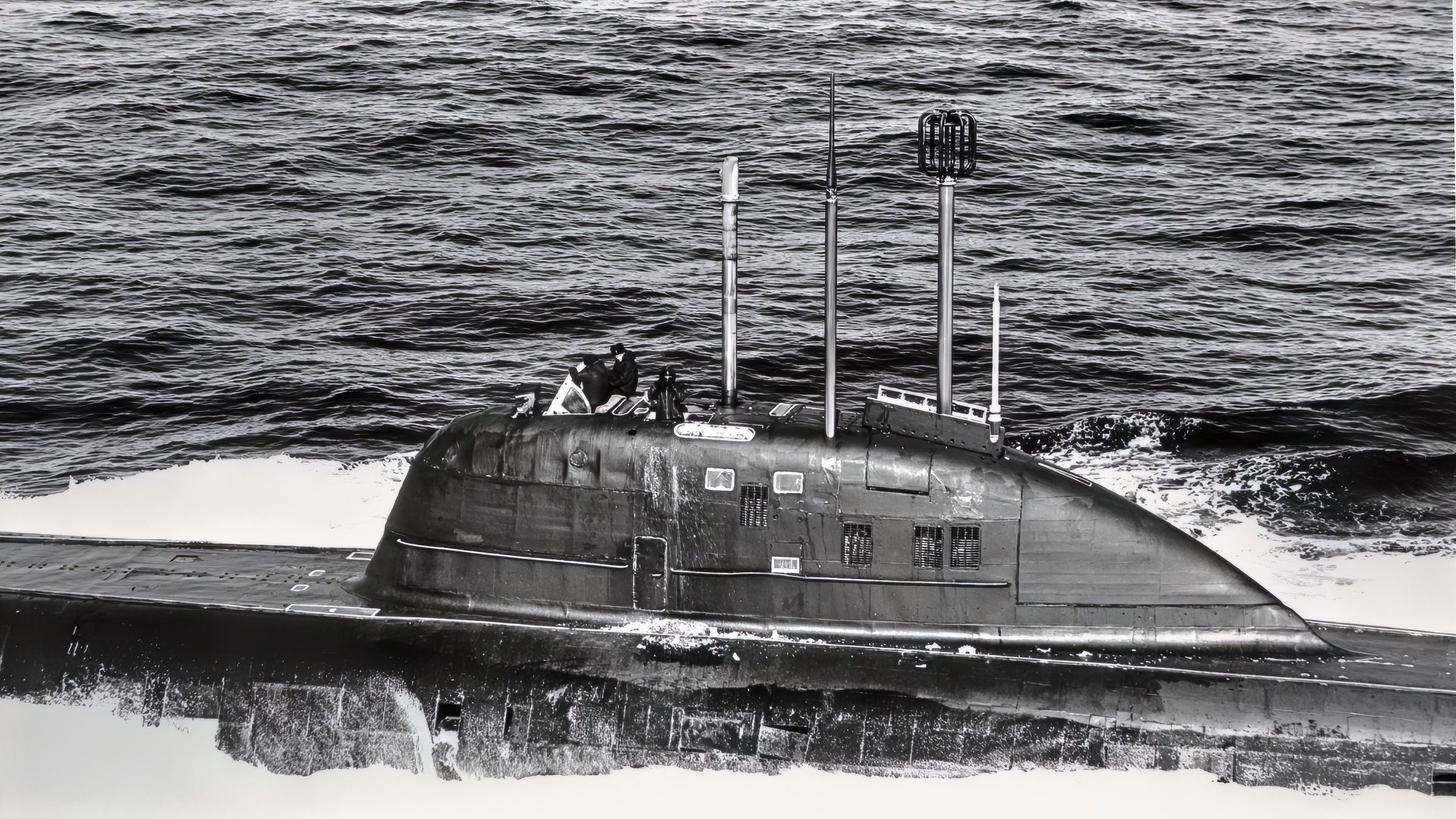
A port view of the sail of a Soviet Victor-II class nuclear-powered attack submarine underway.
-The disaster claimed the lives of 42 out of 69 sailors, many of whom perished from hypothermia or during a horrific malfunction of the escape capsule that ultimately claimed the life of Captain Evgeny Vanin.
-The wreck now lies 5,250 feet deep, still carrying its nuclear reactor and two nuclear-armed Shkval torpedoes, posing a lingering environmental threat.
6 Hours of Fire: How Inexperience Sank the “Unsinkable” Mike-Class Sub
Any country that possesses nuclear warheads usually has one precious asset if they have a nuclear delivery triad. Ballistic missile submarines (SSBNs) are some of the most valuable assets in a naval fleet. The “boomers” run silent and deep, and when nuclear-powered, they can fire doomsday missiles anytime, anywhere.
Most take SSBNs for granted as they rarely surface and their whereabouts are top secret. Sometimes they make port calls or come to the top of the ocean in a show of force, but most of the time they are submerged.
So when the Soviet Union’s K-278 Komsomolets titanium-hull attack submarine was lost, it was a huge shock to the Russians, who were not used to any type of failure with their underwater warfare operations.
Also, known as being part of the Mike-class, this submarine disappeared with its nuclear torpedoes on board in 1989.
What Happened to the Submarine?
The state-of-the-art, double-hulled Komsomolets, translated as “Member of the Young Communist League,” had some difficulties on April 7, 1989. It was sneaking along at 1,266 feet when problems started in the Norwegian Sea.
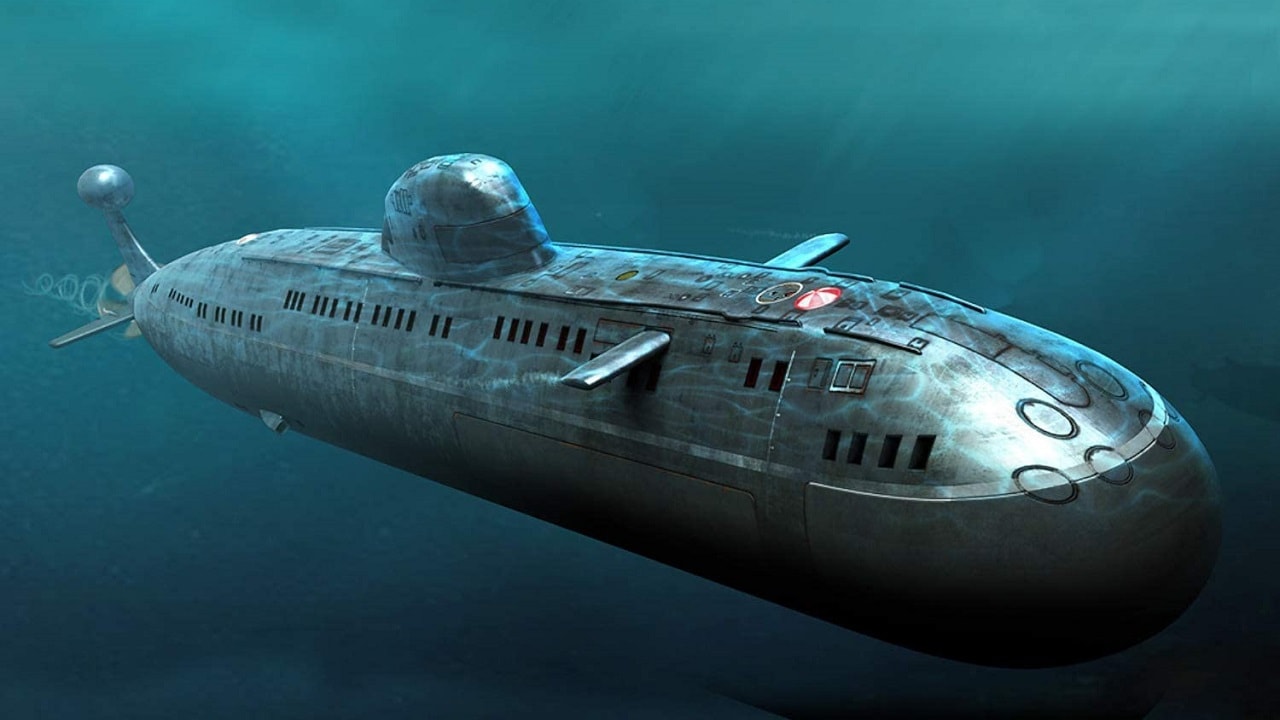
Victor III-class Submarine.
The crew was rested, having just rotated on board, but they were inexperienced on the sub. There was also no damage-control group, since the Komsomolets began its life as a test submarine.
Fire Sparks and All Hands Were in Danger
Then a horrible situation developed. There was a fire in the seventh chamber in the aft part of the boat. The flames were difficult to extinguish, and they quickly destroyed the air supply valve. Pressurized air leaked into the fire, sparking it further. The shipmates assigned to firefighting could not put it out. The nuclear reactor was in danger, so the command team ordered to blow the ballast tanks in an effort to surface.
The Captain Orders to Keep Fighting the Fire
Meanwhile, the fire kept burning, and it did not look good for the Komsomolets. The commander did not give up, and he desperately ordered his firefighters to keep battling the blaze. This activity continued for an astounding six hours. Sailors were horrified that the worst would happen to them. The captain waited for the fire to burn itself out while the submarine’s air heated up and began to choke sailors.
The situation was going from bad to worse. Soon, the rubber anechoic coating tiles on the outer hull slid off from the heat generated by the flames.
Time to Give Up
Captain First Rank Evgeny Vanin gave the order to abandon the sub. But it was unclear whether everyone heard the command. Vanin took four sailors to investigate. Then the submarine began tilting forward as it headed to the bottom. Vanin was not sure if he could rescue anyone, much less survive what looked to be a huge disaster.
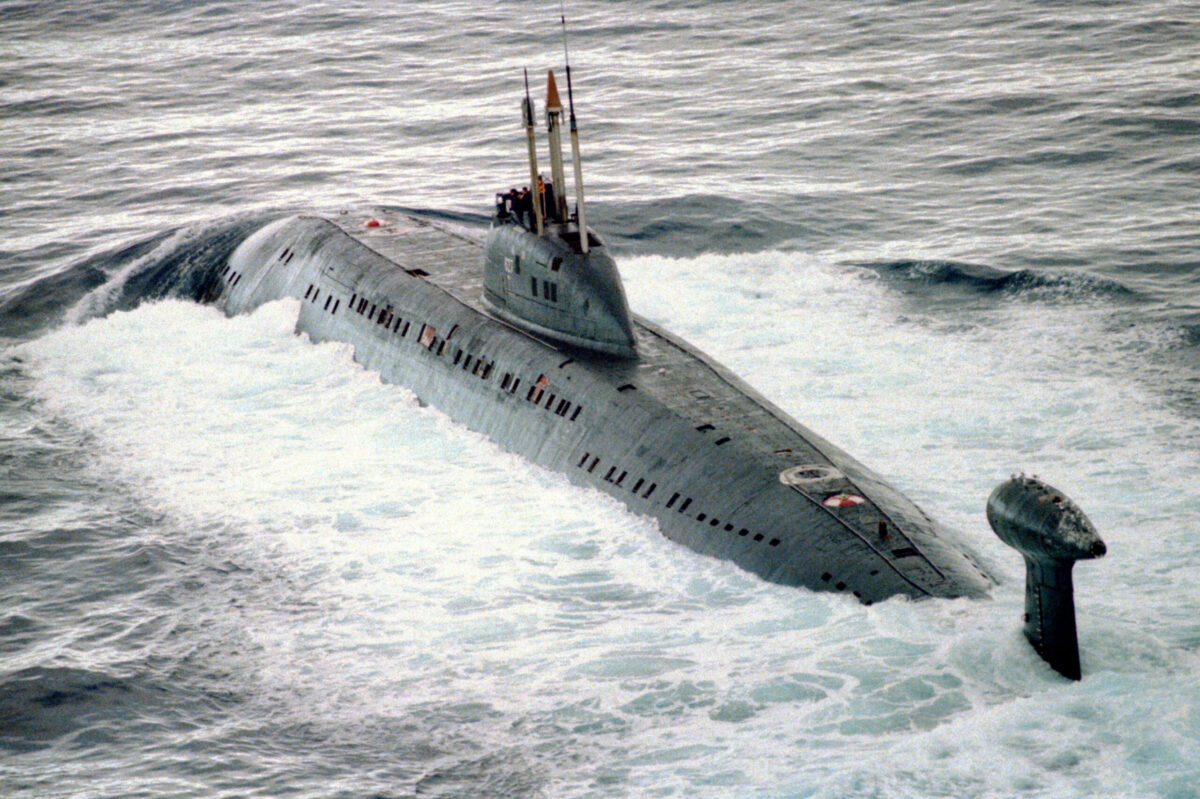
An aerial port quarter view of the Russian Northern Fleet VICTOR III class nuclear-powered attack submarine underway on the surface.
(Exact date unknown)
The captain took all the survivors to the rescue chamber. Then the men were appalled. The chamber refused to break away from the doomed sub. They spent a long few minutes trying to dislodge it and feared they were cooked. But the group was able to jettison the escape mechanism. Their horror show did not end there.
This Wasn’t the Worst Part
Once they reached the surface, there was a significant pressure change due to the speed at which they moved to the top of the waves. The hatch of the escape module blew off, and it sent two sailors out of the compartment into the rough and frigid waters. Then the escape chamber, with the captain still on board, sank.
The water was only 36 degrees Fahrenheit, and many sailors drowned who left the sub’s flames. During the fire, four shipmates had already perished on board.
After an hour, two fishing boats came to rescue the survivors who were rapidly approaching hypothermia. There were originally 69 sailors on board the submarine when the fire started; 42 died, including Captain First Rank Vanin.
What Happed Next?
The submarine sank in 5,250 feet of water. The nuclear reactor was lost along with two nuclear-armed Shkval torpedoes. Sometimes these were called underwater rockets or missiles due to their high speed.
The Soviets sprang into action due to the emergency and tried to reach the sub at the bottom as the reactor leaked radioactive waste. The torpedoes were still armed as well. They tried seven dives to reach the sub between 1989 and 1998 to no avail. The Soviets tried to seal the torpedo tubes, but they failed. The Russians thought that other navies had reached the sub instead, but that was never proven.
Could the Sinking Have Been Averted?
This was a devastating tragedy that shook the Soviet Navy. It is difficult to second-guess the captain’s actions. Firefighting is the first task that many sailors are trained on. Maybe the crew was just too inexperienced and shocked at the intensity of the flames. Should the commander have called abandoned ship sooner?
He thought the fire could be put out at first, and he knew that the nuclear torpedoes would be a problem if the flames reached the torpedo room, so you can’t blame him for trying to extinguish the fire first.
We may never know what could have saved the sub. It was clear that the Soviet navy needed to better train sailors in firefighting and to further rehearse escape measures. All crew members could have easily been lost, and this titanium-hulled submarine could have gone down to Davy Jones’ locker more quickly.
The sub is gone forever.
About the Author: Brent M. Eastwood
Author of now over 3,000 articles on defense issues, Brent M. Eastwood, PhD is the author of Don’t Turn Your Back On the World: a Conservative Foreign Policy and Humans, Machines, and Data: Future Trends in Warfare plus two other books. Brent was the founder and CEO of a tech firm that predicted world events using artificial intelligence. He served as a legislative fellow for US Senator Tim Scott and advised the senator on defense and foreign policy issues. He has taught at American University, George Washington University, and George Mason University. Brent is a former US Army Infantry officer. He can be followed on X @BMEastwood.