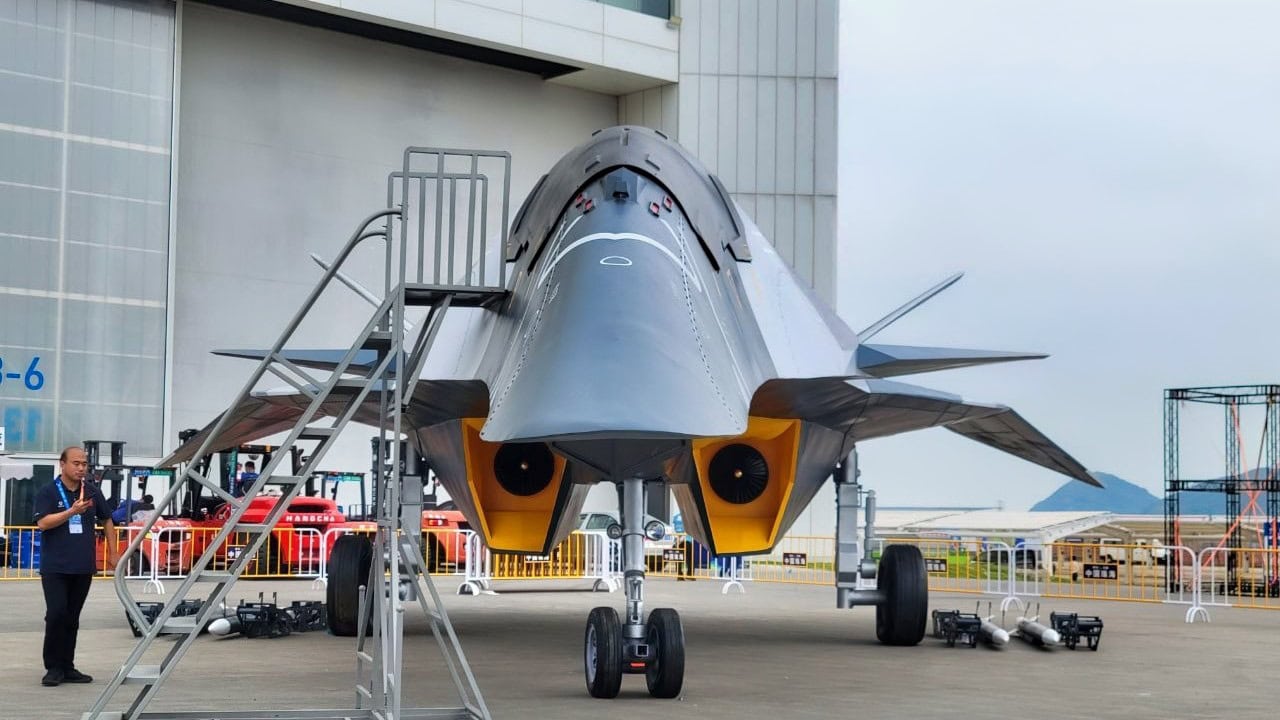
Summary and Key Points: A CCTV video on China’s UAV development spotlighted familiar drones—then pivoted to a far more radical concept: the “Luan Niao,” a proposed orbital or near-space mothership designed to deploy unmanned fighter drones and “hyper-ballistic missiles.”
-The triangular craft is depicted as colossal, with dimensions and takeoff weight that would dwarf any existing aircraft.
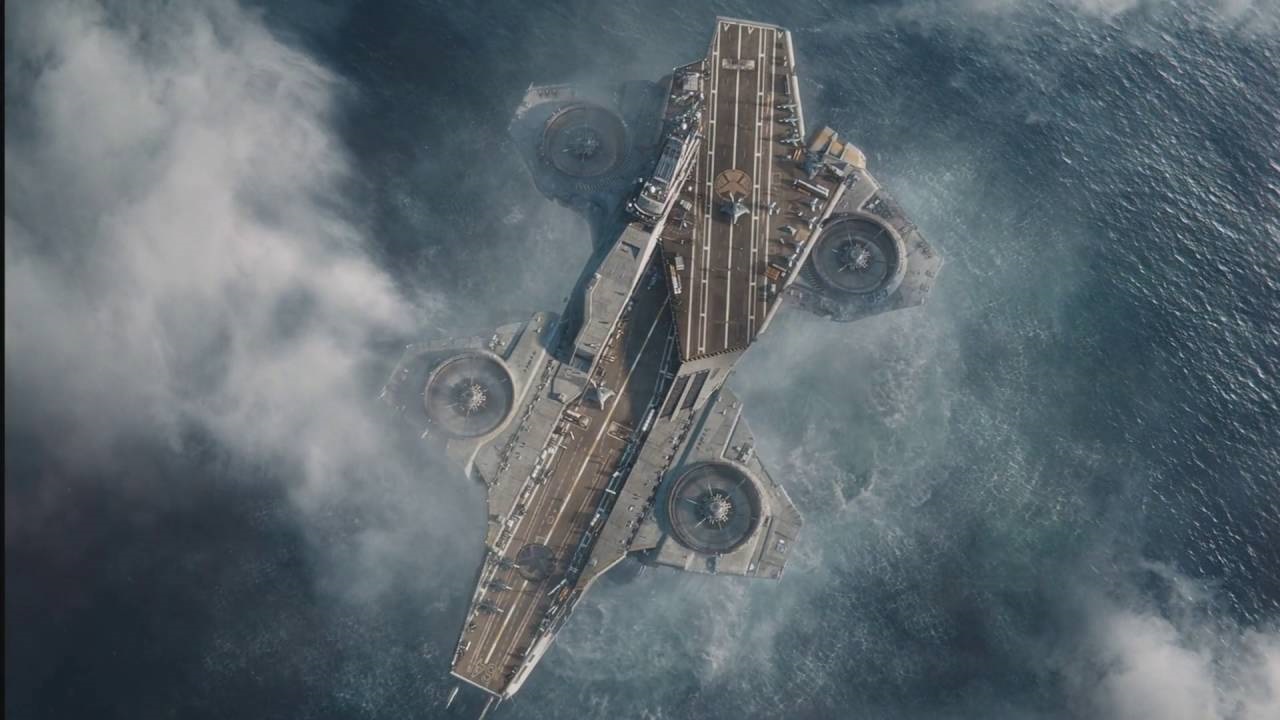
Flying Aircraft Carrier Cutscene from The Avengers of the Shield Helicarrier taking off. Copyright reserved to Marvel and Paramount. Image Credit: YouTube Screenshot.
-Its payload would include 88 “Xuan Nu” autonomous fighter drones meant to operate at the upper edges of the atmosphere.
-Analysts tracking the concept say it has circulated at trade shows for years and is widely viewed as aspirational—useful for recruitment and messaging more than near-term capability.
China’s ‘Space Aircraft Carrier’ Concept: The Luan Niao Mothership Explained
Last weekend, the state-controlled China Central Television (CCTV) network broadcast a video on its YouTube channel showing a history of China’s development of autonomous aerial vehicles. Many of China’s well known unmanned aerial vehicles (UAVs) were shown, such as the Chengdu GJ-2/Wing Loong II Long Range Drone and the United Aircraft Group Lanying R6000 Tiltrotor.
Like all the achievements by China’s aerospace and defense sector, these are innovations that would have been unimaginable 35 years ago, given the poor standards of living in the country of that time. Yet, they do not hold a candle to the futuristic systems being proposed by Chinese industry today.
For example, the CCTV video included footage of a concept spacecraft called the Luan Niao—a name associated with a mythological bird from East Asian folklore.
The flying machine bearing this legendary name is more breathtaking than any generational myth.
This Luan Niao is an orbital mothership designed to launch unmanned fighter drones and what the narration calls “hyper-ballistic missiles.”
The large airborne platform would be loitering on the edge of space.
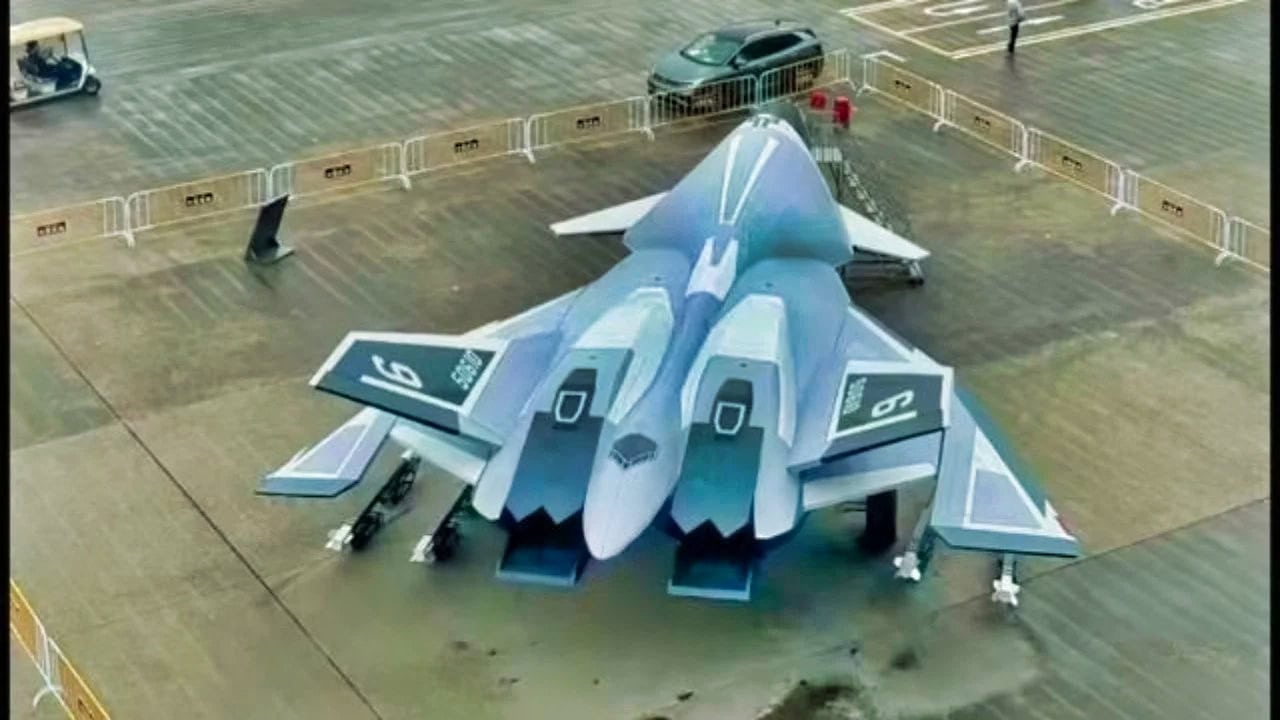
Chinese NGAD White Emperor Fighter Plane from China. Image Credit: X Screenshot.
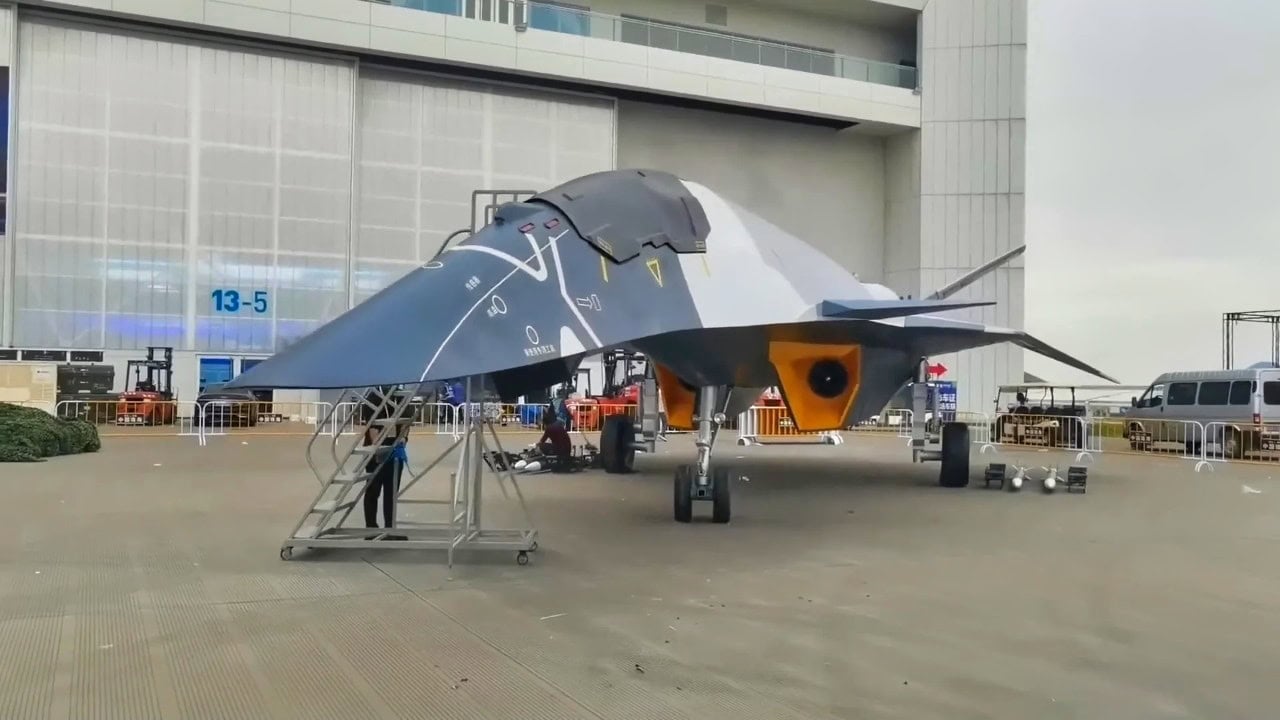
China’s “White Emperor” (Baidi) is a 6th-generation stealth fighter mock-up designed to function as an integrated “space-air” platform. Presented by state-owned AVIC, the mock-up suggests capabilities for supersonic speeds near the atmosphere’s edge.
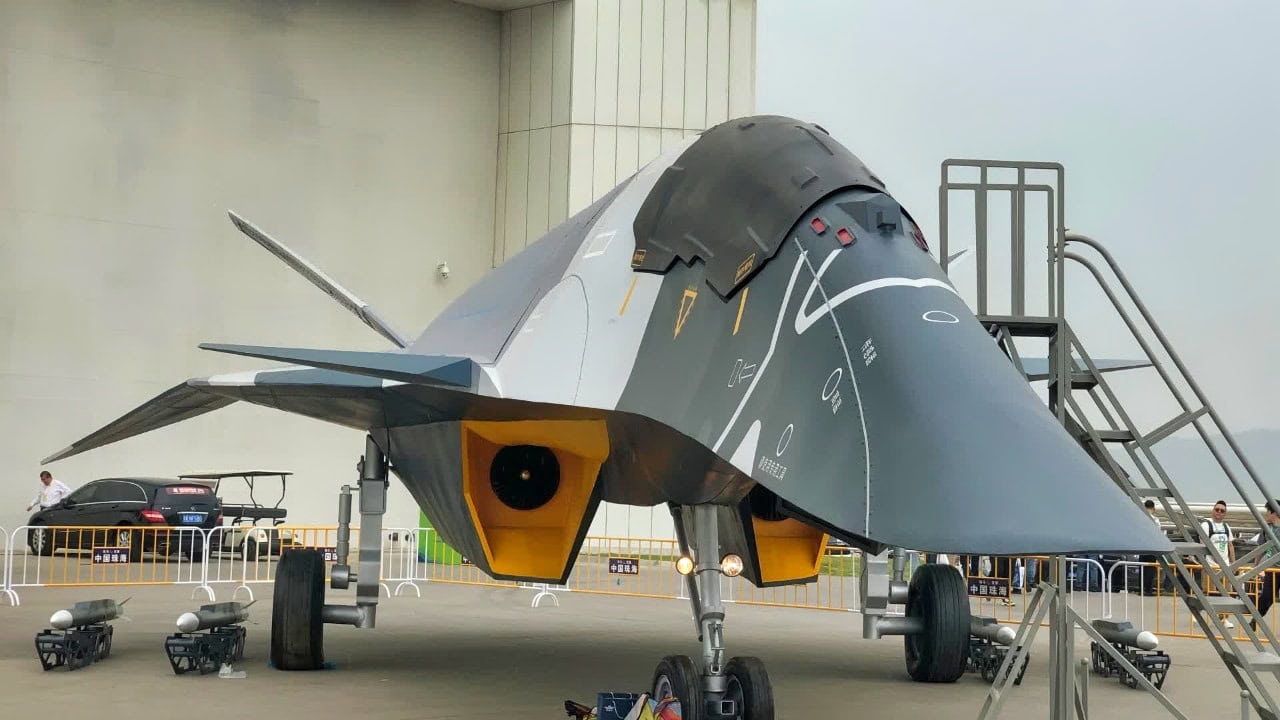
White Emperor 6th Generation Fighter. Image Credit: X screenshot.
Well Above the Clouds
The CCTV concept video depicts an outsized airborne warship; it would be the largest in the world. But the Luan Niao’s flight profile is what makes it a threat Western military planners hope never to face. It would be designed to fly at altitudes that would be well above most of the defensive systems envisioned in the near future.
Experts familiar with the program’s details are highly skeptical this super spaceship will ever exist.
The artists’ depictions of the Luan Niao look more like General Grievous’s spaceship from the Star Wars films than any space-orbiting vehicle that could be built with today’s technology.
It is a monstrously sized grey triangular aircraft carrier in space—it is supposed to be 242 metres long and 684 metres wide. It would have a take-off weight of 120,000 tons, larger than any aircraft.
The Largest Payload Ever
The craft’s massive size matches its outsized payload—88 “Xuan Nu” autonomous fighter drones that would be launched from the Luan Niao and would operate in the uppermost limits of the stratosphere.
Xuan Nu fighters are another conceptual spacecraft.
They would operate as a hypothetical future-generation jet. The model is supposed to be ultra stealthy, but heavier than any unmanned drone system in development.
Those familiar with this design say it has been showcased at technology exhibitions as a means to entice students and the public to support careers and investments in engineering and science. It is also not a new proposal.
Chinese aircraft-industry watchers say the Xuan Nu fighter concept has been circling around aerospace trade shows since at least 2019 and is largely seen as science fiction.
If completed, the new spaceship would “outclass pretty much everyone”, according to Peter Layton, a defense technology expert and a visiting fellow at Australia’s Griffith Asia Institute.
But he, and others, regard the effort to design the Luan Niao as more of a propaganda project than anything else.
The Luan Niao is also viewed as the latest development in an ongoing space race between the United States and China.
Beijing has been pouring massive funding into its push to surpass the United States, and, given the growing disparity in the level of resources for developing space systems, China could win the race.
About the Author: Reuben F. Johnson, Defense Expert
Reuben F. Johnson, a 19FortyFive Senior Editor, has thirty-six years of experience analyzing and reporting on foreign weapons systems, defense technologies, and international arms export policy. Johnson is the Director of Research at the Casimir Pulaski Foundation. He is also a survivor of the Russian invasion of Ukraine in February 2022. He worked for years in the American defense industry as a foreign technology analyst and later as a consultant for the U.S. Department of Defense, the Departments of the Navy and Air Force, and the governments of the United Kingdom and Australia. In 2022-2023, he won two awards in a row for his defense reporting. He holds a bachelor’s degree from DePauw University and a master’s degree from Miami University in Ohio, specializing in Soviet and Russian studies. He lives in Warsaw.