
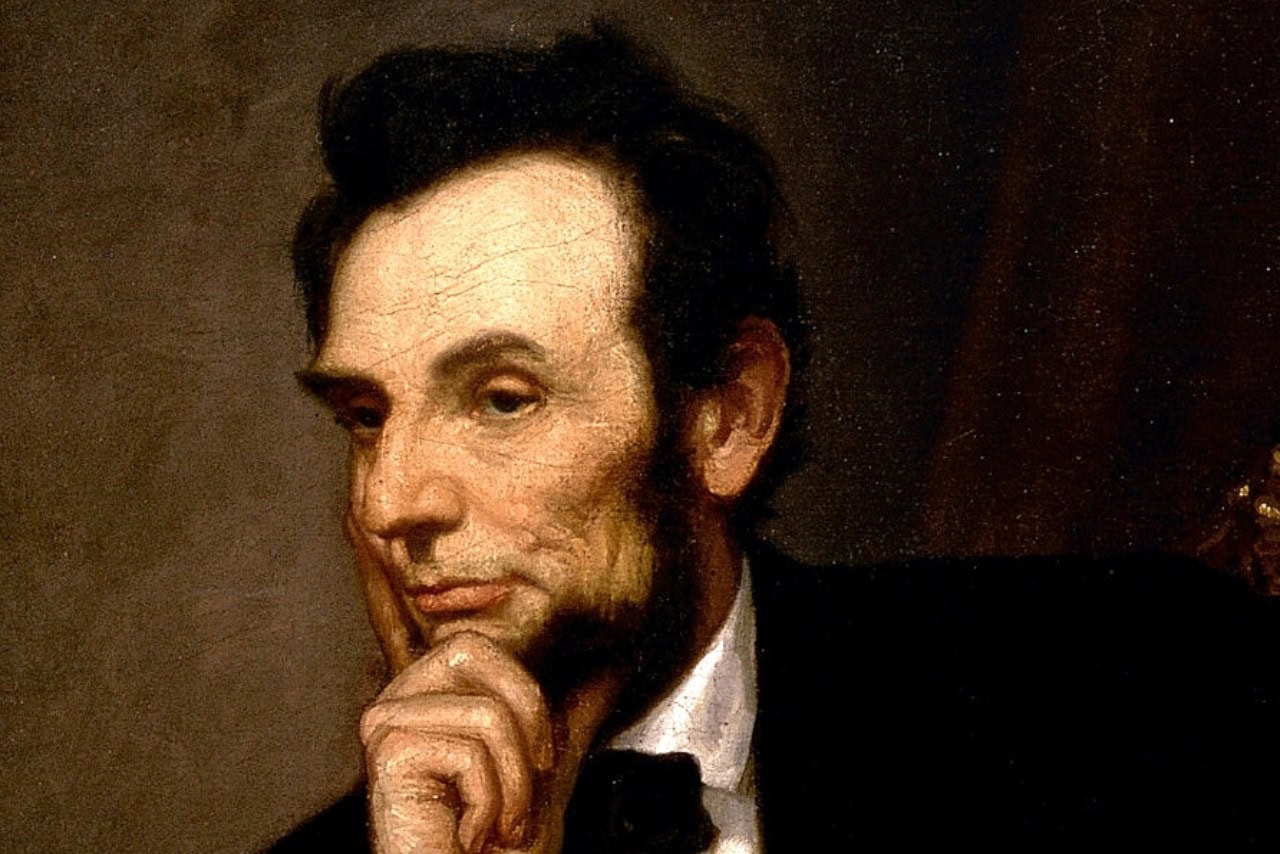
Summary and Key Points: A popular “Quote of the Day” line often attributed to Abraham Lincoln—“I am not bound to win…”—has no documentary evidence tying it to him, yet it keeps resurfacing in American politics.
-The passage spread through repetition: an initial printed attribution, later copied by speakers and writers who assumed it was authentic.
-President Barack Obama used it while rallying Democrats ahead of the Affordable Care Act vote, and Ronald Reagan repeated it as well, alongside other misattributed “Lincoln” lines.
-The pattern is familiar: stirring words get attached to a revered figure, then circulate until they feel true. The piece also revisits key events from Lincoln’s final year in office.
Abraham Lincoln Was Misquoted for Decades—Here’s How the Myth Machine Works
“Quote” of the day: “I am not bound to win, but I am bound to be true. I am not bound to succeed, but I am bound to live by the light that I have.” – Abraham Lincoln
One quote often attributed to Abraham Lincoln was not really said by him.
According to a State-Journal Register article in 2010, as well as an NPR story around the same time, among those who have mistakenly attributed the quotation to Lincoln was then-President Barack Obama, although he was not the only president to do so.
Obama, that year, used the quote and attributed it to Lincoln while addressing Democratic lawmakers before the passage of the Affordable Care Act.
“I was tooling through some of the writings of some previous presidents, and I came upon this quote by Abraham Lincoln,” Obama said, before sharing the “I am not bound to win…” quotation.
However, as John J. Pitney Jr., the Roy P. Crocker professor of American politics at Claremont McKenna College, wrote for NPR, that is not a genuine Lincoln quote.
History of a Misquote
“The Lincoln quotation was stirring. It was also bogus. There is no documentary evidence that Lincoln ever said any such thing,” Pitney wrote.
Pitney also wrote about how often such misquotations happen, citing a pair of books called They Never Said It by Paul Boller and John George, and The Quote Verifier by Ralph Keyes.
“The process starts when an honest mistake or flight of fancy leads to the publication of a spurious passage. Seeing it in print, writers and speakers assume it to be genuine and repeat it. Then they copy one another, and the dubious words spread like a computer virus,” Pitney wrote.
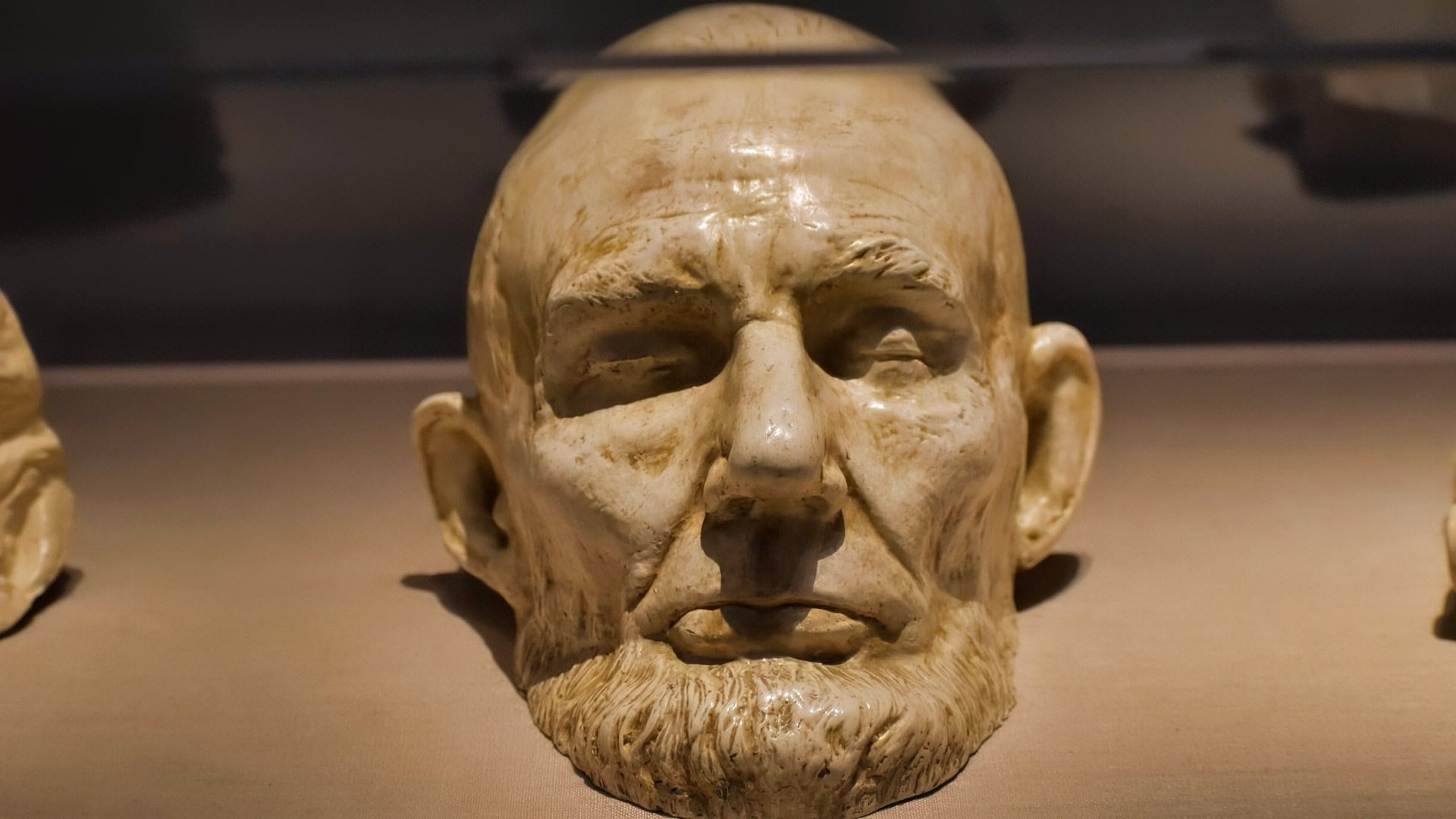
Abraham Lincoln Mask from National Portrait Gallery. Image Credit: 19FortyFive.com/Dr. Brent M. Eastwood.
He also noted that Lincoln is one of the most misquoted people in history, and Obama wasn’t even the first U.S. president to misuse that very same quotation.
“President Reagan used the ‘bound to be true’ line several times,” Pitney wrote. “(One may guess that President Obama’s speechwriter got it from a Reagan speech and incorrectly took it for granted that the Gipper’s staff had sourced it.)”
The Gipper was also fond of using a different, equally inaccurate Lincoln quote.
“You cannot strengthen the weak by weakening the strong. You cannot lift the wage earner by pulling down the wage payer. You cannot help the poor man by destroying the rich,” Reagan said at the Republican convention in 1992, his last major public speech. However, Lincoln never said those words; they were spoken by William Boetcker, a prominent minister from around the turn of the 20th century.
Bush and Clinton, Too
President George H.W. Bush would state, “As Abraham Lincoln said: Here I stand — warts and all;” Lincoln never said this, either.
Bill Clinton once said, in 1994, “The greatest Republican president — some of us think the greatest president we ever had — Mr. Lincoln, once said that you can fool all of the people some of the time, and you can fool some of the people all of the time, but you cannot fool all of the people all the time.” That’s also not a Lincoln quote; per Quote Investigator, it came from Prohibition Party politician William J. Groo in the 1880s.
Misquoting Lincoln goes back even further. The supposed Abe quotation, “Corporations have been enthroned. An era of corruption will follow and the money power of the country will endeavor to prolong its reign by working upon the prejudices of the people until the wealth is aggregated in a few hands and the republic is destroyed.” That one, per Pitney, was denounced by Lincoln’s own personal secretary, still living in the 1880s, as “a “bald, unblushing forgery.”
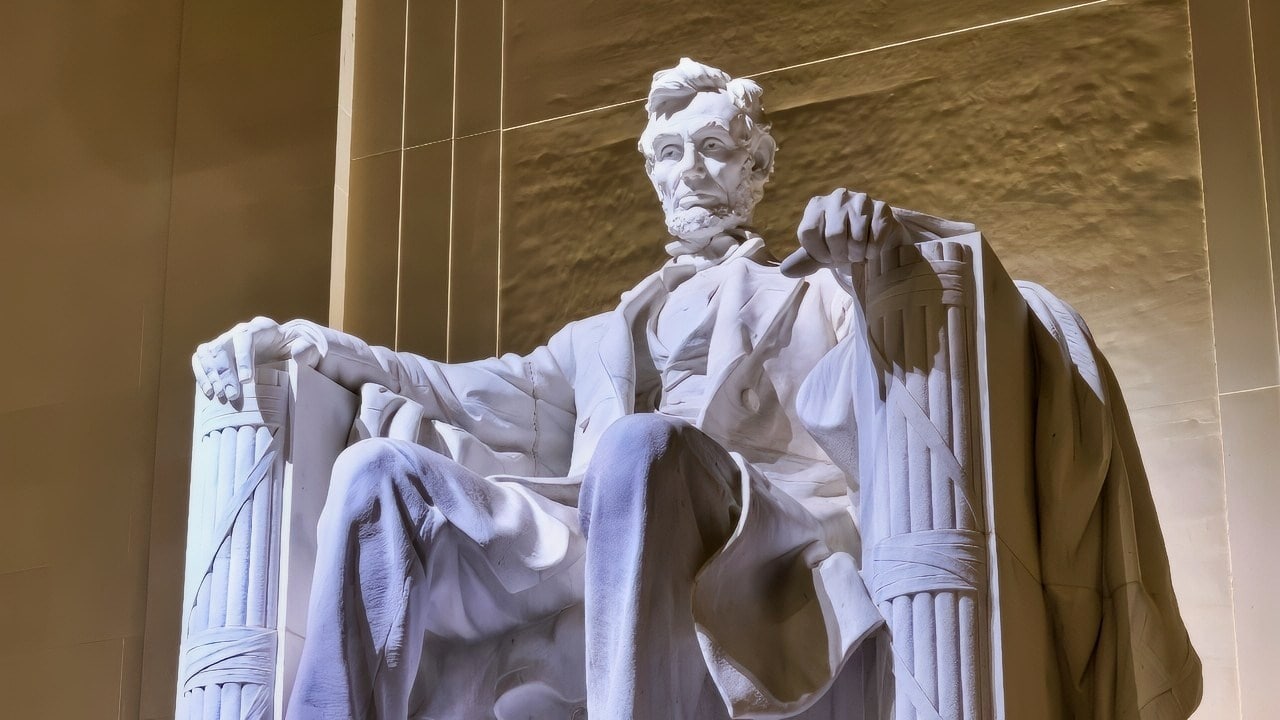
Statue of Abraham Lincoln at the Lincoln Memorial in Washington D.C. on June 12, 2024. The 170-ton statue, sculpted by Daniel Chester French (1850–1931) is located in the Lincoln Memorial on the National Mall. It was carved by the Piccirilli Brothers, assembled in 1920 and unveiled on May 30, 1922.
Lincoln’s Last Year
Whatever he said or didn’t say, President Lincoln had one of the most eventful presidencies, and an especially eventful final year.
According to the American Presidency Project, a lot of important things happened between April of 1864 and his assassination in 1865.
On April 4, 1864, Lincoln wrote to Albert G. Hodges about changes in his thinking on emancipation.
“I felt that measures, otherwise unconstitutional, might become lawful, by becoming indispensable to the preservation of the constitution, through the preservation of the nation,” Lincoln wrote.
Four days later, the Senate voted to pass the 13th Amendment to the Constitution, which abolished slavery. In June, Lincoln signed a law repealing the Fugitive Slave Act. In August, he gave an interview to John T. Mills.
“Abandon all the posts now garrisoned by black men, take one hundred and fifty thousand men from our side and put them in the battlefield or corn-field against us, and we would be compelled to abandon the war in three weeks,” Lincoln said.
In October, Nevada was admitted into the union. In November, Lincoln was elected to his second term.
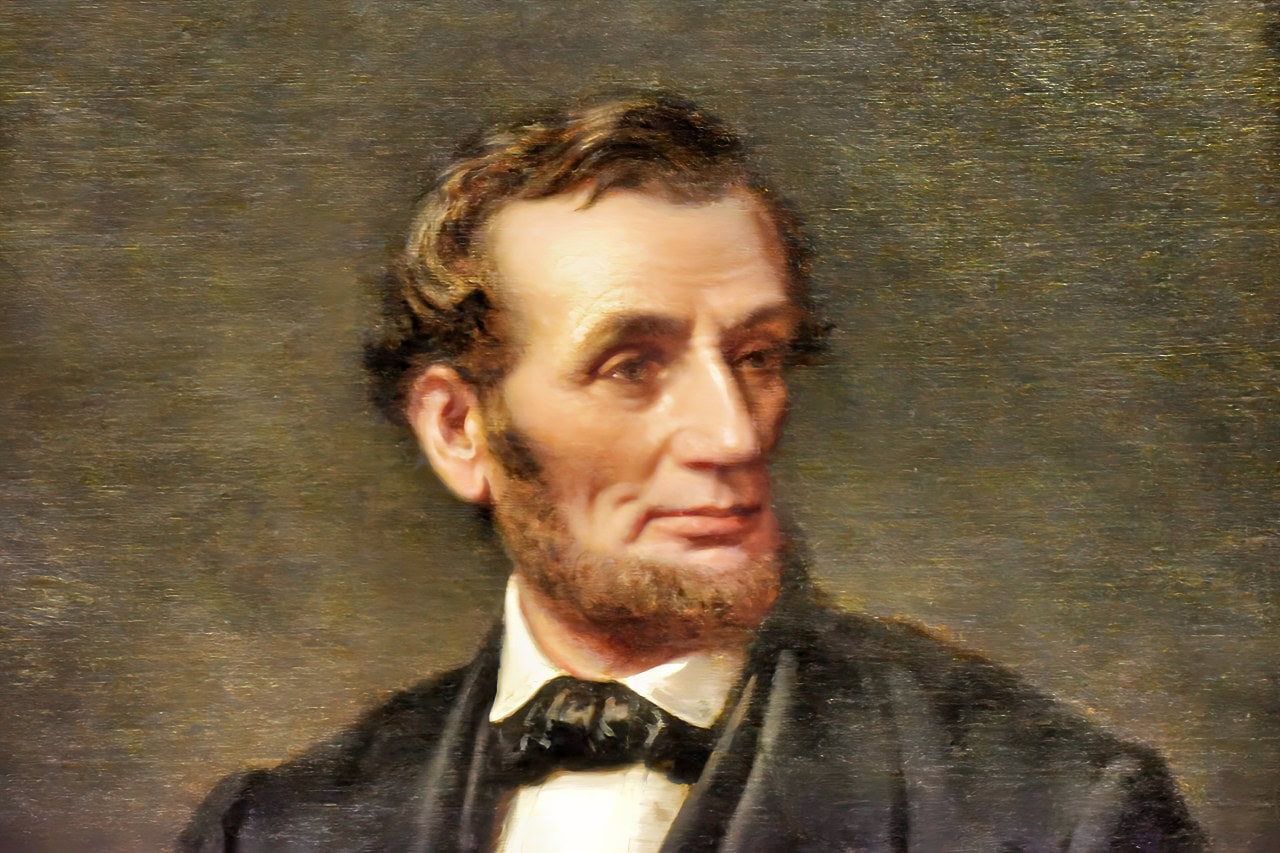
Abraham Lincoln 19FortyFive Image. Taken at the National Portrait Gallery in Washington, DC by Dr. Brent M. Eastwood on 1/23/2026.
The Legacy of Abraham Lincoln
In February of 1865, Lincoln submitted the 13th Amendment to the states. On March 3, he signed a law creating the Bureau for the Relief of Freedmen and Refugees. The next day, he delivered his second inaugural address.
“With malice toward none, with charity for all, with firmness in the right as God gives us to see the right, let us strive on to finish the work we are in, to bind up the nation’s wounds, to care for him who shall have borne the battle and for his widow and his orphan, to do all which may achieve and cherish a just and lasting peace among ourselves and with all nations,” Lincoln said in the address.
On April 9, General Robert E. Lee surrendered at Appomattox, bringing the Civil War to an end. Two days later, Lincoln gave his final public address.
On April 14, Lincoln was assassinated in Washington, and he died the following day.
About the Author: Writer Stephen Silver
Stephen Silver is an award-winning journalist, essayist, and film critic, and contributor to the Philadelphia Inquirer, the Jewish Telegraphic Agency, Broad Street Review, and Splice Today. The co-founder of the Philadelphia Film Critics Circle, Stephen lives in suburban Philadelphia with his wife and two sons. For over a decade, Stephen has authored thousands of articles that focus on politics, national security, technology, and the economy. Follow him on X (formerly Twitter) at @StephenSilver, and subscribe to his Substack newsletter.