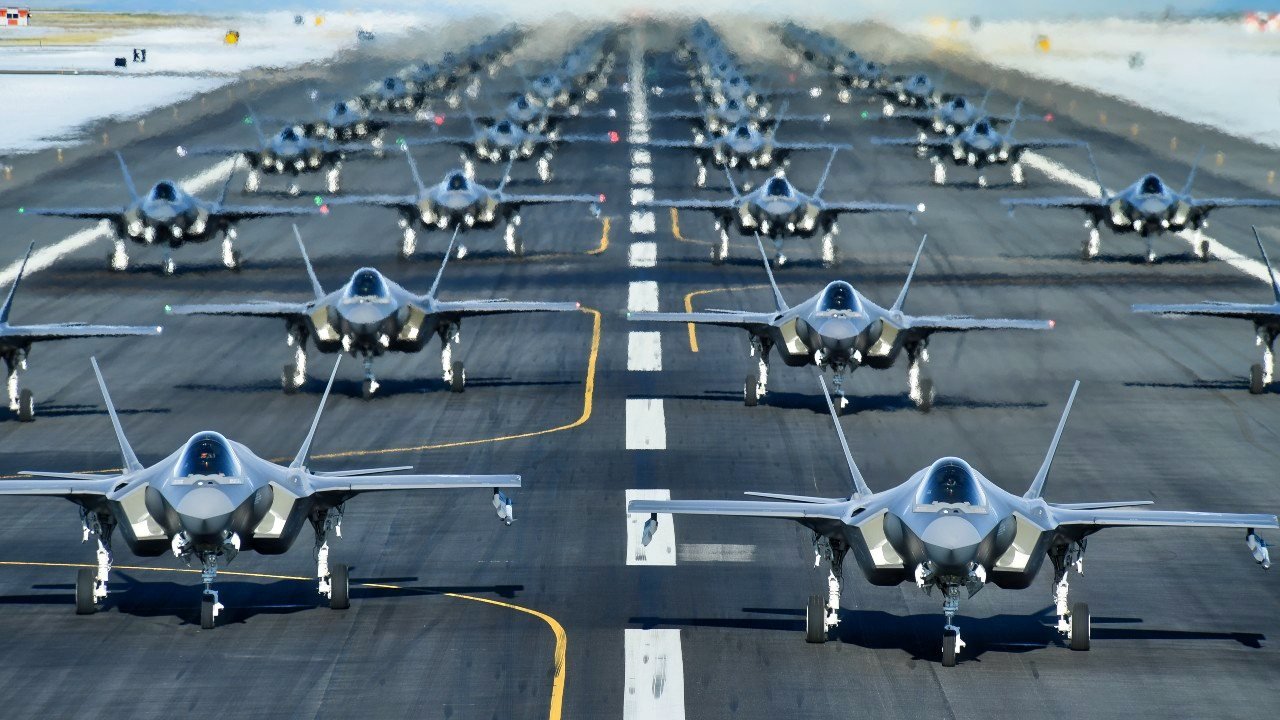
Summary and Key Points: As of February 13, 2026, the U.S. Air Force has officially denied reports that it received F-35 fighters with “empty radomes.”
-Instead, the USAF clarified that Lot 17 aircraft are currently delivering with the older AN/APG-81 radar sets due to developmental delays with the next-generation AN/APG-85.
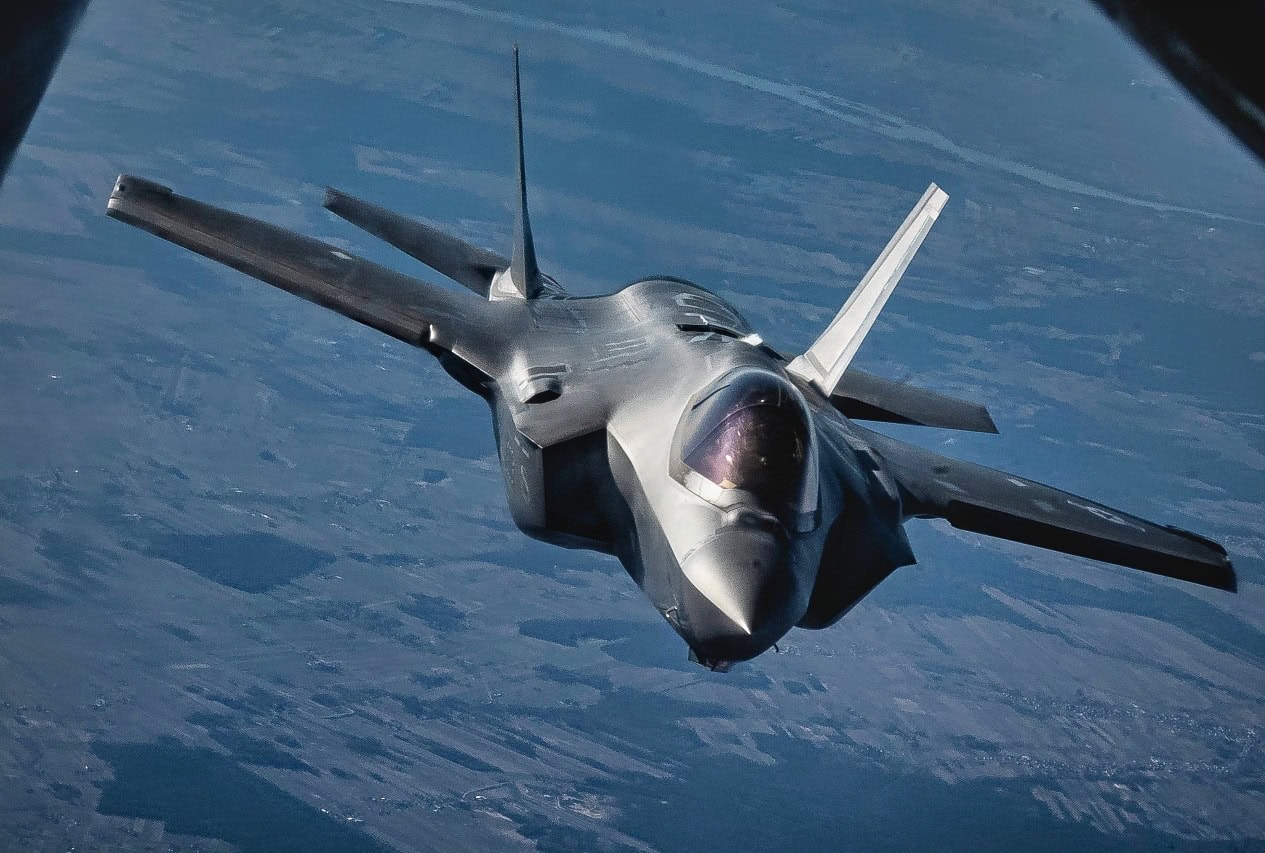
The 388th Fighter Wing’s F-35 Lightning II fifth-generation fighter cruises in Eastern European airspace, Feb. 28, 2022, in support of NATO’s collective defense. U.S. Air Forces in Europe – Air Forces Africa’s ability to support and integrate with NATO’s air policing missions continually hardens the alliance’s solidarity, collective resolve, and ability to adapt to a dynamic warfighting environment. (U.S. Air Force photo by Airman 1st Class Edgar Grimaldo)
-This new radar, utilizing Gallium Nitride (GaN) technology, is central to the Block 4 upgrade but faces significant integration hurdles involving auxiliary power and thermal cooling.
-These setbacks contribute to the F-35’s ballooning lifecycle cost, now estimated at a staggering $2.1 trillion through the 2070s.
Beyond the Rumors: The USAF Sets the Record Straight on “Empty” F-35 Radomes
Despite initial reports to the contrary, the US Air Force (USAF) is now denying that it has taken delivery of any F-35A Joint Strike Fighters from the Lot 17 production run that were minus their radars. That denial follows an unconfirmed report on The War Zone by Tyler Rogoway that the US military has been receiving F-35s with empty radomes since last June.
That rumor was based on coverage that problems with the new AN/APG-85 radar have been worse than previously acknowledged. Reporting on this effect that emerged from The War Zone prompted the USAF to issue what the publication called an “unprompted” response. Experts we spoke to remarked that providing feedback without being pressed to do so is rather rare.
“It is obvious that the USAF wanted this story tamped down and put in the ‘not at all accurate’ basket quickly—before the story spread and it turned into a free fire zone of other customers immediately pumping in inquiries one after the another,” said a US industry expert who spoke on condition of anonymity.
“LM and the USAF have enough problems with customers wanting to either scale back their numbers—like Canada is talking about—or other countries just getting out of the program altogether without this kind of a story making the rounds,” he continued.
“USAF F-35A lot 17 aircraft are delivering with [the previous model] APG-81 radars,” an Air Force spokesperson later explained. “The Air Force is working with the F-35 Lightning II Joint Program Office to deliver F-35s with APG-85 radars, and actual modernization plans, capabilities, and schedules remain classified to maintain program security.”
Next-Generation AESA and F-35
It was first reported in 2023 that Northrop Grumman was developing the AN/APG-85 as a more advanced replacement for the AN/APG-81 radar set installed in all F-35 variants since the beginning of the program. This new radar is a central part of the aircraft’s comprehensive Block 4 upgrade.
The APG-85’s active electronically scanned array (AESA) is built with Gallium Nitride (GaN) semiconductor technology, replacing the APG-81’s Gallium Arsenide (GaAs) Transmit/Receive Modules (TRM). Those TRMs based on GaN have several advantages, most notably higher efficiency.
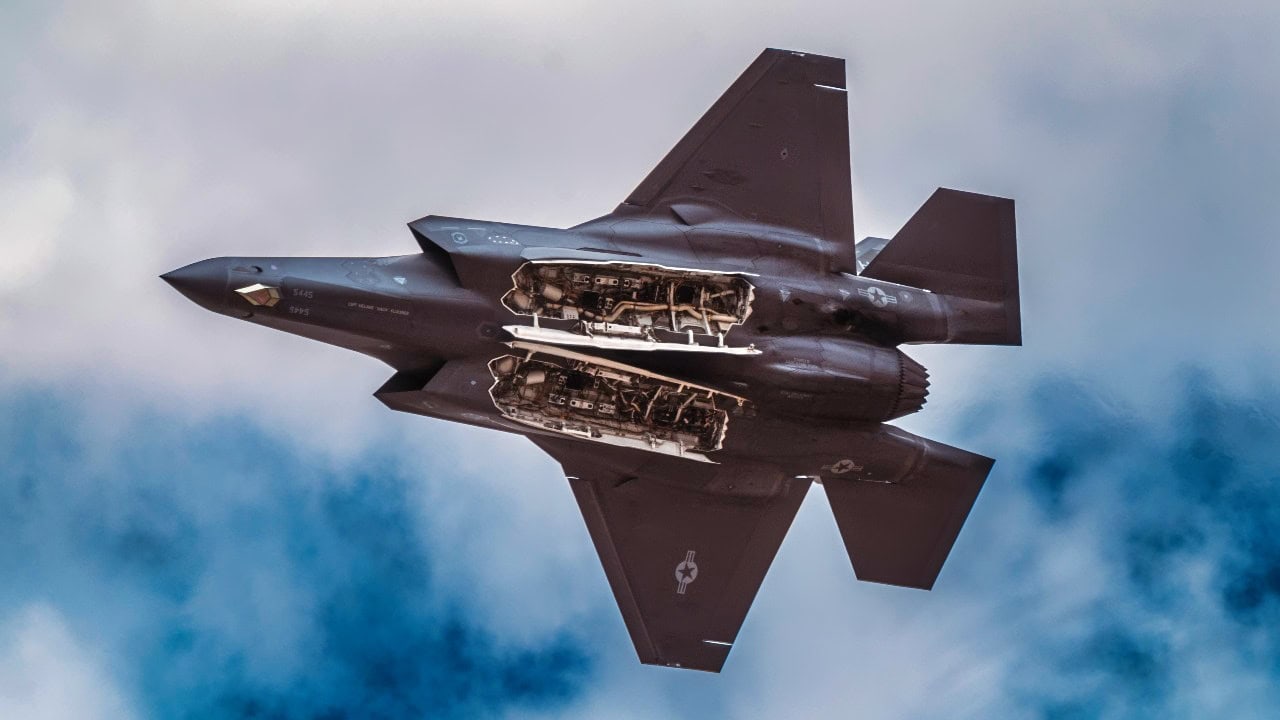
An F-35 Lightning II, assigned to the F-35 Demonstration Team, pays tribute to the past present, and future of Air Force aviation customs and capabilities during Luke Days airshow, March 23, 2024, at Luke Air Force Base, Arizona. Luke Days demonstrates the Air Force’s continuing progress in building the future of airpower with military and civilian air acts including the U.S Air Demonstration team the “Thunderbirds,” F-35A Lightning II, static displays, science, technology, engineering, and math exhibits, and military operations demonstrations. (U.S. Air Force photo by Airman 1st Class Mason Hargrove)
This rating is measured as the ratio of signal strength generated to power consumed. For an AESA fitted with GaN TRMs, this would require an efficiency rating of 40 per cent or better.
GaN technology also provides higher power density, significantly improved detection ranges, and better thermal efficiency, resulting in lower heat dissipation. The performance of this radar set provides superior air-to-air and air-to-ground capabilities for the F-35 Block 4 upgrade. The aircraft is reportedly capable of superior detection and tracking, which ultimately means it can now engage more advanced and stealthier enemy targets.
Block 4 Problems
Among the details the USAF has not yet addressed is whether the current aircraft, which were supposed to have the APG-85 installed, can instead be equipped with the APG-81 without extensive modifications.
Reports from last year indicated backward-compatibility issues when installing the older radar in the area where the newer model was to be installed. There were rumors that a section of the forward fuselage would need to be redesigned to accommodate the older radar in the aircraft configured to accept the newer model.
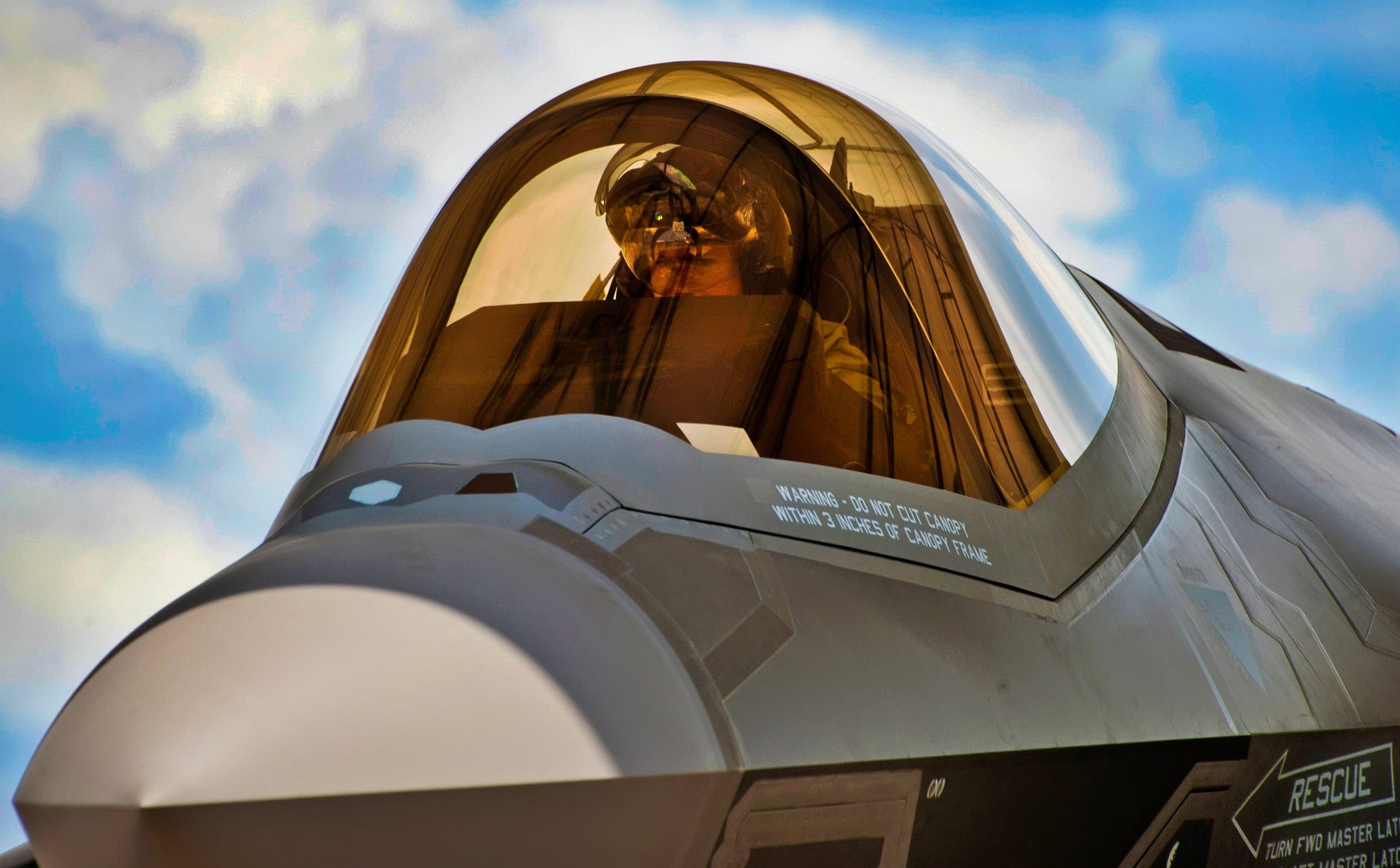
Marine Maj. Joseph Bachmann, of the 33rd Operations Group, executes aircraft shutdown procedures of the second F-35 Lightning II joint strike fighter to arrive at Eglin Air Force Base, Fla., July 20. Bachmann is the first Marine pilot to be JSF certified. Aircraft AF-8 is the flagship for the 58th Fighter Squadron. (U.S. Air Force photo/Samuel King Jr.)
The integration of the APG-85, a new electronic warfare suite, and several other improved subsystems collectively creates the need for additional auxiliary power generation and thermal cooling capacity. These complications are scheduled to be mitigated by an engine upgrade effort that is also running behind schedule.
On balance, the F-35 program continues to incur cost overruns related to operating and maintaining the jets. The total cost of the program from the start of development in the 1990s through the end of the F-35’s projected lifecycle sometime in the 2070s is now estimated at approximately $2.1 trillion.
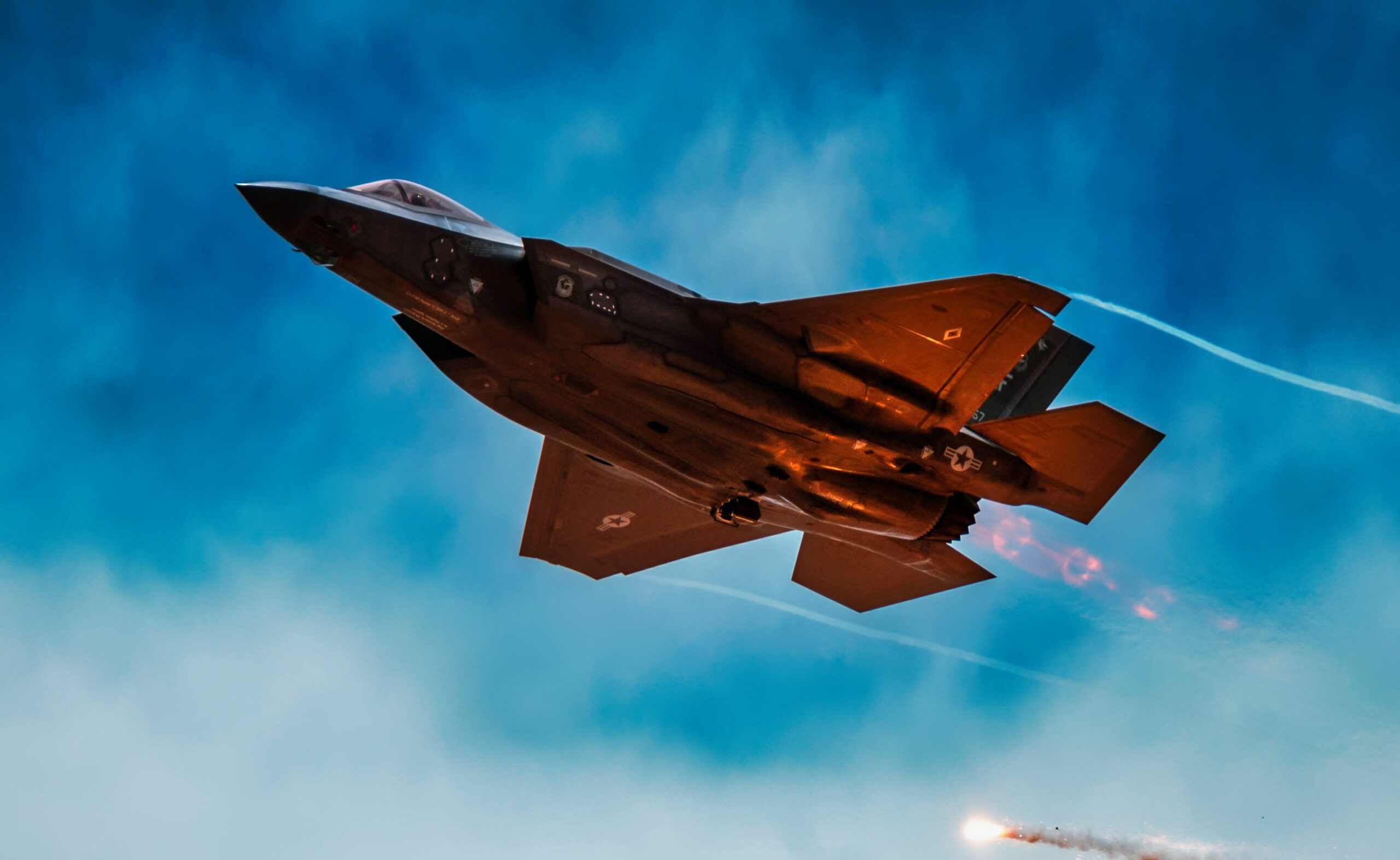
A U.S. Air Force F-35A Lightning II assigned to the 56th Fighter Wing, Luke Air Force Base, Arizona, performs a strafing run during Haboob Havoc, April 24, 2024, over Barry M. Goldwater Range, Arizona. Haboob Havoc is a total force exercise that provides a way for pilots from various bases to demonstrate their skills across a diverse range of aircraft, including F-35 Lightning IIs, F-16 Fighting Falcons, and A-10 Thunderbolt IIs, while also testing their abilities in different mission sets such as dogfighting and gun runs. (U.S. Air Force photo by Airman 1st Class Mason Hargrove)
This will keep the aircraft the most expensive weapon system in the Department of War’s history. And in the category of “economics always matters,” the F-35 JPO points out that inflation is expected to account for roughly half of this dollar figure over the program’s lifecycle in service.
About the Author: Reuben F. Johnson
Reuben F. Johnson has thirty-six years of experience analyzing and reporting on foreign weapons systems, defense technologies, and international arms export policy. Johnson is the Director of Research at the Casimir Pulaski Foundation. He is also a survivor of the Russian invasion of Ukraine in February 2022. He worked for years in the American defense industry as a foreign technology analyst and later as a consultant for the U.S. Department of Defense, the Departments of the Navy and Air Force, and the governments of the United Kingdom and Australia. In 2022-2023, he won two awards in a row for his defense reporting. He holds a bachelor’s degree from DePauw University and a master’s degree from Miami University in Ohio, specializing in Soviet and Russian studies. He lives in Warsaw.