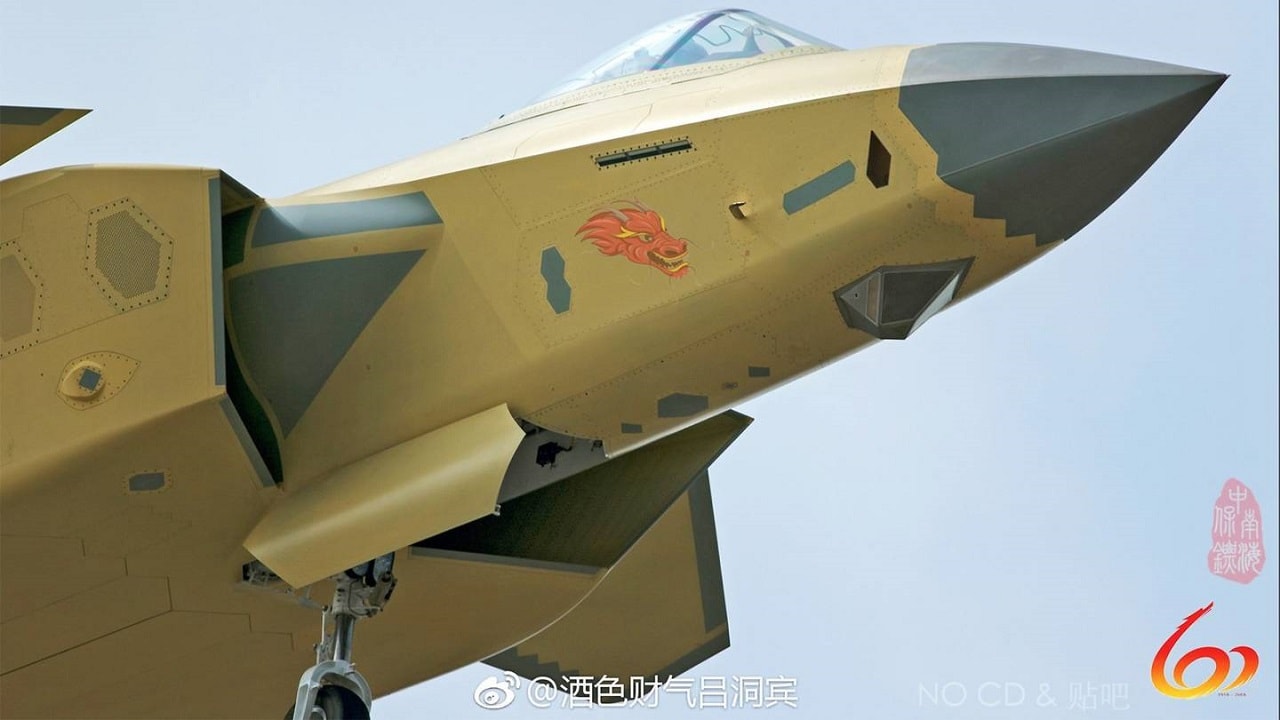
Summary and Key Points: Caleb Larson, a national security journalist and Ukraine conflict expert, analyzes the staggering production ramp-up of the Chengdu J-20 Mighty Dragon.
-With output reportedly hitting 120 airframes annually, the PLAAF is on track to field 1,000 stealth fighters by 2030, outstripping current U.S. Air Force acquisition rates.
-This 19FortyFive analysis explores the “Numbers Game” through research from the Mitchell Institute and Justin Bronk, while evaluating the technical “speed bump” of engine longevity.
-Despite integrating the WS-15, Chinese powerplants still require overhauls after hundreds of hours, compared to the thousands of hours sustained by Pratt & Whitney and GE engines.
1,000 J-20 Mighty Dragons by 2030: China Triples U.S. Fifth-Generation Fighter Production
China’s J-20 fighter has notched several noteworthy firsts. The Chengdu product was the first fifth-generation stealth fighter China put into service. It was the first mass-produced non-U.S. stealth fighter. One variant, the J-20S, was the first two-seat stealth fighter.
Aside from the trivia, an accurate understanding of the jet’s capabilities is more difficult to attain.
But some of the J-20 program’s contours can be assessed with a degree of confidence, thanks in part to information gleaned from open sources by researchers, think tankers, and industry insiders about some of the J-20’s subsystems and its overall production.
A Game of Numbers
Justin Bronk, a senior research fellow at the Royal United Services Institute, analyzed Russian and Chinese aircraft through the lens of production numbers.
His analysis concluded that while Chinese stealth aircraft, including the J-20, tend to lag behind competing analogues in quality, China is building them at a breakneck pace.
“What these figures indicate, in practice,” Bonk explains, “is that the proportion of fifth-generation and advanced fourth-generation fighters operated by the PLAAF has greatly increased since 2020 and will continue to do so. The trend suggests that around 1000 J-20/A/Ss and 900 J-16s will be in service with the PLAAF by 2030.”
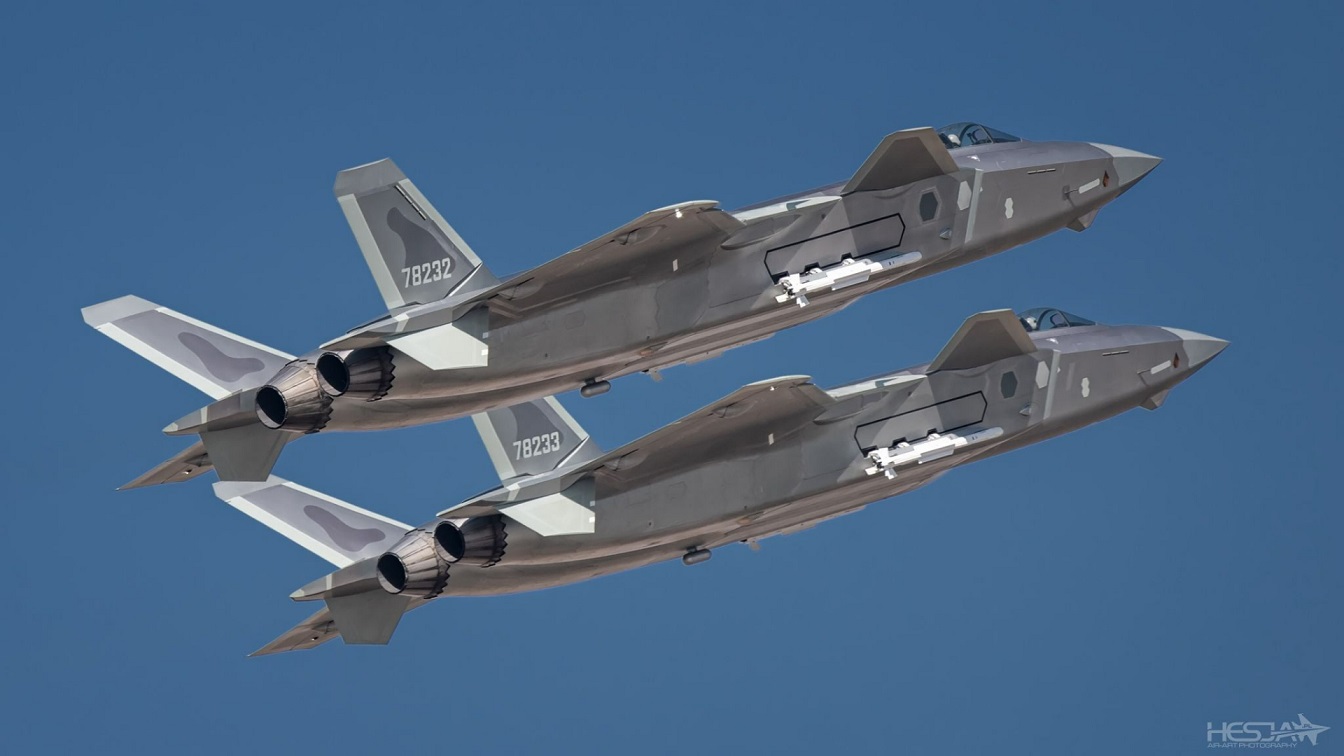
J-20 Stealth Fighter. Image Credit: Creative Commons.
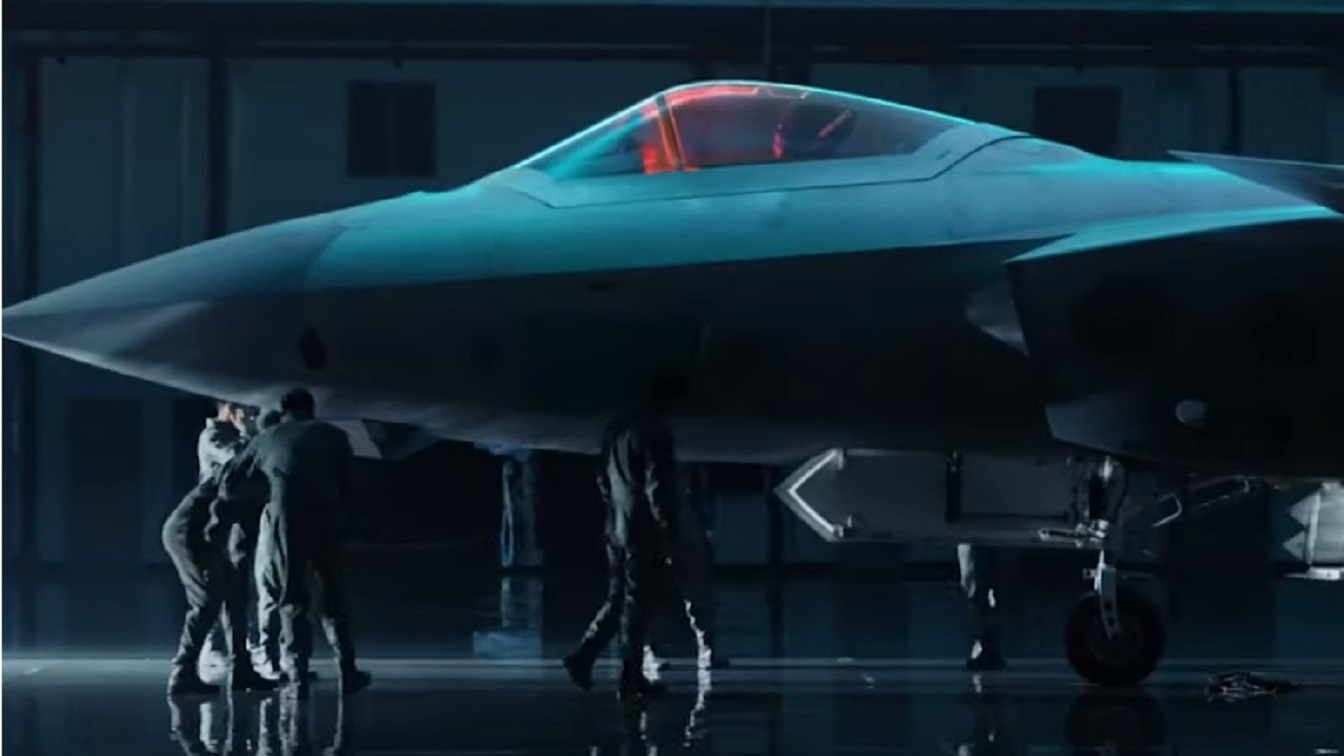
J-20 Stealth Fighter. YouTube Screenshot.
There is a noticeable trend in China’s force makeup “towards heavy fighters in general, with J-16s and J-20s being used to re-equip units that previously were operating not only J-11 and Su-27/30 Flanker heavy fighters, but also some J-7 light and J-8 medium fighters.”
The composition of China’s air fleets is changing away from fourth-generation fighters toward stealthy fifth-generation combat aircraft, including bombers. China also demonstrates a clear desire to field sixth-generation fighters in the future.
A study by the Mitchell Institute for Aerospace Studies concurs both with the figures compiled by Bronk, and the assessment of a turn toward fifth-generation production. “China has an estimated 2,225 fighters in its inventory,” the Mitchell Institute explained, “of which 1,311 are 4th-generation and 320 are 5th-generation aircraft.”
“With a production rate reportedly increasing to 120 J-20s a year, the PLAAF’s acquisition of 5th-generation jets almost triples that of the USAF.”
The Mitchell Institute did acknowledge a significant caveat. “There is little data available regarding readiness, but assuming 70 percent of their fleet is combat-coded and has the same 70 percent MC rate that was assumed for the allies is reasonable. That equates to the PLAAF having roughly 799 MC fighters available to employ at any given time.”
While the numbers are impressive, numerical analyses tell only part of the J-20 story and ignore questions of capabilities.
A Crossroads
That China’s aerospace industry has grown in quality and quantity is evident. Indeed, China is one of the few countries that has put a homegrown fifth-generation fighter into service. But Beijing’s aerospace industry faces a significant speed bump: high-performance jet engines.
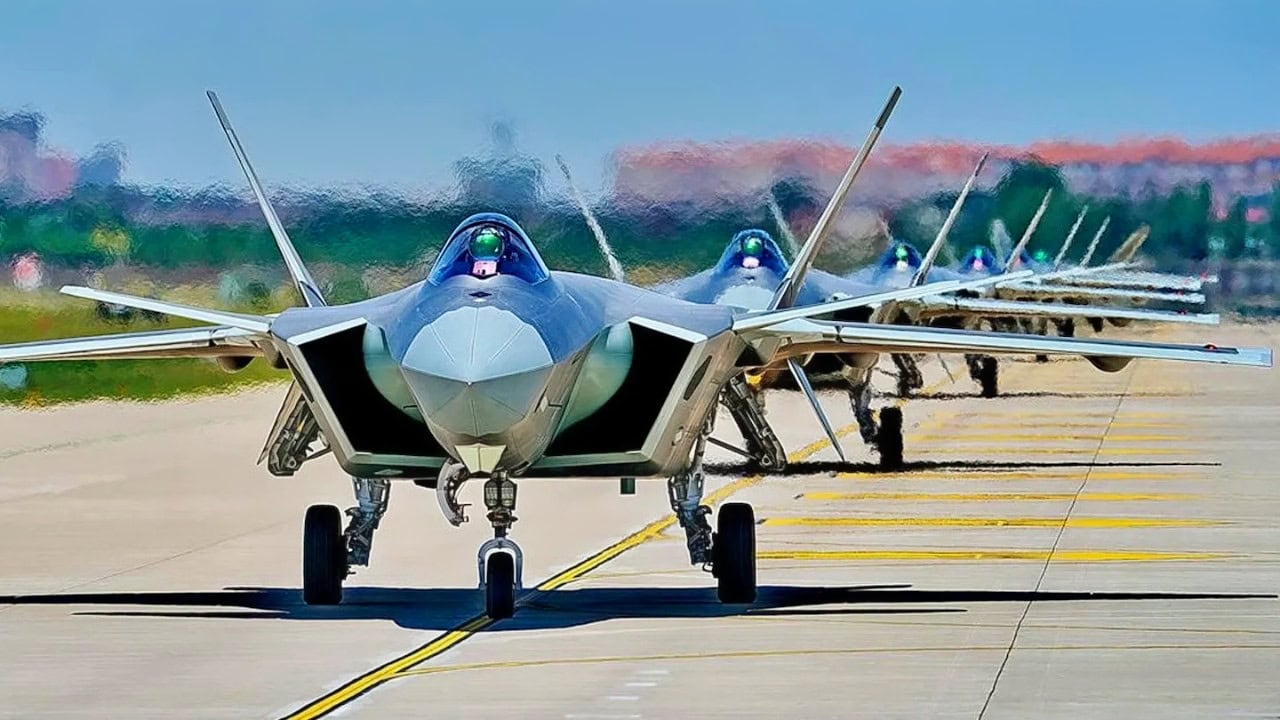
J-20 Fighter from PLAAF China. Image Credit: Creative Commons.
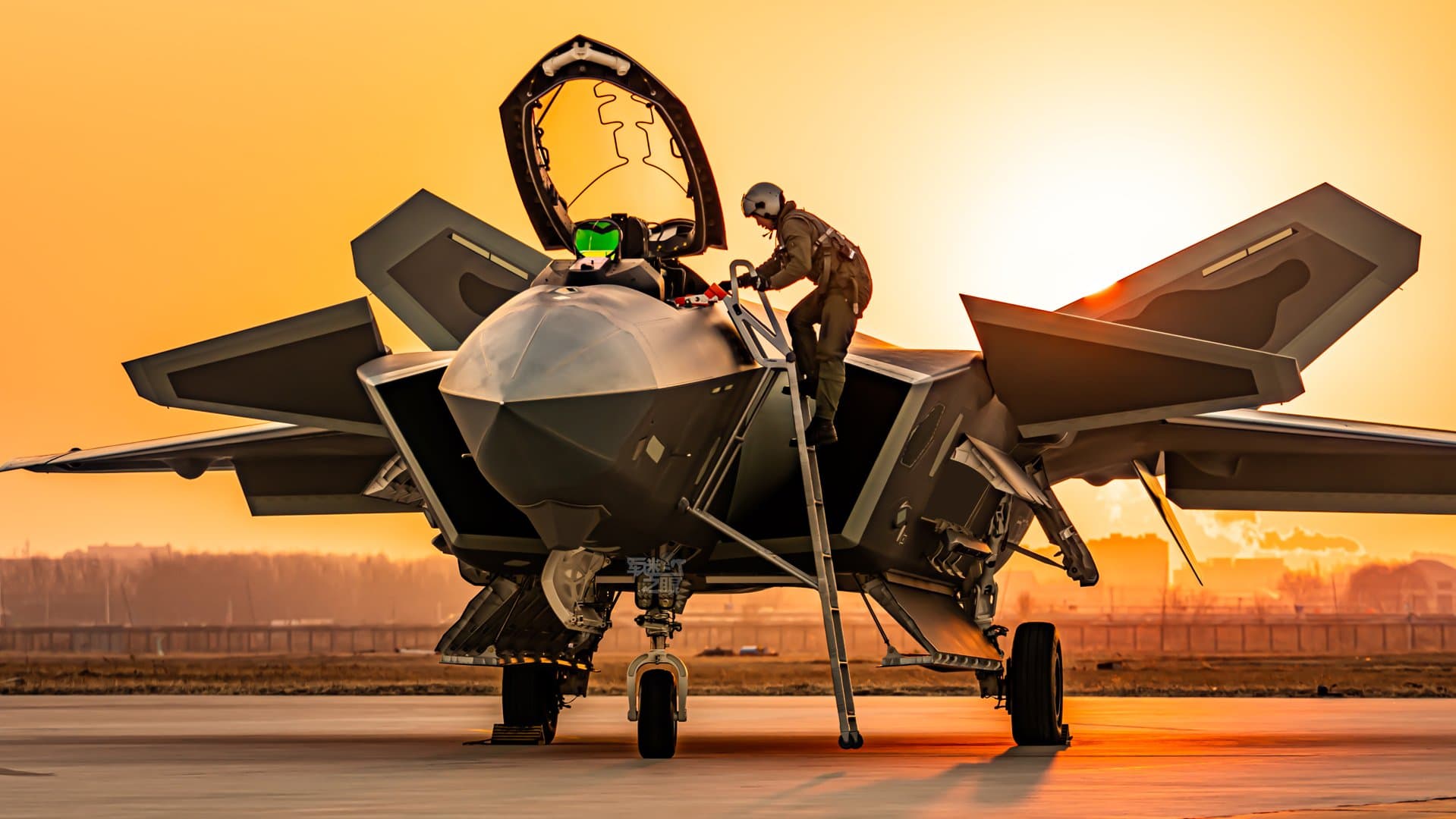
J-20 Fighter. Image Credit: Chinese Internet.

J-20 Fighter. Image Credit: Chinese CCTV.
Steve Russel, the general manager of General Electric’s Edison Works unit, explained why the jet engines his company builds, as well as those of Pratt & Whitney, outclass Chinese rivals—and why China has struggled to match the performance parameters of Western jet engines.
“Our reliability tends to be still an order of magnitude better than theirs,” Russell explained during an interview with Flight Global. Russel also said that while Chinese-made jet engines may approach the performance of their Western-built counterparts, it is the reliability of American jet engines that sets them apart. He added that Chinese jet engines typically need extensive servicing after accumulating hundreds of flight hours. But the engines that power U.S. warplanes are overhauled after accruing thousands of hours of use.
“But,” Russel added, “they’re getting better and we’re seeing them get better. That’s why it’s important that we take this next generational leap to make sure that we maintain that advantage that we have.”
China’s industrial base certainly is enormous. And its ability to build and replace fighters lost in combat may offset China’s qualitative disadvantages through sheer numbers.
About the Author: Caleb Larson
Caleb Larson is an American multiformat journalist based in Berlin, Germany. His work covers the intersection of conflict and society, focusing on American foreign policy and European security. He has reported from Germany, Russia, and the United States. Most recently, he covered the war in Ukraine, reporting extensively on the war’s shifting battle lines from Donbas and writing on the war’s civilian and humanitarian toll. Previously, he worked as a Defense Reporter for POLITICO Europe. You can follow his latest work on X.