
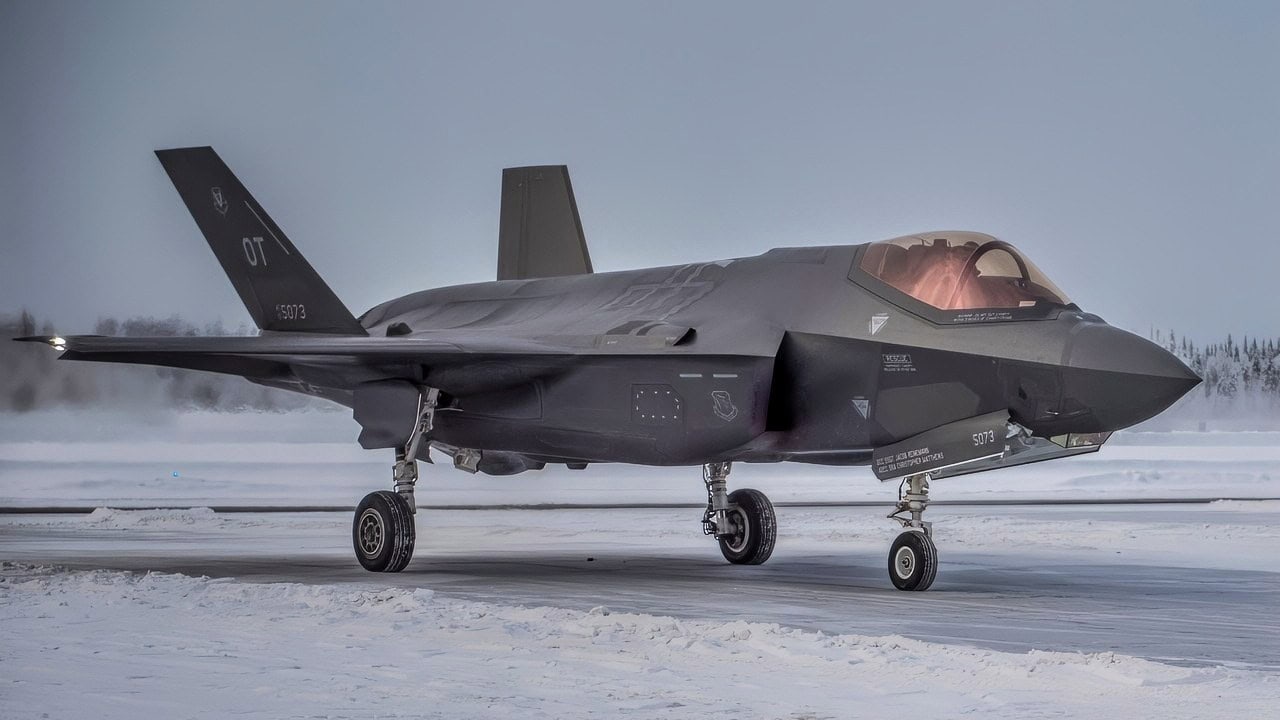
Summary and Key Points: An expert examines the F-35 Lightning II’s specialized cold-weather engineering.
-Following rigorous testing at the McKinley Climatic Laboratory at Eglin AFB, the F-35 has proven its ability to generate sorties at -40°, a vital requirement for the U.S. Air Force at Eielson AFB, Alaska.
-This 19FortyFive analysis explores how the Pratt & Whitney F135 engine and advanced thermal management systems prevent “cold soak” failures, ensuring NATO’s northern flank remains defended against Russian power projection along the Northern Sea Route.
Sortie Generation at 40 Below: The Secret McKinley Lab Testing That Hardened the F-35
The F-35’s ability to operate in brutally cold conditions – down to -40 degrees Fahrenheit – is a core requirement for a fifth-generation fighter that has to be ready in Alaska, Norway, and other high-latitude bases where winter conditions can shut down less-prepared aircraft.
The U.S. Air Force explicitly tested the F-35 in a controlled climatic chamber ranging from 120 degrees Fahrenheit to negative 40 degrees as part of an all-weather certification effort meant to ensure the jet can deploy to any corner of the world.
Cold-weather capability is also becoming strategically more relevant. NATO’s northern flank has expanded and hardened since Finland joined the alliance on April 4, 2023, stretching the alliance’s frontier with Russia deeper into the High North.
At the same time, the Arctic is becoming more operationally significant as sea ice changes open windows for shipping and activity along routes like the Northern Sea Route. With that in mind, a modern fighter’s ability to generate sorties off icy ramps is a crucial part of modern deterrence.
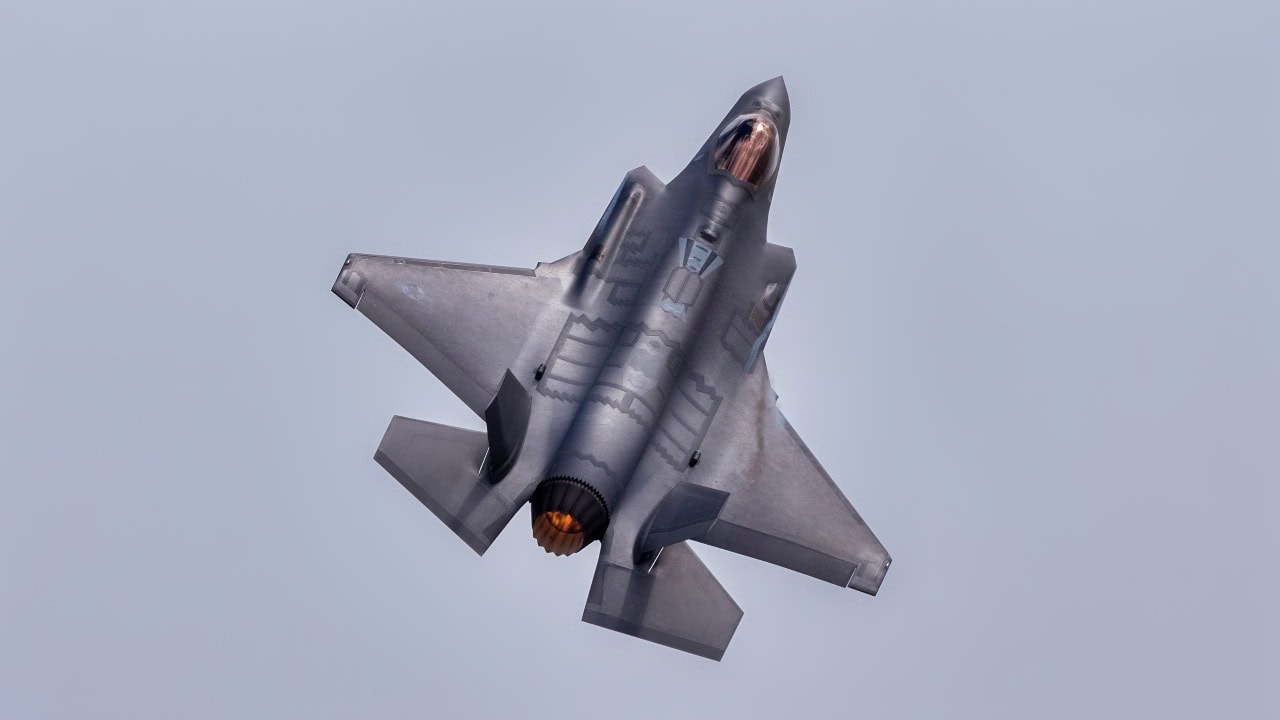
U.S. Air Force Capt. Kristin “BEO” Wolfe, the F-35A Demonstration Team pilot, climbs into the sky during a flight practice June 17, 2020, Hill Air Force Base, Utah. Air Combat Command’s single-ship aerial demonstration teams are required to regularly practice in order to maintain flight currencies and stay performance-ready. (U.S. Air Force photo by Capt. Kip Sumner)
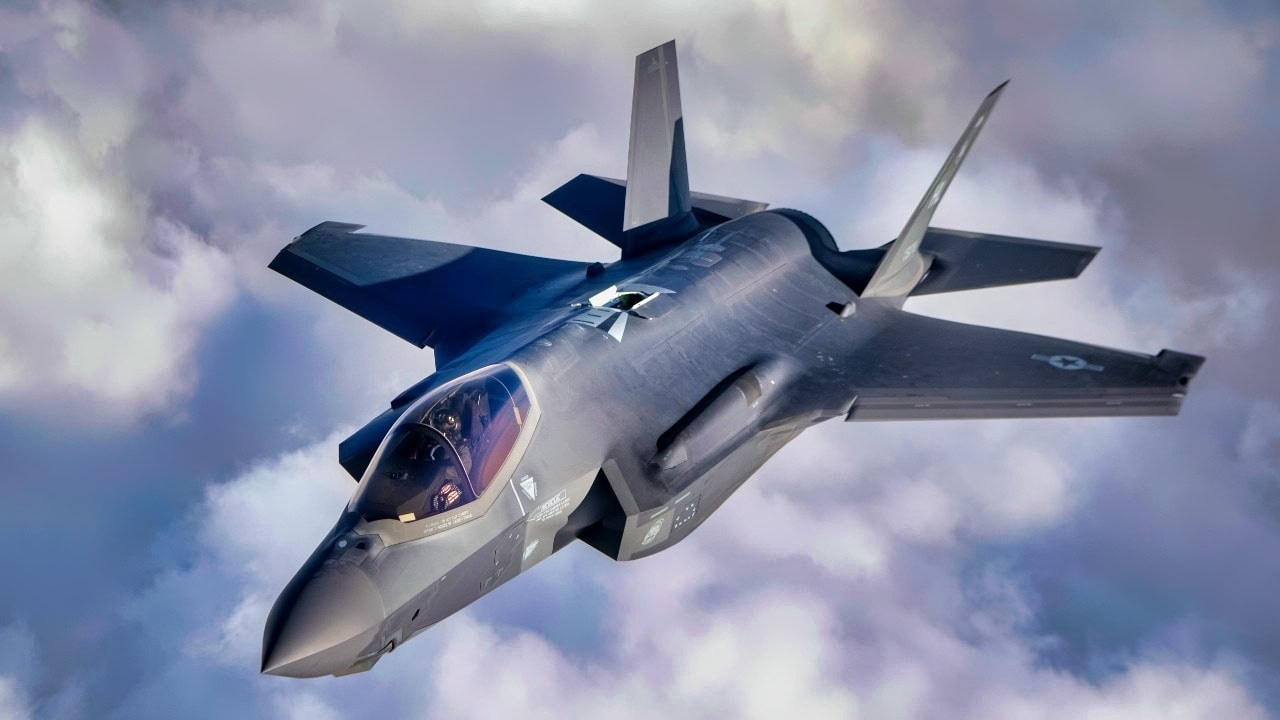
A U.S. Air Force F-35 Lightning II flies over the U.S. Central Command area of responsibility, July 15, 2020. The F-35 Lightning II is an agile, versatile, high-performance, multirole fighter that combines stealth, sensor fusion and unprecedented situational awareness. (U.S. Air Force photo by Airman 1st Class Duncan C. Bevan)
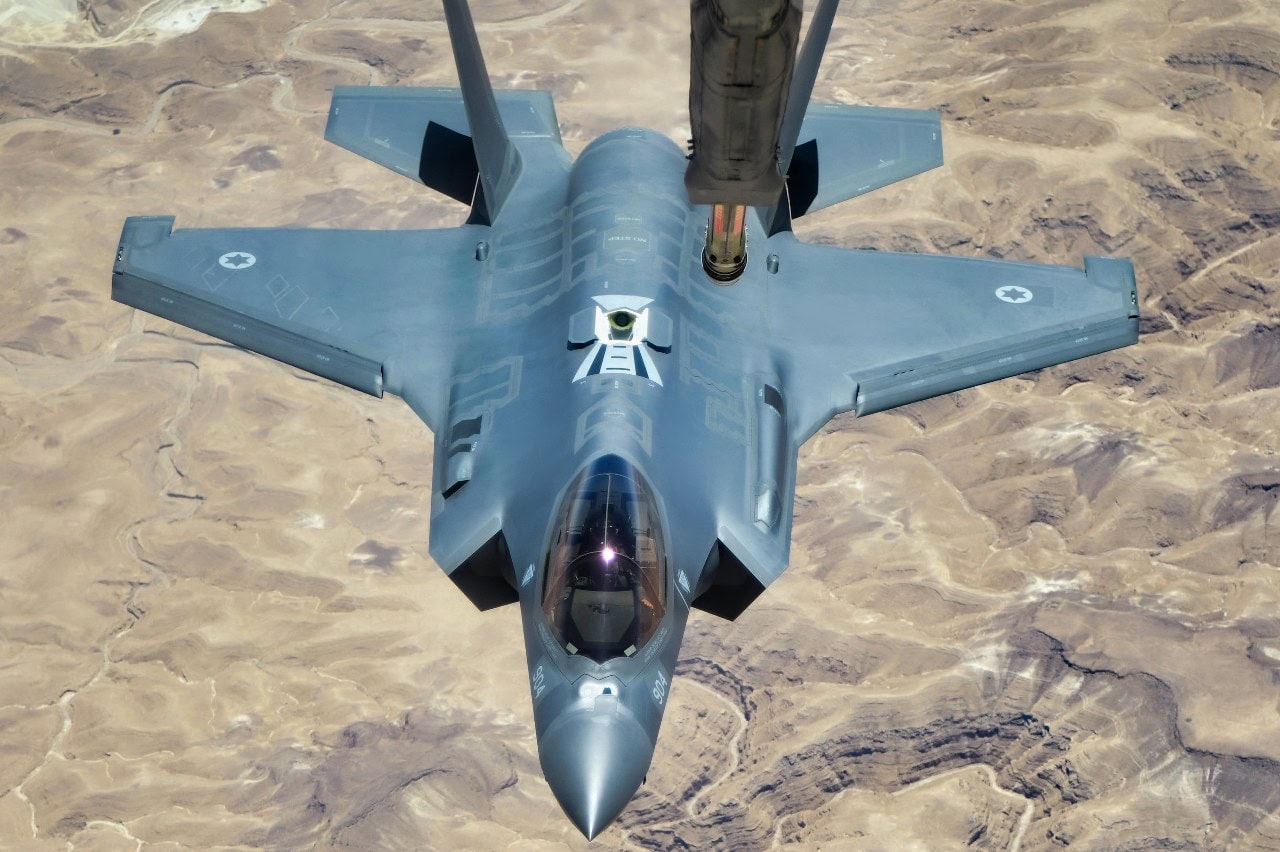
An Israeli Air Force F-35I Lightning II “Adir” approaches a U.S. Air Force 908th Expeditionary Refueling Squadron KC-10 Extender to refuel during “Enduring Lightning II” exercise over southern Israel Aug. 2, 2020. While forging a resolute partnership, the allies train to maintain a ready posture to deter against regional aggressors. (U.S. Air Force photo by Tech. Sgt. Charles Taylor)
Why the F-35 Must Fight in the Deep Cold
A large share of the environments in which the F-35 is expected to operate are cold-weather by geography. The U.S. Air Force placed F-35As at Eielson Air Force Base, Alaska, a location that routinely tests aircraft, personnel, and logistics in extreme winter conditions.
The Air Force has also used real-world Arctic exercises to pressure-test how F-35 units plan, launch, sustain, and integrate with partners in harsh Nordic environments – exactly the kind of conditions that can expose weak links in maintenance workflows and support equipment.
The logic is simple: if NATO’s northern flank is contested, there is no pause button for the winter. Russia has invested for years in refurbishing and expanding Arctic infrastructure, including air bases along the Northern Sea Route. That infrastructure is meant to support persistent presence and power projection across the region – meaning NATO needs aircraft that can reliably operate from cold-weather installations without seasonal degradation.
How It Does It
The F-35’s ability to operate at temperatures as low as -40 is the result of precise engineering and design and has been proven by years of testing.
In 2015, the Air Force described a months-long climatic test program at the McKinley Climatic Laboratory at Eglin AFB that simulated “virtually any weather condition,” including snow, freezing rain, and icing build-up. The same official account quotes an F-35 test pilot describing the chamber as pushing the aircraft to environmental limits “ranging from 120 degrees Fahrenheit to negative 40 degrees.”
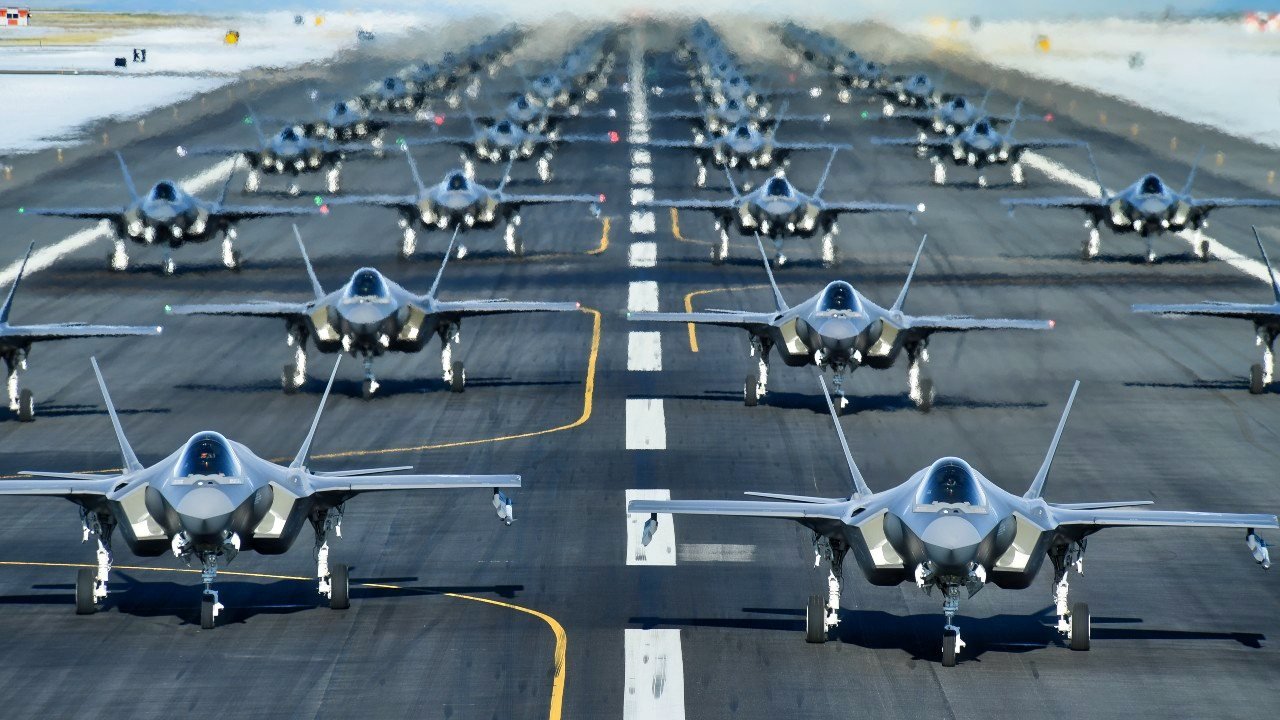
F-35 Elephant Walk. Image Credit: Creative Commons.
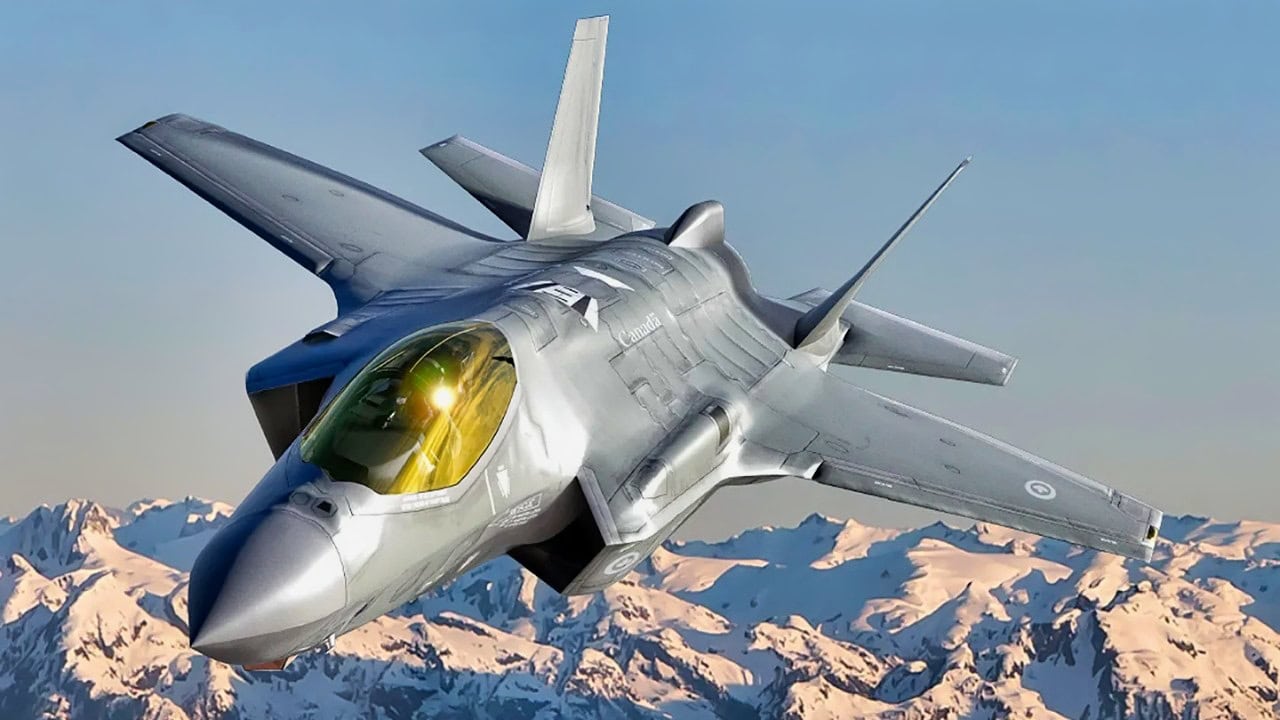
Canada F-35. Image Credit: Creative Commons.
Those testing conditions and proven capabilities matter because cold introduces failure modes that do not appear in mild climates. Ice, for example, may accumulate on probes and leading edges. Freezing rain can create dangerous surface contamination, too, and “cold soak” can stress materials and avionics as temperatures swing dramatically between the heater shelters and freezing flight conditions.
Beyond coatings, the F-35’s propulsion system must also be prepared – and it is. The F-35 is powered by Pratt & Whitney’s F135 engine, and its overall propulsion system features integrated thermal management required for modern sensors and mission systems.
In cold climates, thermal management is a two-way problem: systems must be kept warm enough to function properly while also managing heat loads when the aircraft is operating hard.
The Payoff
For operators, the benefit of the F-35’s cold-weather design is not just the ability to function in a snowstorm, but predictable sortie generation. The High North is logistically unforgiving, and being able to predictably generate sorties is a huge benefit to the U.S. Air Force.
In places like Alaska and northern Norway, winter is not a short season. Temperatures can stay far below freezing for months. Aircraft parked outside can sit in extreme cold overnight before being called on to launch quickly. If fuel systems, sensors, batteries, or hydraulics struggle in those conditions, readiness suffers.
The F-35 was tested specifically to avoid that problem. The Air Force confirmed that the aircraft completed environmental testing that included freezing rain, snow, icing, and temperatures down to negative 40 degrees.
That testing means commanders and operators can have confidence in the F-35s more often than not, and it means they can also rely on the jet’s systems to function even after sitting in extreme cold.
This matters because modern air forces increasingly operate in northern regions. The U.S. Air Force’s F-35s at Eielson Air Force Base in Alaska were specifically positioned to strengthen airpower in the Arctic and Indo-Pacific.
Put simply: if a conflict stretches into winter or takes place in the High North, the F-35 is designed so that snow and freezing temperatures do not shut down air operations.
About the Author: Jack Buckby
Jack Buckby is a British researcher and analyst specialising in defence and national security, based in New York. His work focuses on military capability, procurement, and strategic competition, producing and editing analysis for policy and defence audiences. He brings extensive editorial experience, with a career output spanning over 1,000 articles at 19FortyFive and National Security Journal, and has previously authored books and papers on extremism and deradicalisation.

