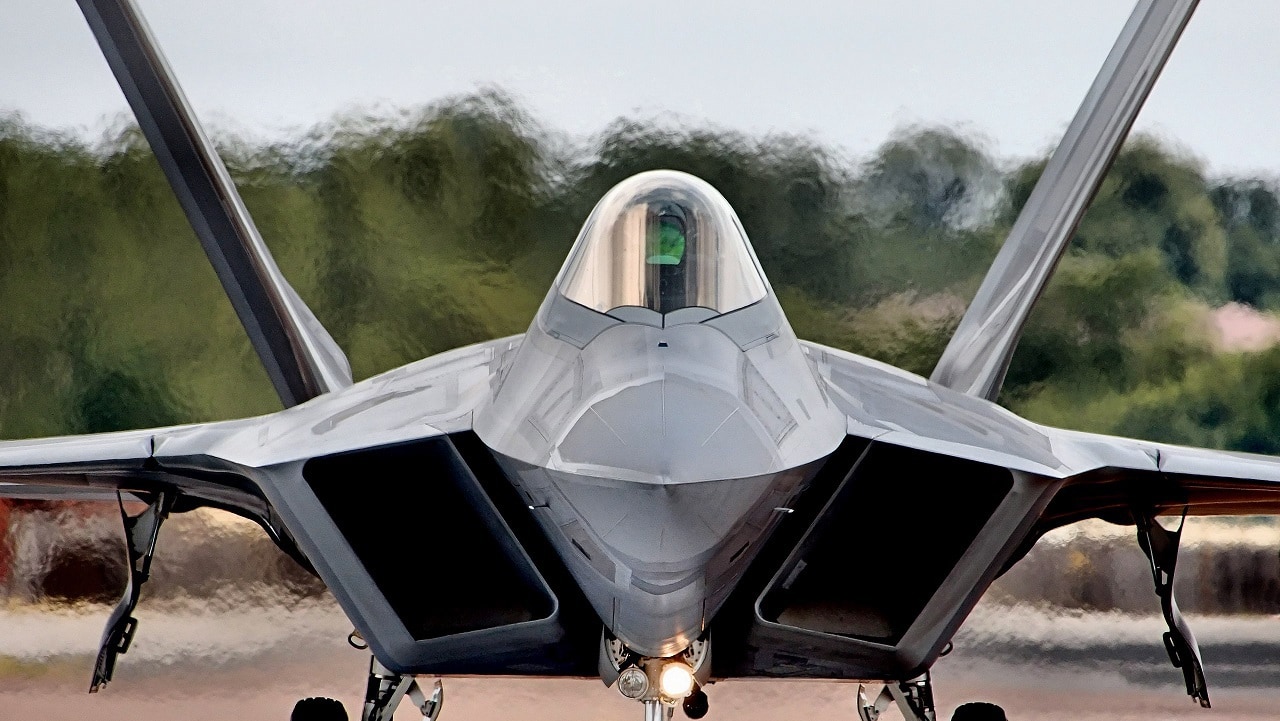
Summary and Key Points: Reuben F. Johnson, a veteran defense analyst and Casimir Pulaski Foundation Director, evaluates the deployment of over 100 F-22 and F-35 fighters to the Middle East.
-Central to this surge is the integration of Lockheed Martin’s Project Overwatch, a tactical AI model designed to resolve Combat Identification (Combat ID) ambiguities in real-time.
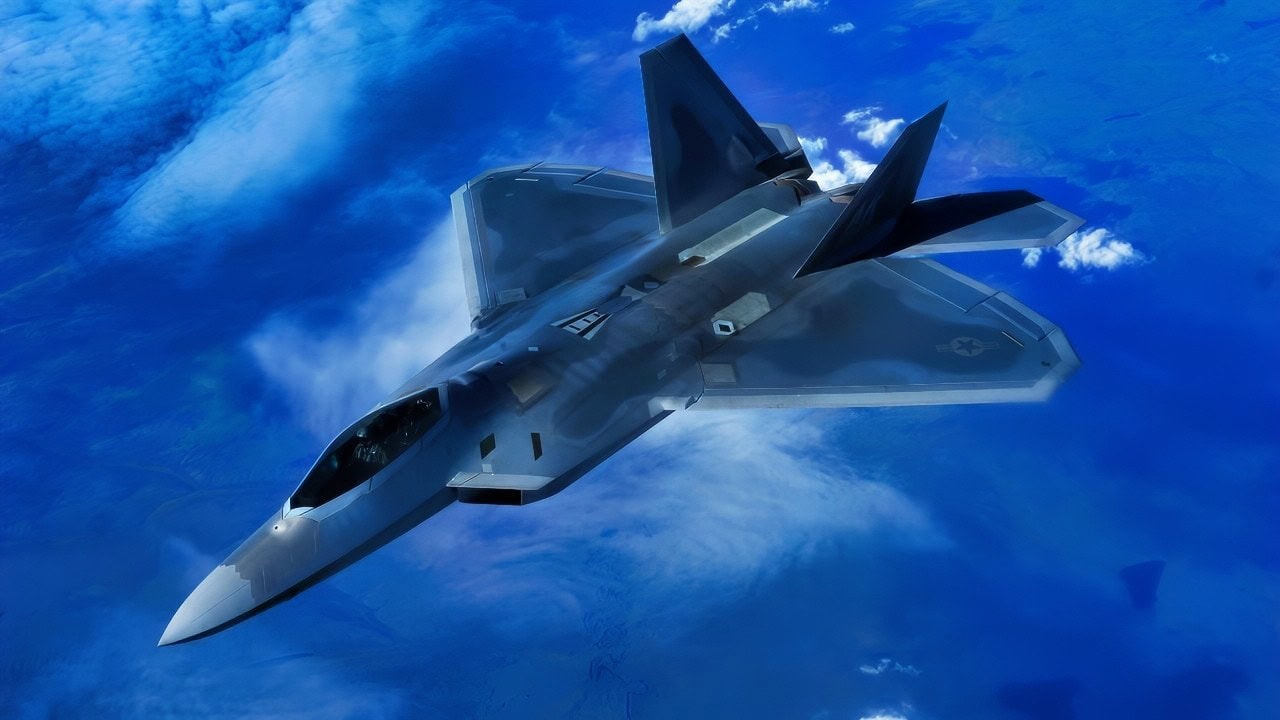
A U.S. Air Force F-22 Raptor assigned to the 90th Fighter Squadron, Joint Base Elmendorf-Richardson, Alaska, flies over clouds during RED FLAG-Alaska 14-3 Aug. 20, 2014, Eielson Air Force Base, Alaska. A combination of sensor capability, integrated avionics, situational awareness and weapons provides first-kill opportunity against threats. (U.S. Air Force photo by Staff Sgt. Jim Araos/Released)
-This 19FortyFive report analyzes how AI-enhanced sensor fusion and automated emitter labeling reduce pilot decision-making latency, providing the USAF and the IAF’s F-35I “Adir” variant with a 6th-generation tactical edge against Iran’s legacy F-14 and MiG-29 fleets.
The “Adir” and the Raptor: Why 100 Stealth Fighters in Israel Change the Middle East Military Equation
As part of US President Donald Trump’s positioning of the US military to attack Iran again, a massing of some of the most advanced combat aircraft in America’s arsenal has descended on the Middle East. A huge fleet of F-22s and F-35s has assembled in the region, with as many as 12 F-22 Raptors deployed to an Israeli Air Force (IAF) base in the southern region of the nation on February 24.
Other reports indicate that an additional six of the famous two-engine stealth fighters departed from Langley AFB in the US and are also suspected to be inbound to the Middle East region. They will be joining a force of some 50 F-35s, some of which are the F-35C models that operate from one of the two aircraft carriers now in the region — the USS Abraham Lincoln and the USS Gerald R. Ford.
This fleet of 100 or more will also potentially be supplemented by 48 IAF F-35I “Adir” variant of the aircraft, which were specially “tailored” and modified for use by Israel. These aircraft will be going up against Iran’s air power assets in what could likely be regarded as less than a “fair fight.”
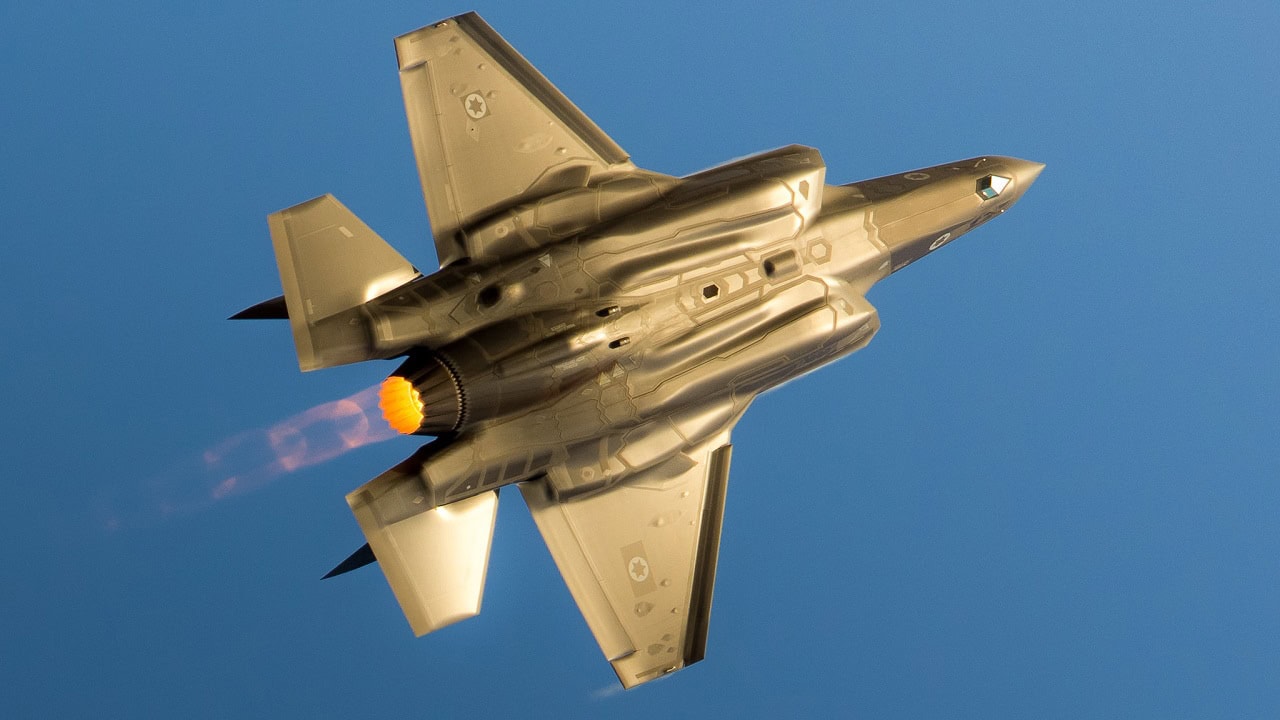
F-35I Adir. Image Credit: Creative Commons.
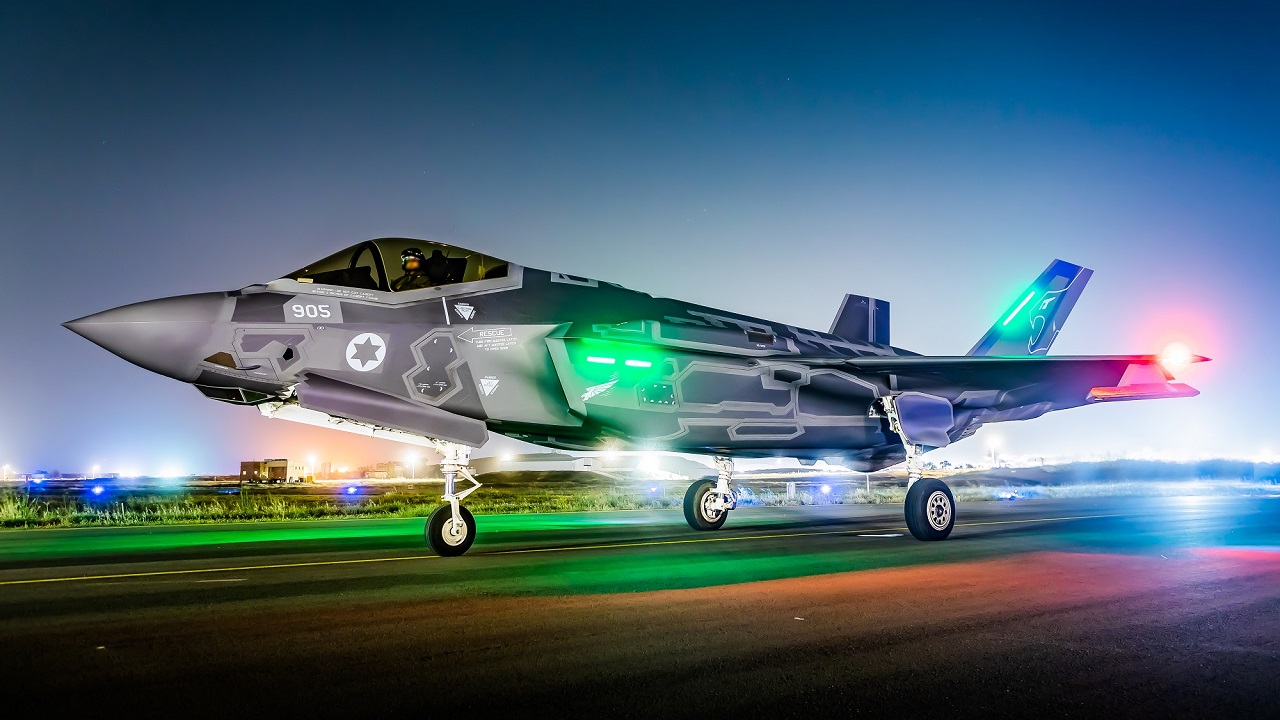
F-35I Adir serving in Israel’s Air Force. Image Credit: Creative Commons.
The reason for the lopsidedness is that Iran’s mainline Air Force assets consist largely of what are referred to as “legacy” aircraft, the most famous of which are the F-14 Tomcat, plus a small number of Russian-made Mikoyan MiG-29s purchased from Moscow in the early 1990s. None of these aircraft is equipped with modern-generation active electronically-scanning array (AESA) radars or active radar-homing air-to-air missiles.
Upgrading Intelligence of F-22 and F-35
Even though the F-22s and F-35s are the most advanced stealth fighter jets in the world, the US has been upgrading both to prepare for an upcoming operation in Iran. According to reports from both military and industry sources, these upgrades are designed to increase the effectiveness and lethality of these platforms.
Among others, the prime contractor, Lockheed Martin, has shared details about how it is integrating Artificial Intelligence (AI) technology into the aircraft’s sensor suite and defensive systems. According to software and programming specialists, this will help F-35 pilots detect hostile air defenses more quickly and accurately.
Lockheed Martin is also trying to layer AI algorithms into the aircraft’s on- board systems. These are supposed to allow processing of more data from multi-domain source inputs.
The improvements from these AI processing enhancements are projected to refine the battlefield picture generated by the F-35s’ sensors. They will also reportedly improve the efficiency of the aircraft’s already state-of-the-art electronic warfare suite.

U.S. Air Force Maj. Melanie “Mach” Kluesner, pilot for the F-35A Demonstration Team, preforms high-speed aerial maneuvers during a practice demonstration at Hill Air Force Base, Utah, Jan. 6, 2026. The team practices during their off-season to ensure that they are always sharp and ready to demonstrate the capabilities of the F-35A and the U.S. Air Force. (U.S. Air Force photo by Staff Sgt. Nicholas Rupiper)
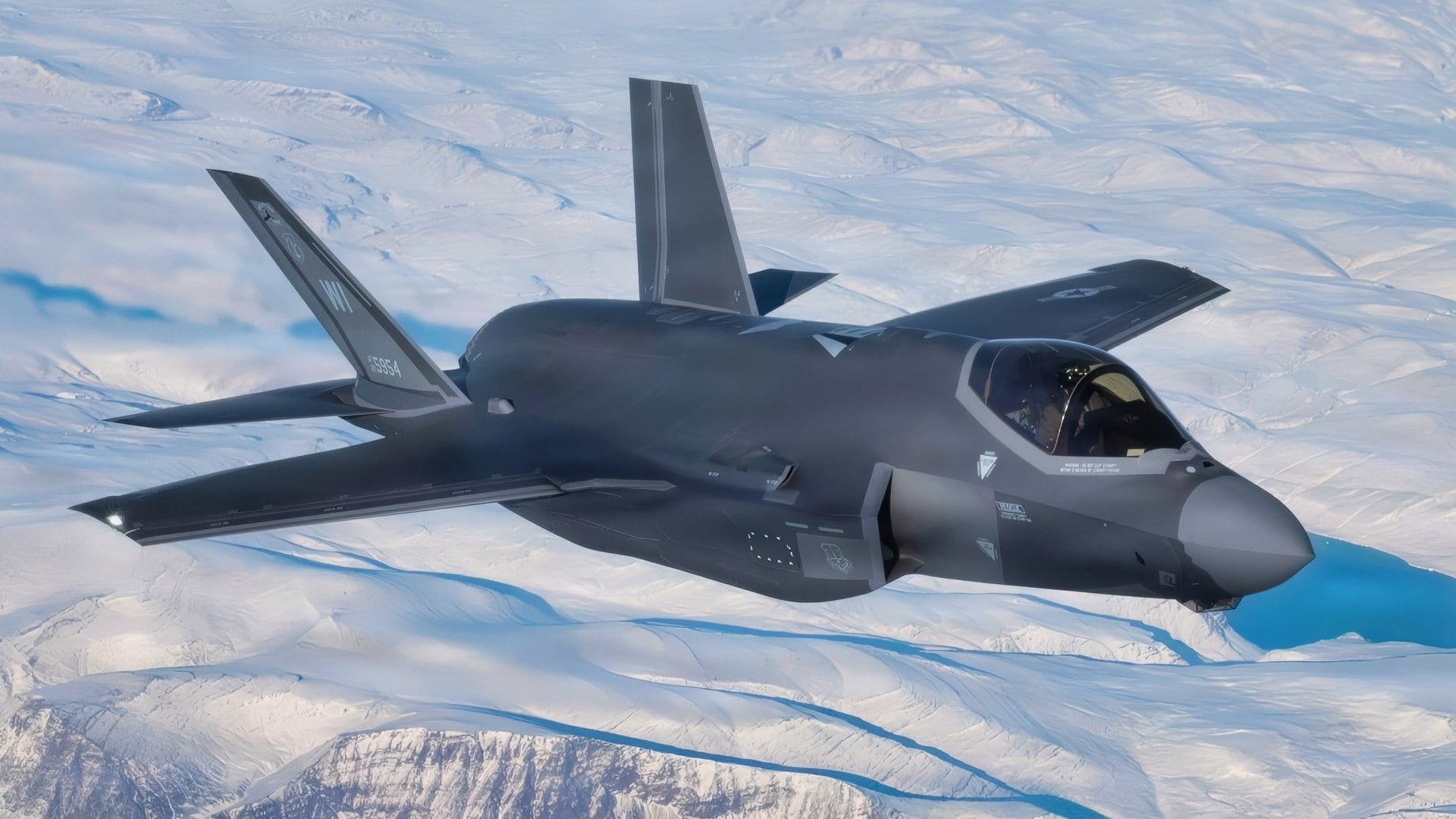
A North American Aerospace Defense Command F-35 Lightning II aircraft with the Wisconsin Air National Guard’s 115th Fighter Wing, in-flight over Greenland Oct. 9, 2025. Operating in the Arctic provides the flexibility and adaptability needed to overcome logistical hurdles in a dynamic and unforgiving environment. Greenland, as part of the Kingdom of Denmark has long played an important role in the defense of North America, which strengthens NORAD’s ability to protect the continent from today’s threats and emerging challenges from all approaches. (U.S. Air National Guard photo by 2d Lt Cameron Lewis)
“Lockheed Martin recently flight tested an artificial intelligence (AI)-enhanced Combat Identification (Combat ID) capability integrated into the F-35’s information fusion system. The successful demonstration, known as Project Overwatch, marks the first time a tactical AI model has been used in flight to generate an independent Combat ID on the pilot’s display,” the company said in a press release.
During the Project Overwatch test flight at Nellis Air Force Base, Nevada, an LM-built and trained AI module was configured as a machine learning model. It successfully demonstrated the system’s capacity to resolve Combat Identification ambiguities created by conflicts or wide variance from emitters. The projected improvement in this aspect of the AI integration is an enhancement of situational awareness and a reduction in pilot decision-making latency.
Benefits of the AI Enhancements
The major benefit of augmenting the aircraft’s systems and synthesizing input processes to improve the man-machine interface is that the F-35 pilot can now process more data faster. Then he can differentiate and prioritize a set of threat targets — as well as identify them — all accomplished using the power of AI.
Embedding advanced AI into the F-35’s mission system will also help pilots understand threat factors more quickly and enable them to make real-time decisions more effectively, accurately, and quickly. Pilots do not have the time to synthesize multiple data inputs in combat, so AI does it for them.
Overall, the modelling runs show that, from the individual pilot’s point of view, the greatest force multiplier these AI enhancements create is a dramatic reduction in cockpit workload. The improvements in situational awareness are one major benefit, but — just as important — the AI package enables the elimination of non-threat or non-priority targets more quickly.
“Engineers then used an automated tool to label new emitters, retrain the AI model to learn the new emitter class within minutes, and reload the updated model for the next flight, all in the same mission planning cycle,” read the statement from LM.
Jake Wertz, vice president of F-35 Combat Systems at Lockheed Martin Aeronautics, said that embedding this AI technology in the F-35 represents a real-world example of how 6th-generation technologies can be integrated and retrofitted into a 5th-generation fighter aircraft.
“Equally important is our ability to re-program the AI model on the ground and have those updates available for the next sortie—an essential step toward maintaining a tactical edge in a rapidly evolving threat environment,” he explained. The AI addition to the F-35 is a crucial added edge in combat capability, said one of the designers familiar with the process, as the air defense threat ecosystem is only set to become more complex going forward.
About the Author: Reuben F. Johnson
Reuben F. Johnson has thirty-six years of experience analyzing and reporting on foreign weapons systems, defense technologies, and international arms export policy. Johnson is the Director of Research at the Casimir Pulaski Foundation. He is also a survivor of the Russian invasion of Ukraine in February 2022. He worked for years in the American defense industry as a foreign technology analyst and later as a consultant for the U.S. Department of Defense, the Departments of the Navy and Air Force, and the governments of the United Kingdom and Australia. In 2022-2023, he won two awards in a row for his defense reporting. He holds a bachelor’s degree from DePauw University and a master’s degree from Miami University in Ohio, specializing in Soviet and Russian studies. He lives in Warsaw.