
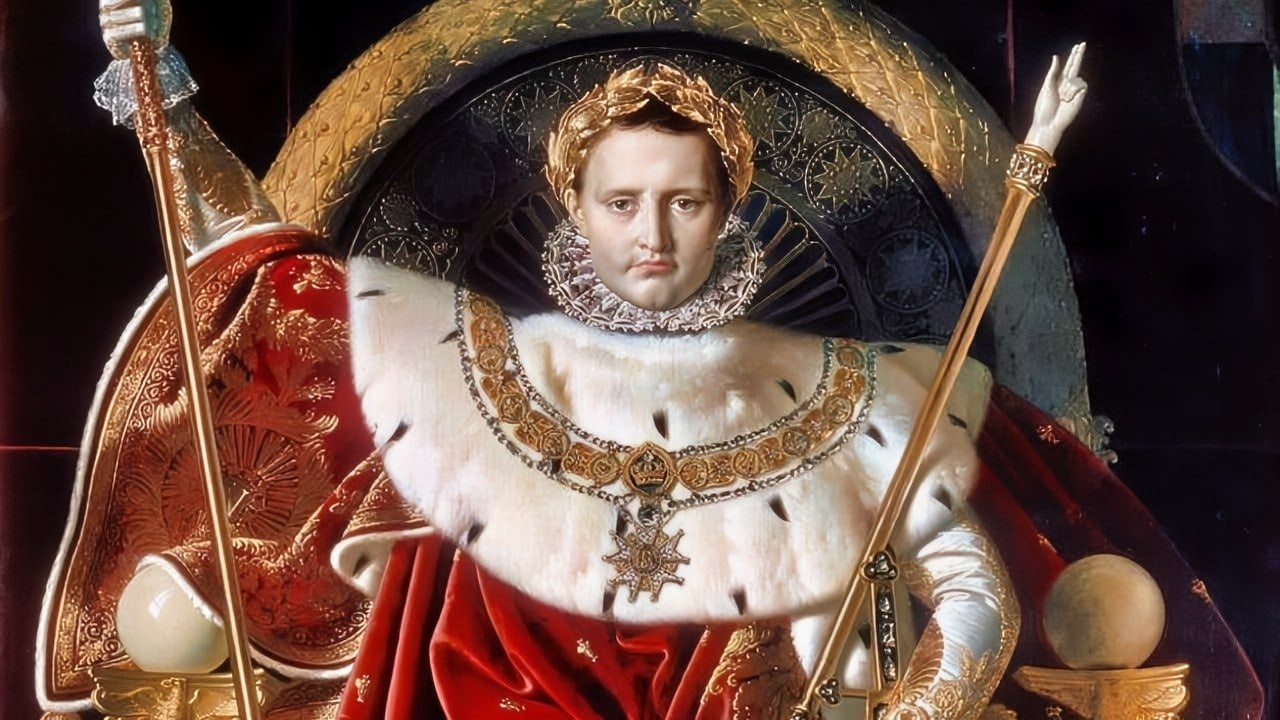
Summary and Key Points: Why Napoleon Was Defeated – Isaac Seitz, a defense columnist and intelligence analyst, provides a comprehensive post-mortem of the Napoleonic collapse.
-From the scorched-earth strategy of Kutuzov in 1812 to the “Battle of Nations” at Leipzig, this analysis examines how the Grande Armée was hollowed out by logistical impossibility and human frailty.
-The report culminates in a tactical breakdown of the Battle of Waterloo and Napoleon’s final defeat, evaluating the failure of Marshal Ney’s cavalry charges and the decisive arrival of Blücher’s Prussians, ultimately detailing how Wellington’s defensive steadfastness transformed a tactical window into a strategic trap.
Quote of the Day from Military Genius Napoleon Bonaparte
“In war, you see your own troubles; those of the enemy you cannot see. You must show confidence.” – Napoleon Bonaparte
Napoleon Bonaparte was a brilliant General and a remarkable tactician who reshaped Europe and fought several campaigns that have brought him eternal fame.
However, as ambitious and cunning as he was, even the Great Napoleon was prone to making errors in his judgment. These mistakes would not only cost him battlefield victories but also his empire. Of all his defeats, his biggest came during the Russian campaign, the Battle of Leipzig, and the Battle of Waterloo, which cost him his army, his command, and his empire.
The Invasion of Russia
Napoleon’s disastrous invasion of Russia was intended as a disciplinary measure to punish Russia for abandoning the Continental System.
By this point, Napoleon had secured hegemony across much of continental Europe. The Continental System aimed to isolate Britain economically and, in Napoleon’s mind, to bring about victory through strangulation rather than direct conquest.
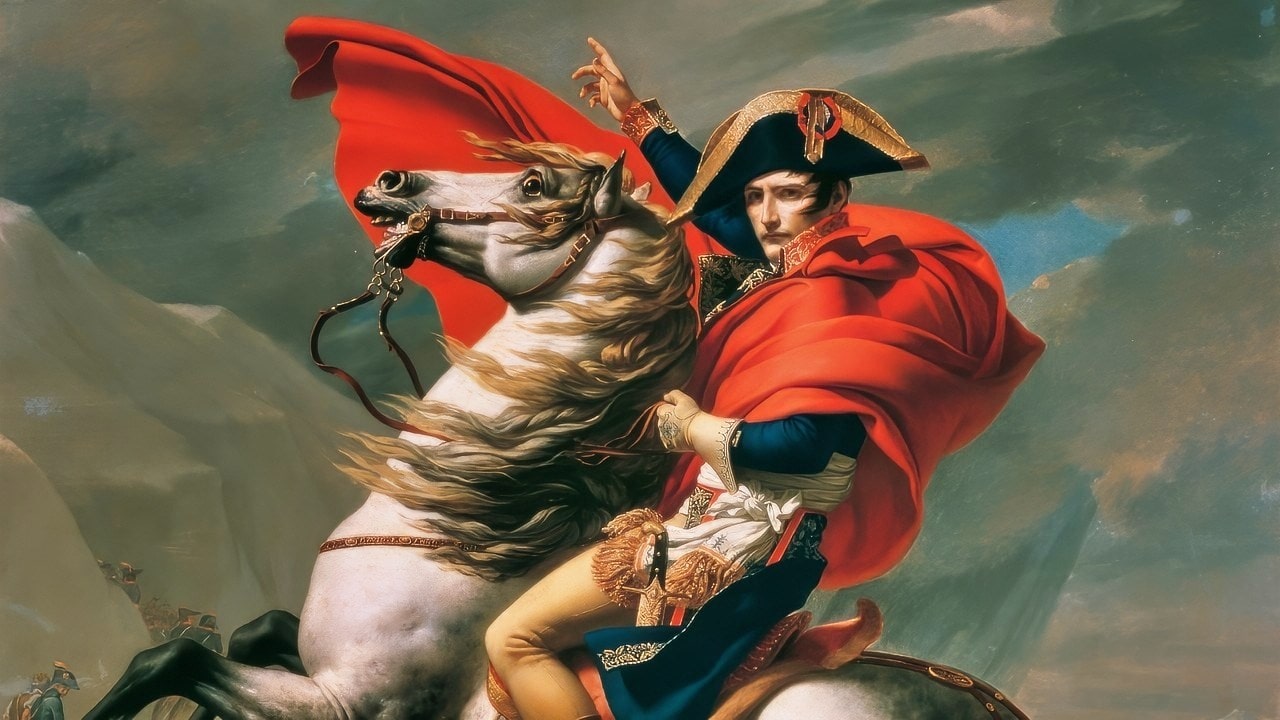
Napoleon Bonaparte. Image Credit: Creative Commons.
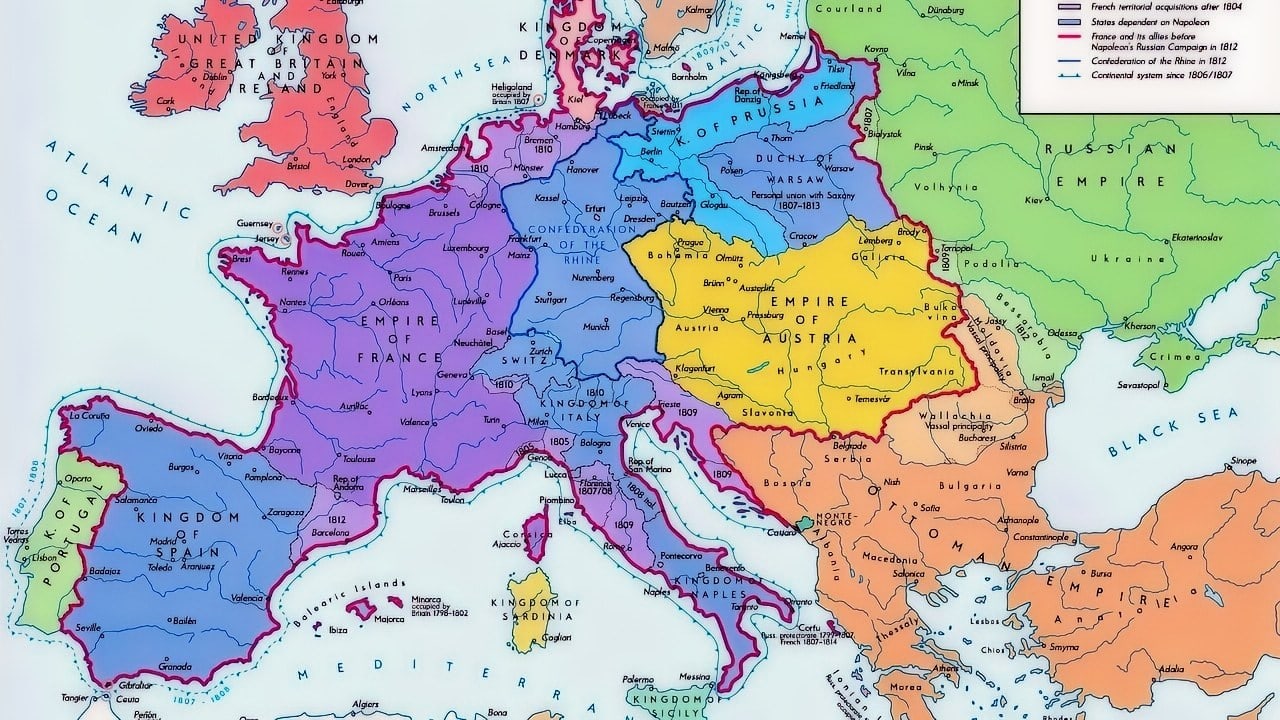
Map of Napoleon’s Empire. Image Credit: Creative Commons.
Russia’s defection from that system was more than a diplomatic affront; it was a structural threat to Napoleon’s project to redraw European commerce and power. Napoleon’s objective was not the outright conquest of Russia, a task almost no general could plausibly achieve given the distances involved, but rather to force Tsar Alexander I back into alignment through a decisive engagement and a punitive march that would compel negotiations.
He assembled the Grande Armée, an astonishing force of around 600,000 men, many of whom were not French but drawn from satellite states and allied contingents.
The operational plan followed his usual formula: advance swiftly, locate the main Russian armies, fix them in place, and destroy them in a single massive blow.
Yet this template required an enemy willing to be fixed and to accept annihilation, and the Russian high command proved too wary to oblige. Under Barclay de Tolly and later Kutuzov, the Russians avoided the set-piece battle Napoleon craved.
They traded space for time, burning resources behind them and drawing the French deeper into a country with sparse infrastructure, long distances, and a harsh climate.
Historians still debate whether this was an intentional strategy or simply happenstance, but the results were the same, nonetheless. By denying the French supplies and forcing him to extend his already-stretched lines of communication, the attacker’s position grew more and more perilous. The result was that what Napoleon intended as a campaign of swift decision turned into an exercise in attrition and logistical overreach.
The Destruction of the Grande Armée
The showdown at Borodino in early September gave Napoleon a victory, but it drained his army of momentum. The fighting was extraordinarily bloody, with tens of thousands of casualties on both sides. Napoleon held the field as the day ended, yet the Russian army remained intact enough to continue withdrawing. The toll on the Grande Armée was severe, especially in leadership and cohesion, and the tactical success yielded no strategic leverage.
Napoleon entered Moscow on September 14, expecting that possession of the capital would force Alexander’s hand. Instead, he found the city largely deserted, then ravaged by fires.
Days turned to weeks without a Russian surrender, and the conquering of Moscow turned out to be little more than a hollow victory. The decision to retreat came late, and when it finally came in October, the French army had already been gutted by hunger, disease, desertion, and exhaustion.
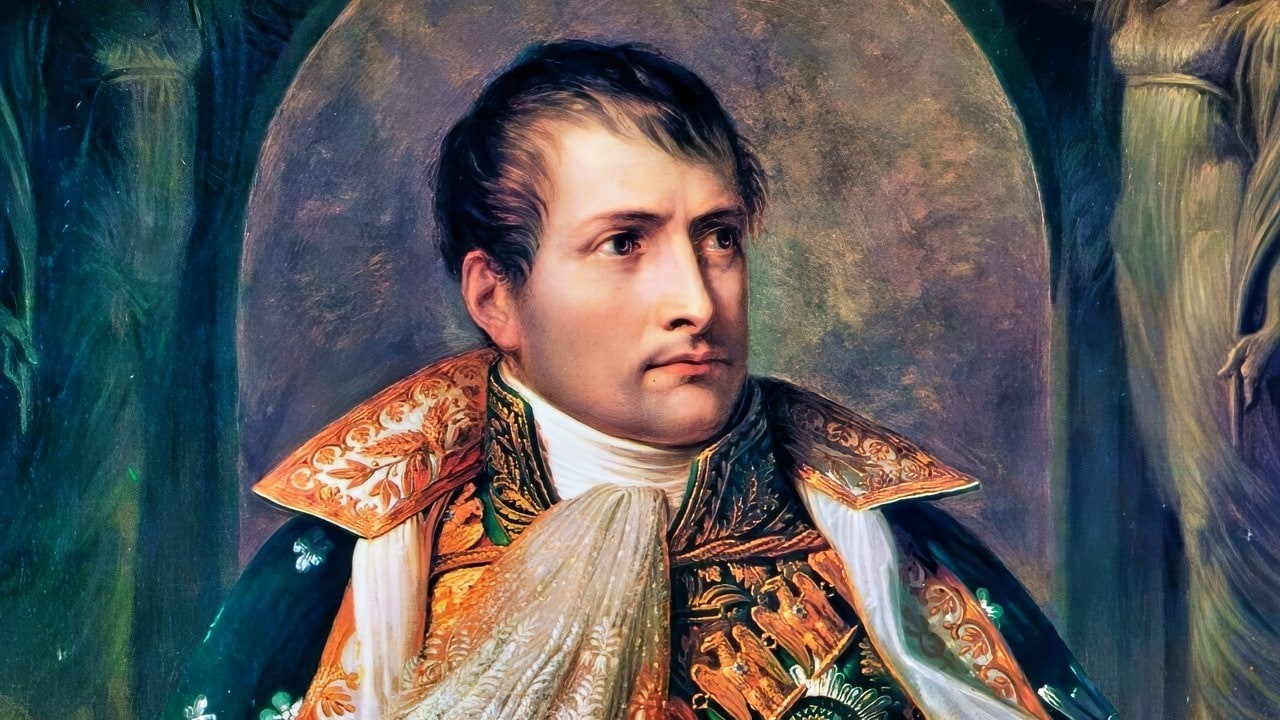
Napoleon Painting. Image Credit: Creative Commons.
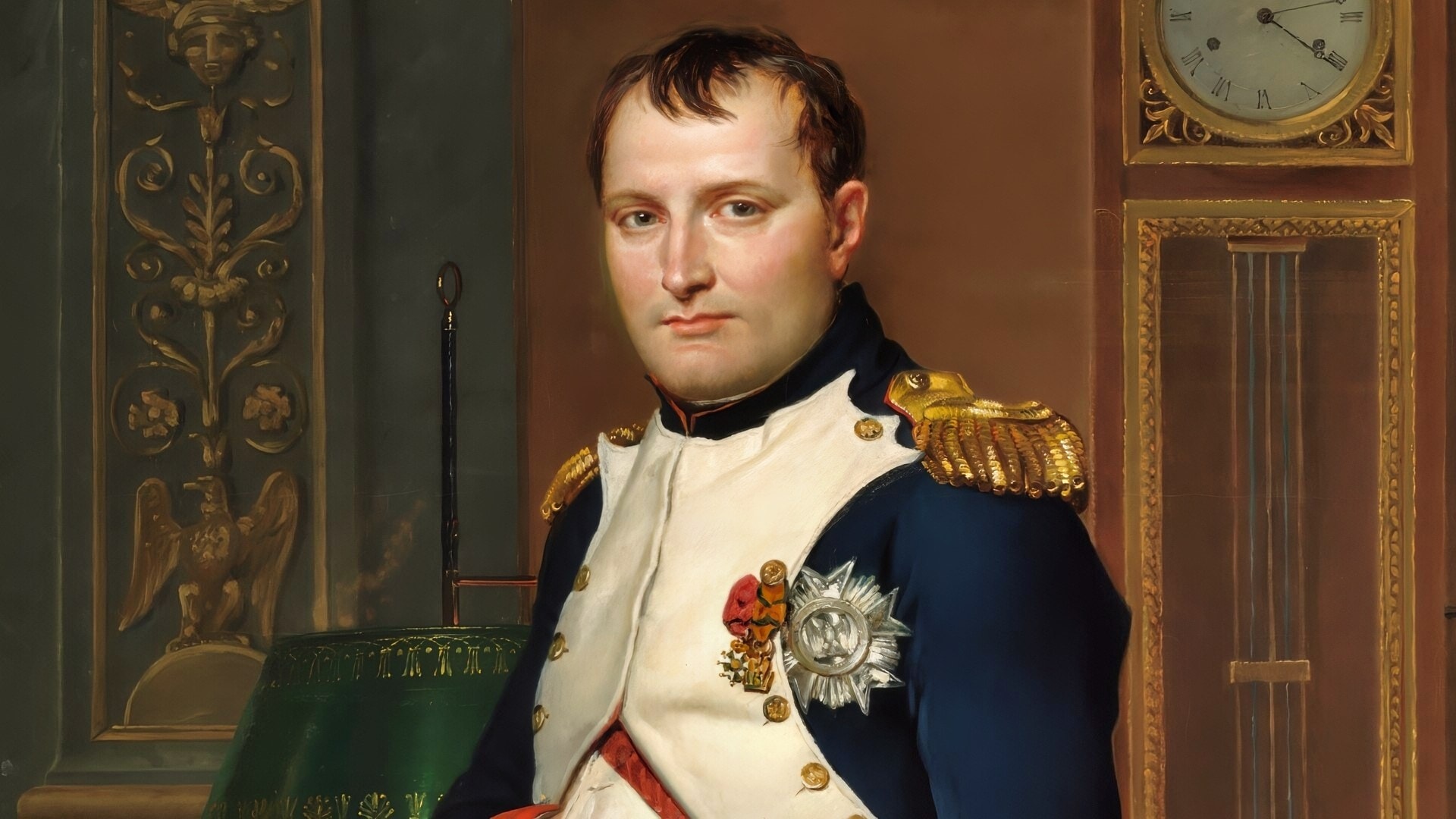
Napoleon Painting Creative Commons Image
The retreat itself became a byword for calamity. Cossacks harried the French columns. Engagements such as Maloyaroslavets and the river crossing at the Berezina punctuated the misery with desperate fighting and heartbreaking losses.
“General Winter” is often invoked as the chief executioner of the Grande Armée. Still, the fuller truth is that the winter compounded damage already inflicted by logistical impossibility and human frailty. Napoleon himself, hearing of the tumultuous situation in Paris, effectively abandoned his troops on sled, leaving Murat to command the remainder of his troops.
By the time the survivors staggered back across the Niemen, the aura of Napoleonic invincibility had been broken, the demographic core of his best forces destroyed, and the continent was emboldened to reorganize against him.
The Battle of Leipzig: Napoleon’s First Major Battlefield Defeat
The Battle of Leipzig in October, often called the “Battle of Nations” for the sheer number of countries involved, was the largest engagement of the Napoleonic Wars and a culminating event of the German campaign. Napoleon had interior lines around the city of Leipzig, but his advantages were undermined by the forces arrayed against him.
The cavalry shortage hampered his reconnaissance; his infantry included too many raw levies for complex maneuvers under fire; and his supply situation limited sustained offensive action. Across several days, the fighting raged around the approaches and villages, with furious contests in which Napoleon could still engineer localized counterattacks.
Yet he could no longer impose his operational will on the entire battle system.
The coalition’s plan converged from multiple directions. Karl von Schwarzenberg’s main army pressed from the south; Gebhard von Blücher was aggressive from the north and northeast; and Bernadotte (ironically, a former French marshal who was by then the Swedish crown prince) approached from the north. Napoleon’s counterstrokes could not unravel this multi-front pressure.
As attrition mounted and command-and-control frayed, several moments crystallized the defeat. Elements of Napoleon’s Saxon allies defected during the battle, which was a dramatic blow to the cohesion of his line and a symbolic collapse of political loyalty among his German contingents. When the time came to withdraw on October 19, a bridge over the Elster was blown too early, cutting off many French troops and resulting in mass surrenders. While not a single cause of the defeat, the bridge’s destruction captured the sense of a system under intolerable stress, where small errors became cascading failures.
With the battle of Leipzig lost, Napoleon had lost his Germanic buffer zone, and thus, France was left vulnerable to future attacks. In the wake of Leipzig, the coalition had the initiative and the numerical advantage necessary to carry the war into France.
The campaign of 1814 on French soil would feature Napoleon at his most brilliant, winning a series of tactical engagements in rapid succession. But even his virtuosity could not compensate for deficits in the workforce, cavalry, logistics, and the coalition’s refusal to be bullied into a decisive, centralized fight. Napoleon was forced to abdicate in April, and the Bourbon monarchy was restored. For most leaders, this would have been the end. For Napoleon, it was an intermission.
The Battle of Waterloo: The End of Napoleon’s Empire
His exile to Elba Island, however, was short-lived, as in 1815 he reclaimed control of France in a stunning political coup and embarked on the brief but desperate sprint known as the Hundred Days.
He understood that time was his enemy: Russia and Austria were mobilizing, Britain and Prussia already had armies in the Low Countries, and Europe’s leadership had no intention of negotiating a long-term role for him. Napoleon resolved to strike first, aiming to separate and defeat Wellington’s Anglo-allied army and Blücher’s Prussians in Belgium before the broader coalition could consolidate. This plan was not mere bravado; it was precisely the sort of operational pattern he had made famous, a bid to defeat enemies in detail before they could combine.
The opening engagements hinted at the brilliance that had once reshaped Europe. Napoleon beat Blücher at Ligny on June 16, while Ney fought the Duke of Wellington at Quatre Bras. Yet these actions did not destroy either allied army.
The Prussians conducted a deliberate retreat that confounded French expectations: rather than falling back east toward their supply bases, they shifted north, preserving lateral connectivity with Wellington. This seemingly subtle choice was, in fact, decisive. It preserved the possibility of mutual support and set the stage for the convergent counterblow that would shape the battlefield at Waterloo.
By the morning of June 18, Wellington had chosen a defensive position on the Mont-Saint-Jean ridge above the village of Waterloo. His army was a multinational force built around a disciplined British core, supported by Dutch, Belgian, and German forces.
Wellington excelled at defensive battle and had chosen terrain that masked his forces from long-range artillery while anchoring his line on strongpoints like Hougoumont and La Haye Sainte. Napoleon expected, or at least hoped, that the Prussians would be sufficiently delayed to allow him to crush Wellington first. However, the previous days had not yielded the clean divisions that Napoleonic decision-making required. Prussian columns were on the march to support Wellington, and the day’s margin for French victory was therefore a matter of hours.
Mud from heavy rains delayed the start of French operations, a practical reality that mattered in a fight governed by the clock. The battle opened with intense actions around Hougoumont, a chateau that consumed French attention and troops without producing a breakthrough.
In the early afternoon, D’Erlon’s corps attacked Wellington’s left-center, advancing in deep formations that initially carried them to the ridge.
They were met with punishing musketry at close range, followed by a heavy cavalry countercharge that hurled them back and shocked the French. The middle phase devolved into repeated French cavalry charges under Marshal Ney against the allied center, often launched without adequate infantry or artillery support. Wellington’s foot formed squares, the classic defense against cavalry, and held stubbornly. Each failed charge eroded French strength and wasted precious time.
The French later seized La Haye Sainte, enabling their artillery to bring down fire closer to the Allied line. Yet just as the French seemed poised to tip the balance, Prussian forces under Bülow attacked Napoleon’s right rear at Plancenoit.
Napoleon was forced to divert some of his best troops, including elements of the Guard, to stabilize this flank, which diluted his ability to mass for a decisive blow against Wellington’s center. As more Prussian corps arrived and pressed in, the French faced an expanding battle they could not control.
In a final roll of the dice, Napoleon committed the Imperial Guard in the evening in an attempt to splinter the allied line. They advanced with formidable determination but were met with implacable fire and a stiff defense. The repulse of the Guard shattered the last fantasy of French cohesion. Panic spread, formations gave way, and the Grande Armée became a retreating tide.
Why Napoleon Lost
The cause of Napoleon’s defeat at Waterloo is a topic of contention among historians. The late start deprived Napoleon of the hours he needed to beat Wellington before the Prussian arrival. The failure to prevent Blücher from reuniting with Wellington was fatal to the operational concept; Grouchy, sent to pursue the Prussians, fought at Wavre but did not interpose effectively between them and the main battle.
On the field itself, too many French assaults lacked proper combined-arms coordination. Ney’s repeated cavalry charges without sufficient infantry or artillery underpinning were costly in both men and momentum.
Meanwhile, Wellington’s defensive methods, the steadfastness of his troops, and the judicious use of terrain maximized allied staying power.
The Prussians’ discipline and endurance, marching hard to the sound of the guns, converted what might have been a narrow French window of opportunity into a hammer-and-anvil trap. Even if Napoleon had snatched a tactical victory, the larger coalition forces advancing from the east would likely have been a brief reprieve rather than a strategic victory he desperately needed.
When Napoleon abdicated for the second time, the Napoleonic Wars ended, and the Concert of Europe framework took shape at the Congress of Vienna.
For France, the immediate implications included occupation, indemnities, and a return to Bourbon rule; for Europe, Waterloo underscored a political commitment to balance that would inform great-power diplomacy for decades.
Napoleon’s military legend survived, even flourished, but the defeats had demonstrated that no single mind could indefinitely outrun the constraints of distance, logistics, coalition politics, and the arithmetic of attrition.
About the Author: Isaac Seitz
Isaac Seitz, a Defense Columnist, graduated from Patrick Henry College’s Strategic Intelligence and National Security program. He has also studied Russian at Middlebury Language Schools and has worked as an intelligence Analyst in the private sector.