Summary and Key Points: Reuben F. Johnson, a veteran defense analyst and Director of Research at the Casimir Pulaski Foundation, evaluates the USAF B-2 Spirit night strikes during Operation Epic Fury.
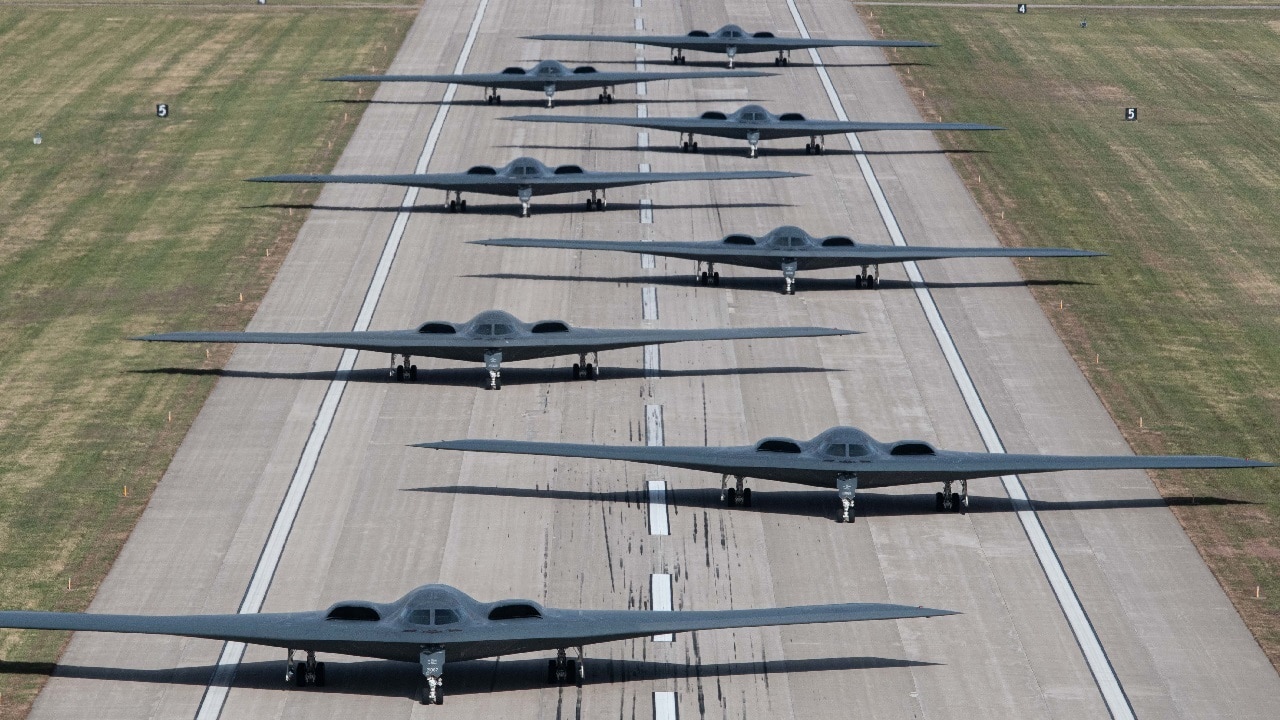
-Utilizing a round-trip profile from Whiteman Air Force Base, four stealth bombers—identified by the Military Air Tracking Alliance as the PETRO41 flight—struck hardened ballistic missile sites across Iran.
-This 19FortyFive report analyzes the logistical support provided by KC-46 tankers out of Lajes Air Base and the strategic shift from the GBU-57 Massive Ordnance Penetrator (MOP) used in 2025 to the 2,000-pound munitions deployed in this latest offensive.
Operation Epic Fury: Inside the B-2 Stealth Bomber Strike on Iran’s Hardened Missile Sites
While we now have official confirmation, the analysis of communications channels appears to have revealed first that the US Air Force (USAF) used a group of four B-2 stealth bombers in this past weekend’s strikes on Iran.
At least for a few hours today, the aircraft’s information and identification had come not from government sources or foreign nations observing these operations, but from analysts monitoring open-source flight-tracking data.
Information on the indications that the B-2s were involved in this weekend’s different mission packages was published by the founder of the Military Air Tracking Alliance.
The organization is a team of some 30 open-source analysts who track and correlate flight activity of US military and other government aircraft.
The USAF previously employed the B-2s in attacks on Iran, which was due to the aircraft being capable of delivering the huge GBU-57 Massive Ordnance Penetrator (MOP) weapon.
This specialized bomb was used in the June 2025 Operation Midnight Hammer mission to destroy Iranian nuclear research facilities that were buried deep underground.
The MOP is a 30,000-pound, GPS-guided “bunker buster” bomb developed by Boeing for the USAF to destroy hardened targets buried deep beneath the Earth’s surface.
It is also the largest conventional bomb in the US arsenal and can penetrate over 200 feet of earth or concrete before it detonates.
Monitoring Transmissions
The group of military air traffic controllers identified the B-2s via radio communications on Air Traffic Control (ATC) frequencies.
That message traffic revealed that four of the B-2A Spirit stealth bombers had flown a round-trip mission from the Continental US (CONUS) to carry out night strikes on Iranian targets.
As had been expected, the USAF employed the B-2As during the first night of strikes against Iranian targets as part of this unfolding campaign against Iran, which has been given the codename of Operation Epic Fury.
The aircrew of the four bombers were reported to have been heard speaking with air traffic controllers on the standard ATC frequencies while returning to their base in CONUS after having completed their mission.

B-2 Spirit Stealth Bomber 19FortyFive Image. Taken By Harry J. Kazianis at U.S. Air Force Museum in 2025.
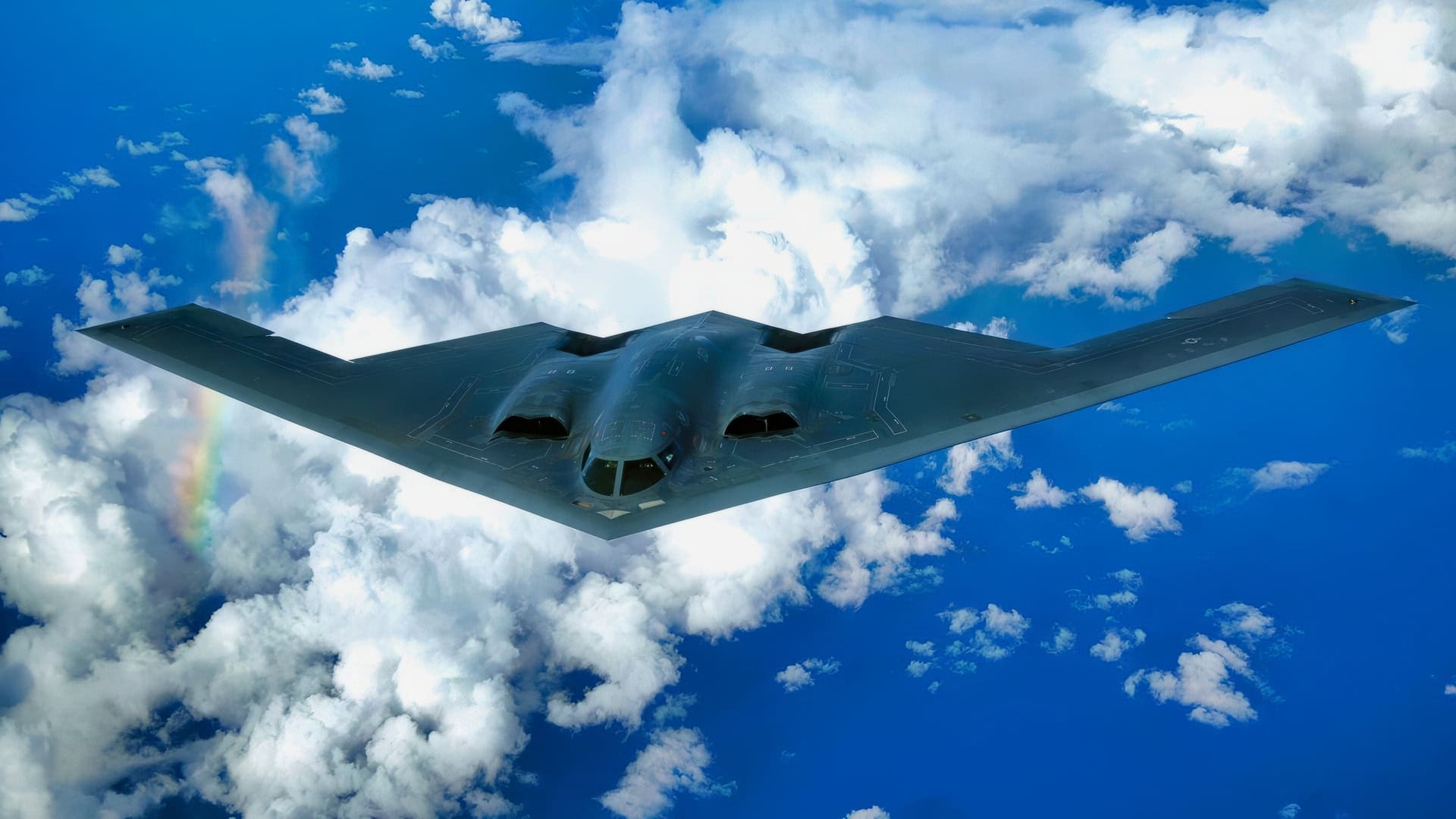
A B-2 Spirit soars after a refueling mission over the Pacific Ocean on Tuesday, May 30, 2006. The B-2, from the 509th Bomb Wing at Whiteman Air Force Base, Mo., is part of a continuous bomber presence in the Asia-Pacific region. (U.S. Air Force photo/Staff Sgt. Bennie J. Davis III)
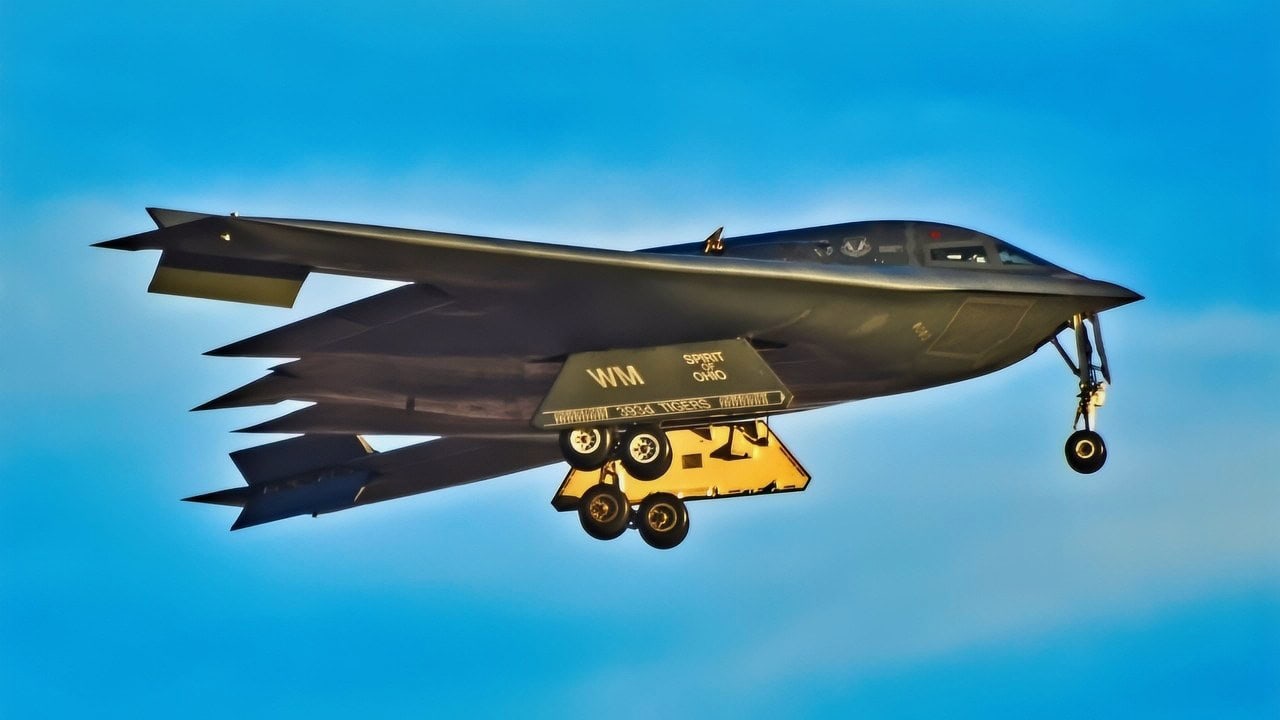
B-2A Spirit Stealth Bomber. Image Credit: Creative Commons.
These four bombers were part of the PETRO41 flight.
They were transiting the Strait of Gibraltar, a similar route flown on the Midnight Hammer mission.
The bombers were, in turn, supported by several KC-46 aerial tankers, one of which confirmed in a transmission that this PETRO41 flight included four aircraft.
The military flight-tracking specialists also point out that the PETRO callsign is frequently used with tankers.
The KC-46s are reported to have used the RCH, or Reach, callsign for this particular mission.
The combination of different callsigns is thought to have been a purposeful designation of aircraft types to avoid attracting attention to the bombers.
A similar approach to these call signs was also employed on the Midnight Hammer mission.
The tankers themselves were filmed briefly in a video showing the 30-second Minimum Interval Take Off from Lajes Air Base in the Azores.
A total of five KC-46s departed the base. This grouping is thought to have been organized so that there was one tanker for each bomber. The fifth aircraft may have been included in the flight as a spare in case one of the tankers had to turn back due to technical issues.
Round-Trip Missions
This deployment of the tankers in other theatres has been used in the past to support round-trip missions from Whiteman Air Force Base, Missouri, and returning to CONUS.
Tanker aircraft are often staged at Lajes or Naval Air Station Rota, Spain.
This pre-positioning of the tankers on the European continent allows them to launch and meet up with the bombers during their crossing of the Atlantic Ocean.
Weapons Used by the B-2 Spirit Stealth Bomber on Iran
U.S. Central Command (CENTCOM) confirmed just hours ago that the B-2 Spirit stealth bombers were equipped with 2,000-pound bombs and struck “hardened” ballistic missile sites in Iran.
About the Author: Reuben F. Johnson
Reuben F. Johnson has thirty-six years of experience analyzing and reporting on foreign weapons systems, defense technologies, and international arms export policy. Johnson is the Director of Research at the Casimir Pulaski Foundation. He is also a survivor of the Russian invasion of Ukraine in February 2022. He worked for years in the American defense industry as a foreign technology analyst and later as a consultant for the U.S. Department of Defense, the Departments of the Navy and Air Force, and the governments of the United Kingdom and Australia. In 2022-2023, he won two awards in a row for his defense reporting. He holds a bachelor’s degree from DePauw University and a master’s degree from Miami University in Ohio, specializing in Soviet and Russian studies. He lives in Warsaw.