
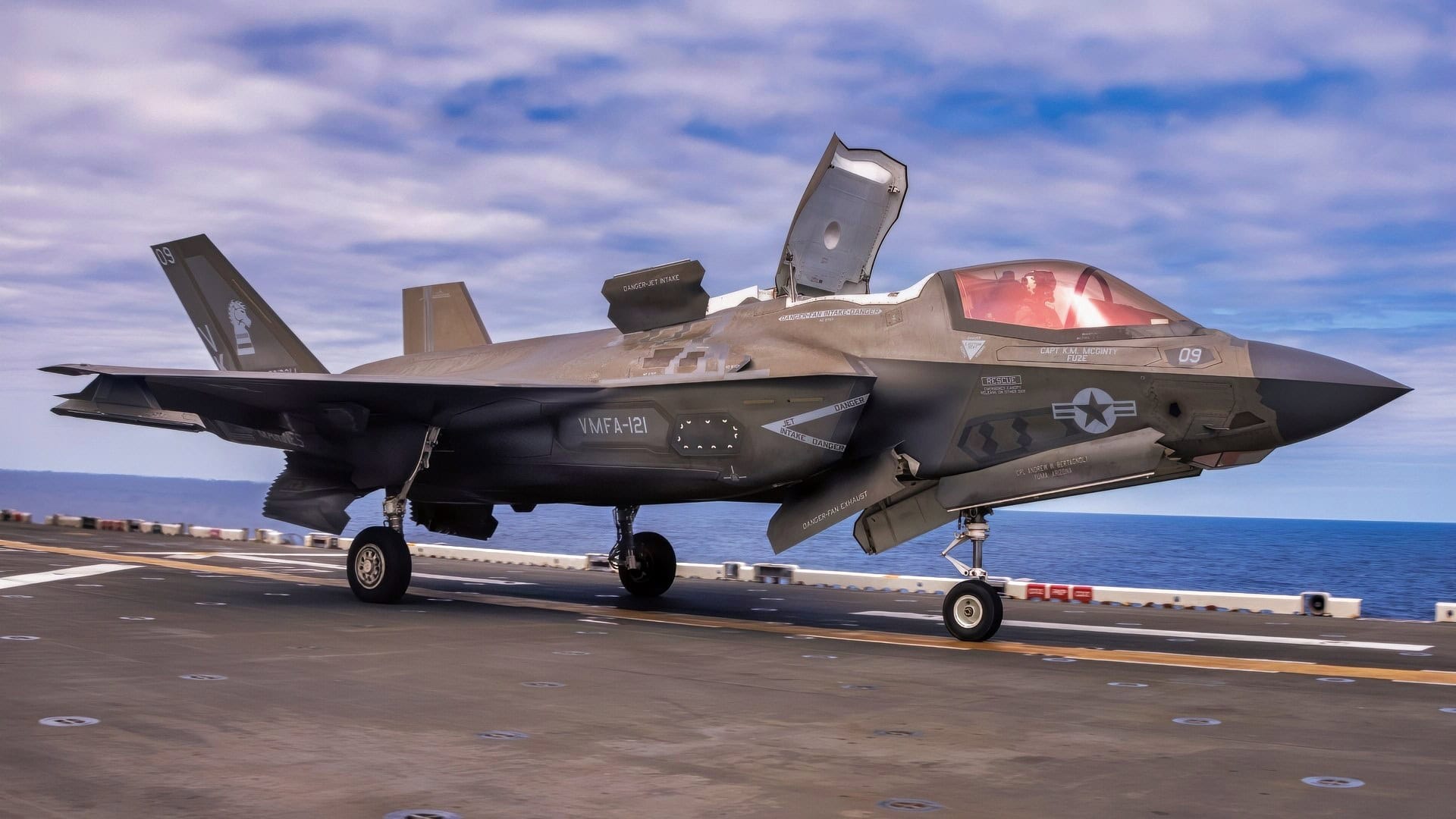
Summary and Key Points: Jack Buckby, a national security researcher and defense analyst, evaluates the “largely absent” role of the Islamic Republic of Iran Air Force (IRIAF) during Operation Epic Fury.
-Despite possessing a fleet of legacy U.S. platforms like the F-14 Tomcat and F-4 Phantom II, Iran has been unable to mount sustained sorties against the networked F-35I Adir and F-22 Raptor forces.
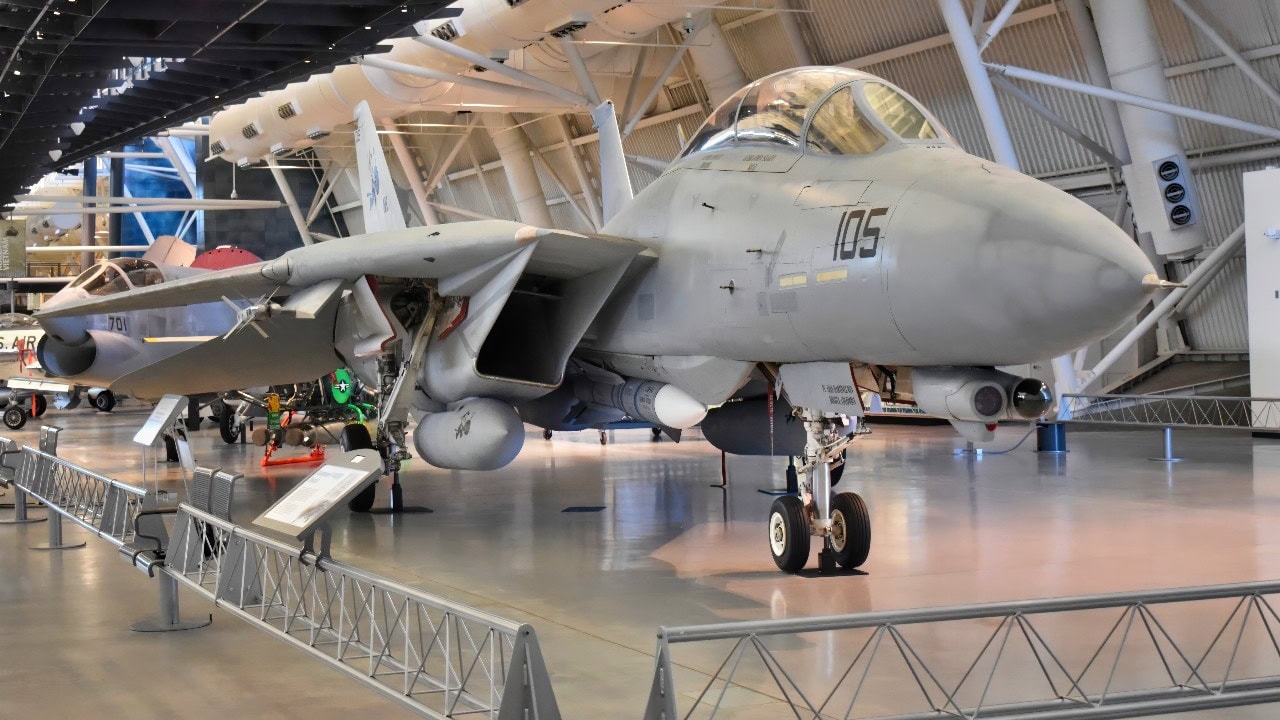
F-14 Tomcat. Image by 19FortyFive.com
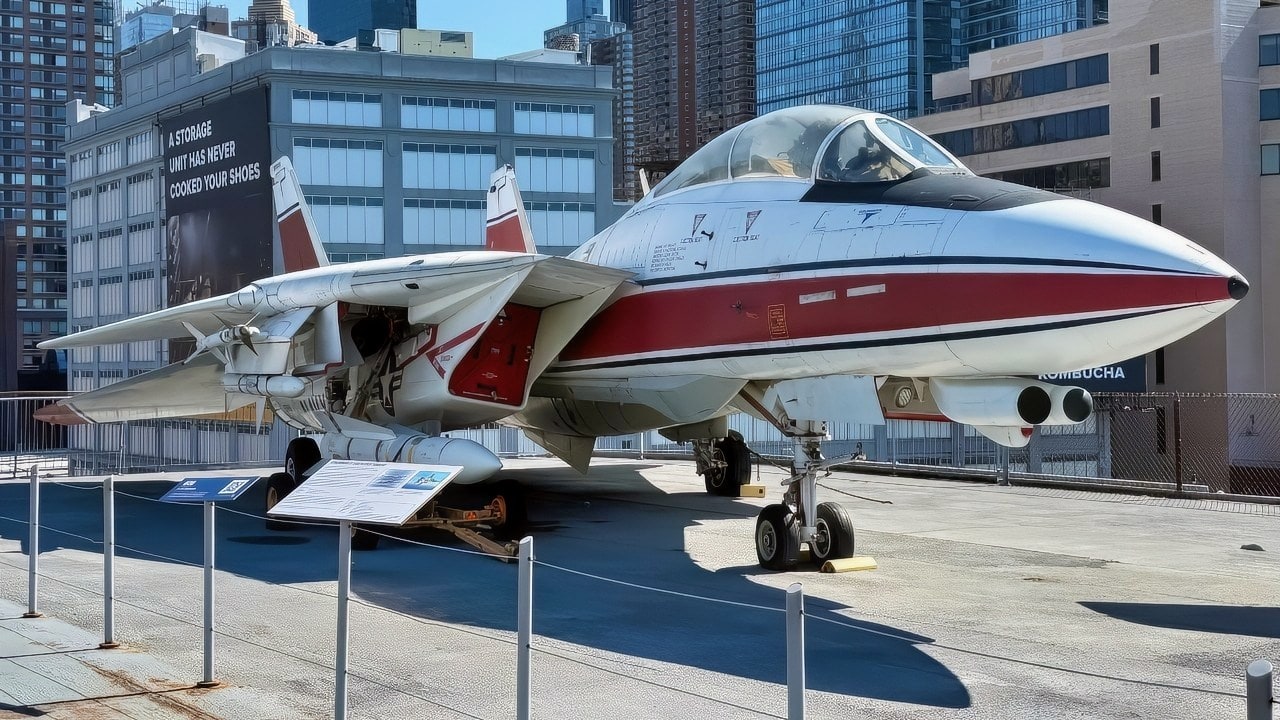
F-14 Tomcat Fighter in USS Intrepid Deck. Image taken late on 2025 by Jack Buckby for 19FortyFive. All Rights Reserved.
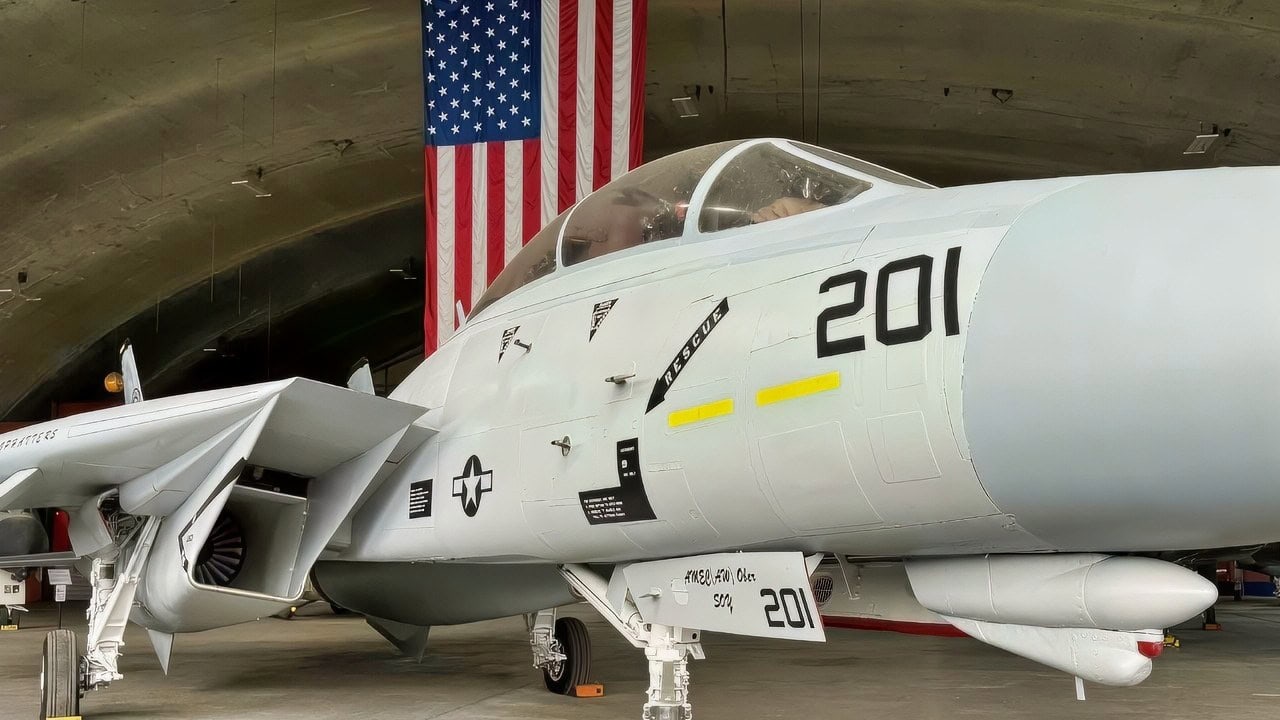
F-14 Tomcat Fighter U.S. Navy. 19FortyFive Field Research Image.

F-14 Tomcat in Museum. Image was taken by Jack Buckby for 19FortyFive.com. All rights reserved.
-This 19FortyFive report analyzes the IRIAF’s reliance on cannibalization and reverse-engineering to maintain airworthiness, concluding that Tehran’s decision to lean on its missile and drone arsenals is a pragmatic response to the technical irrelevance of its Cold War-era fighter inventory.
-Bonus: We have included many original photos of the F-14 and F-4 Phantom in this essay, as we have visited displays of these fighters many times over the years.
The Ghost Fleet: Why Iran’s Cold War-Era Fighter Jets are Missing from the 2026 Air War
As the U.S.-Israel air campaign against Iran continues, there is an interesting detail that may come as a surprise to some observers: there is still limited public evidence of Iranian fighter jets or aircraft mounting any kind of sustained sorties as part of its defense efforts.
Reports and official briefings indicate that the campaign is so far defined by the deployment of modern American strike aircraft and medium- and long-range weapons. Iran, it seems, is responding to air strikes with its own missile and drone launches, but the presence of Iranian aircraft is limited.
That’s not because Iran lacks fighters on paper. Technically, Iran does have an air force – but it is a patchwork fleet built around aircraft families from the Cold War and earlier – among them, the F-4 Phantom II and the F-14 Tomcat, two top-tier U.S. platforms from the 1970s.
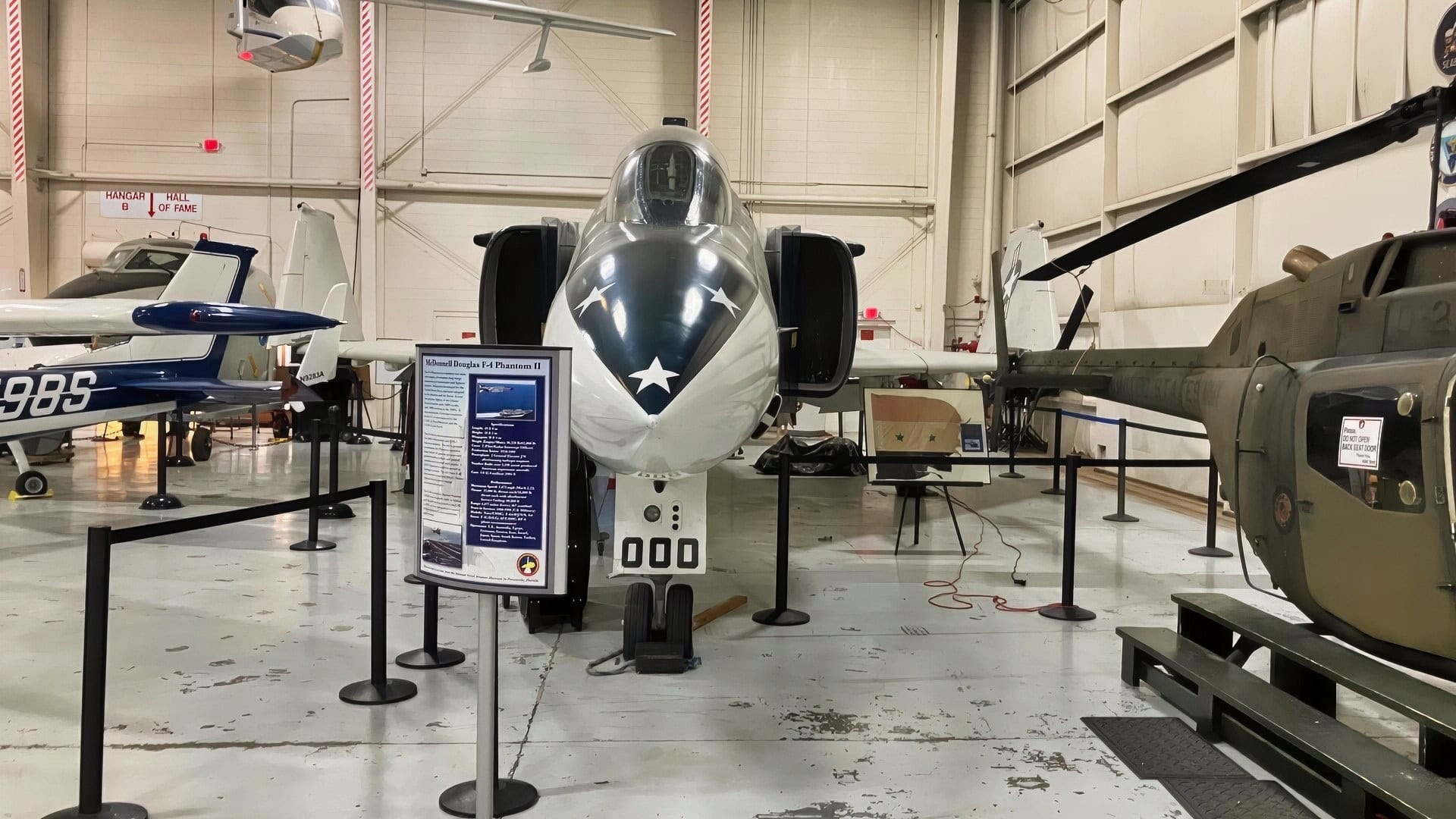
F-4 Phantom Fighter Aviation Museum of Kentucky. Taken by 19FortyFive on March 1, 2026.
Iran’s Air Force Put to the Test
It’s no secret that Iran’s primary strength is its missile arsenal, and open-source intelligence and reports so far indicate that the conflict is largely defined by U.S. and Israeli air operations and Iran’s retaliatory missile and drone strikes, rather than air-to-air engagements or a visible Iranian fighter surge.
On March 2, reports indicated that Iran was indeed deploying some assets. As Arab states across the Gulf came under Iranian missile and drone attack, reports indicated that Qatar shot down two Iranian Su-24 Soviet-era supersonic tactical bombers. Those Su-24s are among Iran’s most capable aircraft because the country has spent so many decades under sanctions, with its aircraft inventory becoming increasingly irrelevant over the years – not just because of their age, but because of a lack of spare parts.
Meanwhile, U.S. and Israeli forces are deploying their most advanced fifth-generation aircraft, including the F-35I “Adir.” That matters because today’s airpower is defined less by individual aircraft performance and more by kill chains – the system that detects a target, identifies it, assigns an aircraft to engage it, and then guides weapons to reach the target. Fifth-generation aircraft like America’s F-35 and Israel’s custom F-35I combine low observability and sensor fusion to create a truly deadly adversary force for Iran – one that is difficult to overcome after missile defense systems have been incapacitated or destroyed.
The point is not that Iran cannot fly fighter jets. It can, technically. However, Tehran simply cannot compete with the assets being deployed against it and is leaning heavily on a toolset that it can actually scale: ground-based air defenses, drones, and missiles.
How Iran Ended Up Flying America’s Best 1970s Jets
The story of Iran obtaining the Grumman F-14 “Tomcat” and the McDonnell Douglas F-4 Phantom II is an interesting snapshot of the geopolitics of years gone by. Before the 1979 Islamic Revolution, the Shah’s Iran was a major U.S. security partner, and Washington exported high-end aircraft to the country as a result. The F-14 – originally a U.S. Navy fleet defense interceptor – was sold abroad only to Iran, making Tehran the Tomcat’s sole foreign operator. When the U.S. Navy retired it in 2006, Iran became the only country still operating it in any form.
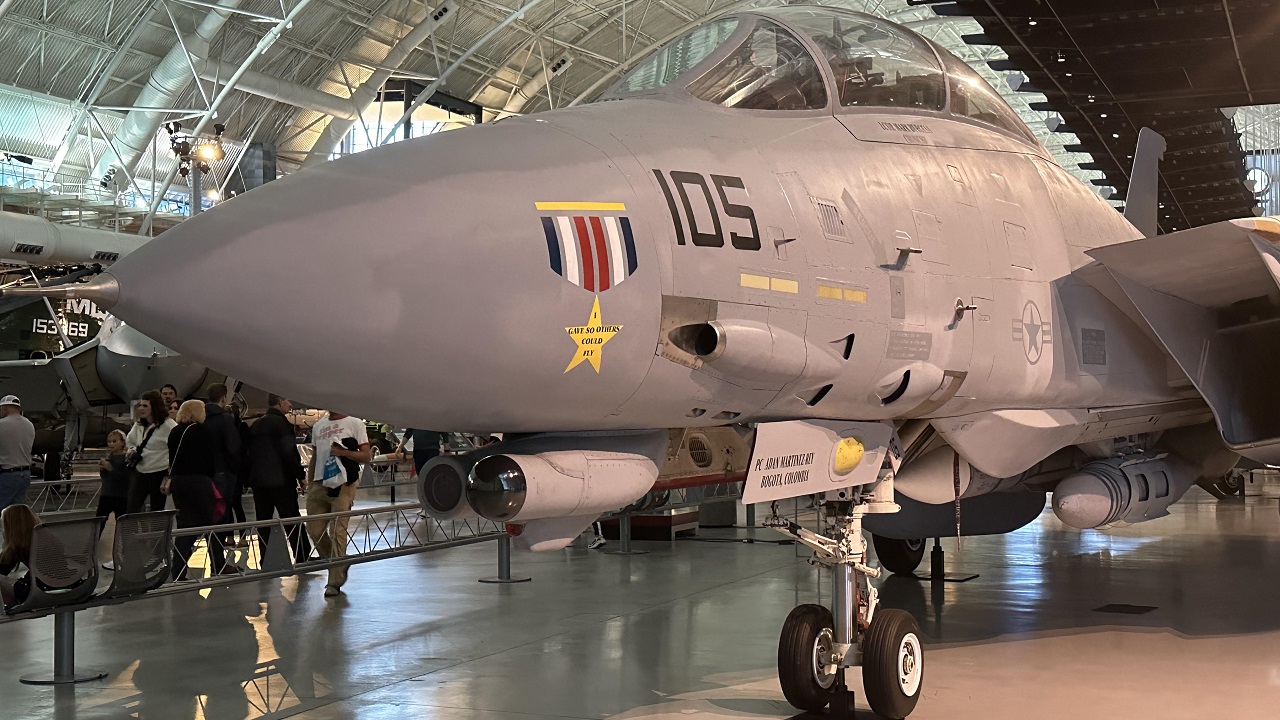
F-14 Tomcat. Image taken at National Air and Space Museum on October 1, 2022. Image by 19FortyFive.
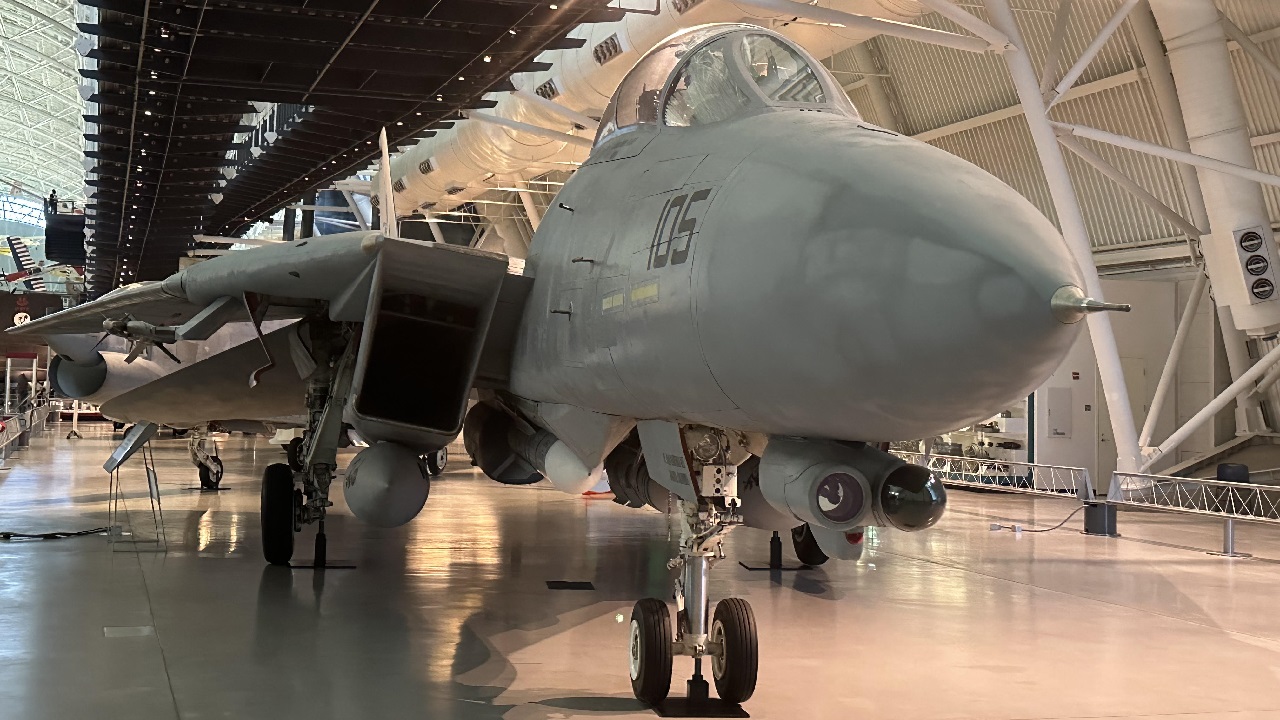
F-14 Tomcat. Image taken at National Air and Space Museum on October 1, 2022. Image by 19FortyFive.
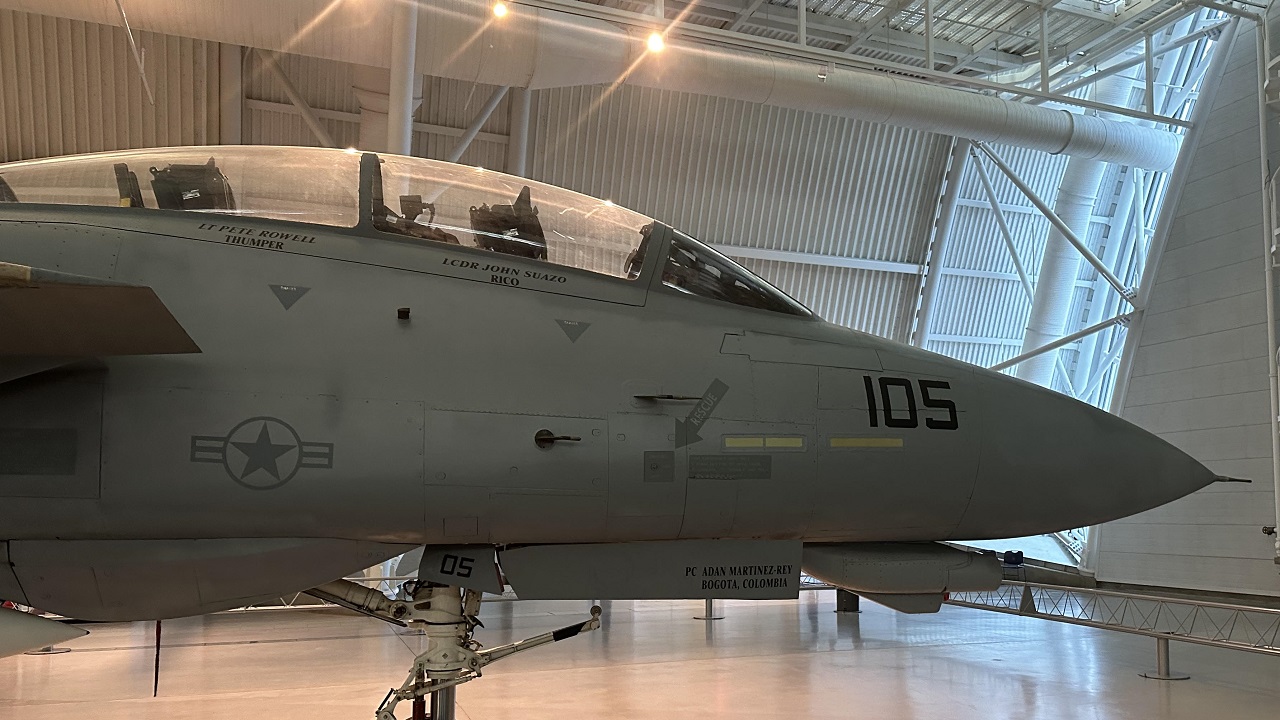
F-14 Tomcat. Image taken at National Air and Space Museum on October 1, 2022. Image by 19FortyFive.
The F-4 Phantom II is even older, however. Its maiden flight dates back to 1958, and it became one of the defining U.S. fighters of the Vietnam era, later adopted widely by allies.
After the Islamic Revolution, Iran lost access to a pipeline of spares, upgrades, and original manufacturer support that keeps complex aircraft like this viable. Since then, Iran has faced enormous maintenance challenges to keep the aircraft airworthy, with intelligence suggesting that many of the country’s most valuable aircraft are being kept alive through cannibalization – the sourcing of spare parts from a donor plane to keep another flying. Iranian engineers have also attempted to reverse-engineer parts or source them sporadically whenever they become available from various global partners. Those efforts, however, have only slowed down the inevitable: Iran’s top air assets are slowly falling apart.
Iran’s Current Air Assets
The Islamic Republic of Iran Air Force’s (IRIAF) combat fleet presently consists of older American aircraft like the F-14, F-4, and F-5, and a small number of Russian types such as the MiG-29 and Su-24. The International Institute for Strategic Studies notes that Iran’s combat-aircraft fleet is made up for the most part of those U.S. legacy platforms, while others note that the inventory also includes some Chinese platforms.
That mix of old aircraft of different origins presents problems in wartime. Different aircraft families require different engine and avionics support; they require varying kinds of test equipment, and munitions integration becomes a headache, too. That all complicates sustainment even in peacetime – let alone under sanctions and with limited access to original spare parts.
So far, Iran’s fighter fleet has remained largely absent for a simple reason: Cold War-era jets cannot achieve air superiority when competing against networked fifth-generation fighters.
About the Author: Jack Buckby
Jack Buckby is a British researcher and analyst specialising in defence and national security, based in New York. His work focuses on military capability, procurement, and strategic competition, producing and editing analysis for policy and defence audiences. He brings extensive editorial experience, with a career output spanning over 1,000 articles at 19FortyFive and National Security Journal, and has previously authored books and papers on extremism and deradicalisation.

