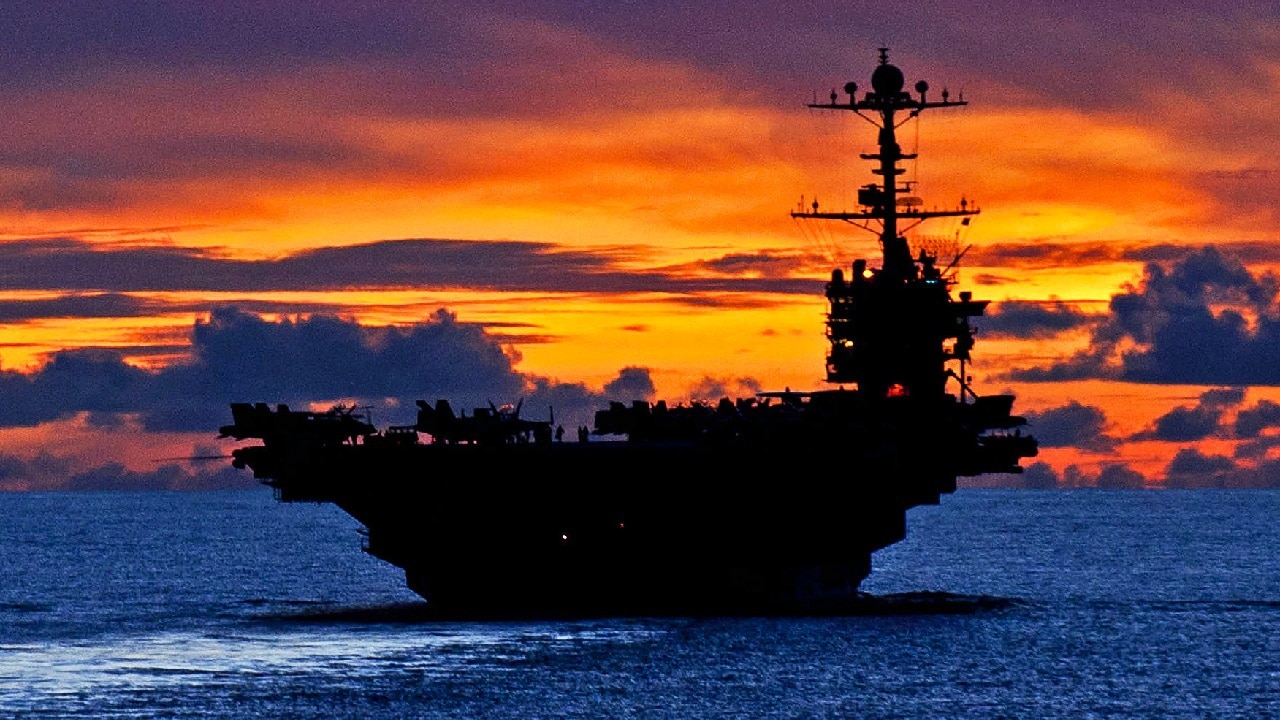
Summary and Key Points: Kris Osborn, a national security expert, evaluates the tactical implications of the Strait of Hormuz closure during the 2026 U.S.-Israeli campaign.
-Despite Iran’s possible attempts to “blanket” the 2-mile-wide shipping lanes with mines and small boat swarms, the U.S. Navy maintains strike dominance by operating Carrier Strike Groups from the Gulf of Oman.
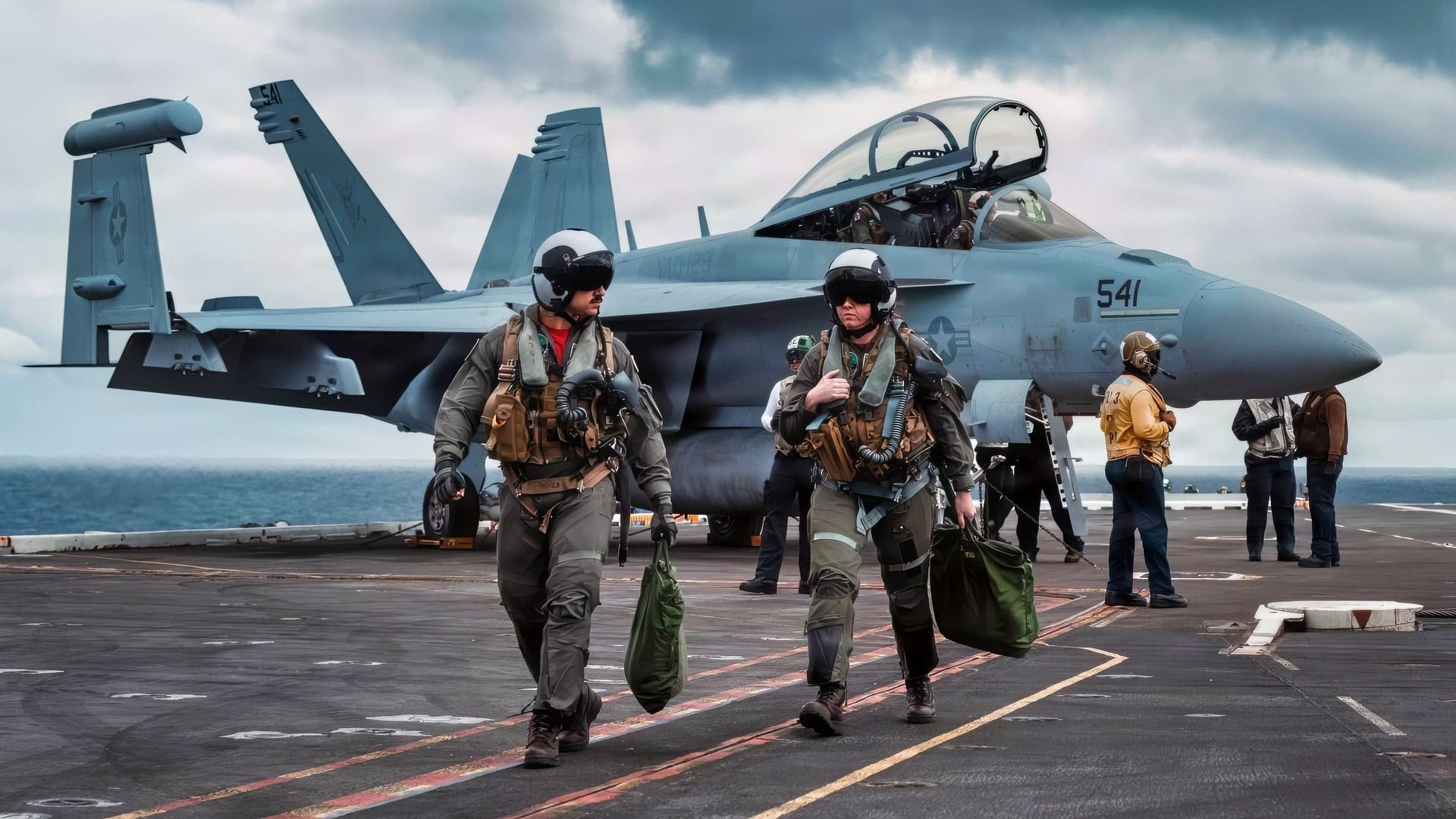
PACIFIC OCEAN (Jan. 24, 2026) – U.S. Navy Lt. Patrick Urrutia, left, and U.S. Navy Lt. Jg. Gabriela Patrick depart a U.S. Navy EA-18G Growler attached to Electronic Attack Squadron (VAQ) 129 on the flight deck of the Nimitz-class aircraft carrier USS Theodore Roosevelt (CVN 71), Jan. 24, 2026. Theodore Roosevelt, flagship of Carrier Strike Group (CSG) 9, is underway conducting exercises to bolster strike group readiness and capability in the U.S. 3rd Fleet area of operations. (U.S. Navy photo by Mass Communication Specialist Seaman Apprentice Cesar Nungaray)
-This 19FortyFive report analyzes the threat posed by Iran’s Shahab-3 and Khorramshahr ballistic missiles, concluding that while close-in defenses like SeaRAM are vital for transit, the Navy’s ability to project power from standoff ranges renders the blockade strategically ineffective against U.S. military objectives.
The 21-Mile Trap: Why the U.S. Navy is Striking Iran Without Transiting the Strait of Hormuz
Iran’s closing of the Strait of Hormuz presents well-known global economic pressures, yet the move also carries substantial tactical and strategic implications for the ongoing U.S.-Israeli attacks on Iran.
Certainly, Iran has sought to maximize whatever leverage it perceives it has to exert pressure on those seeking safe passage through the Strait.
A huge percentage of the world’s oil, including some U.S. oil, must pass through the Strait of Hormuz.
It is quite a narrow passageway, spanning only 21 miles at its narrowest point.
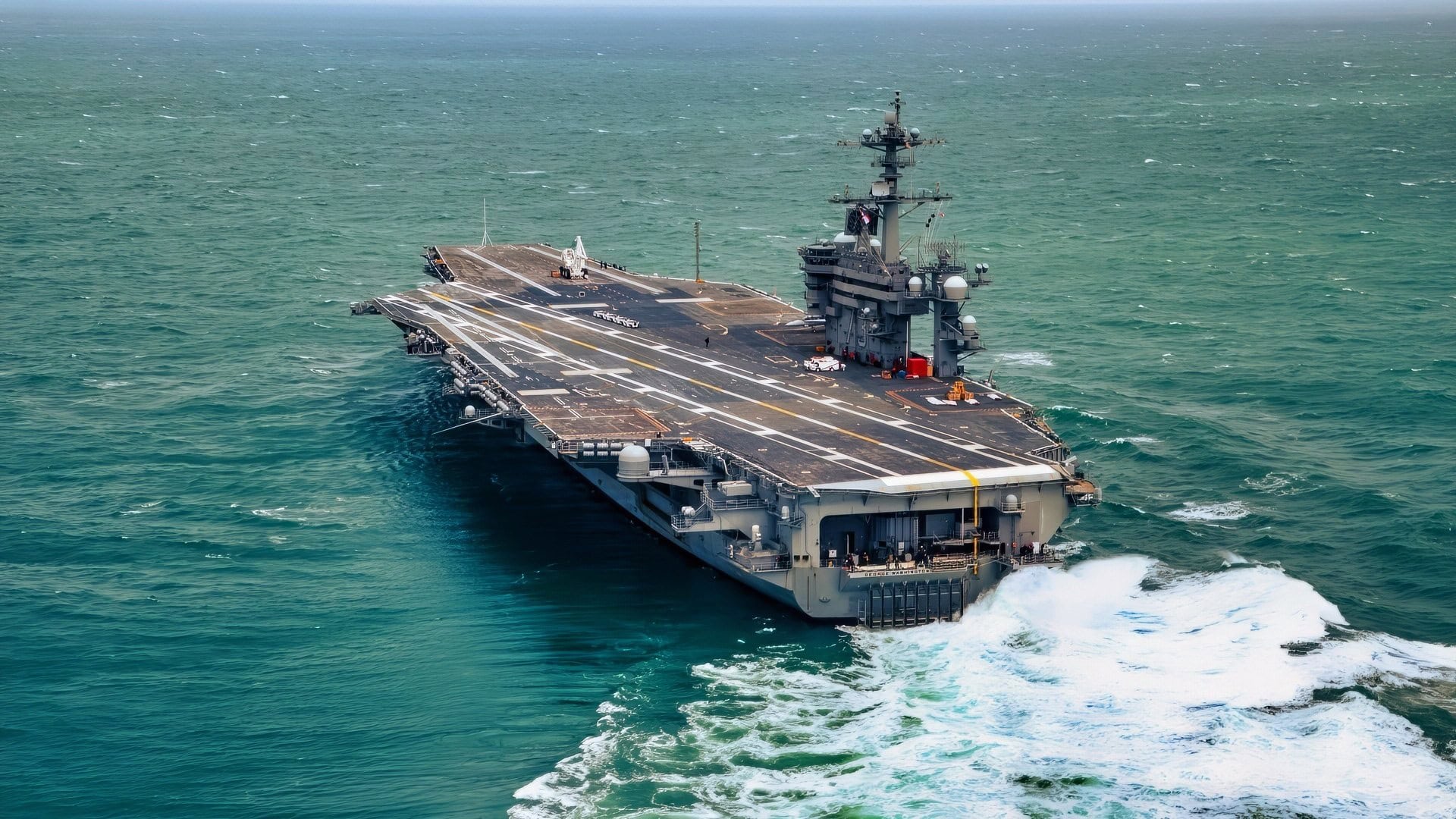
The Nimitz-class aircraft carrier USS George Washington (CVN 73) transits through the Atlantic Ocean May 25, 2023. George Washington was underway after completing its mid-life refueling and complex overhaul and sea trials, a comprehensive test of the ship’s system and technologies. (U.S. Navy photo by Mass Communication Specialist 3rd Class Nicholas A. Russell)
Overall, the strait itself is about 35 to 60 miles wide and connects the Persian Gulf to the Gulf of Oman.
To facilitate safe and efficient passage, the Strait operates specific shipping lanes about 2 miles wide, separated by a buffer.
Roughly 20 percent of the world’s oil, approximately 21 million barrels a day, passes through the Strait of Hormuz.
Can the U.S. Navy Still Attack?
Perhaps even more significantly, the U.S. Navy’s Carrier Strike Group is capable of striking Iran and conducting air operations over the country without transiting through the Strait.
Therefore, any pre-emptive Iranian move to close it is unlikely to make strategic or tactical sense, and it certainly makes no political sense given the number of countries around the world that depend on oil passing through the area. Carrier-launched fighter jets, warships that fired Tomahawk missiles, and submarine strikes could all happen easily from the Gulf of Oman, meaning the U.S. Navy can easily strike Iran without needing to transit the Strait of Hormuz.
U.S. Navy warships, aircraft, and even submarines and countermine vessels could simply “engage” the area to ensure it reopens. Yet, a Naval combat operation of this kind could prove quite difficult given Iran’s known abilities with mines, drones, small boats, and ballistic missiles.
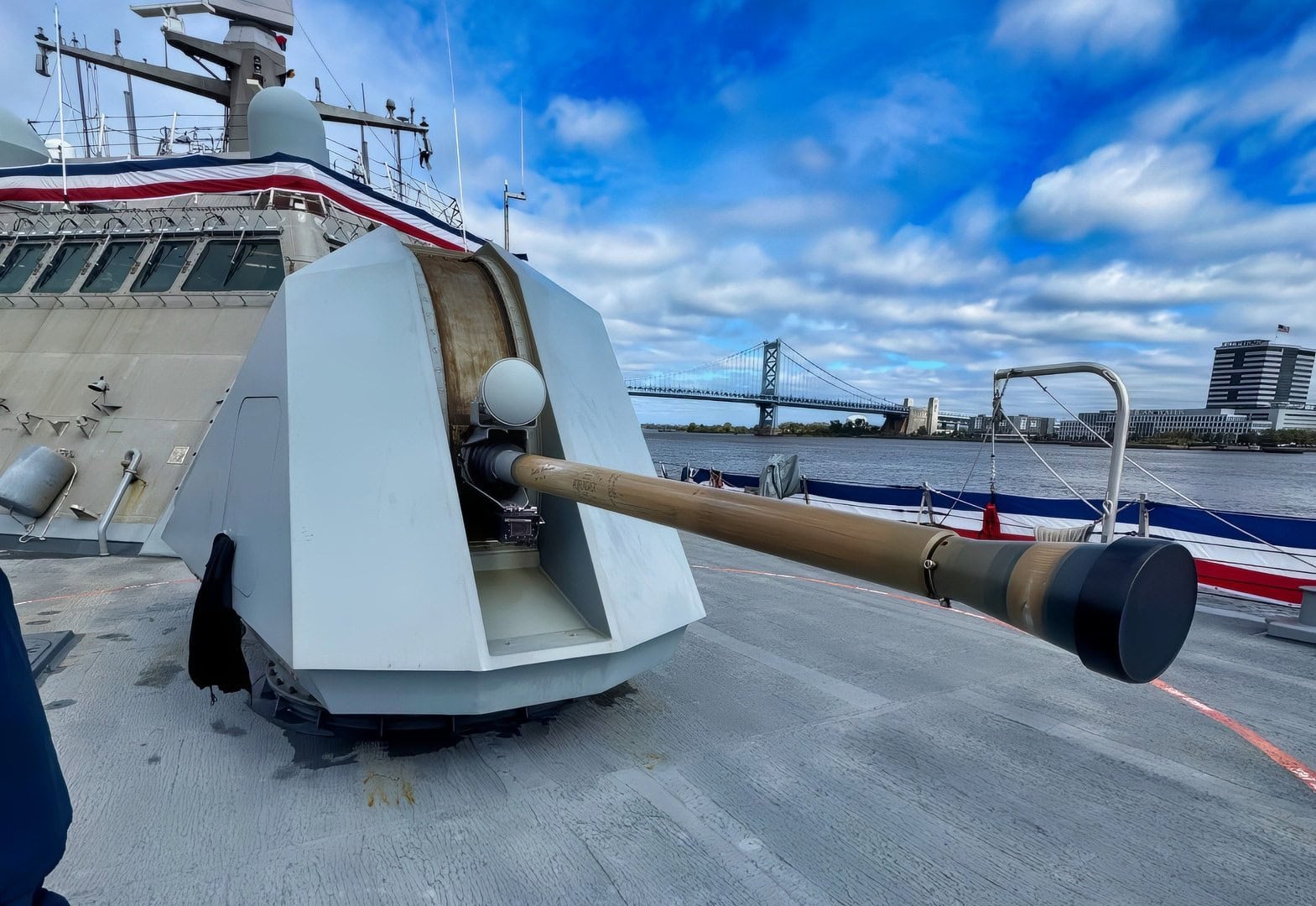
Littoral Combat Ship Deck Gun U.S. Navy. Image Credit: 19FortyFive.com
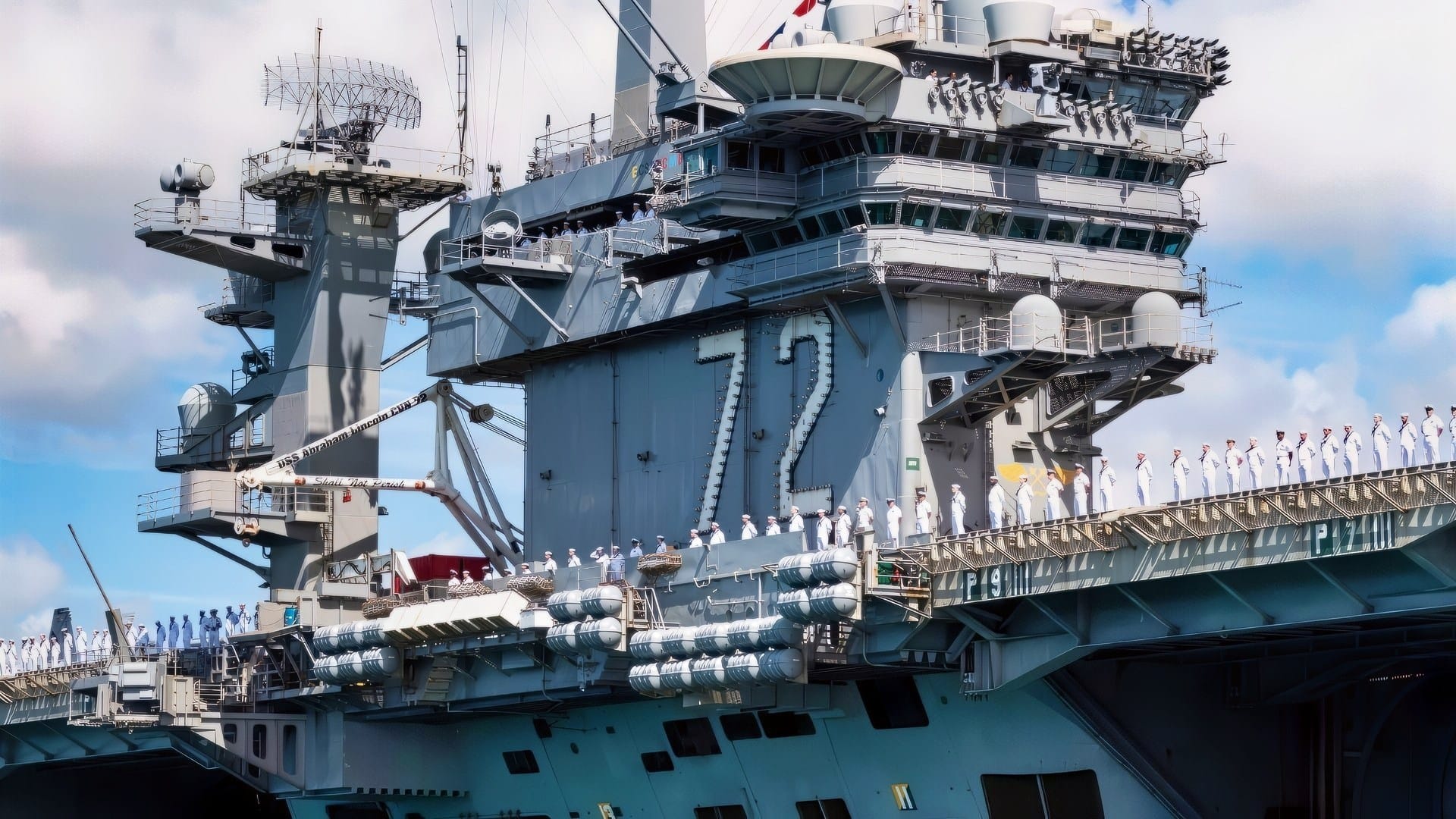
(June 28, 2022) – Nimitz-class aircraft carrier USS Abraham Lincoln (CVN 72) arrives at Joint Base Pearl Harbor-Hickam to participate in Rim of the Pacific (RIMPAC) 2022, June 28. Twenty-six nations, 38 ships, four submarines, more than 170 aircraft and 25,000 personnel are participating in RIMPAC from June 29 to Aug. 4 in and around the Hawaiian Islands and Southern California. The world’s largest international maritime exercise, RIMPAC provides a unique training opportunity while fostering and sustaining cooperative relationships among participants critical to ensuring the safety of sea lanes and security on the world’s oceans. RIMPAC 2022 is the 28th exercise in the series that began in 1971. (U.S. Navy photo by Mass Communication Specialist 1st Class Devin M. Langer)
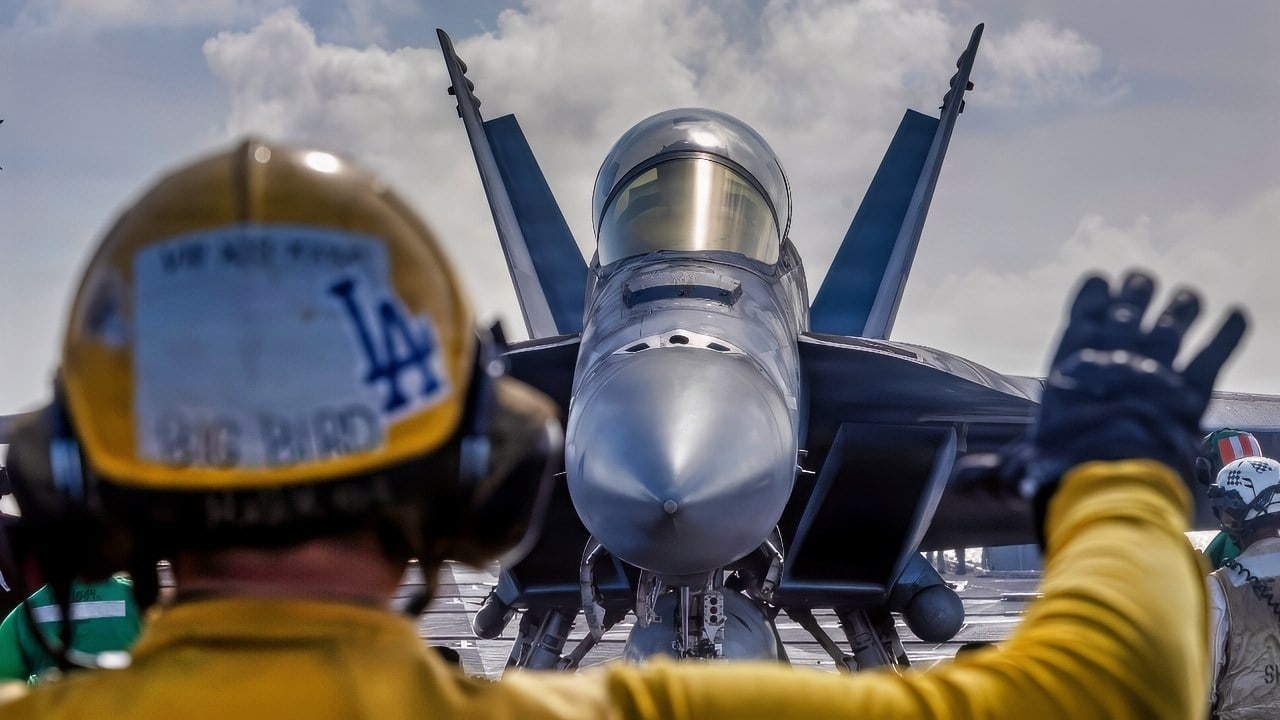
U.S. Navy Aviation Boatswain’s Mate (Handling) 2nd Class Michael Cordova directs an F/A-18E Super Hornet, attached to Strike Fighter Squadron (VFA) 14, on the flight deck of Nimitz-class aircraft carrier USS Abraham Lincoln (CVN 72) on Jan. 10, 2026. The Abraham Lincoln Carrier Strike Group is underway conducting routine operations in the U.S. 7th Fleet area of operations. Units assigned to 7th Fleet conduct regular Indo-Pacific patrols to deter aggression, strengthen alliances and partnerships, and advance peace through strength. (U.S. Navy photo by Mass Communication Specialist Seaman Daniel Kimmelman)
Given the narrow size of the passageway and its proximity to Iran, any U.S. Navy vessels operating there would offer a large, visible, potentially close-in target for Iranian-launched drones, missiles, or small boat swarms. U.S. Navy ships clearing the Strait would not have the expansive defensive “ranges” they operated within when under attack in the Red Sea, a circumstance which might make it more difficult to successfully defend large, deep-draft warships.
Warships would need to benefit not only from Aegis radar, satellite ISR threat-tracking systems, and multi-domain targeting technology, but also address potentially more challenging “closer-in” threats.
Iran Small Boat Threat
Iran has a long and documented history of using swarming small boats to intimidate or harass international commercial vessels as well as U.S. Navy platforms, one reason why the U.S. Navy has, in recent years, massively upgraded its close-in ship defenses, such as deck-mounted guns and interceptor weapons such as SeaRAM and Close-in-Weapons-System.
Should Iran manage to keep the Strait closed as part of its hostile military moves, there would not only be concerning security implications, but the world’s economy would be severely impacted. The actual task of closing the Straight might not have been too difficult, given that its passageways are only 2 miles wide.
Iranian boats would merely need to occupy or “blanket” shipping lanes with boats, barriers, or mines to close them.
Even large U.S. Navy warships could, in some circumstances, be threatened by small boat swarms. The idea of boat swarm attacks would simply be to overwhelm ship defenses with fire from so many different angles at one time that deck-mounted guns or other countermeasures would simply be unable to fully defend the ship.
Ballistic Missile Threat in Strait of Hormuz
A U.S. Navy military effort to reopen the Strait would also need to account for the reality that the area is well within the clear reach of Iran’s massive short, medium, and long-range ballistic missile arsenal.
A significant research paper from Iran Watch shows that indeed Iran does possess a massive arsenal of ballistic missiles, at least five of which can reportedly travel distances of 1,300km or more.
The famous Shahab-3, for instance, is listed by Iran Watch as capable of traveling 1,300km with a 1,000kg warhead. The liquid-fuel, single-stage Shahab-3 rocket is now deployed and in large numbers.
The longest range ballistic missile listed by Iran Watch is the Khorramshahr 1,2, and 4 .. weapons cited as able to travel as far as 2,000 to 3,000km. This means the missile could hit anywhere in Israel from Tehran or most places throughout Central and Western Iran.
Other Iranian Medium-Range Ballistic Missiles capable of traveling 1,600km or more are the now-deployed Ghadr, Emad, and Paveh missiles, according to Iran Watch. The Iranian Sejjil MRBM can travel 2,000km.
About the Author: Kris Osborn, President of Warrior Maven
Kris Osborn is the President of Warrior Maven – Center for Military Modernization. Osborn previously served at the Pentagon as a highly qualified expert in the Office of the Assistant Secretary of the Army—Acquisition, Logistics & Technology. Osborn has also worked as an anchor and on-air military specialist at national TV networks. He has appeared as a guest military expert on Fox News, MSNBC, The Military Channel, and The History Channel. He also has a Masters Degree in Comparative Literature from Columbia University.