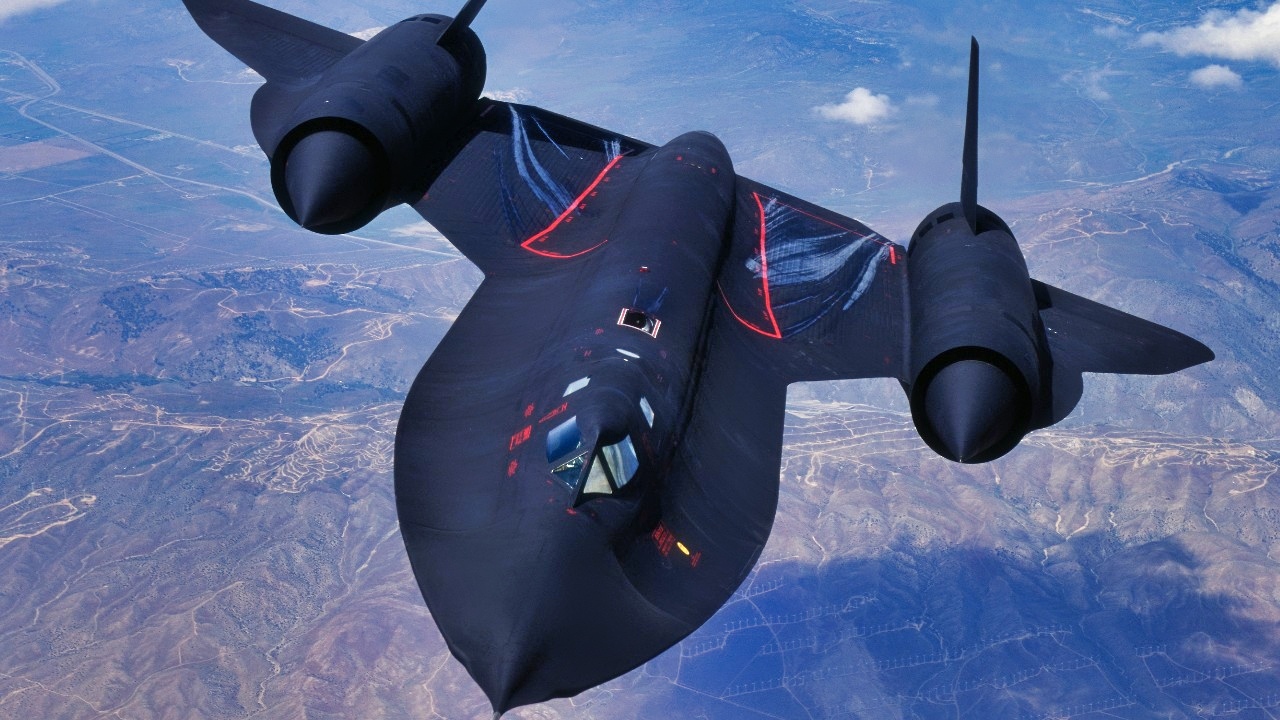
Summary and Key Points: Jack Buckby, a New York-based defense researcher and national security analyst, evaluates the extraordinary legacy and retirement of the Lockheed SR-71 Blackbird.
-Designed by the Skunk Works division to penetrate Soviet airspace, the Blackbird utilized Pratt & Whitney J58 engines to maintain sustained speeds above Mach 3.
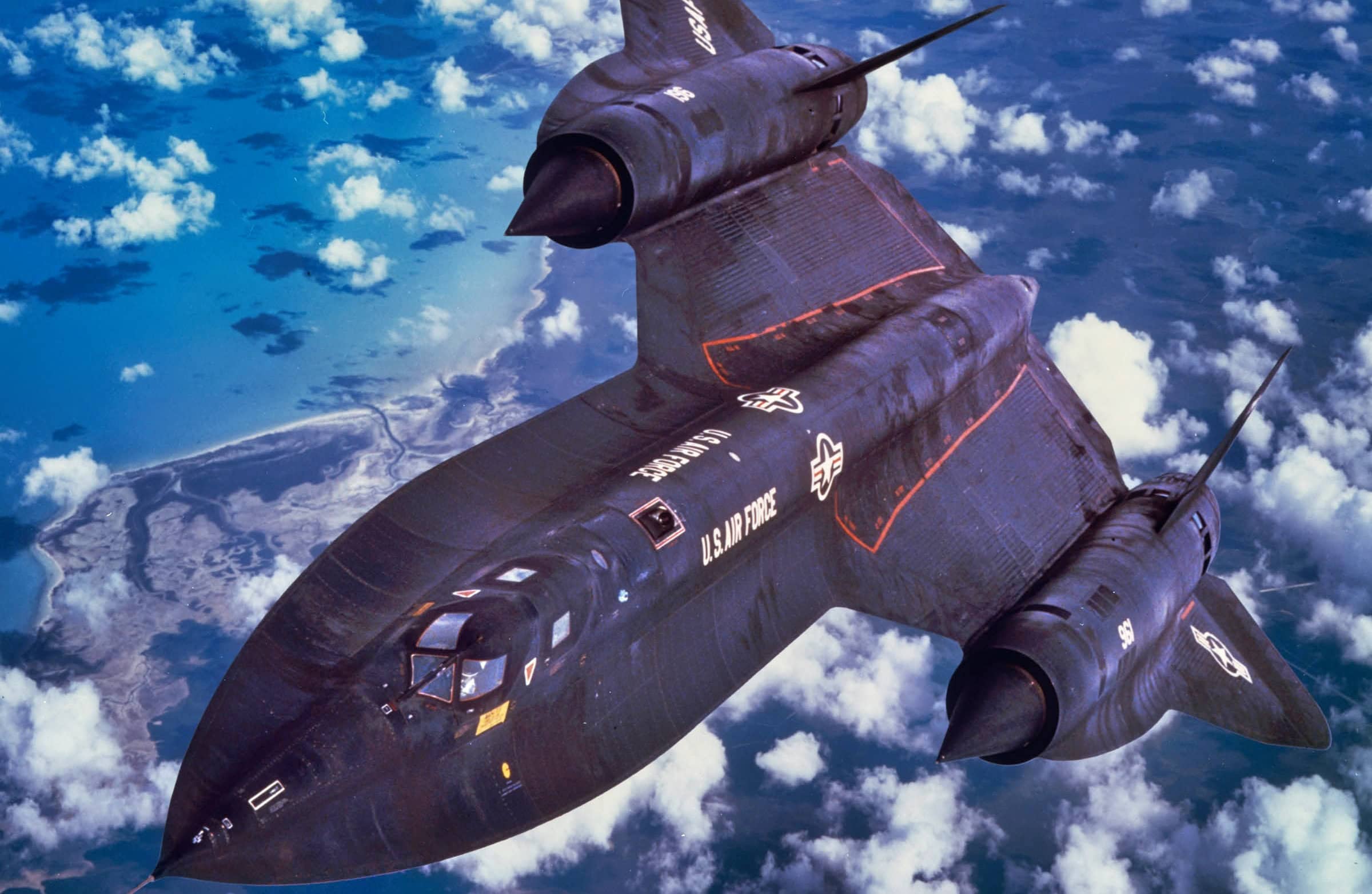
SR-71 Blackbird. Image Credit: Creative Commons.
-This report analyzes the aircraft’s unique titanium construction and its “speed as defense” doctrine, which ensured no airframe was ever lost to hostile fire.
-Buckby concludes that while high operational costs and satellite advancement led to its 1998 retirement, the SR-71’s ability to cross the International Date Line in under two hours remains a pinnacle of aviation achievement.
-This article also includes bonus photos and video from 19FortyFive’s various SR-71 museum tours over the years, as we have seen this amazing spy plane up close many times.
The SR-71 Blackbird and Why It Was Retired
The Lockheed SR-71 Blackbird remains one of the most extraordinary aircraft ever built.
Designed during the Cold War to conduct high-speed reconnaissance missions over hostile territory, the aircraft could fly faster and higher than any other operational jet in history. With cruising speeds above Mach 3 and typical operating altitudes around 85,000 feet, the Blackbird was capable of reaching almost any location on Earth within hours.
Those capabilities produced some remarkable stories from the pilots who flew the aircraft. One famous anecdote described a mission in which an SR-71 departed Kadena Air Base in Okinawa and landed at Beale Air Force Base in California so quickly that the crew arrived in time for Friday evening drinks – even though the aircraft had technically taken off from Japan on Saturday morning. The apparent “time travel” was simply a result of the aircraft’s extraordinary speed combined with crossing the International Date Line.
The story illustrates the extraordinary performance of an aircraft that ultimately redefined reconnaissance during the Cold War – and whose retirement left an intelligence capability that the United States has struggled to replace.
Built to Fly at Mach 3
The SR-71 Blackbird was developed by Lockheed’s Skunk Works division during the early 1960s as a high-speed reconnaissance aircraft designed to penetrate heavily defended Soviet airspace. The aircraft first flew in December 1964 and entered operational service with the U.S. Air Force in 1966.
From the beginning, the aircraft was engineered around one central concept: speed. The Blackbird was designed to cruise above Mach 3 – more than three times the speed of sound – while operating at altitudes exceeding 80,000 feet. To achieve those speeds, engineers needed to come up with some radical solutions. Much of the aircraft, for example, was constructed from titanium alloys because conventional aluminium structures would soften or deform under the intense heat generated during sustained Mach 3 flight. During missions, friction with the atmosphere could cause so much heat that the aircraft’s surface would reach 1,000 degrees Fahrenheit.
The SR-71 also had an unusual propulsion system. Its two Pratt & Whitney J58 engines were capable of producing roughly 32,500 pounds of thrust each and operated, to some extent, like ramjets at high speeds, allowing the aircraft to maintain its extraordinary performance envelope.
The result was an aircraft that could exceed 2,000 mph and climb to altitudes above 85,000 feet – performance that remains unmatched by any operational manned air-breathing aircraft today.
19FortyFive SR-71 Blackbird Visits Over the Years: A Photo Essay
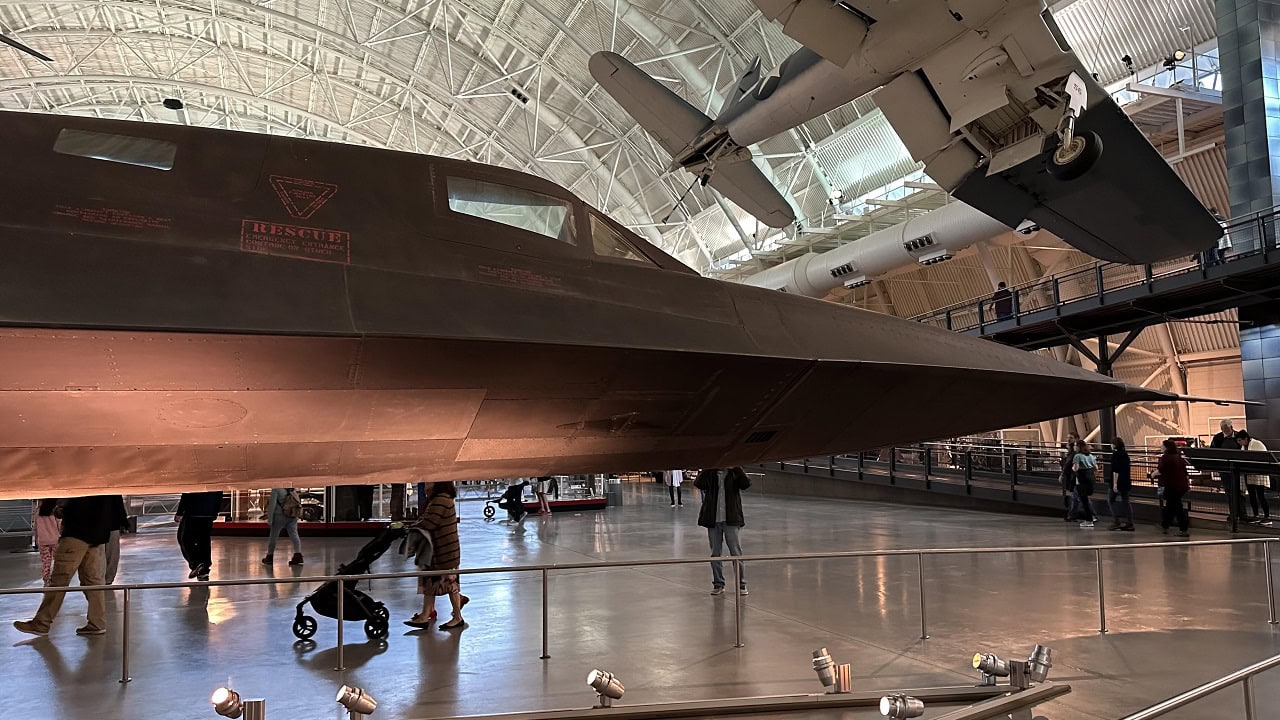
SR-71. SR-71 photo taken at the National Air and Space Museum. Taken by 19FortyFive on 10/1/2022.
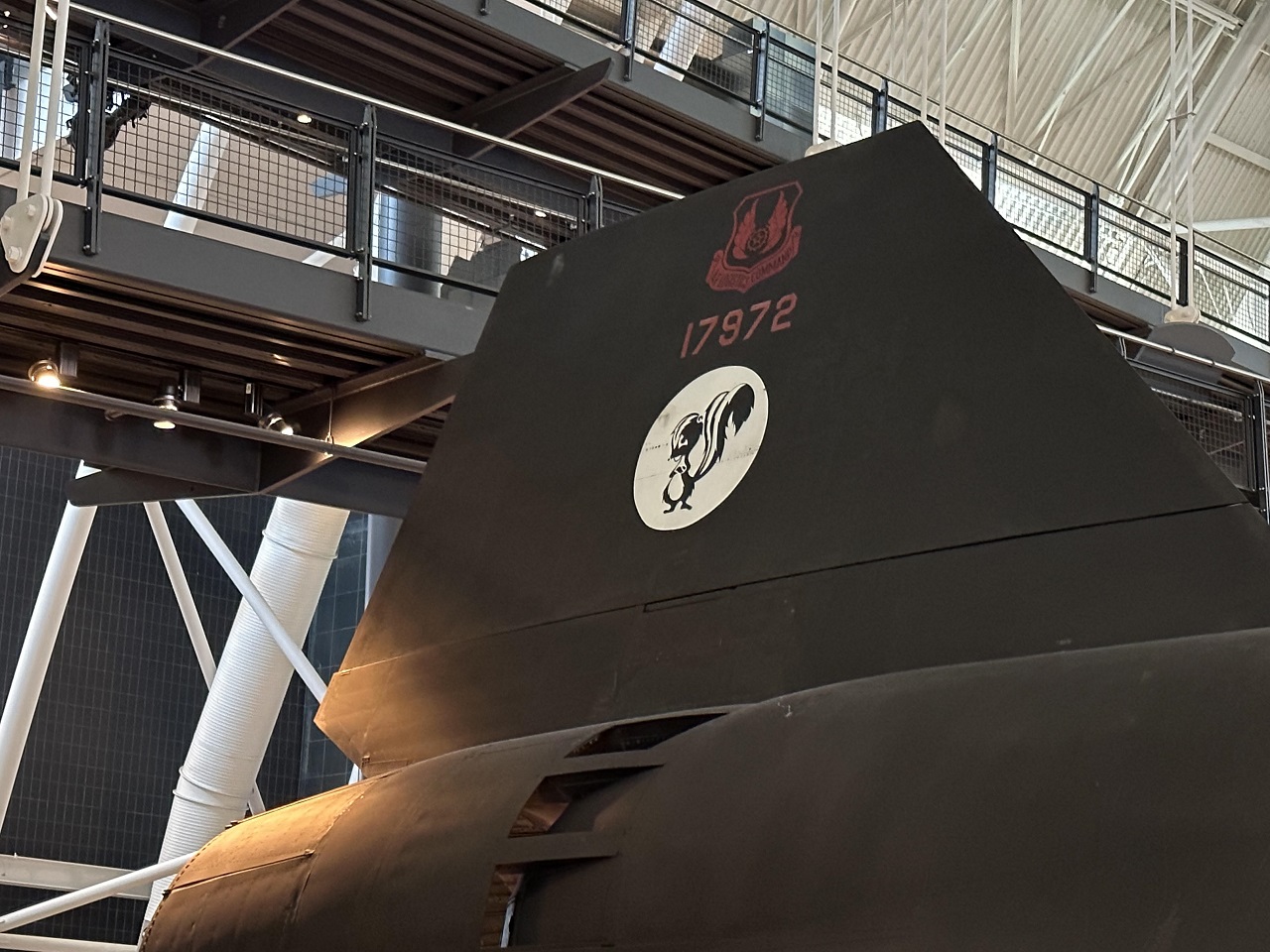
SR-71. SR-71 photo taken at the National Air and Space Museum. Taken by 19FortyFive on 10/1/2022.
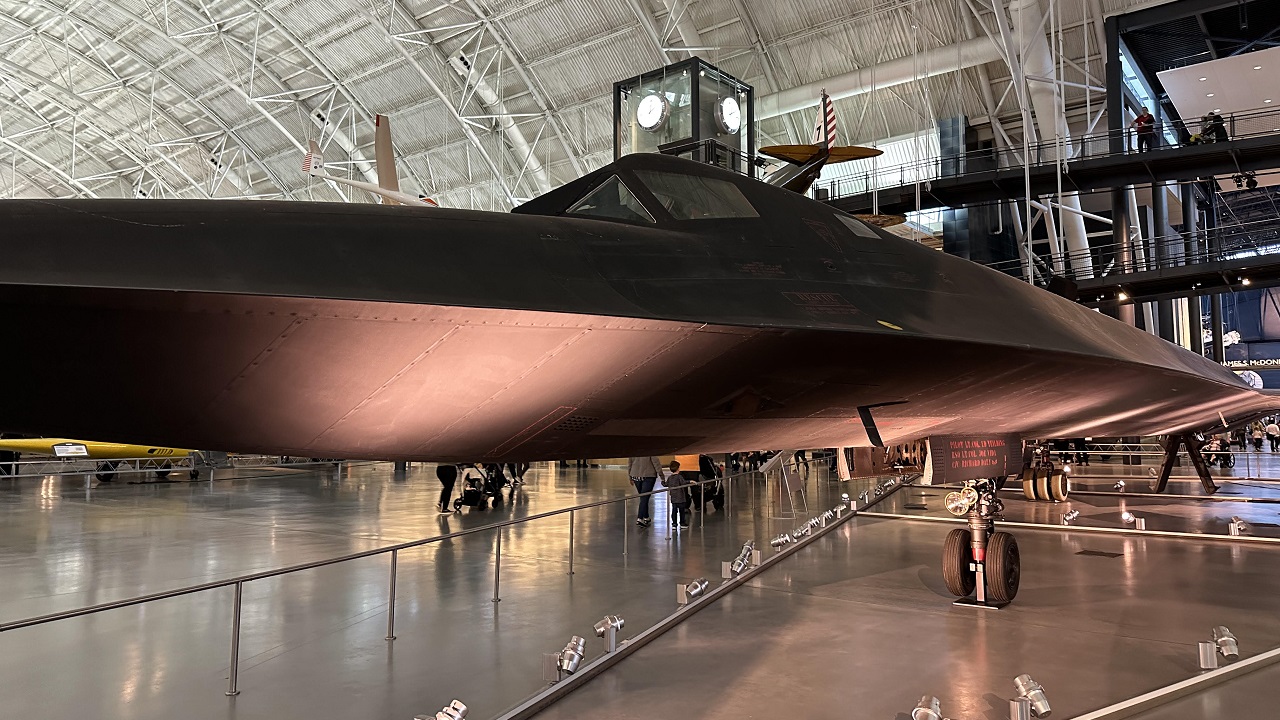
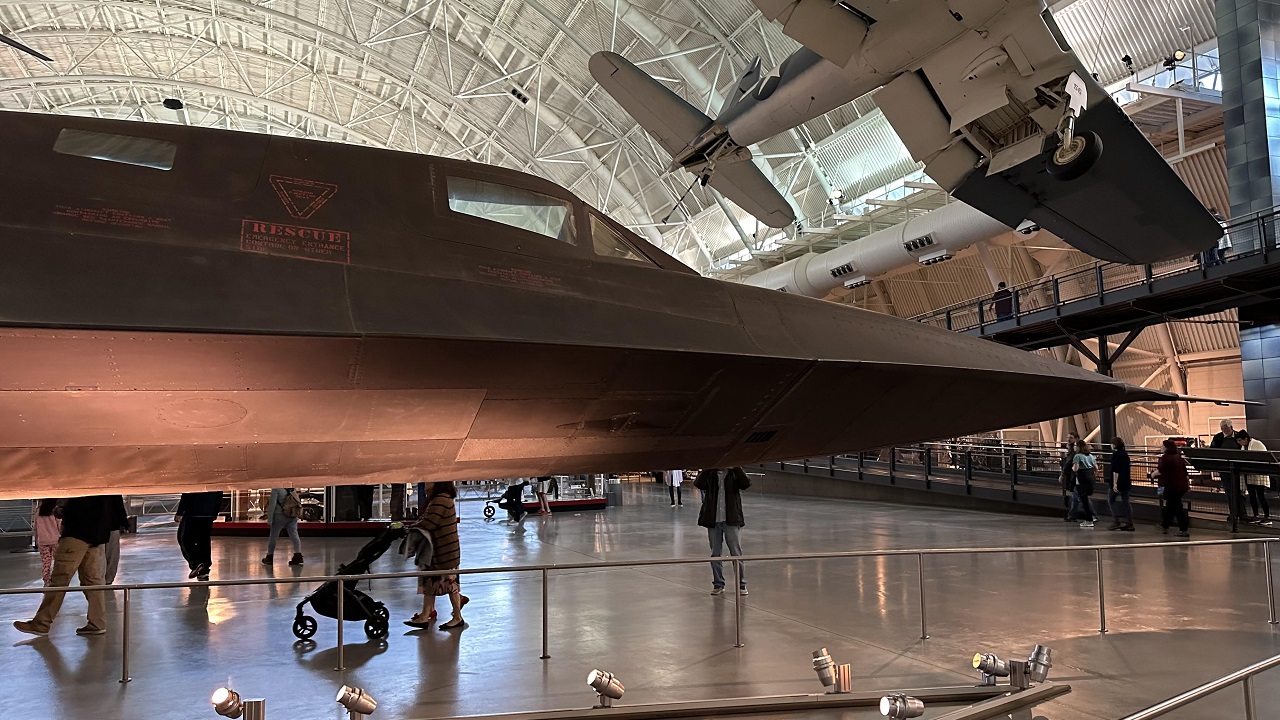
SR-71. SR-71 photo taken at the National Air and Space Museum. Taken by 19FortyFive on 10/1/2022.
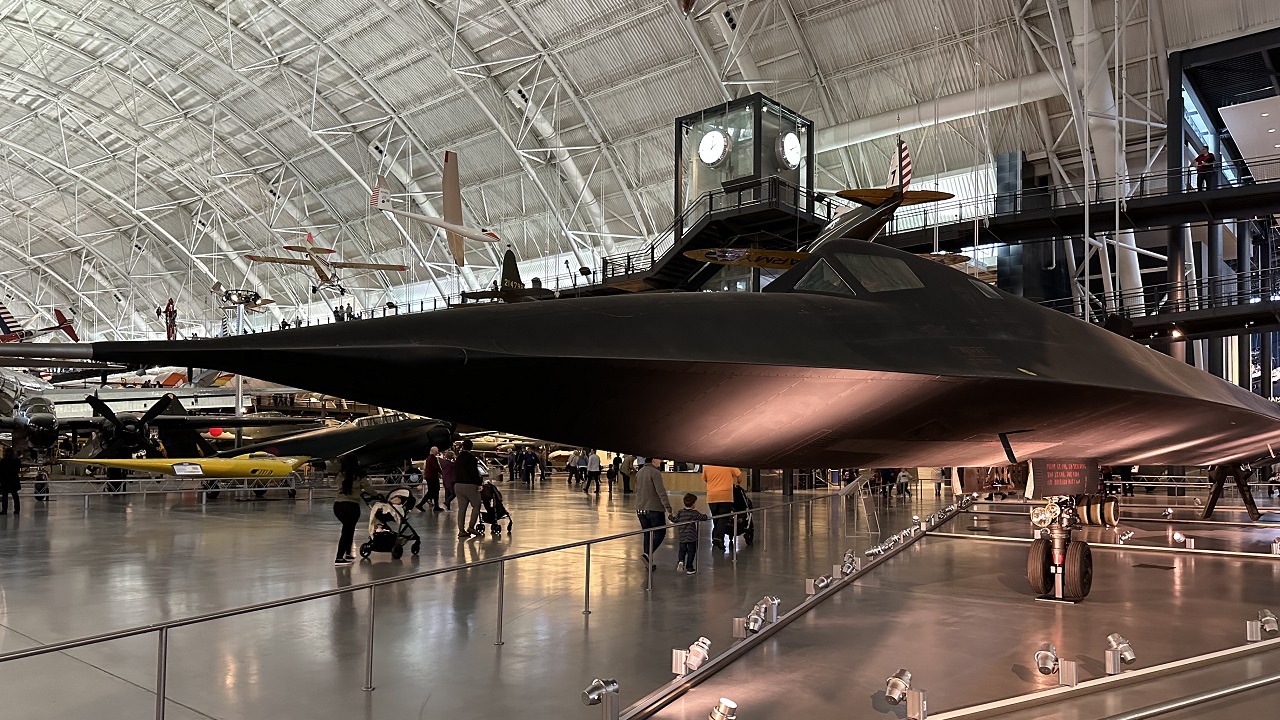
SR-71. SR-71 photo taken at the National Air and Space Museum. Taken by 19FortyFive on 10/1/2022.
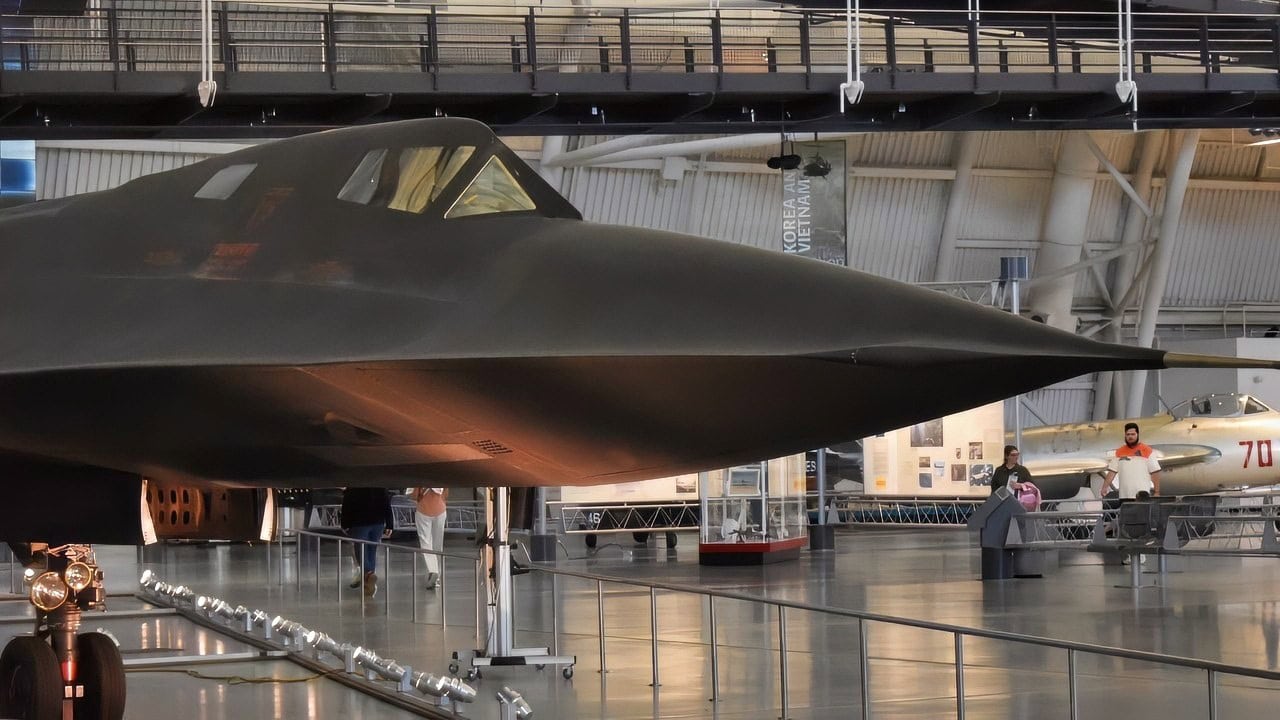
SR-71 Blackbird Photo by Dr. Brent Eastwood of 19FortyFive.

SR-71 Blackbird Photo from Dr. Brent Eastwood at the Smithsonian. 19FortyFive.com Original Image.
The Time Travel Mission
One former SR-71 pilot, David Peters, has been public about his experience with the aircraft, recalling a particularly memorable mission from Kadena Air Base in Okinawa. After a routine pre-flight evening, the crew departed Japan the following morning for a reconnaissance mission across the Pacific.
The flight required multiple refueling operations because the aircraft burned enormous quantities of fuel at high speed before continuing across the North Pacific toward California.
After completing the mission and landing at Beale Air Force Base, the crew reportedly finished their post-flight debrief and headed to the officers’ club. When they checked the clock, it was still Friday evening in California – roughly seventeen hours before the scheduled Saturday morning departure time in Japan.
The explanation for that story is simple geography and physics, but it’s still a remarkable feat. Because the aircraft crossed the International Date Line while flying east at more than three times the speed of sound, the crew effectively gained an entire calendar day. Combined with the SR-71’s remarkable speed, the flight created the impression that the aircraft had arrived before it departed.
Similar feats were actually common for the Blackbird. The aircraft set a number of speed records during its service life, including a 1974 flight from New York to London in just under two hours, and a 1990 record run from Los Angeles to Washington in just 64 minutes.
Speed as Defense
The SR-71 was not armed, but its speed was more valuable than any weapon. This aircraft could simply outrun any threat.
During Cold War reconnaissance missions, the aircraft routinely flew over or near hostile airspace while collecting imagery and signals intelligence. If radar detected a surface-to-air missile launch, the standard evasive maneuver was to accelerate the speed and climb.
Operating at speeds above Mach 3 and altitudes above 80,000 feet placed the aircraft outside the effective engagement envelope of most interceptors and missile systems of the era. As a result, no SR-71 was ever shot down during its operational career. The aircraft could simply outrun threats, leaving pursuing aircraft and missile systems struggling to catch up.
It’s that capability that made the SR-71 one of the most valuable intelligence platforms of the Cold War. It provided critical reconnaissance during major geopolitical crises and delivered high-resolution imagery from regions where satellites or slower aircraft could not operate as quickly.
Why the Blackbird Was Retired
Despite its legendary performance, the SR-71 was ultimately retired in the 1990s. One reason was cost. The aircraft required extensive maintenance after every flight due to the extreme stresses generated during high-speed missions. Its specialized fuel and unique components also made operations more expensive than on other intelligence platforms.
At the same time, advances in reconnaissance satellites enabled persistent global surveillance capabilities. Satellites could remain in orbit for years, continuously monitoring large areas without the operational costs associated with aircraft missions. Budget pressures following the end of the Cold War also influenced the decision. The U.S. Air Force retired the Blackbird in 1990, briefly reactivated a small number of aircraft in the mid-1990s, and finally ended the program permanently in 1998.
About the Author: Jack Buckby
Jack Buckby is a British researcher and analyst specialising in defence and national security, based in New York. His work focuses on military capability, procurement, and strategic competition, producing and editing analysis for policy and defence audiences. He brings extensive editorial experience, with a career output spanning over 1,000 articles at 19FortyFive and National Security Journal, and has previously authored books and papers on extremism and deradicalisation.