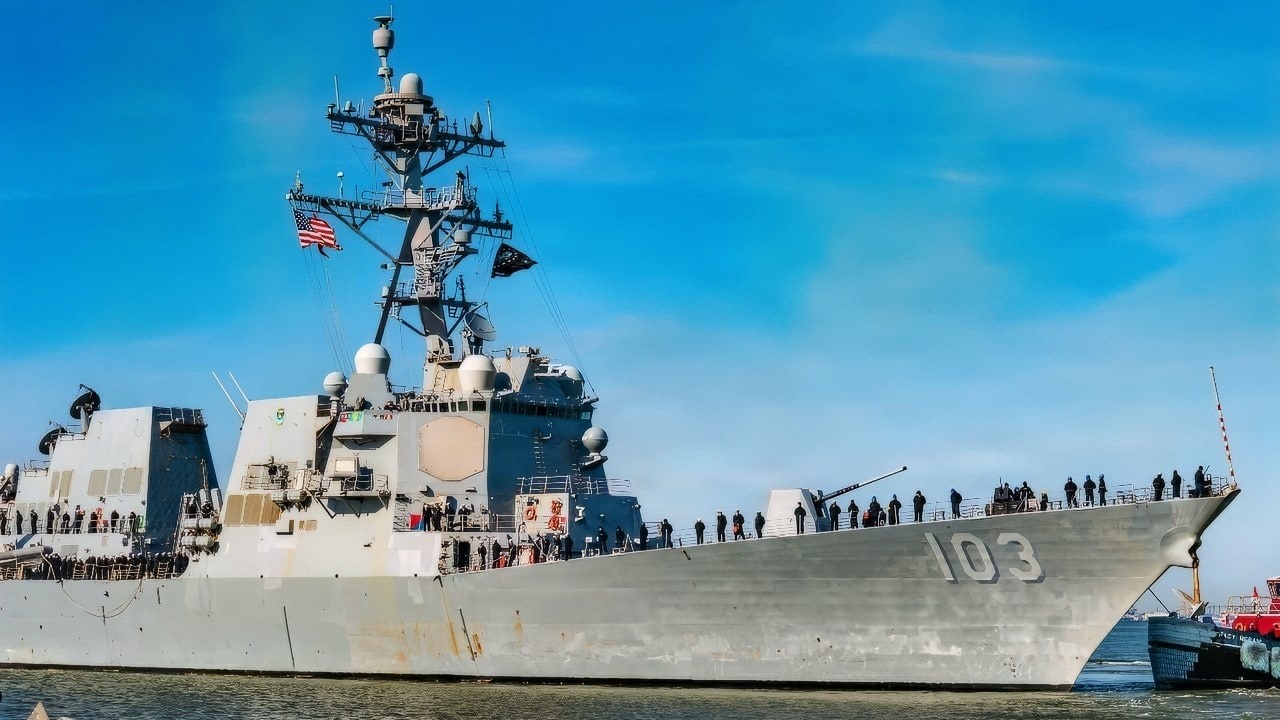
Summary and Key Points: Defense expert Reuben F. Johnson evaluates the catastrophic potential of a PRC blockade of Taiwan compared to the ongoing Strait of Hormuz energy crisis.
-With Operation Epic Fury consuming vast quantities of precision munitions, the U.S. military faces a critical vulnerability: 90% of the world’s most advanced microchips are produced by TSMC in the ROC.
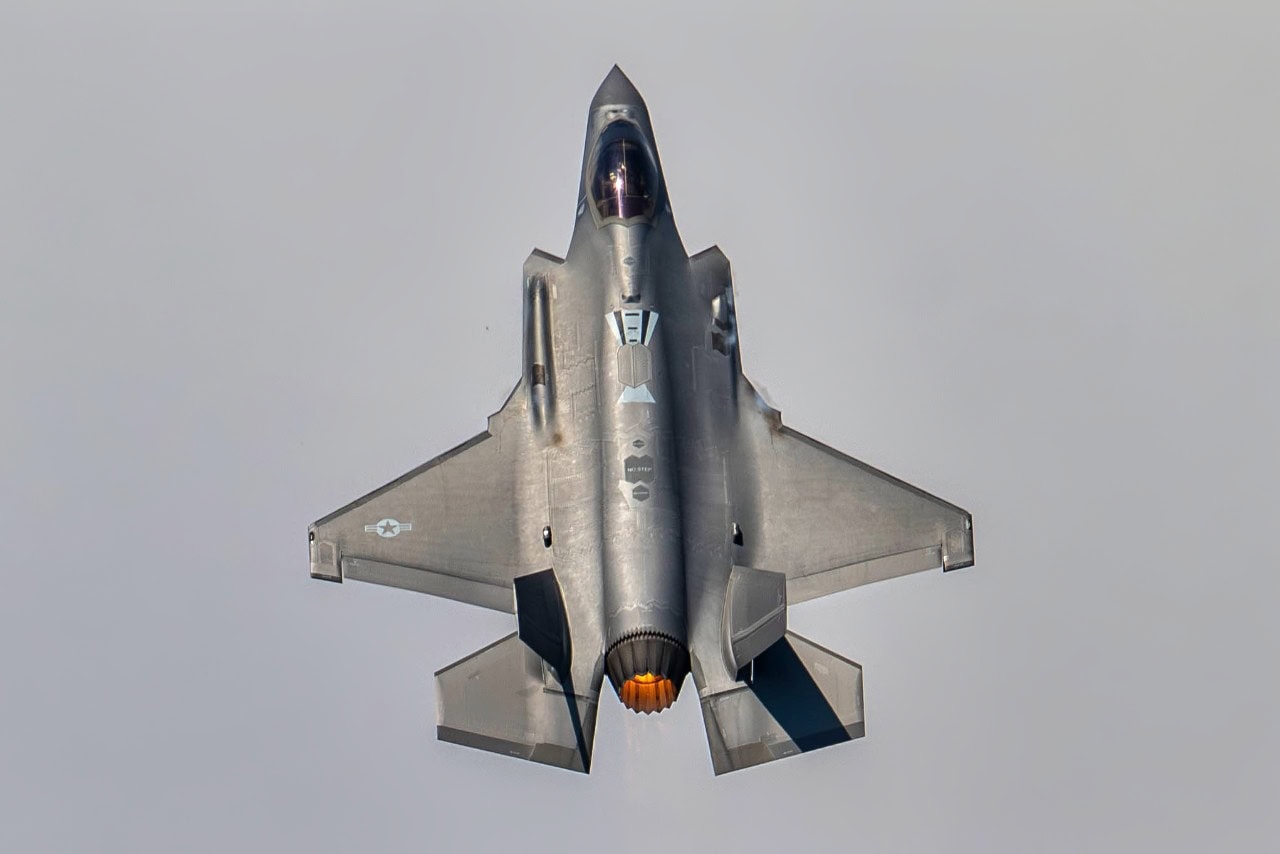
U.S. Air Force Maj. Kristin “BEO” Wolfe, F-35A Lightning II Demonstration Team commander, flies over Kennewick, Washington, during the Tri-Cities Water Follies Airshow Over the River, July 30, 2023. The F-35 Demonstration Team participated in the 2023 Tri-Cities Water Follies airshow and various other events in support of their mission to recruit, retain and inspire new and old generations of Airmen. (U.S. Air Force photo by Staff Sgt. Kaitlyn Ergish)
-This report analyzes the December 2025 Chinese export controls on rare earth elements like erbium and terbium, concluding that a disruption in the Taiwan Strait—which handles 20% of global maritime trade—would constitute a 9.6% hit to global GDP and cripple the U.S. defense industrial base.
Worse Than Strait of Hormuz Crisis: Why A Taiwan Semiconductor “Embargo” Would Be Far Worse
As oil prices rapidly shoot past the famous US $100 per barrel mark but have since come down and somewhat stabalized, many Americans are focusing more of their attention on the Middle East and the current US-Israel air campaign.
The principal reason is that — as has been repeated on the airwaves endlessly for the past ten days — some 20 percent of all global oil consumption and 20 percent of Liquid Natural Gas (LNG) trade passes through the Strait of Hormuz.
Approximately 100 cargo-carrying vessels would pass through the strait on an average day in 2026. Between 60 and 70 percent of these vessels are oil tankers and LNG carriers, highlighting the Middle East’s dominant role in global energy markets.
Additionally, nearly 90 percent of crude oil and condensate exports through this strait are shipped to Asian markets. These include some of Washington’s most important trading partners. Suffice it to say, the US voting public and the leaders of the world’s major economies are on edge as surging oil prices immediately push petrol prices at the pumps to levels not seen in months.
But as a March 7 piece from the Washington Post’s Editorial Board points out, there is another potential embargo out there – of a kind that would make a disruption in oil export flows look like the proverbial tempest in a teapot by comparison.
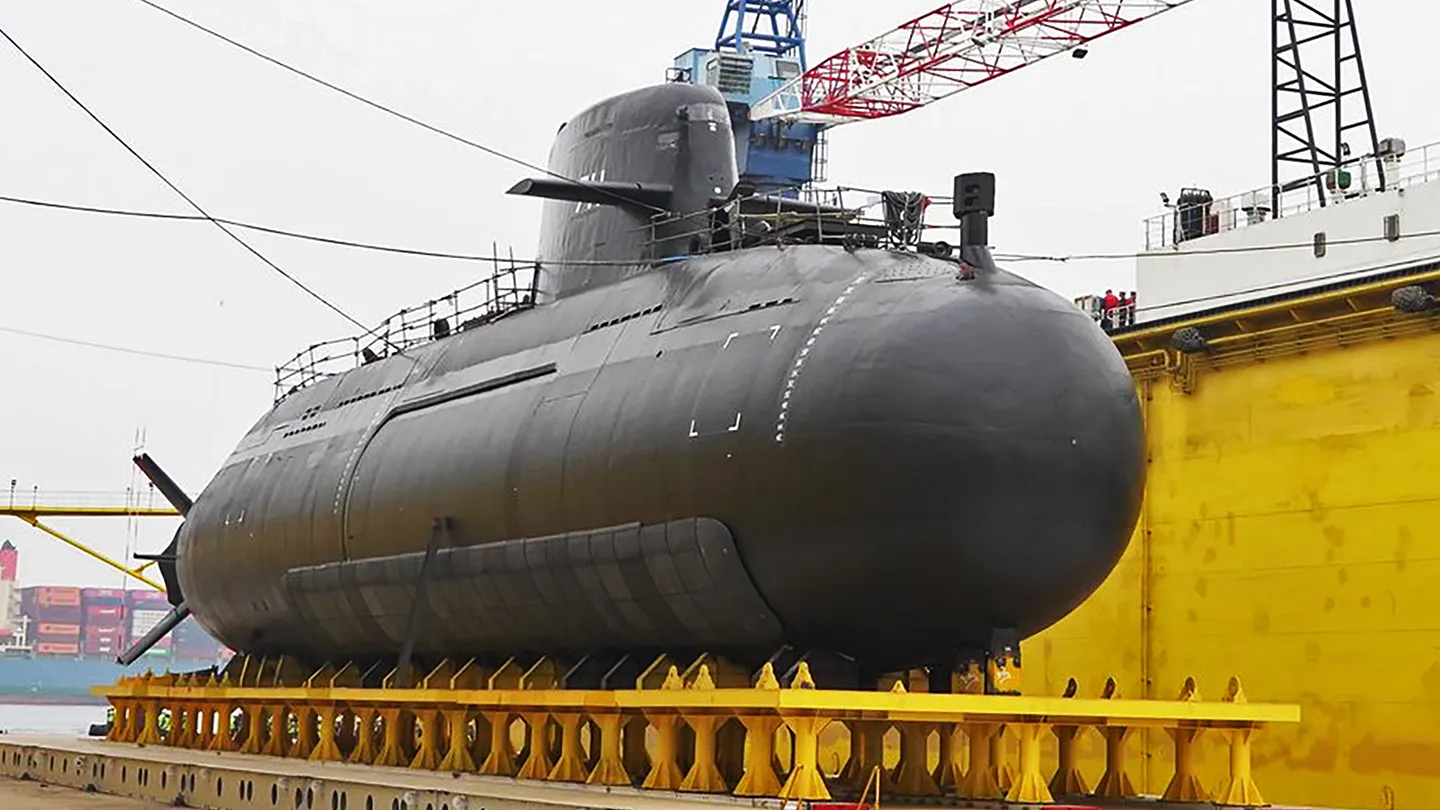
Hai Kun-Class Submarine. Image Credit: Taiwan Government.
If it became an embargo, it could not only cause far worse damage to the US economy — and the rest of the world’s — but also cripple America’s capability to manufacture most of its major weapon systems.
Tariffs on Beijing
US President Donald Trump is currently planning a major state visit to the People’s Republic of China (PRC) at the end of this month. He is trying to manage the delicate balance in trade with Beijing while simultaneously trying to manage a full-scale and escalating program of air strikes against Iran.
But this military campaign could prove far more problematic for Beijing than it is for other nations, as the PRC buys 80 percent of Tehran’s oil exports.
The concern is that as the Middle Kingdom begins to feel the pinch from the loss of this steady crude supply, it could seek ways to put retaliatory pressure on the US. As Trump prepares for his first sit-down with Chinese Communist Party (CCP) General Secretary Xi Jinping since October 2025, this issue is becoming increasingly worrisome with each passing day.
It could very well be the defining factor in how the US President continues to manage the relationships with America’s most important rival and military competitor.
During his first term, 2016-2020, Trump managed to forge an accord and a set of agreements across the aisle on Washington’s approach to the US-PRC relationship. Trump seemed to have accepted the axiom that Washington needed to place far more robust tariffs on the PRC as one of the most effective mechanisms for flexing America’s muscles.
Predictably, Beijing responded with measures of its own. Specifically, these were controls on 12 types of rare earth exports from the PRC. These included holmium, erbium, and terbium, among others.
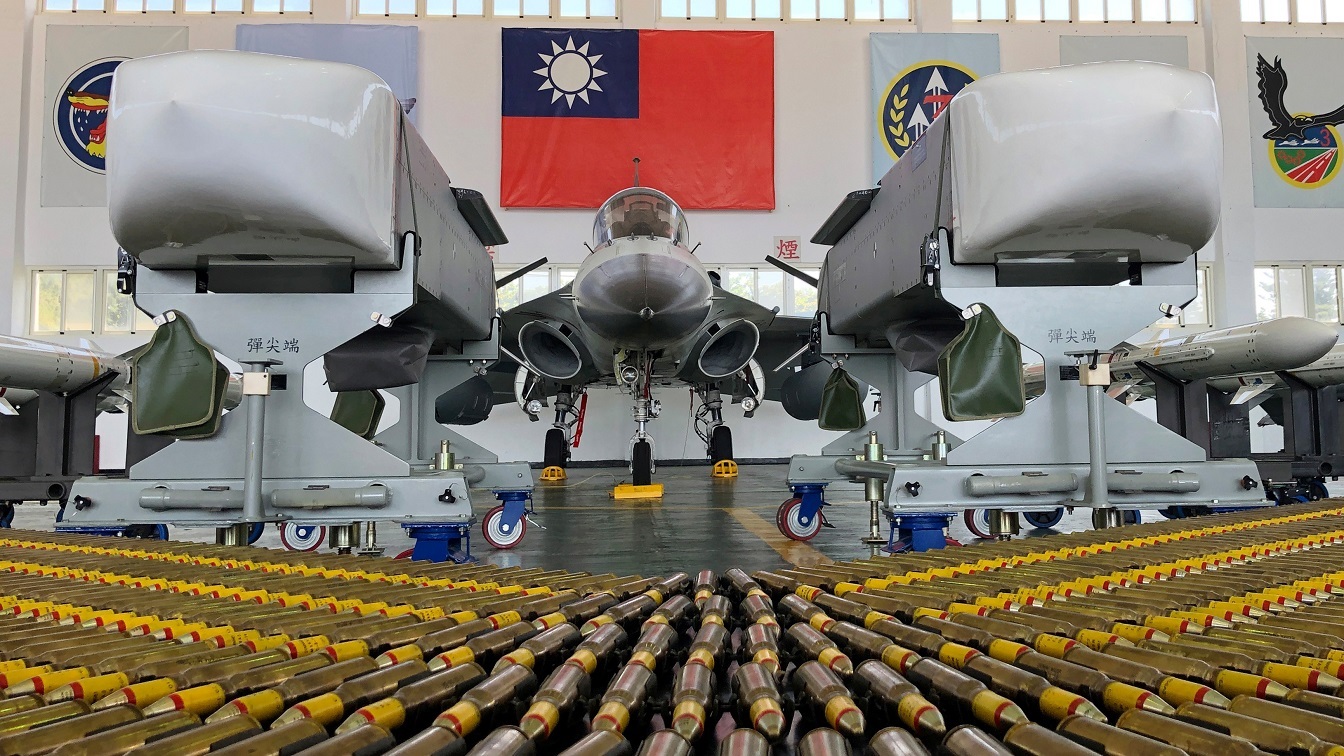
Taiwan Missiles. Image Credit: ROC Government.
Then, on December 1, 2025, the PRC instituted additional restrictions requiring special, difficult-to-obtain licenses for the export of these elements.
The Nightmare If Relations Become Worse
So, how could this escalating tit-for-tat trade conflict turn into something far worse and much more dire than the economic duress from higher oil prices?
Specifically, the trade version of the nuclear option would be if the PRC were to blockade the Republic of China (ROC) on Taiwan, to the extent that the island nation would be cut off from exporting its most valued and sought-after product: the world’s most sophisticated microchips.
The ROC currently produces roughly 90 percent of the world’s most advanced microchips. If that supply to the major economies and corporations were to be cut off, production of almost all the products that all of us employ in everyday life would come to a screeching halt. These include automobiles, smartphones, advanced medical equipment, and computer systems used by both individuals and companies.
“A number of our policy makers seem to have forgotten what was happening across the globe during the COVID pandemic,” said an expert on the ROC who spoke to 19FortyFive. “You would drive up to an auto dealer and would be told that every vehicle on the lot is already sold, and there is a several-month-long waiting list for those who want to order from the factory. Likewise, for a cornucopia of consumer products.”
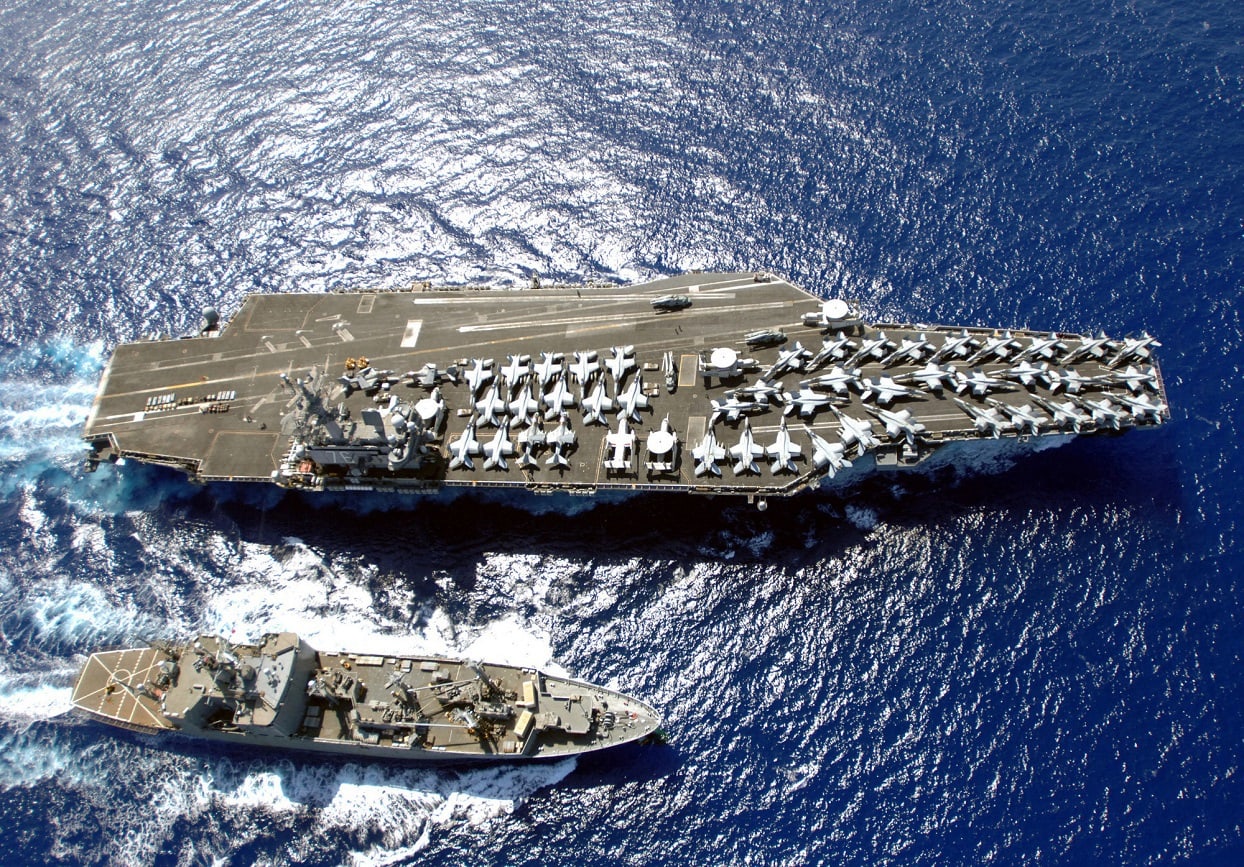
Image: Creative Commons.
Additionally, the Taiwan Strait is the chief trade route for high-technology products and consumer goods produced in Asia and ending up on the shelves of stores in the US. Approximately 20 percent of all global maritime trade passes through the Taiwan Strait.
The $10,000,000,000,000 Risk from a Taiwan Crisis
If the PRC were to cut off the ROC from international trade, it would mean a $10.6 trillion body blow to the world’s economies in one year. Trade experts who spoke to the Post’s Editorial Board estimate this to be 9.6 percent of global economic activity.
But the entity most severely affected and suffering a devastating impact is the US military. The ROC’s semiconductors are essential inputs and foundational building blocks in missile systems, fighter jets, and GPS satellites.
The US military relies on the ROC’s Taiwan Semiconductor Manufacturing Company (TSMC) for most of its weapon systems. The company’s products are also essential to the advanced, AI-driven defense technologies that Washington is counting on to help the US military maintain its competitive edge.
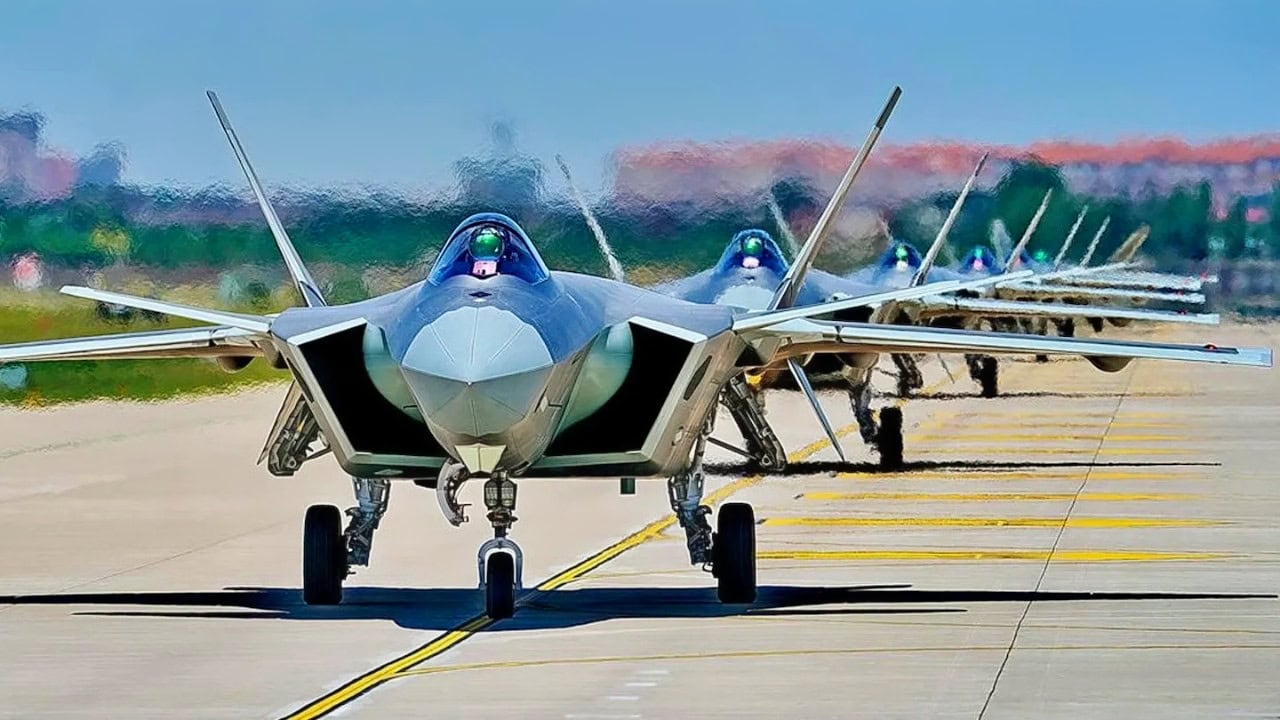
J-20 Fighter from PLAAF China. Image Credit: Creative Commons.
A report written in June 2022 – almost four years ago – by the Washington, DC-based Center for Strategic and International Studies (CSIS) concluded that the US was almost completely reliant on facilities located in Taiwan for production of the most advanced AI-enabling semiconductors. These are the chips “that power all the algorithms critical for defense systems and everything else.”
Consequently, the United States is one or two generations behind our Taiwanese partners, if not further behind, in the design and production of these electronic components. As the chair and vice chair of the National Security Commission on Artificial Intelligence (NSCAI) stated in 2021, “We do not want to overstate the precariousness of our position, but given that the vast majority of cutting-edge chips are produced at a single plant separated by just 110 miles of water from our principal strategic competitor, we must reevaluate the meaning of supply chain resilience and security.”
All of which has far more potential for disastrous outcomes than the blowback from problems with the world’s free flow of oil.
About the Author Reuben F. Johnson
Reuben F. Johnson has thirty-six years of experience analyzing and reporting on foreign weapons systems, defense technologies, and international arms export policy. Johnson is the Director of Research at the Casimir Pulaski Foundation. He is also a survivor of the Russian invasion of Ukraine in February 2022. He worked for years in the American defense industry as a foreign technology analyst and later as a consultant for the U.S. Department of Defense, the Departments of the Navy and Air Force, and the governments of the United Kingdom and Australia. In 2022-2023, he won two awards in a row for his defense reporting. He holds a bachelor’s degree from DePauw University and a master’s degree from Miami University in Ohio, specializing in Soviet and Russian studies. He lives in Warsaw.