
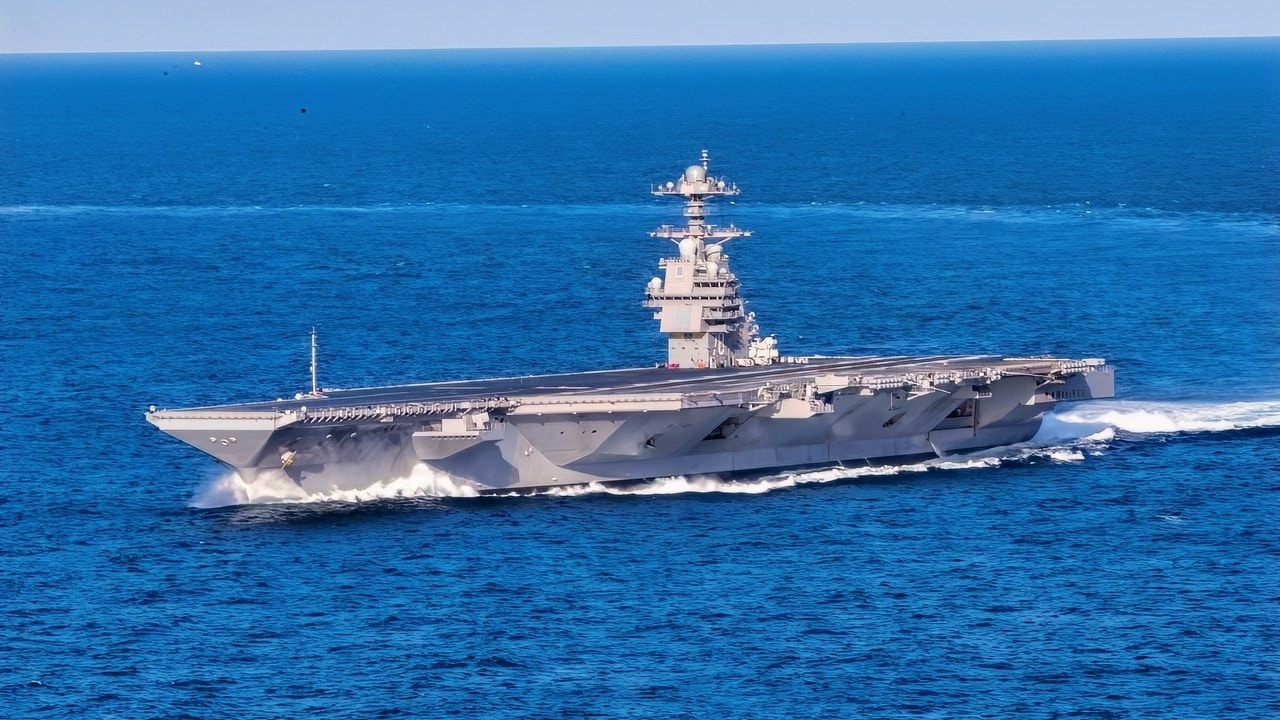
Summary and Key Points: National security analyst Steve Balestrieri evaluates the severe overextension of the U.S. Navy’s aircraft carrier fleet.
-The USS Nimitz (CVN-68) is on its final deployment before decommissioning, reducing the total number of aircraft carriers to 10.
-This report analyzes the high OPTEMPO driven by Operation Epic Fury in the Red Sea and the $1.8 billion maintenance backlog identified by the GAO.
-Balestrieri explores the success of U.S. defenses against 50 Chinese-made CM-302 anti-ship missiles, concluding that while carriers remain vital, aging infrastructure and a shrinking fleet are creating a “dangerous overextension” against the PLAN.
The U.S. Navy’s Nuclear Aircraft Carrier Fleet Is Being Pushed to the Breaking Point
U.S. aircraft carriers are heavily overtaxed, facing a combination of long-duration, intense deployments, significant maintenance backlogs, and an aging fleet that limits the Navy’s ability to meet global requirements.
These pressures are compounded by high-tempo missions, such as those in the Red Sea, and the strain of operating with a smaller fleet. However, despite debates over whether aircraft carriers are survivable in modern war, aircraft carrier strike groups and naval power are the single most versatile and maneuverable elements of the United States’ power projection.
America’s Ford-class aircraft carriers are built to anchor sea power for decades, but the industrial base meant to sustain them is under heavy strain. Maintenance backlogs, too few dry docks, worker shortages, aging shipbuilding infrastructure, and inconsistent funding are stretching repair timelines and disrupting deployments.
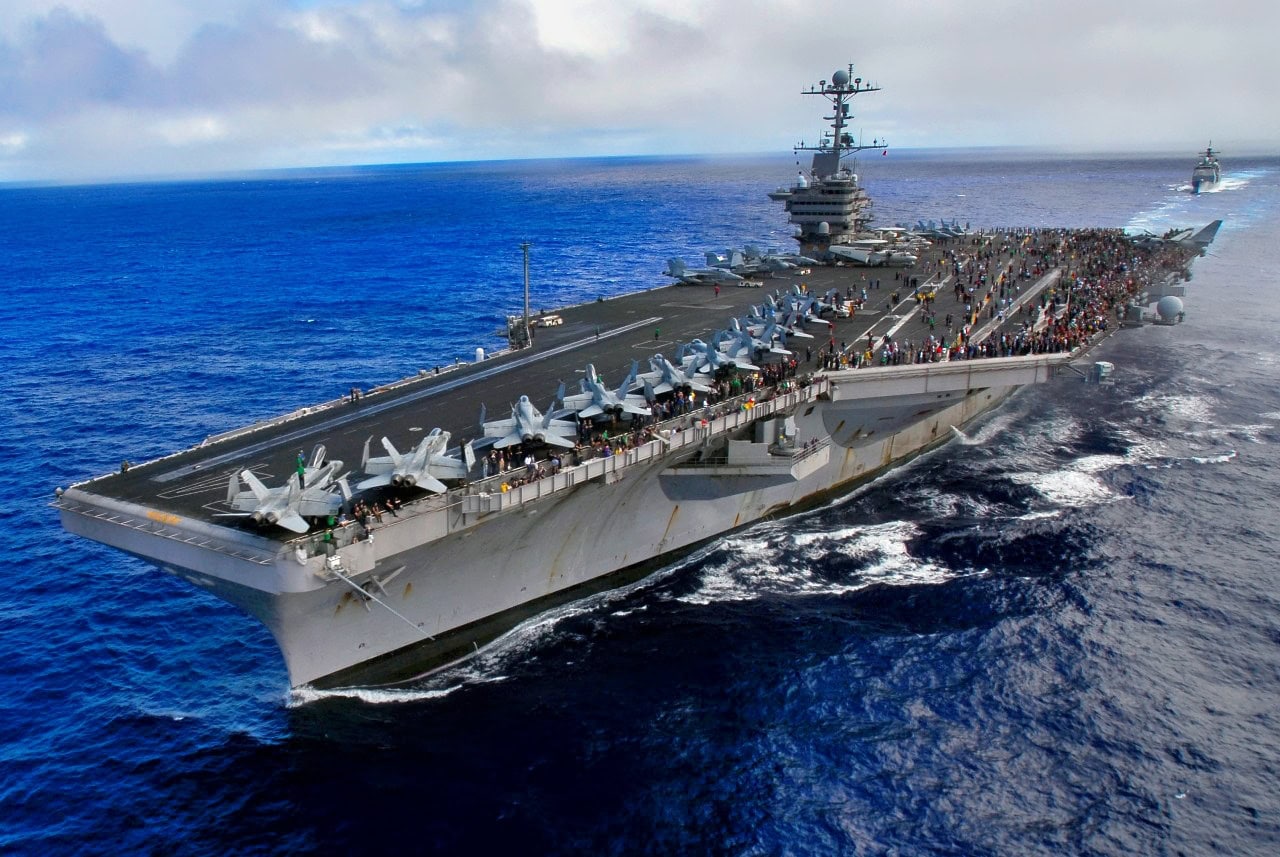
Nimitz class aircraft carrier USS John C. Stennis (CVN 74) leads guided-missile cruiser USS Antietam (CG 54) prior to conducting an air power demonstration. The air power demonstration showed the capability of Stennis and Carrier Air Wing 9 to service members’ family and friends who were invited to get underway with the ship. Stennis is returning to the United States after a 7 month long deployment promoting peace, regional cooperation and stability, and supporting the global war on terrorism.
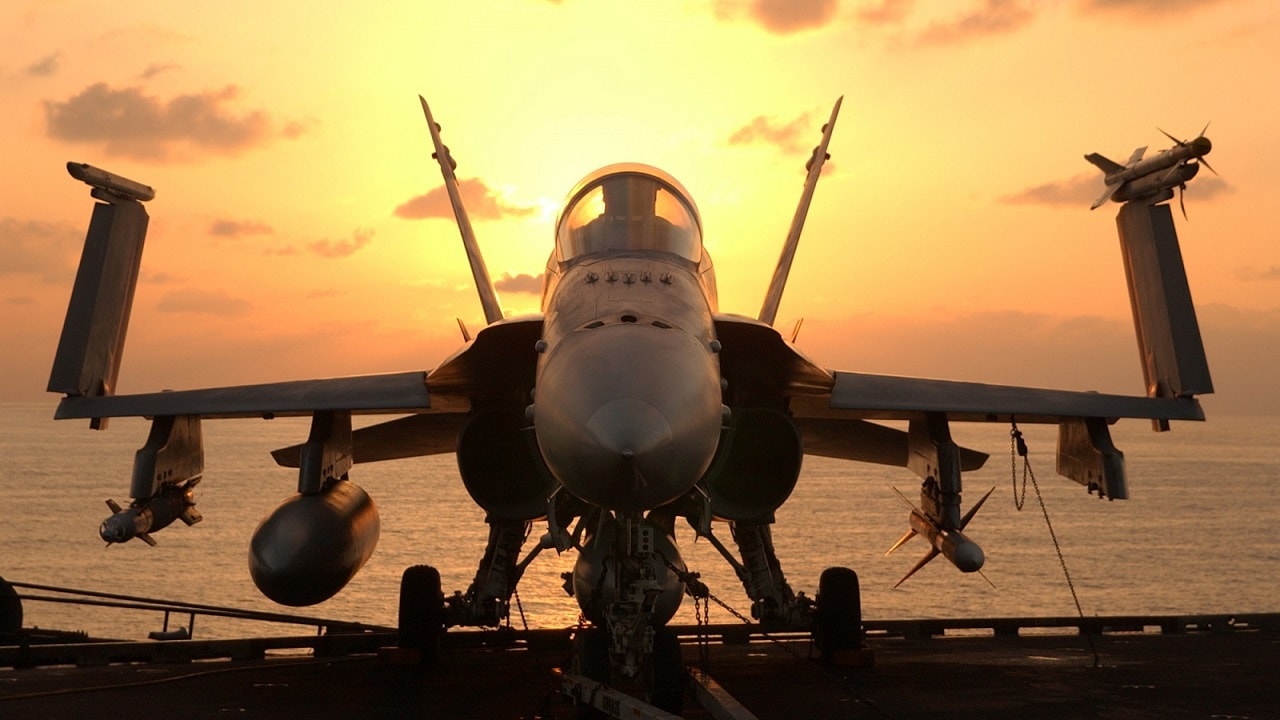
At sea aboard USS John C. Stennis, December 18, 2001 – After an early morning round of flight operations, an F/A-18 Hornet awaits the next round of combat flight operations aboard the USS John C. Stennis (CVN 74). Stennis and her embarked Carrier Air Wing Nine (CVW-9) are supporting Operation Enduring Freedom. U.S. Navy photo by Photographer’s Mate 3rd Class Jayme Pastoric
US Aircraft Carrier OPTEMPO Is Too High To Sustain:
Carriers are frequently deployed for extended periods, leading to high-tempo missions that strain both ships and crews, as seen with the USS Harry S. Truman’s 2025 deployment.
The operational tempo (OPTEMPO) of U.S. Navy aircraft carriers is severely overtaxed, driven by an increased demand for global presence and, more recently, aggressive operations in the Red Sea and Mediterranean.
The fleet is stretched far too thin, forcing ships into longer, more frequent deployments that lead to maintenance backlogs, technical failures, and crew burnout.
Intensified Operations And Maintenance Backlog Strain:
The USS Gerald R. Ford and its strike group, after operating in the Red Sea, have been part of an aggressive, intense campaign that pushes the limits of new technology. This high pace has caused technical issues, such as severe plumbing failures in the ship’s sewage system, with crews working 19-hour shifts to manage repairs.
A $1.8 billion maintenance backlog, as noted in a 2022 GAO report, means ships are spending more time in shipyards.
Seventy-five percent of planned maintenance periods for aircraft carriers and submarines were completed late between 2015 and 2019, with an average delay of 113 days for carriers, the GAO reported.
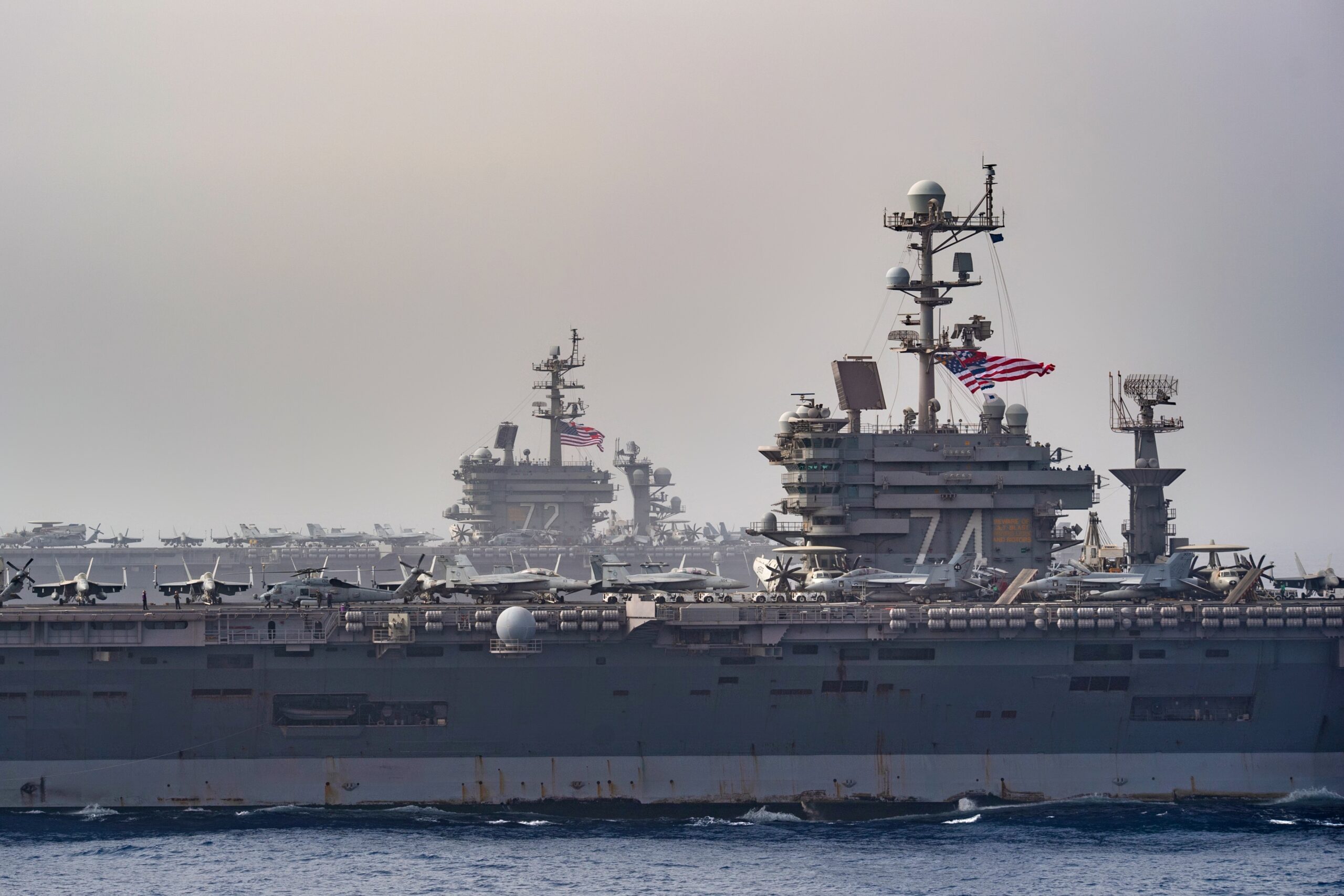
The aircraft carrier USS John C. Stennis (CVN 74) steams alongside the aircraft carrier USS Abraham Lincoln (CVN 72), background, in the Mediterranean Sea, April 24, 2019. The John C. Stennis Carrier Strike Group (CSG) 3 and Abraham Lincoln Carrier Strike Group (CSG) 12 are conducting dual carrier operations, providing opportunity for two strike groups to work together alongside key allies and partners in the U.S. 6th Fleet area of operations. John C. Stennis is underway in the Mediterranean Sea as part of the John C. Stennis Carrier Strike Group (JCSCSG) deployment in support of maritime security cooperation efforts in the U.S. 6th Fleet area of responsibility. (U.S. Navy photo by Mass Communication Specialist 3rd Class Grant G. Grady)
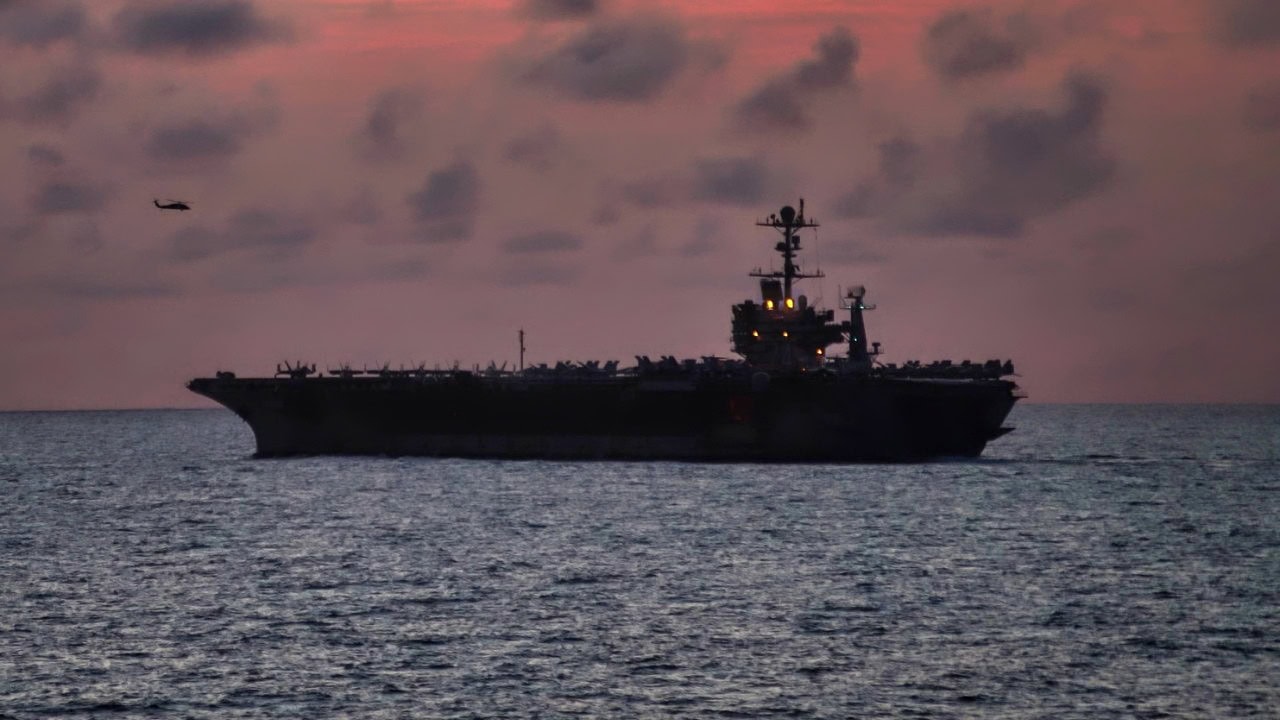
USS John C. Stennis Aircraft Carrier. Image Credit: Creative Commons.
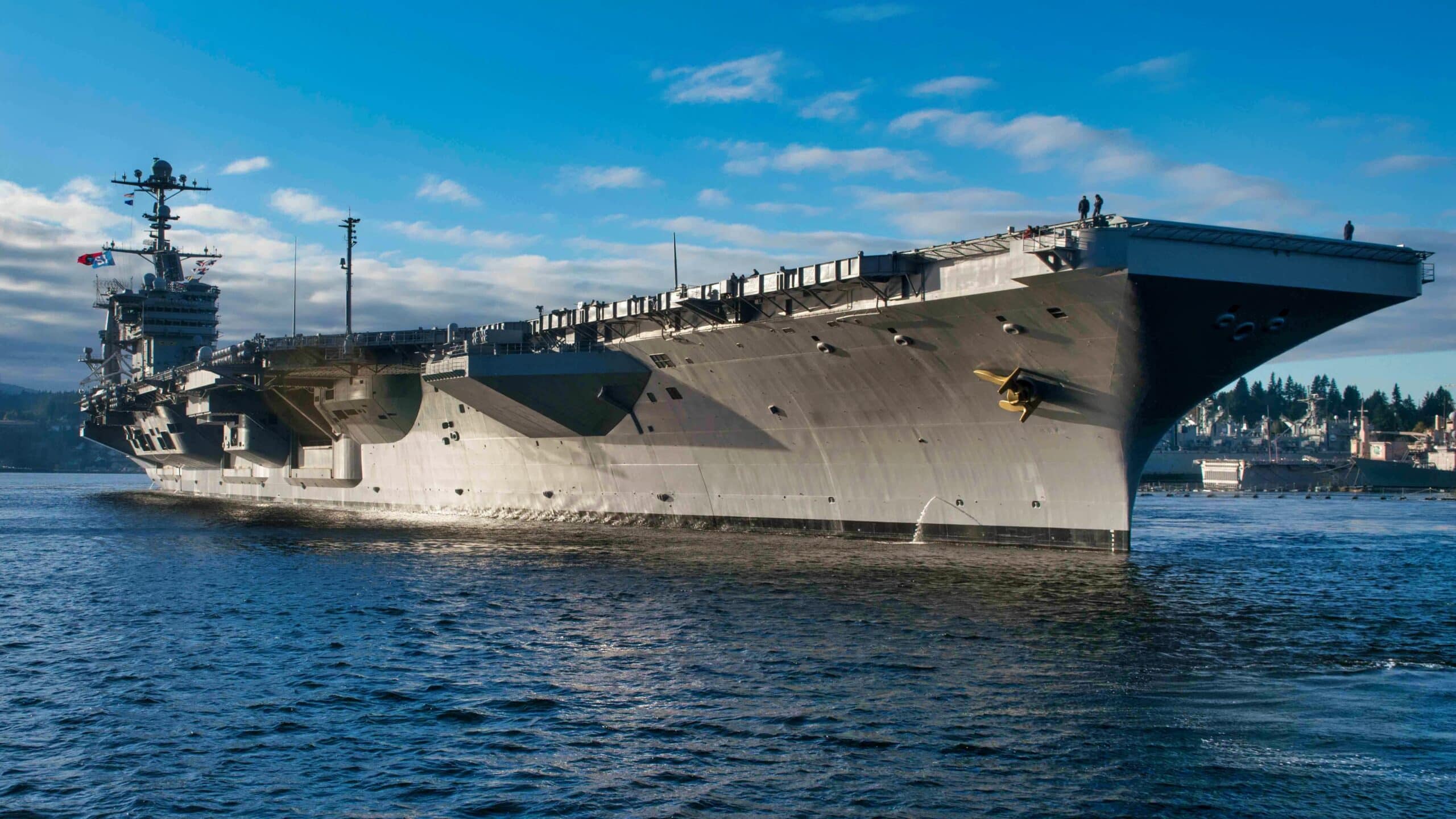
USS John C. Stennis Aircraft Carrier. Image Credit: Creative Commons.
USS Harry S. Truman Collision:
A case in point of this backlog involves the USS Harry S. Truman. Eight months after a February collision with a cargo ship in the Mediterranean, the aircraft carrier USS Harry S. Truman continues to operate with visible hull damage.
The Navy has deferred complete repairs until the ship’s scheduled mid-life Refueling and Complex Overhaul (RCOH), expected to begin sometime in 2026. This kind of issue is unacceptable on the Navy’s power-projection platforms.
Aging Fleet & Reduced Numbers:
The fleet is at its smallest since WWI, forcing existing carriers to work harder. This issue is exacerbated by the scheduled retirement of the USS Nimitz.
The USS Nimitz (CVN-68), the US Navy’s oldest active nuclear-powered aircraft carrier, is scheduled for decommissioning and retirement in May 2026 after over 50 years of service. The vessel is currently on its final deployment, traveling from Washington state to Norfolk, Virginia, for dismantling and defueling.
This will cut the Navy’s carrier fleet from 11 to 10. However, only about half of those are at sea at any given time; the rest are in port undergoing scheduled maintenance and upgrades. That’s where the maintenance backlogs truly hurt fleet readiness.
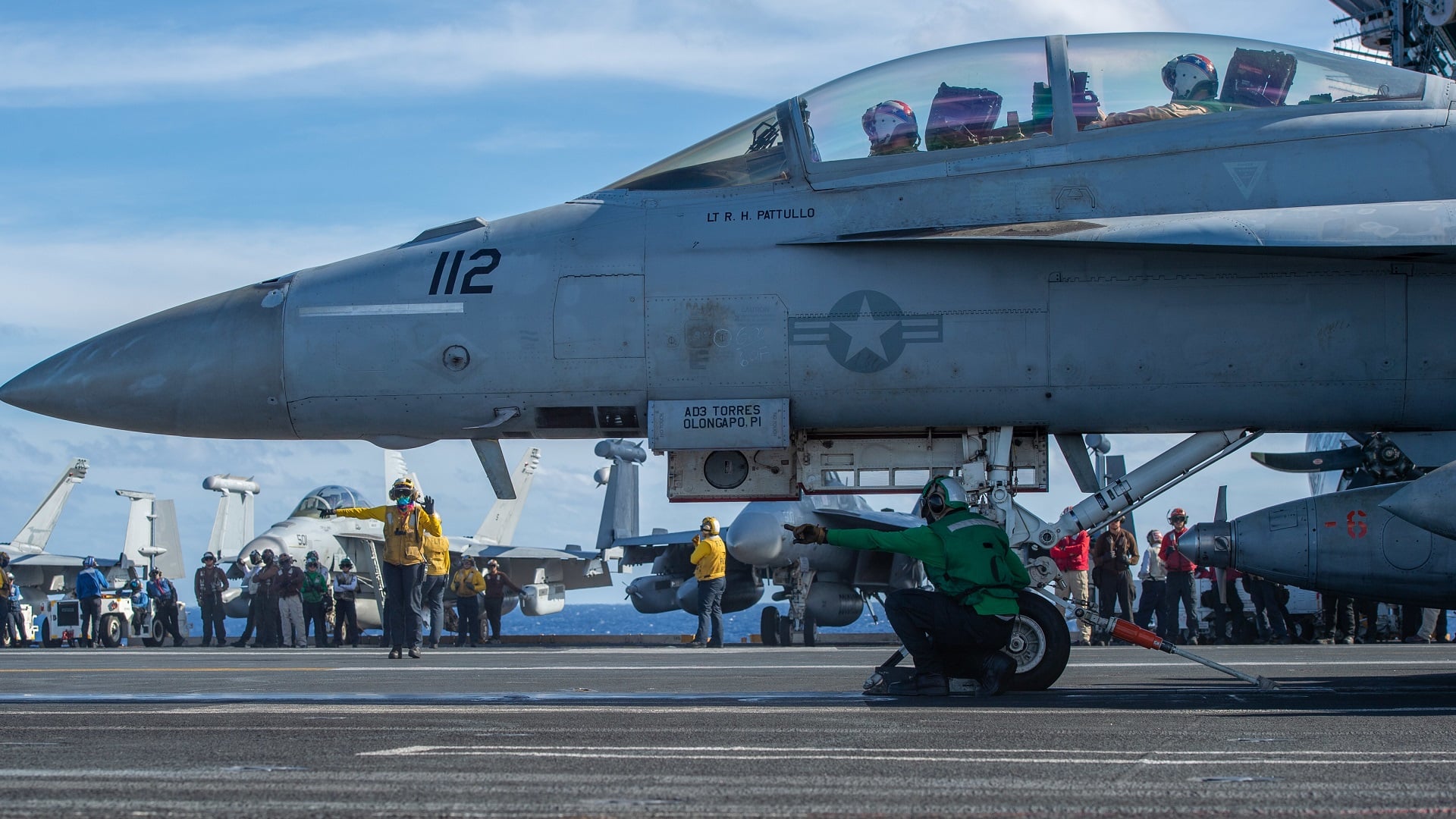
221227-N-DU622-1227 PHILIPPINE SEA (Dec. 27, 2022) An F/A-18F Super Hornet from the “Fighting Redcocks” of Strike Fighter Squadron (VFA) 22 prepares to launch from the flight deck of the aircraft carrier USS Nimitz (CVN 68). Nimitz is in 7th fleet conducting routine operations. 7th Fleet is the U.S. Navy’s largest forward-deployed numbered fleet, and routinely interacts and operates with 35 maritime nations in preserving a free and open Indo-Pacific region. (U.S. Navy photo by Mass Communication Specialist 2nd Class Justin McTaggart)
The Navy is currently too small to maintain the operational tempo required to match the Chinese Navy (PLAN) in the Indo-Pacific, leading to dangerous overextension. Coupled with the current deployment of three carriers off Iran, the fleet has been left overextended.
“The USS Gerald Ford has been deployed since last June and was previously in the Caribbean, ahead of the January operation that captured Venezuelan leader Nicolas Maduro. That has led to one of the longest deployments in Naval history, and that, according to a new report in the Wall Street Journal, is beginning to take a toll on sailors and their families.”
The high-stress environment, combined with long, back-to-back deployments, has led to decreased morale, with some carriers reporting, “sailors describe fatigue… and rising frustration”. Meanwhile, the supply chain is working overtime to maintain the necessary logistics.
Budget & Construction Issues:
The immense cost of building and maintaining carriers, such as the $13.3 billion per-ship cost for the Ford-class, limits the ability to expand the fleet, making it difficult to replace older ships.
The US shipbuilding capacity has significantly declined since the Cold War, struggling with workforce shortages, aging infrastructure, and a reliance on a limited number of specialized yards.
Shipbuilding programs are consistently over budget and behind schedule, with some ships facing delays of up to three years. Collaboration with allies like Japan and South Korea could help address shipbuilding challenges.
With the US building larger ships and its shipyards geared toward them, Japan and South Korea could take up the mantle of building smaller vessels, such as corvettes and frigates.
The Threat Environment Is Constantly Evolving:
New threats from hypersonic missiles and anti-ship missiles that Russia and China possess have many analysts worried that the age of the aircraft carrier is ending and that they are more vulnerable than ever.
But reports have surfaced that Iran fired 50 of the much-ballyhooed Chinese CM-302 anti-ship missiles at American carriers in the Gulf, and that they were either all shot down or destroyed on the ground.
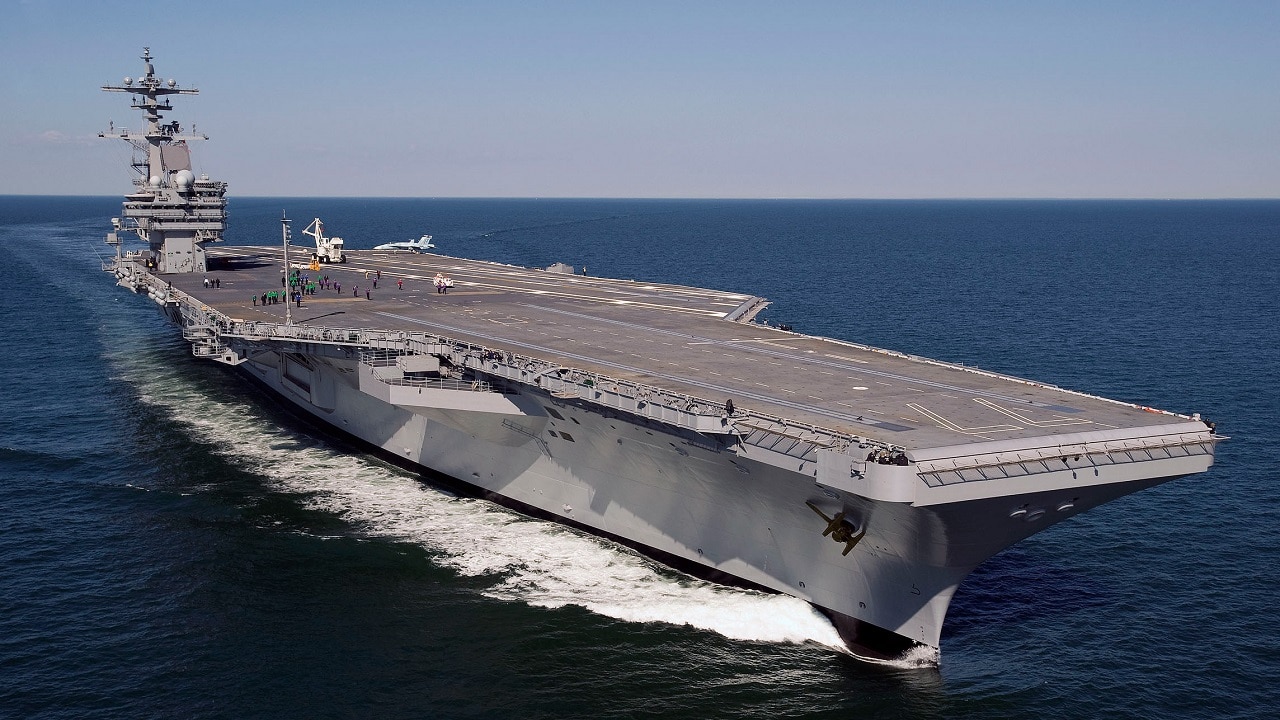
The aircraft carrier USS George H. W. Bush (CVN 77) on builder’s trials, 2/13/2009. The ship, named after the nation’s 41st president, is the 10th and final Nimitz-class, nuclear-powered carrier built at Northrop Grumman Shipbuilding-Newport News. Photo by John Whalen, Northrop Grumman Shipbuilding.
Still, many argue that the future of the US Navy lies in smaller, cheaper combat ships and smaller drone-based carriers to keep pace with China’s rapid naval growth.
The Navy has always believed that “preventing wars is just as important as winning wars,” and that this required forward deployment of power-projection capabilities in the form of carrier strike groups. But our demands have outstripped our abilities, and the cracks are beginning to show.
About the Author: Steve Balestrieri
Steve Balestrieri is a National Security Columnist. He served as a US Army Special Forces NCO and Warrant Officer. In addition to writing on defense, he covers the NFL for PatsFans.com and is a member of the Pro Football Writers of America (PFWA). His work was regularly featured in many military publications.