
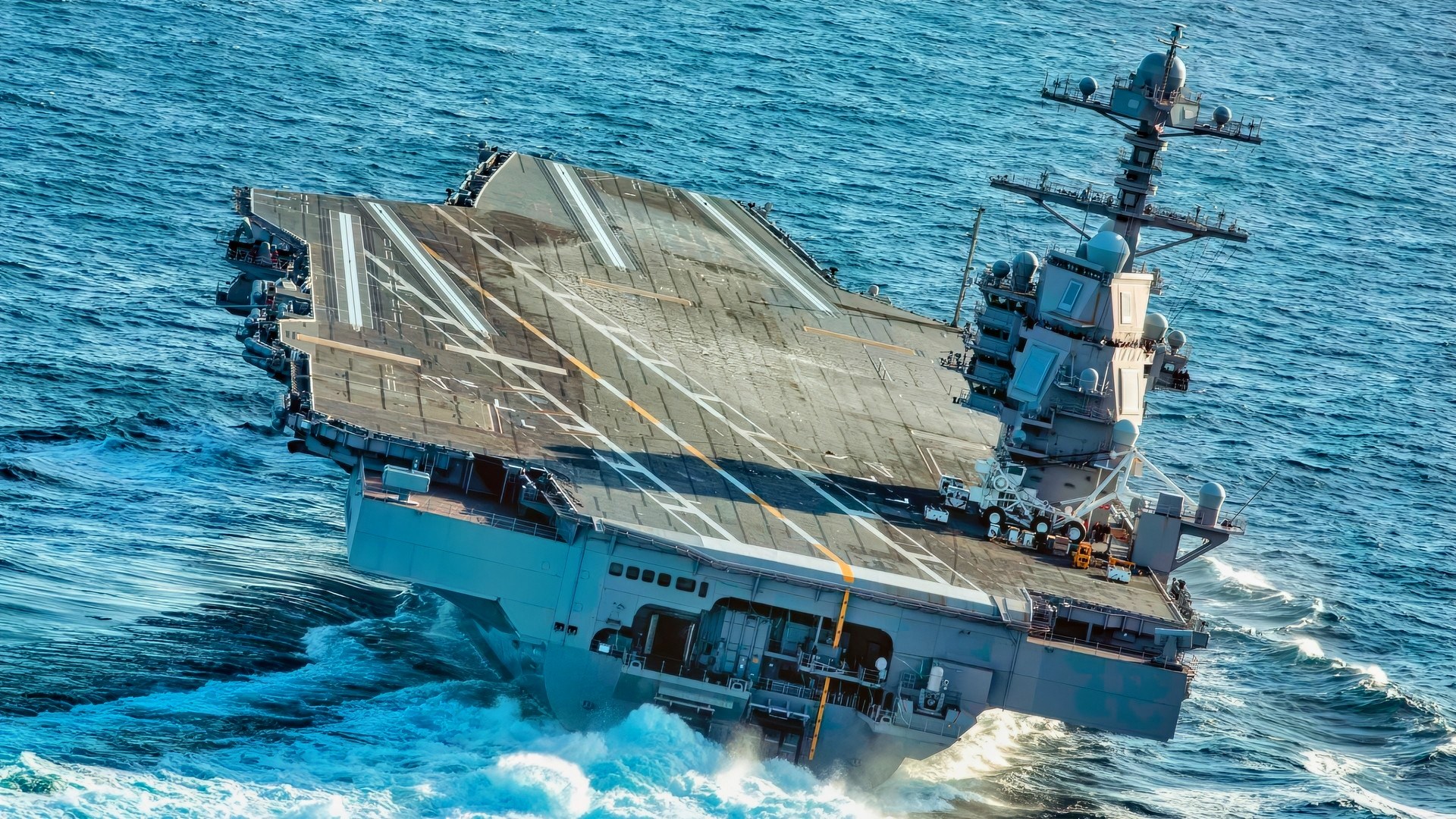
Summary and Key Points: Defense analyst Jack Buckby evaluates the potential deployment of the USS George H.W. Bush, a U.S. Navy aircraft carrier, to the Central Command area of responsibility.
-Following its COMPTUEX certification, the CVN-77 is prepared to join the USS Gerald R. Ford and USS Abraham Lincoln in supporting operations against Iranian military infrastructure.
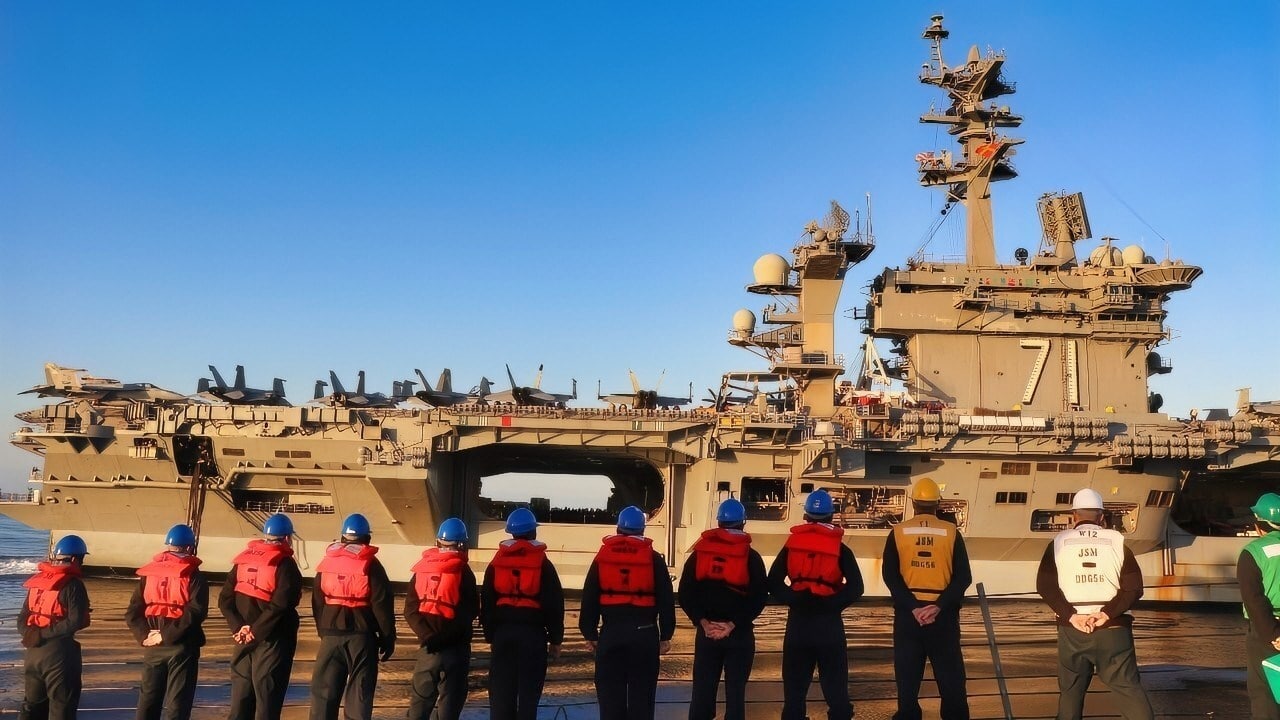
PACIFIC OCEAN (Nov. 28, 2023) Line handling crew assigned to the Arleigh Burke-class guided-missile destroyer USS John S. McCain (DDG 56) prepares to come alongside USS Theodore Roosevelt (CVN 71) for a replenishment at sea. John S. McCain is currently conducting routine training and certifications in the U.S. 3rd Fleet area of operations. (U.S. Navy photo by Ensign Garrett Fox).
-This report analyzes the strategic “show of force” and the tactical capacity to launch hundreds of F/A-18 Super Hornet sorties daily from multiple vectors.
-Buckby explores the role of carrier-based Tomahawk cruise missiles, concluding that a third carrier provides the operational depth needed for a sustained high-intensity campaign.
Three U.S. Navy Aircraft Carriers in Theater: Why the USS George H.W. Bush is Joining the 2026 Air War Against Iran
The United States is preparing to send another aircraft carrier strike group toward the Middle East, a move that could place three American supercarriers within operational reach of Iran at the same time.
Reports in recent days say the USS George H.W. Bush (CVN-77) could soon deploy toward the eastern Mediterranean or nearby waters, joining the USS Gerald R. Ford and USS Abraham Lincoln, which are already supporting ongoing military operations linked to the conflict with Iran.
The Bush carrier strike group recently completed the Navy’s Composite Training Unit Exercise (COMPTUEX), which is the final certification required before a major deployment, effectively placing the carrier on short notice to move if ordered to do so.
If deployed, the Bush would join what is already one of the largest U.S. naval force concentrations in the region in decades.
Why the Bush Carrier May Be Heading to the Region
The United States and Israel have launched a large-scale military campaign against Iranian military infrastructure, and Iranian forces continue to fight, with reports indicating that efforts have been made to begin mining the Strait of Hormuz.
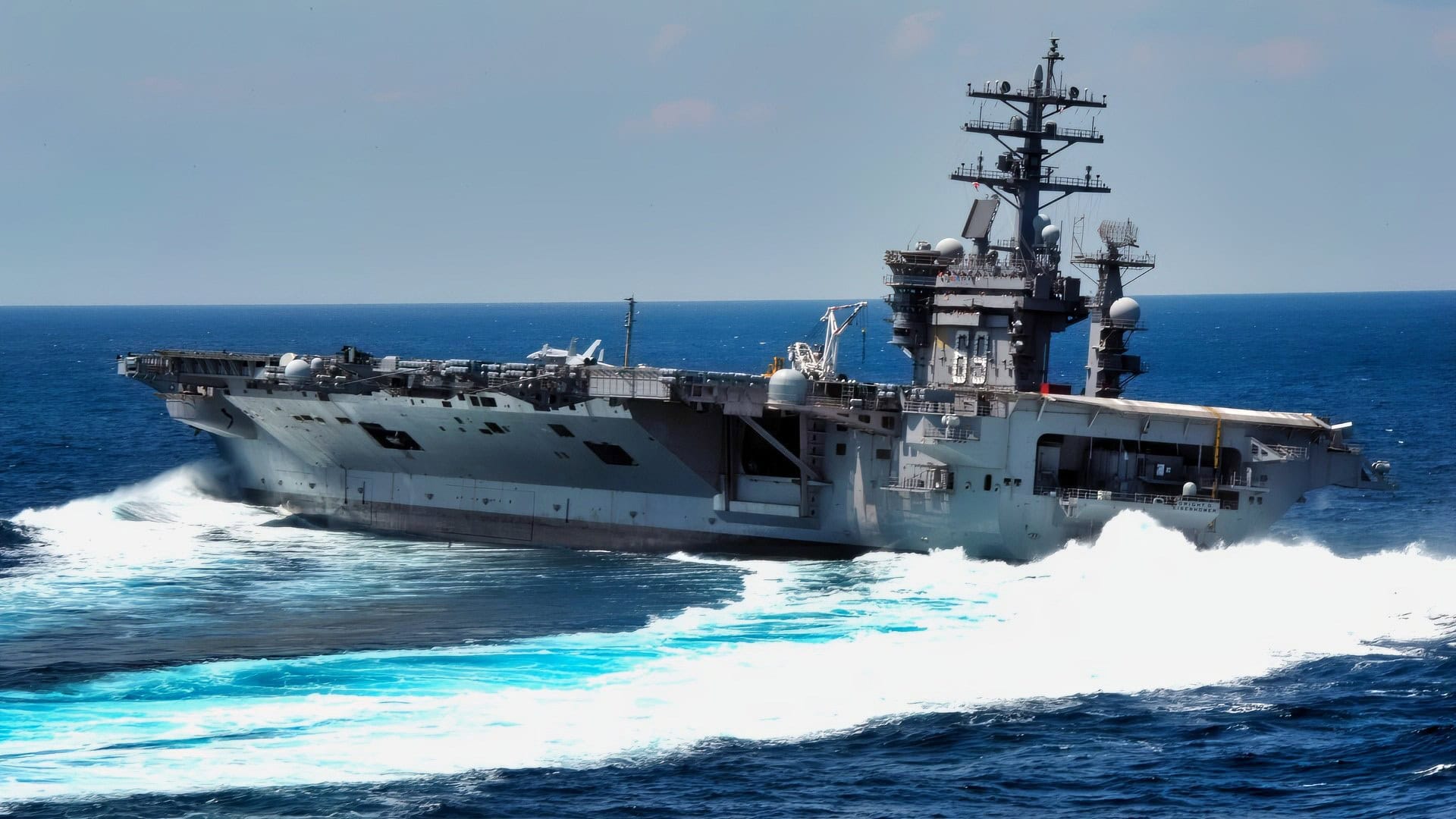
The Nimitz-class aircraft carrier USS Dwight D. Eisenhower conducts rudder turns during sea trials. Dwight D. Eisenhower completed a nine-month planned incremental availability at Norfolk Naval Ship Yard on June 10 and is scheduled to resume underway operations this summer.
Carrier strike groups have been central to the operations so far, and with a ground invasion possible but unlikely, an additional carrier strike group only bolsters the already strong American presence in the region. The USS Abraham Lincoln carrier strike group has been operating in the region during the campaign, launching aircraft and cruise missile strikes.
Meanwhile, the USS Gerald R. Ford, the Navy’s newest aircraft carrier, was moved into the Mediterranean and began supporting air operations shortly after the U.S.–Israel strike campaign began.
By sending the Bush, the U.S. military would expand the number of available aircraft and strike platforms and give U.S. commanders greater operational flexibility.
Carrier strike groups act as floating airbases. Each typically carries dozens of strike aircraft, such as the F/A-18 Super Hornet, surveillance planes, helicopters, and electronic warfare aircraft. The destroyers and cruisers deployed alongside the aircraft carriers also carry long-range Tomahawk cruise missiles.
That combination of assets allows carriers to launch sustained air operations even without any nearby bases. In conflicts like the one taking place in Iran right now, that kind of mobility gives U.S. commanders the ability to strike targets quickly while also remaining outside the range of many land-based threats.
What Three U.S. Carriers Could Actually Do
Should the Bush officially join the Ford and Lincoln, the United States would have a naval aviation force capable of launching hundreds of strike sorties per day if necessary. That acts both as an additional deterrence or coercion to prevent Iranian strikes from intensifying or mining activity resuming in the Strait of Hormuz.
A deployment like this would also give Washington the ability to attack from multiple directions. One carrier group can operate from the Mediterranean, another from the Arabian Sea, and another from the Red Sea or nearby waters.
Positioning the carrier strike groups like this would allow U.S. forces to complicate Iranian air defenses and missile targeting, while allowing U.S. forces to strike missile infrastructure and command facilities across Iran’s vast territory.
Carrier escorts also significantly increase the number of Tomahawk cruise missiles available to U.S. commanders.
Those missiles have been a major component of modern American strike campaigns, including this one, because they enable ships to remain hundreds of miles away while still hitting targets with extreme precision. So, even in an era of long-range aircraft and drones, these carriers enable the United States to sustain air operations near a conflict zone without relying entirely on regional bases.
A Show Of Force
The presence of multiple carriers is not solely about combat power. Historically, aircraft carriers have been among the most visible symbols of American military strength.
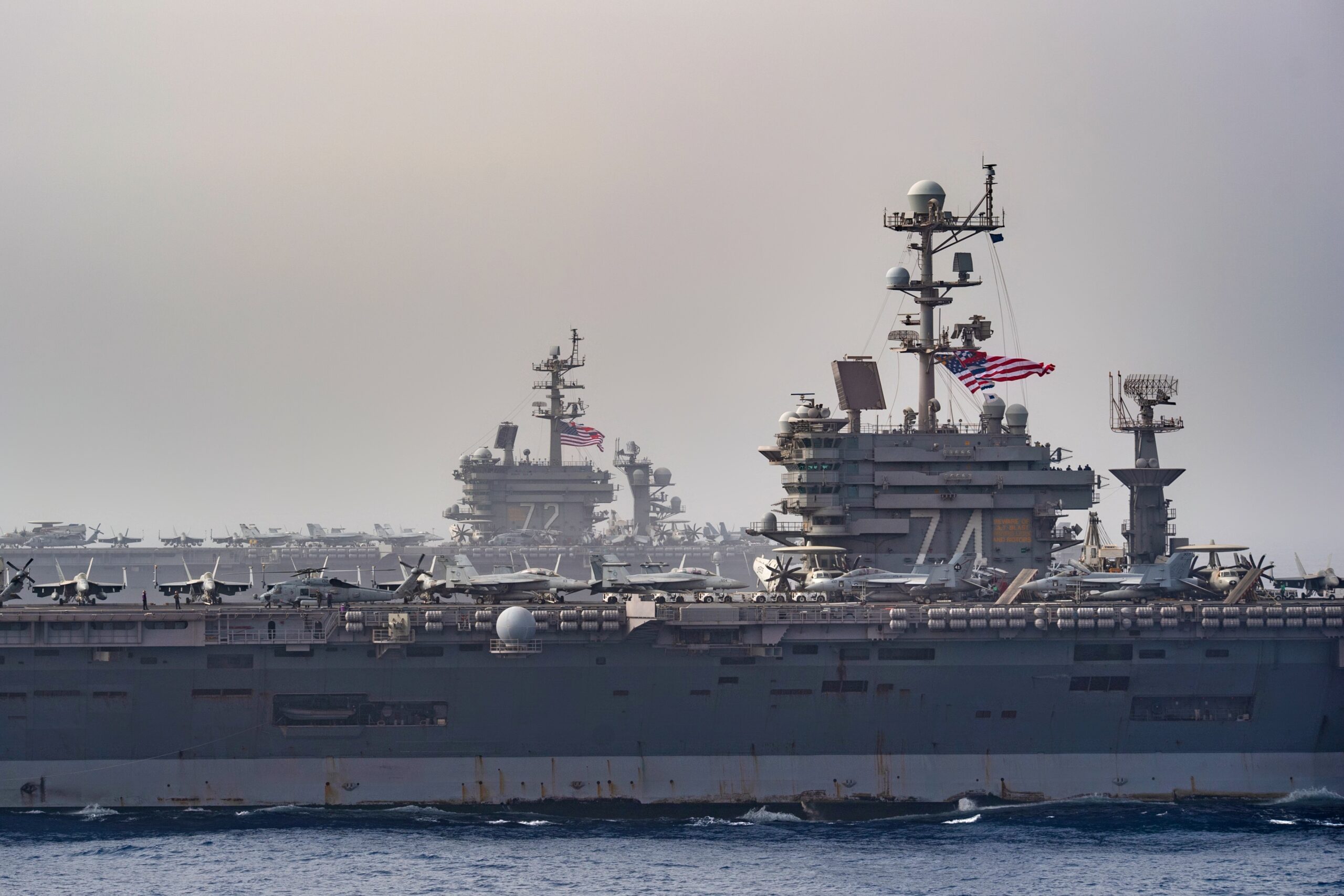
The aircraft carrier USS John C. Stennis (CVN 74) steams alongside the aircraft carrier USS Abraham Lincoln (CVN 72), background, in the Mediterranean Sea, April 24, 2019. The John C. Stennis Carrier Strike Group (CSG) 3 and Abraham Lincoln Carrier Strike Group (CSG) 12 are conducting dual carrier operations, providing opportunity for two strike groups to work together alongside key allies and partners in the U.S. 6th Fleet area of operations. John C. Stennis is underway in the Mediterranean Sea as part of the John C. Stennis Carrier Strike Group (JCSCSG) deployment in support of maritime security cooperation efforts in the U.S. 6th Fleet area of responsibility. (U.S. Navy photo by Mass Communication Specialist 3rd Class Grant G. Grady)
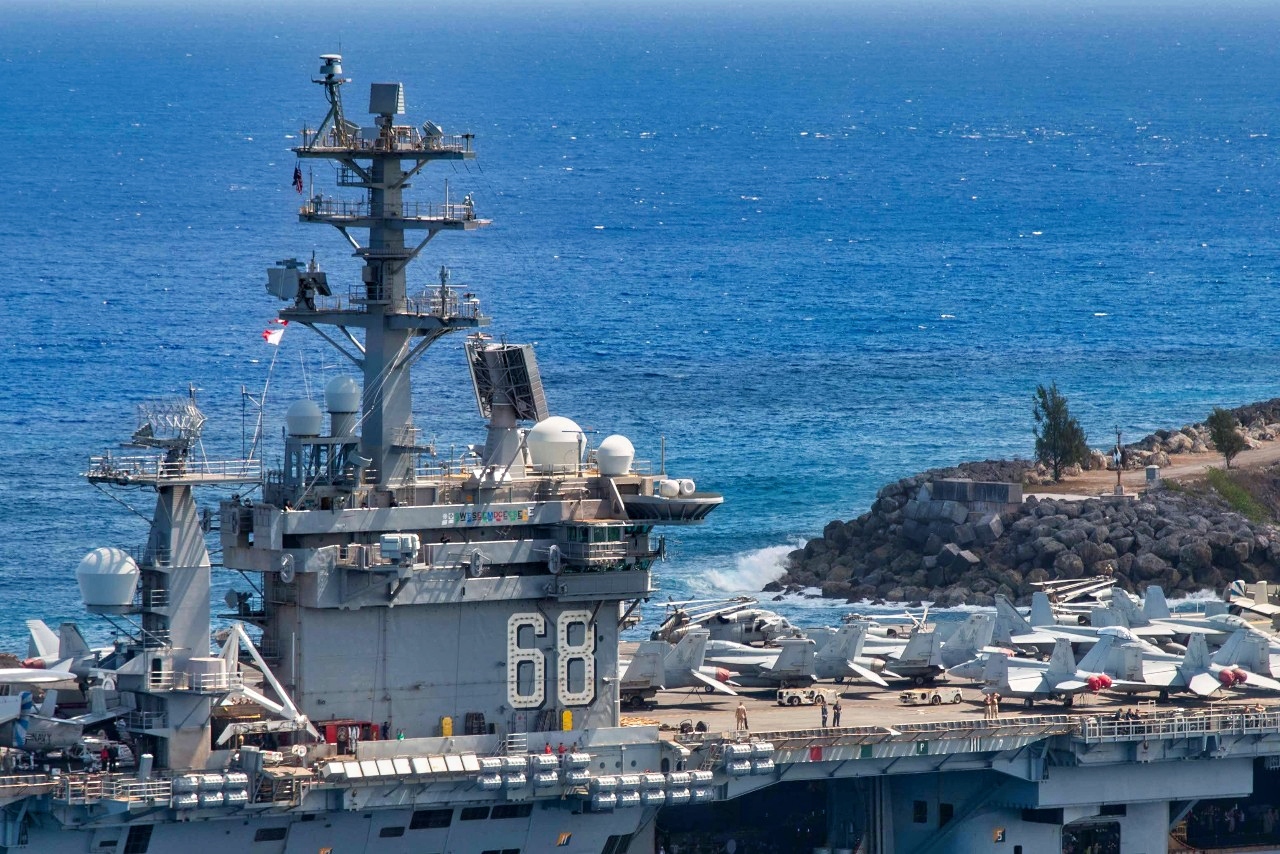
APRA HARBOR, Guam (April 18, 2025) Nimitz-class aircraft carrier USS Nimitz (CVN 68) arrived in Guam for a scheduled port visit, April 18. Nimitz is underway in the U.S. 7th Fleet area of operations on a scheduled deployment, demonstrating the U.S. Navy’s unwavering commitment to a free and open Indo-Pacific. (U.S. Navy Photos by Mass Communication Specialist 1st Class Samantha Jetzer)

Aircraft Carrier. Image Credit: U.S. Navy.
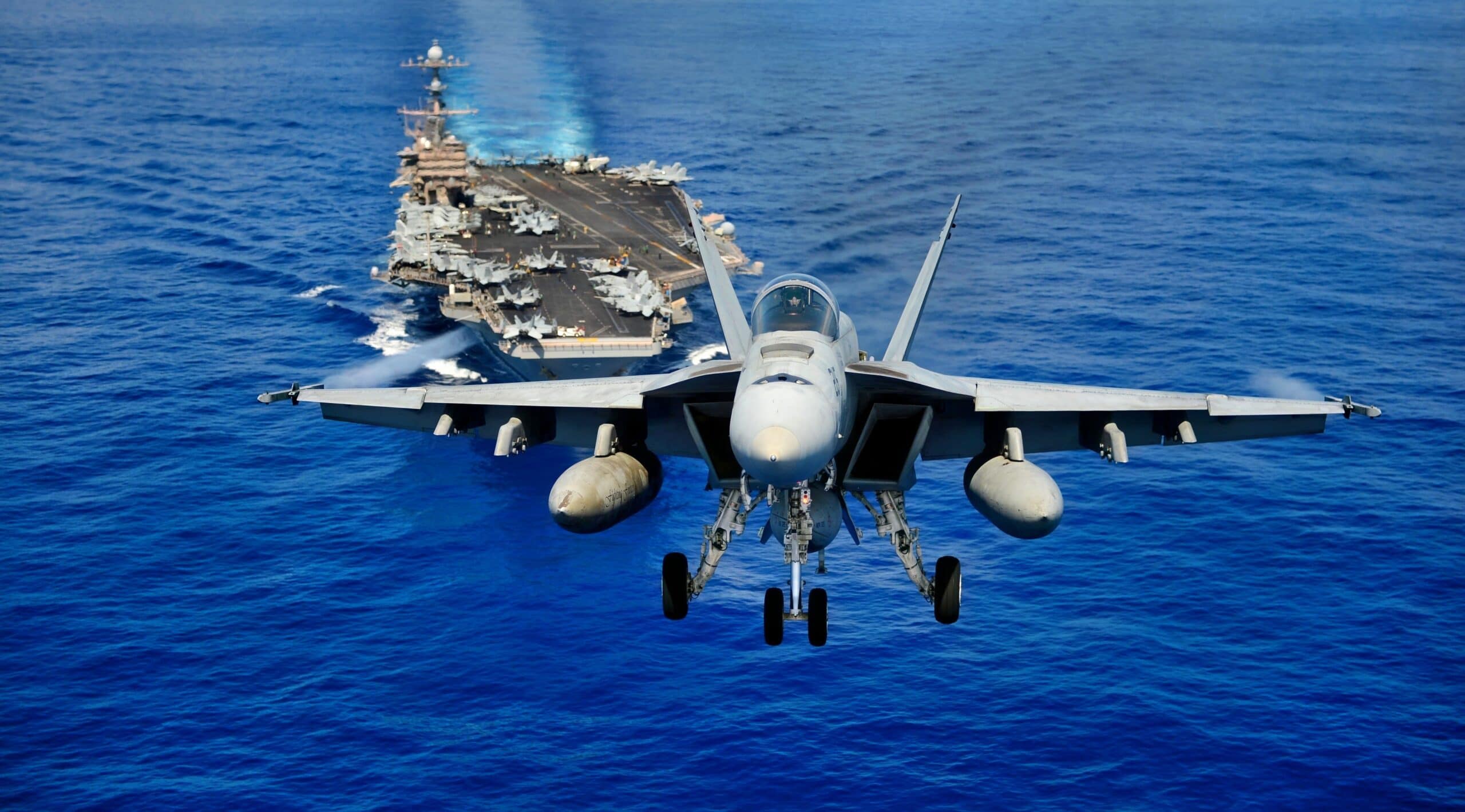
Aircraft Carrier. Image Credit: U.S. Navy.
Deployment is not always about gaining immediate strike power, but sending a signal intended for adversaries and allies who are watching closely.
By demonstrating overwhelming military capability, the United States is hoping to discourage escalation or force negotiations – in this case, with the new leaders of the regime in Tehran.
The potential deployment of the Bush, then, would serve two purposes. A third carrier will dramatically increase the perceived scale of U.S. power in the region, even if only two are actively conducting strike operations. The Bush, if deployed, may simply be present in the region and not actively conducting strikes.
Does This Mean the War Will Last Longer?
It’s hard to say whether the deployment of a third carrier group will ensure the war in Iran lasts longer or comes to a conclusion more quickly. Presumably, Washington is hoping that it will be the latter – but on the other hand, it could also indicate that the Pentagon is preparing for a longer campaign. Sustained air operations require large numbers of aircraft and rotating carrier groups. If one carrier must return home for maintenance or crew rest, another can take its place.
Recent reports suggest that the USS Gerald R. Ford deployment could last 11 months, far longer than a typical 7-month carrier deployment. Planners could, then, expect operations to continue for some time.
But the news could also be interpreted as planners are looking to end the conflict more quickly by assembling overwhelming naval firepower early in the conflict and potentially convincing Tehran that resistance is futile. Only time will tell.
About the Author: Jack Buckby
Jack Buckby is a British researcher and analyst specialising in defence and national security, based in New York. His work focuses on military capability, procurement, and strategic competition, producing and editing analysis for policy and defence audiences. He brings extensive editorial experience, with a career output spanning over 1,000 articles at 19FortyFive and National Security Journal, and has previously authored books and papers on extremism and deradicalisation.

