Summary and Key Points: Defense analyst Kris Osborn evaluates the March 2026 interception of a Russian Il-20M Coot-A by Norwegian F-35A Lightning II fighters.
-Operating out of Evenes Air Station under NATO’s Quick Reaction Alert (QRA), the RNoAF shadowed the reconnaissance aircraft for two days during Exercise Cold Response.
-This report analyzes the F-35’s use of its AN/APG-81 AESA radar and EOTS to track the non-transponding Il-20M near the Finnmark region.
-Osborn explores the Russian strategy of monitoring NATO tactics from the Kola Peninsula, concluding that F-35 networking is now the primary deterrent in the strategically vital Arctic.
The Arctic Sentinel: How Norwegian F-35s Neutralized Russian Spy Flights During Cold Response 2026
Norwegian F-35As used sensors, networking, and stand-off surveillance technologies to spot and track Russian spy planes operating near a NATO-related training exercise in Northern Norway.
The event shines a light on the strategic importance of northern Europe and the role of modern air policing missions in maintaining security in the strategically vital regions near the Arctic.
The interceptions occurred during Exercise Cold Response 2026, a large NATO military drill held in northern Norway.
This exercise focuses on training allied forces to operate in extreme Arctic conditions and involves troops, aircraft, and naval forces from multiple NATO countries.
Not surprisingly, large multinational exercises often attract surveillance from other nations, as they provide opportunities to observe tactics, equipment, and coordination among allied forces.
In this case, Russian reconnaissance aircraft appeared in the region during the exercise, prompting Norwegian air defense forces to respond.

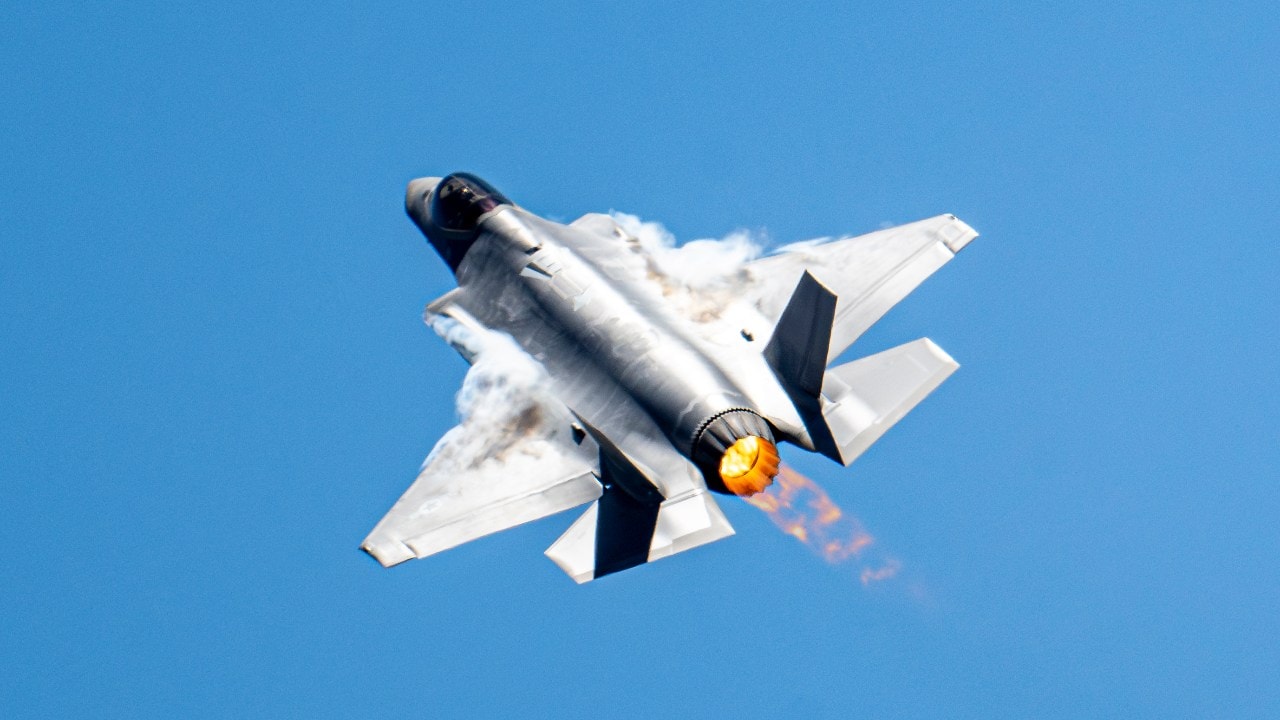
U.S Air Force Captain Kristin “BEO” Wolfe, F-35A Lightning II Demonstration Team Commander, flies during a demonstration at the Oregon International Airshow in McMinnville, Ore., Aug. 20, 2022. The F-35 Demo team travels around the United States and around the world, showcasing the world’s most technologically advanced fifth-generation fighter jet. (U.S. Air National Guard photo by Master Sgt. John Winn)
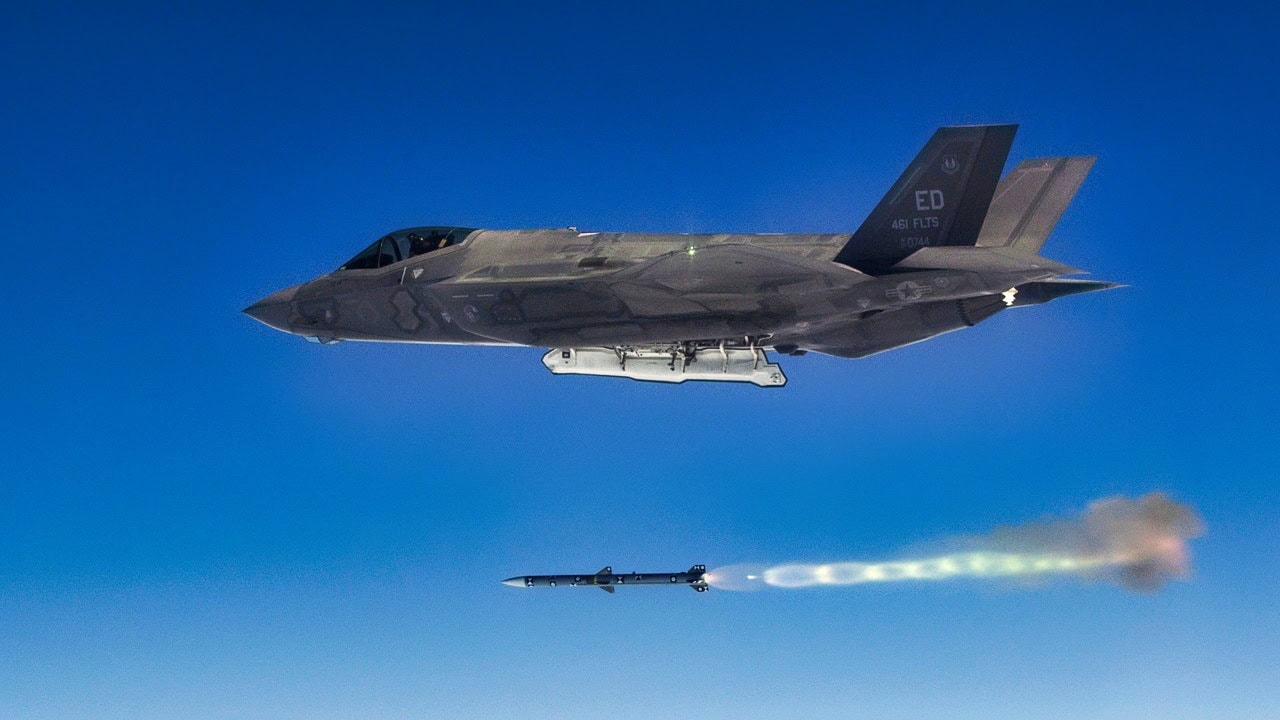
An Edwards AFB F-35A Lightning II fires an AIM-120 Advanced Medium-Range Air-to-Air Missile as part of Weapons Delivery Accuracy testing. The 461st Flight Test Squadron and F-35 Integrated Test Force completed WDA testing in early December, which concludes a large and important part of F-35 developmental test and evaluation. (Courtesy photo by Chad Bellay/Lockheed Martin)
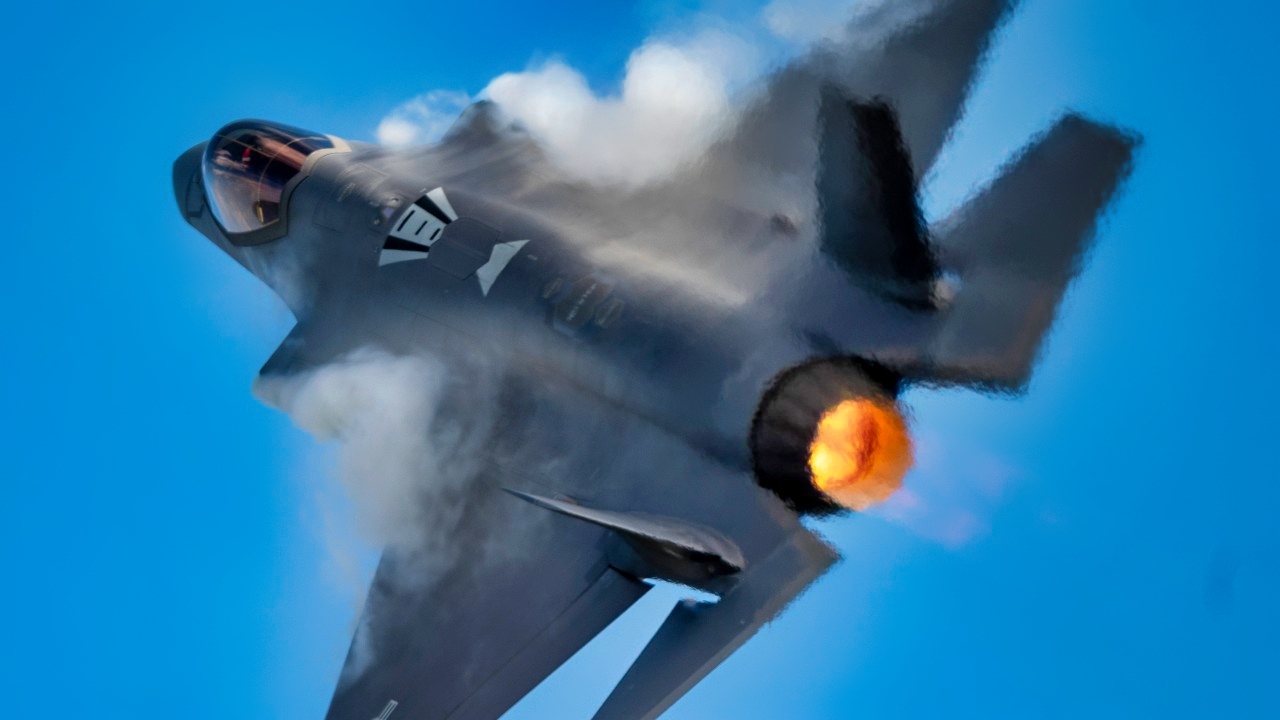
U.S. Air Force Maj. Melanie “Mach” Kluesner, the pilot for the F-35A Demonstration Team, performs aerial maneuvers in a USAF F-35A Lightning II during the practice day before the airshow at Jacksonville Naval Air Station, Florida, on 18 October, 2024. The practice day ensures that the team is able to safely and properly display the power, agility, and lethality of America’s 5th generation fighter jet. (U.S. Air Force photo by Senior Airman Nicholas Rupiper)
F-35As “Track” Russian Planes
Norway’s response relied on its fleet of Lockheed Martin F-35A Lightning II fighter jets operated by the Royal Norwegian Air Force.
The F-35 is one of the most advanced fighter aircraft in the world, equipped with stealth technology, sophisticated sensors, and powerful radar systems.
These capabilities allow it to detect and track other aircraft at long distances while remaining difficult to detect itself. Because of these features, the F-35 plays a central role in NATO’s air policing missions in northern Europe.
The aircraft that triggered the interception was an Ilyushin Il-20M, a Russian surveillance and reconnaissance aircraft designed to gather electronic intelligence and monitor military activity.
Known by NATO as the “Coot-A,” the aircraft carries specialized sensors and antennas capable of collecting signals from radar systems, communications networks, and other electronic sources. Such aircraft are commonly used to observe large military exercises or monitor activity near national borders.
Norwegian Radar & Sensors
According to reports from Norwegian defense officials, sensors detected the Russian aircraft flying in international airspace off the coast of northern Norway near the Finnmark region.
The aircraft was reportedly operating without an active transponder signal, meaning that it was not automatically broadcasting its identification and position.
Because of this, Norwegian air defense systems relied on radar and sensor networks to detect aircraft and determine their flight paths, as described in an essay on Interesting Engineering.
Once the aircraft was detected, two Norwegian F-35 fighters stationed at Evenes Air Station were scrambled under NATO’s Quick Reaction Alert procedures.
Quick Reaction Alert is a system used by NATO air forces in which fighter jets remain on standby around the clock to respond immediately to unidentified or potentially suspicious aircraft near allied airspace.
When the alert is triggered, pilots and ground crews rapidly prepare the aircraft for takeoff and launch within minutes.
F-35A “Intercept”
After taking off, the F-35 fighters flew toward the Russian aircraft to visually identify it and monitor its movements.
Interception missions like this typically involve approaching the unidentified aircraft, confirming its type and nationality, and escorting or shadowing it while ensuring it does not violate national airspace.
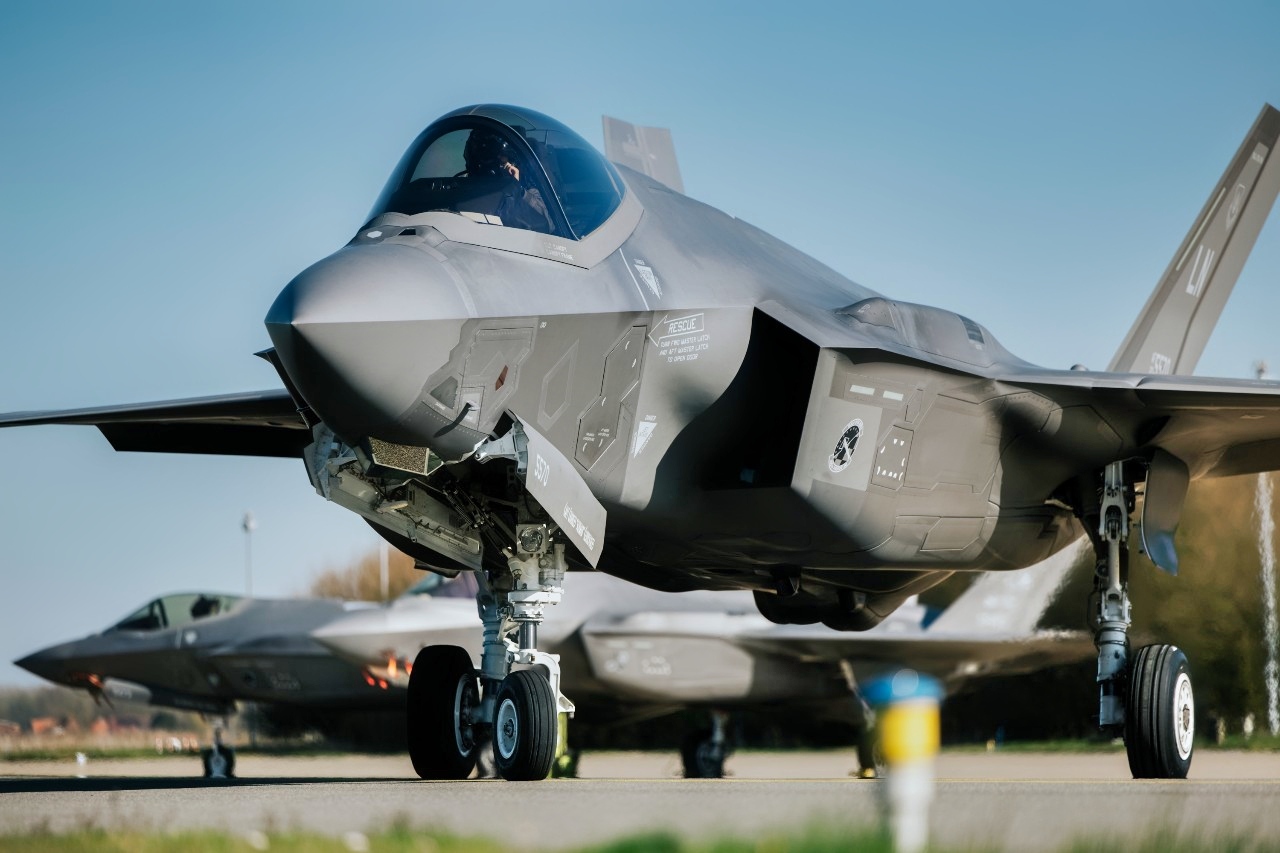
A U.S. Air Force F-35 Lightning II taxis during a cross-servicing event at NATO Allied Air Command’s Ramstein Flag 2025 exercise April 4, 2025. Successful cross-servicing at RAFL25 is an example of the importance of integrated logistics and maintenance training that enhances U.S. warfighting readiness by strengthening United States Air Forces in Europe – Air Forces Africa’s ability to deploy, sustain, and project fifth-generation capabilities across the European theater. (Royal Netherlands photo by Sgt. Maj. Jan Dijkstra)
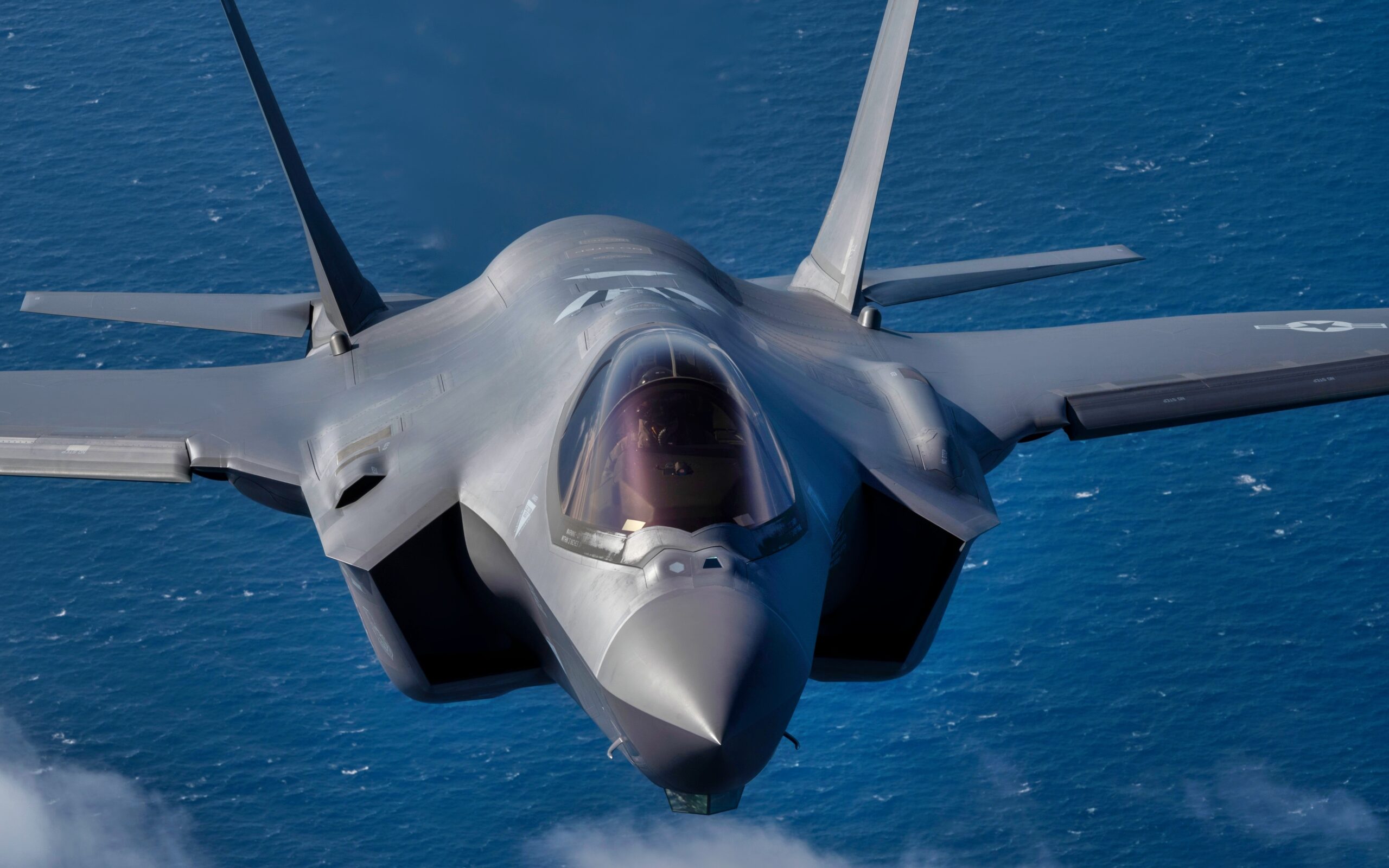
A U.S. Air Force F-35A Lightning II participating in NATO exercise Ramstein Flag 24 flies over the west coast of Greece, Oct. 4, 2024. Over 130 fighter and enabler aircraft from Greece, Canada, France, Hungary, Italy, Poland, Portugal, Romania, Spain, Sweden, United Kingdom and United States are training side by side to improve tactics and foster more robust integration, demonstrating NATO’s resolve, commitment and ability to deter potential adversaries and defend the Alliance. (U.S. Air Force photo by Tech. Sgt. Emili Koonce)
In this case, the Norwegian fighters confirmed that the aircraft was an Il-20M reconnaissance platform and continued to track it along the Norwegian coastline.
The Russian aircraft reportedly flew south along the coast, then turned north and eventually returned toward the Kola Peninsula, where several Russian military air bases are located.
Throughout the mission, the Norwegian fighters remained nearby to monitor the aircraft’s flight path and ensure it remained in international airspace.
Norwegian authorities emphasized that the aircraft did not enter Norwegian airspace and that such surveillance flights are relatively common in the region.
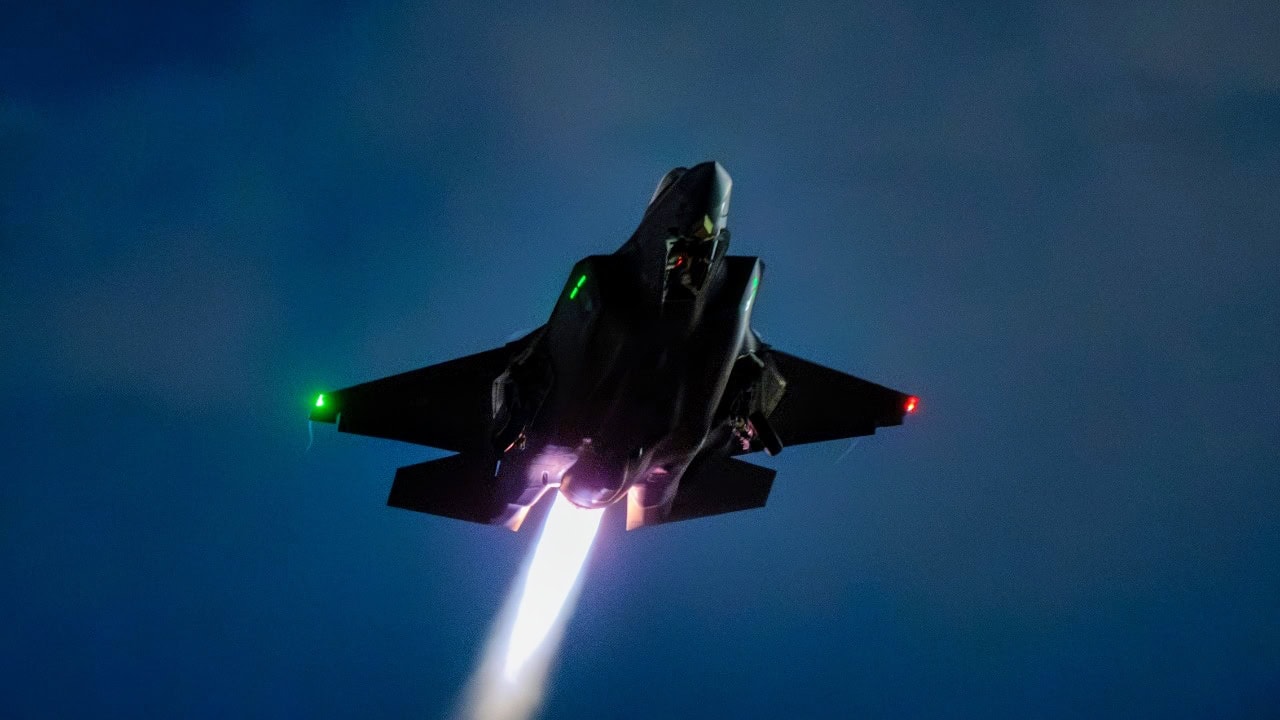
An F-35A Lighting II takes off for a Red Flag-Nellis 24-2 night mission at Nellis Air Force Base, Nevada, March 18, 2024. The presence of the F-35s offers the U.S., Allies, and partners a versatile and highly capable system, enhancing collective defense measures while reinforcing the NATO Alliance’s commitment to leveraging top-tier military capabilities for regional security and deterrence. (U.S. Air Force photo by 1st Lt. Jimmy Cummings)
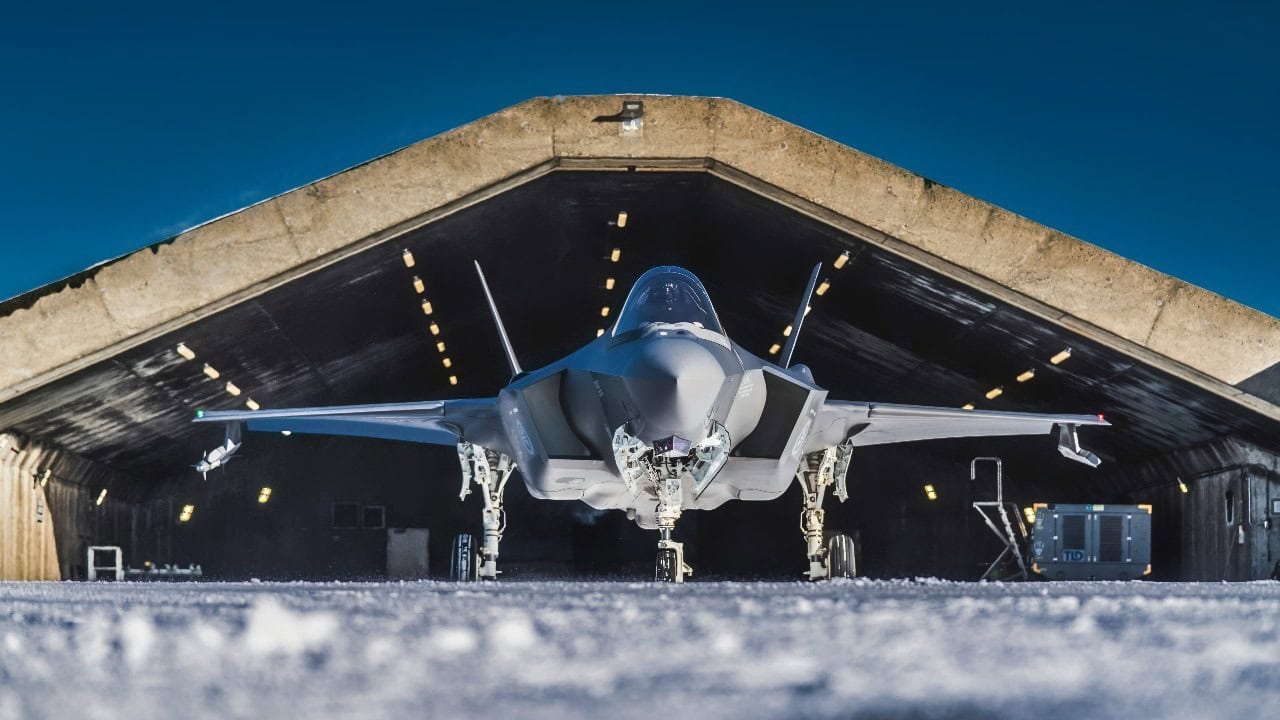
A Royal Norwegian Air Force F-35 Lighting II fighter leaves its shelter at Keflavík Air Base in Iceland. Norway sent the fighters to Iceland, which doesn’t have its own air force, in February 2020.
Interestingly, this interception occurred on two consecutive days. Norwegian defense officials reported that the same Russian reconnaissance aircraft conducted similar flights on both March 10 and March 11, 2026.
Each time, Norwegian sensors detected the aircraft, and F-35 fighters were dispatched to identify and shadow it.
This pattern suggested that the Russian aircraft was deliberately observing NATO activities connected to the Cold Response exercise.
About the Author: Kris Osborn
Kris Osborn is the President of Warrior Maven – Center for Military Modernization. Osborn previously served at the Pentagon as a highly qualified expert in the Office of the Assistant Secretary of the Army—Acquisition, Logistics & Technology. Osborn has also worked as an anchor and on-air military specialist at national TV networks. He has appeared as a guest military expert on Fox News, MSNBC, The Military Channel, and The History Channel. He also has a Masters Degree in Comparative Literature from Columbia University.