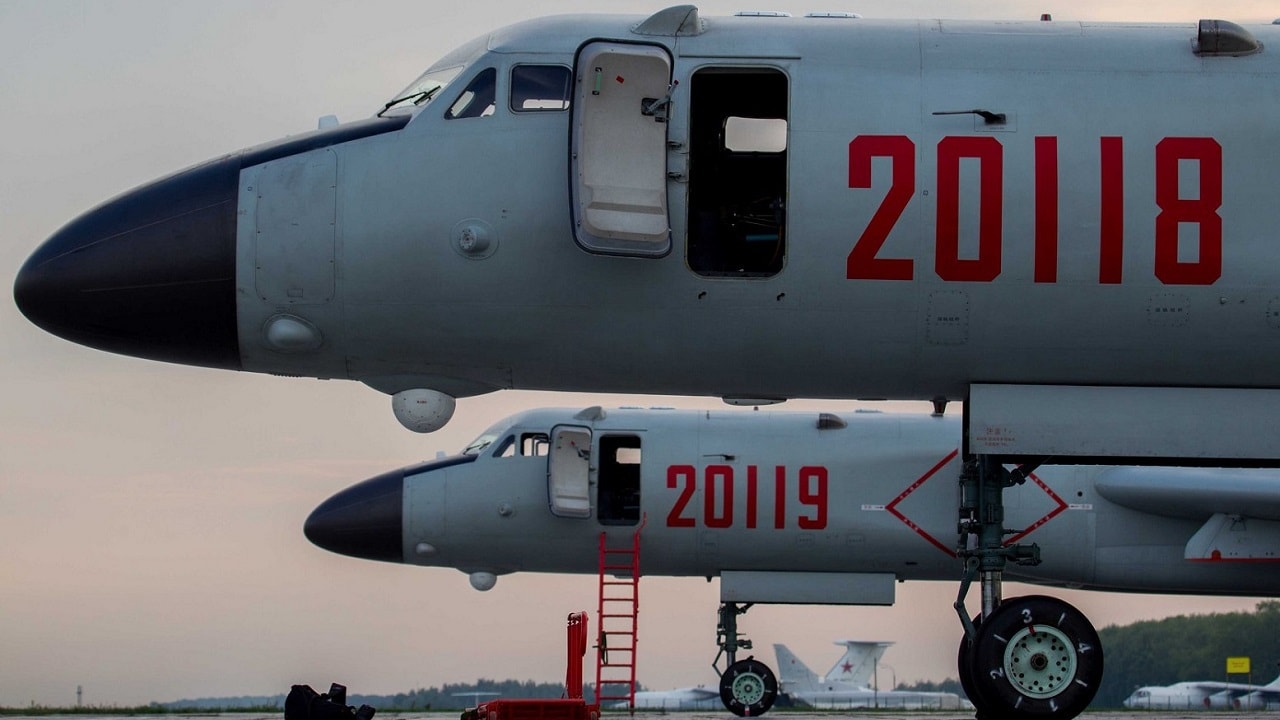
China’s Old H-6 Bomber Haunts the U.S. Navy Summary and Key Points:
- Brandon J. Weichert — Senior National Security Editor at 19FortyFive, former senior editor at The National Interest, iHeartRadio host, DoD consultant, and author of Winning Space, Biohacked, and The Shadow War — argues that China’s Xi’an H-6 strategic bomber, despite its Soviet-era origins, represents one of Beijing’s most effective anti-access/area-denial weapons.
- Armed with the YJ-21 hypersonic anti-ship ballistic missile capable of Mach 10 terminal speeds at 1,500-kilometer range, and the YJ-12 supersonic missile enabling 108-missile saturation attacks, the H-6 is designed specifically to hold U.S. Navy aircraft carriers at risk across the First Island Chain.
- Weichert warns that if U.S. aircraft carriers cannot operate freely near Chinese territory, American deterrence collapses and regional allies will reassess their security arrangements with Washington.
The H-6 Bomber’s Carrier-Killer Missiles Are the Reason the U.S. Navy Is Worried About China
If 21st century warfare has taught us one thing, it is that “modern” is not necessarily the right term to describe the way of today’s wars.

H-6 Bomber.
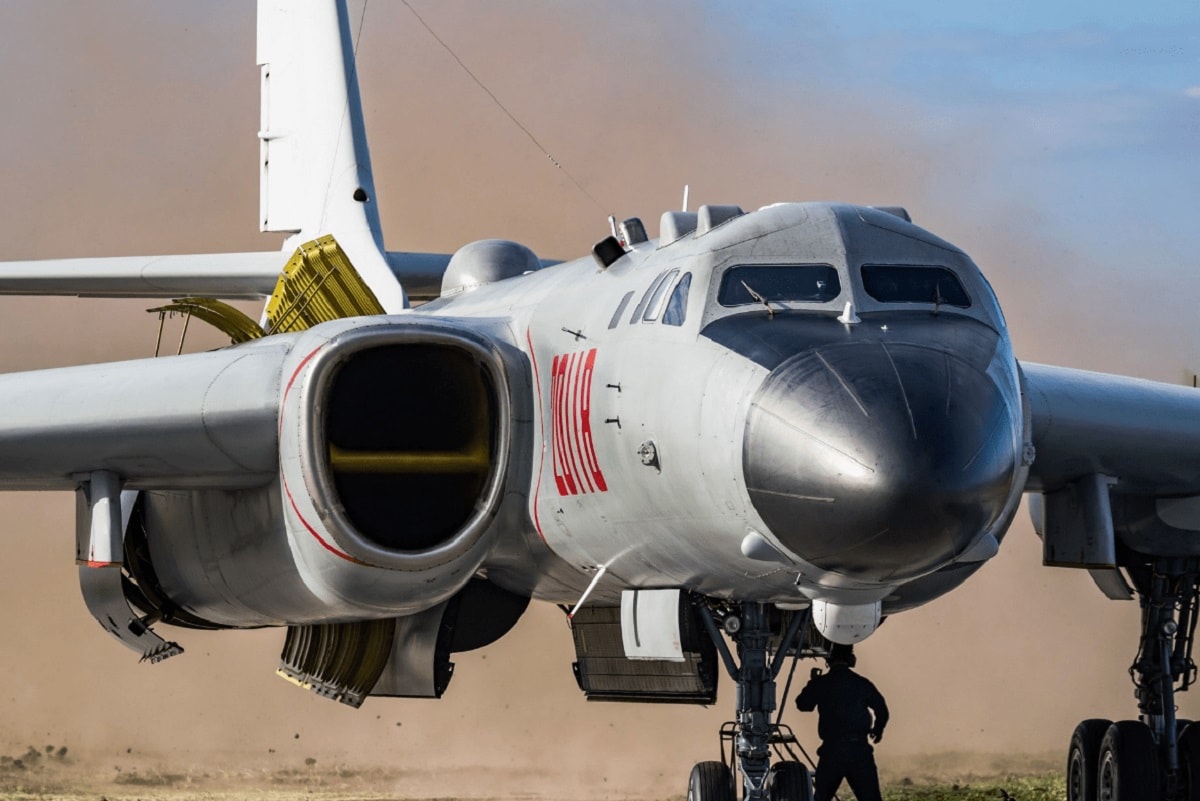
Image: Creative Commons.
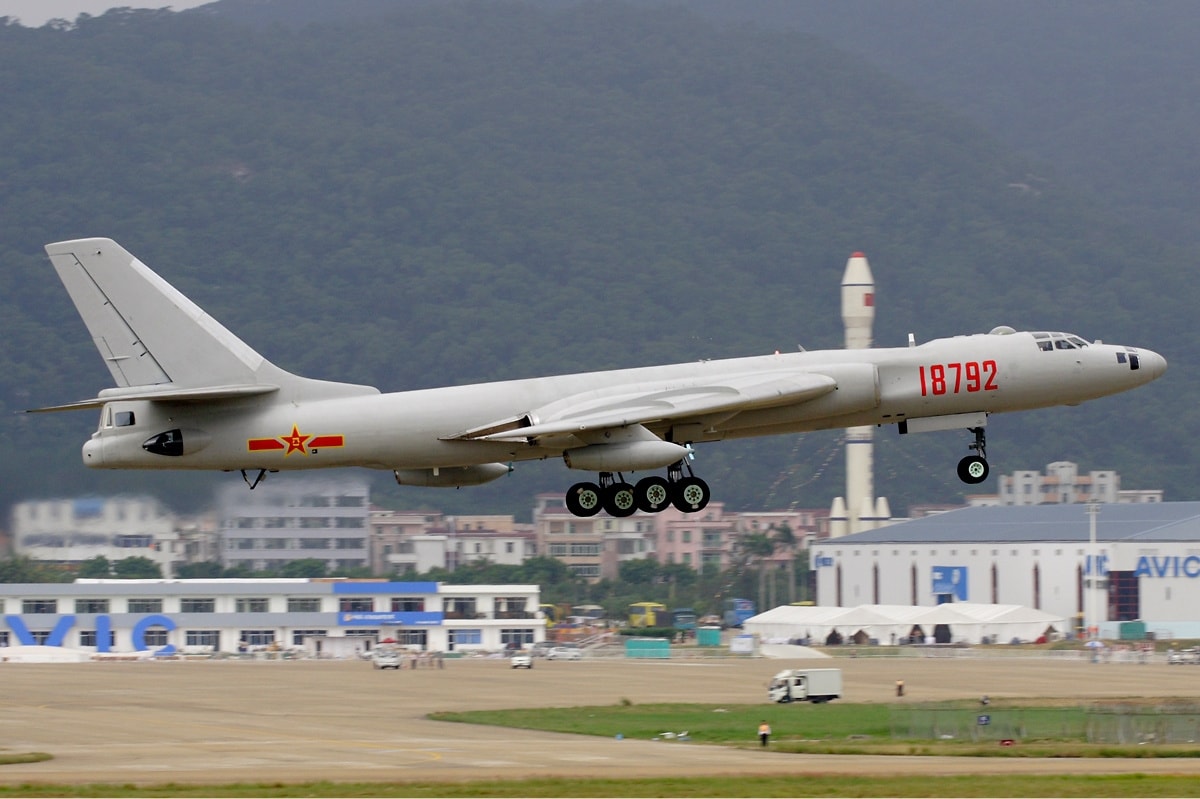
PLANAF HY-6U with aerial refuelling pods (2008) “The most distinct difference between HY-6U and HY-6D is that HY-6U has a metal nose cone, while HY-6D still has the transparent glass nose”.
During the war on terror, the ubiquitous weapon of U.S. enemies was the improvised explosive device (IED), in Ukraine, it is the first-person drone, and during the Iran War, it is the long-range ballistic missile (and drones). All these technologies either have been with us for decades, or are cheaply produced, highly lethal, unconventional weapons.
Modern War Isn’t Modern
That’s where China’s Xi’an H-6 long-range strategic bomber comes into play.
Based on a 1950s Soviet-era design, China’s H-6 has been converted into a giant missile truck designated as a naval strike plane.
The aircraft is, of course, highly vulnerable to enemy warplanes. But its real importance lies in the fact that this flying missile carrier can lob standoff munitions at will—far beyond the reach of many adversary warplanes.
The H-6 is meant to be one of China’s “carrier killers.”
For China to assert dominance in the first island chain, its forces must keep U.S. aircraft carriers out. The goal for China is to stunt U.S. power projection into the First Island Chain, especially that of the U.S. Navy and Air Force.
The Return of Cheap, Lethal Weapons
The old H-6 is essential for this mission. Once the Americans are reluctant to deploy their carriers and other power-projection platforms close to Chinese territory out of fear for what missile trucks such as the H-6 might do to the carriers, Beijing can do what it wants in the first island chain. After all, the nations there that oppose China’s rise depend on the United States’ security guarantees for survival.
If the Americans cannot—or will not—come to their aid because of systems such as the H-6, then American credibility in the region is shot, and regional partners will reassess their options.
China’s H-6 carries oversized payloads, such as air-launched ballistic missiles (ALBMs). Its weapons include the powerful YJ-21 hypersonic “Carrier Killer” ASBM. This missile has a reported range of 1,500 kilometers and can achieve terminal speeds of Mach 10, complicating interception by current U.S. ship-based defenses.
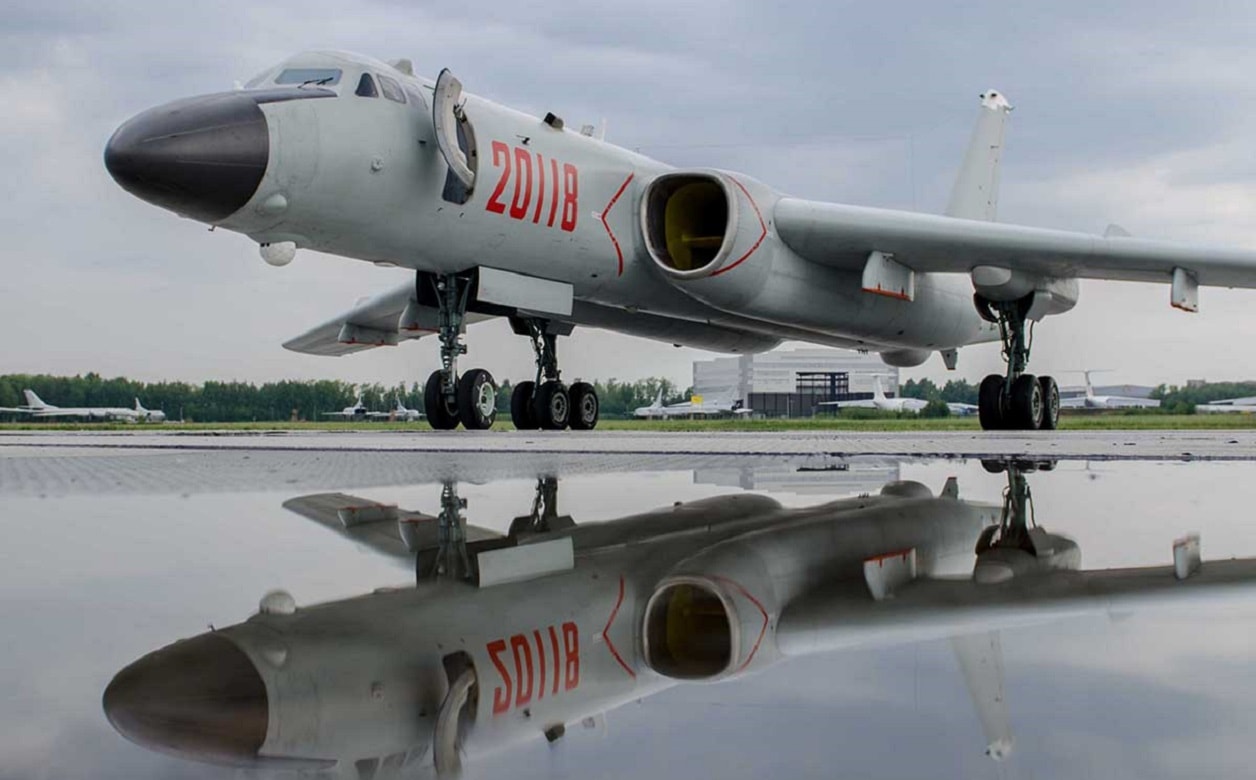
H-6 Bomber. Image Credit: Creative Commons.
The H-6 also carries a supersonic, Mach 3 missile with 400-km range, the YJ-12. The bombers are capable of launching YJ-12s as part of saturation attacks of 108 various missiles to overwhelm an enemy ship’s defenses.
And let’s not forget about the CH-AS-X-13—a giant, nuclear-capable ALBM slung by the H-6N, capable of hitting targets and large naval formations from even greater distances.
Until China’s stealth bomber, the Xi’an H-20, becomes available, H-6 bombers will remain the steady backbone of the Chinese military.
The Missile Truck Strategy
The lesson for U.S. military planners should be obvious. The next great war will not be won solely by the most advanced platforms, but by the side that can combine old designs, cheap weapons, and mass production into a coherent strategy. China understands this.
The H-6 is not impressive because it is so advanced. Far from it. But it fits perfectly into Beijing’s anti-access/area-denial doctrine.
By turning an old Soviet-era bomber into a long-range missile carrier capable of threatening U.S. aircraft carriers from hundreds of miles away, China has created a cost-effective method for holding the United States’ most powerful symbols of military dominance at risk.
The Strategic Lesson Washington Can’t Ignore
If the United States cannot operate its carriers inside the first island chain without unacceptable danger, then deterrence collapses, alliances wobble, and Beijing gains the strategic edge without ever having to fire the first shot.
In the 21st century, victory will not belong to the side with the newest weapons. Victory will go to the side that best understands how to use the old systems in new ways—and right now, China appears to understand this reality better than anyone does.
About the Author: Brandon J. Weichert
Brandon J. Weichert is the Senior National Security Editor at 19FortyFive.com. Recently, Weichert became the editor of the “NatSec Guy” section at Emerald.TV. He was previously the senior national security editor at The National Interest. Weichert is the host of The National Security Hour on iHeartRadio, where he discusses national security policy every Wednesday at 8pm Eastern. He hosts a companion show on Rumble entitled “National Security Talk.” Weichert consults regularly with various government institutions and private organizations on geopolitical issues. His writings have appeared in numerous publications, among them Popular Mechanics, National Review, MSN, and The American Spectator. And his books include Winning Space: How America Remains a Superpower, Biohacked: China’s Race to Control Life, and The Shadow War: Iran’s Quest for Supremacy. Weichert’s newest book, A Disaster of Our Own Making: How the West Lost Ukraine, is available for purchase wherever books are sold. He can be followed via Twitter/X @WeTheBrandon.