
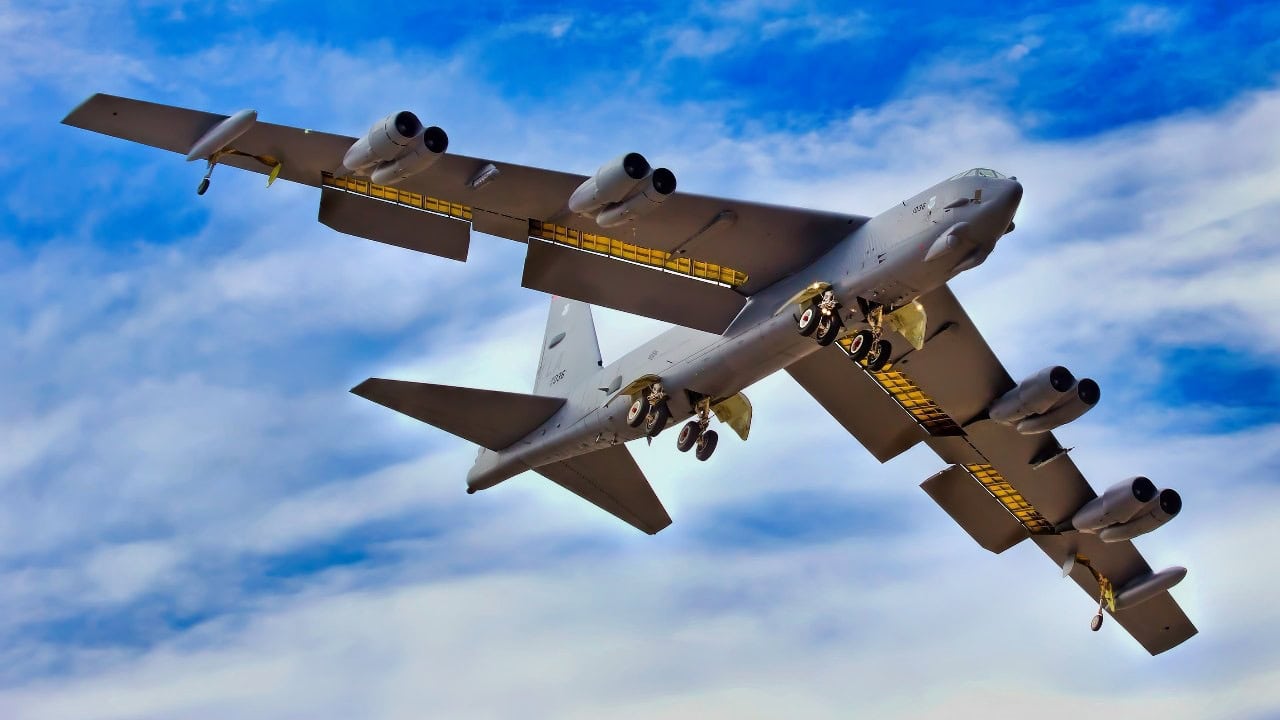
Summary and Key Points: Defense analyst Jack Buckby evaluates the B-52 Stratofortress’s pivotal role in Operation Epic Fury.
-Despite entering service in 1955, the B-52H remains a “flying missile truck,” capable of delivering 70,000 pounds of ordnance.
-In 2026, the bomber utilizes AGM-158 JASSM-ER standoff missiles to penetrate Iran’s “mosaic” air defenses from ranges exceeding 1,000 kilometers.
-This strategy allows the U.S. Air Force to neutralize ballistic missile facilities and command-and-control nodes without exposing the non-stealthy airframe to S-300 or Bavar-373 SAM sites, maintaining mission persistence through superior magazine depth.
How B-52 Bombers Hit Iran Without Entering Its Airspace
The U.S. Air Force has deployed B-52 Stratofortress bombers in the ongoing air campaign against Iran, using them to target ballistic missile facilities and command-and-control infrastructure.
U.S. Central Command confirmed that the aircraft have been used alongside other bombers such as the B-1 and B-2 to strike Iranian military targets during the operation.
Yet the B-52 – an aircraft that first entered service during the Eisenhower administration – rarely needs to fly directly over Iranian territory to conduct these attacks. Instead, it launches long-range “standoff” weapons, cruise missiles capable of traveling hundreds of miles to their targets.
That method allows the bomber to remain far outside the reach of Iranian air defenses while still delivering precision strikes.
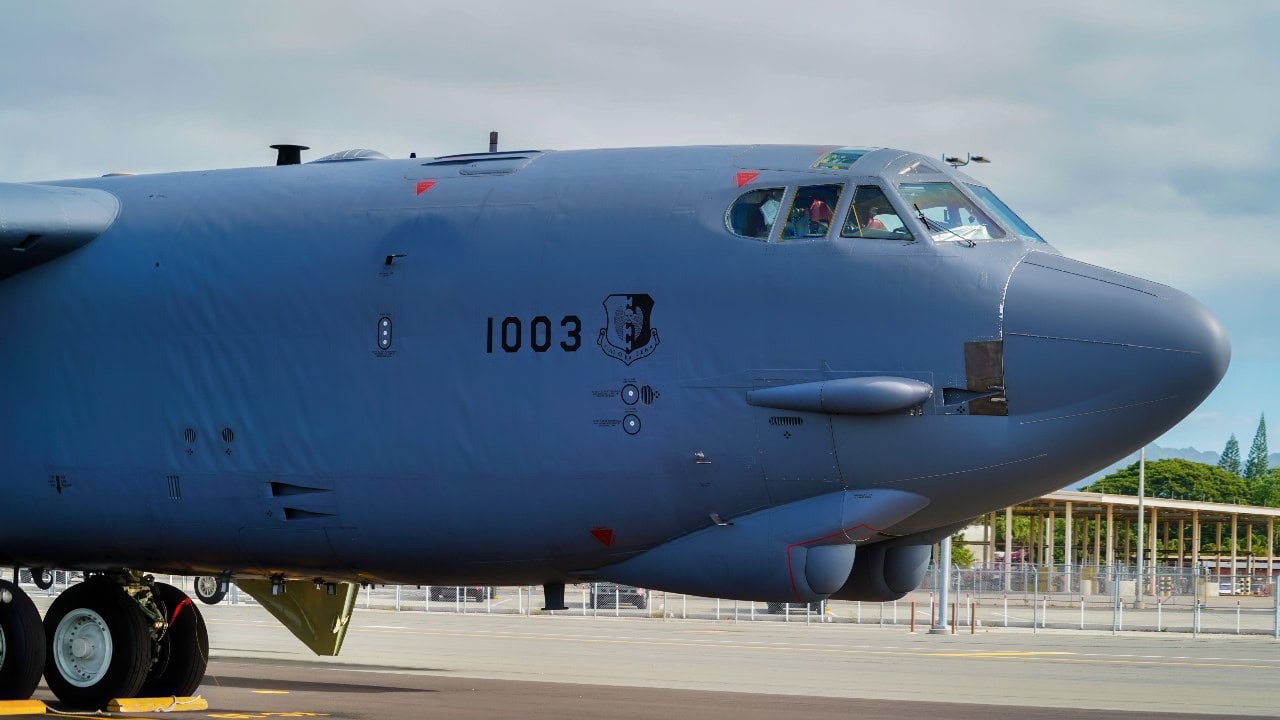
A B-52, assigned to Minot Air Force Base, sits on the flightline at Joint Base Pearl Harbor-Hickam, Hawaii, Nov. 27, 2019. (U.S. Air Force photo by Airman 1st Class Jermaine Ayers)

PHILIPPINE SEA (Feb. 24, 2024) A U.S. Air Force B-52 Stratofortress, attached to the 5th Bomb Wing, and aircraft attached to Carrier Air Wing (CVW) 11, fly in formation over the Nimitz-class aircraft carrier USS Theodore Roosevelt (CVN 71), Feb. 24, 2024. Theodore Roosevelt, flagship of Carrier Strike Group Nine, is underway conducting routine operations in the U.S. 7th Fleet area of operations. U.S. 7th Fleet is the U.S. Navy’s largest forward-deployed numbered fleet, and routinely interacts and operates with allies and partners in preserving a free and open Indo-Pacific region. (U.S. Navy photo by Mass Communication Specialist 1st Class Thomas Gooley)
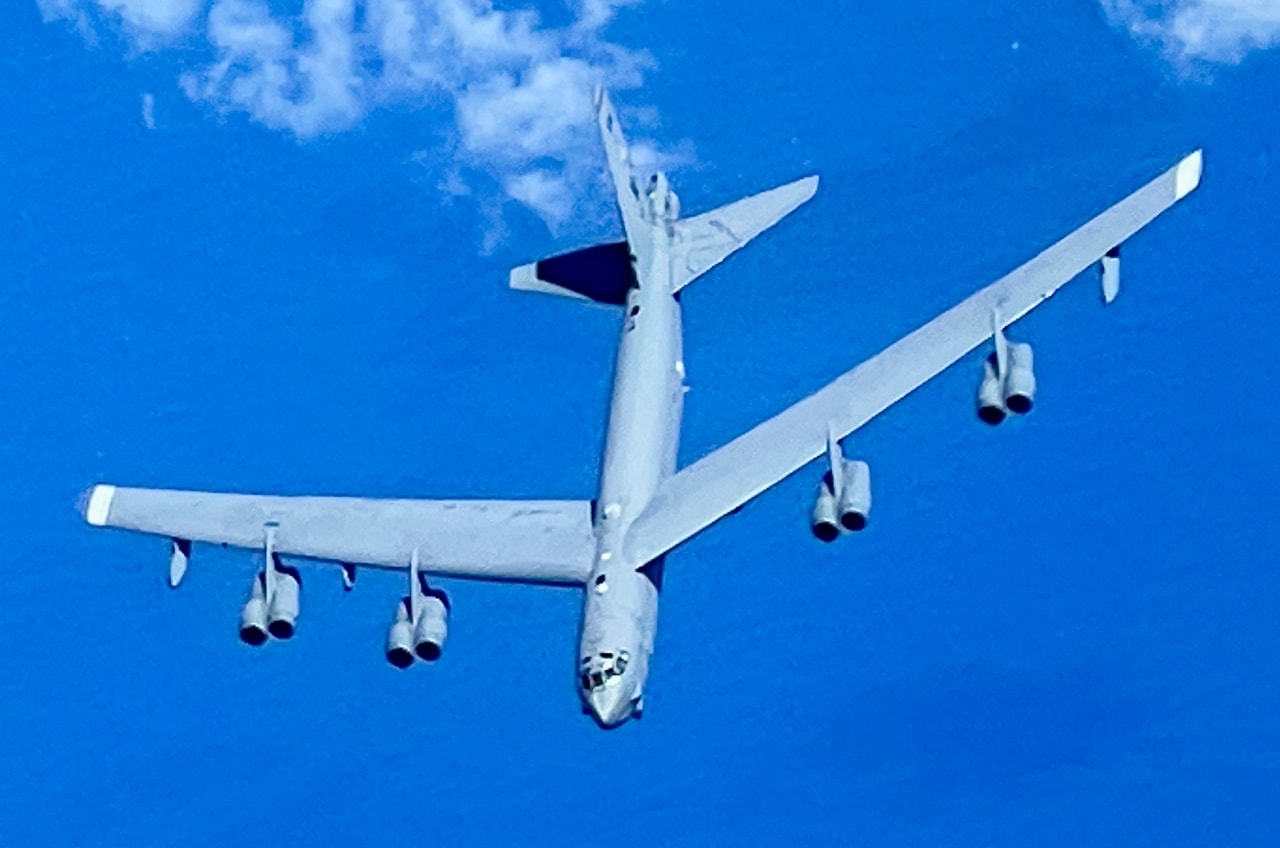
A B-52 Stratofortress assigned to the 2nd Bomb Wing, Barksdale Air Force Base, Louisiana, approaches a KC-135 Stratotanker assigned to the 6th Air Refueling Wing, MacDill AFB, Florida, for fuel over the southeastern United States, Nov. 5, 2024. The B-52 Stratofortress is a long-range, heavy bomber that can perform a variety of missions. As part of the Air Force Global Strike Command, the B-52 enables combat-ready forces to conduct strategic nuclear deterrence and global strike operations in support of combatant commanders. (U.S. Air Force photo by Senior Airman Mia McNeill)
These missiles have become central to modern air campaigns. In the current conflict with Iran, they allow the U.S. military to attack missile infrastructure and other strategic targets without exposing vulnerable aircraft to dense air-defense networks.
Understanding what weapons the B-52 carries – and why the aircraft remains relevant more than 70 years after its first flight – helps explain how these long-range strikes are conducted.
The Cold War Bomber That’s Still Fighting Wars
The Boeing B-52 Stratofortress first flew in 1952 and entered service with the U.S. Air Force in 1955 as a nuclear-armed strategic bomber designed to strike the Soviet Union. More than 700 aircraft were built during the Cold War, and the modern B-52H variant remains in service today.
Despite its age, the aircraft continues to play a major role in U.S. military operations. One reason is its enormous payload capacity. The B-52 can carry roughly 70,000 pounds of weapons, ranging from conventional bombs to long-range cruise missiles.
Historically, the bomber was used for high-volume bombing campaigns. During the Vietnam War, it conducted massive “carpet bombing” missions. Later conflicts, including the Gulf War, Iraq, and Afghanistan, saw the aircraft transition into a precision-strike platform capable of delivering guided weapons and cruise missiles from long distances.
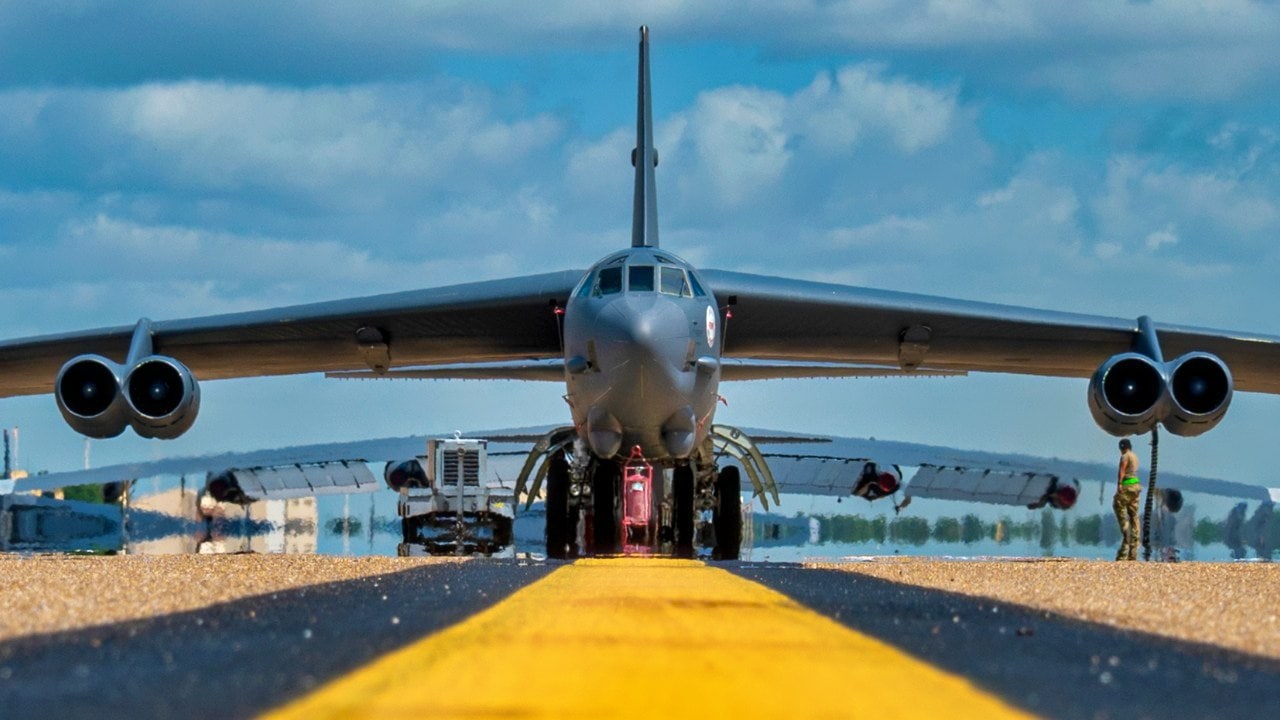
A U.S. Air Force B-52H Stratofortress bomber assigned to the 307th Bomb Wing goes through an engine check June 24, 2021, at Barksdale Air Force Base, Louisiana. Eight Pratt & Whitney TF33 engines power the B-52H to give it the capability of flying at high subsonic speeds. (U.S. Air Force photo by Senior Airman Kate Bragg)
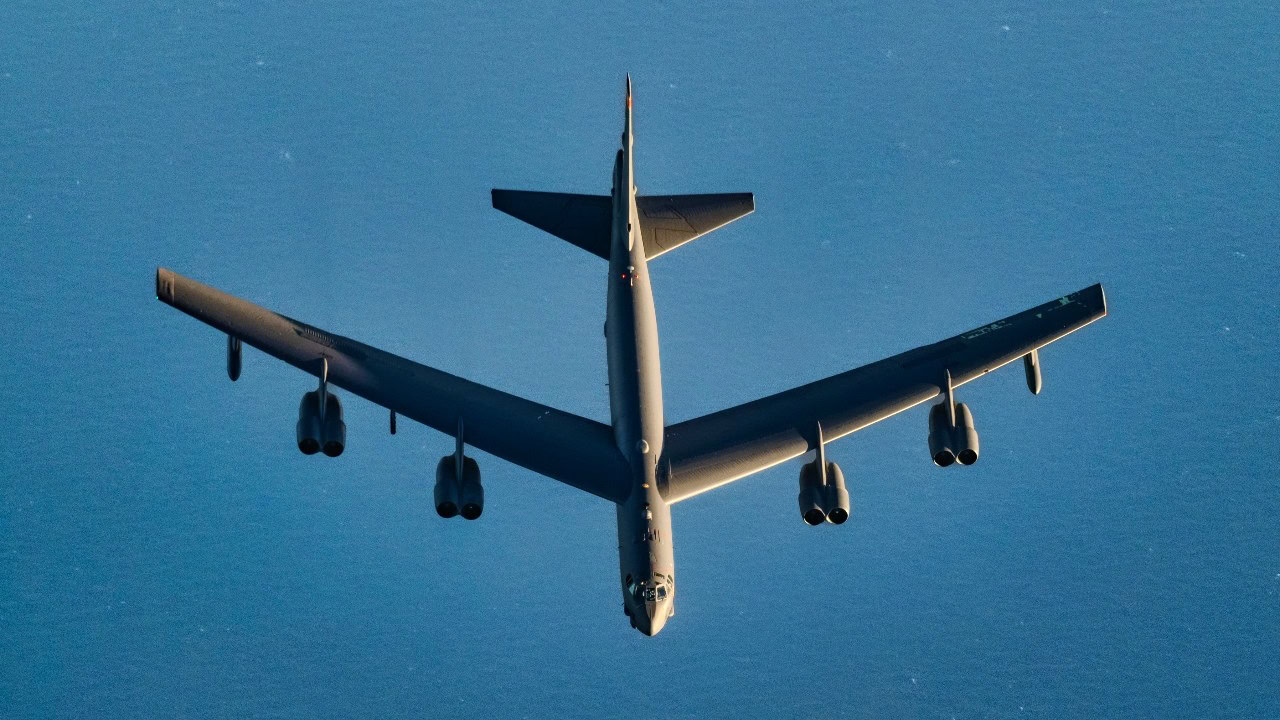
A U.S. Air Force B-52H Stratofortress flies a show of presence mission over the U.S. Central Command area of responsibility, Feb. 20, 2025. Strategic bombers contribute to stability in the CENTCOM theater by demonstrating the credibility, capability, and readiness of the U.S. bomber force, which is critical to deterring attacks against the U.S. and its allies and partners. (U.S. Air Force photo by Staff Sgt. Jackson Manske)
Today, the aircraft often operates as a kind of flying missile truck, launching precision weapons rather than flying directly over enemy territory. That role has become particularly important in conflicts such as the war with Iran, where advanced air defenses mean large bombers cannot safely operate over hostile territory for extended periods.
What “Standoff Weapons” Means
The key to the B-52’s modern role is the use of standoff weapons – missiles that can be launched from well outside enemy air-defense range.
A standoff weapon allows a bomber to fire from hundreds of miles away while the missile itself flies the rest of the distance autonomously, guided by GPS, terrain-matching systems, or imaging sensors. This concept is central to modern air warfare. Iran maintains a network of radar systems and surface-to-air missiles designed to defend key military sites.
By launching cruise missiles from long range, the B-52 avoids those defenses while still striking critical targets.
The bomber’s payload capacity also makes it particularly valuable in this role. A single B-52 can carry up to 20 long-range cruise missiles, allowing one aircraft to hit multiple targets during a single sortie.
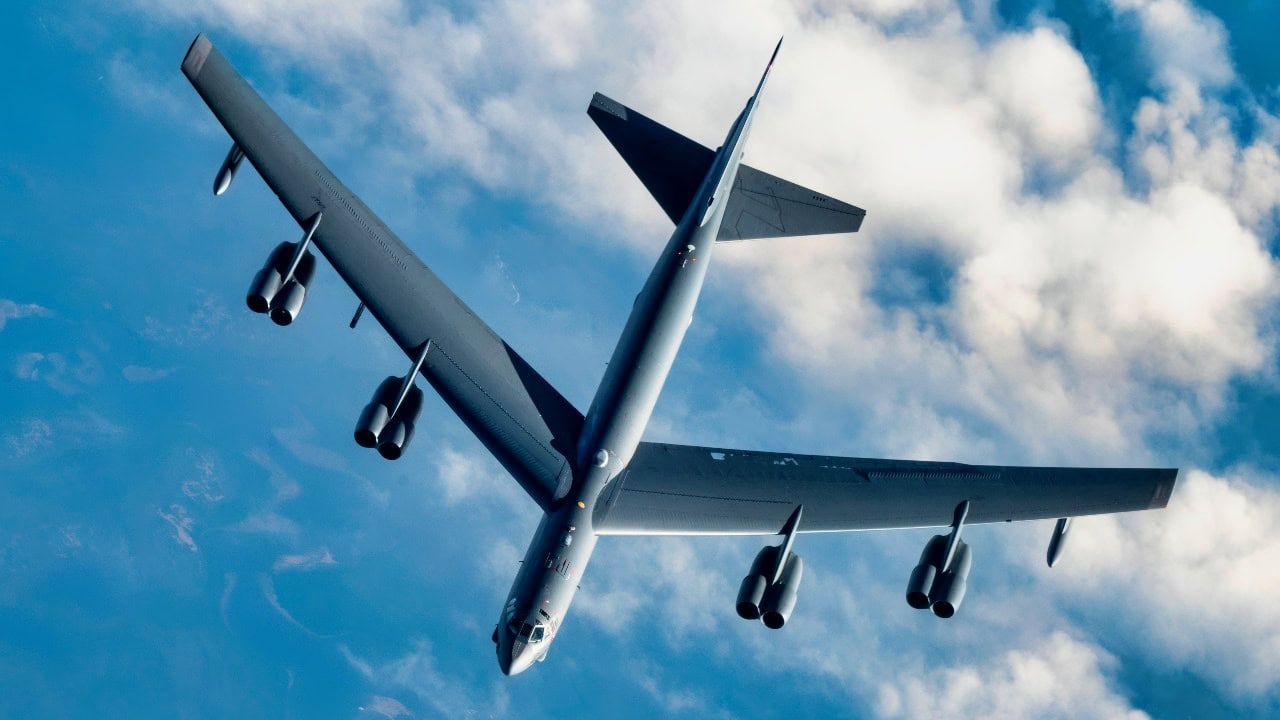
A U.S. Air Force B-52 Stratofortress departs after being refueled by KC-135 Stratotanker over the Pacific Northwest July 18, 2024. The 92nd Air Refueling Wing and 141st ARW’s ability to rapidly generate airpower at a moment’s notice was put to the test when Air Mobility Command’s Inspector General team conducted a no-notice Nuclear Operational Readiness Inspection, July 16–18, 2024. During the NORI, Airmen demonstrated how various capabilities at Fairchild AFB enable units to generate and provide, when directed, specially trained and equipped KC-135 Stratotanker aircrews to conduct critical air refueling of U.S. Strategic Command-assigned strategic bomber and command and control aircraft. (U.S. Air Force photo by Staff Sgt. Lawrence Sena)
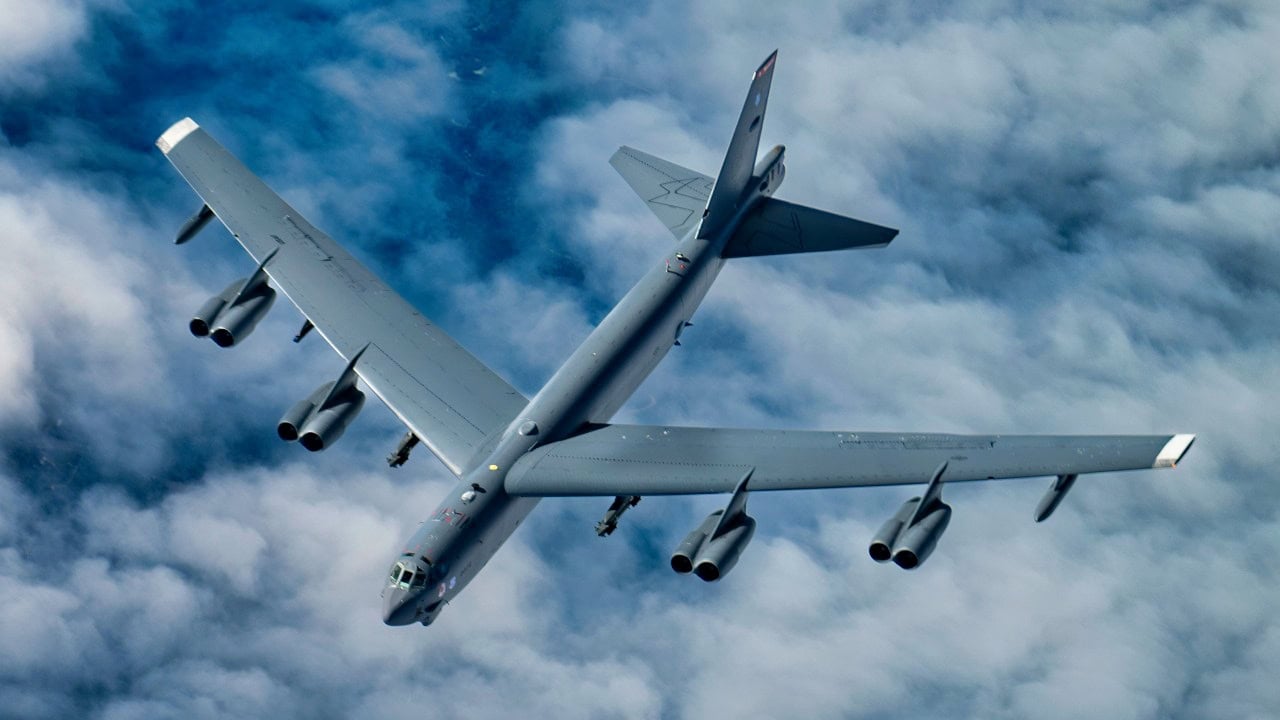
A B-52 Stratofortress assigned to the 2nd Bomb Wing, Barksdale Air Force base, Louisiana, approaches a KC-135 Stratotanker assigned to the 6th Air Refueling Wing, MacDill AFB, Florida, for fuel over the southeastern United States, Dec. 4, 2024. The B-52 Stratofortress is a long-range, heavy bomber that can perform a variety of missions. The aircraft can carry nuclear or precision guided conventional ordnance with worldwide precision navigation capability. (U.S. Air Force photo by Staff Sgt. Lauren Cobin)
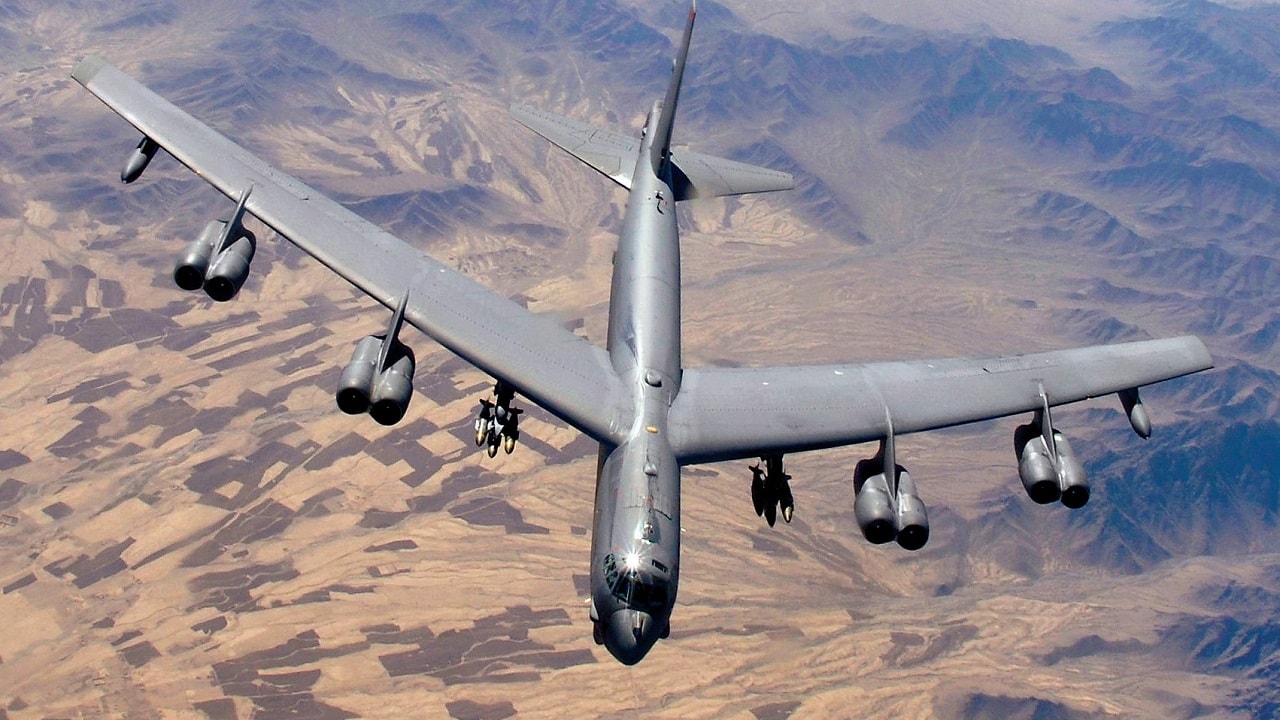
B-52H Stratofortress Primary function: Heavy bomber. Speed: 650 mph. Dimensions: Wingspan 185 ft.; length 159 ft. 4 in.; height 40 ft. 8 in. Range: 8,800 miles unrefueled. Armament: M117, Mk-56/62/65/82/84, CBU- 87/89/103/104/105, AGM-86B/C/D/129A/158A, GBU- 10/12/28/31/38; nuclear weapons. Crew: Five. (U.S. Air Force photo by Master Sgt. Lance Cheung)
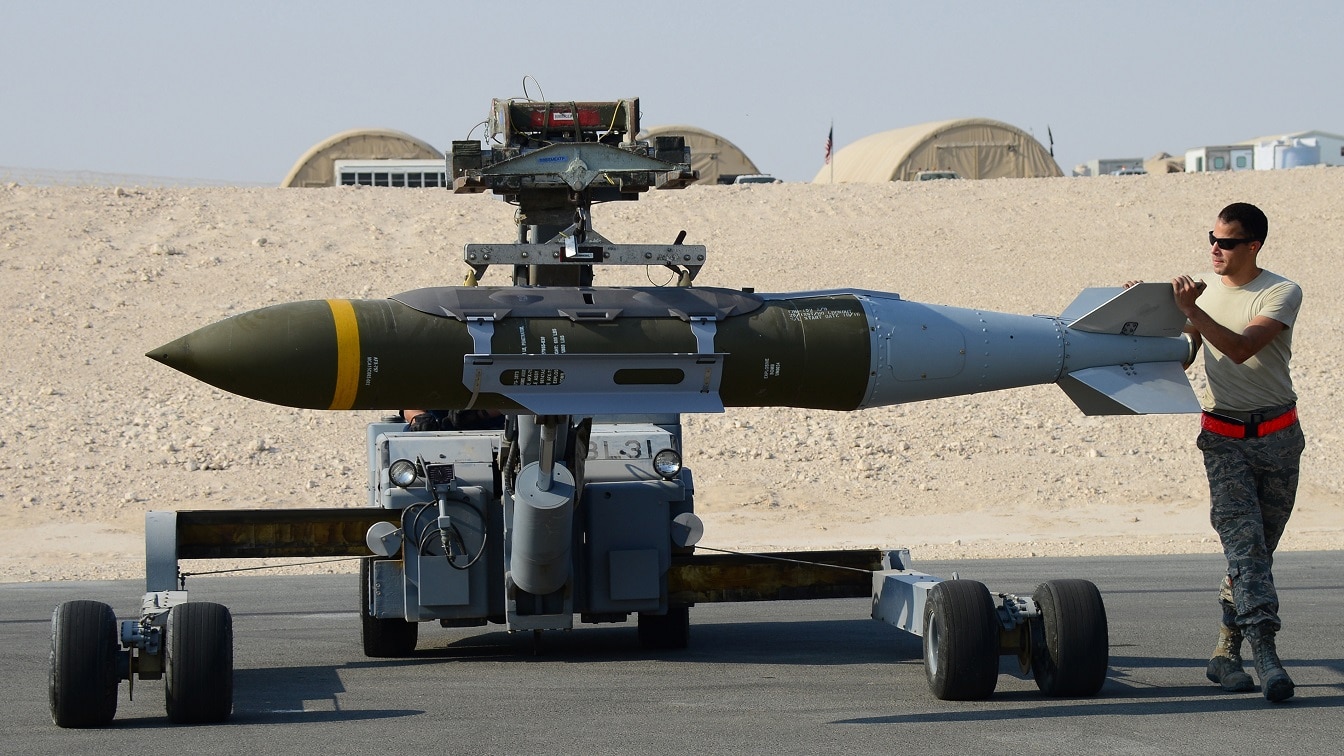
An airman assigned to the 379th Expeditionary Aircraft Maintenance Squadron guides a Joint Direct Attack Munition as it is taken to be loaded onto an aircraft Oct. 19, 2016. The air operations in support of the offensive to recapture Mosul are conducted as part of Operation Inherent Resolve, the operation to eliminate Da’esh and the threat it poses to Iraq, Syria, the region and wider international community. (U.S. Air Force photo/Senior Airman Miles Wilson/Released)
The result is that only a handful of bombers are necessary to deliver the firepower equivalent of a much larger strike package – a capability that is especially useful in large air campaigns where hundreds of targets may need to be hit in a short period of time.
The Cruise Missiles the B-52 Can Use Against Iran
Several different weapons can be launched from a B-52, but the most relevant in the Iran conflict is the AGM-158 Joint Air-to-Surface Standoff Missile (JASSM).
The JASSM is a stealthy cruise missile designed to penetrate defended airspace and destroy high-value targets such as missile launchers, command centers, or hardened infrastructure. The missile carries an armor-piercing warhead weighing roughly 1,000 pounds.
Reports say that the B-52 bombers used in the Iran campaign have launched JASSM missiles against Iranian missile sites, particularly during the opening phase of the campaign.
An extended-range version known as the JASSM-ER can also travel much farther, reaching targets roughly 1,000 kilometers away, giving bombers the ability to strike deep into enemy territory without approaching defended airspace.
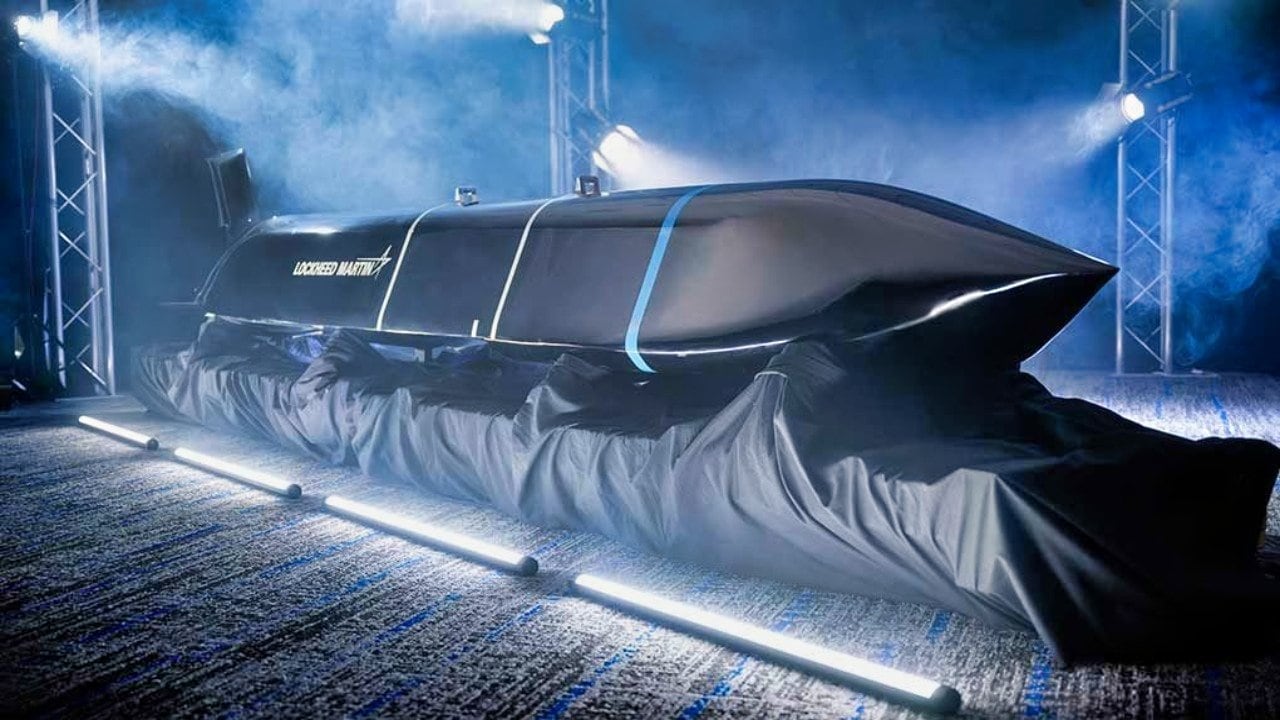
JASSM XR. Image Credit: Lockheed Martin.
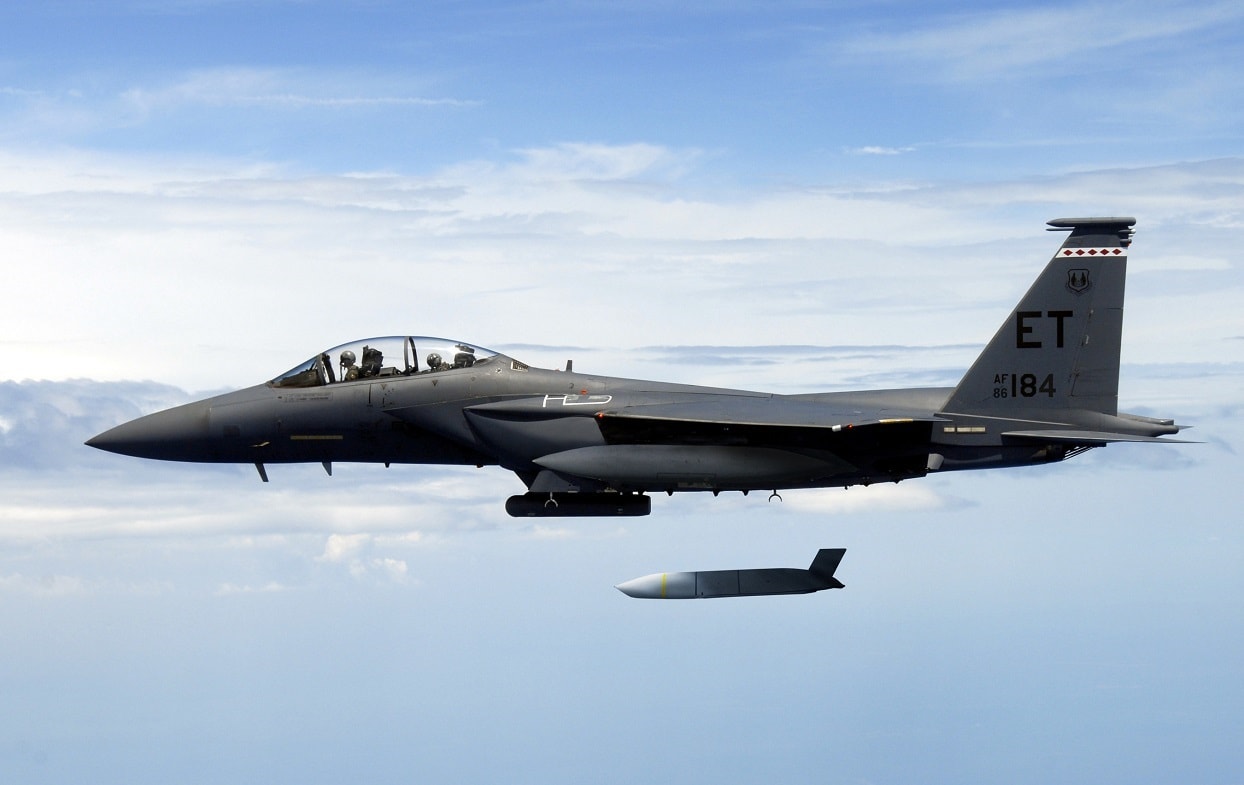
A U.S. Air Force F-15E Strike Eagle flies with a Joint Air-to-Surface Standoff Missile (JASSM). JASSM-Extended Range has more than two-and-a-half times the range of JASSM for greater standoff distance. Photo credit: U.S. Air Force. (PRNewsfoto/Lockheed Martin)
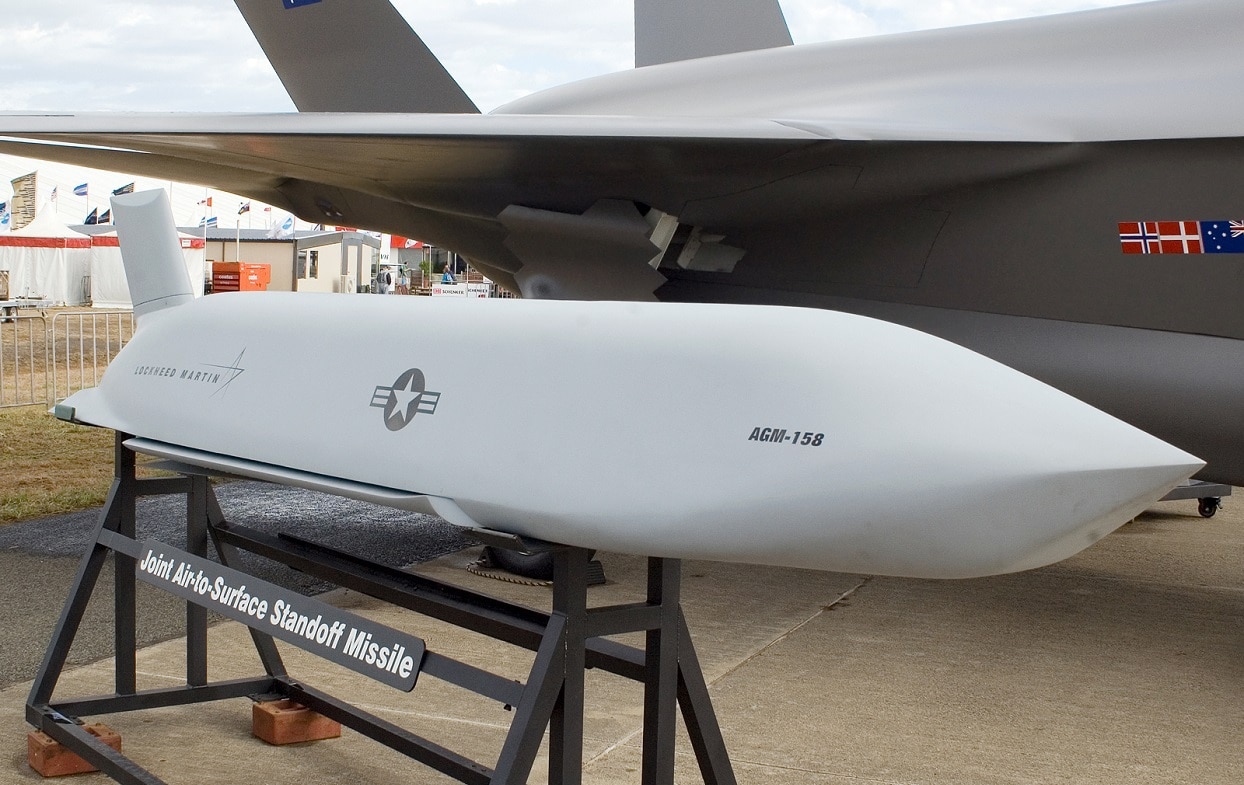
Image: Creative Commons.
Another weapon historically carried by the B-52 is the AGM-86 air-launched cruise missile, a weapon originally designed during the Cold War to give bombers the ability to strike Soviet targets without entering heavily defended airspace.
Modern standoff missiles are effectively the descendants of that concept.
Future upgrades will further expand the bomber’s arsenal, too. The AGM-181 Long-Range Stand-Off (LRSO) missile, currently under development, is intended to replace the aging AGM-86 and provide a more survivable stealth cruise missile for the B-52 fleet.
Combined, these weapons allow the aircraft to strike targets from hundreds of miles away, making the bomber relevant even in highly contested environments like this. While the aircraft is old, the weapons it carries is not. Modern cruise missiles give the bomber the ability to strike large numbers of targets without entering dangerous airspace.
Because the aircraft can carry so many missiles at once, a small number of bombers can deliver a massive amount of firepower.
About the Author: Jack Buckby
Jack Buckby is a British researcher and analyst specialising in defence and national security, based in New York. His work focuses on military capability, procurement, and strategic competition, producing and editing analysis for policy and defence audiences. He brings extensive editorial experience, with a career output spanning over 1,000 articles at 19FortyFive and National Security Journal, and has previously authored books and papers on extremism and deradicalisation.