
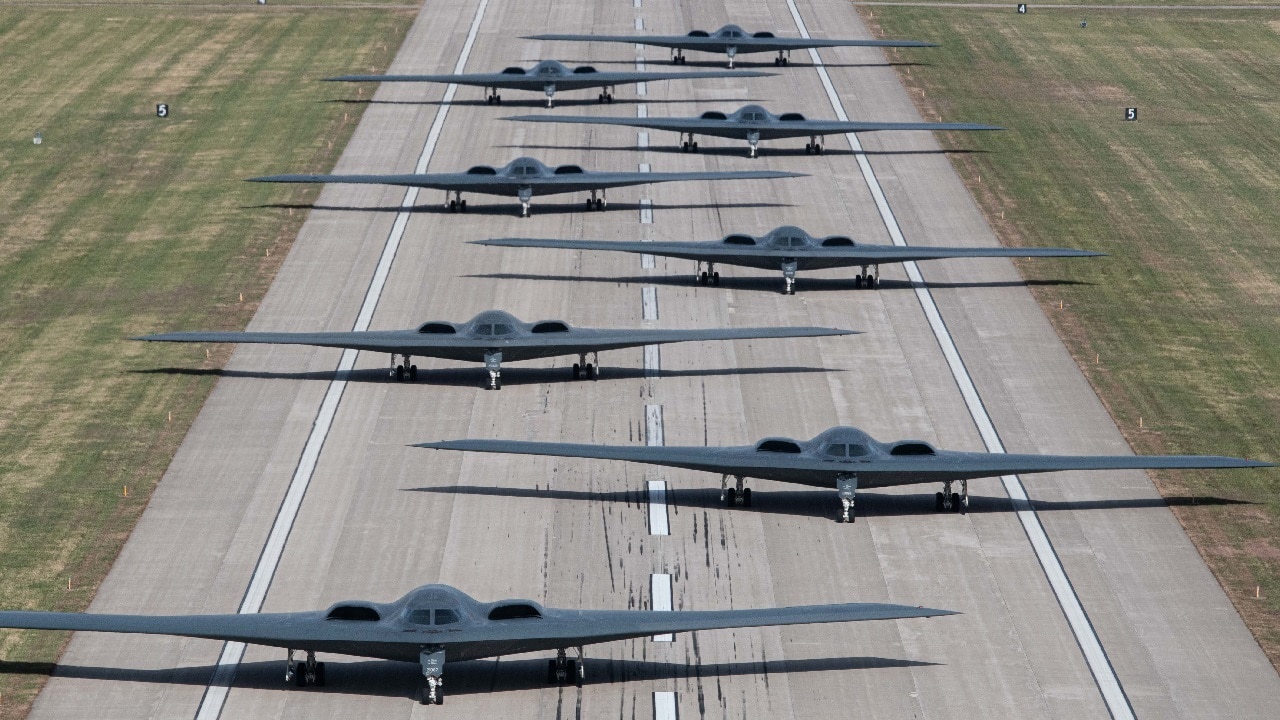
Summary and Key Points: National security expert Dr. Brent M. Eastwood evaluates the alleged deployment of the GBU-57B Massive Ordnance Penetrator (MOP) against the Taleghan 2 site in Iran.
-Spatial intelligence from Vantor shows three precise hits on the facility, which Iran had recently “rehabilitated” and buried under layers of soil and concrete.
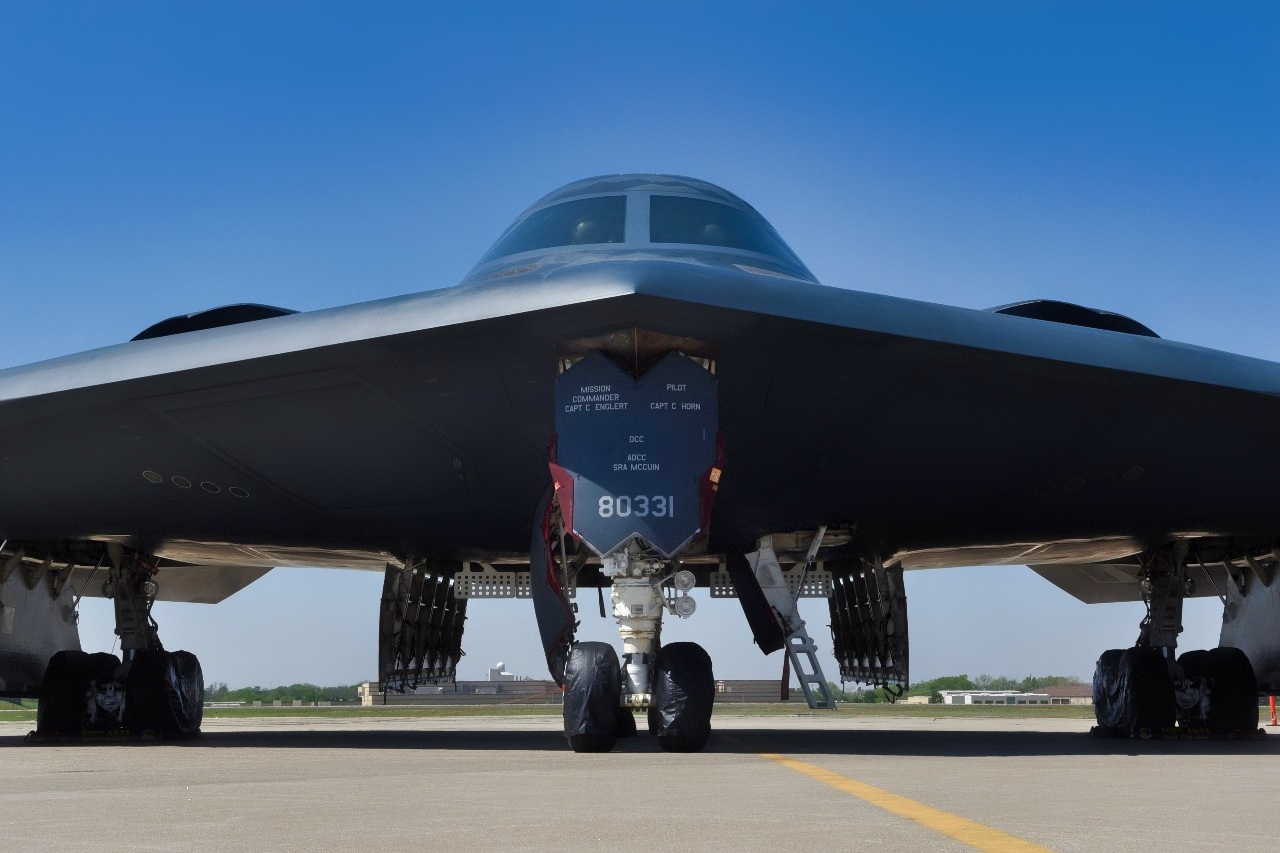
B-2A, serial #88-0331, ‘Spirit of South Carolina’ of the 509th Bomb Wing, Air Force Global Strike Command, on the parking ramp at Tinker Air Force Base, Oklahoma, during a visit April 11, 2017. The B-2A ‘stealth bomber’ visited the base to allow hundreds of personnel who work in direct support of the aircraft program through continuous software upgrades to see it in person and better understand the aircrafts’ role in the nation’s defense. (U.S. Air Force photo/Greg L. Davis)
-This report analyzes the conflicting claims between the IDF and U.S. Central Command regarding the strike’s origin.
-Eastwood explores the difficulties of Battle Damage Assessment (BDA) in underground complexes, concluding that the survival of such hardened sites necessitates the continued use of B-2-launched bunker busters.
The Parchin Impact: Analyzing the Satellite Evidence of Potential MOP Use at Taleghan 2
If you are looking for a U.S. military weapon like no other, look no further than the 30,000-pound GBU-57B Massive Ordnance Penetrator (MOP).

B-2 Spirit Stealth Bomber 19FortyFive Photo. Taken by Harry J. Kazianis back in July 2025.
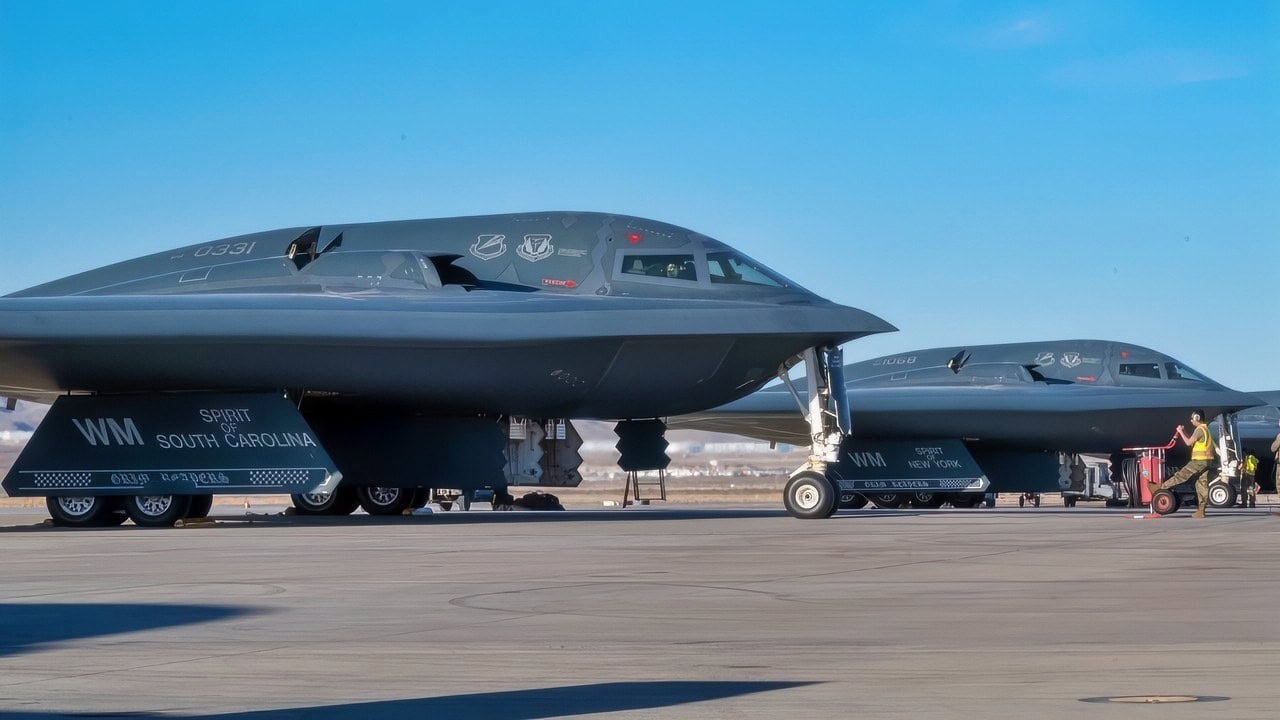
Three B-2 Spirit stealth bombers prepare for departure during Exercise Bamboo Eagle at Nellis Air Force Base, Nevada, Feb. 10, 2025. Bamboo Eagle incorporates multiple mission scenarios, preparing aircrews for complex operational challenges. (U.S. Air Force photo by Senior Airman Bryson Sherard.)
These are also known as the infamous bunker-busting bombs. These make an explosion as big as you would ever see on the battlefield and can take out targets buried deep in the earth. MOPs are difficult and costly to produce, so the United States has a limited supply, but they are perfect for attacking deep underground nuclear infrastructure in Iran.
Was it a Massive Ordnance Penetrator that caused the Damage?
Now Internet sleuths are trying to figure out if the MOP was used recently on a key Iranian nuclear site.
This attack has not been confirmed by the U.S. military or Central Command, but satellite imagery points toward potential MOP use.
The spatial intelligence firm Vantor has released three images to compare and contrast a before and after sequence that could be evidence that at least one MOP was deployed against a nuclear weapons facility at the Parchin complex.
The U.S. Is Still Trying to Eliminate Iranian Nuclear Infrastructure
MOPs were used last year during Operation Midnight Hammer in a mission that the Donald Trump administration deemed an overwhelming success. But there could be remains of Iranian nuclear infrastructure still existing that could have necessitated a MOP strike during the current Operation Epic Fury.
Taleghan 2 Site at the Parchin Complex Was Still Alive
It appears that the Iranian Taleghan 2 site at the Parchin complex may have survived, and the Iranians have shipped tons of concrete and dirt to cover it up since last summer. The United States needed a MOP to completely destroy the facility.
Vantor released satellite imagery on March 11 that appeared to show three impact points on Taleghan 2. The hits were precise and in a straight line. Vantor also had imagery from March 6 of this year and last November that showed the site was intact while other centers in Parchin were wiped out.
Improving a Hardened Site
Iran has been using concrete and soil covering on Taleghan 2 and on other sites to harden them before U.S. and Israeli strikes happened during the war this year. This shows that the American strikes during Operation Midnight Hammer may not have been as effective as once thought.
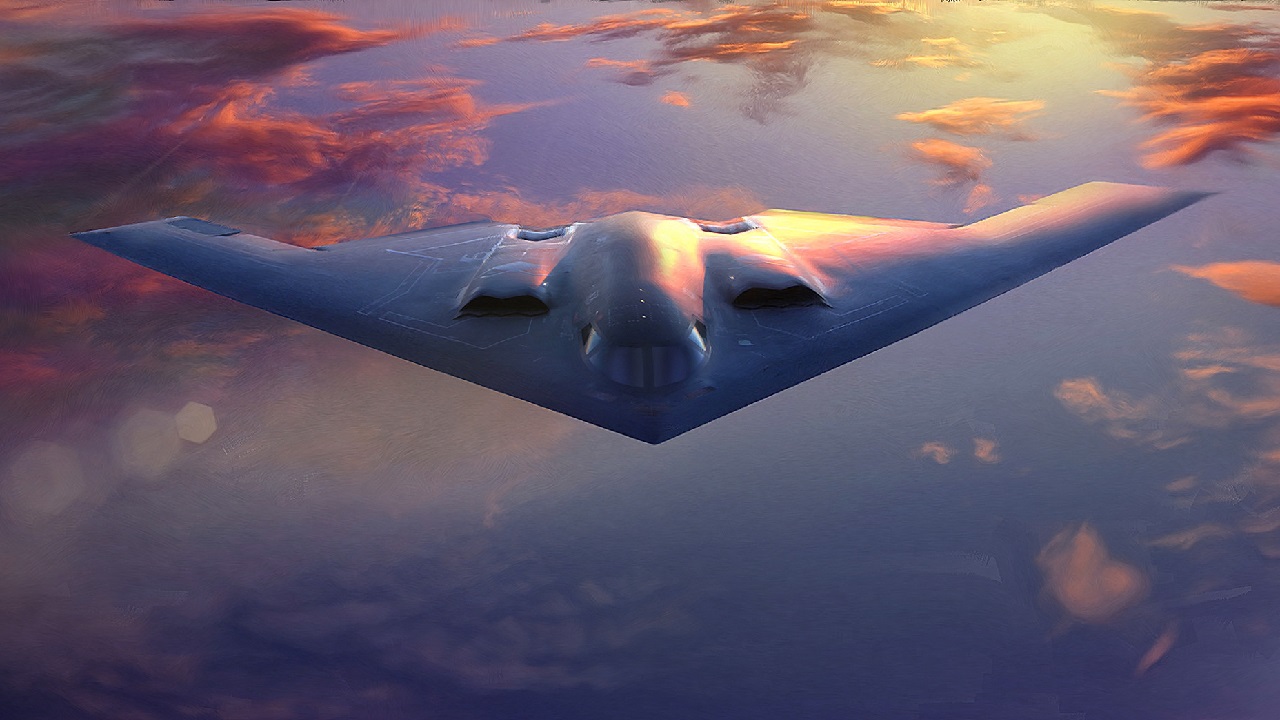
B-2 Spirit. Image Credit: Creative Commons.
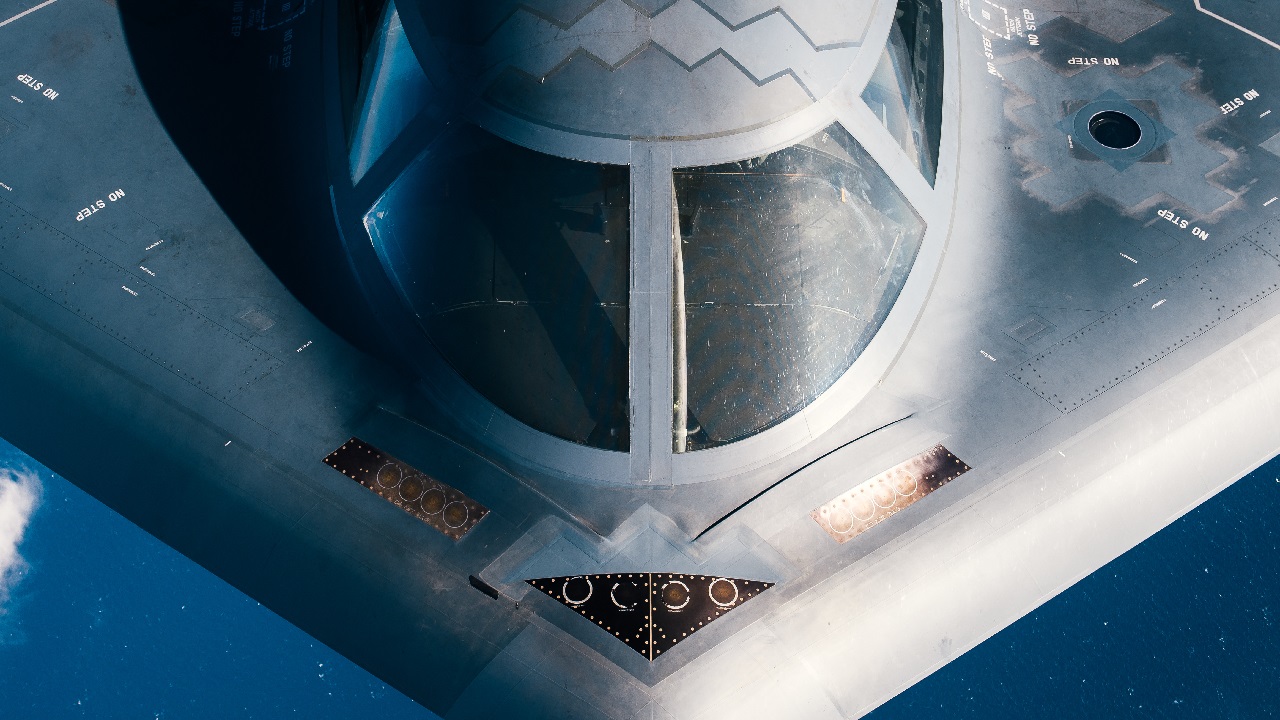
A U.S. Air Force 509th Bomb Wing B-2 Spirit refuels from a 351st Aerial Refueling Squadron KC-135 Stratotanker during the Bomber Task Force training exercise over England, Aug. 29, 2019. The B-2 aircraft will operate out of RAF Fairford, England, and will exercise there at U.S. Air Forces in Europe’s forward operating location for bombers. (U.S. Air Force photo by Staff Sgt. Jordan Castelan)
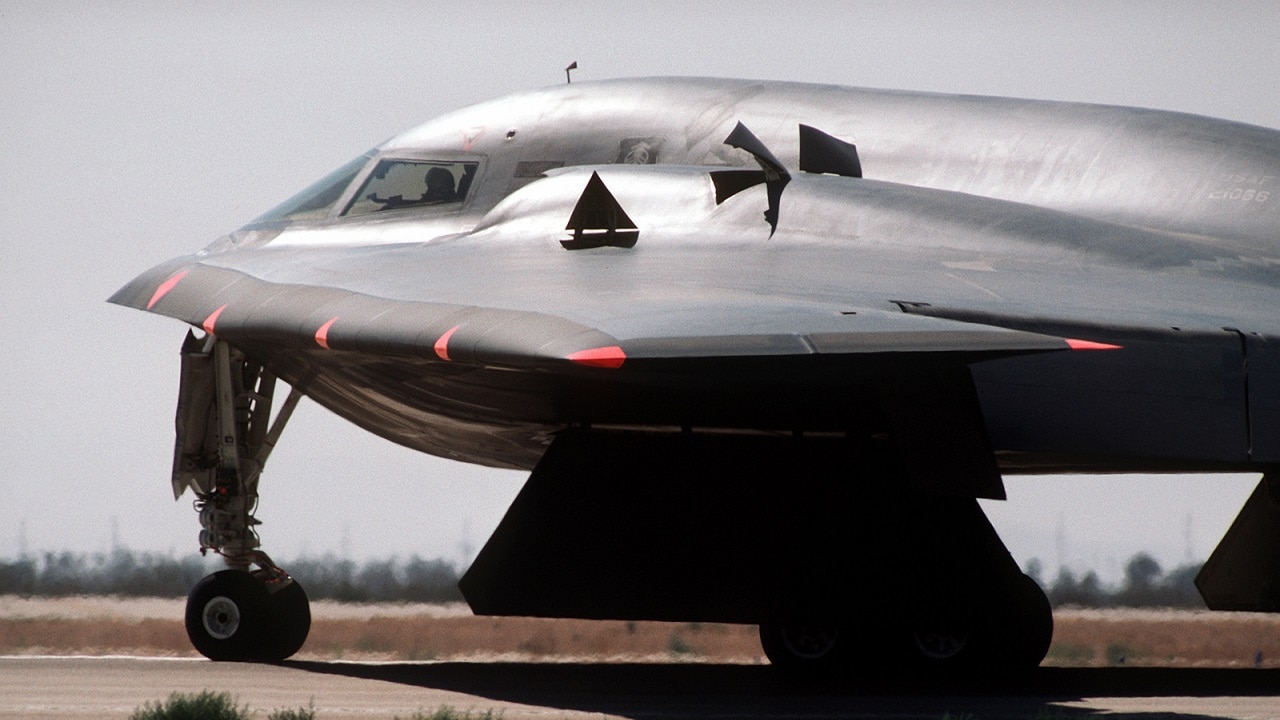
A left side view of the front of a B-2 advanced technology bomber aircraft as it prepares for its first flight, at the Air Force Flight Test Center.
“Over the last two to three weeks, Iran has been busy burying the new Taleghan 2 facility at the Parchin military complex with soil. Once the concrete sarcophagus around the facility was hardened, Iran did not hesitate to move soil over large parts of the new facility.
More soil is available, and the facility may soon become a fully unrecognizable bunker, providing significant protection from aerial strikes,” according to an X post by the Institute of Science and International Security.
B-2 Bombers Have Struck Before
The impact shape of the munition used to punish Taleghan 2 is similar to that observed at Fordow and Natanz during Operation Midnight Hammer. U.S. Air Force B-2 bombers dropped 12 MOPs on Fordow and two MOPs on Natanz, according to the War Zone.
The B-2 is the only aircraft capable of deploying MOPs. U.S. Central Command has not confirmed that MOPs were used against the Taleghan 2 site, but we know that B-2s have been operational during Operation Epic Fury.
The War Zone believes that the Iranians moved rapidly to harden Taleghan 2 and other nuclear infrastructure sites with a mixture of concrete, dirt, and sand in order to better protect them from bunker busters and other ballistic missiles.
Strike Ventilation Shafts to Blow Up the Facility
One way that MOPs can be especially effective is by dropping them on ventilation shafts. These are difficult to identify and target and require a high level of precision. It doesn’t appear that Taleghan 2 had such features that could have made the alleged MOP strike more damaging.
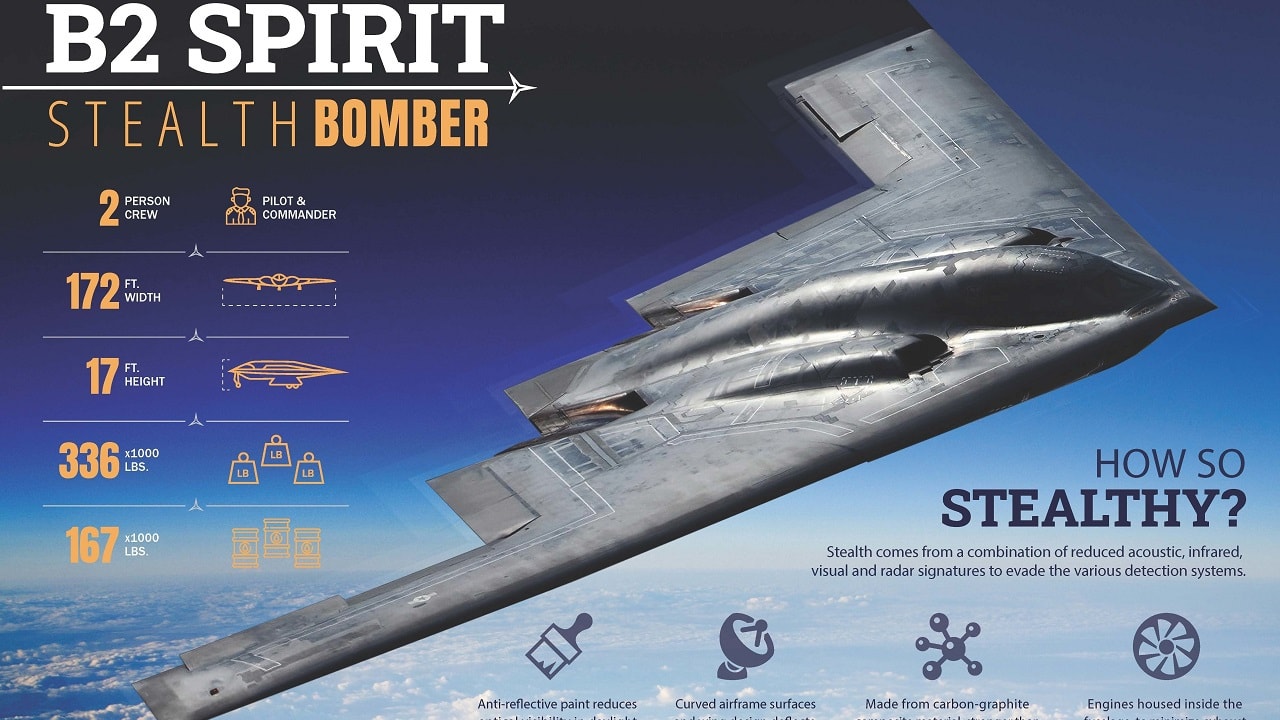
191209-N-HG846-2001 NORFOLK,Va. (Dec. 9, 2019) This poster is designed to communicate the aircraft specifications of the B2 Spirit Stealth Bomber. The B2 bomber was introduced on Jan. 1, 1997 by the Northrop Corporation.
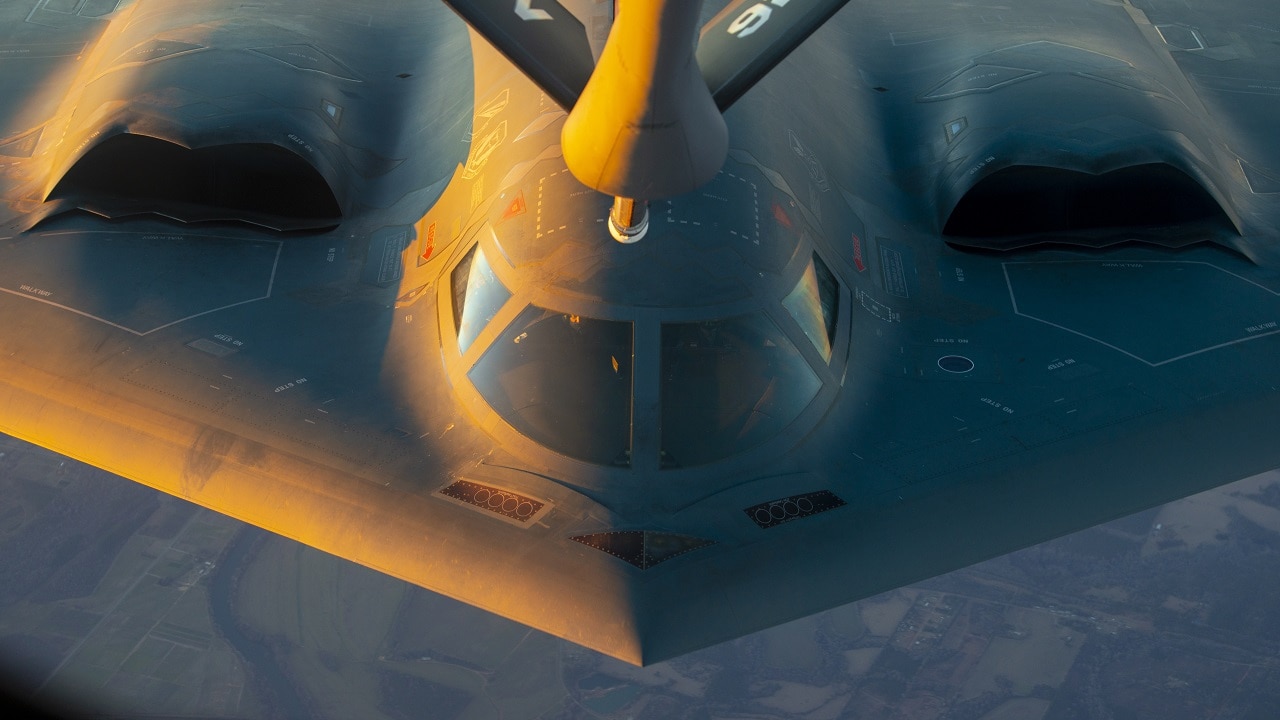
A B-2 Spirit assigned to Whiteman Air Force Base, Mo., prepares to receive fuel from a KC-135 Stratotanker, Feb 7, 2021. A B-2 Spirit performed alongside a B-1B Lancer and a B-52 Stratofortress for the Super Bowl LV flyover on Feb. 7, 2021. (U.S. Air Force photo by Airman 1st Class David D. McLoney)
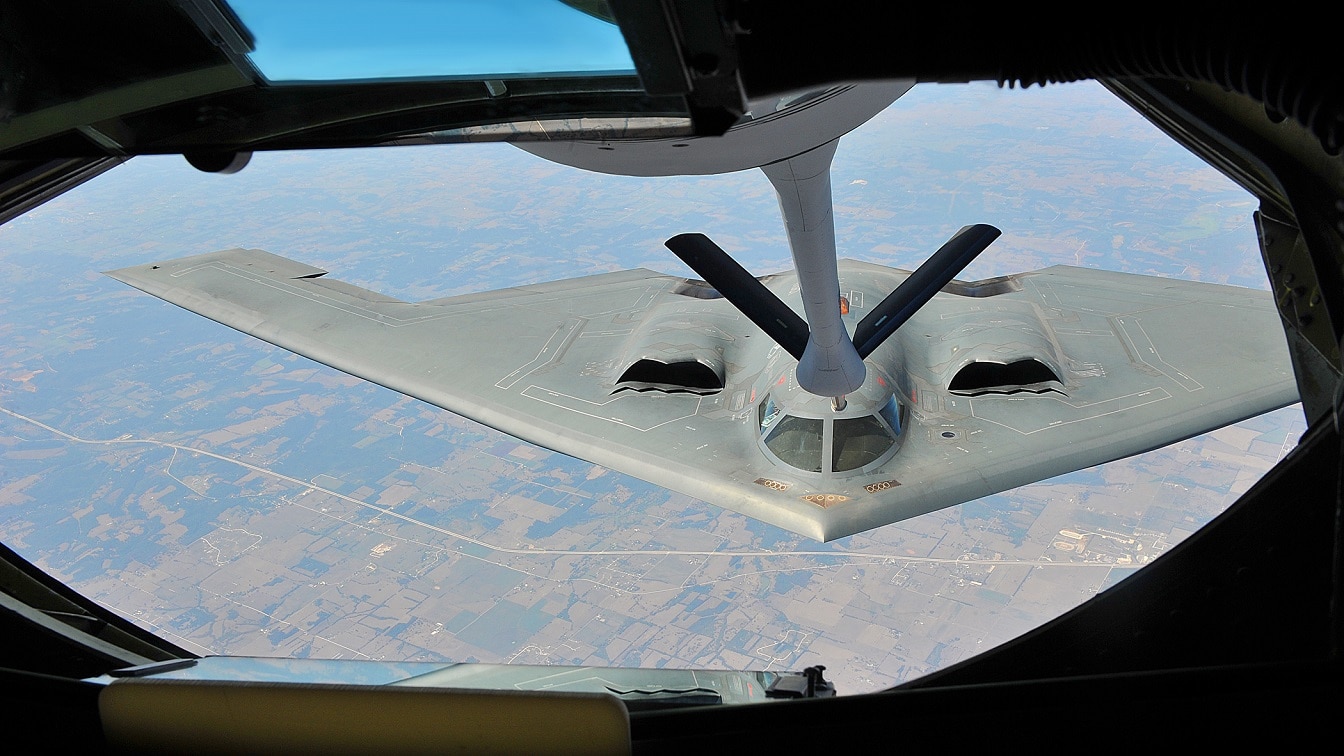
A KC-135 Stratotanker from the 22nd Air Refueling Wing refuels a B-2 Spirit from the 509th Bomb Wing, Aug. 29, 2012. A B-2 Spirit is designed to be very difficult to detect so it can better engage enemies during war efforts. (U.S. Air Force photo/ Airman 1st Class Maurice A. Hodges)
Israel Takes Credit for the Taleghan 2 Strikes
One complication about the theory of MOP use at Taleghan 2 is that the Israelis have claimed that it was hit by air strikes. “The IDF says that in recent years, Iran used the [Taleghan 2] site for ‘the development of advanced explosives and for conducting sensitive experiments as part of AMAD Project,’ Iran’s alleged secret nuclear weapons development program,” according to the Times of Israel.
The IDF believes that Tehran has “taken steps to rehabilitate the [Taleghan 2] compound.” The Jerusalem Post also reported on March 12 that it was Israel that struck Taleghan 2. The location was near Tehran and used for explosive testing. The Israelis believe that the Iranians have refused to stop work on a nuclear device and that Taleghan 2 has been rebuilt since January.
Who Did It?
It is thus not clear if the United States also used bunker busters against Taleghan-2, with the Israelis taking credit for the hits in the satellite imagery.
But this does show that both the U.S. Department of Defense and the IDF are aware that Iran is rebuilding and protecting sites, and the 12-day War strikes against nuclear complexes conducted by Israel and the Americans during Operation Midnight Hammer were not completely successful.
Battle Damage Assessment Is Difficult
This means the current war could go on until Israel and the United States are satisfied that the Iranian nuclear infrastructure is totally destroyed.
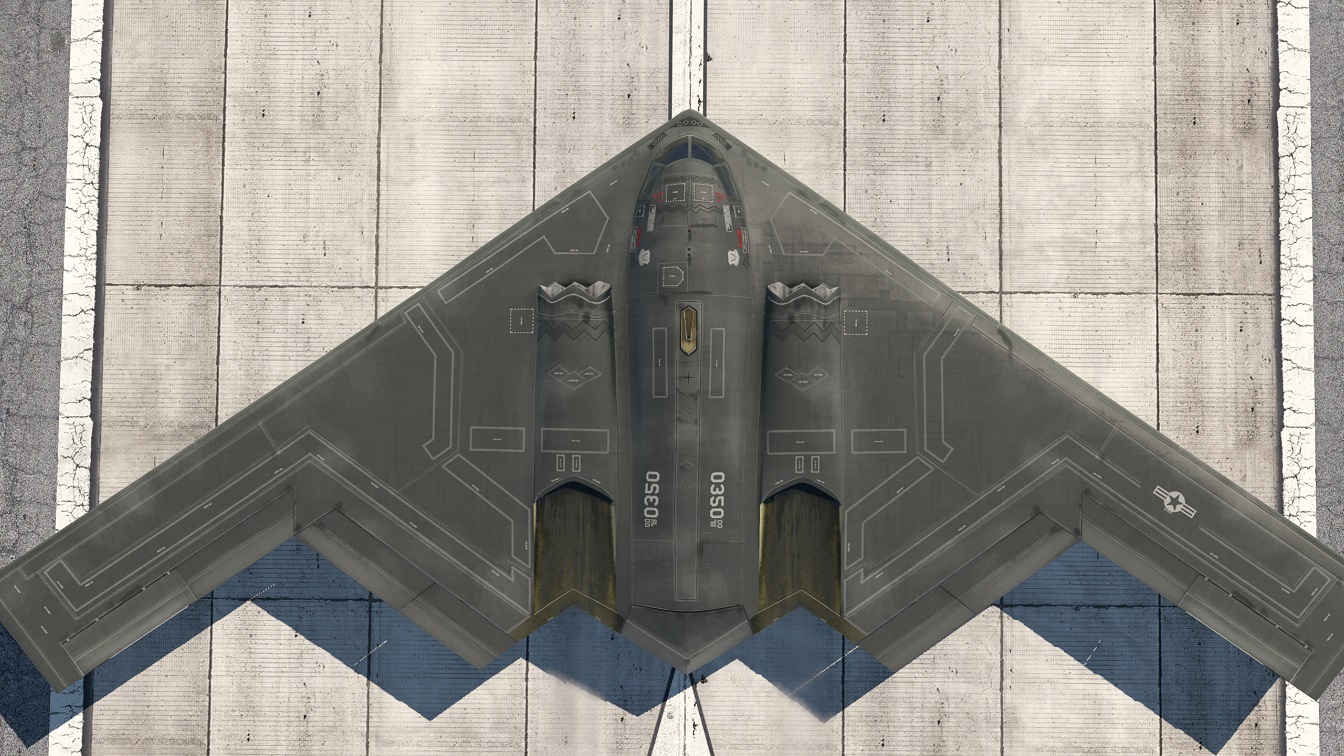
B-2 Bomber. The B-21 Raider will look very similar. Image Credit: Creative Commons.
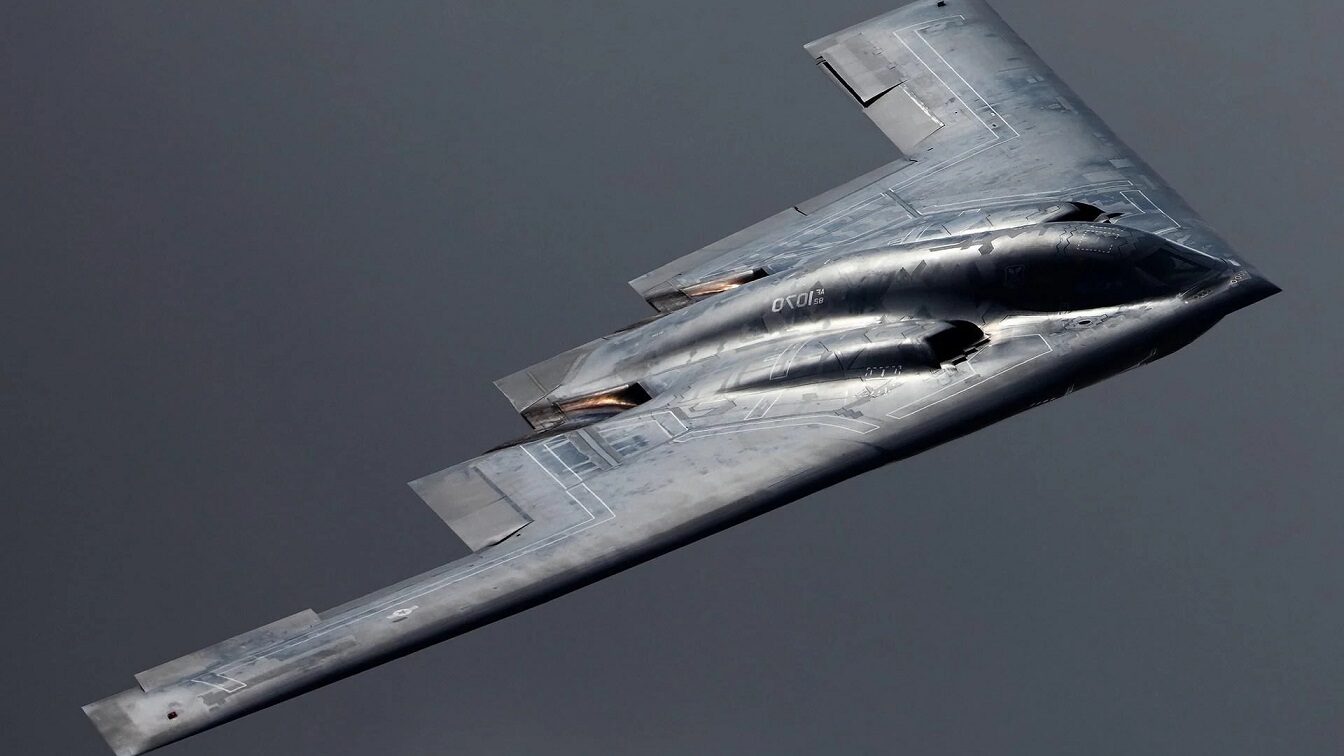
Artist image of B-2 Spirit. The B-21 Raider will look similar.
The problem is conducting a battle damage assessment. I said on X on the first day of the war that battle damage assessment would be the most difficult aspect of the bombing and missile strike campaign during Operation Epic Fury.
It is also not clear how closely the U.S. Air Force and the Israeli Air Force are working together to eliminate targets.
Both countries have different intelligence sources and media affairs capabilities, with each military taking public credit for strikes that come at different times.
We will keep watching how the strikes from both countries have been used to eliminate all nuclear weapons sites in Iran, but using mere publicly-available satellite images does not tell the complete story on whether a compound has been destroyed.
About the Author: Brent M. Eastwood
Author of now over 3,000 articles on defense issues, Brent M. Eastwood, PhD, is the author of Don’t Turn Your Back On the World: A Conservative Foreign Policy and Humans, Machines, and Data: Future Trends in Warfare, plus two other books. Brent was the founder and CEO of a tech firm that predicted world events using artificial intelligence. He served as a legislative fellow for US Senator Tim Scott and advised the senator on defense and foreign policy issues. He has taught at American University, George Washington University, and George Mason University. Brent is a former US Army Infantry officer. He can be followed on X @BMEastwood.