
Summary and Key Points: Senior Defense Editor Christian D. Orr evaluates the Royal Canadian Air Force’s (RCAF) modernization efforts following a $50 million investment by Dominion Dynamics. The Canadian firm is developing a sovereign Autonomous Collaborative Platform (ACP), a domestic Collaborative Combat Aircraft (CCA) designed to operate alongside the Lockheed Martin F-35A or the Saab JAS 39 Gripen.
-Founded by CEO Eliot Pence, Dominion Dynamics aims to provide an autonomous wingman for Arctic surveillance, Electronic Warfare (EW), and strike missions.

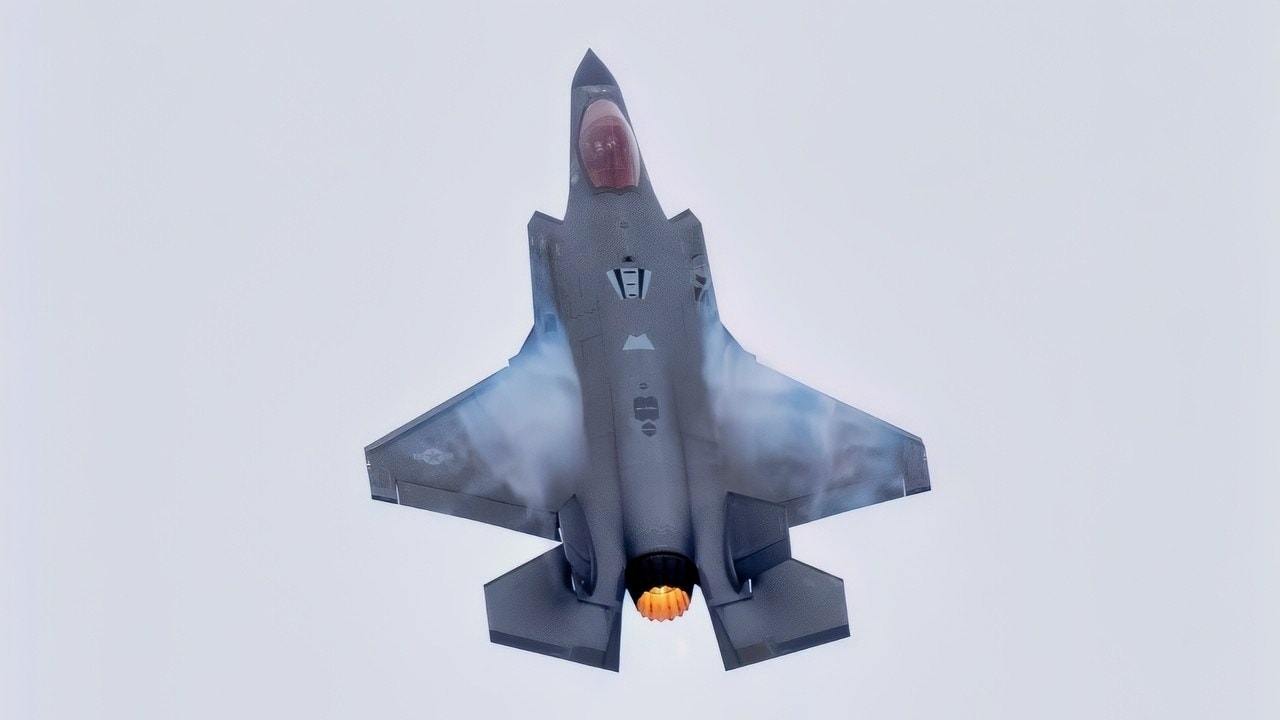
U.S Air Force Captain Kristin “BEO” Wolfe, F-35A Lightning II Demonstration Team Commander, flies during a demonstration at the Oregon International Airshow in McMinnville, Ore., Aug. 20, 2022. The F-35 Demo team travels around the United States and around the world, showcasing the world’s most technologically advanced fifth-generation fighter jet. (U.S. Air National Guard photo by Master Sgt. John Winn)
-This push for sovereign technology surfaces amidst diplomatic friction between PM Mark Carney and the Trump Administration regarding Canada’s 5th-generation commitments.
Canada’s Sovereign “Wingman”: Dominion Dynamics Unveils the ACP for F-35 Operations
The Canadian government’s dilemma over whether to continue purchasing the fifth-generation F-35 stealth fighter jet, or cut its order in favor of the 4.5-generation Swedish-built JAS 39 Gripen goes on.
The Royal Canadian Air Force (RCAF) has already made a financial commitment to purchase 30 F-35A airframes, with the first 8 specimens to be delivered in the coming months to Luke Air Force Base, Arizona, where Canadian fighter jocks will begin immediate training.
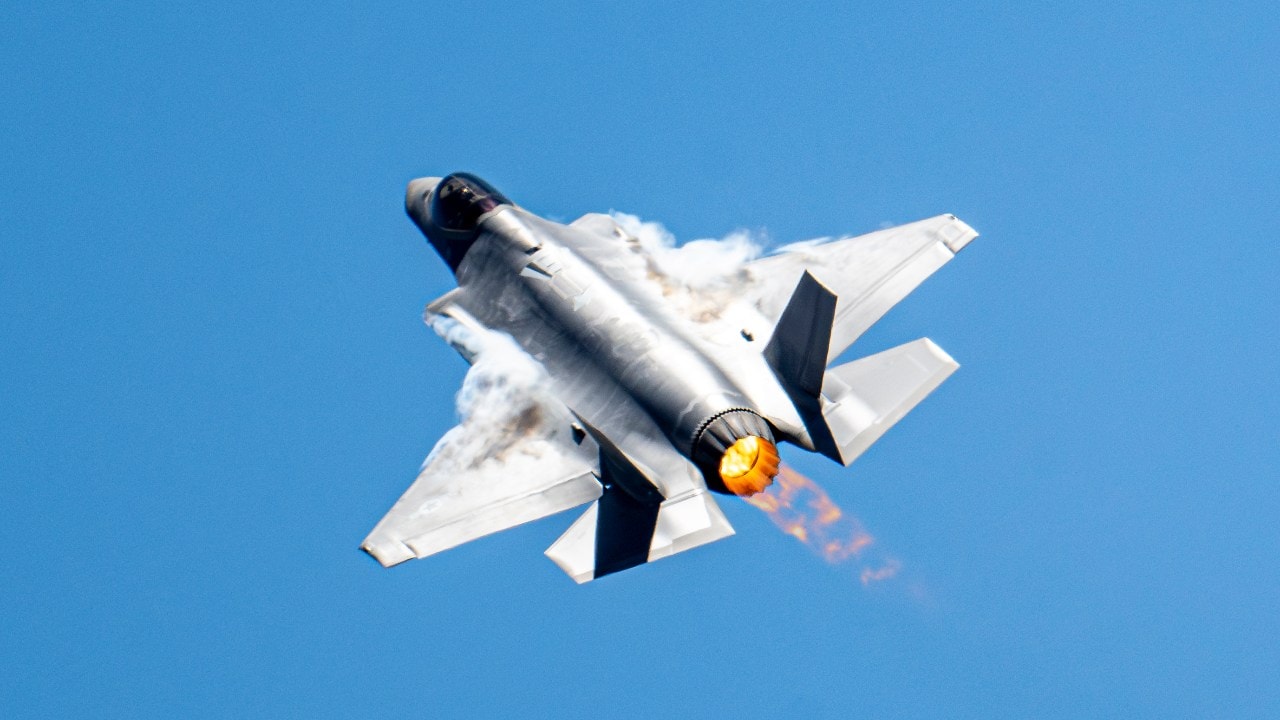
U.S. Air Force Maj. Melanie “Mach” Kluesner, pilot of the F-35A Demonstration Team, performs aerial maneuvers at the Wings and Eagles Airshow at Kingsley Field, Oregon, on July 19, 2025. The demonstration team travels across the country to showcase the power and precision of the world’s most advanced 5th-generation fighter jet. (U.S. Air Force photo by Senior Airman Nicholas Rupiper)
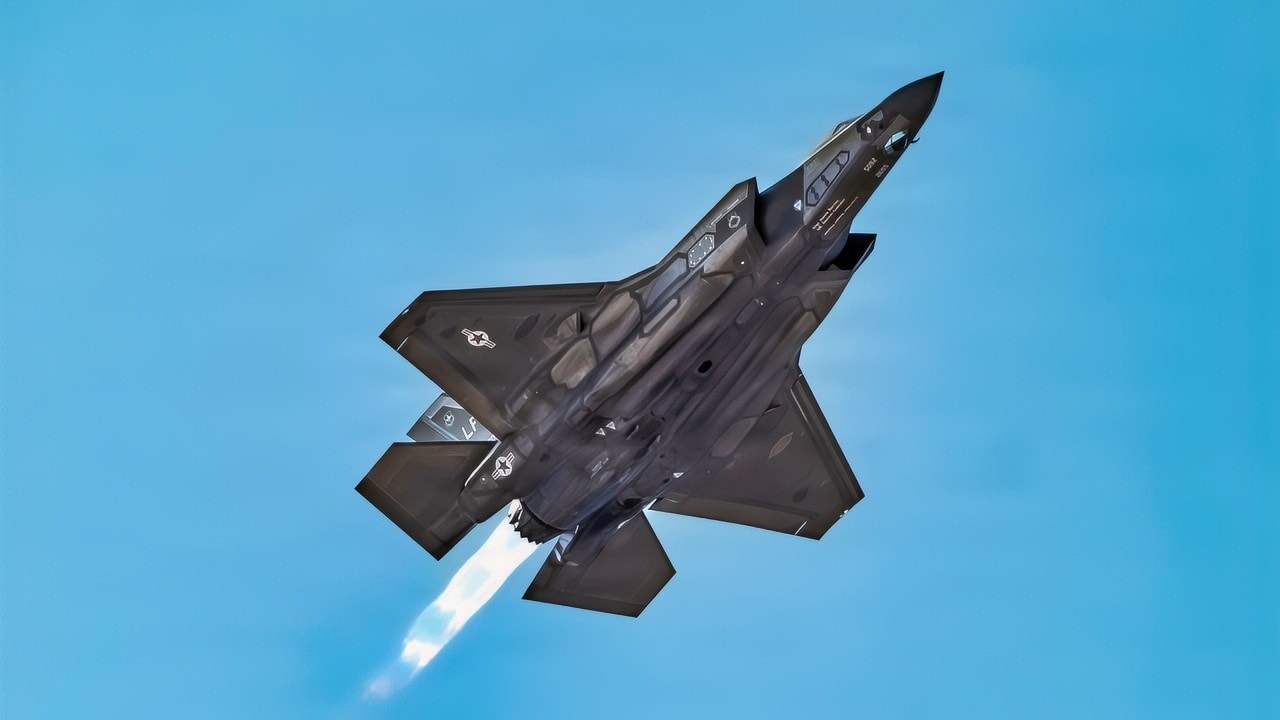
A U.S. Air Force F-35A Lightning II, assigned to the 56th Fighter Wing, takes flight, Nov. 26, 2025, at Luke Air Force Base, Arizona. The F-35A’s is designed for missions ranging from air superiority and electronic warfare. The 56th FW’s training programs emphasize interoperability, ensuring F-35A pilots can effectively collaborate with partner nations to achieve shared objectives. (U.S. Air Force photo by Airman 1st Class Belinda Guachun-Chichay)
For good measure, these Canadian Lightning IIs are now getting a specialized drone to make them even deadlier and more versatile.
Bottom Line Up Front (BLUF): Canada and the F-35
This latest development comes to us courtesy of Jérôme Brahy for Army Recognition:
“On March 5, 2026, the Canadian company Dominion Dynamics announced a $50 million investment to initiate the development of a sovereign Autonomous Collaborative Platform (ACP), an uncrewed aircraft intended to operate alongside crewed fighter jets such as the F-35 or the Gripen. The ACP is conceived as an autonomous wingman designed to extend the operational range of fighters and enable missions in environments considered too dangerous or too distant for human pilots. The project aims to establish Canada’s first domestically designed collaborative combat aircraft (CCA), capable of operating as part of networked formations involving crewed fighters, surveillance aircraft, and ground control nodes.”
The ACP is intended to conduct missions including persistent surveillance, electronic warfare (EW), and strike support while preserving aircrew and expensive aircraft. (Training the aircrew is also plenty expensive.)
Dominion Dynamics Company and CEO Profile
Dominion Dynamics isn’t exactly a household name in the defense industry like Lockheed Martin, Saab, or Boeing—so who are they exactly?
Headquartered in Ottawa—with branches in Toronto and Kingston—Dominion Dynamics is, per the company’s official info page, “Backed by Canadian private capital, including top entrepreneurs and leading venture funds, Dominion is building the digital backbone for next-generation command and control. Our team includes veterans of Anduril, Amazon, Google, and the Canadian Armed Forces, combining Silicon Valley speed with Waterloo-grade engineering and a deep national security focus.”
The company was founded by current CEO Eliot Pence with the intent of developing sovereign defense technologies adapted to Canadian operational requirements, particularly in remote environments such as the Arctic.
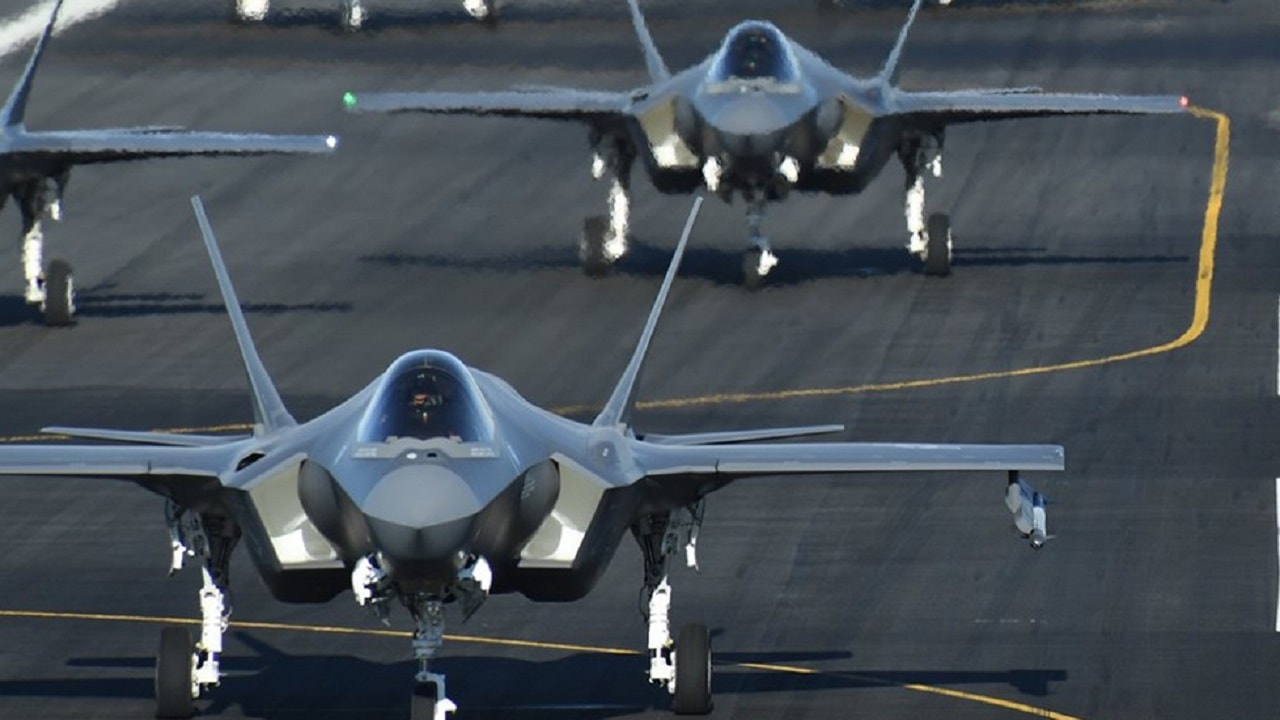
The active duty 388th and Reserve 419th Fighter Wings conducted an F-35A Combat Power Exercise with 52 aircraft at Hill AFB, Utah, Jan. 6, 2020. 388th Fighter Wing photo via Facebook.
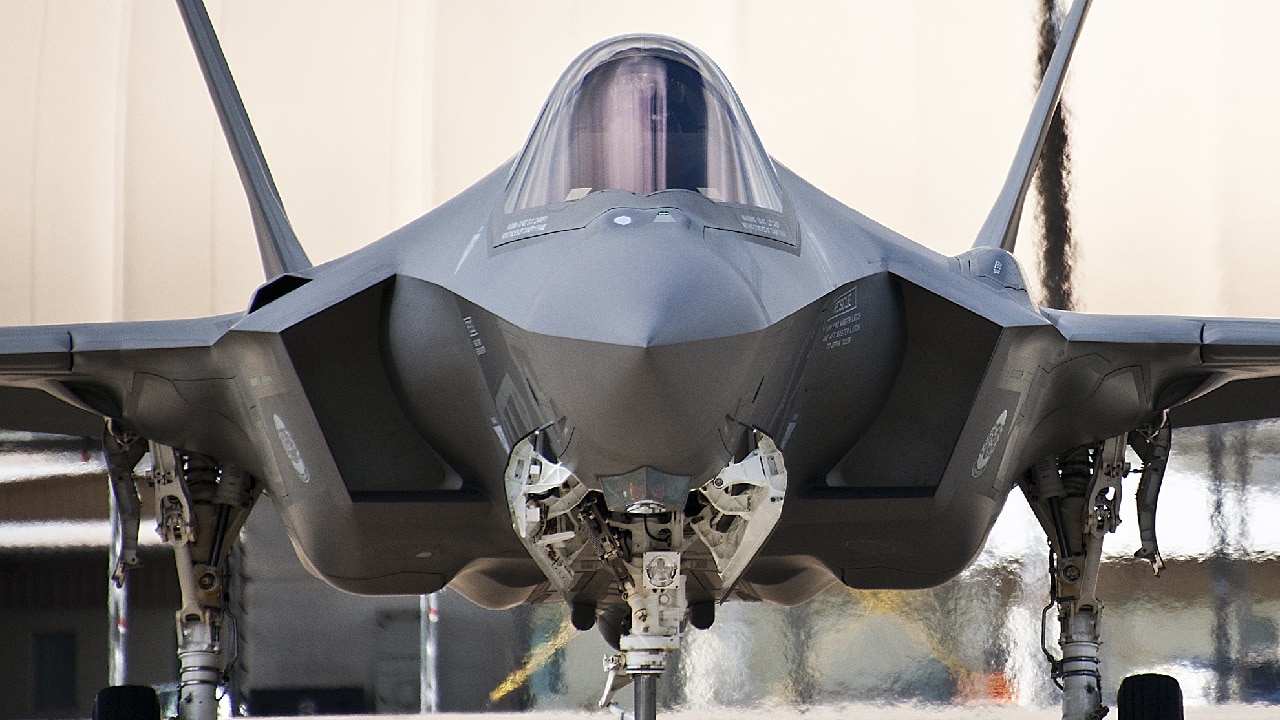
An F-35A Lightning II pilot turns his aircraft along the yellow taxi line on the 33rd Fighter Wing flightline at Eglin Air Force Base, Fla. (U.S. Air Force photo by Samuel King Jr./Released)
In other words, the company could at least partially wean Canada off of its heavy dependence on U.S.-made military technologies.
That’ll be music to the ears of Canadian Prime Minister Mark Carney, whose dislike and distrust of U.S. President Donald Trump is a major factor in Canada’s flirtation with the notion of bugging out on the F-35.
The Way Forward for ACP and the RCAF F-35
The first development phase of the ACP program centers on the creation of scaled prototypes before moving to a full-scale aircraft within a projected 24 to 36 months.
This development effort runs concurrent with Canada’s Future Fighter Capability Project, which aims to replace the RCAF’s aging and increasingly dilapidated fleet of CF-18 Hornet fighters.
Meanwhile, the first operational RCAF F-35 unit is expected to arrive on Canadian soil in 2028. Political tizzies with Trump notwithstanding, Canada has already purchased movable facilities to house F-35 jets and maintenance equipment until permanent hangars are finally constructed in 2031.
About the Author: Christian D. Orr, Defense Expert
Christian D. Orr is a Senior Defense Editor. He is a former Air Force Security Forces officer, Federal law enforcement officer, and private military contractor (with assignments worked in Iraq, the United Arab Emirates, Kosovo, Japan, Germany, and the Pentagon). Chris holds a B.A. in International Relations from the University of Southern California (USC) and an M.A. in Intelligence Studies (concentration in Terrorism Studies) from American Military University (AMU). He is also the author of the newly published book “Five Decades of a Fabulous Firearm: Celebrating the 50th Anniversary of the Beretta 92 Pistol Series.”