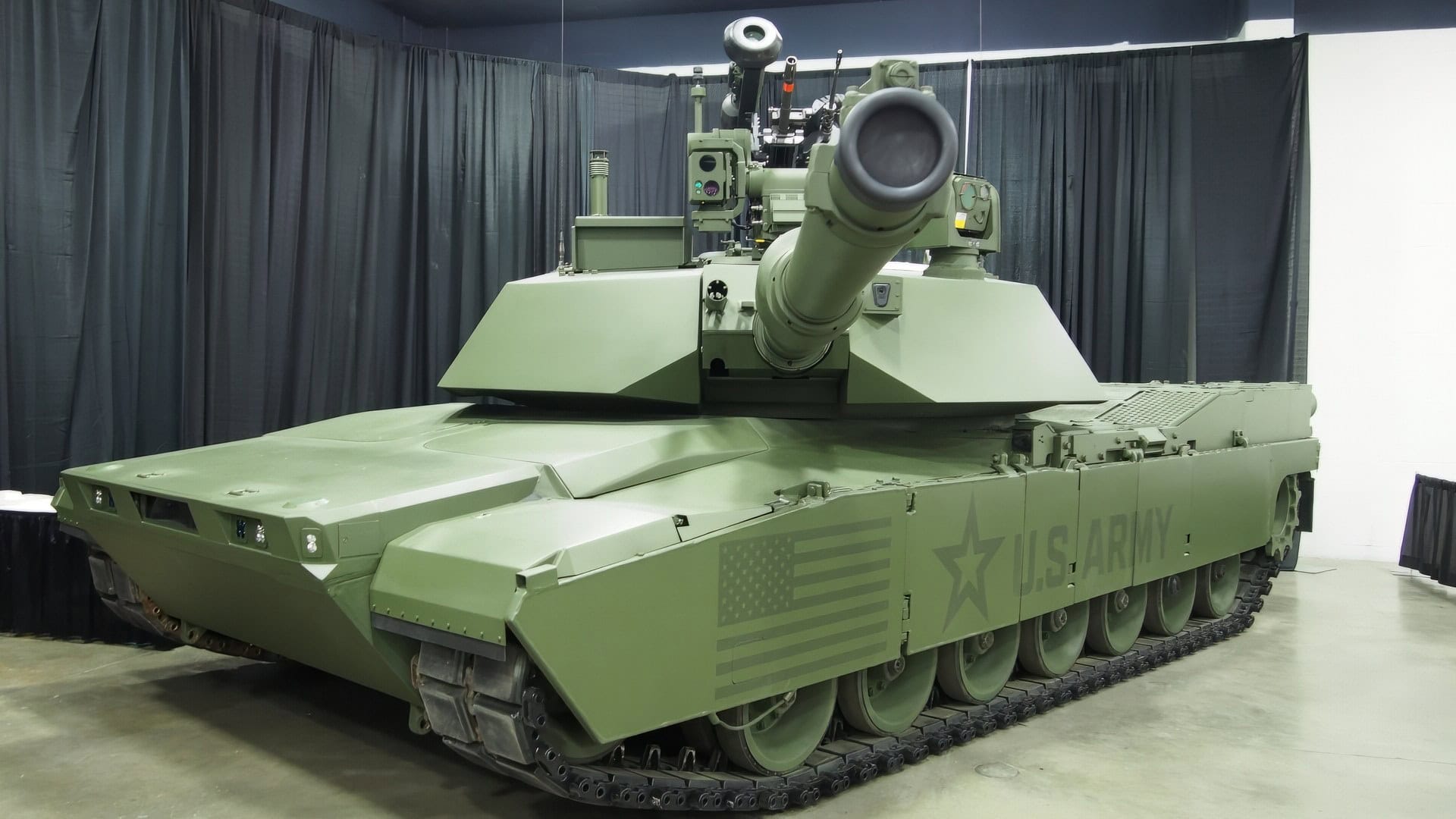
Summary and Key Points: Defense expert Brandon J. Weichert breaks down the U.S. Army’s M1E3 Abrams, which may be America’s last main battle tank — or its most important reinvention.
-Lighter than 60 tons, hybrid-powered, and built to survive drone-saturated battlefields like Ukraine, the M1E3 abandons the old formula of adding armor and weight.
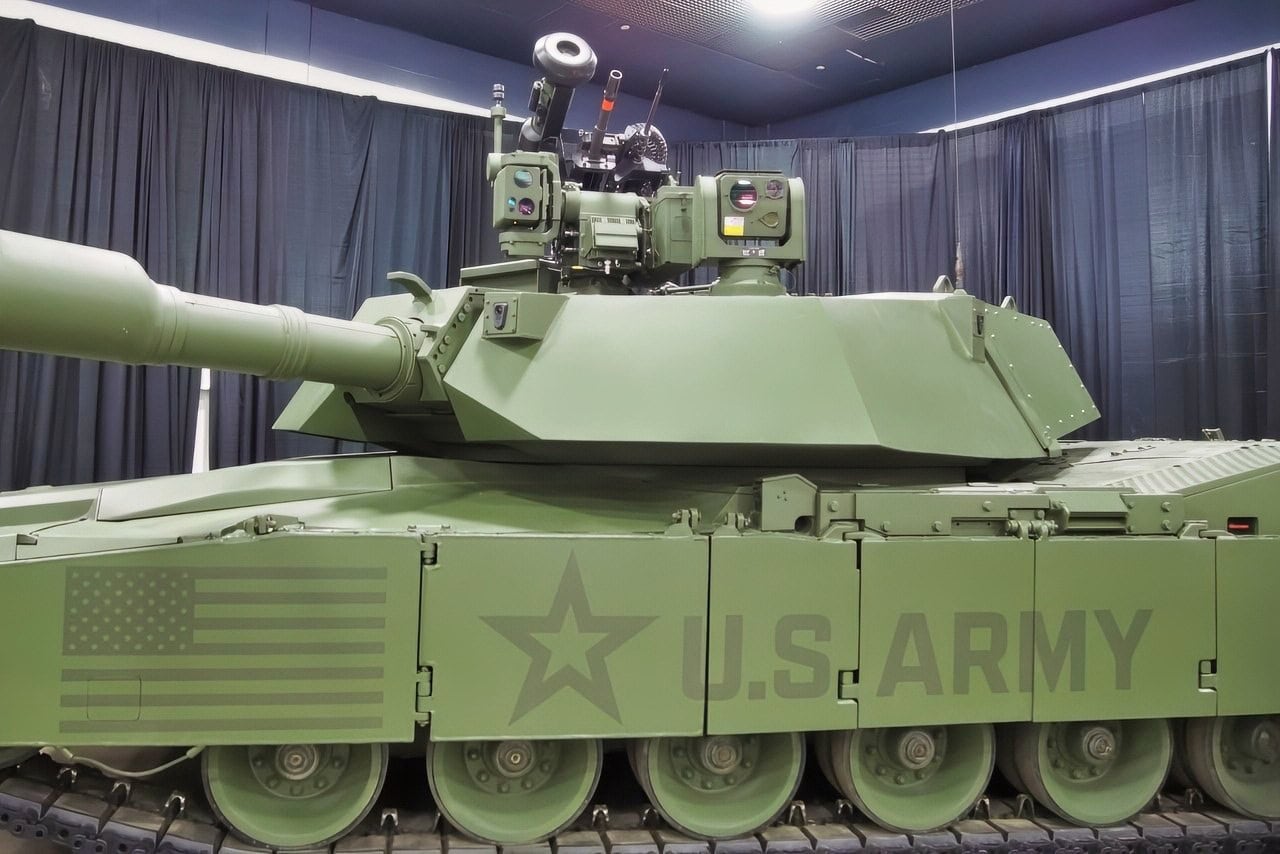
M1E3 from the Detroit Auto Show. Taken by 19FortyFive.com on 1/17/2026.
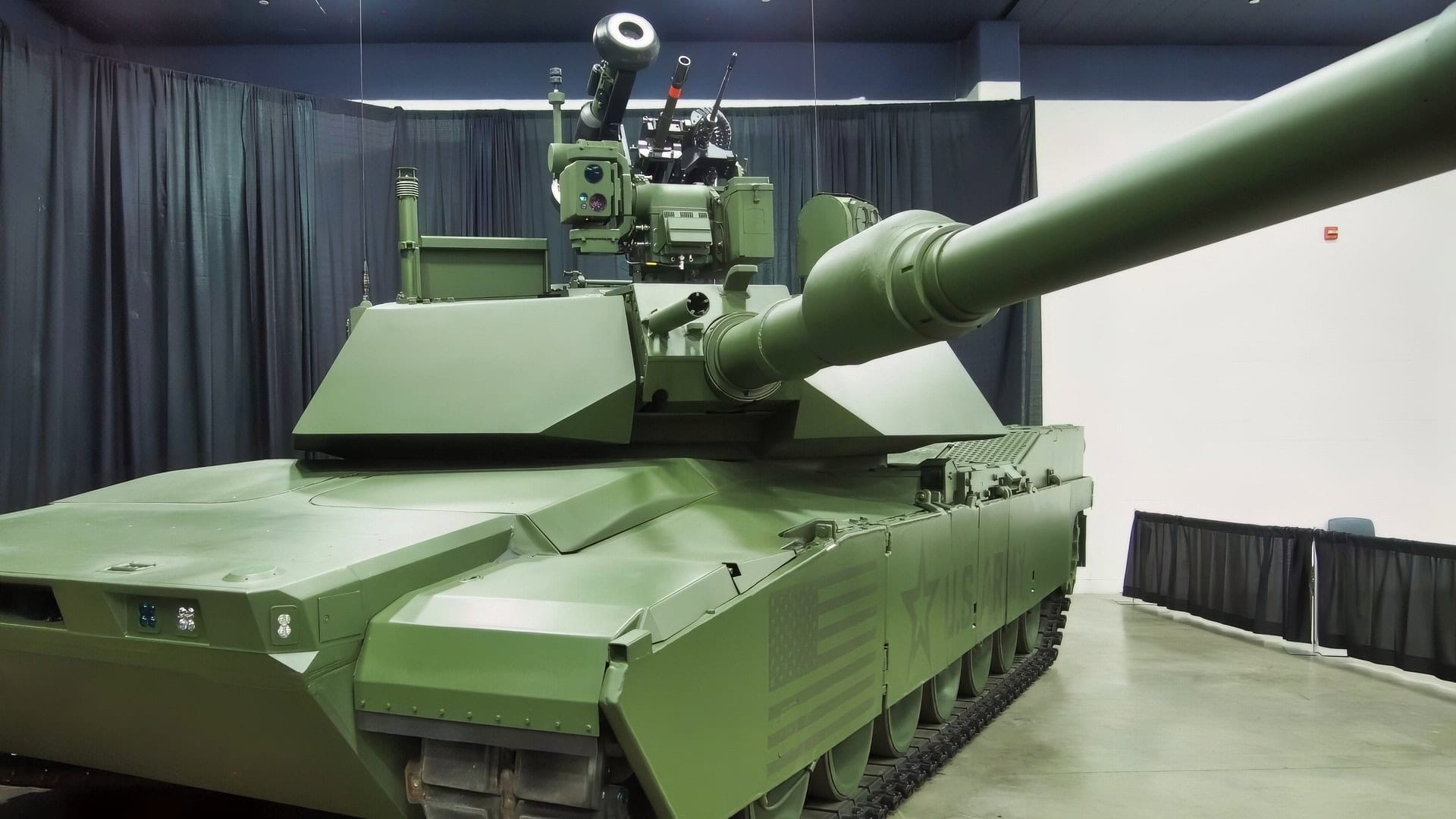
At the Detroit Auto Show, 19FortyFive visited the new M1E3 tank. Image Credit: 19FortyFive.com.
-Instead, it trades protection for speed, silence, and modularity. But the hard question remains unanswered: can any tank survive under a sky that never stops watching?
-Without a survivable M1E3, the Army loses its only mobile protected direct-fire system for close combat. Drones can scout and kill. Infantry can hold ground. Neither can replace the tank.
-Bonus: All photos are from 19FortyFive’s recent visit to see the U.S. Army’s new M1E3 Abrams at the Detroit Auto Show.
Is the M1E3 Abrams America’s Last Main Battle Tank?
The U.S. Army is trying to redesign its Abrams main battle tank for a battlefield transformed by cheap drones, pervasive intelligence, and precision strike.
The M1E3 Abrams MBT is not just an incremental tweak by Big Green, though it carries the name of its predecessor.
Faster, Quieter, and More Modular
The M1E3 is designed to be lighter, faster, quieter, and more modular. The Pentagon thinks these new capabilities, integrated into the overall new design, will increase survivability and mobility and reduce the burden on the U.S. military logistics chain.
In essence, the Army abandoned its old formula of simply adding more armor and weight to mechanized forces. The target weight for the M1E3 was under 60 tons. The Army wanted either a hybrid engine or a hybrid-capable powertrain that would not drain as much fuel and would create lower thermal and acoustic signatures.
The Army also wanted a better integrated active protection system for survivability, a possible autoloader to augment a smaller crew of three, and an optionally manned or unmanned turret structure.
The Main Battle Tank: Obsolete or Time for a New Role?
During a December interview, retired U.S. Army Lieutenant Colonel Daniel L. Davis, the former armor officer, explained his reading that the MBT was not going away from the modern, contested battlefield, as many analysts have been arguing since the outbreak of the Ukraine War. Instead, Davis asserted, the role of MBTs would be different.
Rather than being the tip of the proverbial spear in land warfare, tanks would take on a more support role, akin to long-range, mobile artillery support for ground forces engaged in combat.
Toward that end, the M1E3 is apparently designed to incorporate many of these observations. That’s why the Army is integrating so many electronic warfare (EW) capabilities into its overall design.
Because the Army anticipates the M1E3 performing more of a mobile fire-support role for other units engaged in combat on electronically degraded, drone-intensive battlefields, the Army has reduced armor and increased speed on this new system.
Why the Army Wants a Hybrid Engine in the New Abrams (We Saw It Up Close)
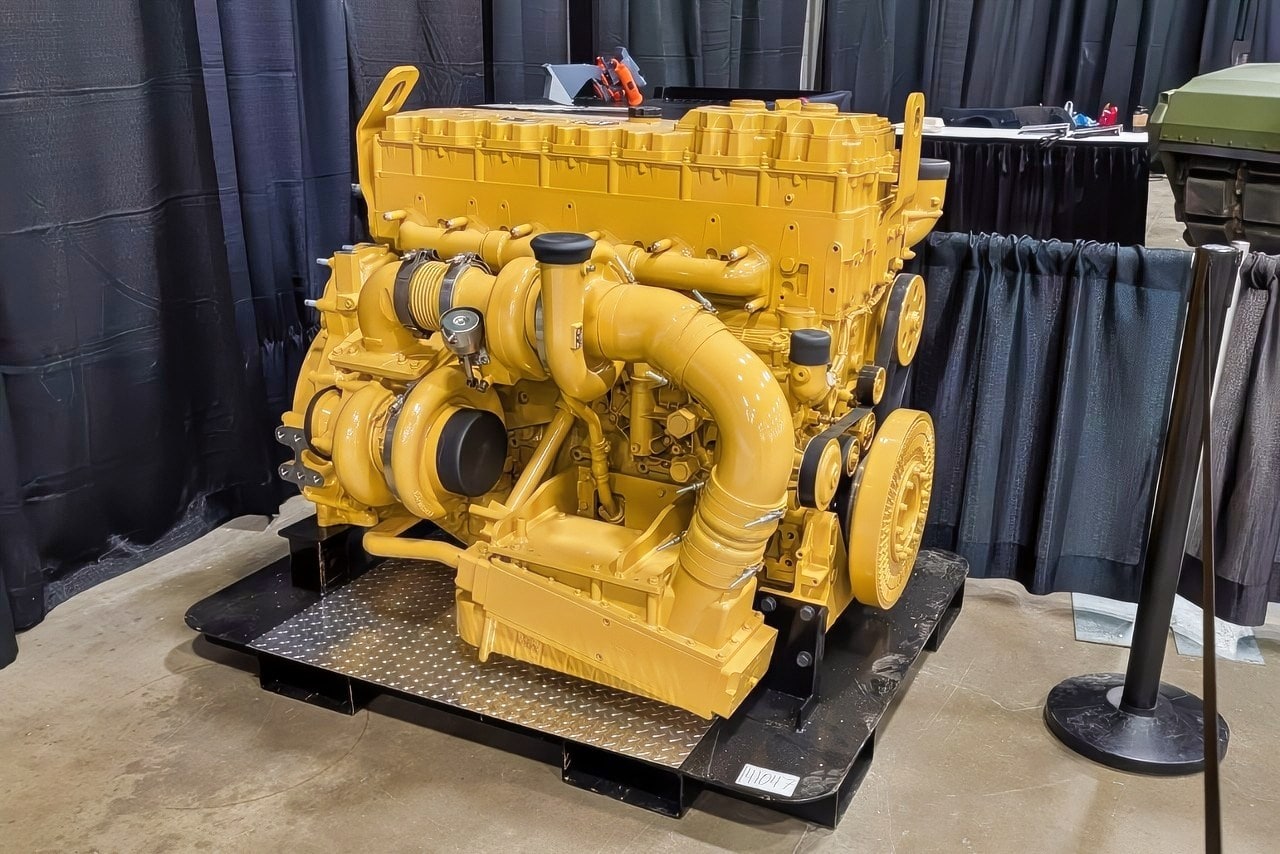
M1E3 Tank at the Detroit Auto Show. Image Credit: 19FortyFive.
According to Task & Purpose, the key element of this system is its hybrid powertrain.
The current turbine-powered Abrams is a loud, hot, fuel guzzler. Hybrid-electric powertrains would drastically reduce the new Abrams’ signature and let crews run systems without needing to idle the engine.
In the kind of intensive modern combat we’ve seen now dominate the killing fields of Ukraine, the Army seems to have the right idea.
All this sounds great. Yet, the Pentagon’s acquisitions process is slow and heavily bureaucratic. We still don’t know if we have seen the final design for the M1E3, or if the Army is going to tweak the design, perhaps considerably. Just look at what happened recently with the Navy’s Constellation-class frigate.
Like the new Abrams, it was meant to be a more practical system that was still relevant to today’s battlefields. Sadly, the Navy’s bureaucracy effectively destroyed the program by constantly changing the design and requirements to better meet their bureaucratic standards—after the steel for the hull had already been cut.
A Case for Optimism?
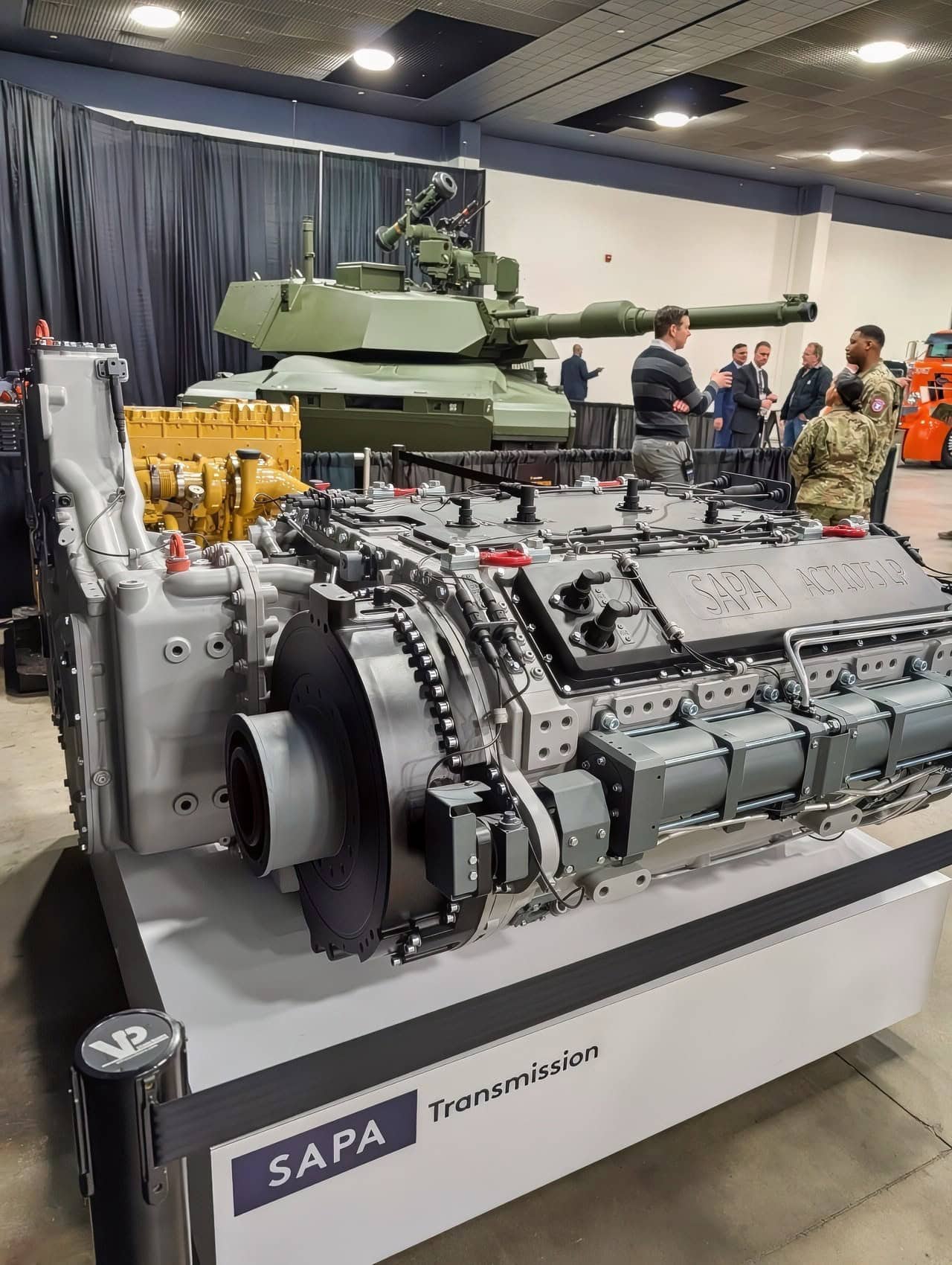
M1E3 Tank at the Detroit Auto Show. Image Credit: 19FortyFive.
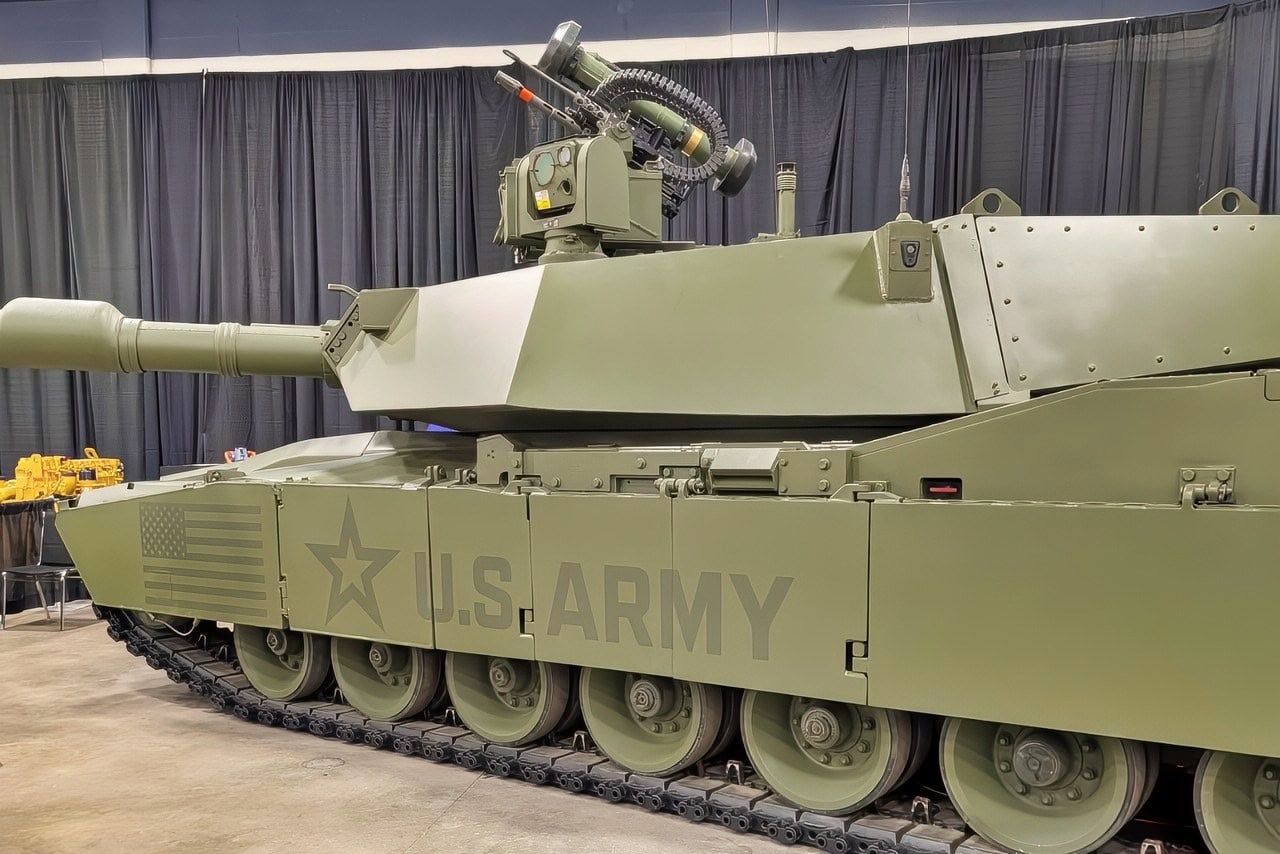
M1E3 Tank at the Detroit Auto Show. Image Credit: 19FortyFive.
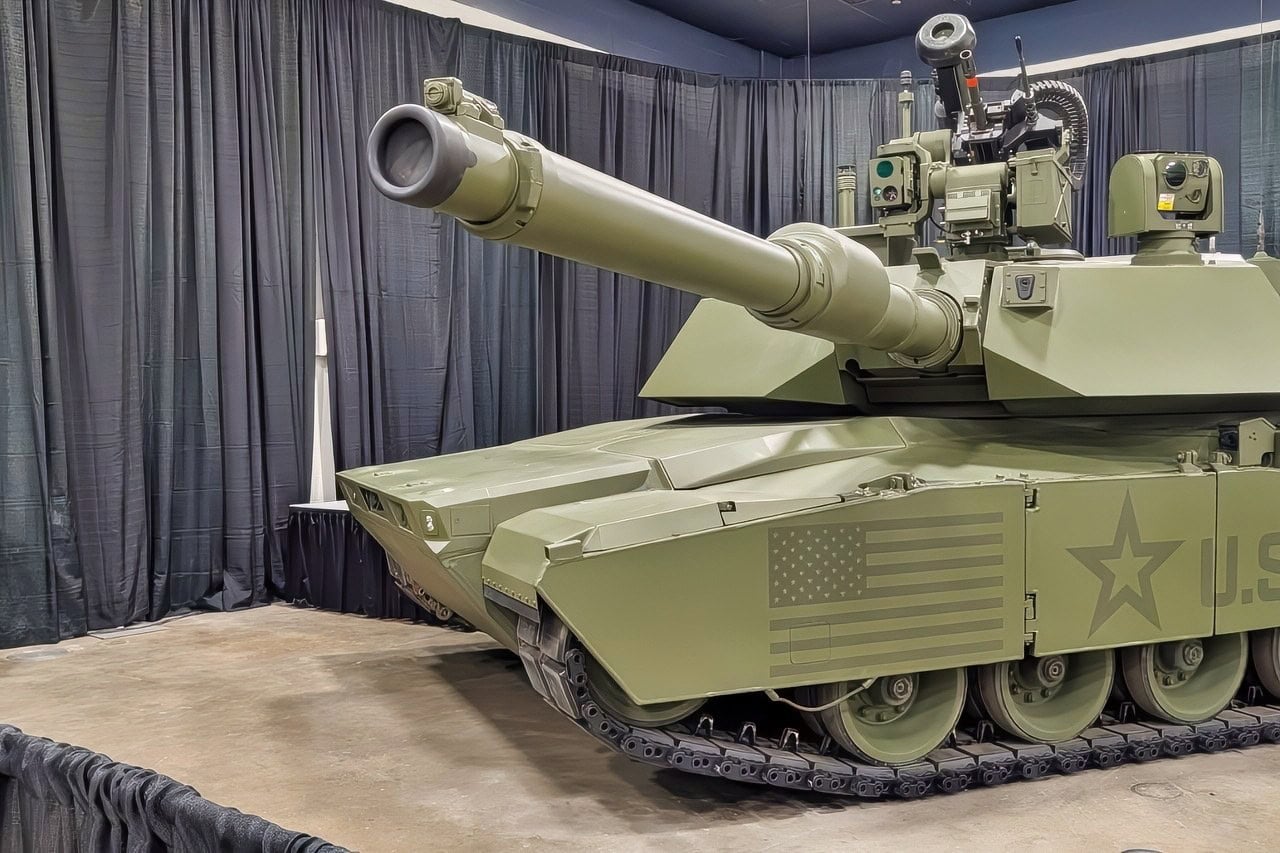
M1E3 Tank at the Detroit Auto Show. Image Credit: 19FortyFive.com
Fox News, however, is more optimistic about this system. A recent op-ed highlights that the M1E3 is arriving “five years ahead of schedule,” with the author of the piece highlighting the “hybrid-drive silent killer.”
Fox goes deeper, celebrating the advent of the silent mode, the presence of remote weapons, active protection, reduced signature, and the reduced weight. The piece further notes that the lighter size allows for the new tank to have greater bridge access in Eastern Europe.
But the greater question remains: Can heavy armor be redesigned to survive long enough to matter under constant aerial observation and attack? The Army thinks the answer to this query is unequivocally “yes,” which is why the service is so keen to develop the M1E3.
But how good are the M1E3’s counter-drone systems?
That remains to be seen.
Defending Against Drones
U.S. defenses against Iranian Shahed-style drones in the ongoing Iran War are using rounds that cost millions of dollars each to strike drones that cost $100,000 at most.
Given the extreme imbalance of defense against drones versus attacking with drones, the greater question becomes, how sustainable would any anti-drone defenses for the M1E3 be?
Nevertheless, the Army is still required to take—and hold—ground, should it ever be called into action.
What If America Didn’t Use Tanks in Modern War?
If not the tank, the Army would need to create an entirely new way of breaking through enemy formations.
First, the Army would need massive drone and intelligence, surveillance, and reconnaissance (ISR) coverage to locate enemy positions, minefields, EW nodes, and artillery. Then, intense suppression from long-range fires, attack aviation, loitering munitions, EW, and engineers would be employed.
The Army would then need to deploy infantry, Bradley infantry fighting vehicles, and older tanks—all moving carefully under constant drone overwatch, smoke, deception, camouflage, jamming, and active counter-unmanned aerial system cover. Then a laborious consolidation phase would be needed to keep the ground once taken.
It’s all still combined arms, just without the new MBT—and with the MBT drastically reduced in doctrinal importance. It is combined arms with less protected shock action. And, if you can believe it, worse odds for success.
Without a survivable tank, the Army loses its best mobile protected direct-fire system for the final close fight. Infantry can clear and occupy, artillery suppresses, drones scout and kill, but none of those are substitutes. They do not provide the same level of armor protection, shock effect, breaching support, and immediate direct fire against bunkers, strongpoints, enemy IFVs, and counterattacking armor.
Breaking Defense interviewed US Army Brigadier General Geoffrey Norman recently and he explained how the future tank must survive close combat at 100 meters. The Army is building the M1E3 because it still needs to close with the enemy and stay there.
The Tank: Still Needed But Not Nearly as Important as It Once Was
So the talk about the tank’s obsolescence may be overstated, and the Army could still take ground without the M1E3. But it would struggle to hold it at an acceptable cost against a peer. In the drone age, tanks are no longer enough by themselves.
But in a war over territory, drones alone are not enough. The M1E3 exists because the Army thinks future battlefields still require armor—just armor redesigned to survive under an always-watched sky.
About the Author: Brandon J. Weichert
Brandon J. Weichert is the Senior National Security Editor at 19FortyFive.com. Recently, Weichert became the editor of the “NatSec Guy” section at Emerald.TV. He was previously the senior national security editor at The National Interest. Weichert is the host of The National Security Hour on iHeartRadio, where he discusses national security policy every Wednesday at 8pm Eastern. He hosts a companion show on Rumble entitled “National Security Talk.” Weichert consults regularly with various government institutions and private organizations on geopolitical issues. His writings have appeared in numerous publications, among them Popular Mechanics, National Review, MSN, and The American Spectator. And his books include Winning Space: How America Remains a Superpower, Biohacked: China’s Race to Control Life, and The Shadow War: Iran’s Quest for Supremacy. Weichert’s newest book, A Disaster of Our Own Making: How the West Lost Ukraine, is available for purchase wherever books are sold. He can be followed via Twitter/X @WeTheBrandon.