Summary and Key Points: Drawing on his expertise as a national security consultant and author of The Shadow War, Senior Editor Brandon J. Weichert warns that the ongoing U.S. struggle to reopen the Strait of Hormuz during the 2026 Iran War is providing a dangerous blueprint for Beijing.
-Weichert argues that China is studying Washington’s reluctance to commit ground forces and applying those lessons to a potential blockade of the Taiwan Strait.

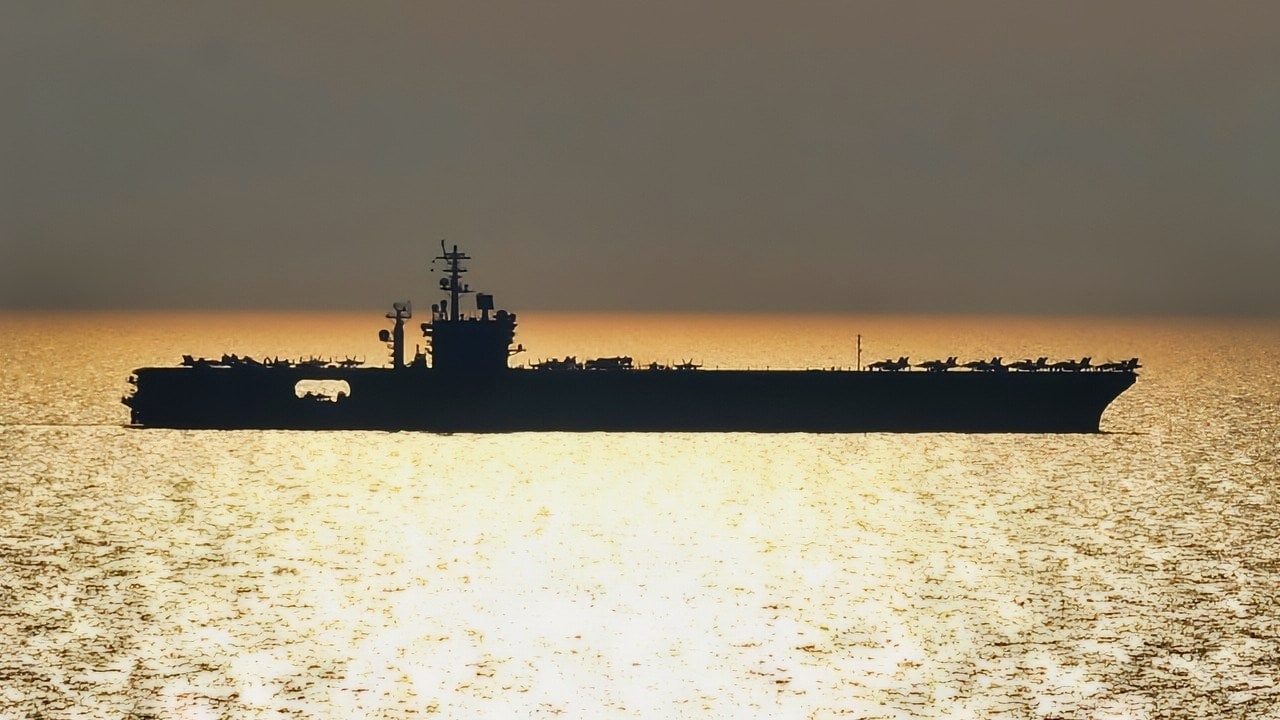
120511-N-WO496-003 STRAIT OF HORMUZ (May 11, 2012) Guided-missile cruiser USS Cape St. George (CG 71) and aircraft carrier USS Abraham Lincoln (CVN 72) transit the Strait of Hormuz. Both ships are deployed to the U.S. 5th Fleet area of responsibility conducting maritime security operations, theater security cooperation efforts and support missions as part of Operation Enduring Freedom. (U.S. Navy Photo by Mass Communication Specialist 3rd Class Alex R. Forster/Released)
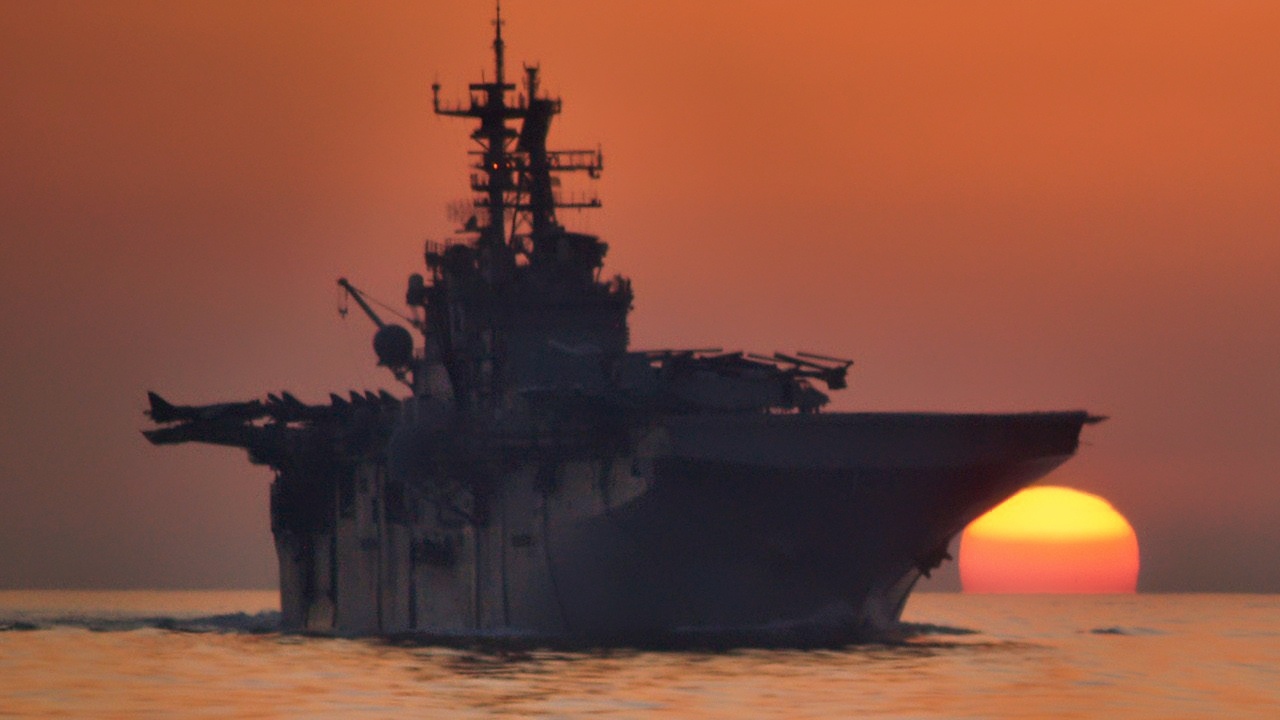
The amphibious assault ship USS Bataan (LHD 5) transits the Strait of Hormuz.
-With roughly $2.45 trillion in maritime trade and 90 percent of the world’s advanced semiconductors from TSMC flowing through this chokepoint, a Chinese blockade designed to trigger U.S. economic collapse could prove catastrophic.
The Hormuz Blueprint: How Beijing is Studying the 2026 Iran War
The United States finds that it has kicked the geopolitical equivalent of a hornet’s nest with the Iran War.
Now, the Trump administration is contemplating deploying thousands of U.S. troops to the Middle East for “reinforcements” of America’s fading position in the region.
There are even whispers that the 47th president is considering ordering a Marine Expeditionary Unit to try to land and take part of the Iranian coastline so that the Marines can impose sea control on the Strait of Hormuz.
Of course, this will end in disaster.
Understanding the Importance of Training
But there are wider lessons to be learned here about how any conflict with China might erupt … and whether the United States could do anything constructive to deter China from attempting to blockade the Taiwan Strait.
According to the Center for Strategic and International Studies (CSIS), in 2022, about 44 percent of the world’s container fleet passed through the Taiwan Strait. CSIS assessed at that time that China’s reliance on the Taiwan Strait for moving its goods was around 21.6 percent of China’s total trade profile.
Meanwhile, Al Jazeera reports that 80 percent of China’s imports pass through the Taiwan Strait. Roughly $2.45 trillion worth of goods—one-fifth of global maritime trade—pass through the Taiwan Strait.
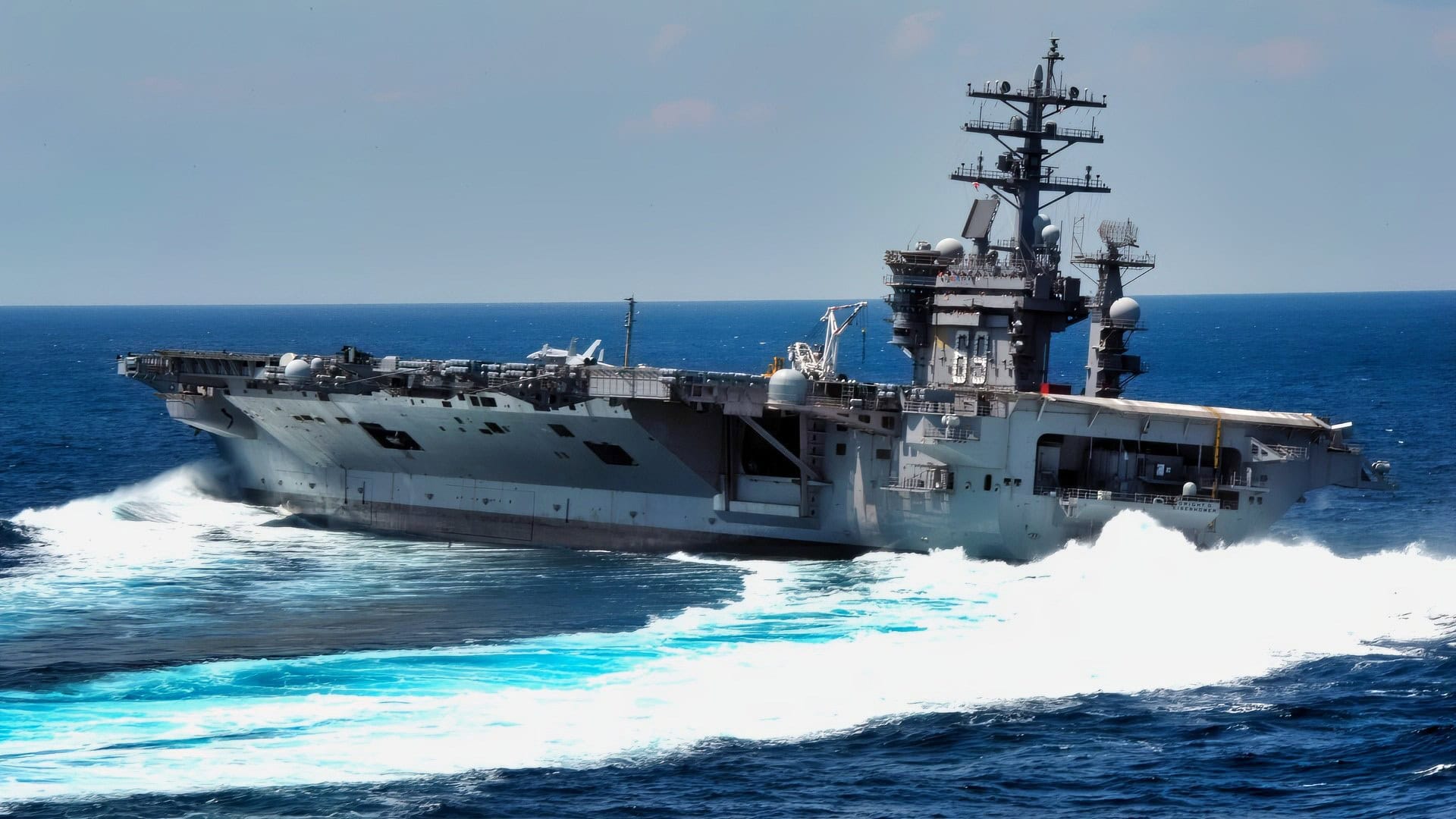
The Nimitz-class aircraft carrier USS Dwight D. Eisenhower conducts rudder turns during sea trials. Dwight D. Eisenhower completed a nine-month planned incremental availability at Norfolk Naval Ship Yard on June 10 and is scheduled to resume underway operations this summer.
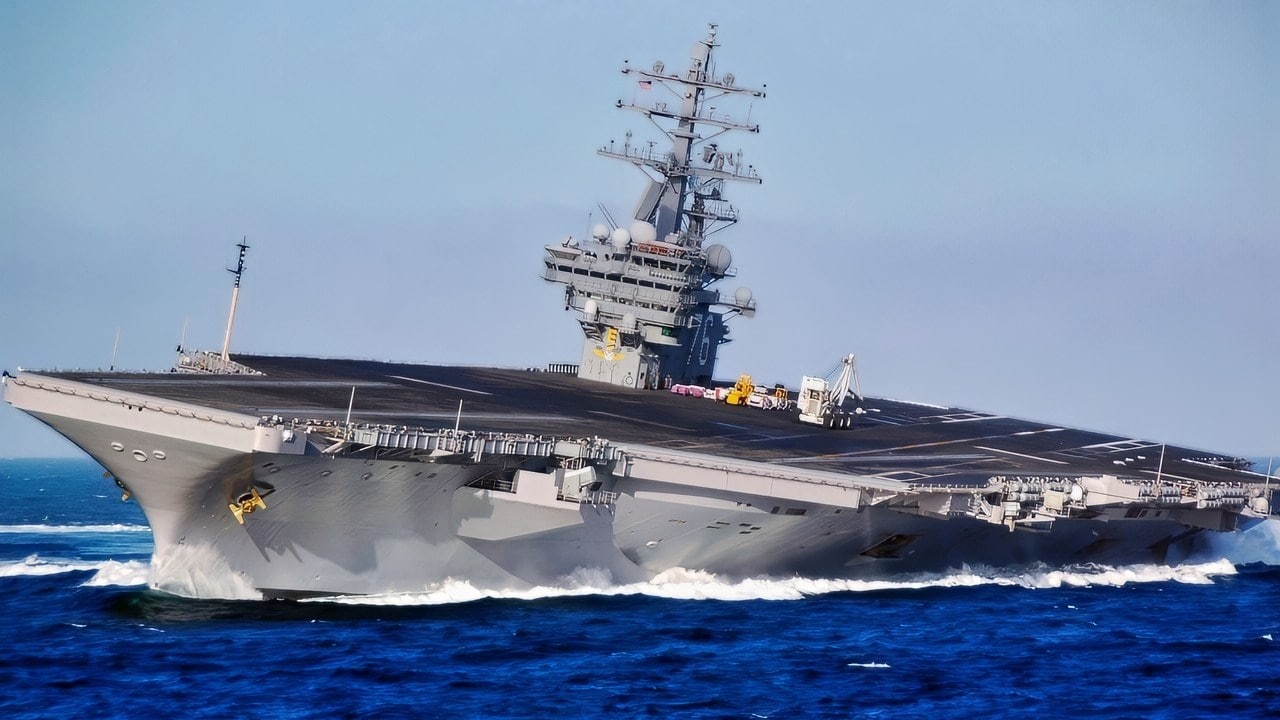
PACIFIC OCEAN (Oct. 30, 2007) – USS Ronald Reagan (CVN 76) conducts rudder checks as part of the ship’s Board of Inspection and Survey (INSURV) following a six-month Planned Incremental Availability. All naval vessels are periodically inspected by INSURV to check their material condition and battle readiness. U.S. Navy photo by Mass Communication Specialist 2nd Class M. Jeremie Yoder (RELEASED)
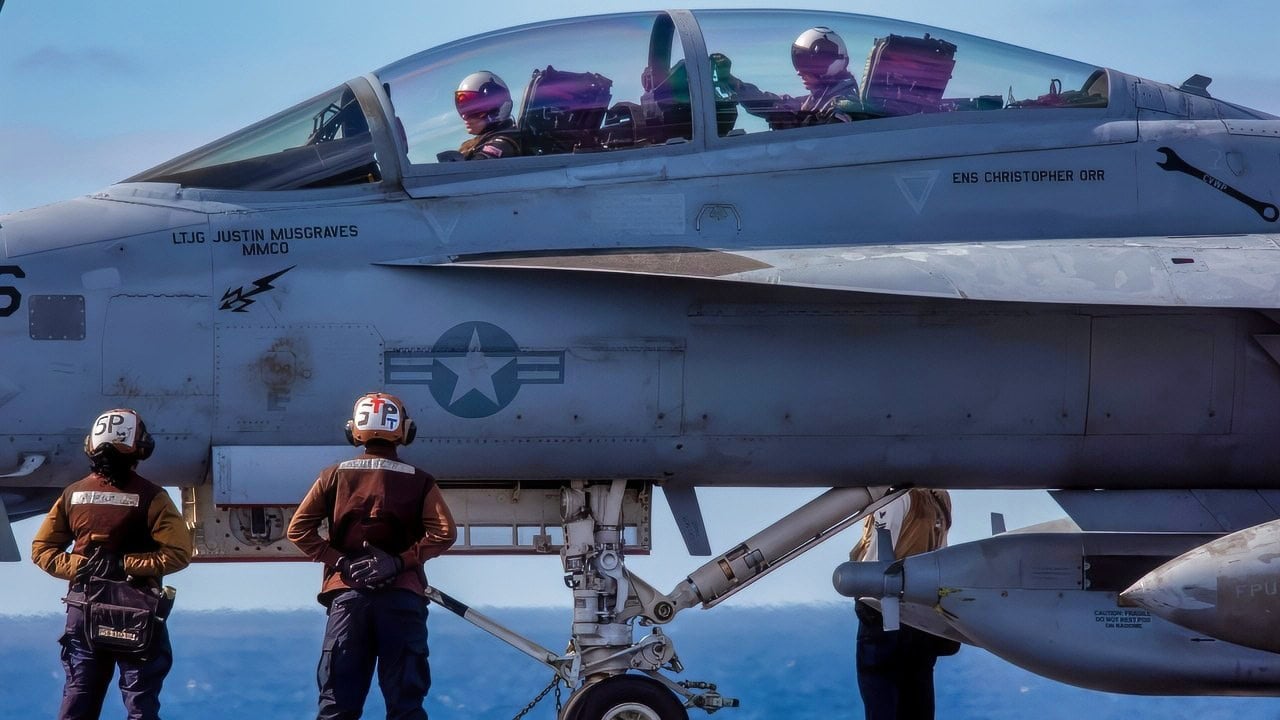
U.S. Navy Sailors prepare to taxi an EA-18G Growler, attached to Electronic Attack Squadron (VAQ) 133, on the flight deck of Nimitz-class aircraft carrier USS Abraham Lincoln (CVN 72) on Nov. 24, 2025. USS Abraham Lincoln (CVN 72), flagship of the Abraham Lincoln Carrier Strike Group, is underway conducting routine operations in the U.S. 3rd Fleet area of operations, demonstrating the U.S. Navy’s long-term commitment to a free and open Indo-Pacific. (U.S. Navy photo by Mass Communication Specialist Seaman Daniel Kimmelman)
The Taiwan Strait is critical for trade involving not only China, but South Korea, Japan, and many African and BRICS nations.
The Role of Semiconductors in the Strait of Hormuz
Because Taiwan Semiconductor Manufacturing Company (TSMC) is based in Taiwan, and since TSMC makes most of the world’s semiconductors, roughly 90 percent of all the world’s semiconductors pass through the Taiwan Strait. Should they be blockaded and/or Taiwan invaded, the likelihood that TSMC would lose the ability to reliably produce and ship its key products increases.
That will have profoundly negative consequences for the global economy, just as the current Iranian blockade of the Strait of Hormuz is having. And like the Iranian blockade of the Strait of Hormuz, the Americans and their allies would be hard-pressed to do anything substantive to reverse a potential Chinese blockade of Taiwan.
The economic damage just might be the point, though. Just as with the Iranians over the Strait of Hormuz, the Chinese understand that the Americans are far more exposed to significant disruptions to the global economy, notably if semiconductors were taken offline for even a short while. The United States would be unlikely to economically survive the fallout from even a short-term blockade of the Taiwan Strait.
CSIS assessed that any Chinese-imposed blockade would initially reduce China’s GDP by about 9 percent. It might be that the Chinese decide that they have enough political stability at home to risk damaging their own GDP to close the strait.
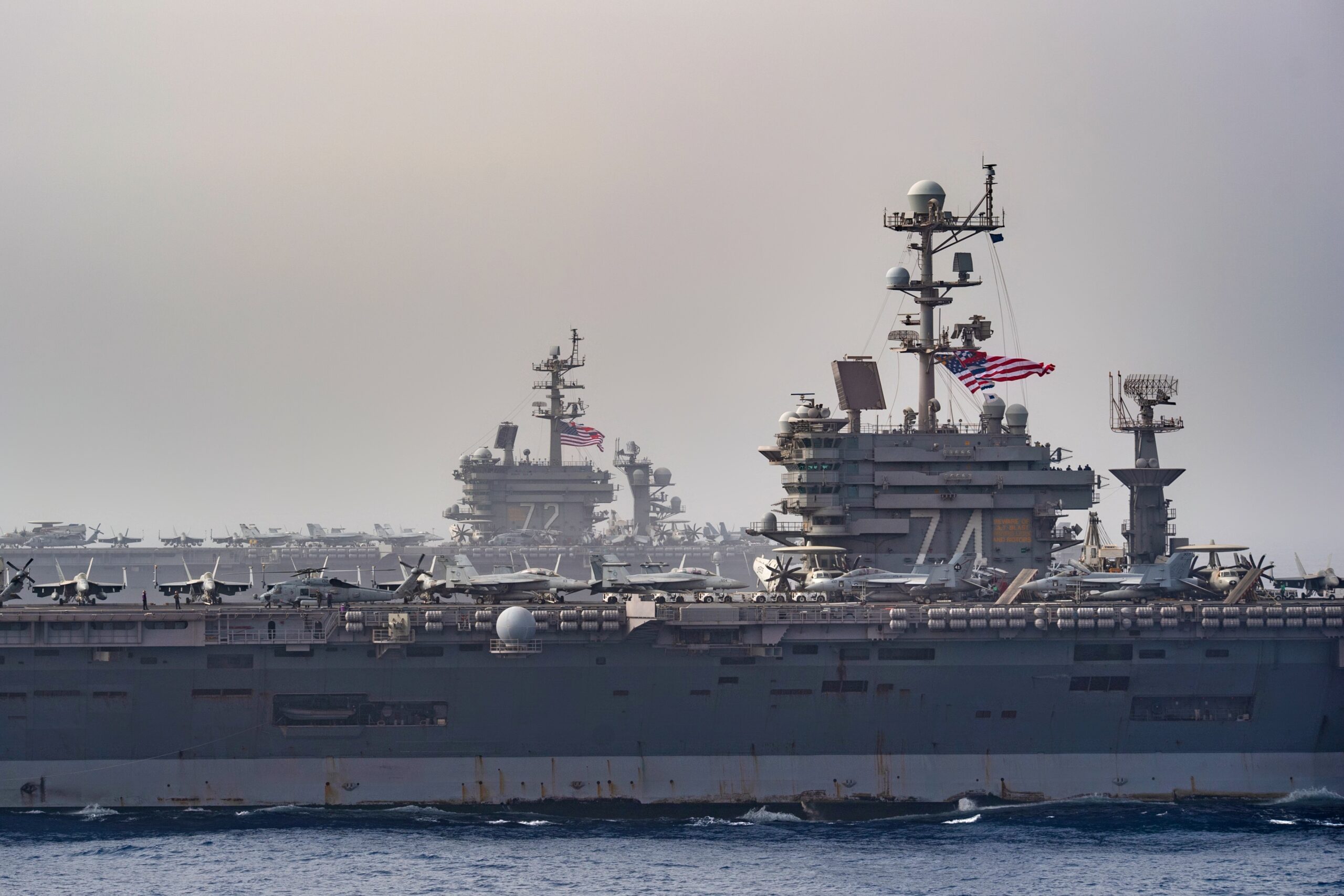
The aircraft carrier USS John C. Stennis (CVN 74) steams alongside the aircraft carrier USS Abraham Lincoln (CVN 72), background, in the Mediterranean Sea, April 24, 2019. The John C. Stennis Carrier Strike Group (CSG) 3 and Abraham Lincoln Carrier Strike Group (CSG) 12 are conducting dual carrier operations, providing opportunity for two strike groups to work together alongside key allies and partners in the U.S. 6th Fleet area of operations. John C. Stennis is underway in the Mediterranean Sea as part of the John C. Stennis Carrier Strike Group (JCSCSG) deployment in support of maritime security cooperation efforts in the U.S. 6th Fleet area of responsibility. (U.S. Navy photo by Mass Communication Specialist 3rd Class Grant G. Grady)
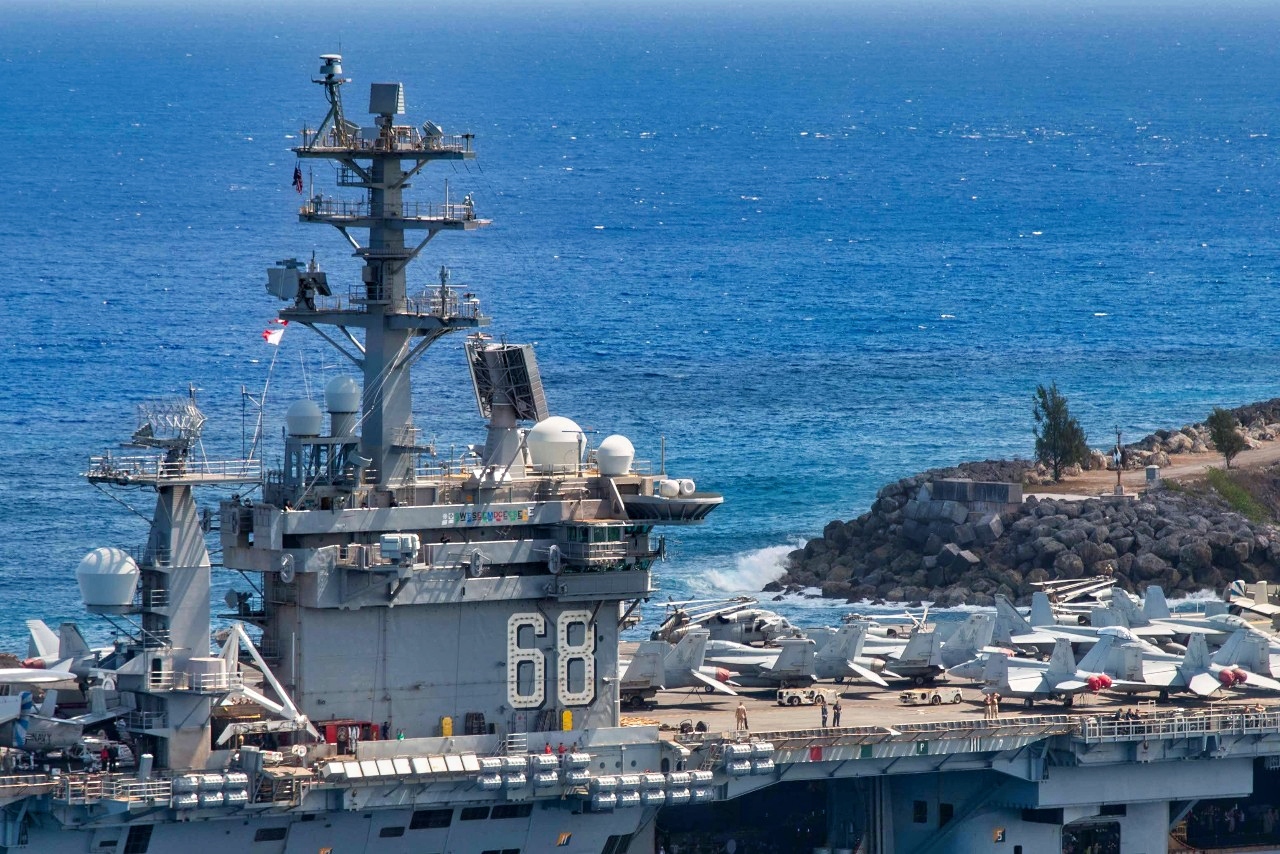
APRA HARBOR, Guam (April 18, 2025) Nimitz-class aircraft carrier USS Nimitz (CVN 68) arrived in Guam for a scheduled port visit, April 18. Nimitz is underway in the U.S. 7th Fleet area of operations on a scheduled deployment, demonstrating the U.S. Navy’s unwavering commitment to a free and open Indo-Pacific. (U.S. Navy Photos by Mass Communication Specialist 1st Class Samantha Jetzer)

Aircraft Carrier. Image Credit: U.S. Navy.
Indeed, China’s own semiconductor production capabilities are not something to look down upon. It is a serious endeavor, and the Chinese are only about a year or two behind the United States in terms of making advanced chips. Once China has acquired that capability, it will be able to build and process semiconductors that are nearly as good as what TSMC is making!
What China Learned from Iran…
Beijing has studied the Iran War. China’s rulers understand that the Americans have no stomach for the kind of fighting required to restore freedom of navigation, and they know they can play on that war weariness. Just as the Iranians know about the Strait of Hormuz.
So, Beijing likely figures that the American military will be resistant to fighting to reopen the Taiwan Strait. Instead, the Americans will hang back, just as they are doing in the Middle East.
The longer a blockade lasts, the greater the long-term harm to the U.S. economy. That’s another reason the Americans don’t necessarily want things to break down between them and the Chinese.
But if China wanted to reclaim Taiwan, it might first impose an onerous blockade and then wait for the American economic order to collapse. China likely thinks it can reconstitute a newer, better order in its place.
This is the key takeaway thus far of America’s war with Iran. The Americans are blasting anything they can see. But that is not having the impact of reopening the Strait of Hormuz.
While countries like Iran or, more properly in this case, China would blockade the Taiwan Strait and squeeze, just like Iran has done.
Just as with the Strait of Hormuz, Trump will huff and puff, but there has been no significant presence in Iran’s Strait of Hormuz.
The same will occur with the Taiwan Strait. Washington has learned not to take action against a Hormuz-like contingency. It will likely take the same approach again.
It will end in a weaker America.
About the Author: Brandon J. Weichert
Brandon J. Weichert is the Senior National Security Editor at 19FortyFive.com. Recently, Weichert became the editor of the “NatSec Guy” section at Emerald.TV. He was previously the senior national security editor at The National Interest. Weichert is the host of The National Security Hour on iHeartRadio, where he discusses national security policy every Wednesday at 8pm Eastern. He hosts a companion show on Rumble entitled “National Security Talk.” Weichert consults regularly with various government institutions and private organizations on geopolitical issues. His writings have appeared in numerous publications, among them Popular Mechanics, National Review, MSN, and The American Spectator. And his books include Winning Space: How America Remains a Superpower, Biohacked: China’s Race to Control Life, and The Shadow War: Iran’s Quest for Supremacy. Weichert’s newest book, A Disaster of Our Own Making: How the West Lost Ukraine, is available for purchase wherever books are sold. He can be followed via Twitter/X @WeTheBrandon.