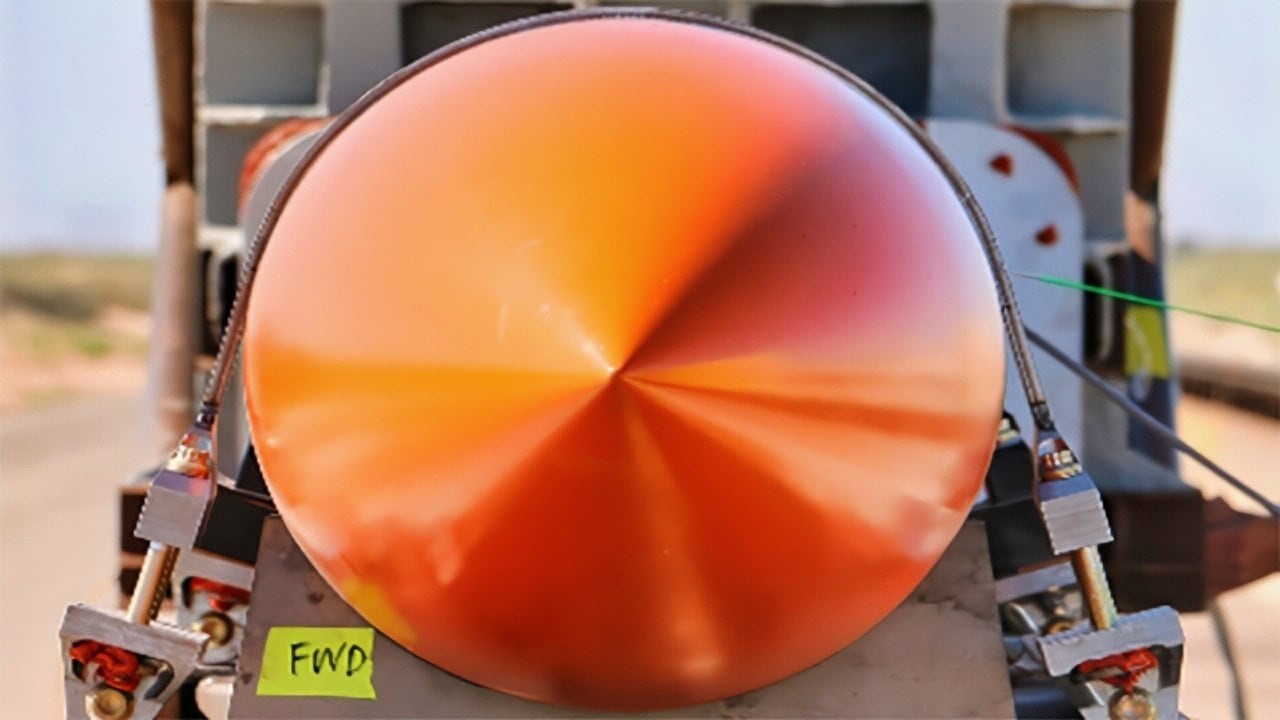
Summary and Key Points: Defense analyst Kris Osborn breaks down the devastating mechanics of the U.S. Air Force’s newest bunker-buster: the GBU-72.
-Recently deployed to obliterate Iran’s coastal missile stockpiles near the Strait of Hormuz, this 5,000-pound precision weapon uses an elongated steel body and a delayed fuse to plunge through 100 feet of earth and 22 feet of solid concrete before detonating.
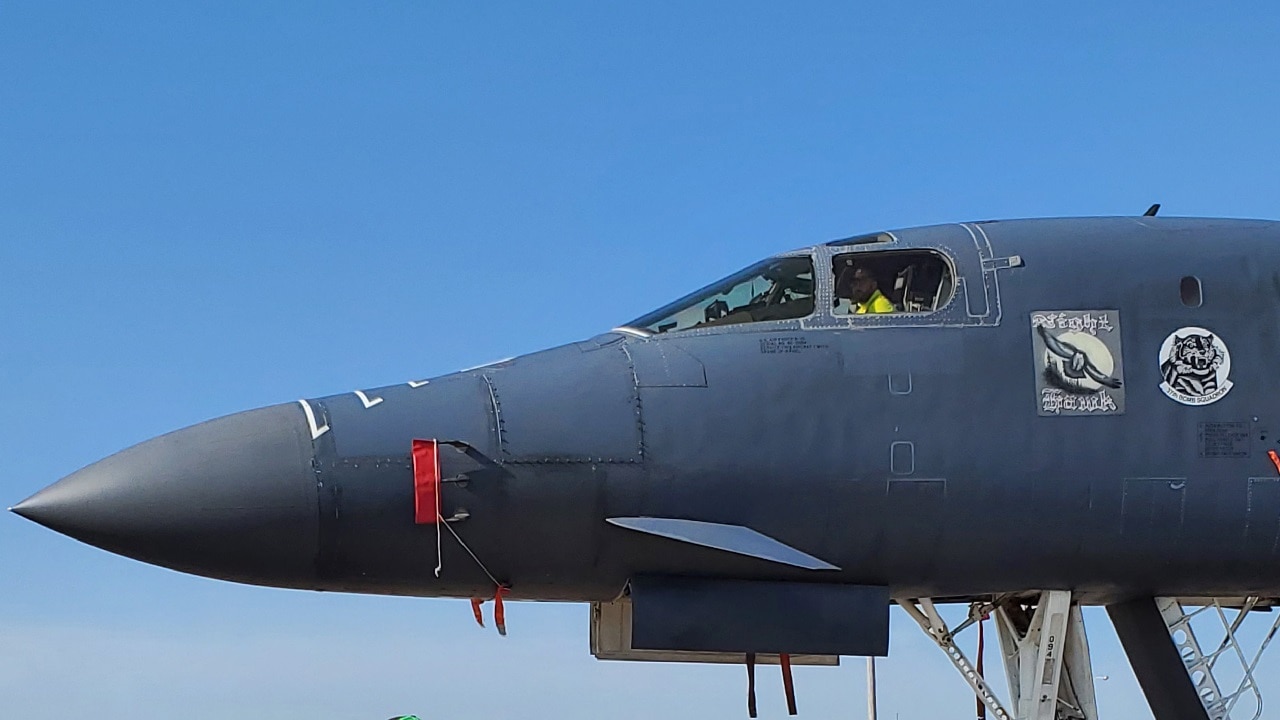
A B-1B Lancer, tail number 86-0094, is moved across Douglas Blvd. to the Maintenance Repair and Overhaul Technology Center (MROTC) to receive an initial portion of Gate 1 of programmed depot maintenance April 21. 567th AMXS personnel will perform three days of maintenance which include single system checks on 40 individual actuators validating voltage outputs as
well as interrogating each actuator for hydraulic leaks. After single systems are completed, the horizontal stabilizers will be removed from the aircraft. This is the first time that horizontal stabilizers have ever been removed at the MROTC. Once complete, the aircraft and horizontal stabilizers will be brought back across Douglas to the 569th AMXS strip facility for plastic media blasting. Once stripped, the horizontal stabilizers will be routed to the 76th Commodities Maintenance Group for overhaul and repairs. (U.S. Air Force photo/Kelly White)
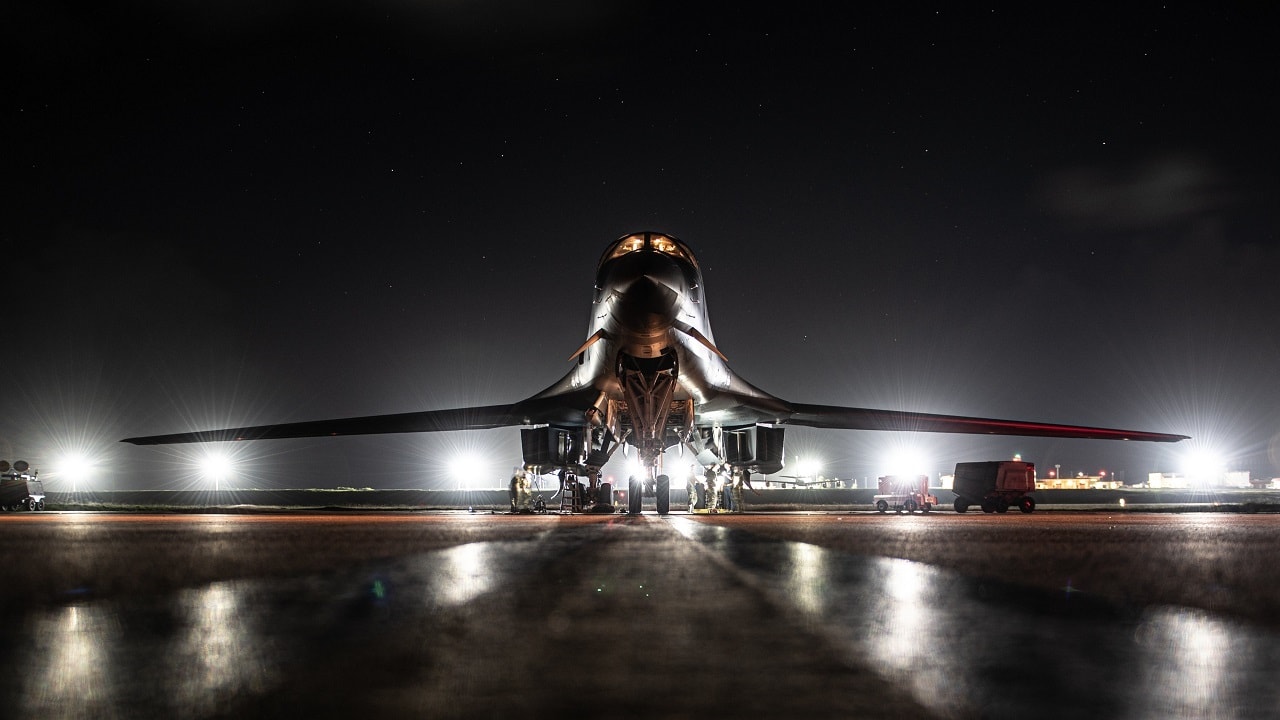
B-1B Lancer Bomber. Image Credit: U.S. Air Force.
-By triggering the explosion deep underground, the GBU-72 traps the blast wave, instantly turning subterranean fortresses into inescapable tombs and neutralizing the advanced threats lurking inside.
The GBU-72 Bunker Buster: Inside the 5,000-Pound Bomb Devastating Iran’s Tunnels
Sharp, penetrating contours, special steel alloys, and pure speed are the driving elements of bunker-buster weapons—bombs engineered to cut through rock, earth, and concrete before detonating beneath the surface.
These U.S. Air Force weapons, such as the GBU-28, have been part of the arsenal for years, yet the bomb body and explosives technology have continued to advance.
Technological progress in bunker-buster earth-penetrating weapons led to their use against underground Iranian weapons stockpiles.
The munition employed is the GBU-72—a new 5,000-pound earth-penetrating bomb. Bunker busters are designed to be sharp for maximum penetration.
They plow into the earth at devastating speeds, blasting through fortified rock and concrete through the sheer force of size and weight.
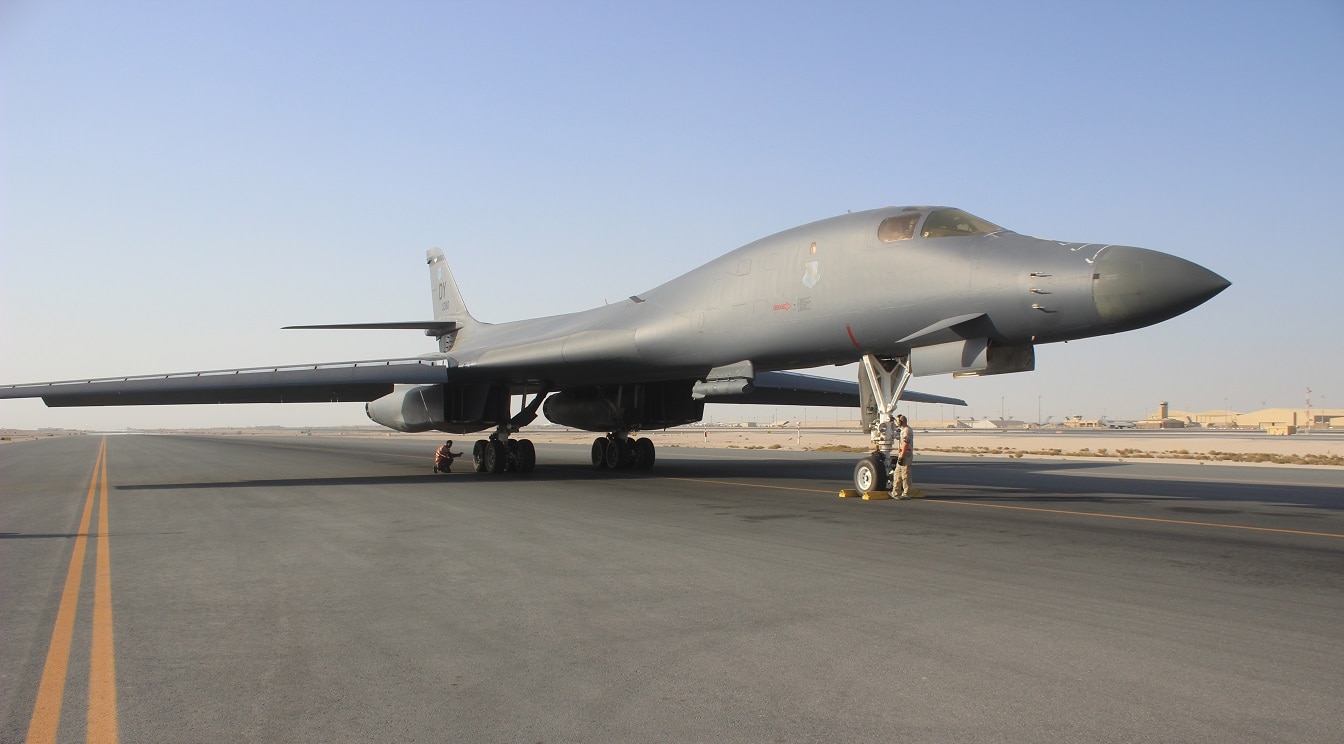
U.S. Air Force maintainers from Ellsworth Air Force Base, South Dakota, work 24/7 servicing and inspecting the B-1B Lancer. They are maintainers within the 379th Air Expeditionary Wing’s 34th Expeditionary Aircraft Maintenance Unit (nicknamed “the backbone of the bone”) and provide hundreds of thousands of manpower hours during six month deployments to Al Udeid Air Base, Qatar. Maintainers comprise approximately a dozen different career specialties to ensure the aircraft flies and meets mission throughout the Middle East. The Lancer carries the largest conventional payload of guided and unguided weapons in the Air Force inventory.
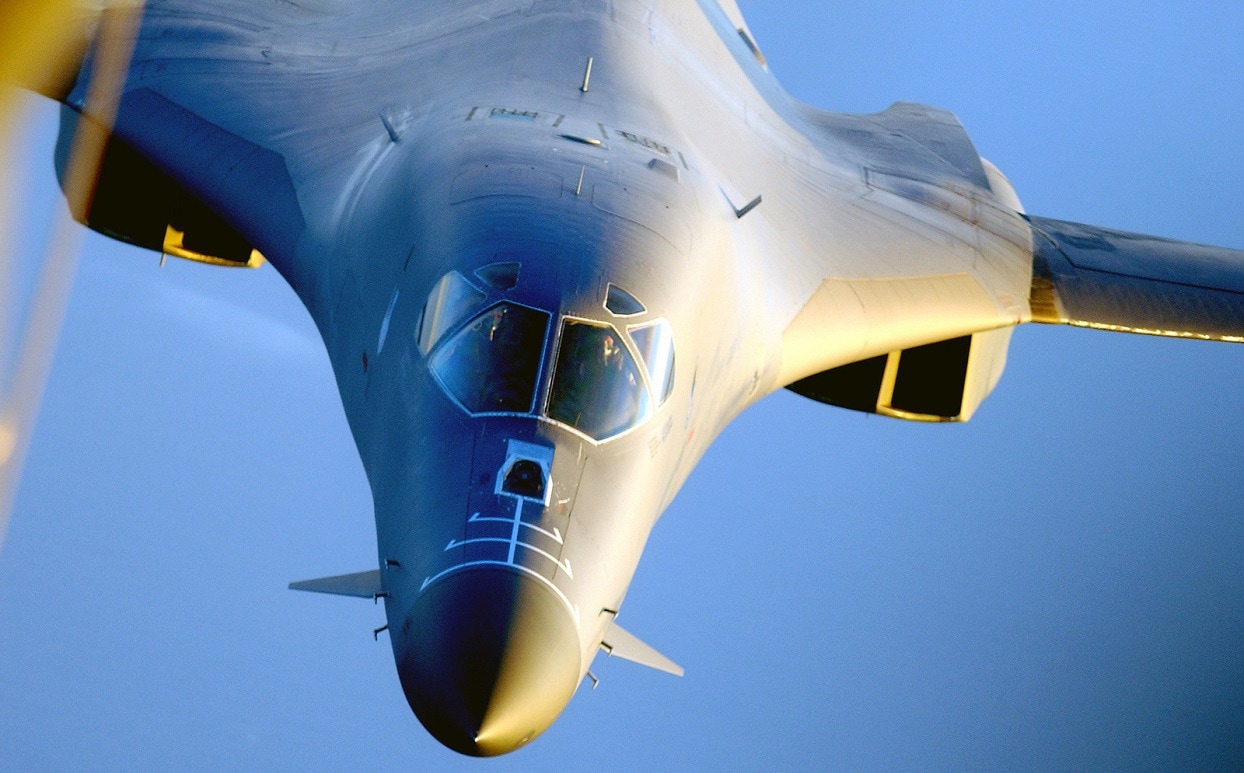
A B-1B Lancer from the 28th Air Expeditionary Wing (EW), maneuvers to receive fuel while on a bombing mission, in support of Operation ENDURING FREEDOM.
Delayed Fuse
The weapons use a time-delayed fuse to ensure the explosives don’t detonate until the weapon has reached its desired depth.
This delay allows the weapon to bypass outer layers of protection—such as bunker roofs or underground shielding—and explode within the target itself.
The result is far more destructive than a surface blast, as the explosion occurs in confined spaces, amplifying pressure and structural damage.
Its elongated, narrow body is engineered to minimize air resistance during descent and to concentrate force onto a smaller surface area upon impact.
This focused force allows it to punch through layers of reinforced concrete, rock, or soil rather than dispersing energy across a wider area.
U.S. Central Command confirmed that the GBU-72 was used against underground Iranian weapons.
The strikes may have greatly reduced Iran’s coastal arsenal, which is designed to launch attacks on ships transiting the Strait of Hormuz.
Detonating underground changes the nature of a blast dramatically.
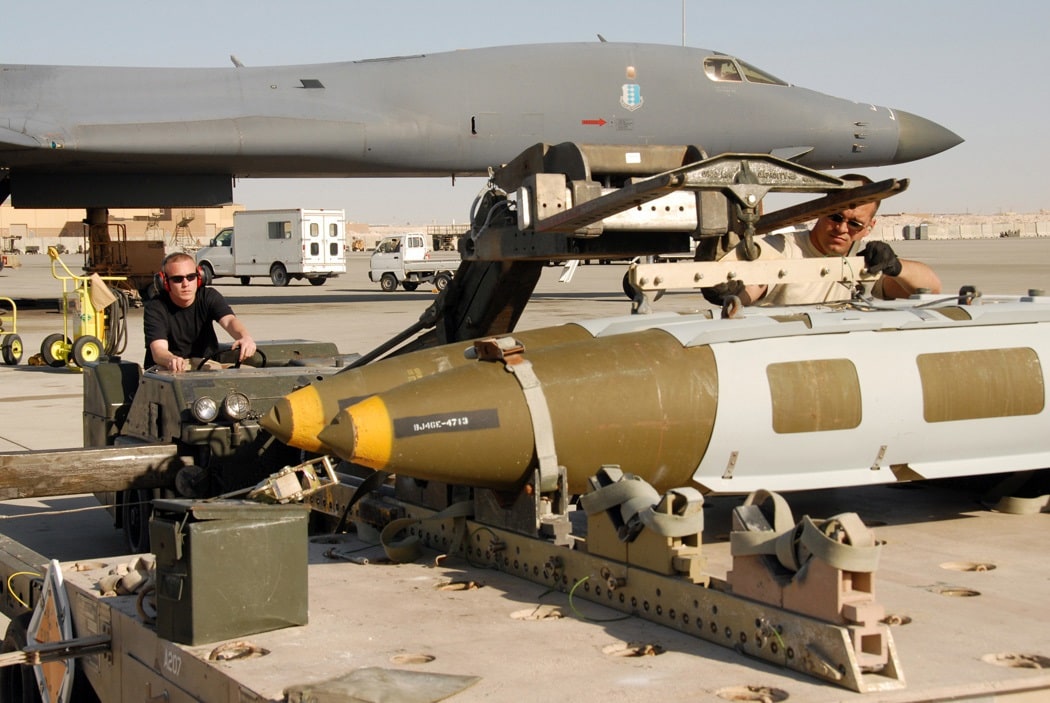
U.S. Air Force Airman 1st Class Kenneth Nealis, right, and Senior Airman Christopher Silas, both weapons load crew members assigned to the 379th Expeditionary Aircraft Maintenance Squadron, transfer a 2,000 pound GBU-31 Joint Direct Attack Munition to a lift truck for loading onto a B-1B Lancer aircraft March 29, 2007, in Southwest Asia. (U.S. Air Force photo by Airman 1st Class Gustavo Gonzalez) (Released)
Instead of dispersing outward into open air, the energy is confined by the surrounding material. This confinement produces intense shockwaves and pressure that radiate through the structure.
In underground missile facilities, these shockwaves can collapse tunnels, destroy storage chambers, and disrupt critical systems such as ventilation, power, and communications.
Underground Missiles
Missiles and their support equipment are particularly vulnerable to these effects. Even if the blast does not directly strike every stored weapon, the extreme pressure and structural failure can render them inoperable.
Guidance systems, fuel lines, and electronic components are sensitive to shock and vibration. Additionally, collapsing tunnels can bury equipment under tons of debris, making recovery or use nearly impossible.
Another important factor is accuracy. Modern bunker-buster bombs are often guided by satellite or inertial navigation systems, allowing them to strike precise locations. This precision is crucial when targeting underground facilities.
Hitting the correct point—such as an entrance, a known storage chamber, or a structurally weaker section—maximizes the likelihood of successful penetration and destruction.
Bombs Penetrate Rock & Concrete
Many of these weapons are known to be capable of penetrating more than 100 feet of earth and up to 22 feet of rock and concrete, making them an optimal attack weapon for buried targets.
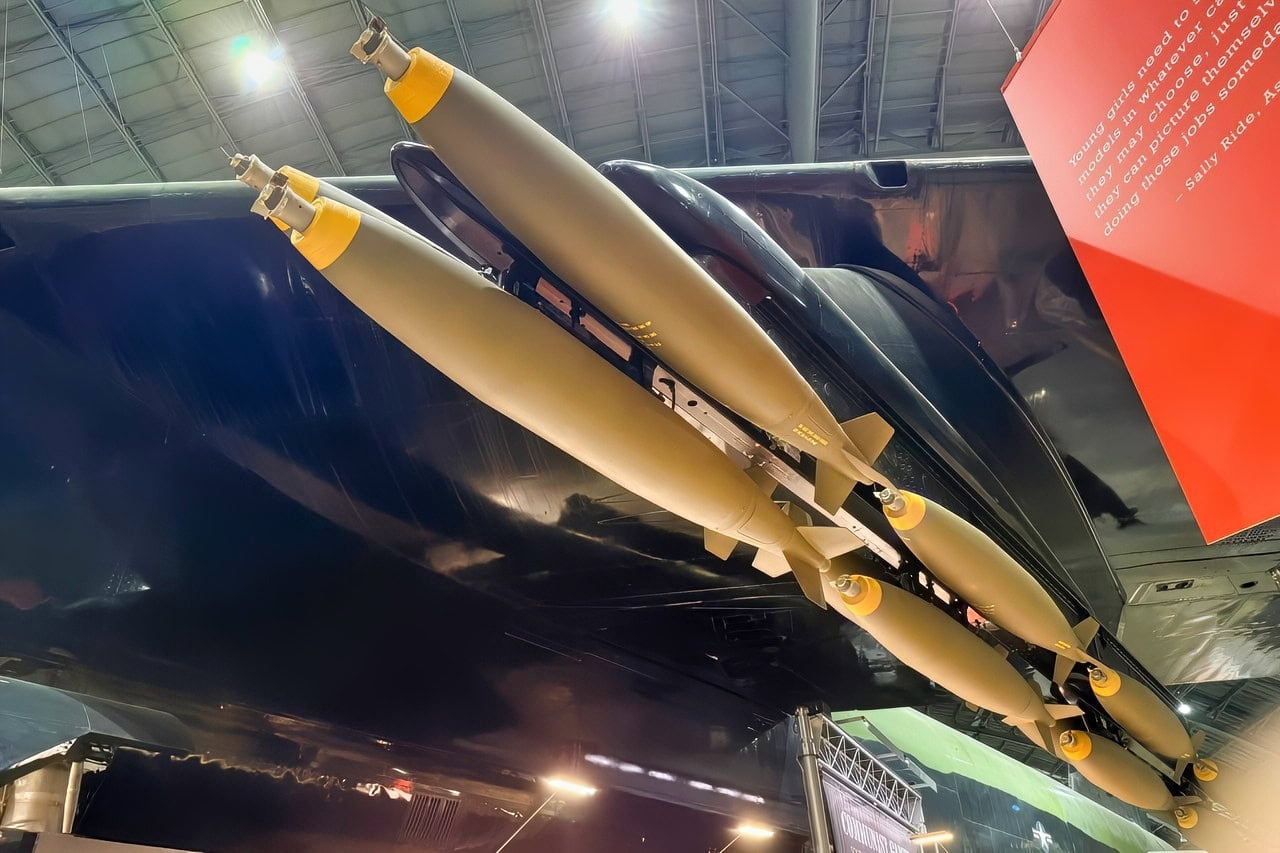
B-52 bombs. Image Credit: 19FortyFive.com Taken at the National Museum of the Air Force.

A modified B-52H Stratofortress departs Edwards Air Force Base for an evening training mission on June 25, 2025. The aircraft is assigned to the 419th Flight Test Squadron, Global Power Bombers Combined Test Force, tasked with supporting developmental testing across the B-52, B-1, and B-2 bomber portfolio. Along with most 412th Test Wing aircraft, B-52H bombers at Edwards include special instrumentation to conduct a variety of testing activities. (Air Force photo by Chase Kohler)
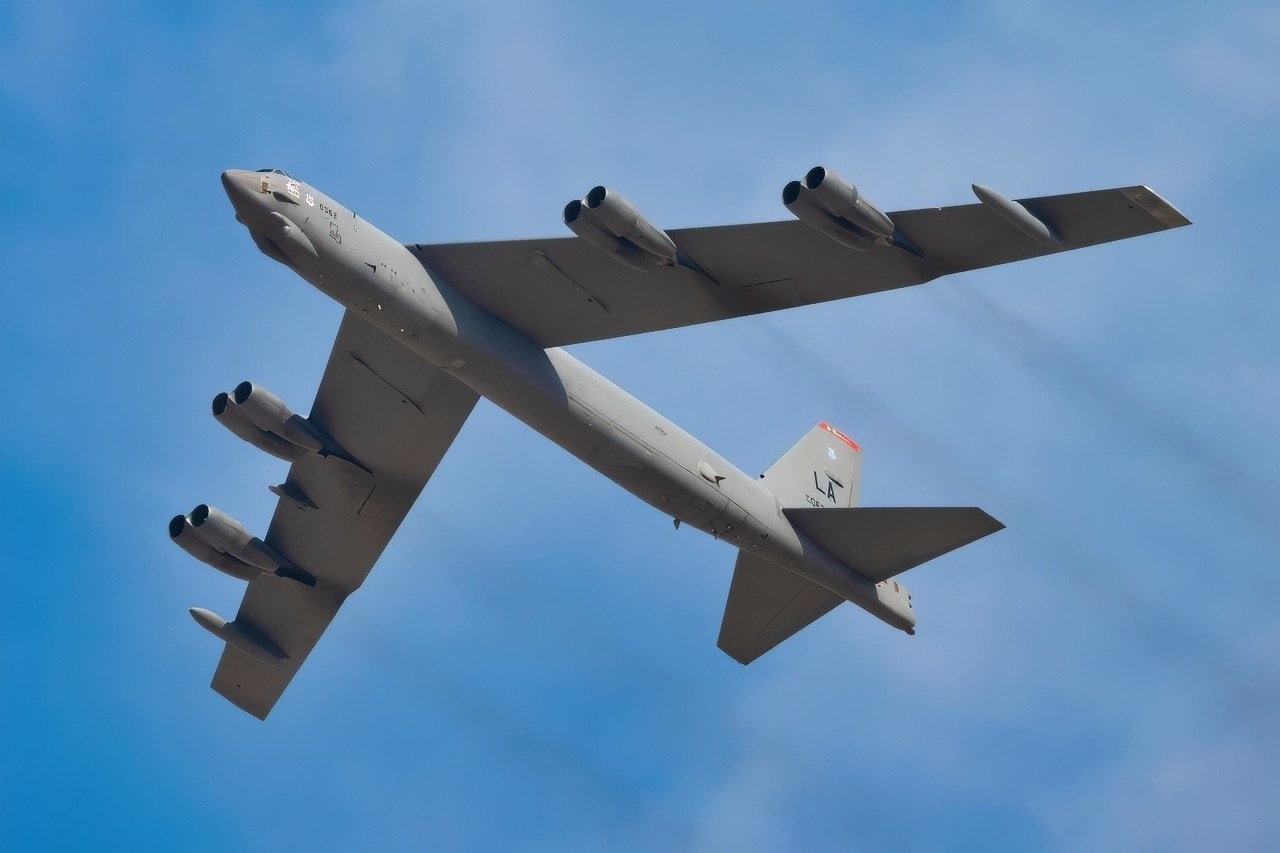
A U.S. Air Force B-52 Stratofortress aircraft, assigned to the 96th Bomb Squadron from Barksdale Air Force Base, Louisiana, flies over spectators at the Dubai Airshow 2025, Nov. 17, 2025, at the Al Maktoum International Airport in Dubai, United Arab Emirates. The B-52 flew from Rota, Spain, to participate in the event, showcasing U.S. airpower on a global stage. (U.S. Air Force photo by Staff Sgt. Tylin Rust)
Unlike general-purpose bombs that are designed to fragment on impact, the GBU-72 must remain intact long enough to burrow deep into a structure before detonating.
These kinds of weapons could prove decisive in the ongoing war against Iran.
If intelligence assets are able to help commanders identify the locations of underground weapon stockpiles, then precision-guided, heavy bunker buster weapons such as the GBU-72 may continue to reduce the threat in the Strait of Hormuz.
About the Author: Kris Osborn
Kris Osborn is the President of Warrior Maven – Center for Military Modernization. Osborn previously served at the Pentagon as a highly qualified expert in the Office of the Assistant Secretary of the Army—Acquisition, Logistics & Technology. Osborn has also worked as an anchor and on-air military specialist at national TV networks. He has appeared as a guest military expert on Fox News, MSNBC, The Military Channel, and The History Channel. He also has a Masters Degree in Comparative Literature from Columbia University.