

Summary and Key Points: Drawing on over a decade of experience covering national security, award-winning journalist Stephen Silver breaks down the U.S. Army’s sweeping new restrictions on its education benefits.
-As the service mandates strict command approval for all Tuition Assistance requests and revokes credentialing funds for commissioned officers, a much larger ideological shift is taking place at the Pentagon.

Lance Cpl. Alex Rowan, a combat engineer with 4th Combat Engineer Battalion, 4th Marine Division, stationed out of Bessemer, Ala., runs to take cover before the Anti-Personnel Obstacle Breaching System detonates during the SAPPER Leaders Course aboard Camp Lejeune, N.C., June 26, 2015. During the course, the Marines used assault and breaching techniques to clear a wire obstacle using line charges that utilized C4 explosives and their APOBS. (U.S. Marine Corps photo by Cpl. Krista James/Released)
-Defense Secretary Pete Hegseth has officially banned military funding for officers attending 22 elite Ivy League universities and prominent think tanks, signaling a profound and controversial pivot in how the United States intends to educate its future military leaders.
The U.S. Army’s Sweeping Overhaul of Tuition Assistance and Credentialing Benefits
The U.S. Army has instituted new rules for using the Army’s Tuition Assistance Program, requiring approval from supervisors to access it.
According to Task & Purpose, “the new requirement for the program was one of several recent policy changes to the service’s regulation for the Army Continuing Education System, which oversees educational programs and services. As part of the new policy, soldiers also need command approval for credentialing assistance — a separate Army program that helps soldiers pay to obtain industry-recognized credentials, such as certifications for information technology and project management.”
Such approval was not required previously. The change was first reported by Stars and Stripes, with an announcement this week also appearing on the Army’s Human Resources Command Facebook page.
“The Army is reining in some of its education benefits, eliminating commissioned officer reimbursements for industry certifications and requiring command approval for all tuition assistance requests,” Stars and Stripes reported. “Credentialing assistance, meanwhile, will now be available only to enlisted personnel and warrant officers, with commissioned officers no longer eligible for the benefit. Command approval is also now required for the benefit under the new guidance, while soldiers failing to complete their courses will be suspended from the program for a year.”
The Facebook post by the Human Resources command went into more detail.
“Command approval will be required for all TA requests,” the Facebook post said.
“Soldiers with two recoupment actions in the same fiscal year will be suspended from requesting TA or CA for 12 months.”
“These updates are designed to support long-term sustainability of Army education benefits, preserve resources for Soldiers where they’re most needed, and increase leader involvement in the approval process. This also brings the Army into closer alignment with education policies across other Services,” the post added.
Why the U.S. Army Did It
A “supervisor,” for these purposes, is defined as a person who signs the person’s performance report, an Army spokesperson told Task & Purpose.
What was the reason for this?
“The intent of command approval for Tuition Assistance and Credentialing Assistance requests is to ensure leadership visibility into soldiers’ voluntary education activities and will help soldiers balance their education efforts with service responsibilities, including deployments and unit training activities,” Maj. Travis Shaw, the Army spokesperson, told the outlet.
Per T&P, “the program pays active-duty, National Guard and Reserve soldiers up to $4,500 per year for a maximum of 18 semester hours, according to the Army. Soldiers can receive financial assistance for up to 130 hours total of undergraduate credit and 39 semester hours of graduate credit.”
The Previously Announced Increase
The U.S. Army first announced changes to the program in 2024, describing them at the time as an effort to bring “the Army in line with the Navy and the Air Force.”
“The Army recognizes the value of the tuition assistance and credentialing assistance programs, both of which support our Soldiers’ professional development and readiness levels,” Christine Traugott, policy manager for Soldier education and transition with the office of the Assistant Secretary of the Army for Manpower and Reserve Affairs, said in 2024.
“The changes we are making to these programs will help ensure their long-term sustainability, will bring the Army into closer alignment with how other services execute voluntary education programs , and will preserve the benefits for Soldiers who need them the most.”
Cutting Off the Ivy League
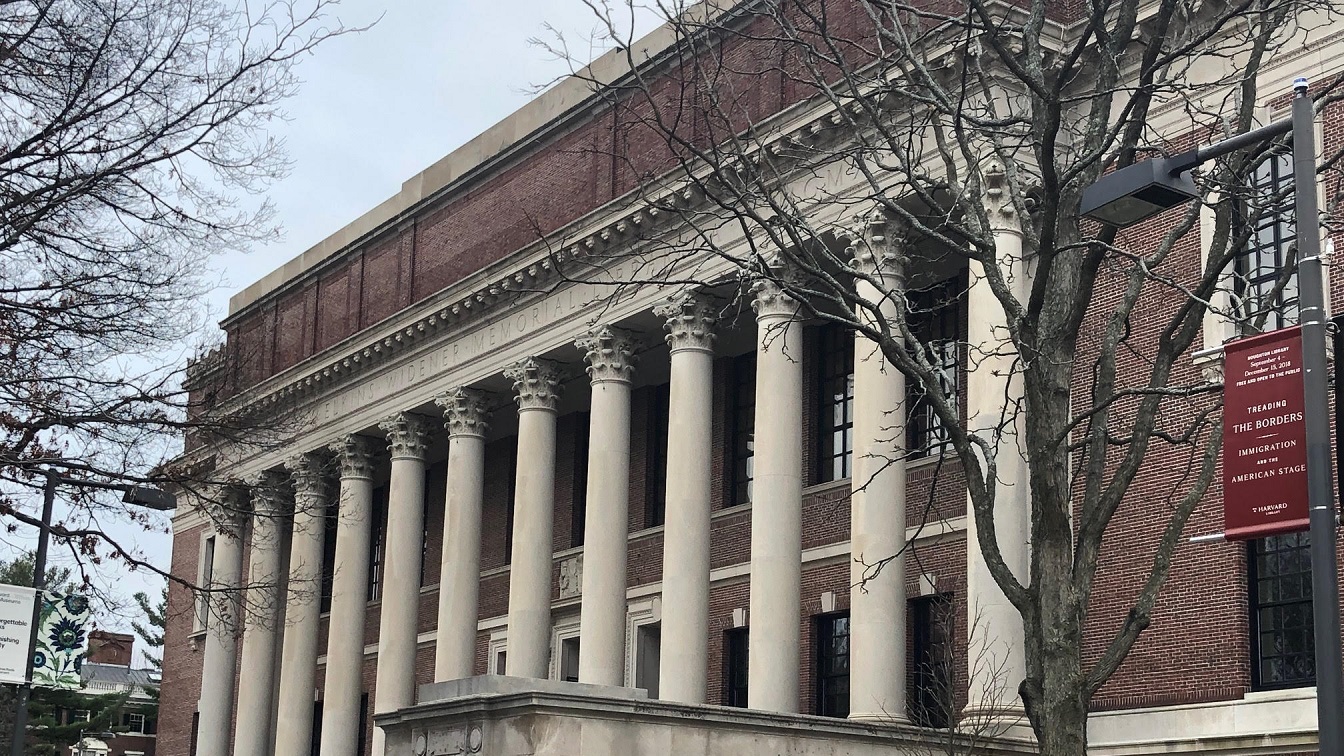
Harvard University from back in 2018. Image Credit: 19FortyFive Staff.
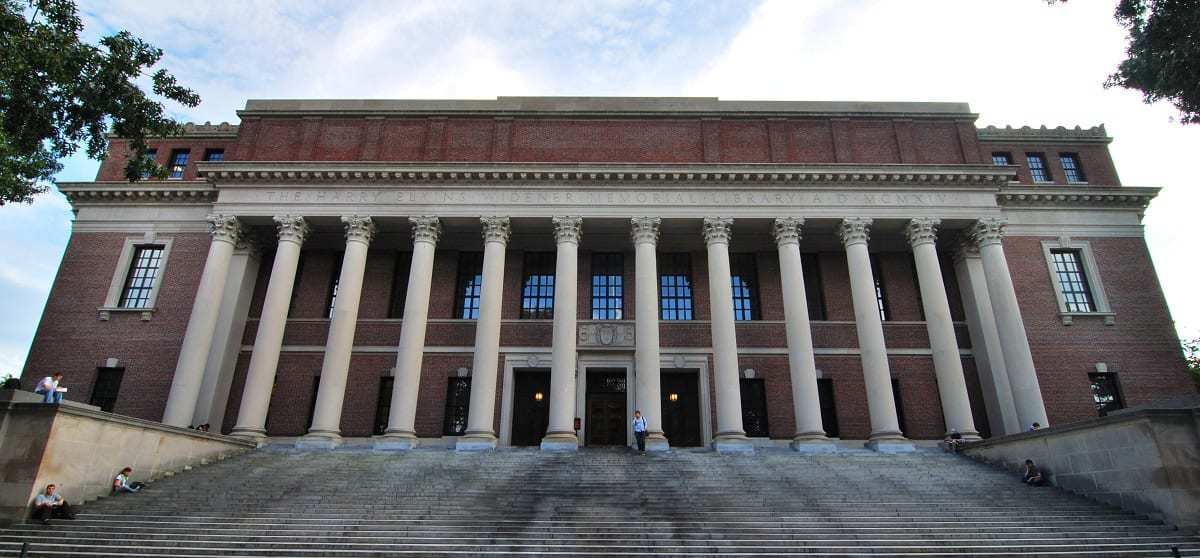
Widener Library, Harvard University, 2009.
Defense Secretary Pete Hegseth announced in early March that military officers would have their tuition assistance cut off at 22 colleges and other institutions, including several Ivy League schools. One of them was Harvard, where Hegseth obtained his own graduate degree.
“We will no longer invest in institutions that fail to sharpen our leaders’ warfighting capabilities or that undermine the very values they are sworn to defend,” the “Secretary of War” said in announcing the cutoff.
Per the New York Times, the colleges cut off included Massachusetts Institute of Technology, Princeton, Yale, Brown, Georgetown, Johns Hopkins, Columbia, George Washington, Tufts, Saint Louis, and Carnegie Mellon. Also affected were seven think tanks: Center for Strategic and International Studies, New America Foundation, the Brookings Institution, the Atlantic Council, Center for a New American Security, the Council on Foreign Relations, and The Henry L. Stimson Center.
Hegseth also suggested replacement institutions, such as The Citadel Military College of South Carolina, the University of North Georgia, and the Virginia Polytechnic Institute and State University, as well as several state universities, and conservative-identified universities like Liberty University and Hillsdale College.
Fewer than 100 students are affected, the Times added.
“Our PME institutions must return to the fundamental mission of focusing our military leaders on core national security strategy issues,” Hegseth wrote in the late-February memo. “We must develop strategic thinkers through education grounded in the founding principles and documents of the republic, embracing peace through strength and American ideals, and focused on our national strategies and grounded in realism. We will no longer invest in institutions that fail to sharpen our leaders’ warfighting capabilities or that undermine the very values they are sworn to defend.”
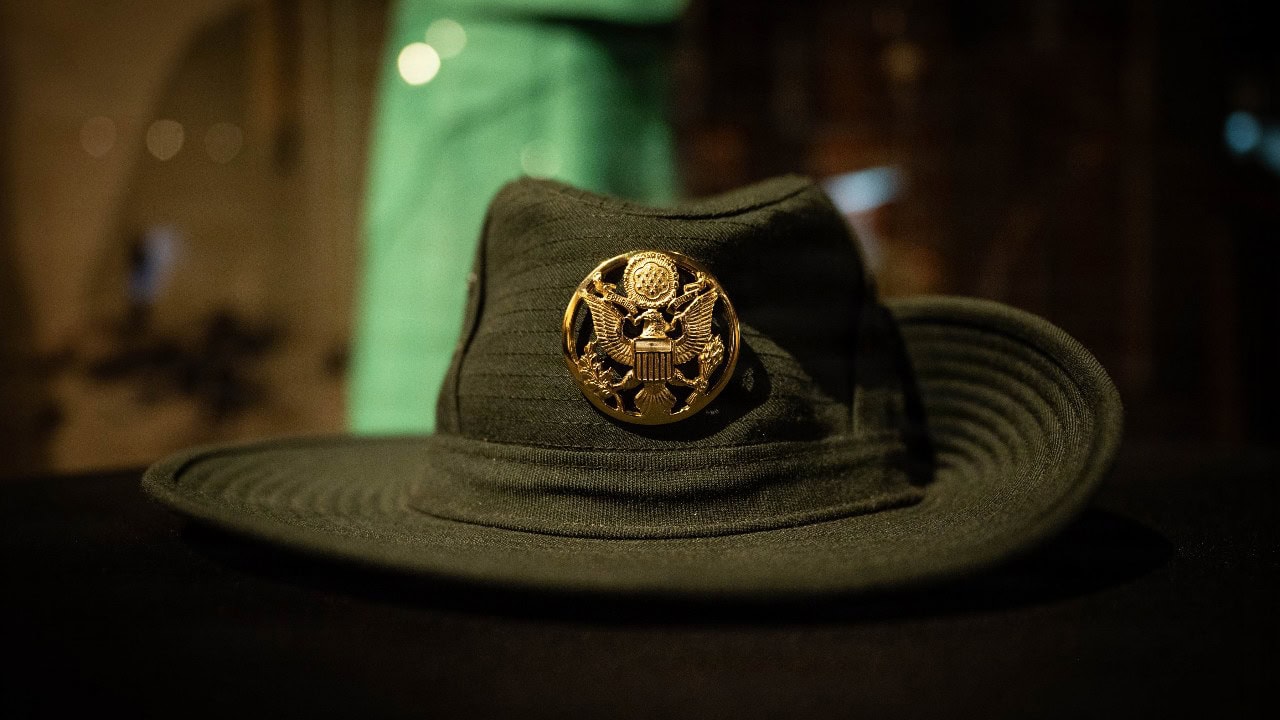
U.S. Army Sgt. 1st Class Edjenik Uzcategui, a Drill Sergeant with Alpha Company, 5th Battalion, 1st Special Warfare Training Group (Airborne), 369th Adjutant General Battalion (AIT), and Staff Sgt. Heather Woodward, a Senior Drill Sergeant with Echo Company, 1st Battalion, 13th Infantry Regiment, remove their bush hats for the final time and don the campaign hat during a special ceremony hosted by Command Sgt. Maj. William M. Shoaf, Command Sgt. Maj. for Fort Jackson, and museum curator, Mr. Steven P. Noonan at the Basic Combat Training Museum, Fort Jackson, S.C., January 23, 2026. The campaign hat became the official hat for all Drill Sergeants, January 2, 2026. (U.S. Army photo by Sgt. 1st Class Dana Clarke)
In the Washington Post, in early March, J.B. Branch and Allan E. Cameron wrote an op-ed criticizing Hegseth’s new policy.
“This decision is far more consequential than partisan optics suggest,” Branch and Cameron write for the Post. “It directly affects how the United States cultivates technological advantage, educates its senior military leaders, and prepares for long-term strategic competition… At a time when the Pentagon warns about competition with China, voluntarily pulling U.S. military officers out of the world’s most important research and policy institutions is not a show of strength. It is a strategic retreat.”
About the Author: Stephen Silver
Stephen Silver is an award-winning journalist, essayist, and film critic, and contributor to the Philadelphia Inquirer, the Jewish Telegraphic Agency, Broad Street Review, and Splice Today. The co-founder of the Philadelphia Film Critics Circle, Stephen lives in suburban Philadelphia with his wife and two sons. For over a decade, Stephen has authored thousands of articles that focus on politics, national security, technology, and the economy. Follow him on X (formerly Twitter) at @StephenSilver, and subscribe to his Substack newsletter.