
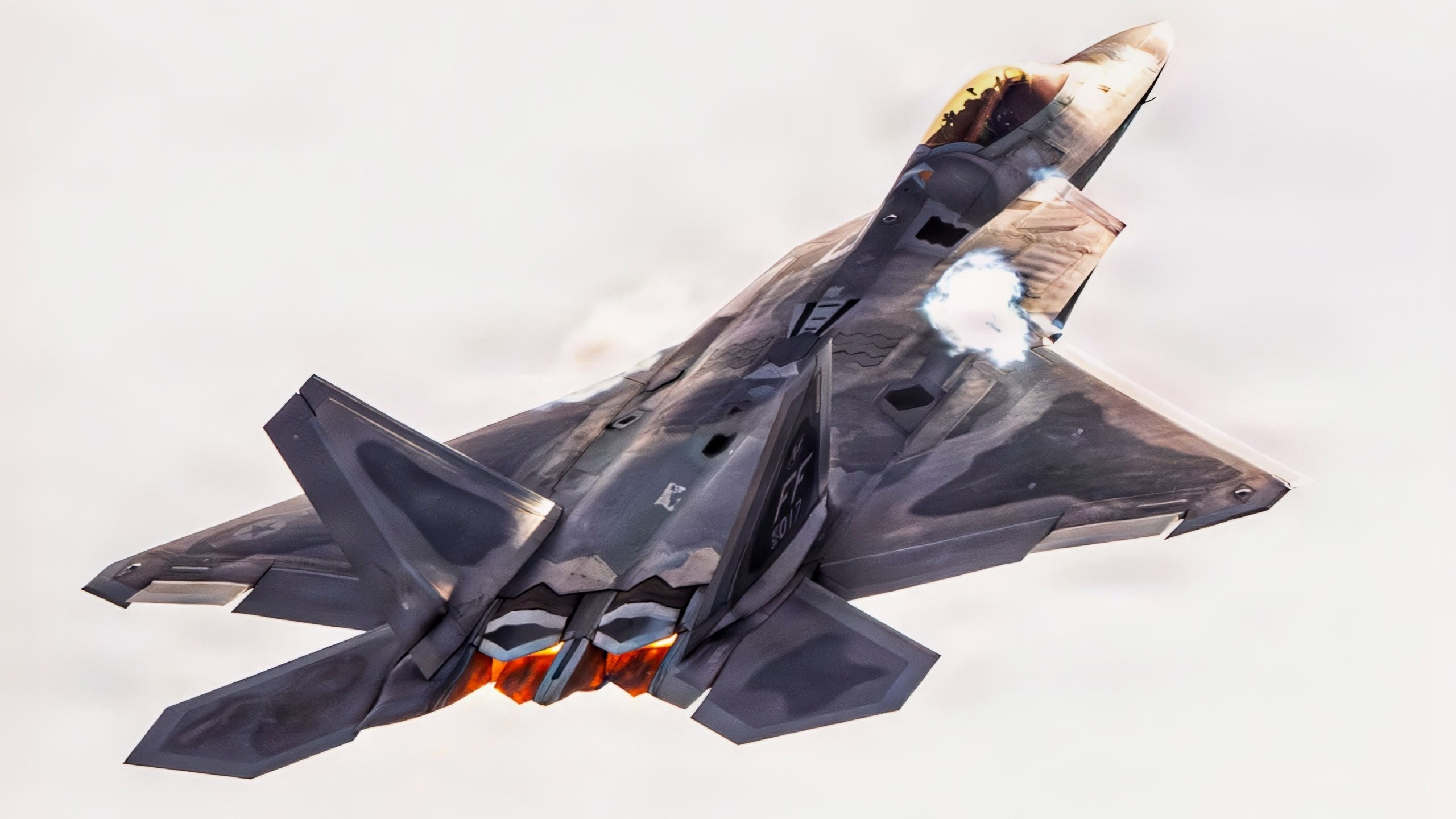
Summary and Key Points: F-22 vs. F-35 and the Iran War
-National security analyst Jack Buckby breaks down the critical tactical differences between America’s premier fifth-generation stealth fighters: the F-22 Raptor and the F-35 Lightning II.
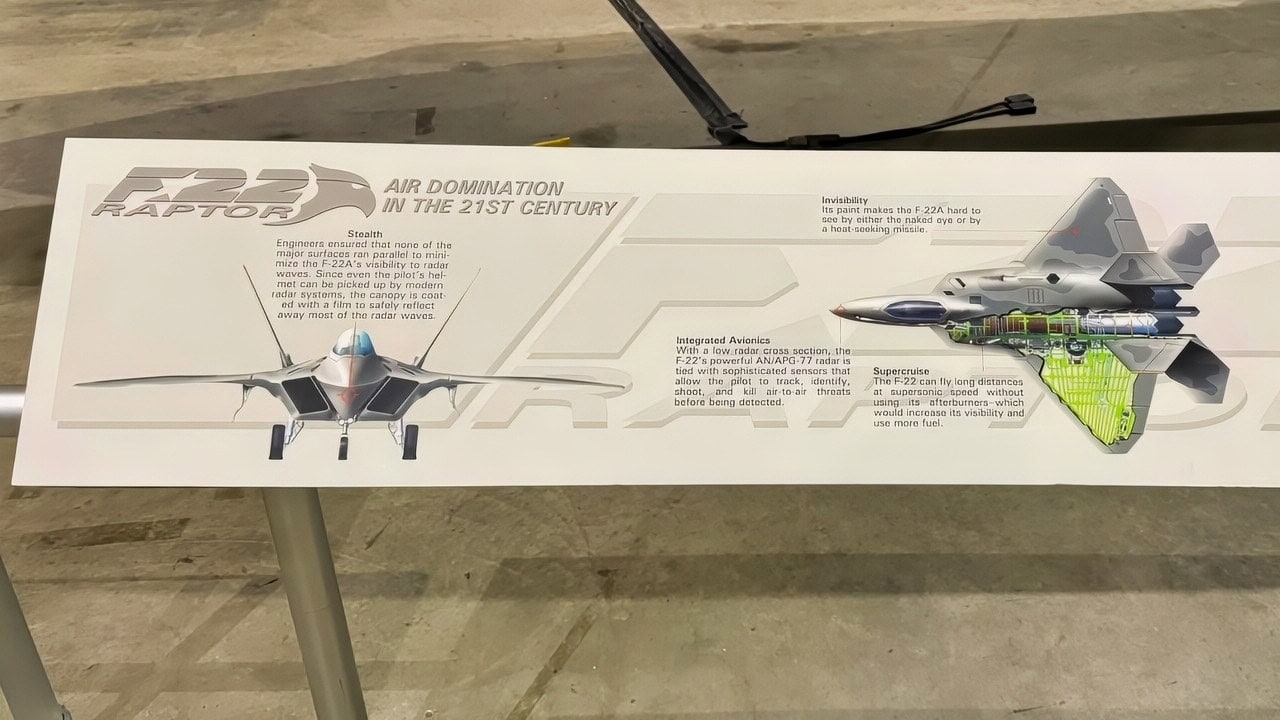
F-22 Raptor Diagram from National Museum of the U.S. Air Force. Image Credit: Harry J. Kazianis.
-As both jets actively engage in combat operations over Iran during Operation Epic Fury, Buckby explains why they are not interchangeable.
-While the F-22 acts as an unmatched air superiority specialist designed to dominate the skies, the F-35 operates as a highly networked, multi-role “quarterback,” utilizing advanced sensor fusion to manage the entire battlefield and conduct deep precision strikes.
F-22 vs F-35: Why They’re Not the Same
In late February 2026, the United States began moving large numbers of advanced fighter aircraft toward the Middle East as part of a buildup ahead of strikes on Iran. That deployment included both F-22 Raptors and F-35 Lightning IIs, with at least 12 F-22s sent toward Israel and dozens of F-35s staged through bases like Britain’s RAF Lakenheath before moving into the theater.
Since the campaign began on February 28, both aircraft have been used in combat. The F-35 has conducted strike missions over Iranian territory, including at least one mission that ended with an emergency landing after possible damage from ground fire. Meanwhile, F-22s have been deployed forward specifically to secure airspace and support high-end operations.
The F-22 and F-35 are similar in certain ways; they are, after all, both fifth-generation stealth fighters. Both aircraft are designed to evade radar and carry their weapons internally, and they’re both capable of operating in contested airspace. But that doesn’t make them interchangeable.
The F-22 was built for one kind of war, and the F-35 was built for another.
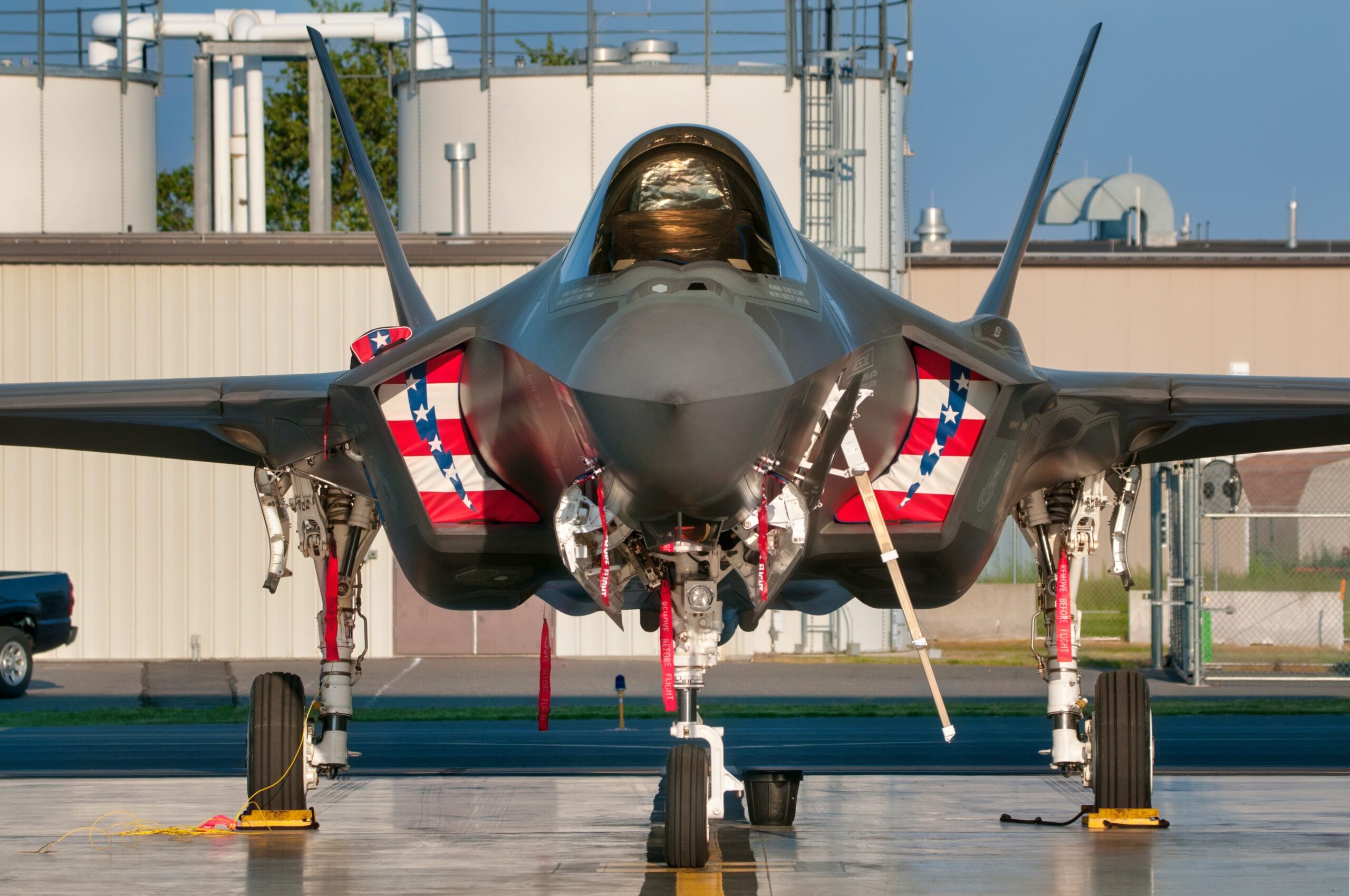
A U.S. Air Force F-35 Lightning II fighter jet from the 56th Fighter Wing, Luke Air Force Base, Arizona, displays it’s crew-designed red, white and blue inlet covers while parked in a military aircraft shelter at the Atlantic City International Airport in Egg Harbor Township, N.J. on May 26, 2016. Pilots and crew from the USAF F-35 Heritage Flight Team made a stop at the 177th Fighter Wing of the New Jersey Air National Guard on the way to their performance at the Jones Beach Airshow in Wantagh, New York on May 28 and 29. (U.S. Air National Guard photo by Master Sgt. Andrew J. Moseley/Released)
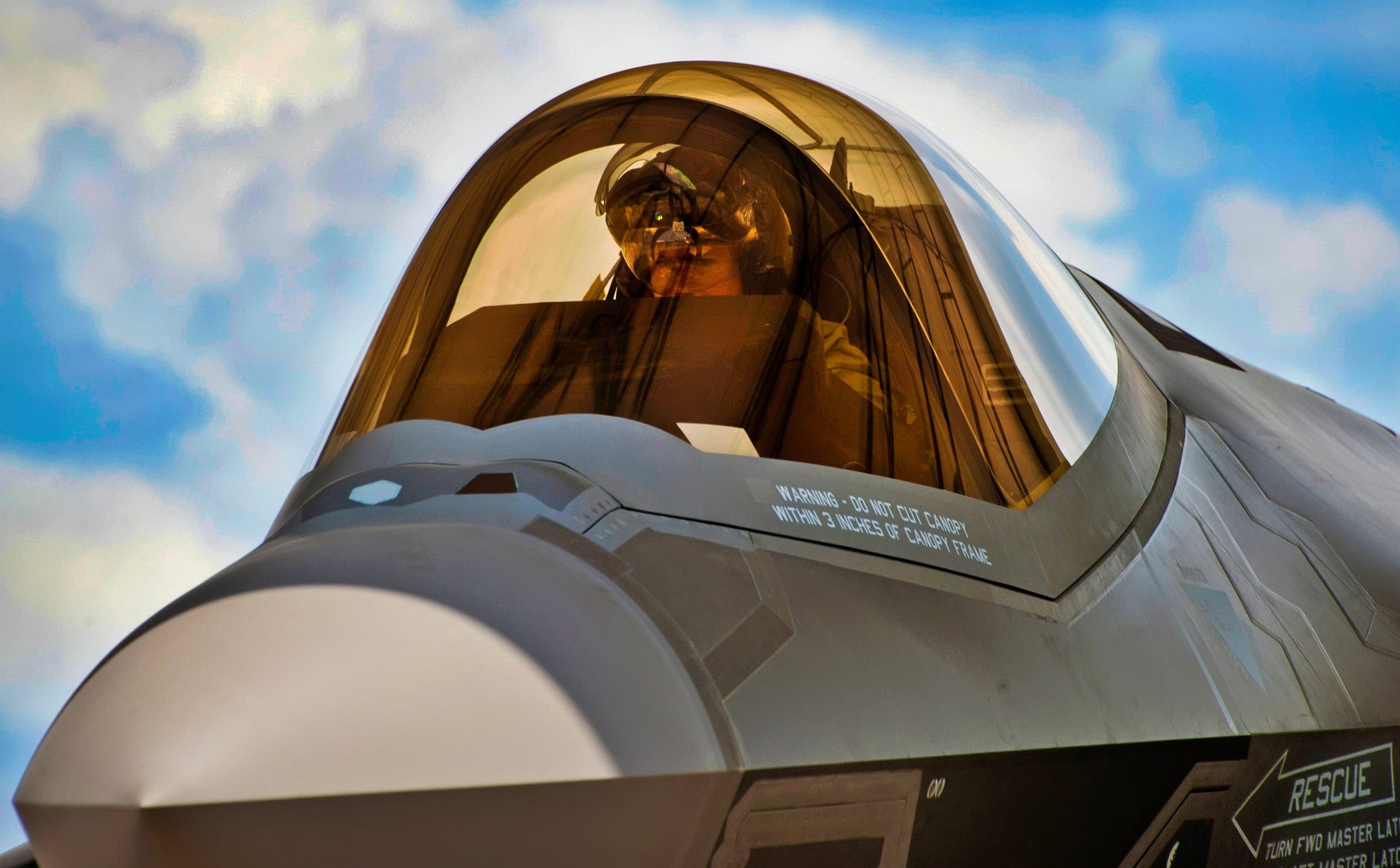
Marine Maj. Joseph Bachmann, of the 33rd Operations Group, executes aircraft shutdown procedures of the second F-35 Lightning II joint strike fighter to arrive at Eglin Air Force Base, Fla., July 20. Bachmann is the first Marine pilot to be JSF certified. Aircraft AF-8 is the flagship for the 58th Fighter Squadron. (U.S. Air Force photo/Samuel King Jr.)
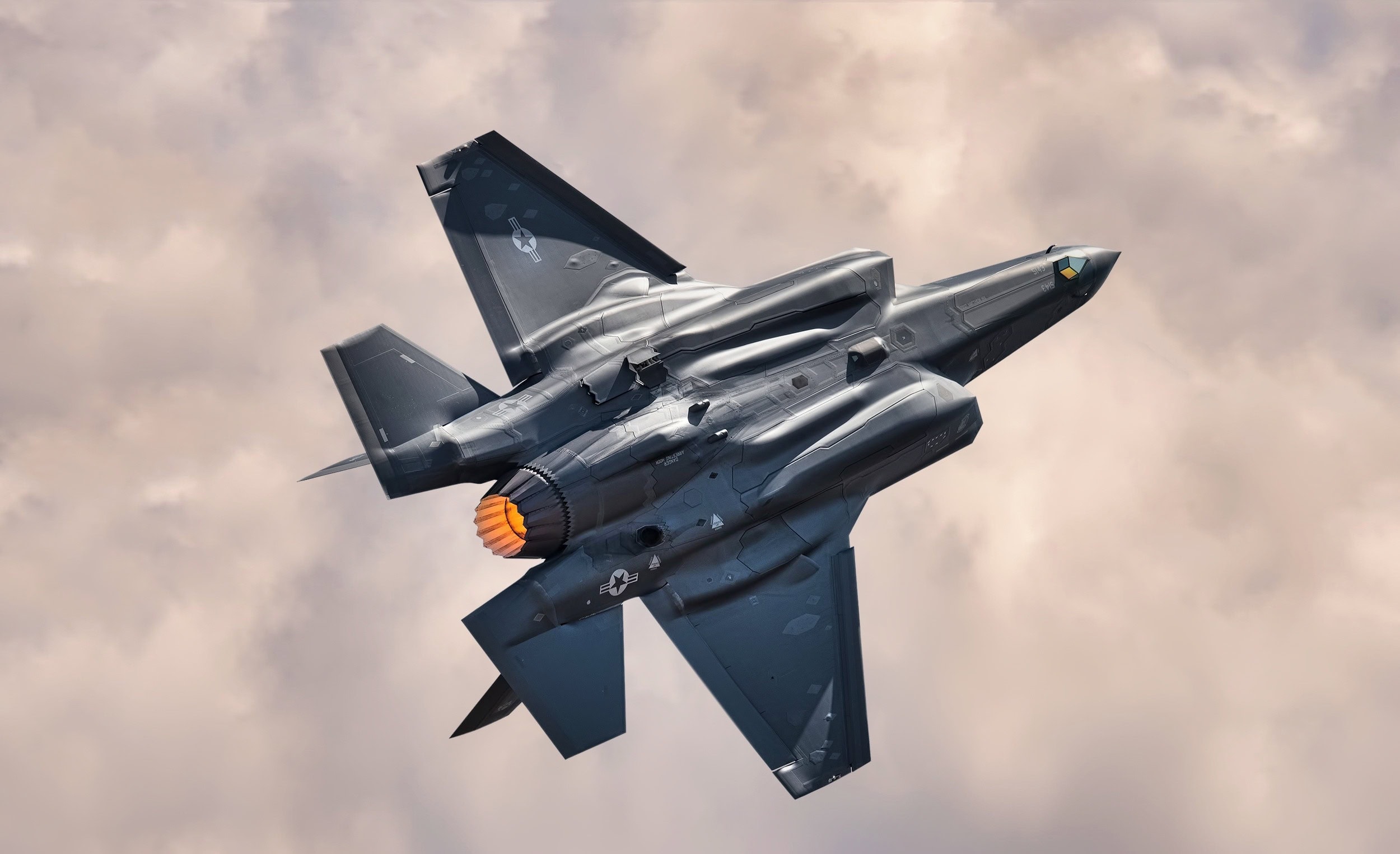
F-35 Fighter. Image Credit: Creative Commons.
Built for Different Wars
The F-22 was conceived in the final years of the Cold War and officially entered service in 2005. Its primary purpose was air superiority – destroying enemy aircraft and controlling the skies against a peer adversary like the Soviet Union.
Air superiority refers to the ability to operate aircraft without significant interference from enemy fighters or air defenses. The F-22 was designed to achieve that not just through stealth but also through speed and maneuverability. It can fly at supersonic speeds without using afterburners (supercruise), and engage targets at long range before being detected.
The F-35, however, is a product of the post-9/11 era. It was designed not just as a fighter jet but as a multi-role aircraft that can conduct precision strike missions, engage in electronic warfare, conduct intelligence gathering, and support electronic warfare.
In that sense, the F-22 is a specialist platform, while the F-35 is part of a system that functions best within an allied network. It was built for coalition warfare in particular and is designed to operate across multiple services and allied nations – and be produced at scale. Hundreds have been produced and delivered so far, and it’s now the backbone of U.S. and allied airpower.
So while the F-22 was built to win air battles, the F-35 was built to fight and manage the entire battlefield.
How They Fight
Perhaps the most important difference between the two aircraft is how they approach combat. The F-22 is optimized for speed and maneuverability, and is widely regarded as one of the most capable dogfighting aircraft ever built – meaning that it excels in close-range aerial combat where aircraft rely on agility and the skill of a pilot to outmaneuver opponents.
It also excels in beyond visual range (BVR) combat, meaning it can detect and engage enemy aircraft at distances where pilots cannot see each other, using radar-guided missiles.
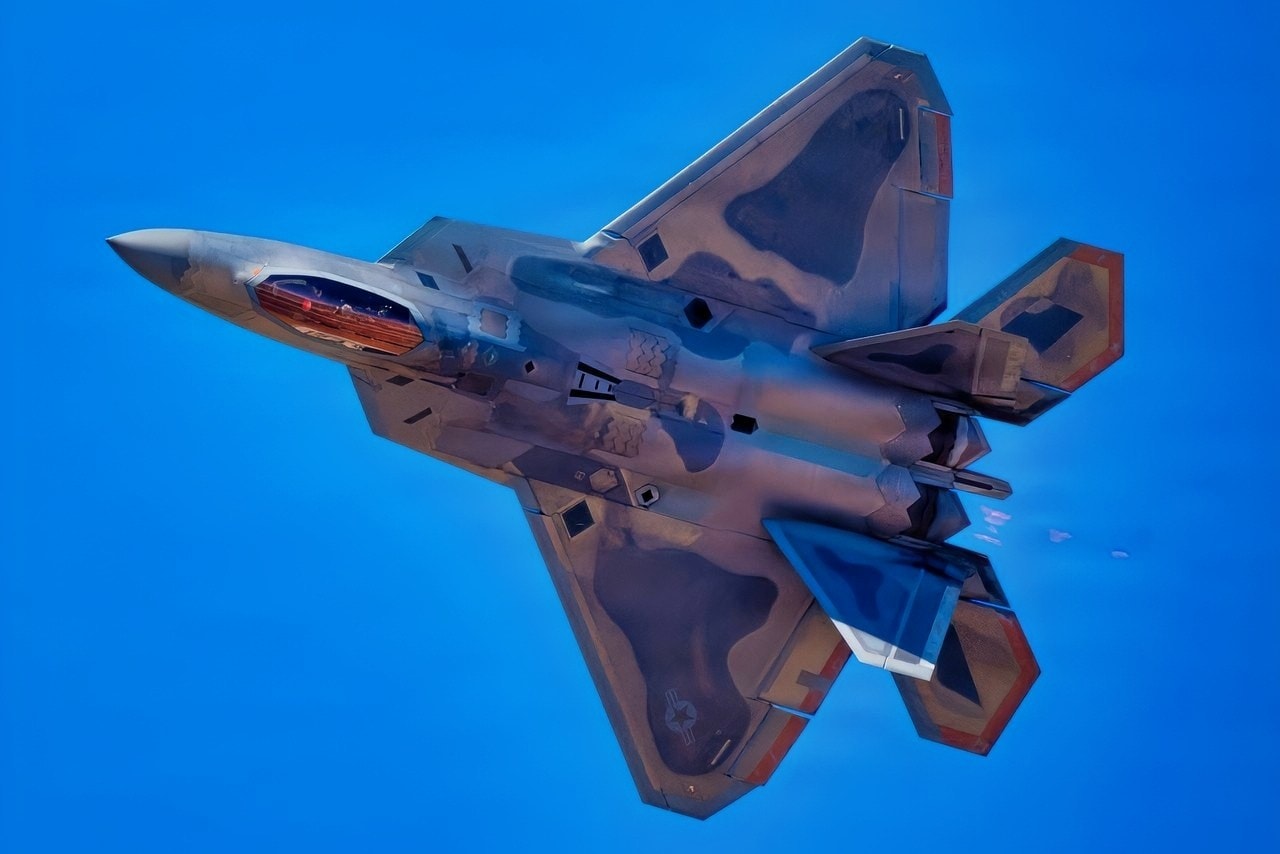
U.S. Air Force Capt. Samuel “RaZZ” Larson, F-22 Raptor Aerial Demonstration Team pilot and commander, performs during FIDAE 2024, Santiago, Chile, April 4th, 2024. The F-22 Raptor Aerial Demonstration showcases the unmatched maneuverability of the airframe by executing a series of combat maneuvers to inspire Americans and their allies, and deter foreign adversaries. (U.S. Air Force video by Staff Sgt. Michael Bowman)

U.S. Air Force Capt. Samuel “RaZZ” Larson, F-22 Raptor Aerial Demonstration Team pilot and commander, performs during FIDAE 2024, Santiago, Chile, April 4th, 2024. The F-22 Raptor Aerial Demonstration showcases the unmatched maneuverability of the airframe by executing a series of combat maneuvers to inspire Americans and their allies, and deter foreign adversaries. (U.S. Air Force video by Staff Sgt. Michael Bowman)
The F-35, however, is built around sensor fusion, processing a combination of data from multiple onboard systems, including radar and infrared sensors. The F-35 turns that data into a single, integrated picture of the battlefield that is useful not only for that pilot but also for others operating in tandem. Instead of focusing solely on raw performance, the F-35 emphasizes situational awareness. It can detect threats and share that information with other ground units and ships. The pilot of an F-35 is not just flying an aircraft; they are managing a network of sensors and directing other assets simultaneously.
That distinction is visible in the ongoing operations in Iran, where the F-35 has been used to strike targets and leverage its ability to penetrate defended airspace. The F-22s, meanwhile, have been deployed to ensure that no hostile aircraft can challenge those operations.
Where They Overlap
Despite their differences, the F-22 and F-35 are often deployed together – and for good reason. Both are stealth aircraft that carry weapons internally, preserving their low observability while ensuring they can defend themselves and operate in defended environments. In modern operations, they are used as part of a layered system.
During the recent buildup and subsequent strikes on Iran, both aircraft were deployed simultaneously as part of a bigger airpower package, with the F-22 providing air dominance and the F-35 identifying targets and conducting strikes while sharing data across the entire force – both for the Americans and the Israelis.
Fifth-generation fighters are no longer just fighter jets, but nodes in a larger network – and these two are complementary platforms, not competing ones.
What Comes Next?
The U.S. Air Force is already developing a sixth-generation replacement under the Next Generation Air Dominance (NGAD) program, which is expected to replace the F-22 first, with initial operational capability targeted for the 2030s.
NGAD is expected to go beyond traditional fighter design, with early concepts including longer range for operations in the Indo-Pacific and advanced stealth technology that stands up better to next-generation sensors. The next-generation fighter that comes from the program is expected to integrate with unmanned aircraft, too, known as “Collaborative Combat Aircraft” or CCAs.
Artificial intelligence is also expected to play a major role in the system that connects the next-generation systems, helping process battlefield data and reduce pilot workload, building on the successes of the F-35’s sensor fusion technology.
About the Author: Jack Buckby
Jack Buckby is a British researcher and analyst specialising in defence and national security, based in New York. His work focuses on military capability, procurement, and strategic competition, producing and editing analysis for policy and defence audiences. He brings extensive editorial experience, with a career output spanning over 1,000 articles at 19FortyFive and National Security Journal, and has previously authored books and papers on extremism and deradicalisation.