
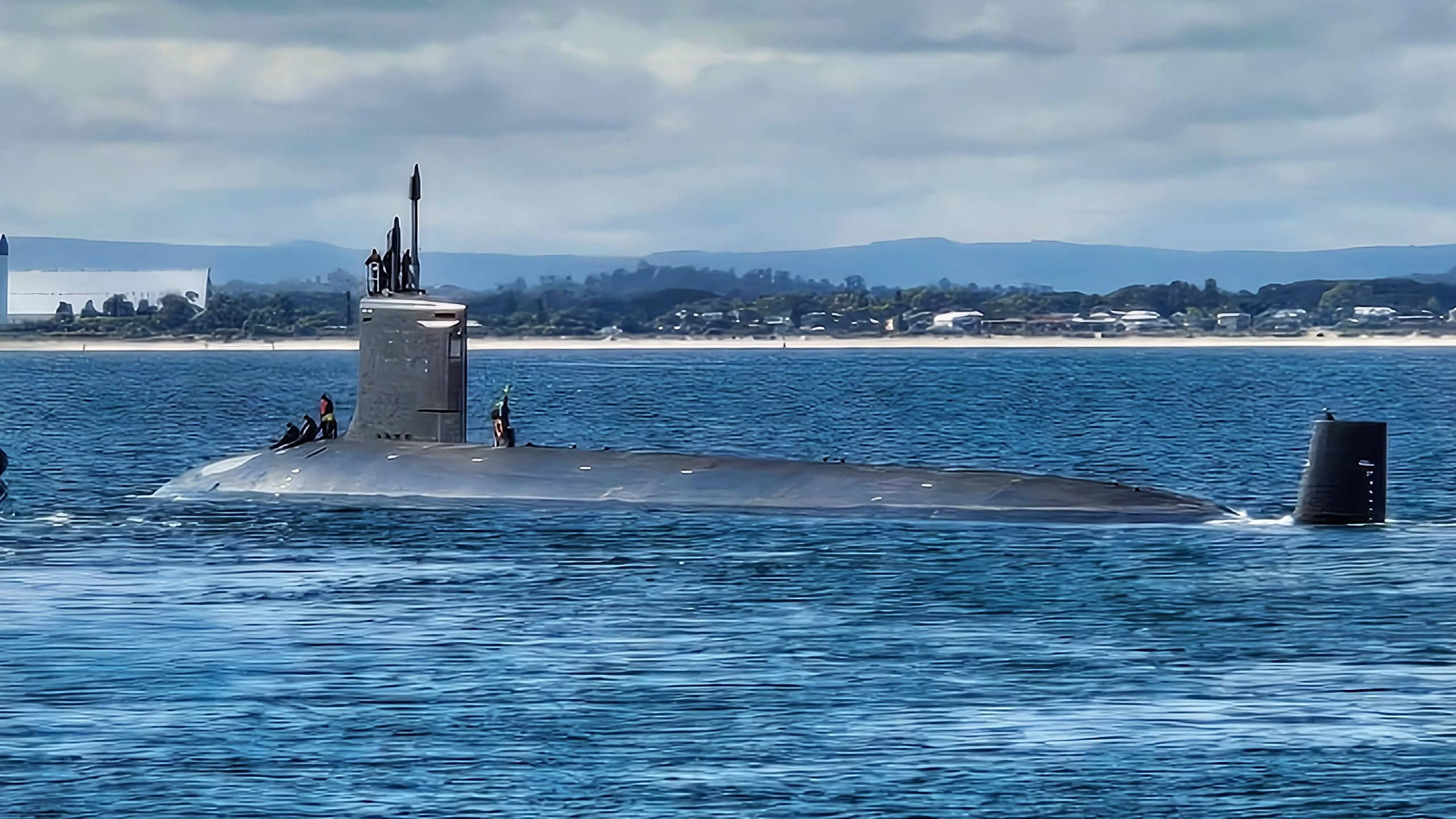
Inside F4: The $2.4 Billion Factory Building the U.S. Navy’s Future Submarines
In March 2026, the United States reached a significant milestone in expanding its defense industrial base with the opening of an advanced new manufacturing facility in Cherokee, Alabama.
Operated by the manufacturing company Hadrian, this state-of-the-art plant was created to support the production of the U.S. Navy’s Virginia-class attack submarines and Columbia-class ballistic-missile submarines. The 2.2-million-square-foot site, located in the historic Shoals region, has been transformed from the nation’s largest railcar manufacturing facility into a modern industrial hub capable of mass-producing highly specialized components essential to nuclear-submarine construction.
F4: The Factory of the Future
The facility addresses one of the Navy’s most urgent challenges: chronic bottlenecks in the submarine industrial base. Components required for building next-generation submarines are often too complex, too slow to produce, or too dependent on a limited number of suppliers. Navy officials have repeatedly identified these critical parts as the driving factor behind construction delays across multiple submarine programs.
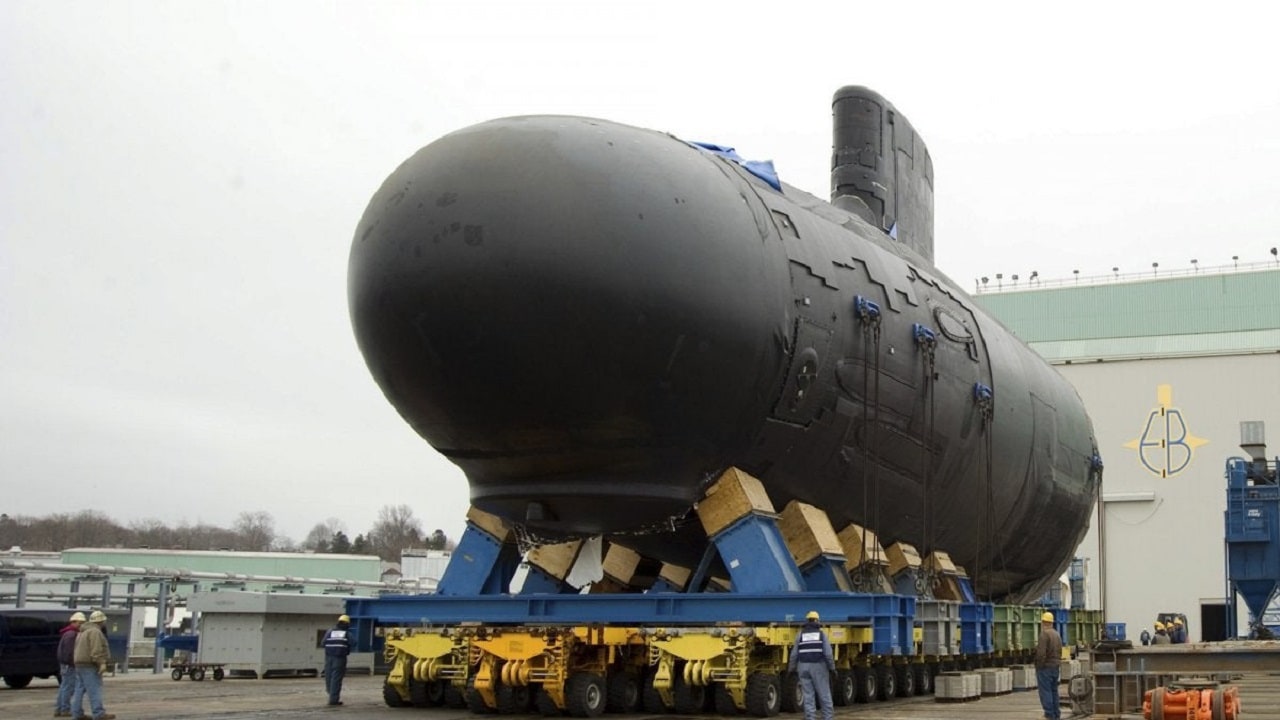
Image of Block III US Navy Virginia-class Submarine.
With shifting global threats and increased pressure to maintain undersea superiority, submarine production has become a national-level priority. F4 in Cherokee was built as a direct response to these production constraints and is expected to play a transformative role in strengthening the United States’ long-term naval readiness.
A major feature of the Navy’s shipbuilding strategy involves the adoption of what leadership calls “distributed shipbuilding,” a shift away from concentrating all manufacturing within traditional shipyard centers.
Under this approach, specialized facilities such as the new Cherokee plant take over the manufacturing of major components, enabling submarine shipyards in Connecticut, Rhode Island, and Virginia to focus on high-complexity tasks such as module integration, welding, nuclear-systems fitting, and final assembly.
According to Assistant Secretary of the Navy Jason Potter, moving work to advanced off-site manufacturing hubs relieves pressure on shipyards and creates a “profound effect on the speed of delivery.” This strategy is central to meeting the Navy’s aggressive production targets in the coming decade.
Rebuilding Domestic Shipbuilding
The creation of the Cherokee facility required one of the largest public-private investments in recent defense-industry history.
Hadrian provided more than $1.5 billion in private capital, while the U.S. Navy contributed roughly $900 million through appropriations for major funding initiatives, such as the One Big Beautiful Bill Act. The result is a partnership that marks a generational investment in restoring U.S. industrial capacity.
Senior federal and state officials, including Secretary of the Navy John C. Phelan, attended the facility’s ribbon-cutting ceremony, emphasizing how essential private-sector collaboration is for achieving the ambitious goals set by the Navy’s modern shipbuilding initiatives. Phelan stressed during his remarks that the government “cannot deliver the Golden Fleet alone—fast enough or at scale,” stating that partnership with the private sector is vital to meeting the Navy’s needs.
In general, U.S. factories have lagged behind in automation, but Hadrian has described F4 as a “factory of the future,” built around advanced automated manufacturing processes that dramatically increase production speed, consistency, and quality.
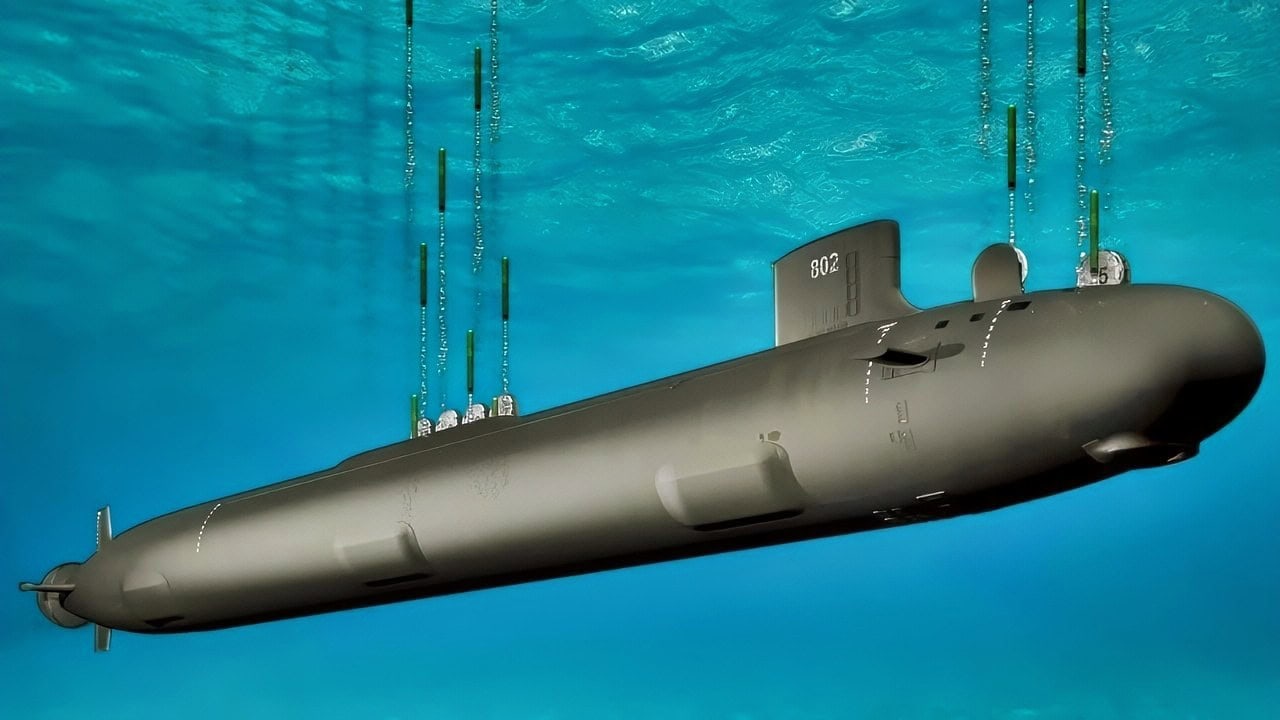
Columbia-Class SSBN USN. Image Credit: Creative Commons.
The company’s proprietary platform, known as Opus, automates the highly technical stages of component manufacturing that traditionally require years of training for machinists and technicians.
With this system in place, workers can reach production-ready proficiency in as little as 30 days. This innovation helps alleviate one of the most persistent challenges in submarine production: the shortage of skilled labor capable of performing the demanding tasks historically required in submarine component manufacturing.
Timeline to Full-Rate Production
Production ramp-up at the Cherokee site is expected to take 18–24 months. By the third year of operations, the facility is expected to operate at full-rate production, delivering a stable, high-volume stream of parts needed to maintain submarine construction schedules.
This steady output is vital, particularly for the Columbia-class ballistic-missile submarine program, which anchors the sea-based leg of the U.S. nuclear deterrent. Any delay in Columbia-class delivery carries national-security stakes.
Hadrian expects the facility to generate up to 1,000 high-quality jobs once fully operational, bringing advanced manufacturing opportunities back to an area long affected by outsourced production and industrial decline. The Shoals region’s workforce will benefit significantly from the plant’s training programs and an accelerated skill-development model enabled by advanced automation.
Furthermore, leaders in Washington have been trying to rebuild American shipbuilding for decades, and this new factory is the fruit of such labor.
Why F4 is so Important
The Cherokee plant is expected to be the first in a series of new facilities supporting the submarine industrial base. Two additional sites are planned, including a future “Foundry of the Future” focused on producing castings and forgings necessary for submarine pressure hull structures, propulsion systems, and other heavy components.
Together, these facilities represent a multipronged effort to decentralize submarine manufacturing, increase production resilience, and eliminate long-standing supply-chain vulnerabilities. This modular, distributed infrastructure makes submarine production more adaptable and less vulnerable to disruption, whether due to workforce shortages, material constraints, or unexpected logistical challenges.

An artist rendering of the future U.S. Navy Columbia-class ballistic missile submarines. The 12 submarines of the Columbia-class will replace the Ohio-class submarines which are reaching their maximum extended service life. It is planned that the construction of USS Columbia (SSBN-826) will begin in in fiscal year 2021, with delivery in fiscal year 2028, and being on patrol in 2031.
The Cherokee facility directly supports the two classes of submarines that form the backbone of U.S. undersea capabilities.
The Virginia-class attack submarines, known for their stealth, endurance, and multi-mission versatility, carry out critical tasks, ranging from intelligence collection to land-attack missions using Tomahawk missiles.
The Columbia-class ballistic-missile submarines, meanwhile, are poised to replace the aging Ohio-class and will be the foundation of the U.S. nuclear deterrent well into the 2080s. With such high-stakes programs dependent on timely component delivery, the importance of F4 cannot be overstated.
READ MORE – Iran Claims to Have Hit a Navy Aircraft Carrier With a Missile
READ MORE – Iran Came Close to Hitting a Navy Super Hornet
About the Author: Isaac Seitz
Isaac Seitz, a Defense Columnist, graduated from Patrick Henry College’s Strategic Intelligence and National Security program. He has also studied Russian at Middlebury Language Schools and has worked as an intelligence Analyst in the private sector.