
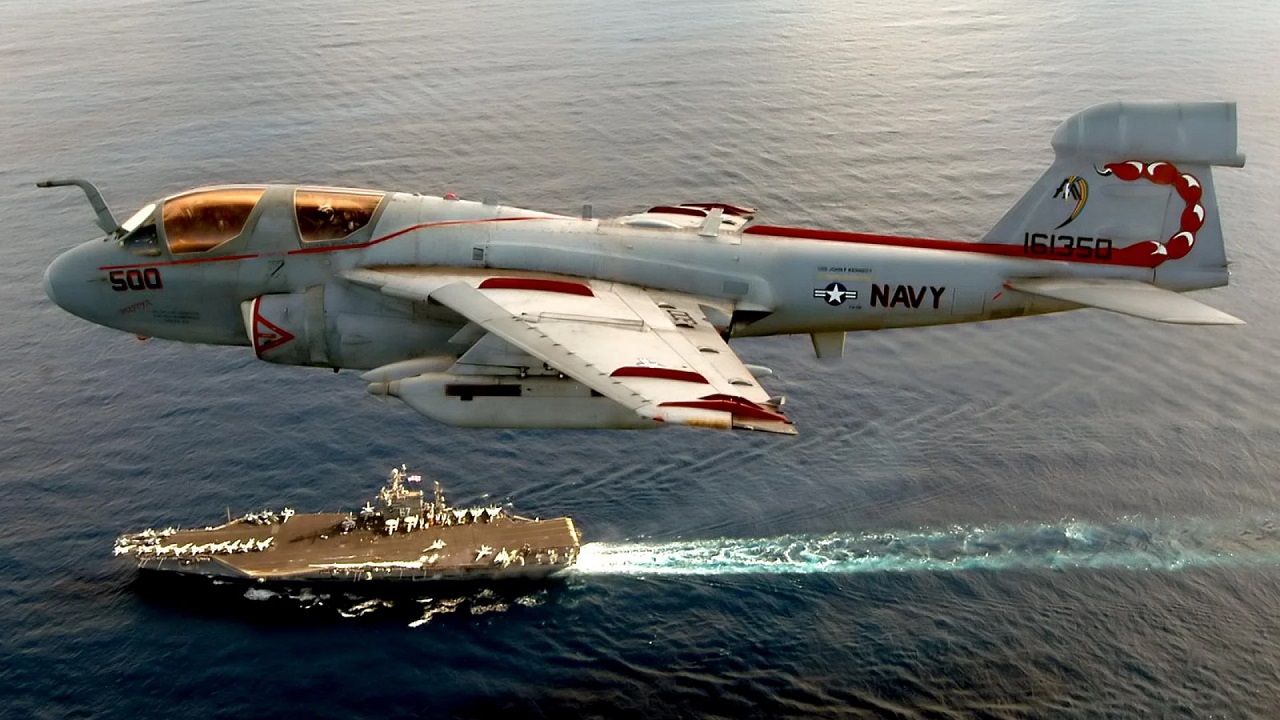
The U.S. is currently in a military conflict with Iran, but this is not the first time that has happened. And, in fact, this is actually the second time Washington has gone after Iran’s navy and come out on top. And Tehran, well, they went to the bottom, their navy, that is.
In April of 1988, the Navy launched Operation Praying Mantis. It isn’t as well-known an episode as the Iranian hostage crisis or other well-known incidents involving the United States and Iran being in conflict, but it was still a significant event.
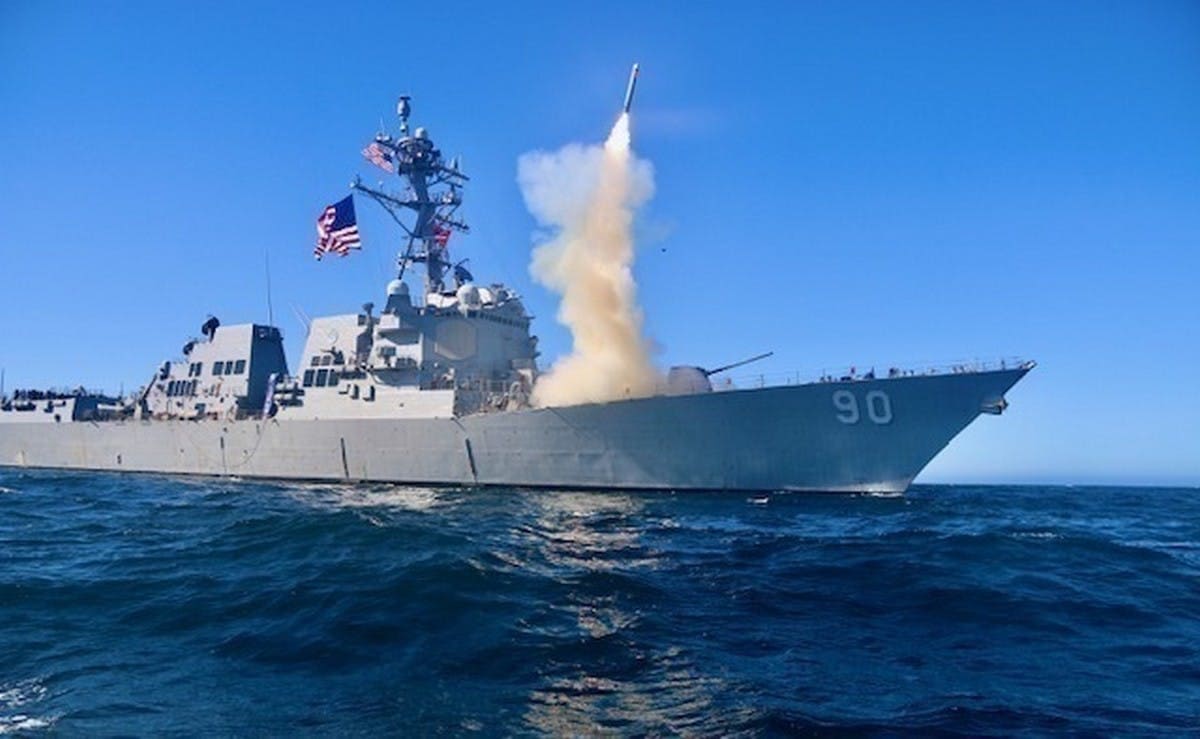
Tomahawk Missile. Image: Creative Commons.
According to the Navy’s official history, “the U.S. Navy launched Operation Praying Mantis against Iranian targets in the Arabian Gulf in retaliation for USS Samuel B. Roberts (FFG-58) mining four days earlier, which blew an immense hole in the ship’s hull. Ten Sailors from Samuel B. Roberts sustained severe injuries. Four were seriously burned. Commander Paul X. Rinn was hurt as well. The ship should have sunk, but thanks to an extraordinary damage control effort by all hands of an extremely well-trained crew, Samuel B. Roberts was kept afloat.”
That wasn’t the end of it.
“The U.S. response was fierce,” the Navy account says. “Operation Praying Mantis was the largest of five major U.S. Navy surface actions since World War II. It was the first, and so far only, time the U.S. Navy has exchanged surface-to-surface missile fire with an enemy, and it resulted in the largest warship sunk by the U.S. Navy since WWII. In the one-day operation, the U.S. Navy destroyed two Iranian surveillance platforms, sank two of their ships, and severely damaged another.”
The Aviators Speak
“On 14 April 1988, the USS Samuel B. Roberts (FFG-58) struck an Iranian mine in the central Persian Gulf. The explosion nearly forced the crew to abandon ship. No one was killed in the incident, but there were several injuries, some severe. The commanding officer reported that the force of the blast raised the Roberts’s stem 10 to 12 feet,” was how the journal Proceedings told the story.
“The fight to keep the ship afloat was a heroic effort. The substantial evidence linking Iran to the mining led the U.S. National Command Authority to respond appropriately on 18 April, in an operation called Praying Mantis.
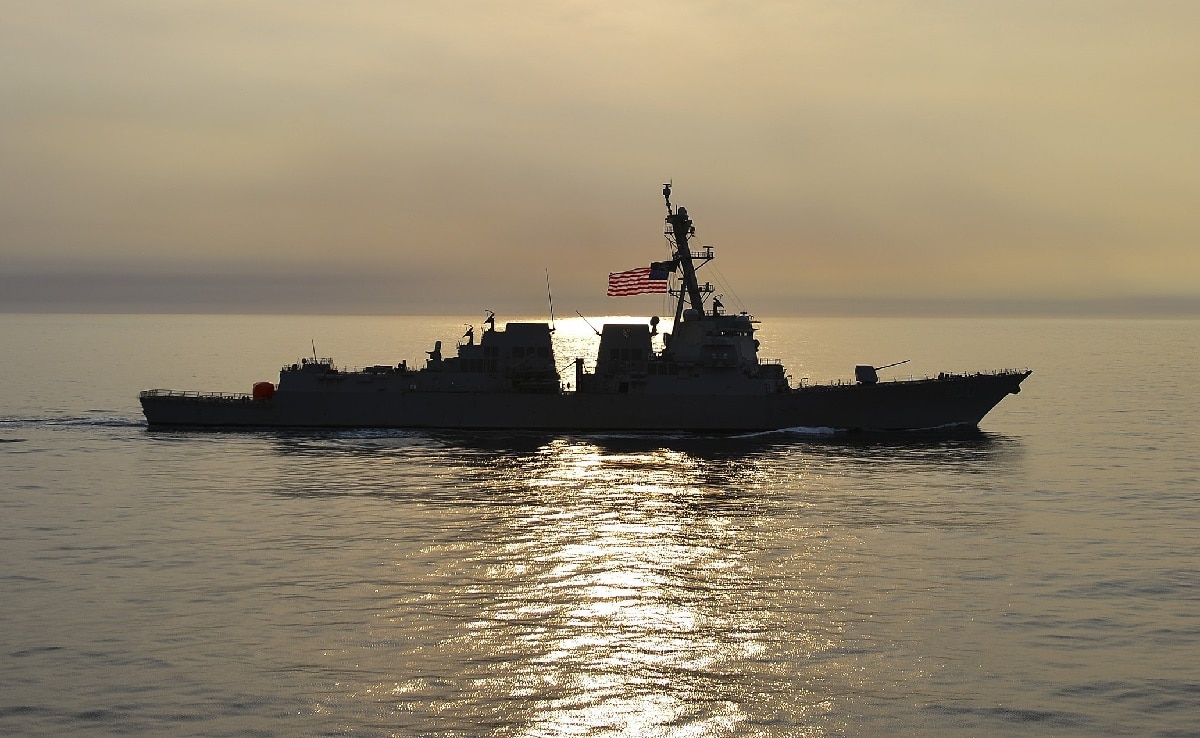
171207-N-JH929-039 PACIFIC OCEAN (Dec. 7, 2017) The Arleigh Burke-class guided-missile destroyer USS Kidd (DDG 100) prepares to perform a sea-power demo alongside the aircraft carrier USS Nimitz (CVN 68) during Tiger Cruise 2017, Dec. 7, in the Pacific Ocean. The Nimitz Carrier Strike Group is on a regularly scheduled deployment to the Western Pacific. The U.S. Navy has patrolled the Indo-Asia-Pacific region routinely for more than 70 years promoting peace and security. (U.S. Navy photo by Mass Communication Specialist 3rd Class Cole Schroeder/Released).
“In April 1989, the year after Operation Praying Mantis, two of the aviators involved in the mission wrote for Proceedings about the view from the air of that mission.” Those two men were Captain Bud Langston and Lieutenant Commander Don Bringle, both of the U.S. Navy.
When the initial incident took place, Battle Group Foxtrot, including the USS Enterprise (CVN-65), was in the Arabian Sea. After the Roberts exploded, units from the Enterprise headed to the Persian Gulf.
How It Went Down
“On board the Enterprise, Commander Carrier Air Wing Eleven received the Praying Mantis Operations Order (OpOrder) from Commander Cruiser Destroyer Group Three in the early evening of 17 April,” the two Navy men wrote. “The OpOrder tasked the air wing with attack and fighter combat air patrol (CAP) and a backup war-at-sea mission the next morning in support of the initial surface action against the Iranian oil platforms in the Persian Gulf and the sinking of a major Iranian naval combatant. Planning intensified.”
Then came the orders.
By April 18, “the direction and plans were firm, the air plan was in hard copy, and the strike leaders’ surface combat air patrol (SUCAP) support and war-at-sea strike plans were sent by message to JTFME. Selected aircrews were assigned either to participate in the initial fighter CAP/escort and attack SUCAP or to be part of a separate war-at-sea strike to locate and sink the Iranian frigate Sabalan, which had earned a reputation for her vicious attacks on neutral merchant shipping.
“The Intruders and Corsairs carried Harpoons, Walleyes, laser-guided bombs. Skippers and Rockeyes. This gave them the diversity in weaponry to ensure an overwhelming seaworthiness kill against the Saam-class frigate.”
The SUCAP and CAP/escort sorties—or SUCAP Group that day consisted of “four F-14 Tomcats, two A-6E Intruders, and two EA-6B Prowlers,” the authors wrote.
“At 0855, radio warning calls were made in Farsi, French, and English to those on the Iranian oil platforms to abandon the platforms prior to imminent shelling. Dead silence followed the warnings, which left an eerie premonition of what was to come. Shelling of the Sirri and Sassan platforms commenced at precisely 0900,” the account said. “Sirri and Sassan were chosen as targets because they both had been used for military purposes, including support for Iranian speedboat attacks on neutral shipping and support of mining operations in the Persian Gulf.”
The Sinking of the Joshan
“Four hours after the shelling began, one of Iran’s Combattante-II-class patrol boats, the Joshan, equipped with the Harpoon missile, moved toward the USS Wainwright (CG-28), Bagley (FF-1069), and Simpson (FFG-56), the account said.
“After an exchange of intentions on VHF channel 16, the Joshan refused to turn away. The Wainwright warned the Joshan of imminent attack. The Joshan then fired a Harpoon missile, which passed down the Wainwright’s port side, but failed to guide accurately. The Simpson launched an SM-1, which hit the Joshan. The Simpson and Wainwright proceeded to launch additional SM-ls, several of which scored direct hits. They continued the attack with five-inch and 76-mm. guns until they sank the Joshan.”
The next phase of the battle began when an Iranian frigate, the Sahand, challenged the surface group by firing missiles.
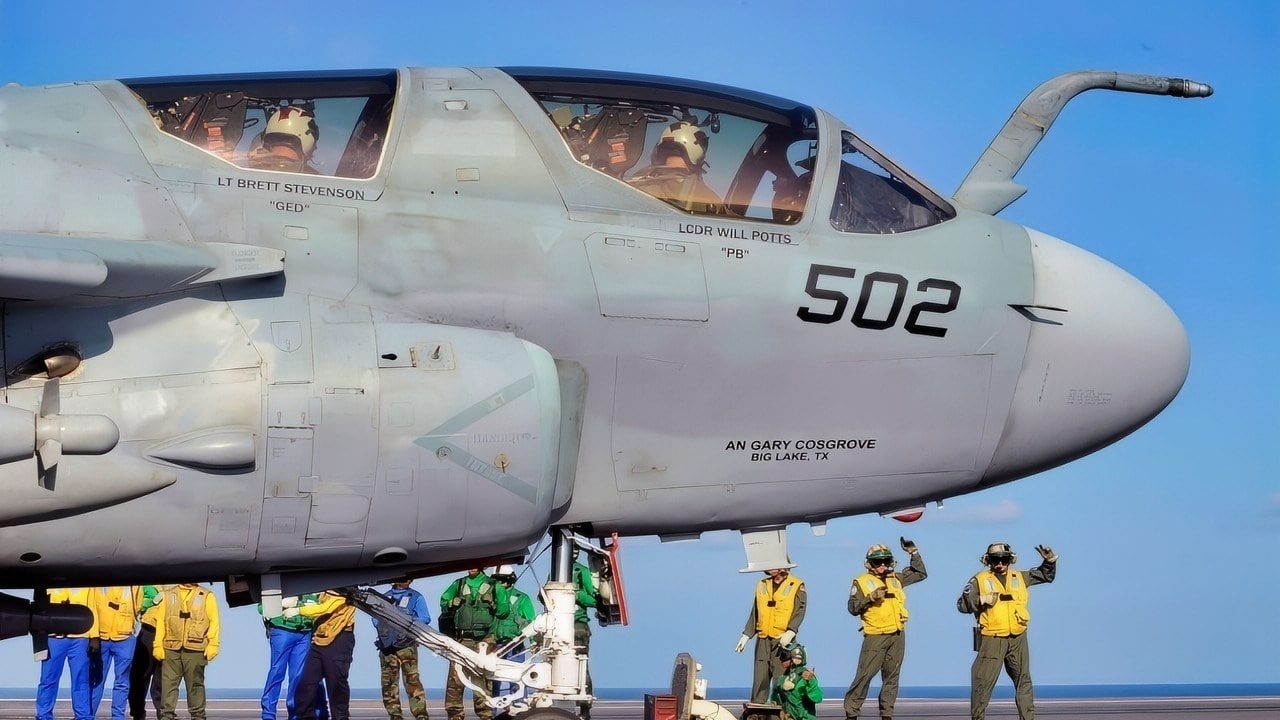
A-6 Intruder U.S. Navy Photo. Image Credit: Creative Commons.
“There was no mistaking the Sahand’s intentions. Executing a “break-turn,” the A-6 crew discharged flares to defeat the missiles, then immediately retaliated, launching Harpoon, a laser-guided bomb (LGB), and Skipper weapons. The initial attack inflicted major damage on the Sahand and put her dead in the water, engulfed in flames,” the Proceedings account said.
Another frigate, the Sabalan, went on to challenge the jets, but was eventually struck by them, although it was towed away.
“The war-at-sea strikes executed on 18 April were not a demonstration of sophisticated tactics against a formidable threat. Yet they clearly demonstrated the U. S. Navy’s substantial force and capability. The operation also served to validate readiness, verify attack profiles, and certify weapons reliability, accuracy, and damage effects,” the account said.
Fighting in Court
The engagement was followed by de-escalation, and Iran’s long war with Iraq ended later that year.
There was, of course, plenty of other U.S engagement in that part of the world in the years to follow. But the battle also sparked a long-running legal dispute between the countries.
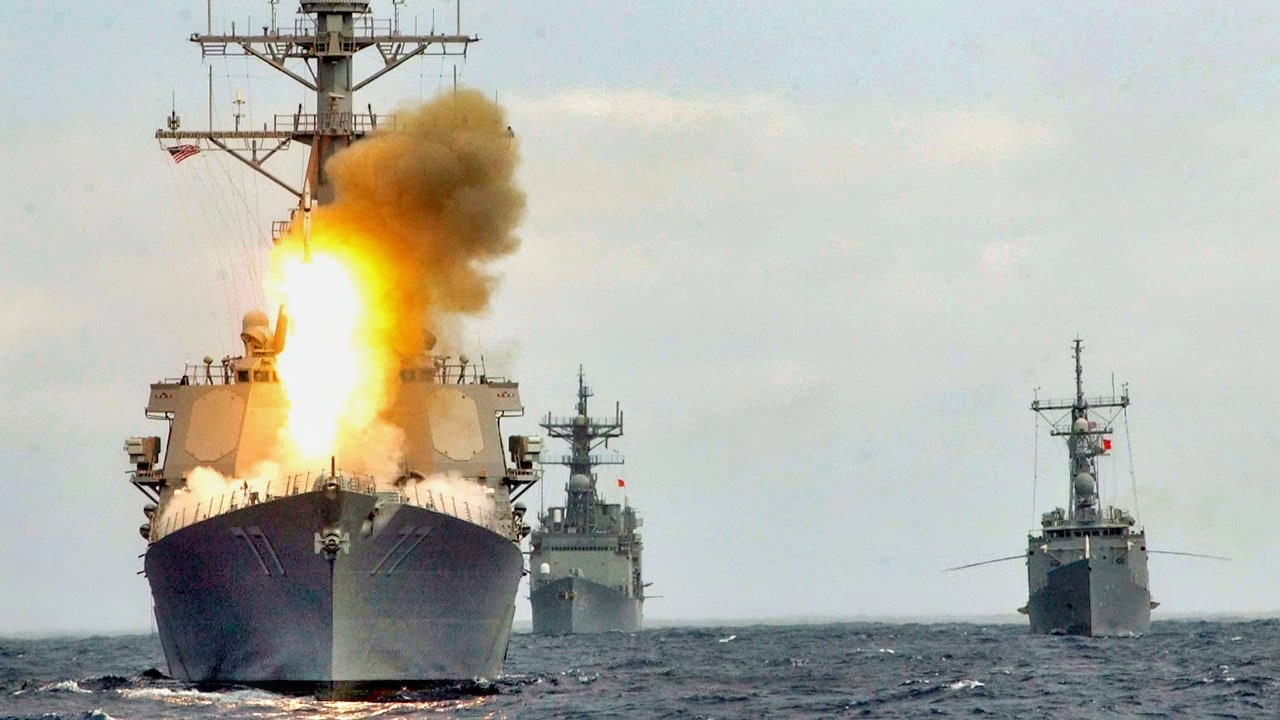
Pacific Missile Range Facility, Kauai, HI (Jul. 5, 2002) — Guided missile destroyer USS O’Kane (DDG 77) launches an SM-2 standard missile from its forward Vertical Launch System (VLS) during exercise ÒRim of the PacificÓ (RIMPAC) 2002. The guided missile frigate USS Crommelin (FFG 37) (right) and Spruance-class destroyer USS Paul F. Foster (DD 964) (center) follow in formation. RIMPAC 2002 is designed to improve tactical proficiency in a wide array of combined operations at sea, while building cooperation and fostering mutual understanding between participating nations. Countries participating this year are: Australia, Canada, Chile, Peru, Japan, the Republic of Korea and the United States. U.S. Navy photo by PhotographerÕs Mate 1st Class Chris Desmond. (RELEASED)
According to the American Society of International Law, the International Court of Justice ruled in 2003, 15 years after that battle, that “a series of retaliatory attacks by the U.S. Navy against certain Iranian oil platforms in the Persian Gulf in 1987 and 1988, although constituting an unlawful use of force, did not violate a 1955 commerce treaty between the U.S. and Iran since the attacks did not adversely affect freedom of commerce between the territories of the parties.”
About the Author: Stephen Silver
Stephen Silver is an award-winning journalist, essayist, and film critic, and contributor to the Philadelphia Inquirer, the Jewish Telegraphic Agency, Broad Street Review, and Splice Today. The co-founder of the Philadelphia Film Critics Circle, Stephen lives in suburban Philadelphia with his wife and two sons. For over a decade, Stephen has authored thousands of articles that focus on politics, national security, technology, and the economy. Follow him on X (formerly Twitter) at @StephenSilver, and subscribe to his Substack newsletter.