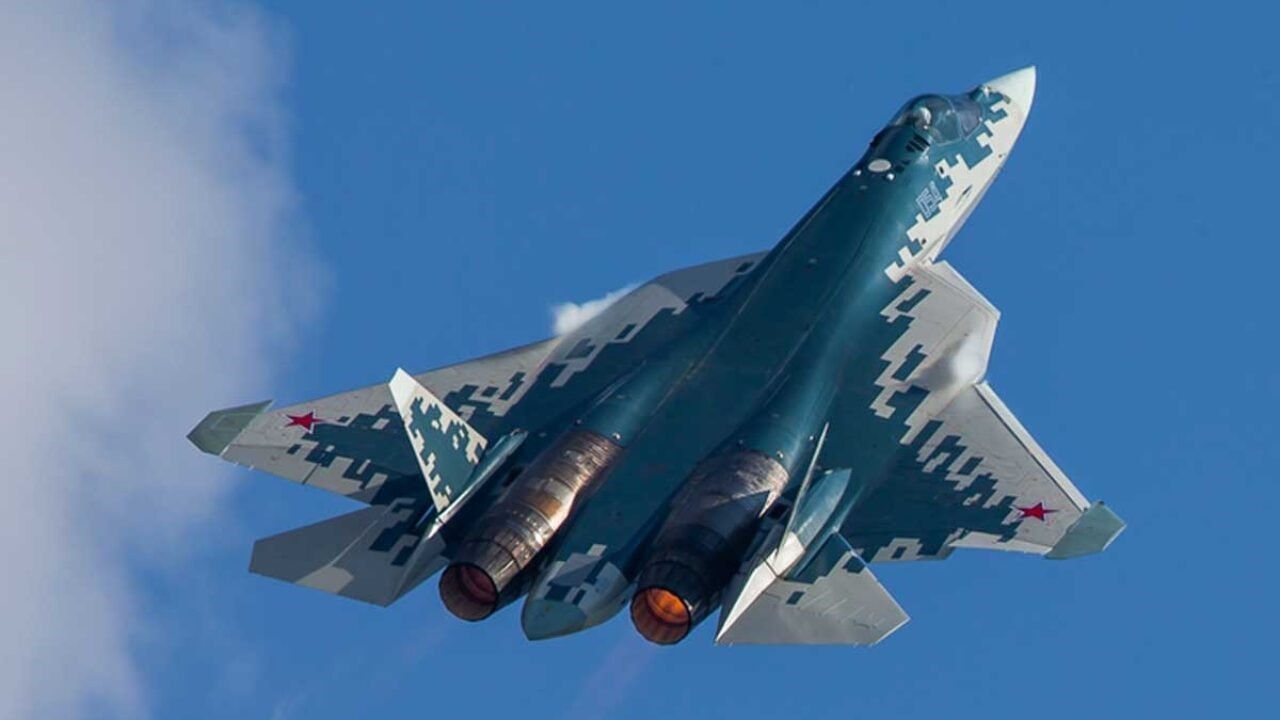
Russia’s Tiny Su-57 Felon Stealth Fighter Fleet Isn’t Built for Modern Warfare
Russia’s Sukhoi Su-57 program is the definition of great power ambition colliding with industrial reality, as well as strategic priorities surpassing the dreams of aerospace engineers and air war planners. The jet is technically evolving in terms of getting better sensors, weapons, and possible integration of artificial intelligence (AI).
But the fleet remains tiny, inconsistent, and strategically marginal compared to the United States’ and China’s fifth-generation forces.
The biggest problem facing the Su-57 is not its design. Contrary to what Western propaganda says, it’s actually quite impressive. Instead, the problem that the expensive and complex Su-57 faces is its production, scale, and the overall ecosystem undergirding it.
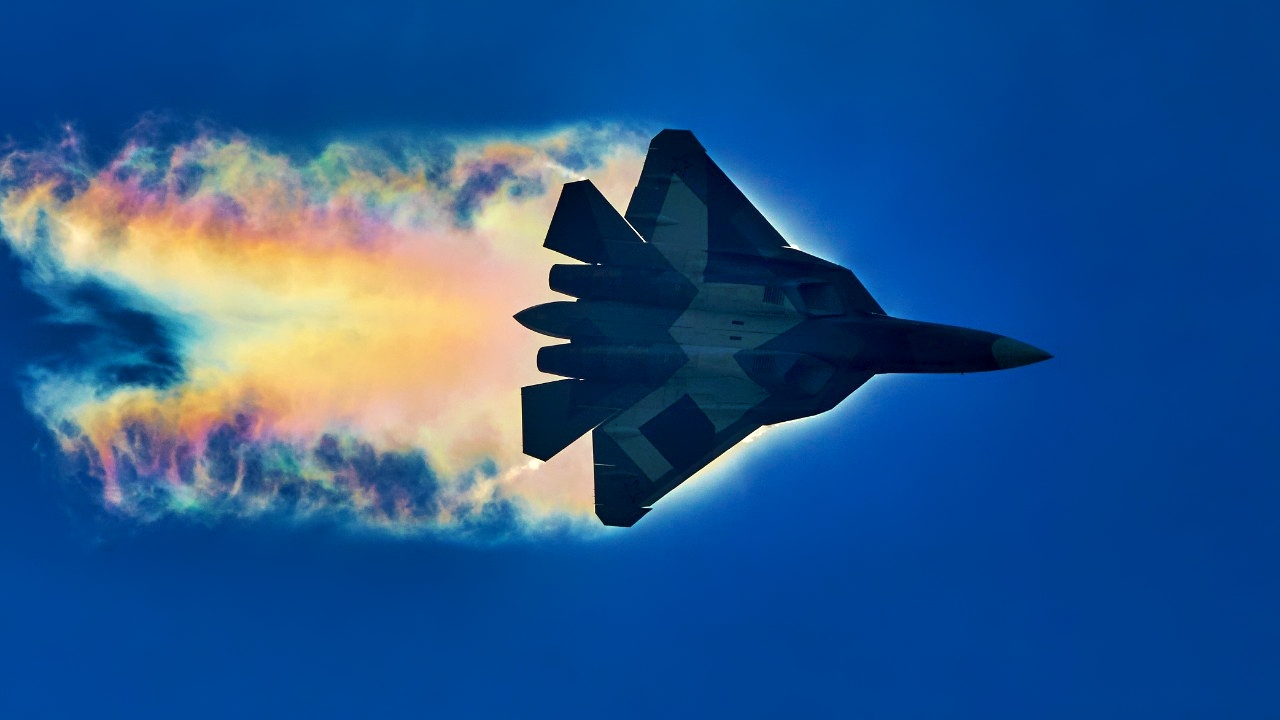
Russia’s Su-57 Felon Fighter
The Core Problem: Fleet Size is Almost Irrelevant
Right now, it is believed that the Russian Air Force possesses around 30-32 operational Su-57s. There have been a total of around 40 units built for Russia (including prototypes). The original goal was for Russia to possess 76 aircraft by 2027, or 2028 at the latest.
It does seem as though the Su-57 was developed at a time when the assumptions of modern warfare were fundamentally different from what modern warfare has, in reality, become.
Back when the Russians first developed the program, the world’s great powers were obsessed with developing fifth-generation, stealth multirole fighters. Those fighters, while expensive, were never designed for swarming tactics. They were meant for high-end, precision warfare. But the kind of war that the Russians are waging in neighboring Ukraine does not favor the employment of exquisite, complex systems like the Su-57.
The kind of warfare that is required today does not require expensive, unique systems. It needs cheap, easily mass-produced, replaceable systems. Like drones. Indeed, both the Russians and Ukrainians have demonstrated a remarkable reliance on drones and even old Soviet-era systems to keep them in the fight.
The glamorous, legacy systems have been out of the fold. It isn’t only the Su-57 that has been basically kept out of the bulk of the fighting. It’s the T-14 Armata main battle tank (MBT), which was considered by many before the war began to be the herald of a new age of high-tech tank warfare.
Just as with the Su-57s, though, Russia possesses an insufficient number of those systems—and they are too costly to risk in the kind of high-intensity drone-dominated warfare that defines the Ukraine war.

Su-57 and Su-75 Checkmate Russian Air Force.
So, the Su-57, like many advanced systems developed by the world’s great powers, is no longer as relevant as its designers believed it would be.
Further, the Russian Su-57 fleet is numerically inferior to the U.S. fleet of fifth-generation warplanes, such as the F-35 Lightning II (which has around 1,300 units) and China’s rapidly scaling Chengdu J-20. In essence, Russia built a fifth-generation fight—but not a fifth-generation force.
Production Crisis: The Real Achilles’ Heel
Then there’s the chronic underproduction of the Su-57. Again, it is a fine aircraft.
But it simply is too expensive and complex for Russia, which has a finite defense budget, to risk limited resources to build at the expense of other, cheaper, more militarily useful systems. There have been, even before the Ukraine war erupted, years of delays resulting from supply chain issues that derive from the fact that the Russians have been under onerous Western sanctions.
Yes, the Russians have managed to insulate themselves well from the most severe impacts of the sanctions. But the Su-57 was a specific system that was designed to rely upon advanced Western electronics. Now that the West has deprived the Su-57 of those subsystems, Moscow has had to get creative with indigenizing what it could—and relying on the Chinese advanced industrial sector to fill the gap.
Overall output, too, has been low and inconsistent year-to-year. In some years, only two aircraft were delivered to the Russian Air Force.
Since the start of the Ukraine war, Moscow routinely announces that “large batches” of Russia’s vaunted Su-57 are being activated. But there are never any disclosed numbers, making it difficult for outside analysts to get an accurate image of what the Russians are up to.
Of course, the Russians have crafted a self-contained war economy out of necessity. Yet, even within that self-contained war economy, which has performed much better than anyone in the West assumed it would, there are gaps that are not easy to overcome. Not only is there the microelectronics shortage from the West that is negatively impacting the development of the Su-57, but there is also the problem of stable industrial scaling.
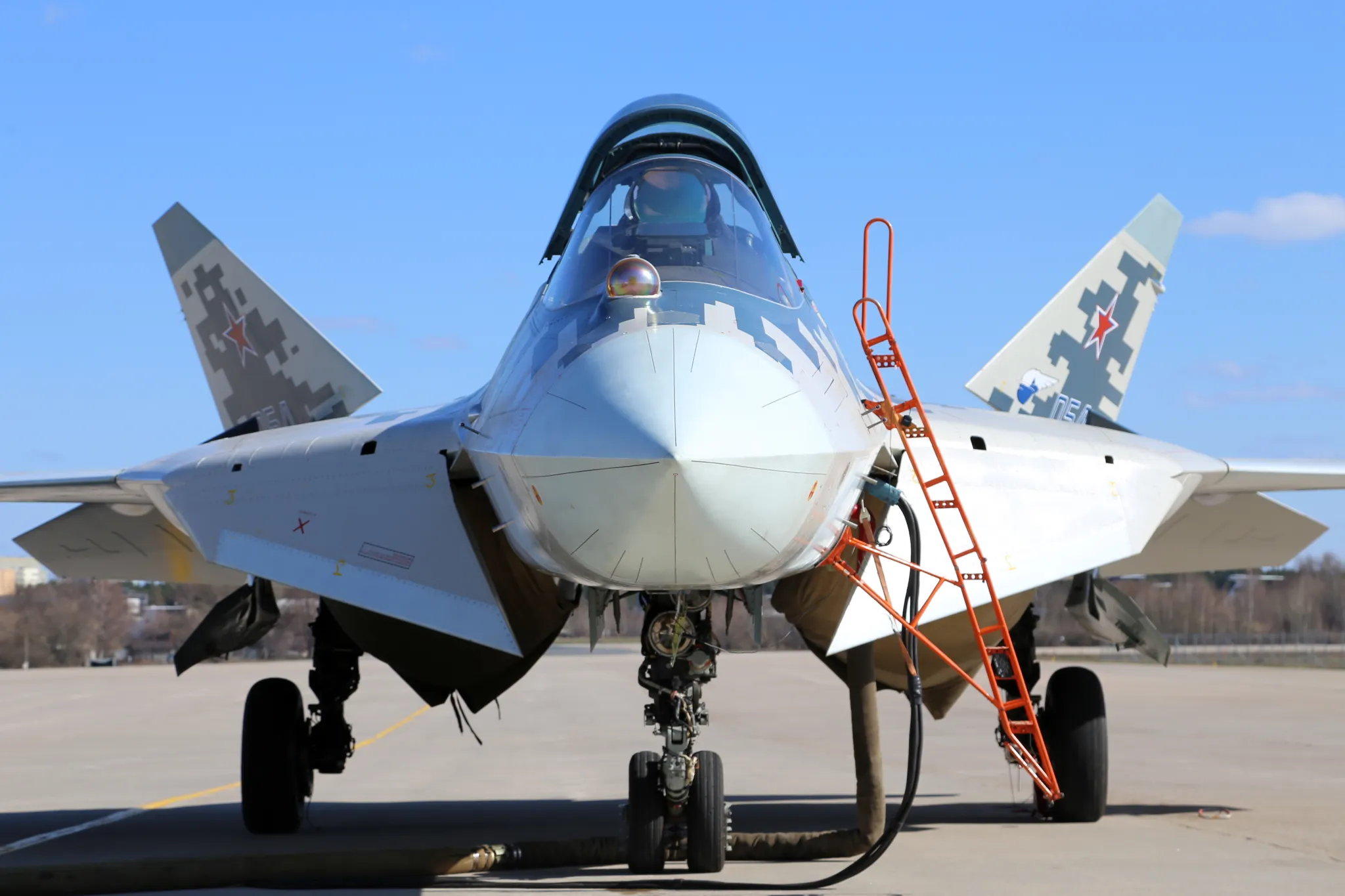
Russia’s Su-57 Stealth Fighter. Image Credit: Creative Commons.
The Russians are facing a defense-industrial problem that will not be easily overcome by simply spending more money on building more Su-57s. This is particularly the case given that the Russians have managed to hold their own in the Ukraine war without needing the Su-57.
Incremental Upgrades: Evolution Without Scale
As the Russians have struggled to fully actualize their Su-57 dream, they have already started to incrementally upgrade the warplane. These improvements include an upgraded 101KS electro-optical system and a move toward passive detection (like F-35 DAS). The Russians have expanded the Su-57’s weapons suite to include modernized air-to-air and strike capabilities.
More importantly, the Russians are believed to be adapting the upgraded Su-57s for potential integration with air-launched drones, such as the S-71 concept.
Moscow has further enhanced the Su-57 by adding a new “second-stage” engine in testing to provide better thrust, efficiency, and stealth performance. Meanwhile, Russian sources tout AI-assisted flight systems and more advanced pilot decision support.
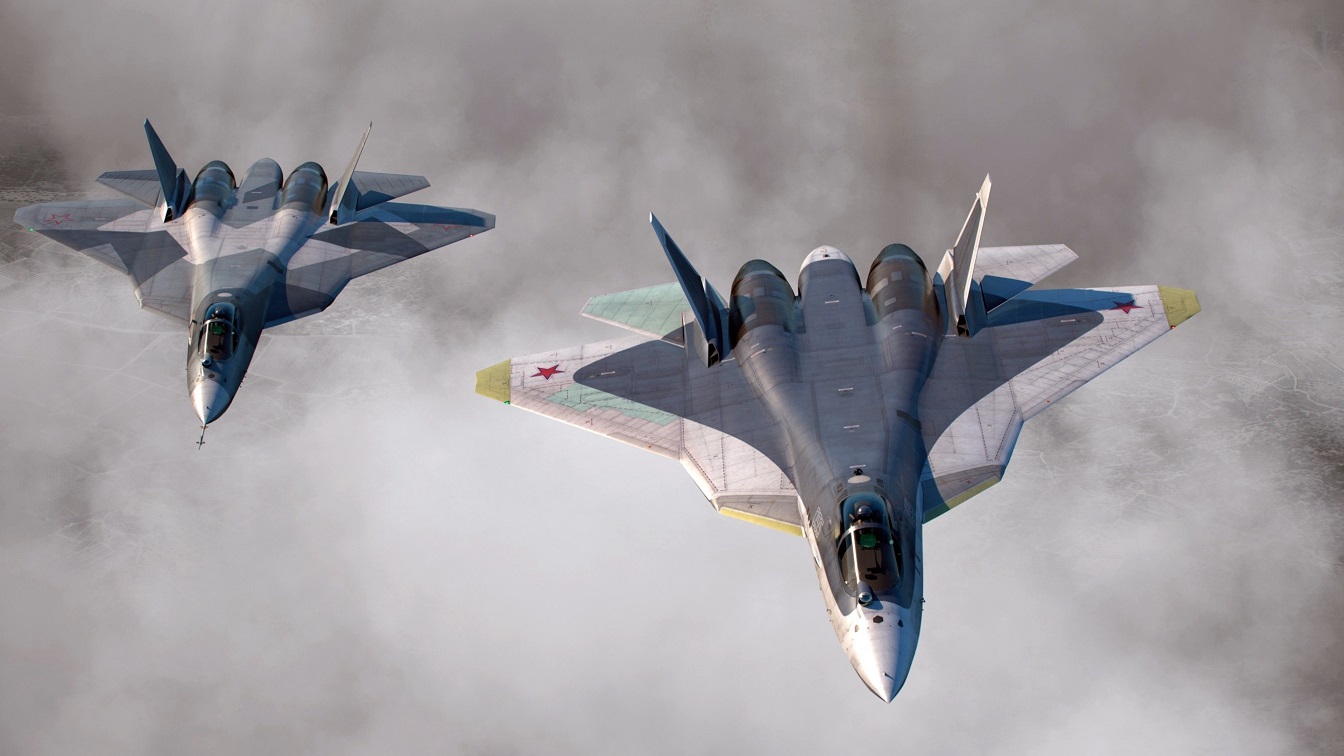
Su-57 stealth fighter. Image Credit: Artist Rendition.
Such upgrades, while important, are considered “catch-up features,” rather than “leap-ahead” capabilities.
Export & Geopolitics: Symbol Over Substance?
Thus far, Algeria is believed to be the first foreign export customer for the Su-57. Moscow is pushing export variants to offset the onerous cost of the Su-57 and to signal technological relevance to the world.
Yet there remains limited buyer interest globally due to the presence of sanctions and the Su-57’s niche role in Russia (why would any nation want to spend so much money in such economically uncertain times if not even the Russians are using the Su-57 as their primary warplane?).
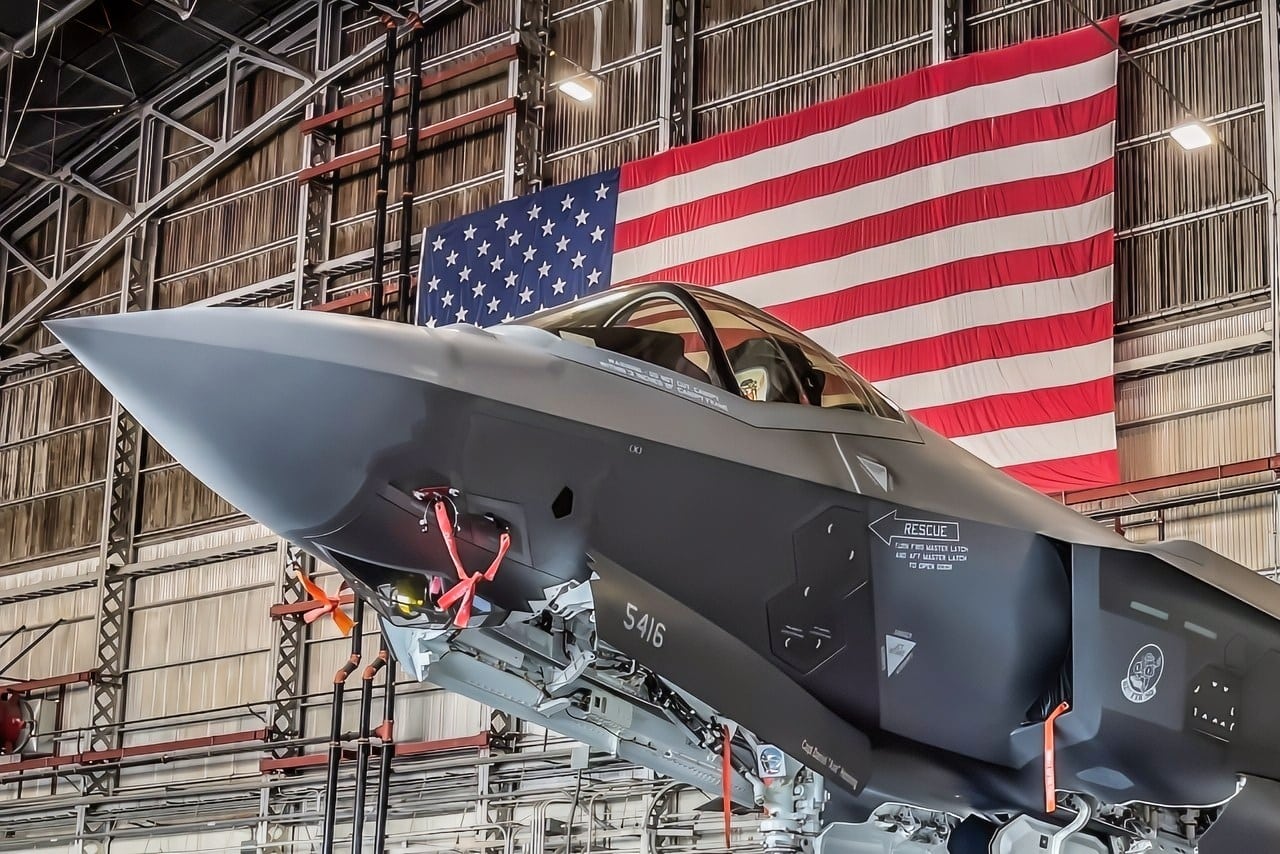
An F-35 Lightning II assigned to the 62nd Fighter Squadron, Luke Air Force Base, Ariz., sits in a hangar ahead of operations for the F-35 Lightning II TDY, Oct. 28, 2021, at Joint Base San Antonio-Kelly Field, Texas. The 62nd FS will be training with F-16s from the 149th Fighter Wing and the 301st Fighter Wing, along with T-38s from the 301st Fighter Wing. The multi-role capabilities of the F-35 allows them to perform missions which traditionally required numerous specialized aircraft. The complimentary air superiority capabilities of the F-35 will augment our air superiority fleet and ensure we continue to “own the skies” over future battlefields. (U.S. Air Force photo by Brian G. Rhodes)
In fact, some experts assess that not only does the Su-57 compete poorly with the F-35 ecosystem, but it is also being rivaled now by the Chinese support ecosystem for their fifth-generation warplanes.
The Su-57 is really being treated by Russia as a luxury capability. The rest of the world sees that, and they are treating the potential Su-57 export variant accordingly (so far).
The Bigger Strategic Picture
The Russian approach to their fifth-generation warplane program is distinct from that of the American and Chinese approaches to similar projects. The Russians seek to build small numbers of high-end systems that rely mostly on missiles, air defenses, and attrition warfare.
That contrasts deeply with the U.S. approach, which is networked and mass-produced (more so than the Su-57 at least), and China’s industrial-scale replication strategy. Indeed, the Russian approach is essentially to create a limited, boutique capability.
Therefore, the Su-57 program reveals a deeper truth about modern warfare: fifth-generation power is not about having a stealth fighter—it is about fielding hundreds of them, networking them, and sustaining them in combat. Russia has the platform in the Su-57. But Moscow has not built the system required to make that platform decisive.
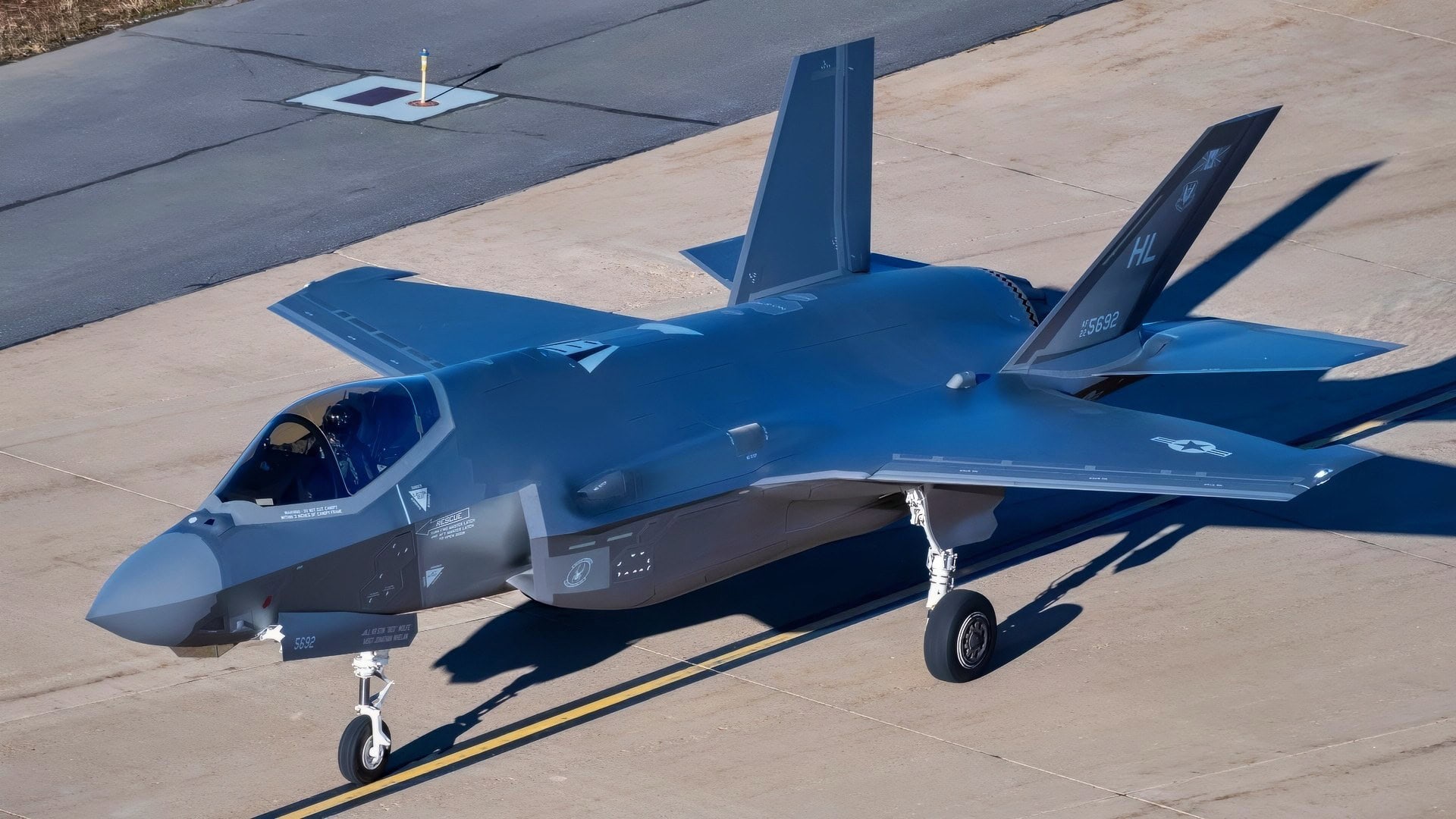
Maj. Kristin “BEO” Wolfe demonstrates the capabilities of the F-35A Lighting II, a single seat, single engine, all-weather stealth multirole fighter aircraft, during a practice flight with the F-35 Demonstration Team at Hill Air Force Base, Utah, Dec. 13, 2023. (U.S. Air Force photo by Senior Airman Jack Rodgers)
And in a world defined by industrial-scale warfare, that may be the difference between relevance and irrelevance.
Nevertheless, the Russians might have the last laugh. Unlike the Americans and Chinese, they have spent nowhere near as much money or resources on their fifth-generation warplane. As the Ukraine war and now the Iran war are showing us, the real essential element for modern warfare is increasingly complex—in large numbers—missiles, hypersonic weapons, and drones. Russia has all those systems in abundance. As does China.
The Americans, however, do not have those important systems in large quantities. And that, more than any fifth-generation warplane, could prove decisive in a major war.
MORE – Iran Almost Took Out a U.S. Navy F/A-18 Super Hornet
About the Author: Brandon J. Weichert
Brandon J. Weichert is the Senior National Security Editor at 19FortyFive.com. Recently, Weichert became the editor of the “NatSec Guy” section at Emerald.TV. He was previously the senior national security editor at The National Interest. Weichert is the host of The National Security Hour on iHeartRadio, where he discusses national security policy every Wednesday at 8pm Eastern. He hosts a companion show on Rumble entitled “National Security Talk.” Weichert consults regularly with various government institutions and private organizations on geopolitical issues. His writings have appeared in numerous publications, among them Popular Mechanics, National Review, MSN, and The American Spectator. And his books include Winning Space: How America Remains a Superpower, Biohacked: China’s Race to Control Life, and The Shadow War: Iran’s Quest for Supremacy. Weichert’s newest book, A Disaster of Our Own Making: How the West Lost Ukraine, is available for purchase wherever books are sold. He can be followed via Twitter/X @WeTheBrandon.