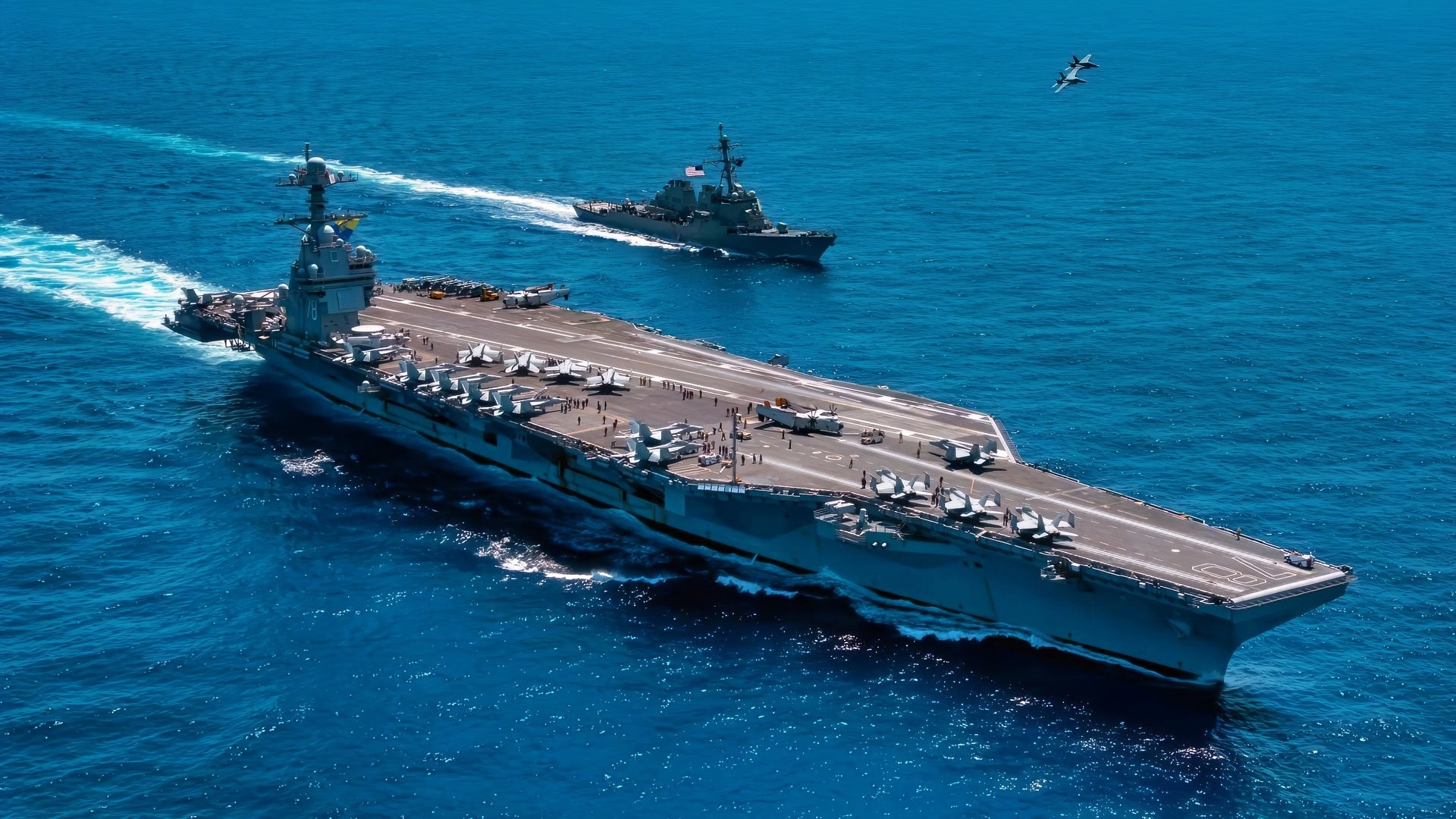
The U.S. Navy Has A Clear Problem: Not Enough Aircraft Carriers As China Builds More Supercarriers
The U.S. Navy currently operates with 11 aircraft carriers.
But the war in Iran, along with broader geopolitical conditions and global threats confronting the United States, would suggest that a larger carrier fleet would make for a stronger, more effective Navy.
The reasons a 12-aircraft carrier Navy would be desirable are clear enough. Just consider the current circumstances in the Pacific, the war in the Middle East, and the continued conflict in Ukraine.
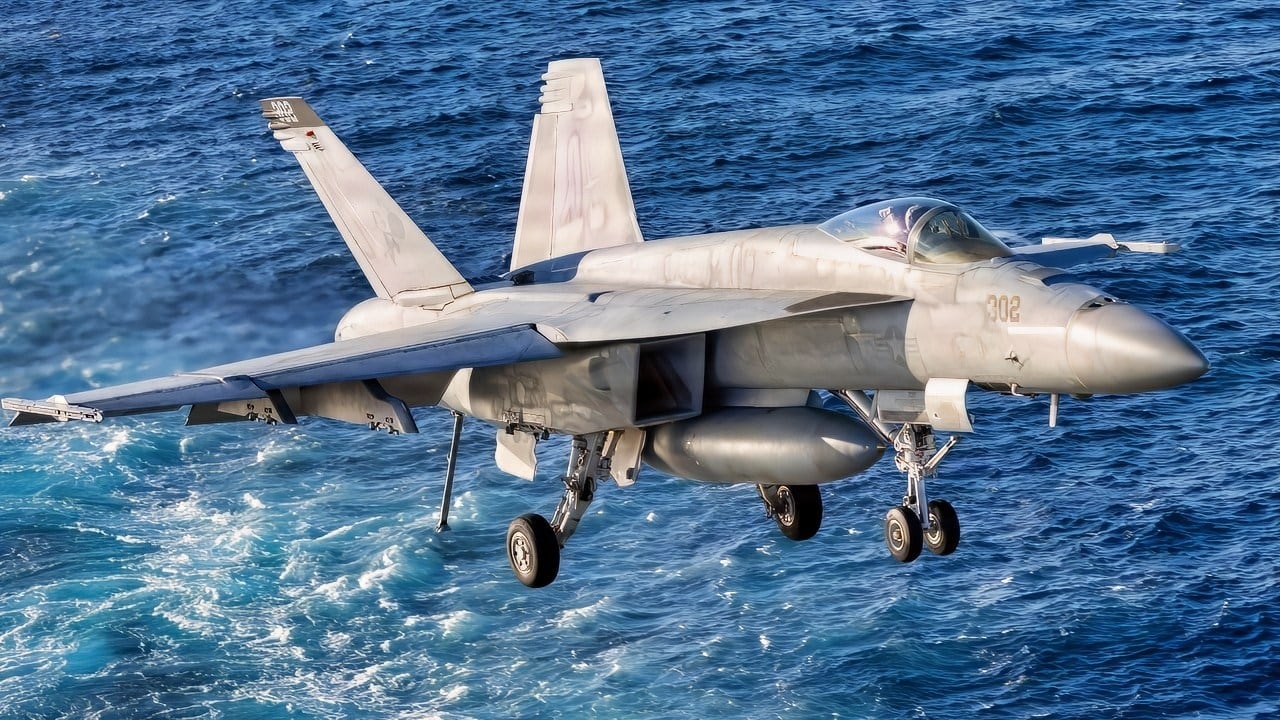
An F/A-18E Super Hornet aircraft approaches the flight deck of the world’s largest aircraft carrier, Ford-class aircraft carrier USS Gerald R. Ford (CVN 78), Nov. 17, 2025. U.S. military forces are deployed to the Caribbean in support of the U.S. Southern Command mission, Department of War-directed operations, and the president’s priorities to disrupt illicit drug trafficking and protect the homeland. (U.S. Navy photo)
China Threat
Most are familiar with the growing threat China poses—it can be measured in the rapid pace at which Beijing is building new aircraft carriers fo the People’s Liberation Army Navy (PLAN) operations.
Not long ago, the PLAN achieved the ability to operate up to three carriers in the Pacific at once. Its first carrier, the Liaoning, and its second carrier, called the Shandong, were both on patrol in the Pacific when the PLAN’s next carrier, the Fujian, began sea trials.
The Chinese have also copied U.S. Navy “dual-carrier” warfare preparation exercises in the Pacific.
They operated two carriers together on patrol near the South China Sea to conduct joint, integrated air-attack preparation exercises.
China is now known to be building a fourth carrier, and to call it a supercarrier would be no exaggeration—it is anticipated to be the largest carrier ever built.
As a result, U.S. combatant commanders’ demand for carriers in the Pacific is arguably at an all-time high. The Navy’s forward presence would be critical for deterrence and for preparing for the breakout of a conflict over Taiwan.
The threats in the Middle East are also quite well-known. The Iran War is ongoing, and there is a persistent threat of attacks from the Houthis. Carrier strike groups are critical to deterrence, power projection, and forward presence, and carrier air wings have already demonstrated unique value in counter-drone and maritime missile defense operations.
Strait of Hormuz Threat
Destroyers and cruisers operating in carrier strike groups are well positioned with interceptors, threat-detection radar, and an assortment of layered countermeasures, including lasers, electronic warfare measures, and deck-mounted guns.
But the Navy’s recent Red Sea experience has also shown that carrier-launched fighter jets help to counter drone and cruise missile salvos.
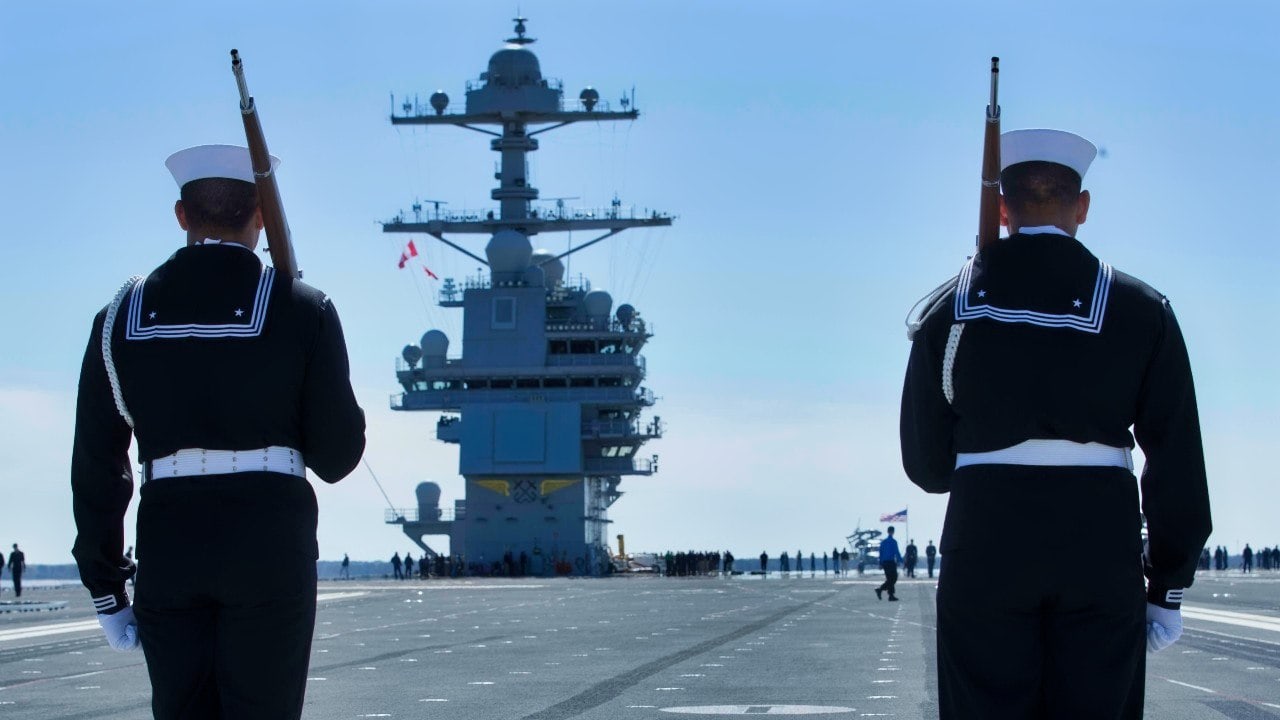
(April 8, 2017) — Logistics Specialist 3rd Class Miguel Monduy, from Miami, Florida, and Aviation Ordnanceman Airman Michael Valdez, from Pheonix, Arizona, assigned to Pre-Commissioning Unit Gerald R. Ford (CVN 78), stand on the flight deck for shifting colors. The future USS Gerald R. Ford (CVN 78) is underway on its own power for the first time. The first-of-class ship — the first new U.S. aircraft carrier design in 40 years — will spend several days conducting builder’s sea trials, a comprehensive test of many of the ship’s key systems and technologies. (U.S. Navy photo by Mass Communication Specialist Seaman Gitte Schirrmacher)
Not only can fighter jets provide a sensor layer beyond the standard radar view available to surface ships to detect targets, but they also showed in the Red Sea that they can intercept Houthi drones and cruise missiles, destroying them with air-to-air missiles.
Their experience shows another way carriers can conduct defensive warfare at sea.
12 Aircraft Carriers for the U.S. Navy?
These realities underscore that the U.S. Navy would be well-served to operate at least 12 carriers across the globe.
The demand for Navy power-projection operations is growing, as is the call to launch air campaigns across multiple regions simultaneously.
Given carriers’ ability to transport fifth-generation F-35C stealth fighter jets into position to respond to any contingency, they can help deliver a mass air attack anywhere in the world.
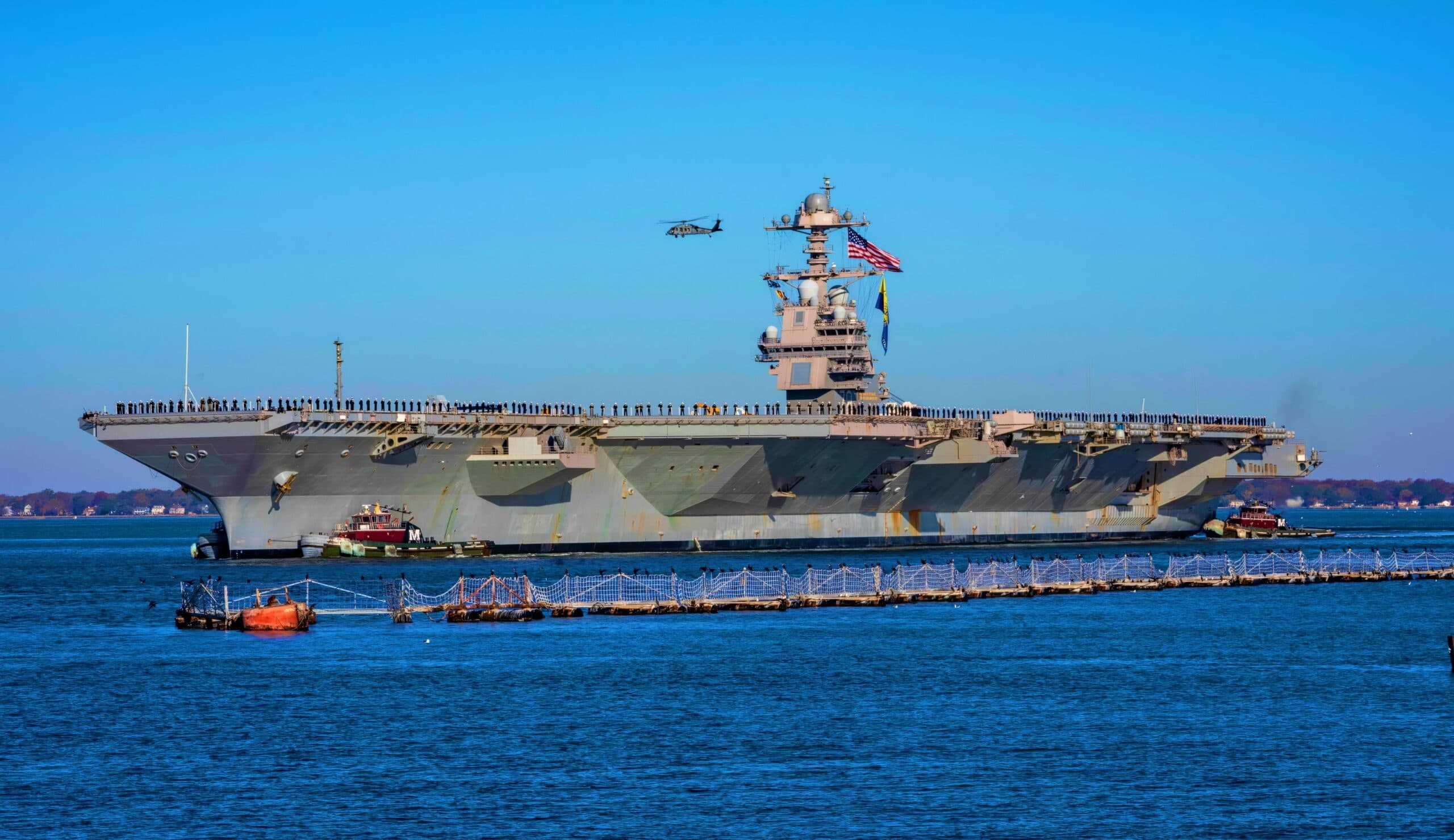
NORFOLK (Nov. 26, 2022) The USS Gerald R. Ford (CVN 78) returns to Naval Station Norfolk after completing their inaugural deployment to the Atlantic Ocean with the Gerald R. Ford Carrier Strike Group (GRFCSG), Nov. 26. The GRFCSG, returned to Naval Station Norfolk following a scheduled deployment with Allies and partners in an effort to build strategic relationships and contribute to a stable and conflict-free Atlantic region, while also showcasing the U.S. Navy’s most advanced class of aircraft carrier. (U.S. Navy Photo/Video by Mass Communication Specialist First Class Nathan T. Beard)
At the moment, the U.S. enjoys a significant fifth-generation air superiority advantage, and a single carrier can deploy as many as 50 F-35Cs to high-risk areas.
Also, 12 carriers would enable the Navy to surge its operational forward-attack presence. At any given time, carriers will also need to return to port for maintenance or sustainment, and other carriers are unavailable due to mid-life refueling complex overhaul.
MORE – The Navy Needs to Stop Building Ford-Class Aircraft Carriers Now
About the Author: Kris Osborn, President of Warrior Maven
Kris Osborn is the President of Warrior Maven – Center for Military Modernization. Osborn previously served at the Pentagon as a highly qualified expert in the Office of the Assistant Secretary of the Army—Acquisition, Logistics & Technology. Osborn has also worked as an anchor and on-air military specialist at national TV networks. He has appeared as a guest military expert on Fox News, MSNBC, The Military Channel, and The History Channel. He also has a Master’s Degree in Comparative Literature from Columbia University.