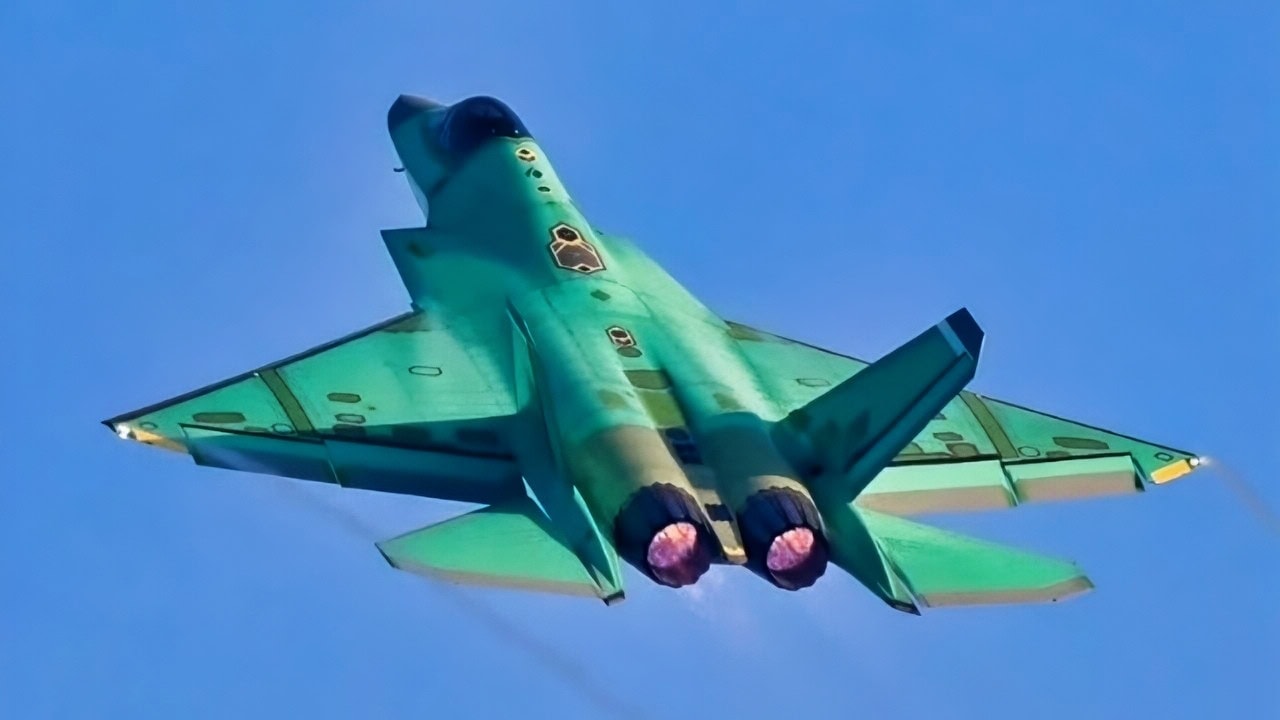
Shenyang Aerospace Copied the Su-27, Su-30, and Su-33 — Then Used Stolen F-35 Data to Build the J-35
Following the pattern set by Mikoyan in Russia with the MiG-29 and MiG-29K, Dassault in France with the Rafale C and Rafale M, and the United States industrial partnership that produces the F-35A and F-35C models, the People’s Republic of China’s (PRC) Shenyang Aerospace Corporation (SAC), one of the main subsidiaries within the Aviation Industry Corporation of China (AVIC) consortium, has designed and built land-based and carrier-capable versions of the same fighter.
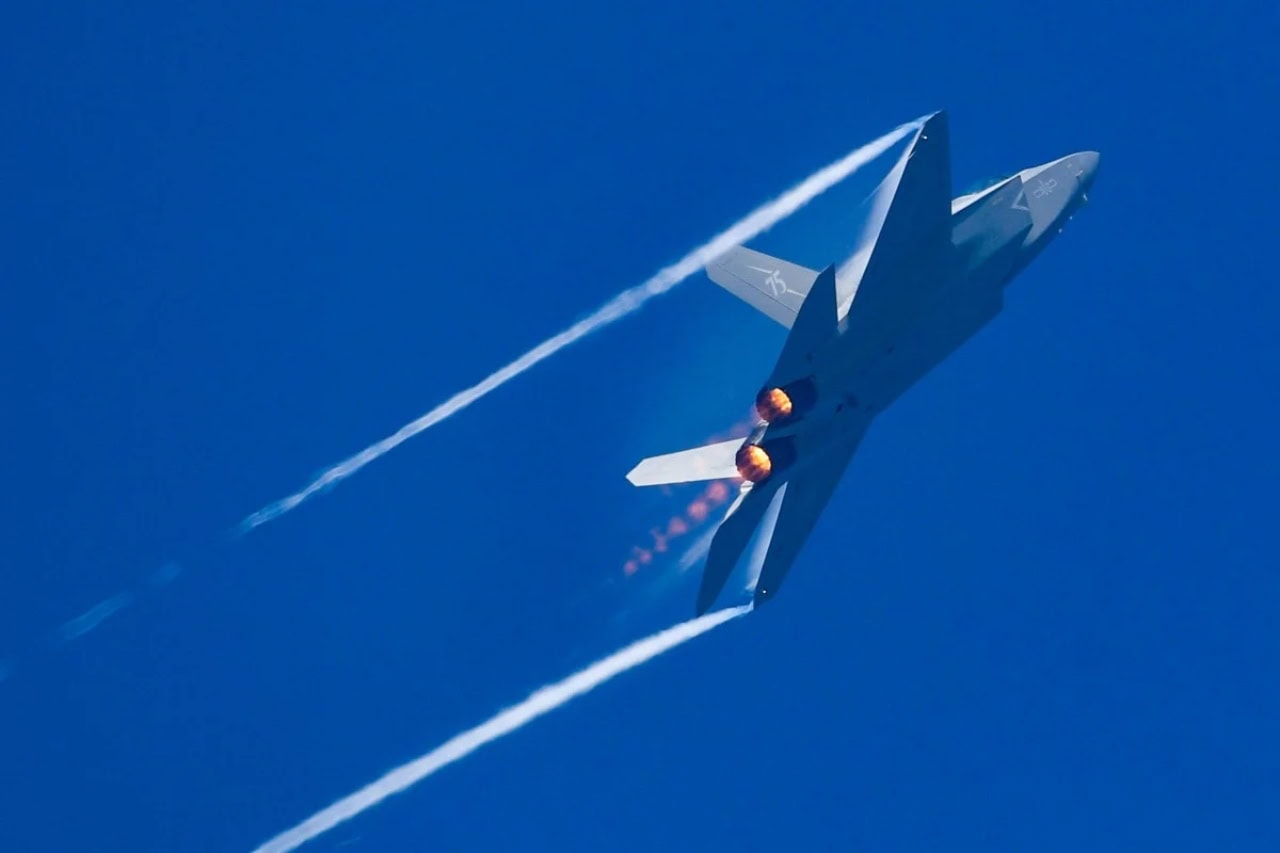
J-35. Image Credit: Chinese State Media.
Creating two aircraft — one designed for land and the other for sea — from the same basic planform is always a challenge for any aerospace corporation. The J-35 design team has managed that task about as well as one could expect for SAC, and — more significantly for the Chinese — has reportedly done so at a reasonable program cost per unit.
There are several reasons why this PRC combat aircraft design team was the logical choice for the J-35’s two variants.
One is that SAC has had more than three decades of experience in reverse-engineering other aircraft designs to produce local copies of the originals. The J-11B produced at SAC was derived from the original Su-27 at Shenyang, and the J-16 was reverse-engineered from the Su-30MKK.
Secondly, SAC also built the first carrier-capable aircraft for the PLAN, the J-15, which was again a copy made from the Russian Navy’s (VMF) Su-33.
Having built both the carrier- and land-based variants of the PRC’s Flanker analogs was a learning experience for the design team about how the structural configuration must differ between the two versions.
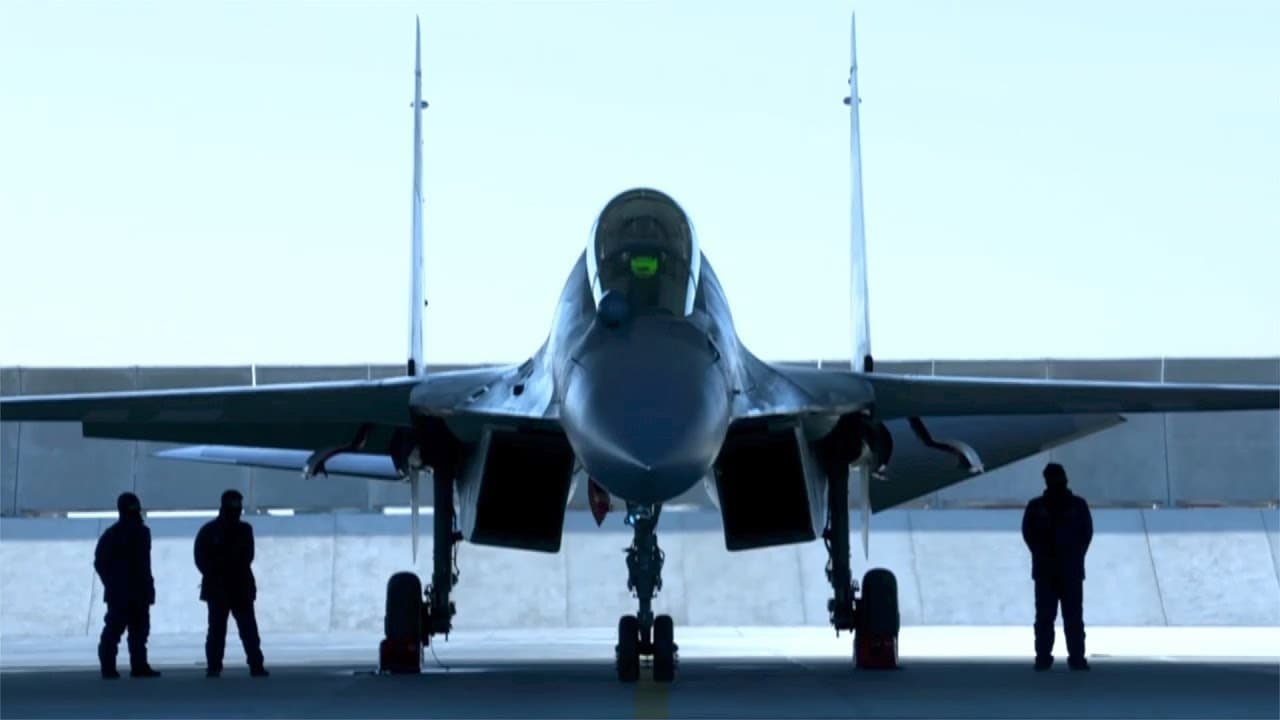
J-16D. Image Credit: Chinese Military.
Thirdly, SAC was one of the main benefactors of reams of information on the design of the US F-35 that was stolen largely from U.S. Government computer databases by Su Bin, a Chinese national living in Canada and operating a cyber espionage ring.
Several reports on operations published in 2009 cite six current and former government officials who confirmed to the Wall Street Journal that design information for the F-35 had been accessed multiple times by Chinese hackers between 2008 and 2014.
Perhaps not coincidentally, the end year of this espionage operation in 2014 was also the year that one of the initial prototype aircraft for the J-35 program, then designated FC-31, made its only debut at the biennial Air Show China in Zhuhai, Guangdong Province.
J-35 for China: Stealth at Scale and the Math Problem
The most important recent news about the J-35 was a report from earlier this year stating that SAC is making massive investments to significantly expand aircraft production.
The company has announced it will double fighter aircraft production over the next 3-5 years and is building the facilities to achieve that goal.
The new SAC facility being developed to reach that objective represents an investment by Beijing of more than $1.2 billion.
The current factory buildings cover 1.62 square miles. But according to reports from the PRC and open-source publications, as well as industry representatives, the company is about to undergo a massive expansion of its facilities.
According to these sources, the current SAC facility will become only one section of a much larger “Shenyang Aerospace City” complex that will cover an area approximately the size of Hong Kong Island.
A local state-controlled publication, Liaoning Daily, reported in January 2026 that a new assembly plant was structurally completed in mid-2025.
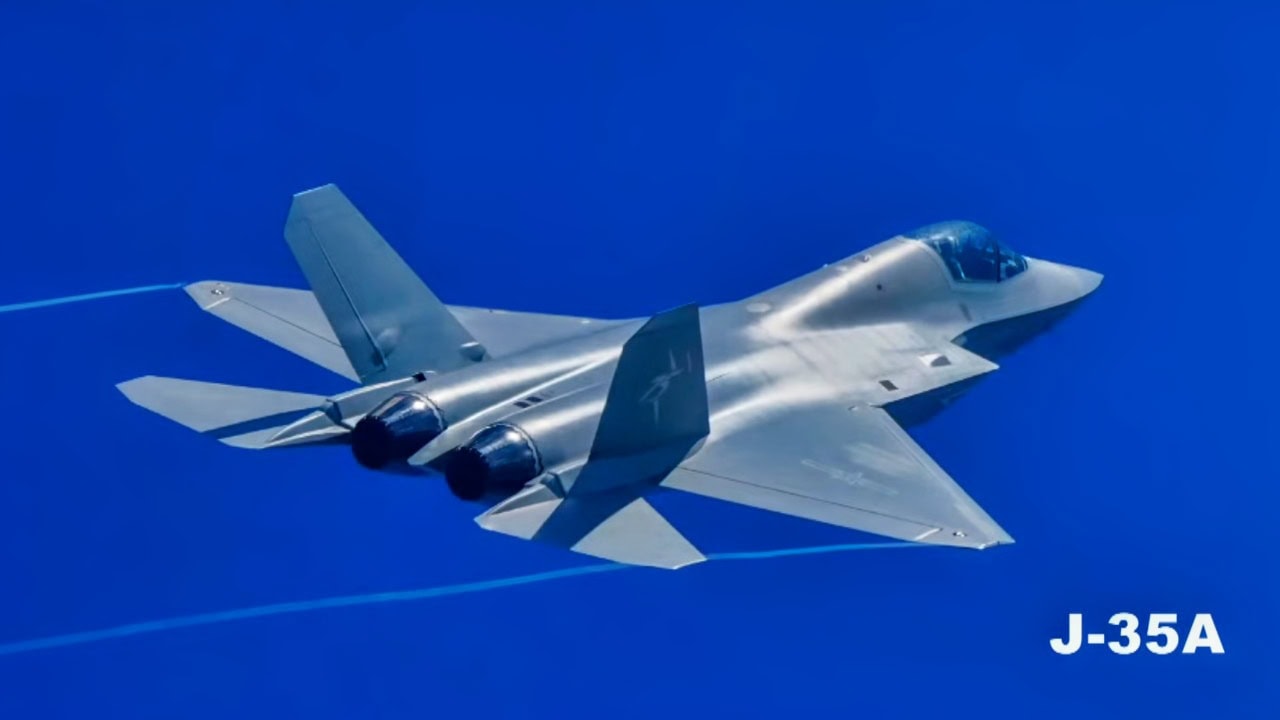
J-35 flying at Zhuhai Airshow 2024.
This and other reporting states that mass production of the J-35 is intended to begin in 2026. Three significant developments in the program are likely to be seen as J-35 manufacturing surges, some of which will be first-time events for SAC and PRC combat aviation.
And that math problem becomes clear: the U.S. military will soon need to think about countering a massive influx of Chinese stealth fighters.
How J-35 Takes Off from Here
The J-35 will demonstrate whether SAC can turn out stealth technology-based aircraft at scale.
This may mean a wholesale replacement of older types of aircraft within the PLAAF with the J-35. Within the PLAN, the J-35 will supplant the J-15 in numerous carrier-launched missions.
The sheer number of aircraft to be in service will be such that they are intended to overpower any US-led force that would be assembled to stand against a PLAN and PLAAF attack on the Republic of China (ROC). It is an ambitious plan that will require a robust supply chain and the steady, dependable delivery of major subsystems such as engines, radars, and avionics.
Secondly, the speed at which SAC will be producing the J-35 models is anticipated to be on the order of Chengdu Aerospace, SAC’s main rival, which accelerated the time-to-build for the J-20.
Lastly, churning out record numbers of J-35s in record time is thought to be accomplished by the SAC program piggybacking on the J-20’s experience with new systems that are the heart of stealthy fighter aircraft. Specifically, these would include a current-generation active electronically scanned array (AESA) radar set, open-architecture avionics, and advanced datalink capacity.
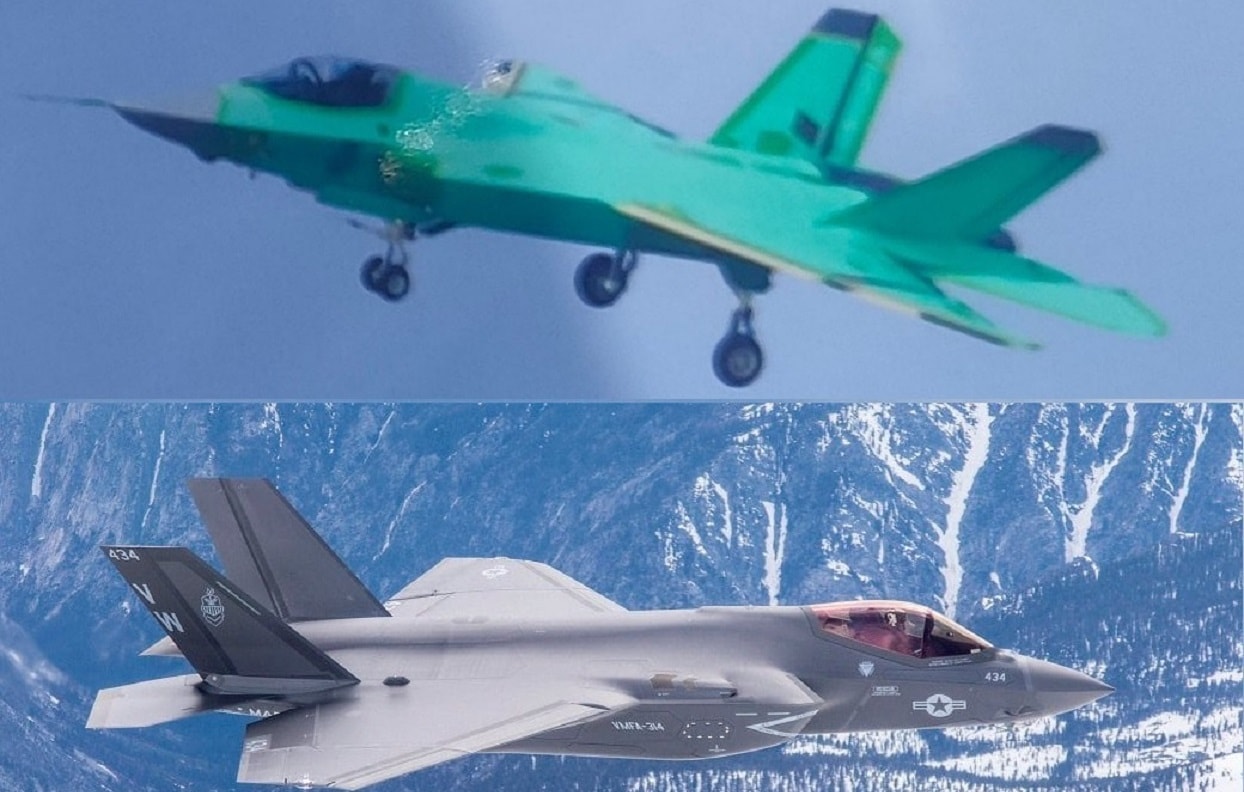
J-35 vs. F-35 Comparison. Image by Twitter User RupprechtDeino.
This will also enhance interoperability within the Chinese armed forces and enable air power elements to operate in close conjunction.
“This is a considerable uptick in Chinese tactical airpower that we are about to see,” said one retired military intelligence officer with long experience analyzing the PLA. “They are not building all these fighters just for show. What is more likely is a big showdown with us in the West. Perhaps the biggest in a long time.”
MORE – The F-35 Stinks Narrative Is Not Real
About the Author: Reuben F. Johnson
Reuben F. Johnson has thirty-six years of experience analyzing and reporting on foreign weapons systems, defense technologies, and international arms export policy. Johnson is the Director of Research at the Casimir Pulaski Foundation. He is also a survivor of the Russian invasion of Ukraine in February 2022. He worked for years in the American defense industry as a foreign technology analyst and later as a consultant for the U.S. Department of Defense, the Departments of the Navy and Air Force, and the governments of the United Kingdom and Australia. In 2022-2023, he won two awards in a row for his defense reporting. He holds a bachelor’s degree from DePauw University and a master’s degree from Miami University in Ohio, specializing in Soviet and Russian studies. He lives in Warsaw.