
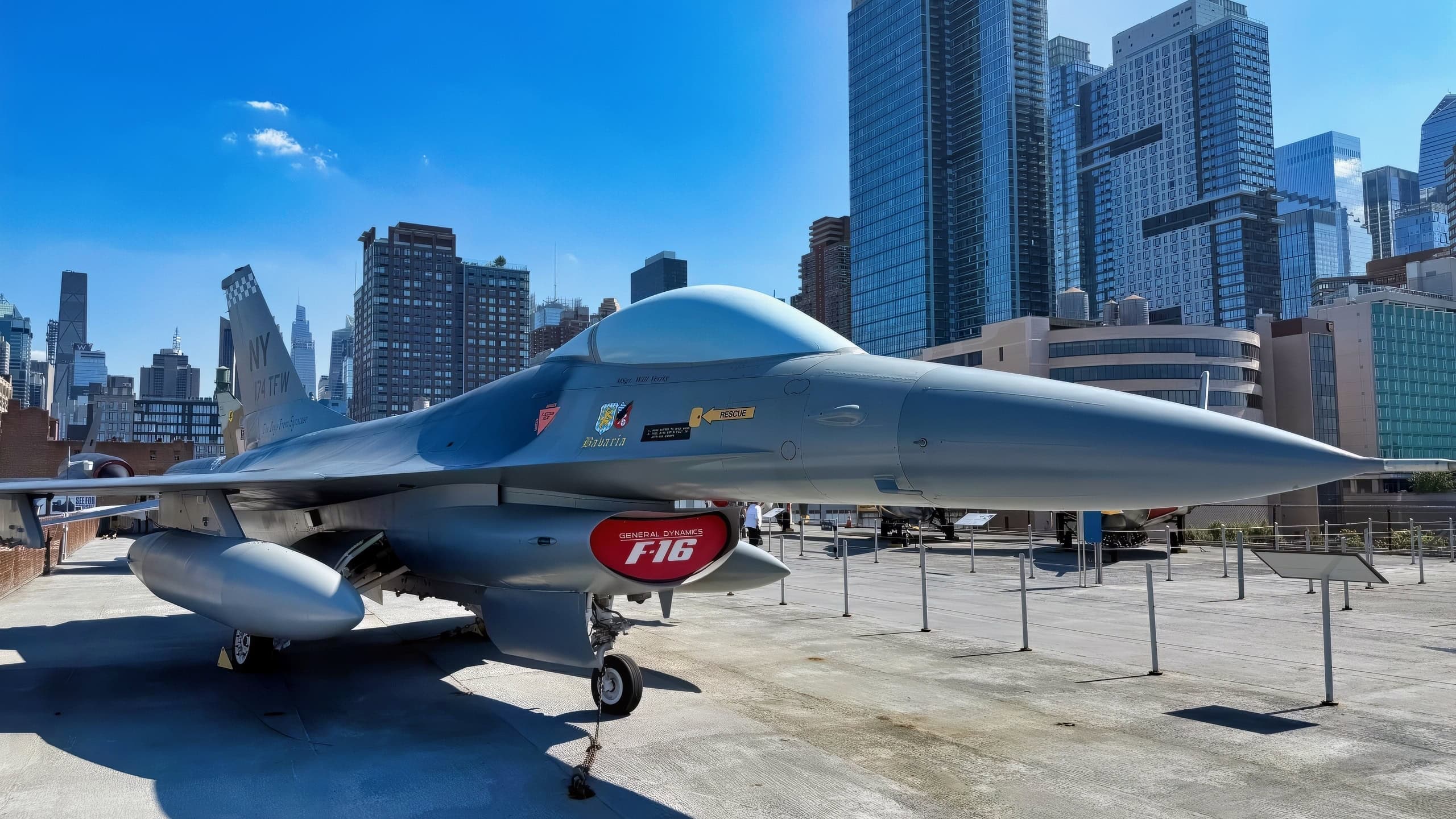
The F-16 Was Designed as a Daytime Air Superiority Fighter — LANTIRN Targeting Pods and Precision Munitions Turned It Into an All-Weather Strike Platform
On December 13, 1973, the YF-16, a prototype aircraft designed by General Dynamics, took its first flight.
This prototype would eventually evolve into the F-16 Fighting Falcon, one of the world’s most renowned fourth-generation aircraft.
Despite its reputation today, the aircraft’s origins were actually quite modest.
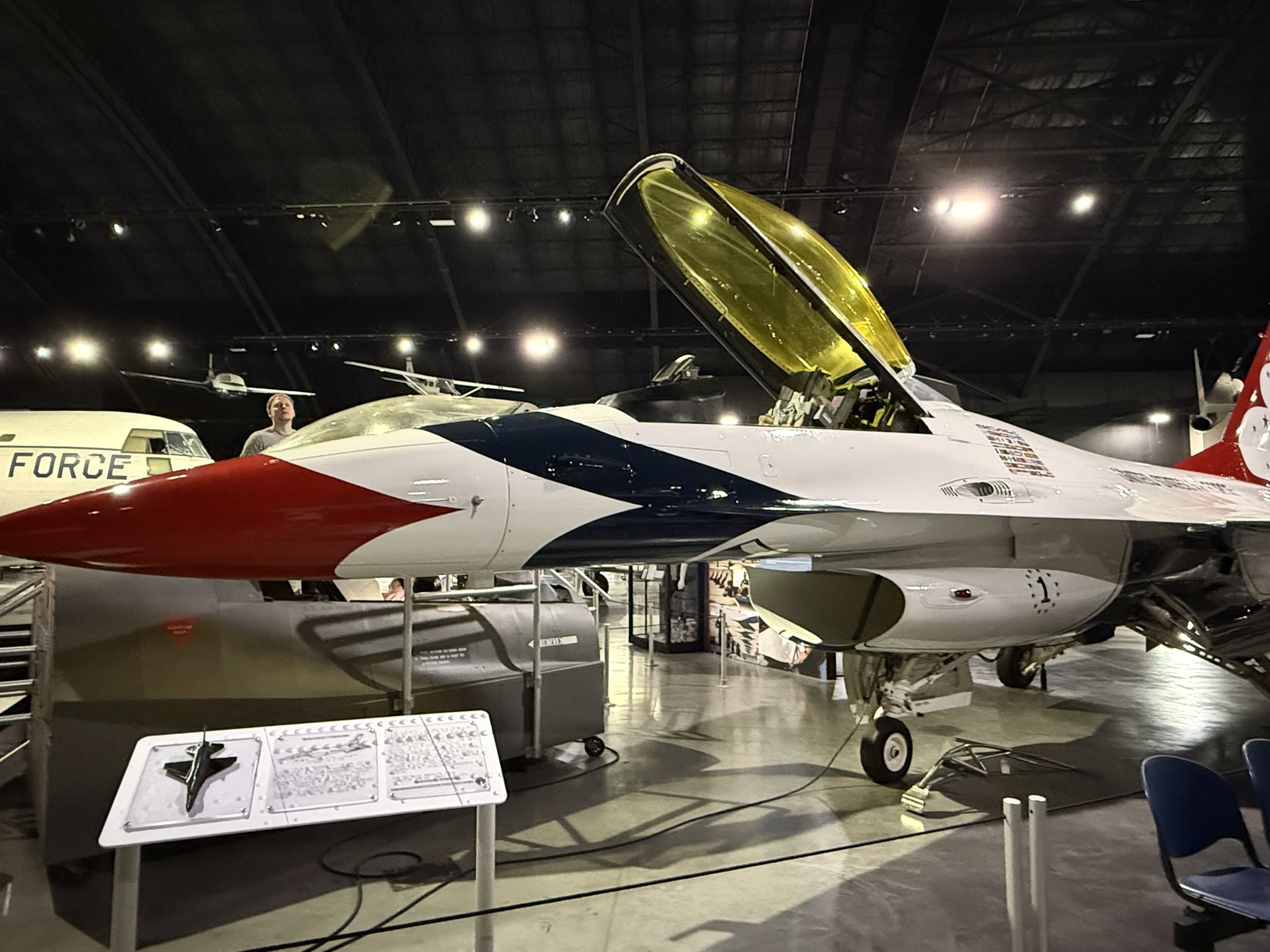
F-16 Fighter. 19FortyFive.com Image from the National Museum of the U.S. Air Force.
Originally conceived as an air superiority day fighter, the F-16 has since evolved into an all-weather, multi-role aircraft that still dominates the skies today.
Continuous updates and modernization efforts have ensured that the aircraft remains a prominent force in the skies at all times.
Vietnam and the Need for a New Fighter
The origins of the F-16 can be traced to lessons learned during the Vietnam War. In the early 1960s, U.S. fighter design had been driven by the belief that future air combat would occur at long range with radar-guided missiles, making traditional dogfighting obsolete.
Aircraft such as the F-4 Phantom II were large and heavy, optimized for speed and missile carriage, with maneuverability and pilot visibility often secondary concerns. This was largely driven by experience from the Korean War in anticipation of a potential Chinese intervention. Instead, the USAF was forced to conduct a limited war against communist guerrillas in an environment that did not favor the larger, less maneuverable aircraft.
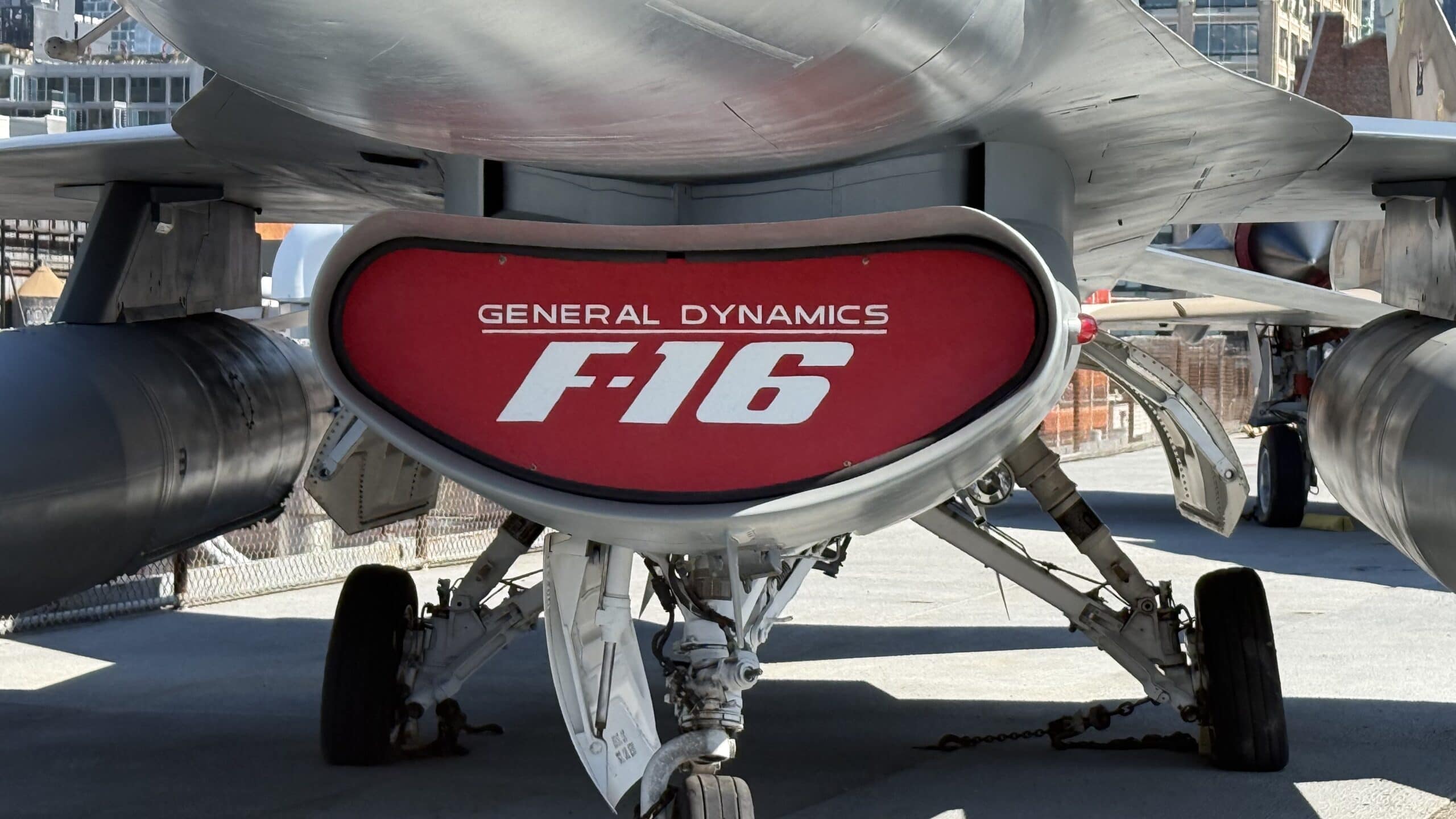
F-16 On Flight Deck of USS Intrepid. 19FortyFive.com Image.
In response, a group of analysts and officers within the U.S. Air Force, known collectively as the “fighter mafia,” began advocating for a fundamentally different kind of fighter.
Leading this effort was Colonel John Boyd, whose energy-maneuverability theory provided a mathematical framework for understanding fighter performance in terms of speed, altitude, and turning capability. Boyd and others argued that a lighter aircraft with a high thrust-to-weight ratio, excellent acceleration, and superior turning performance would consistently outperform heavier, more complex designs in close combat.
The YF-16 Takes Off
These ideas gained enough traction that in the early 1970s, the Department of Defense initiated the Lightweight Fighter program. Rather than committing immediately to a production aircraft, the program sought experimental prototypes that could demonstrate the feasibility of the lightweight fighter concept.
Two companies were selected to compete: General Dynamics and Northrop. Each was tasked with building a pair of prototypes, designated the YF-16 and YF-17, respectively, for flight testing.
General Dynamics’ YF-16 featured several revolutionary design decisions. One of the most important was its use of relaxed static stability. Traditional aircraft are designed to be aerodynamically stable, meaning they naturally return to straight and level flight if disturbed.
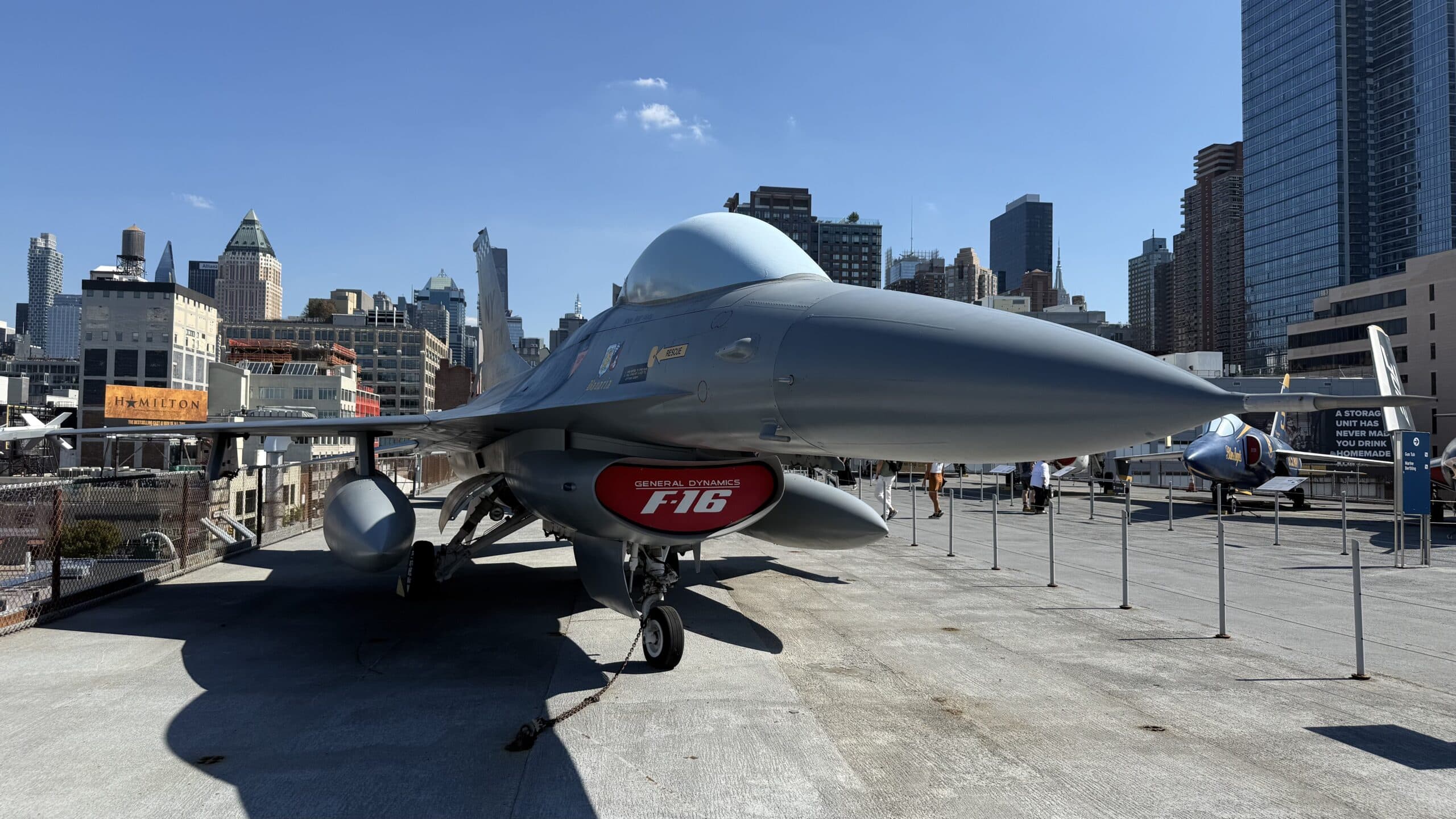
F-16 On Flight Deck of USS Intrepid. 19FortyFive.com Image.
The YF-16, by contrast, was intentionally unstable, which allowed it to respond more quickly and aggressively to control inputs. Such a design would have been impossible for a human pilot to manage using mechanical controls alone, so the aircraft relied on a digital fly-by-wire system that continuously adjusted the control surfaces to maintain controlled flight. This made the F-16 the first operational fighter aircraft built from the outset with full-authority fly-by-wire controls.
What Made the F-16 So Unique
The cockpit was another area of innovation. Designers paid close attention to the pilot’s ability to endure high-G maneuvering and maintain situational awareness. The ejection seat was reclined more than in earlier fighters, improving the pilot’s tolerance to sustained G-forces.
The traditional center stick was replaced with a side-mounted controller, making it easier to maintain precise control during extreme maneuvers.
A frameless bubble canopy provided exceptional visibility, giving the pilot an unobstructed view in almost every direction, a critical advantage in both air combat and ground attack missions.
Power was provided by the Pratt & Whitney F100 turbofan engine, which delivered impressive thrust for an aircraft of the F-16’s size.
Combined with its relatively light weight, this gave the aircraft a thrust-to-weight ratio approaching or exceeding 1 in certain configurations, allowing it to accelerate vertically if required.
The airframe itself featured a blended wing-body design that generated additional lift and reduced drag, further enhancing maneuverability and fuel efficiency.
Birth of the Fighting Falcon
Flight testing of the YF-16 and YF-17 took place in 1974 and 1975, and both aircraft performed well.
However, the YF-16 demonstrated superior acceleration, turning performance, and growth potential, and it was also less expensive to produce.
In January 1975, the U.S. Air Force announced that the YF-16 had won the competition. Shortly thereafter, the aircraft entered full-scale development under the designation F-16 Fighting Falcon.
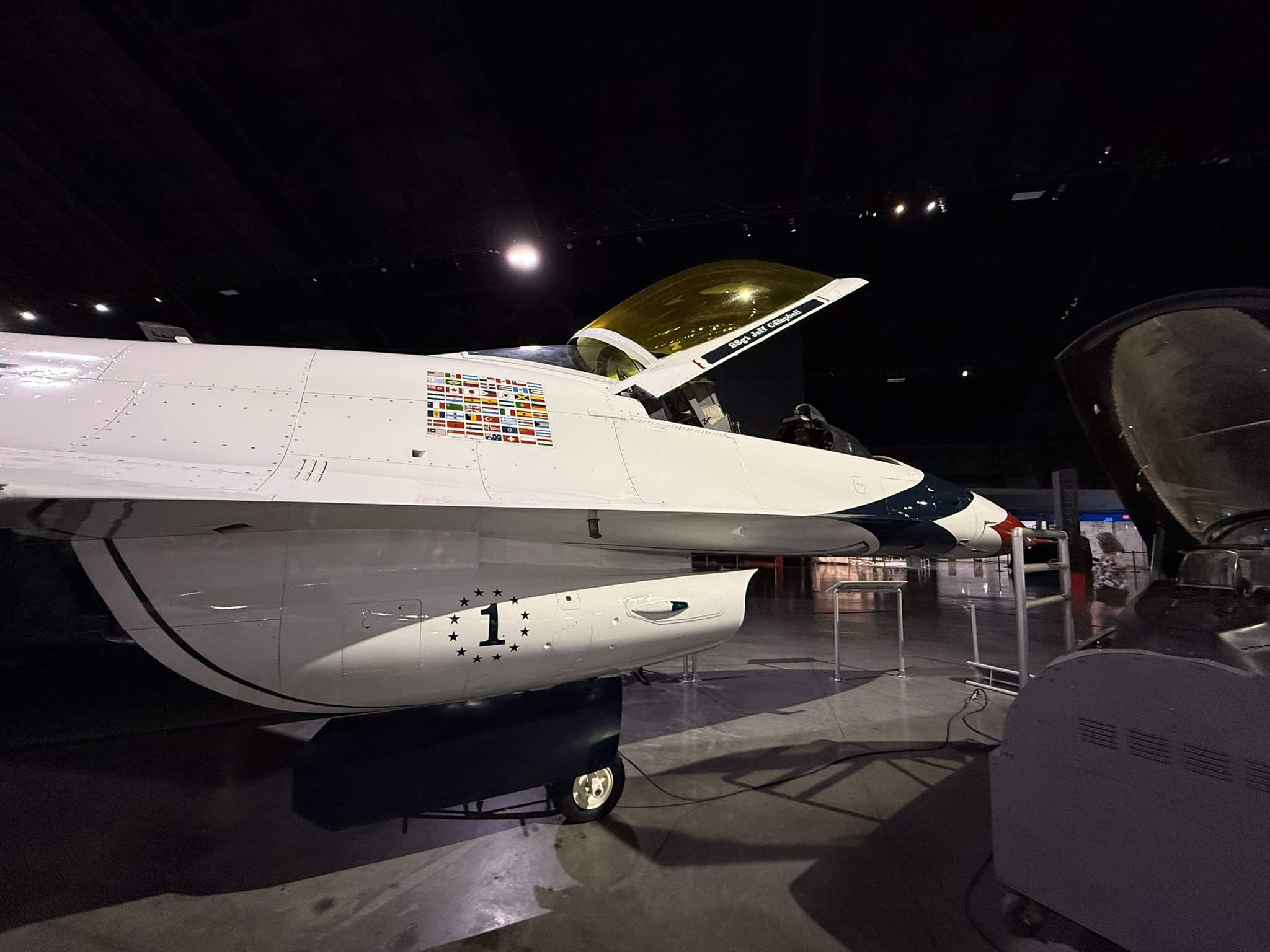
F-16 Fighter. 19FortyFive.com Image from the National Museum of the U.S. Air Force.
The F-16’s early success was greatly aided by NATO partners. Several European air forces were seeking a modern replacement for aging fighters such as the F-104 Starfighter, and the F-16 offered an appealing combination of performance, affordability, and interoperability with U.S. forces.
Belgium, the Netherlands, Denmark, and Norway all selected the F-16, and a multinational production arrangement allowed these countries to manufacture and assemble aircraft domestically. This approach reduced costs, strengthened political ties, and ensured that the F-16 would be widely adopted from the very start of its service life.
Evolution of the F-16
The first operational F-16s entered U.S. Air Force service in 1980. Initially, the aircraft was intended primarily as a daytime, fair-weather air-to-air fighter, but its inherent capabilities quickly suggested broader possibilities. The F-16’s aerodynamic performance, payload capacity, and growing avionics suite made it well-suited to air-to-ground missions, and the Air Force began expanding its role almost immediately.
Throughout the 1980s, the F-16 underwent a steady evolution from a dedicated air-superiority fighter into a true multirole aircraft. Improvements in radar technology enabled accurate ground mapping and targeting, while the integration of precision-guided munitions allowed the F-16 to conduct strike missions with far greater accuracy than earlier fighters.
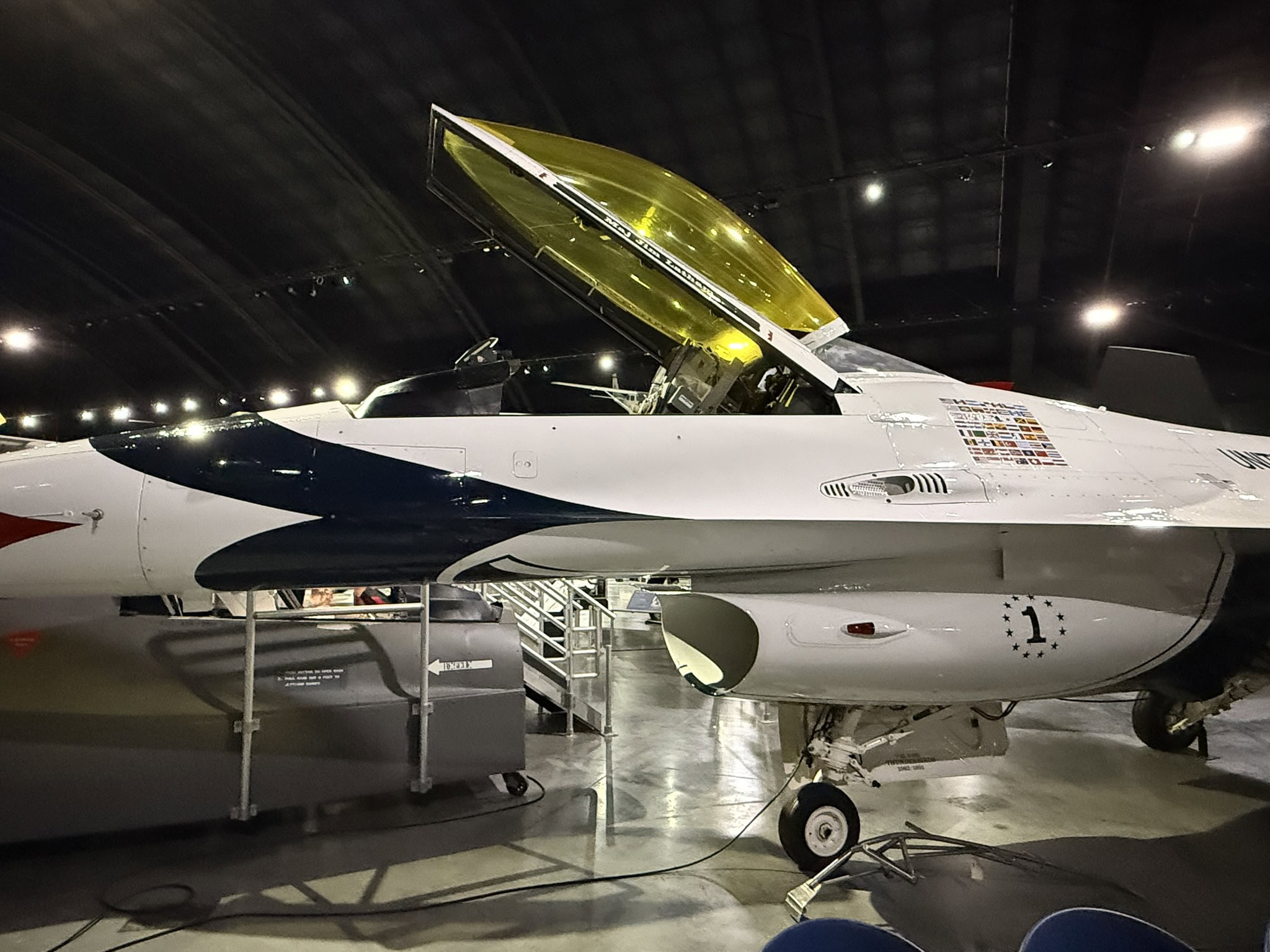
F-16 Fighter. 19FortyFive.com Image from the National Museum of the U.S. Air Force.
The addition of targeting pods such as LANTIRN made night and all-weather operations possible, further expanding the aircraft’s usefulness.
Electronic warfare systems and countermeasures improved survivability in heavily defended airspace, allowing the F-16 to operate in some of the most dangerous combat environments.
About the Author: Isaac Seitz
Isaac Seitz, a Defense Columnist, graduated from Patrick Henry College’s Strategic Intelligence and National Security program. He has also studied Russian at Middlebury Language Schools and has worked as an intelligence Analyst in the private sector.