
Did the U.S. Technically Win the Sixth-Generation NGAD Fighter Race Already?
China’s unveiling of two advanced stealth aircraft – widely referred to as the J-36 and J-50 – has triggered a wave of commentary speculating that Beijing is pulling ahead in the race for sixth-generation airpower.
Imagery that first appeared in late 2024 depicting two distinct tailless aircraft in flight testing prompted claims that China had already fielded next-generation fighters while the United States remained behind – but that assessment doesn’t hold up.
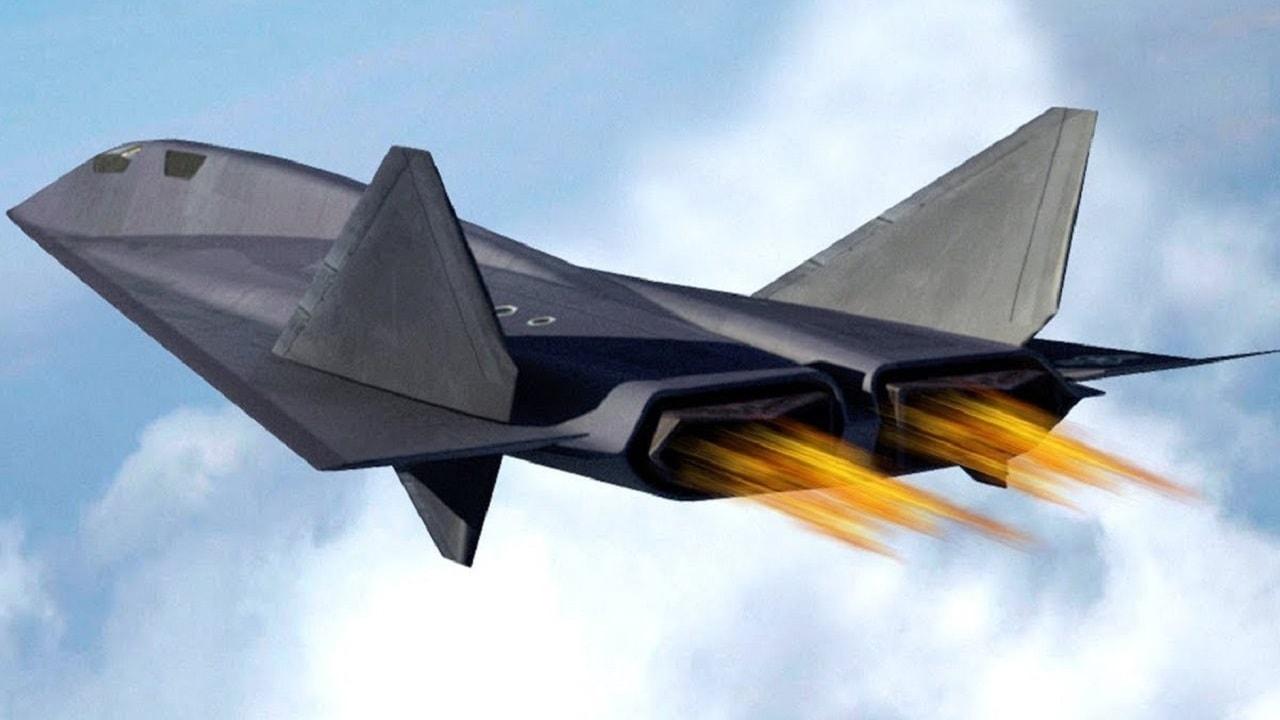
By: Image Credit: Rodrigo Avella
The truth is that while images of China’s early-stage prototypes have appeared online, the U.S. Air Force has already confirmed that it flew a full-scale Next Generation Air Dominance (NGAD) demonstrator as far back as 2020, years before China’s own versions appeared on the internet.
What We Know About China’s Efforts
The J-36 and J-50 became public through open-source imagery in December 2024, with both platforms being observed conducting flight tests at Chinese facilities.
What can be assessed from those images is relatively limited, but both appear to feature tailless or reduced-tail configurations – a design consistent with next-generation stealth shaping and reduced radar cross-section.
The larger of the two, the J-36, appears to prioritize range and payload, with analysts indicating that it could function as a long-range strike or command platform rather than a traditional fighter.
However, it’s important to stress that there is still a lot we don’t know. Engine maturity, for example, remains unclear – and China has historically struggled to match Western turbofan reliability and performance.
Sensor fusion and data integration capabilities, which are essential for sixth-generation aircraft, are entirely unknown. And while China appears to be working on its own networking and manned-unmanned teaming concepts, they have not been publicly demonstrated.
Even the aircraft’s role is not fully defined, with analysts unable to agree on whether the J-36 is a bomber, a fighter, or a combination of the two.
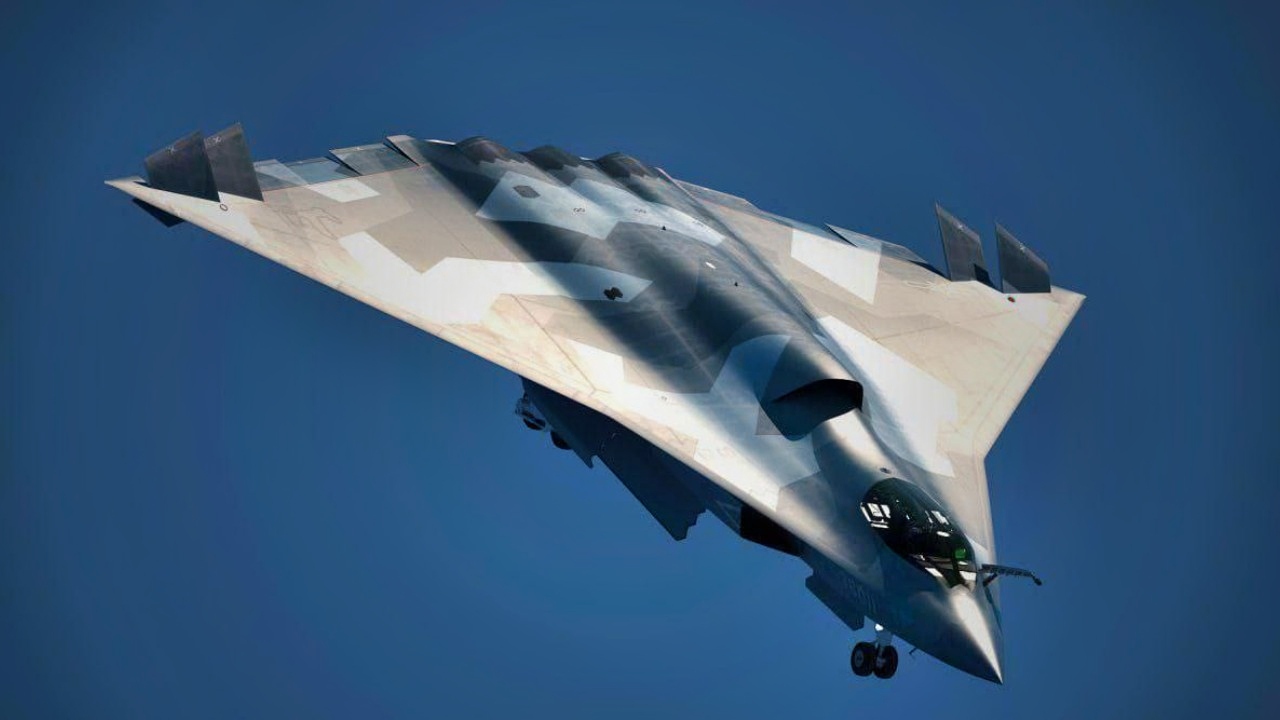
J-36 Fighter Artist Rendition. X Screenshot.
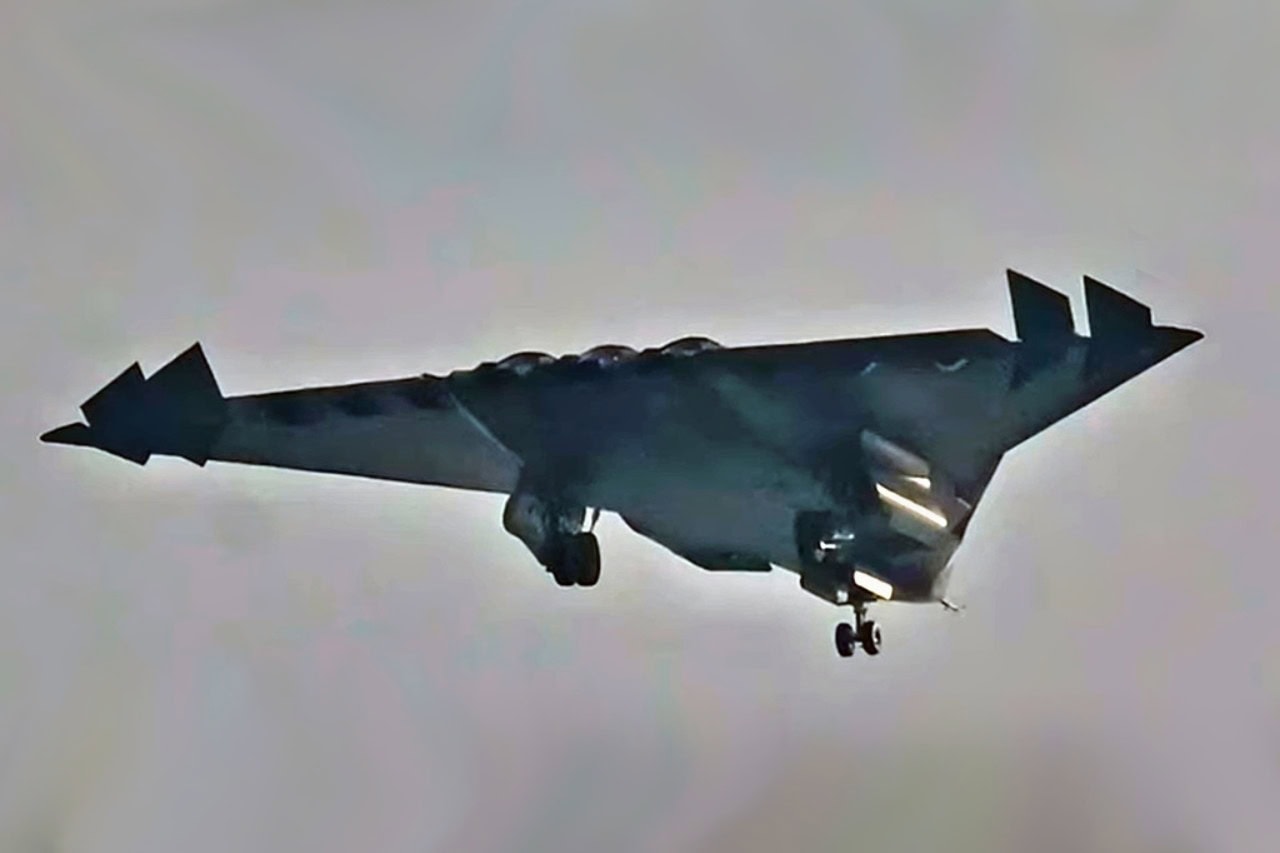
J-36 Fighter from China. Image Credit: Creative Commons.
This all matters because first flight is not the same as operational capability. China has followed this pattern before: the Chengdu J-20 was revealed early, but took years of incremental upgrades – particularly in engines and avionics – before reaching maturity.
So far, China has demonstrated that it can build and fly advanced prototypes, but the U.S. has been flying them longer.
The U.S. Has Already Flown NGAD
In 2020, the U.S. Air Force confirmed that it had already designed, built, and flown a full-scale demonstrator aircraft. Defense News confirmed the news on September 13 to Will Roper, the service’s most senior acquisition official.
“We’ve already built and flown a full-scale flight demonstrator in the real world, and we broke records in doing it,” Roper said. “We are ready to go and build the next-generation aircraft in a way that has never happened before.”
The aircraft was not just a conceptual or scaled model, but a representative aircraft developed using digital engineering methods and flown in real-world conditions. The program reportedly also moved quickly from design to flight in only the space of a year – far faster than traditional fighter development cycles.
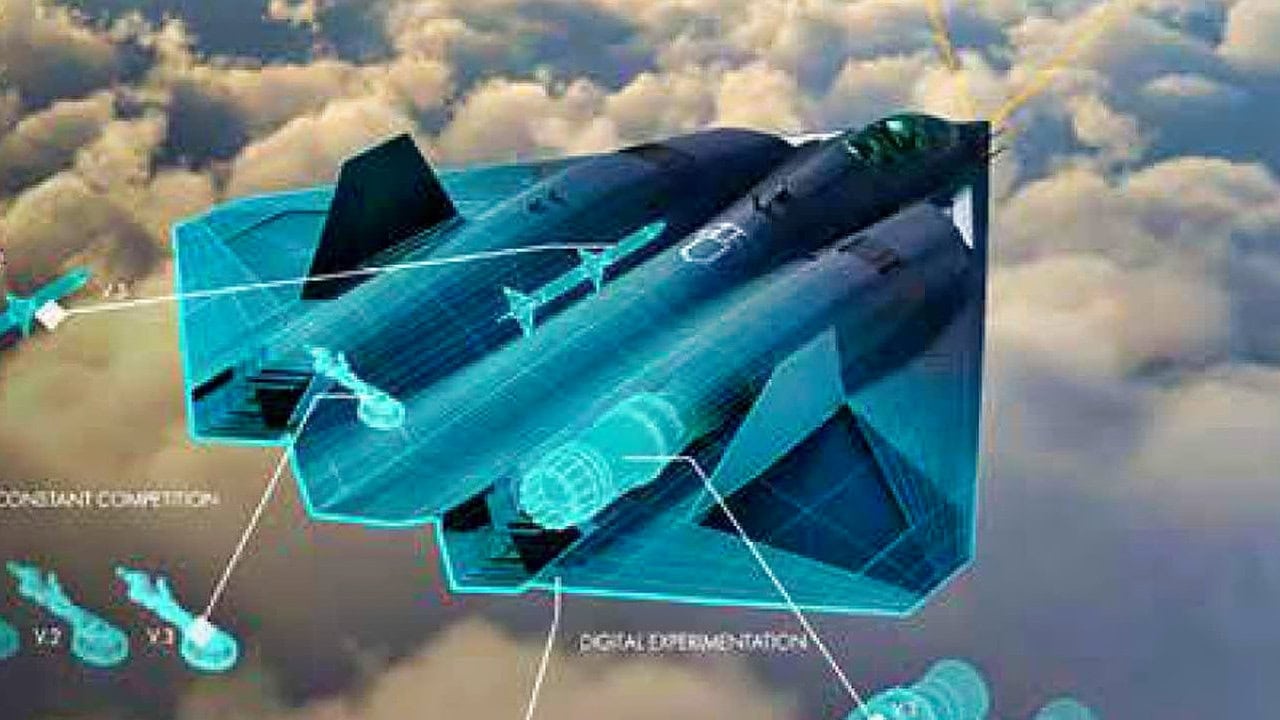
It’s important to note that the aircraft is not actually the F-47, which will be the centerpiece of NGAD’s efforts to build a family of next-generation systems. These were demonstrators – technology validation platforms designed to test airframe design concepts, advanced propulsion integration, sensor and avionics systems, and networking and data-sharing capabilities.
The news shocked observers when it arrived six years ago, because it meant that the United States had already passed the most difficult milestone in any aircraft program – the transition from design to successful flight testing.
And, it’s highly unlikely that only one demonstrator exists. The NGAD program was built around a “Digital Century Series” model, intended to produce multiple rapid prototypes rather than a single long-cycle aircraft. In other words, the U.S. has probably been flying successive iterations of NGAD-related aircraft for years, which makes news of China’s own rapid iterations much less daunting.
While the U.S. has been developing and flying these aircraft early, China is playing catch-up, with the main difference being that its prototypes leaked to the public, while America’s haven’t.
Why the U.S. Keeps NGAD Under Wraps
China may or may not have chosen to reveal the early-stage aircraft. It’s unclear, after all, exactly how the original images were released, and whether authorities had a hand in the “leak.”
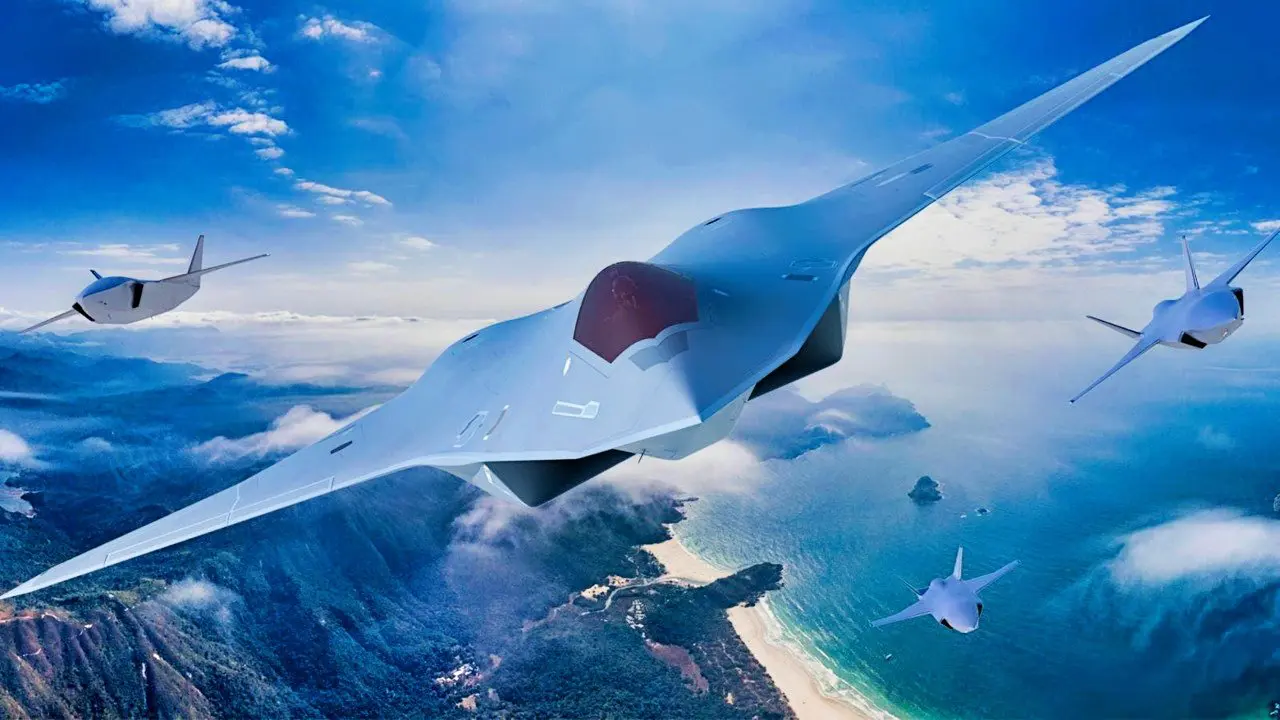
NGAD fighter from U.S. Air Force.
But the appearance of two distinct prototypes, followed a year later by substantially upgraded or redesigned platforms, suggests that fast, parallel development tracks are in place. China is demonstrating momentum and capability.
But the United States is doing things differently.
Programs like this routinely operate in what is often referred to as the “black world” – a classified development environment where capabilities are deliberately concealed until they are mature or operationally relevant. This is not new. The F-117 stealth fighter, for example, flew for years before being publicly acknowledged.
The same was true of the B-2 bomber. The reasoning is sound, too. Revealing aircraft early exposes design features to adversaries, and as a global leader, the U.S. has more to lose.
The result of these dynamics, however, is that China may appear to move first, while the United States is already working on a mature system.
NGAD’s Real Advantage Isn’t Actually the Fighter
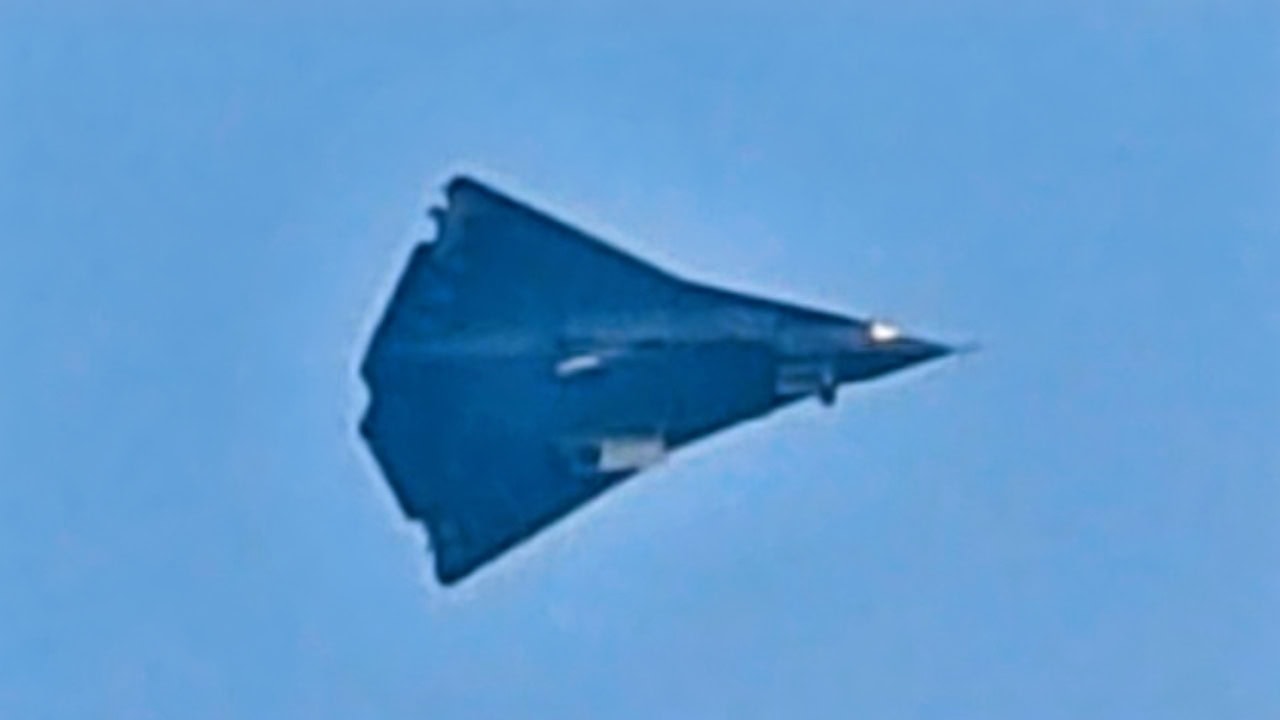
China Sixth-Generation Fighter NGAD. Image Credit: Social Media Screenshot.
The F-47 fighter jet forms the core of the NGAD initiative and represents the next generation of American fighters, but its real advantage isn’t just found in the advanced systems that power it – it’s the system of systems that supports it.
At its core, NGAD includes a crewed sixth-generation fighter – the future F-47 – and more than 1,000 Collaborative Combat Aircraft (CCA) drones. It will also feature advanced sensor networks and data fusion systems, designed to create the clearest possible picture of the combat environment.
These elements are designed to operate together, creating a distributed combat architecture that is more survivable than a single platform.
That approach to fighter jet systems is the result of changing requirements and rapidly improving capabilities among America’s biggest adversaries. The challenges of modern airpower are no longer limited to dogfighting performance, either.
Forward bases are now increasingly vulnerable to China’s long-range missiles, for example. Operational distances are expanding, particularly in the Indo-Pacific, and survivability now depends on a combination of networking, dispersion, redundancy, and defensive systems. NGAD is built to address those realities, and the system enables manned-unmanned teaming, with drones acting as sensors and weapons carriers.

China NGAD 6th Generation Fighter. Image Credit: Chinese Social Media.
It also supports distributed operations across multiple bases and platforms, operating alongside other assets that may have been deployed from elsewhere.
Even if China successfully produces a comparable airframe, matching this level of integration is significantly more difficult. Hardware can largely be replicated, but operational doctrine and large-scale system integration cannot be copied as easily – and while China will almost certainly deliver something close, the United States still retains its advantage. At least, for now.
MORE – China’s H-20 Stealth Bomber Can’t Jump 40 Years in Development History
About the Author: Jack Buckby
Jack Buckby is a British researcher and analyst specializing in defense and national security, based in New York. His work focuses on military capability, procurement, and strategic competition, producing and editing analysis for policy and defense audiences. He brings extensive editorial experience, with a career output spanning over 1,000 articles at 19FortyFive and National Security Journal, and has previously authored books and papers on extremism and deradicalization.