
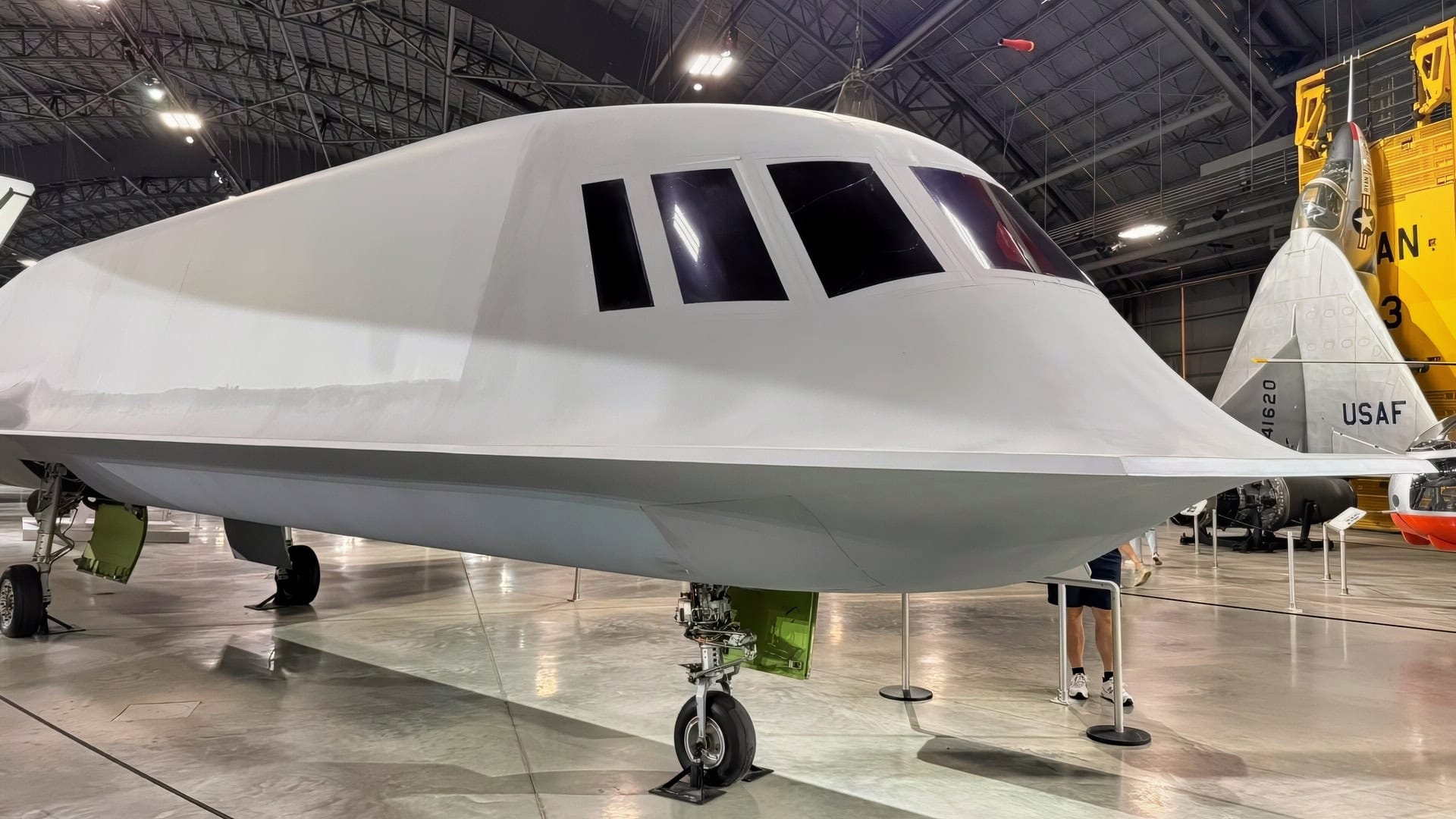
Northrop’s Tacit Blue Program And “The Whale” Stealth Plane History Has Forgotten About That We Got Up Close To
The Tacit Blue program was a secret DARPA/US Air Force initiative that ran from 1976 to 1985. The program developed an experimental “stealth” aircraft, nicknamed “The Whale,” to demonstrate that curved, low-observable aircraft could monitor battlefield conditions in real time without being detected by radar.
It pioneered curved stealth shaping and low-probability-of-intercept radar, influencing the B-2 Spirit bomber and E-8 Joint STARS.
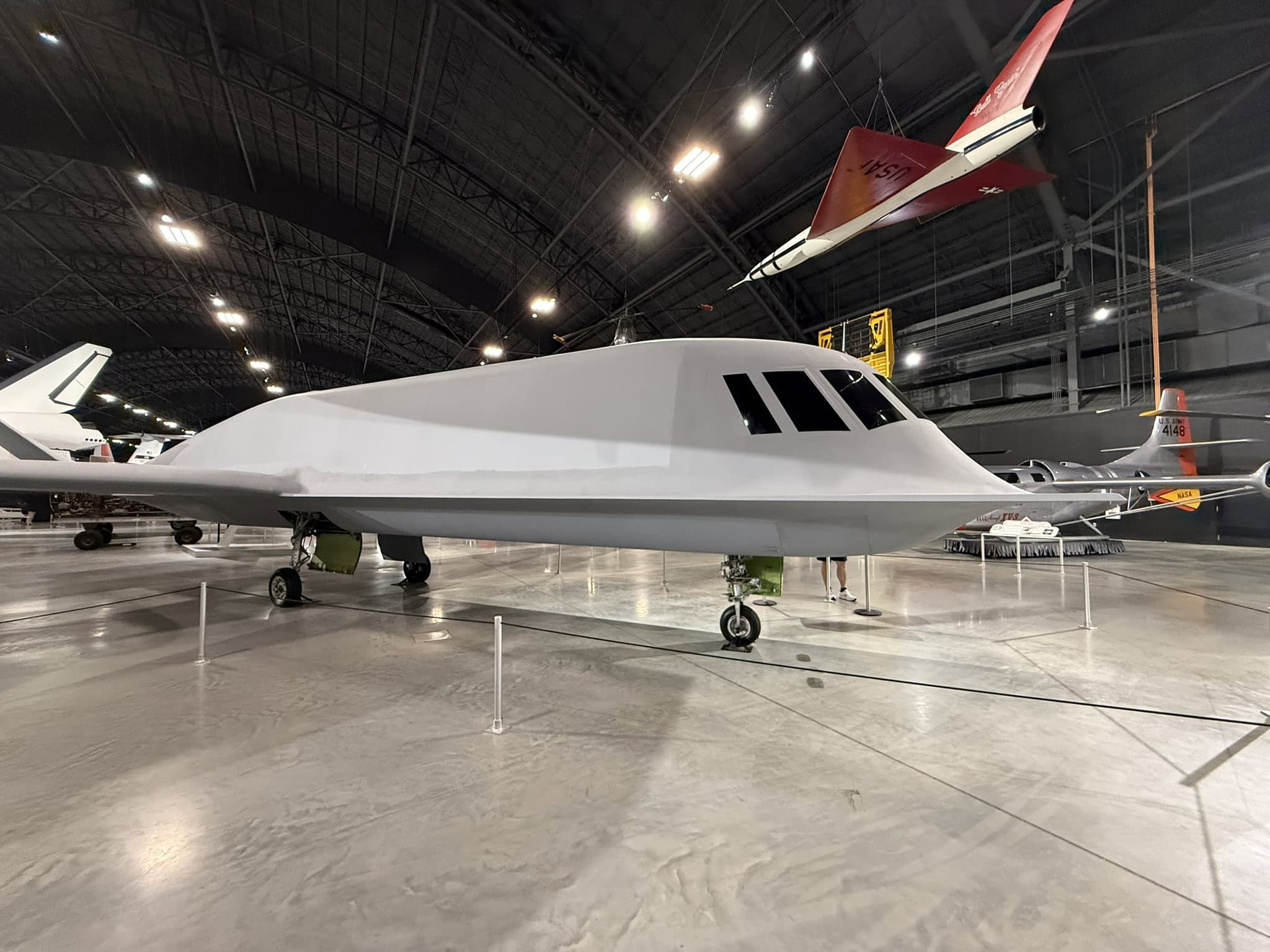
Tacit Blue Stealth Plane 19FortyFive.com Image
19FortyFive.com has some great close-up photos of the aircraft from its visit to the National Museum of the Air Force, which are included here.
Northrup’s Design Was Far Different From The F-117 Nighthawk
The objective of the program was to create a stealthy, survivable reconnaissance platform capable of continuous battlefield surveillance and high-precision targeting in high-threat environments.
Unlike the faceted surfaces of the F-117 Nighthawk stealth fighter, Tacit Blue was designed with curved surfaces to deflect radar, influencing future designs such as the B-2 Spirit stealth bomber.
It used a digital fly-by-wire system to manage its inherently unstable aerodynamic design.
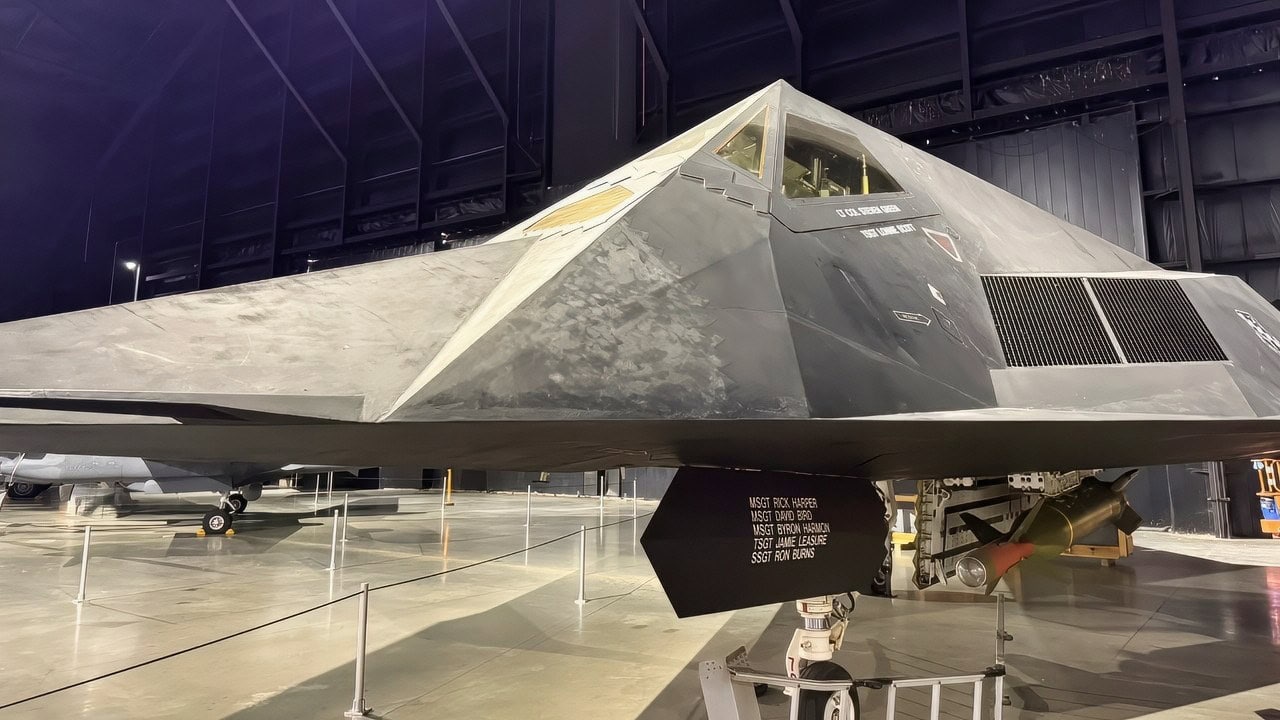
F-117A Nighthawk at USAF Museum. Image taken by 19FortyFive Owner, Harry J. Kazianis.
Tacit Blue pioneered Low Probability of Intercept (LPI) radar technology that could detect enemy targets without revealing its own position.
The prototype, nicknamed “The Whale” (or “alien school bus”), characterized by its wide, bulky, and curved fuselage, straight wing, and V-tail, completed 135 test flights between February 1982 and 1985, when the program was concluded.
Meet “The Whale,” Tacit Blue’s Demonstrator
“The Whale” was the nickname for the Northrop Tacit Blue, a top-secret U.S. Air Force and DARPA technology demonstrator program, which ran from 1982 to 1985, and was designed to test stealth technology and battlefield surveillance.
Its boxy, curved shape and somewhat awkward appearance made the Whale, sometimes referred to as “The Alien School Bus,” capable of monitoring ground forces undetected, pioneering curved-surface stealth techniques that would be crucial to the future B-2 Spirit bomber.
Tacit Blue’s design also minimized the heat signature emitted from the engines, further masking its presence. It was one of the first aircraft to use curved, “Gaussian” surfaces, which offered better radar cross-section reduction than flat panels.
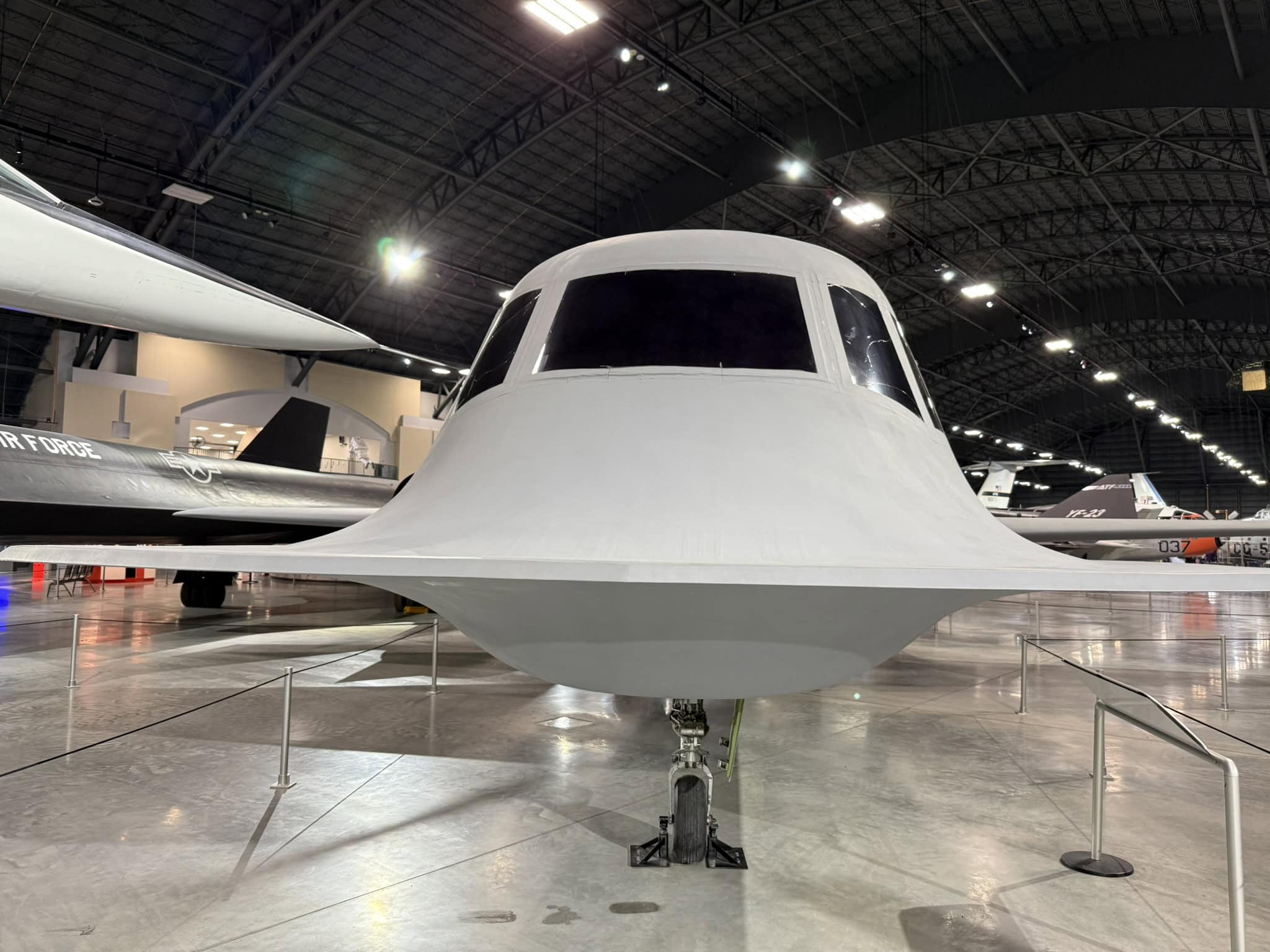
Tacit Blue Stealth Plane 19FortyFive.com Image.
The Air Force National Museum characterized “The Whale’s” capabilities: “With its low, ‘all-aspect’ radar signature, Tacit Blue demonstrated that such an aircraft could loiter over — and behind — the battlefield without fear of being discovered by enemy radar.
“Using advanced sensors, it could also continuously monitor enemy forces (even through clouds) and provide timely information through data links to a ground command center. Moreover, these sensors operated without revealing the aircraft’s location.”
What Exactly Are “Gaussian Surfaces” in Radar Reflection?
In radar engineering and signal processing, Gaussian surfaces are used to simplify, simulate, and analyze the scattering of radar waves from complex or rough surfaces.
They help convert difficult physical calculations into manageable mathematical functions, particularly when predicting how radar energy reflects off irregular terrain or materials.
The Gaussian model enables effective simulation of radar echoes, providing a basis for analyzing how these surfaces scatter microwave signals.
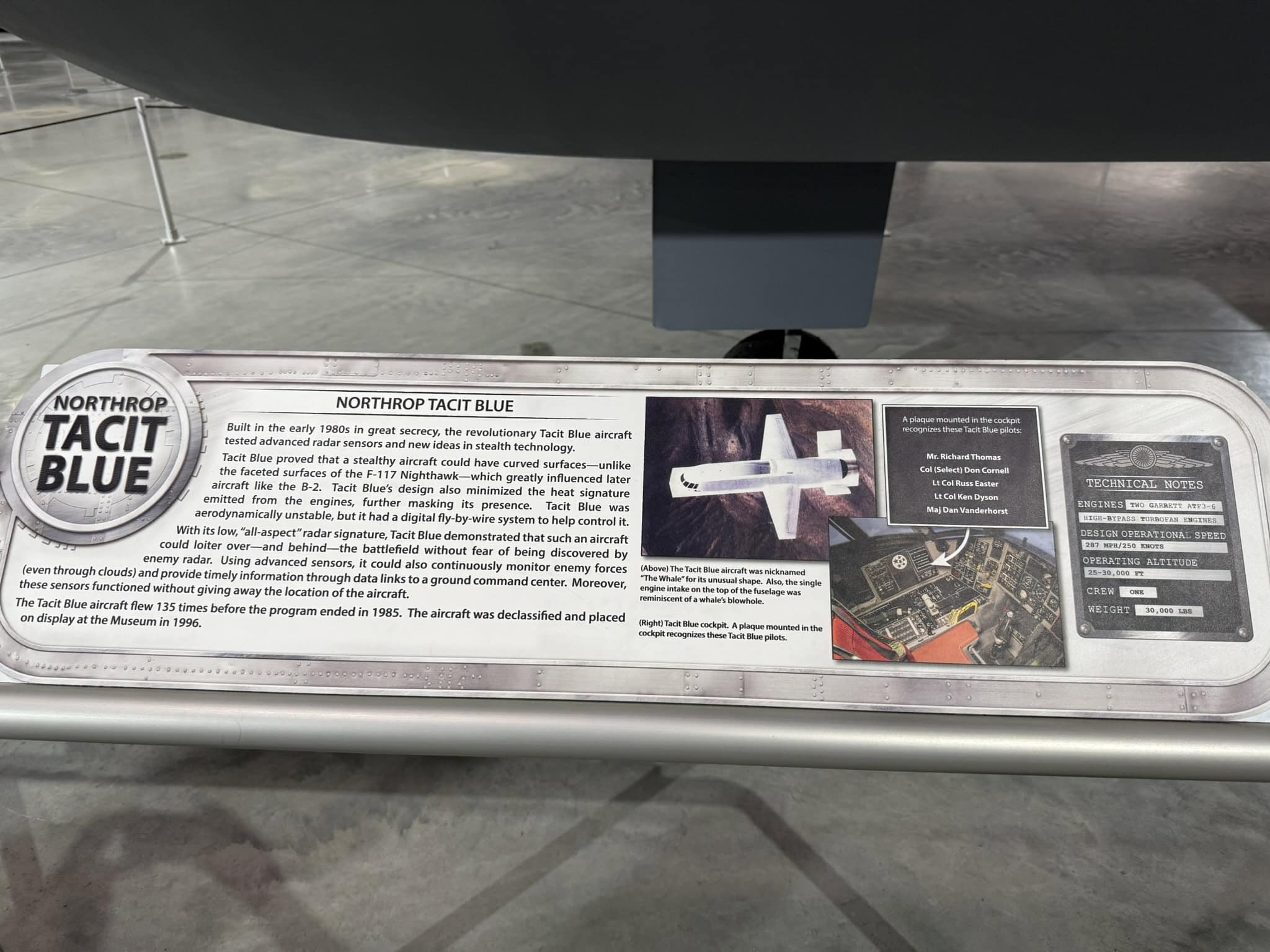
Tacit Blue. 19FortyFive.com image.
Engineers and researchers use a Gaussian model to characterize the absorption properties of radar-absorbing materials (such as anti-radar paints) in the 4–18 GHz range. This involves defining the curve of reflection loss vs. frequency, enabling predictions of performance across a wider frequency range.
History Of the Tacit Blue Program
Northrop’s engineers were justifiably proud of the Tacit Blue program and the Whale. In fact, Northrop’s California headquarters for its advanced projects division was chock full of pictures of whales.
“There were whale paintings in the lobby, whale drawings on letterheads, and whale logos stamped on all kinds of company equipment. Northrop employees sometimes referred to each other as ‘whalers.’ Top managers had models of whales on their desks.”
Visitors often asked about the preponderance of whales throughout the facility, but, due to the program’s secrecy, they had to remain mum.
“It was something you couldn’t talk about,” said John Cashen, a top Northrop engineer back then. “People would ask, and we’d say, ‘Well, the whale is a noble animal.'”
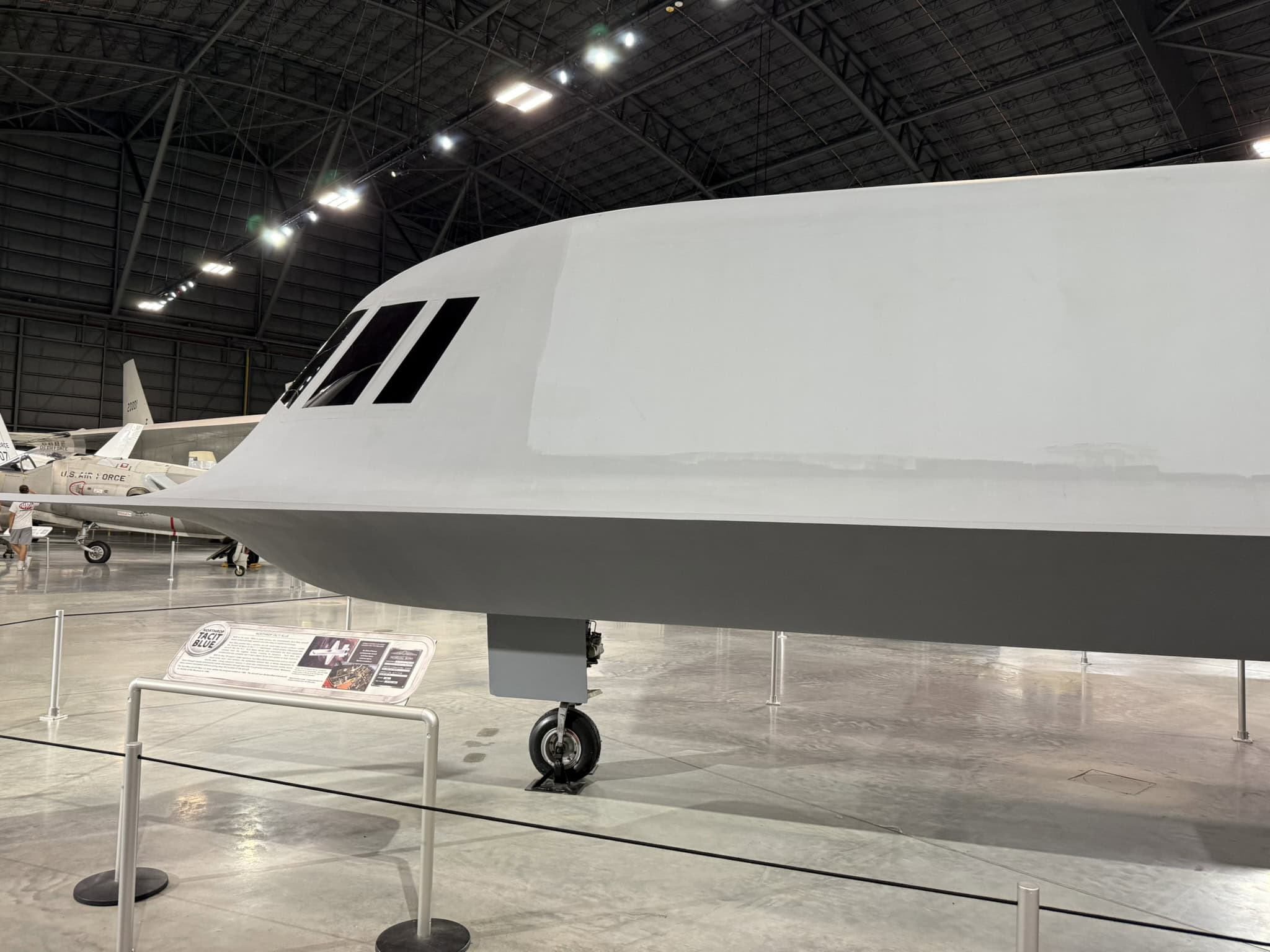
Tacit Blue Taken at the National Museum of the Air Force Back on July 19, 2025 for 19FortyFive.com.
Despite numerous whale references throughout the facility, Northrop produced only one (1) complete aircraft for testing. And once the Air Force had finished its 135 test flights, the Whale was boxed up and shipped to a secret Air Force facility, where it remained hidden until 1996, when it was finally acknowledged.
The program began in the 1970s, when DARPA and the Air Force were beginning to understand and research aircraft stealth. Northrop was tasked with researching whether this new stealth approach could be used to develop a reconnaissance aircraft that could operate safely in orbits near enemy defenses without being detected on radar.
The Air Force began the project in 1978 as “Pave Mover.” Northrop was awarded a $136 million contract to develop this.
The Whale’s radar cross section (RCS) was “below that of a bat, somewhere down in that area,” said LTG George K. Muellner, who was then the principal deputy assistant secretary of the Air Force for Acquisition, at Tacit Blue’s unveiling. “I haven’t looked at the RCS of a bee recently,” he joked.
Northrop kept the Whale’s construction costs down by using some off-the-shelf parts. For landing gear, the firm used stock F-5E gear. The ejection seat was a McDonnell Douglas ACES II. The powerplant was a pair of twin Garrett ATF3-6 turbofans, similar to those used on small Falcon 20 aircraft.
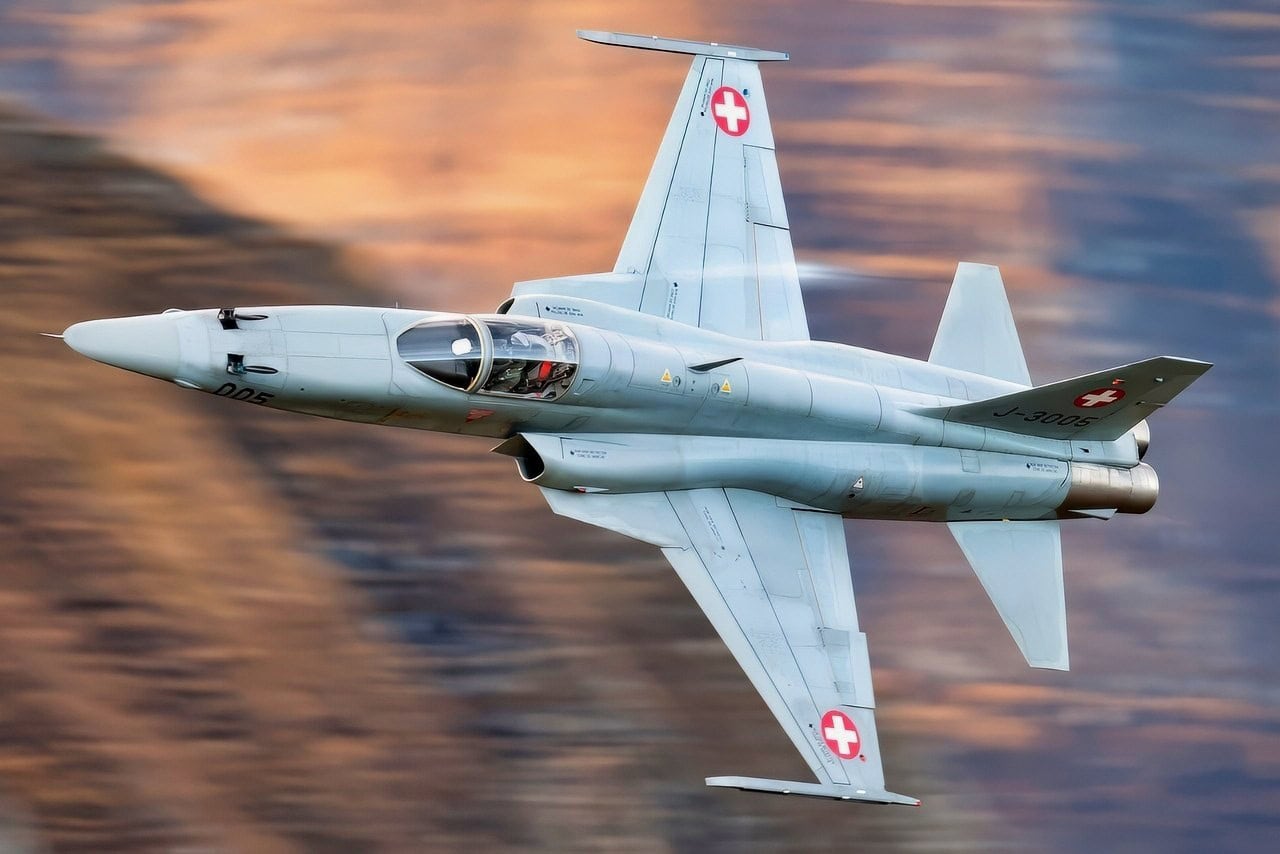
F-5E Tiger II Fighter. Image Credit: Creative Commons.
The Whale’s engines were buried in the airframe to reduce the infrared signature. The engines breathed through a single engine inlet set flush with the top, an approach that worked well enough in flight but sometimes caused difficulties starting the aircraft.
After finally unveiling its existence (it was kept classified for 18 years), the Air Force placed the one Tacit Blue aircraft in the service’s national museum, where it resides today. And that’s where we found her looking as good as new back in June of last year.
MORE – The SR-71 Blackbird Required Titanium Manufacturing That Didn’t Exist
About the Author: Steve Balestrieri
Steve Balestrieri is a National Security Columnist. He served as a U.S. Army Special Forces NCO and Warrant Officer. In addition to writing on defense, he covers the NFL for PatsFans.com and is a member of the Pro Football Writers of America (PFWA). His work was regularly featured in many military publications.