
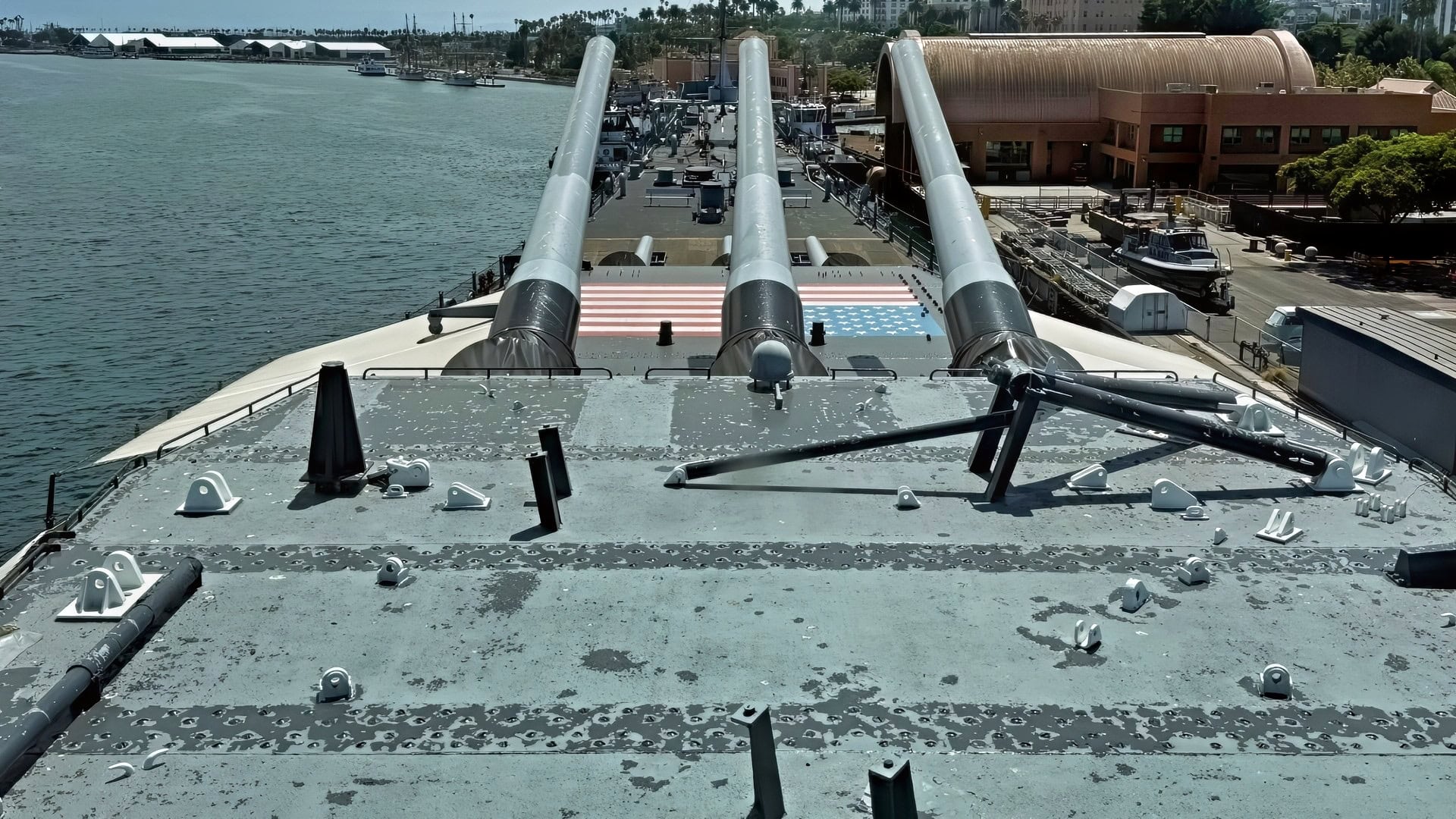
We Visited the USS Iowa in Los Angeles and Photographed the Last Battleship Class the U.S. Navy Ever Built — These Are Our Original Images
In March 2026, the Pacific Battleship Center announced a new partnership with America250 in celebration of America’s upcoming 250th anniversary, alongside the planned opening of the National Museum of the Surface Navy aboard USS Iowa in Los Angeles.
The program is designed to expand the ship’s role as both a museum and a public-facing center of naval history, with events, including Los Angeles Fleet Week, expected to draw large crowds to the waterfront. The organization is also preparing to launch new onboard experiences, including a “Life of a Sailor” exhibit.
At 19FortyFive, part of our work involves visiting museums and military sites that keep the history of American defense assets alive. We visited USS Iowa in California last year, and the images in this report are from that trip.
USS Iowa is an important piece of American naval history – a preserved warship accessible to the public today.
It is the lead ship of the last battleship class the United States ever built – and one that was designed to solve a very specific strategic problem the Navy was grappling with on the eve of World War II.
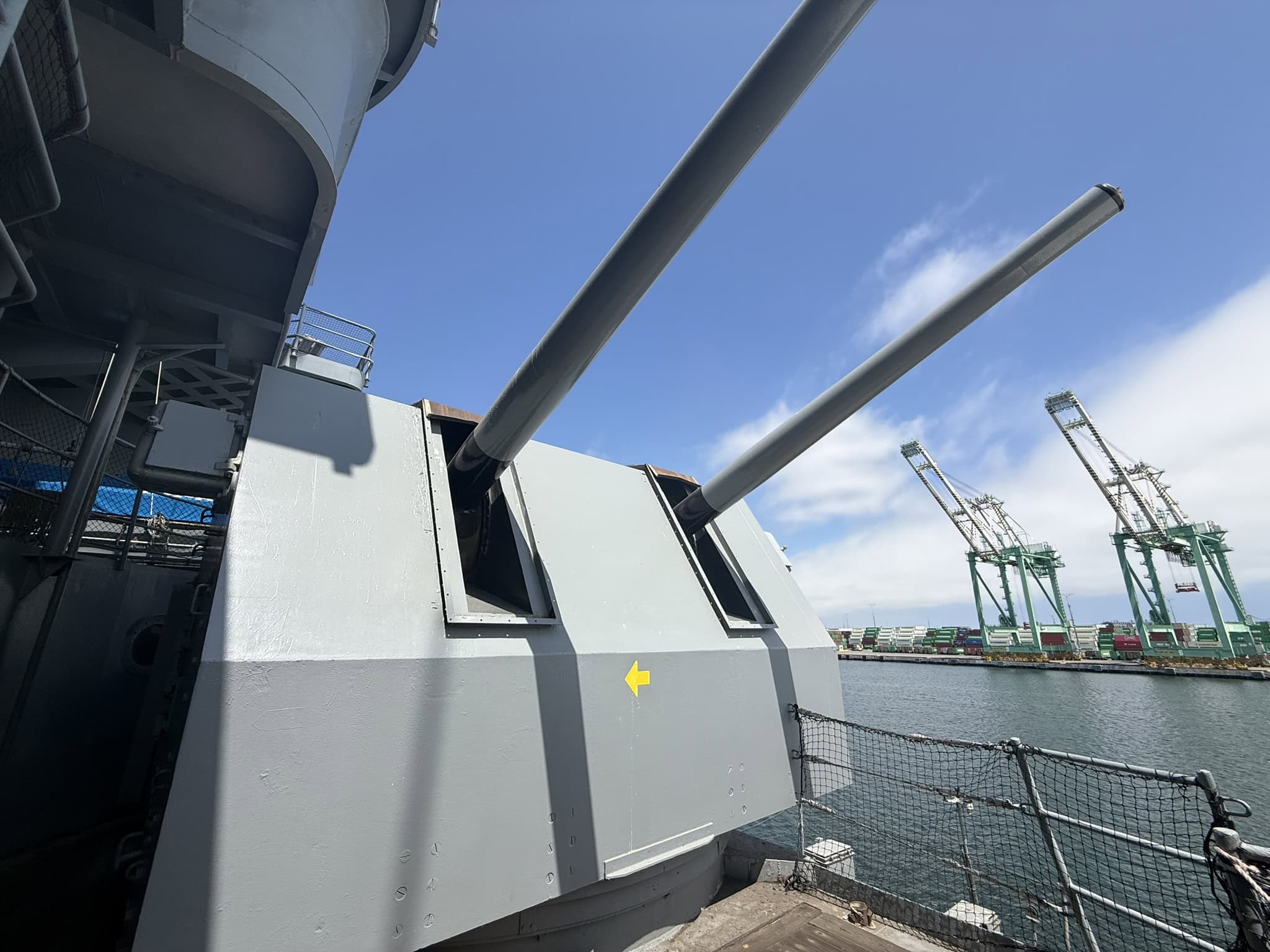
USS Iowa. 19FortyFive.com Original Image Taken in July of 2025.
Why the U.S. Navy Needed the Iowa Class
The Iowa class was designed as a response to a changing naval battlefield, and went well beyond a simple upgrade over earlier designs. By the late 1930s, the U.S. Navy needed a fast battleship – one capable of keeping pace with aircraft carriers while still delivering heavy firepower.
Earlier battleships, designed for roughly 21 knots, could not operate effectively alongside fast carrier task forces that would become central to Pacific operations.
The result was the Iowa class of ships, capable of speeds of around 33 knots and armed with nine 16-inch/50-caliber guns and protected by heavy armor.
The ships were designed within the framework of interwar naval arms control agreements – specifically the Washington Naval Treaty and the Second London Naval Treaty, which imposed strict limits on battleship size and armament.
As those restrictions began to loosen toward the end of the 1930s, the Iowa-class design expanded to roughly 45,000 tons, reflecting both the treaty limit and a growing recognition that future naval warfare would require a combination of speed and firepower.
Six ships were planned, but only four were ever completed: USS Iowa, USS New Jersey, USS Missouri, and USS Wisconsin. Two additional hulls – USS Illinois and USS Kentucky – were never finished.
USS Iowa. 19FortyFive.com Image Taken Back in July of 2025.
Built For a War That Changed
When USS Iowa entered service in 1943, naval warfare had already begun to change. Aircraft carriers, not battleships, were now the central priority. That did not make the Iowa class obsolete, but it did mean its role had changed. Instead of fighting traditional gun duels, the ships became fast escorts for carrier strike groups and platforms for naval gunfire support.
USS Iowa itself illustrated how that transition worked: during World War II, it screened aircraft carriers and conducted bombardment operations in support of amphibious landings in the Pacific.
It also carried President Franklin D. Roosevelt across the Atlantic in 1943 on the first leg of his journey to meet Winston Churchill and Joseph Stalin in Tehran.
Another ship in the class, USS Missouri, became the site of the Japanese surrender in September 1945, one of the war’s most significant symbolic moments.
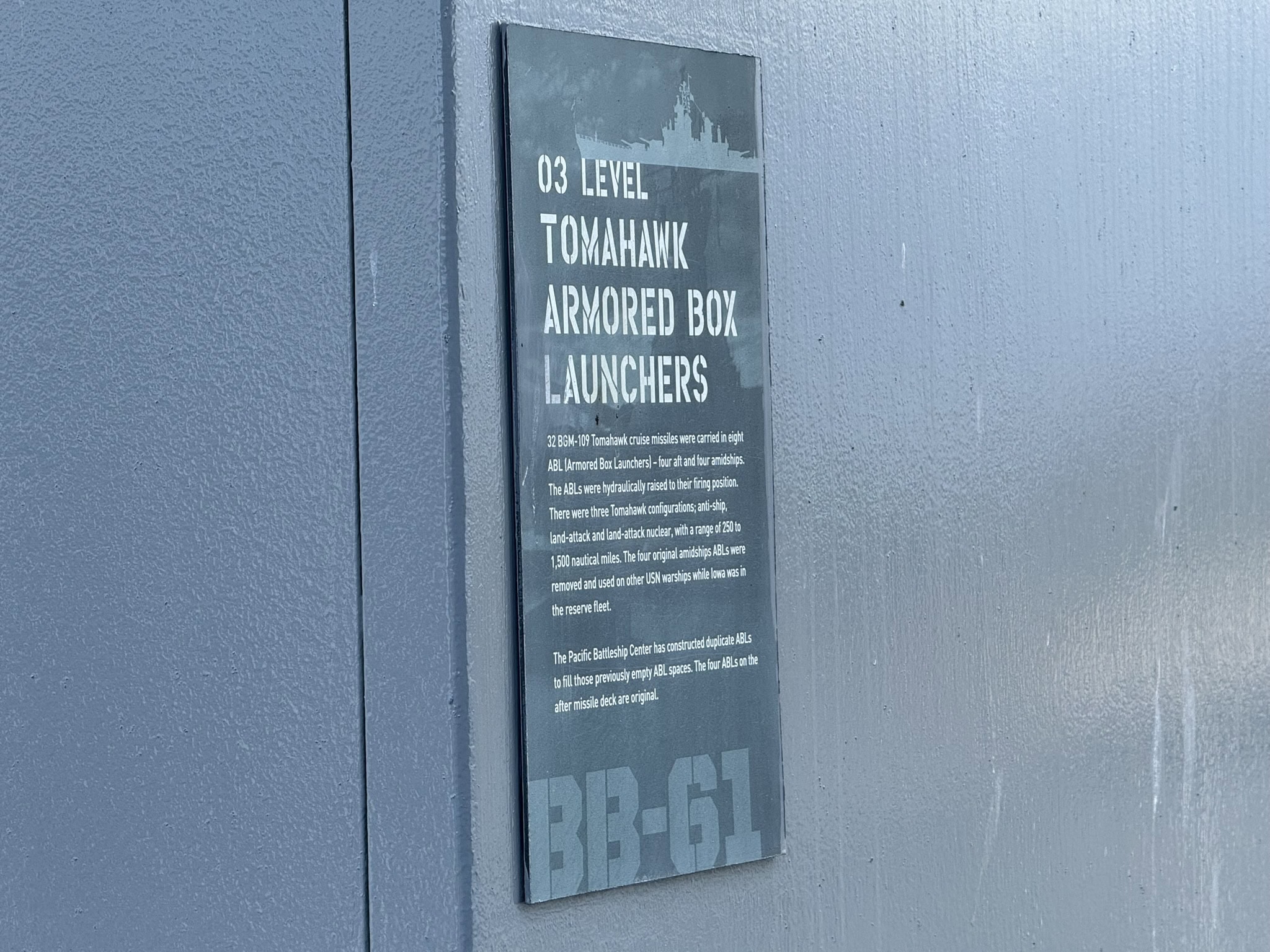
Tomahawk Box on USS Iowa. 19FortyFive.com Image.
The Iowa class, then, did not dominate naval warfare in the way earlier battleships were expected to, but it did adapt – quickly – into a supporting role within a carrier-led fleet.
The Iowa Class Kept Coming Back
What also makes the Iowa class so unusual is its longevity. Unlike most battleships, which were retired after World War II, the Iowa class repeatedly returned to service across multiple conflicts.
During the Korean War, the ships were used for naval gunfire support, delivering heavy bombardment against North Korean targets. USS New Jersey was reactivated for the Vietnam War, where it again provided shore bombardment – demonstrating that its large naval guns still had value in certain contexts.
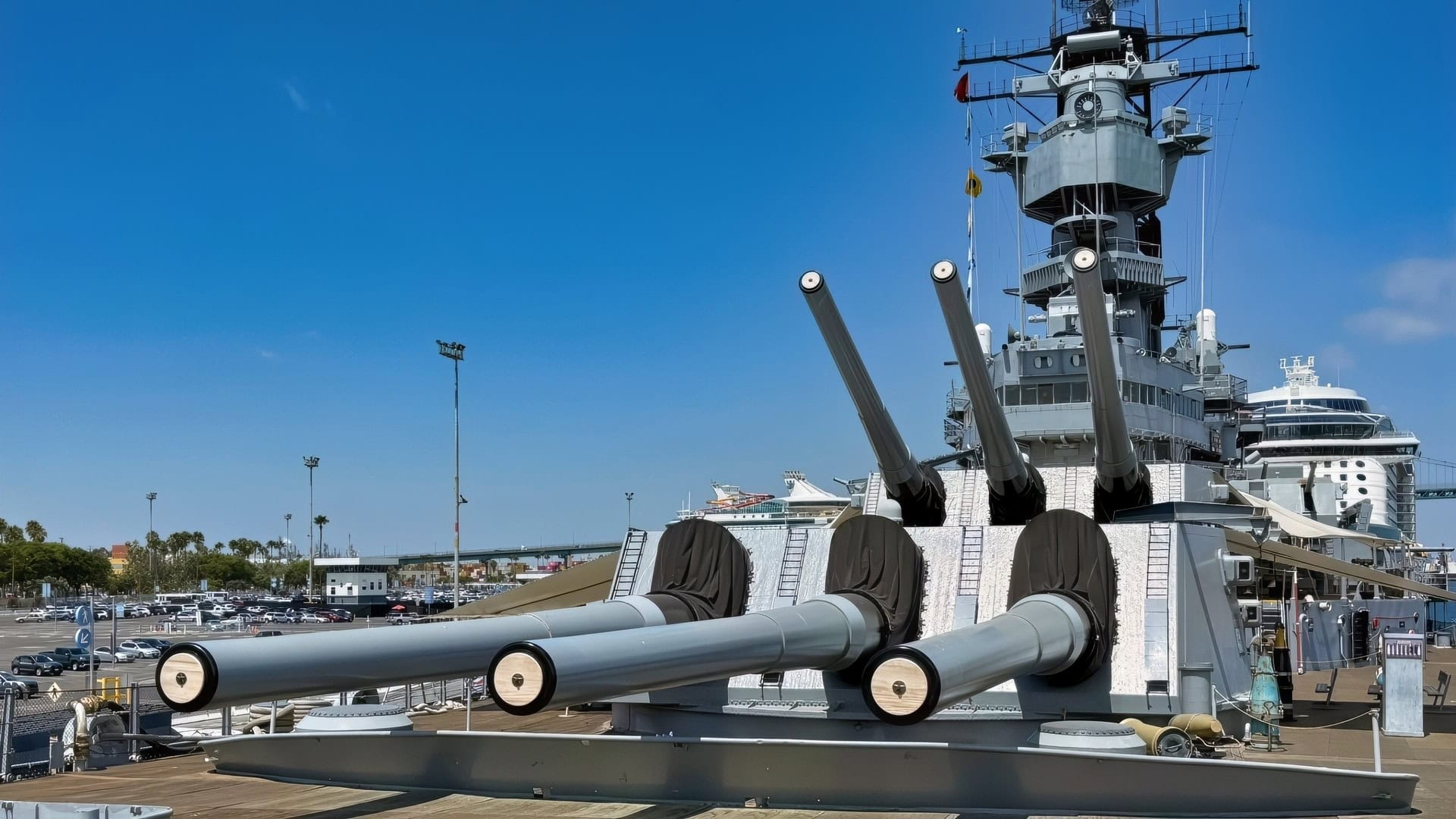
USS Iowa Battleship Guns 19FortyFive.com Image
The most significant example of this, though, came in the 1980s, when all four ships were modernized as part of the Reagan administration’s 600-ship Navy plan. Those upgrades fundamentally changed the ships, with each vessel retaining its guns but being fitted with Tomahawk cruise missiles, Harpoon anti-ship missiles, and Phalanx close-in weapon systems. Plans to remove the guns and modernize them even further were eventually canceled, but the upgrades that did take place were still transformative.
During the 1991 Gulf War, USS Missouri and USS Wisconsin launched Tomahawk missiles and conducted gunfire strikes against Iraqi targets, proving that these 1930s ships could still contribute to late-20th-century warfare.
Few warship classes have demonstrated that level of adaptability across such different technological eras.
An Impressive Record Not Without Problems
The Iowa class was successful, but that doesn’t mean it was without its own challenges. The most significant incident involving the class occurred on April 19, 1989, when an explosion inside Turret Two aboard USS Iowa killed 47 sailors during a training exercise.
The cause of the explosion was the subject of extensive investigation and debate, making it one of the most scrutinized incidents in modern U.S. naval history. It also demonstrated the danger of operating battleships of this scale, with their larger crews and more complex procedures.
There were other problems, too. USS Missouri ran aground in 1950, necessitating a large-scale recovery effort, and USS Wisconsin suffered a major collision in 1956, requiring extensive repairs.

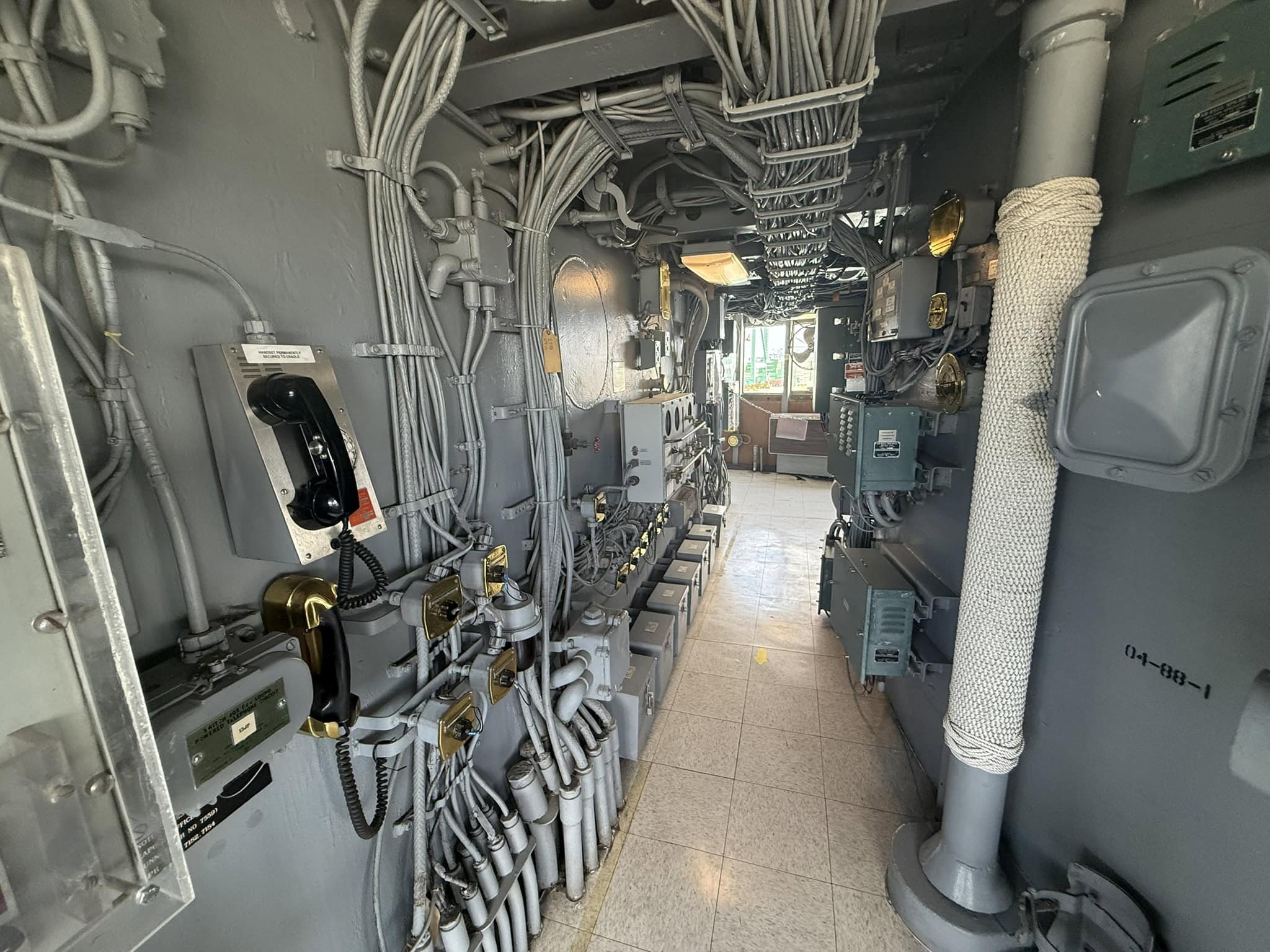
Inside USS Iowa. Image Credit: Harry J. Kazianis for 19FortyFive.com
Those incidents were by no means representative of the class being uniquely vulnerable – all ships have their problems and carry dangers – but it does serve as a reminder of just how powerful and resource-intensive they were as a class. These were operationally demanding ships.
By the end of the Cold War, the strategic environment had changed again, with carrier aviation and submarines increasingly defining naval warfare. Battleships, no matter how capable, became difficult to justify – and all four Iowa-class ships were ultimately decommissioned in the early 1990s.
From Warship to Museum
Today, USS Iowa sits at the Port of Los Angeles as a museum ship, operated by the Pacific Battleship Center. Originally commissioned in 1943, the ship served in World War II, the Korean War, and the Cold War, earning 11 battle stars before being retired and eventually donated for public display.
The ship was decommissioned on October 26, 1990, at Norfolk, Virginia, after nearly a decade of Cold War reactivation service, and formally struck from the Naval Vessel Register in 1995 as the Navy moved away from battleships entirely. For years, it remained in the Navy’s reserve fleet, with intermittent proposals to reactivate it for naval gunfire support that were ultimately rejected as missile and airpower capabilities made the platform redundant.
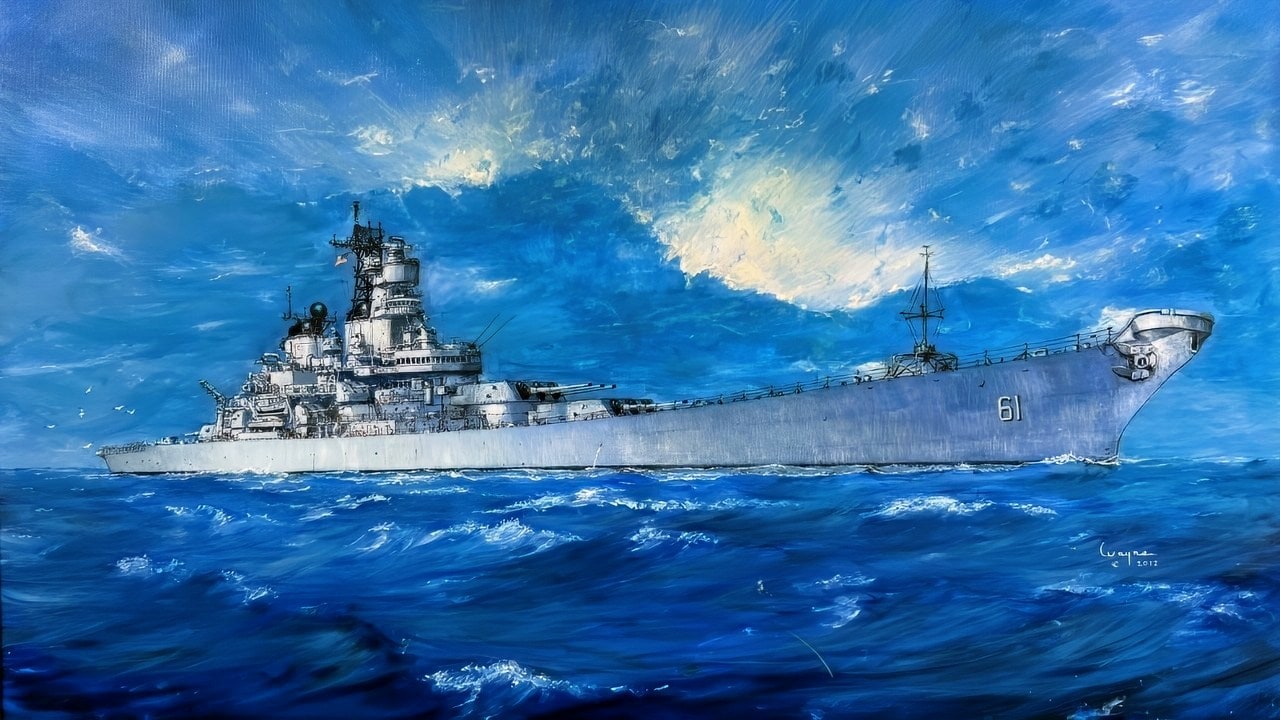
Image taken by Harry J. Kazianis aboard the USS Iowa on August 15, 2025. Image is of a painting of the USS Iowa of the Iowa-Class. USS New Jersey is also a Iowa-Class battleship.
USS Iowa was officially donated in 2011 and opened to the public in Los Angeles in July 2012, following refurbishment and relocation from the Suisun Bay Reserve Fleet.
Today, the ship offers guided tours through restored crew spaces and engine rooms. It offers interactive exhibits focused on life at sea and naval operations, hosts educational programs and STEM initiatives, and is expected to host some of the largest public events in its history as part of upcoming America250 celebrations.
MORE – The SR-71 Blackbird Required Titanium Manufacturing That Didn’t Exist
About the Author: Jack Buckby
Jack Buckby is a British researcher and analyst specializing in defense and national security, based in New York. His work focuses on military capability, procurement, and strategic competition, producing and editing analysis for policy and defense audiences. He brings extensive editorial experience, with a career output spanning over 1,000 articles at 19FortyFive and National Security Journal, and has previously authored books and papers on extremism and deradicalization.