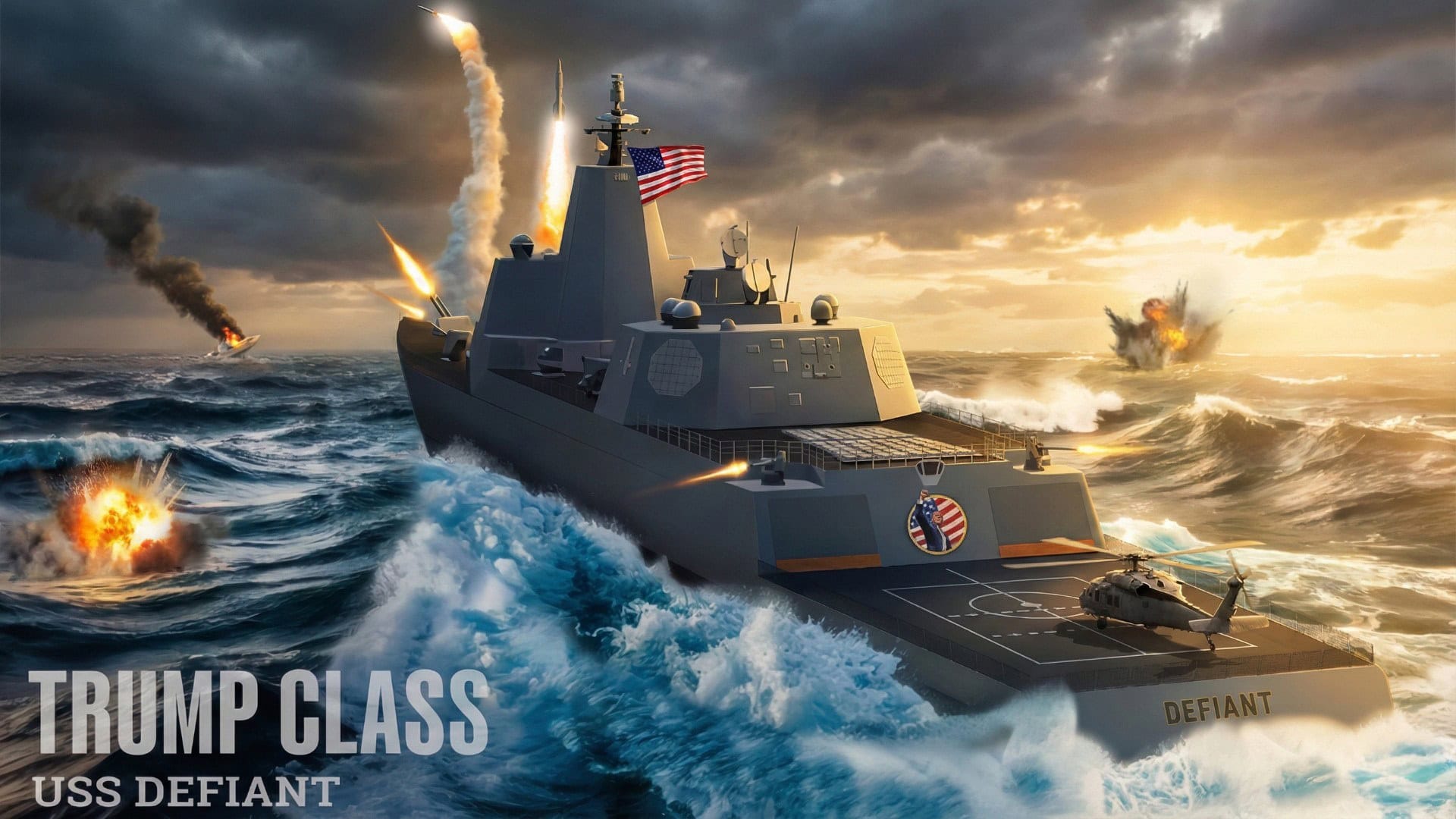
The Trump-Class Battleship Could Be the First U.S. Warship to Carry an Electromagnetic Railgun — General Atomics Says the Technology Is Possible
Back in January, Nick Bucci, the Vice President for Defense Systems & Technologies at General Atomics (GA) Electromagnetic Systems, was asked during the Surface Navy Association symposium about the possibility that the new Trump-class battleship would still be equipped with an electromagnetic railgun.
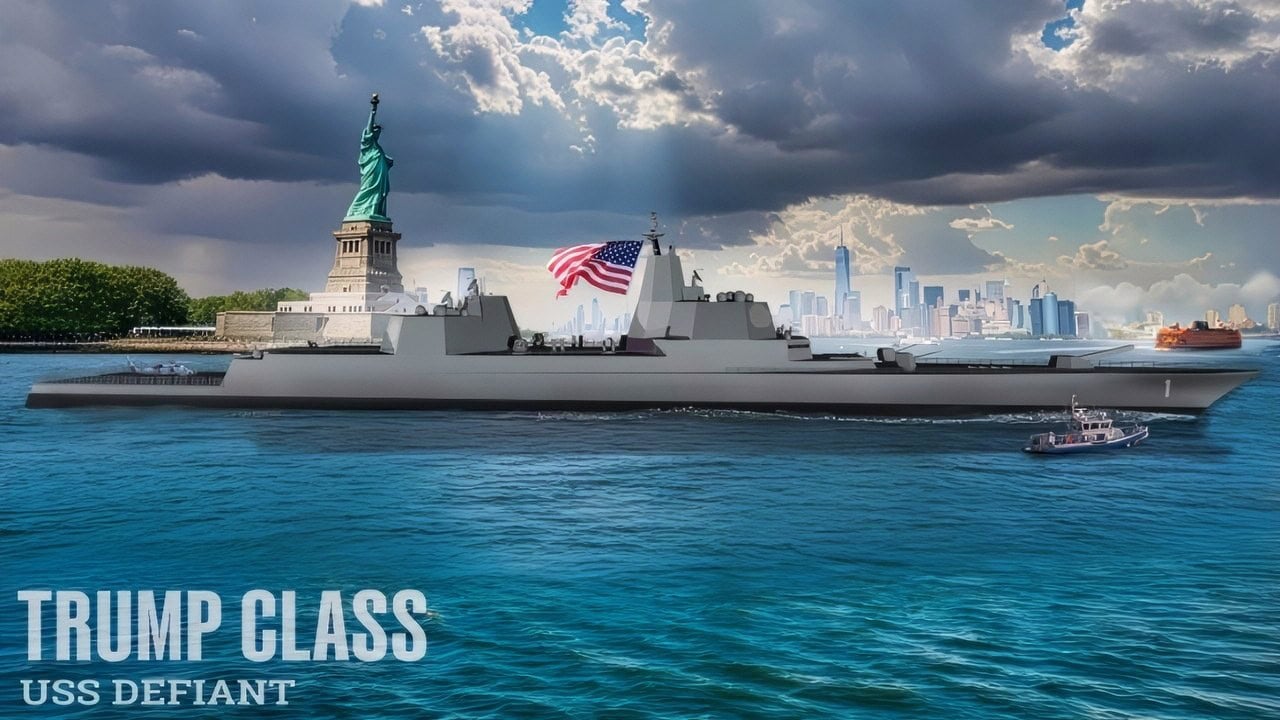
Trump-Class Battleship. Image Credit: Creative Commons/White House.
For those who have not been to what we used to call the “Navy League expo” in Washington, GA, the major contractor for the most high-profile electromagnetic systems of all.
These are the EMALS aircraft catapult and the advanced arresting gear (AAG) that are equipped on the new USS (CVN-78) Gerald Ford-class aircraft carrier.
“You know, we didn’t really give up on it,” said Bucci, speaking to Naval News during the event. “We’ve been working kind of behind the scenes with some of those other companies and countries to keep the technology moving forward to some level. Some of it we’ve put on the back shelf, but it’s ready to be pulled back out. We’ve used some of that technology in other areas of our portfolio, and so we can easily pull some of that back,” he explained.
Bucci also stated that the initial shortcomings and technical obstacles that were encountered during the initial phases of the railgun’s testing are being resolved.
The railgun is a 32 megajoule weapon that the US Navy officially stopped developing in 2021 due to technical issues.
But according to Bucci, work has continued at the company even though high-level naval officials have expressed doubts about its practicality.
“Depending on what their [US Navy’s] skepticism is, we probably have already solved that problem. And frankly, in many ways, with the advances that we’ve made in some of the inherent technologies, those challenges don’t exist any longer because we’ve tackled them for a different product. Whether it was from EMALS and AAG. Whether it was for our long-range maneuvering projectile with some of the electronics and things like that.”
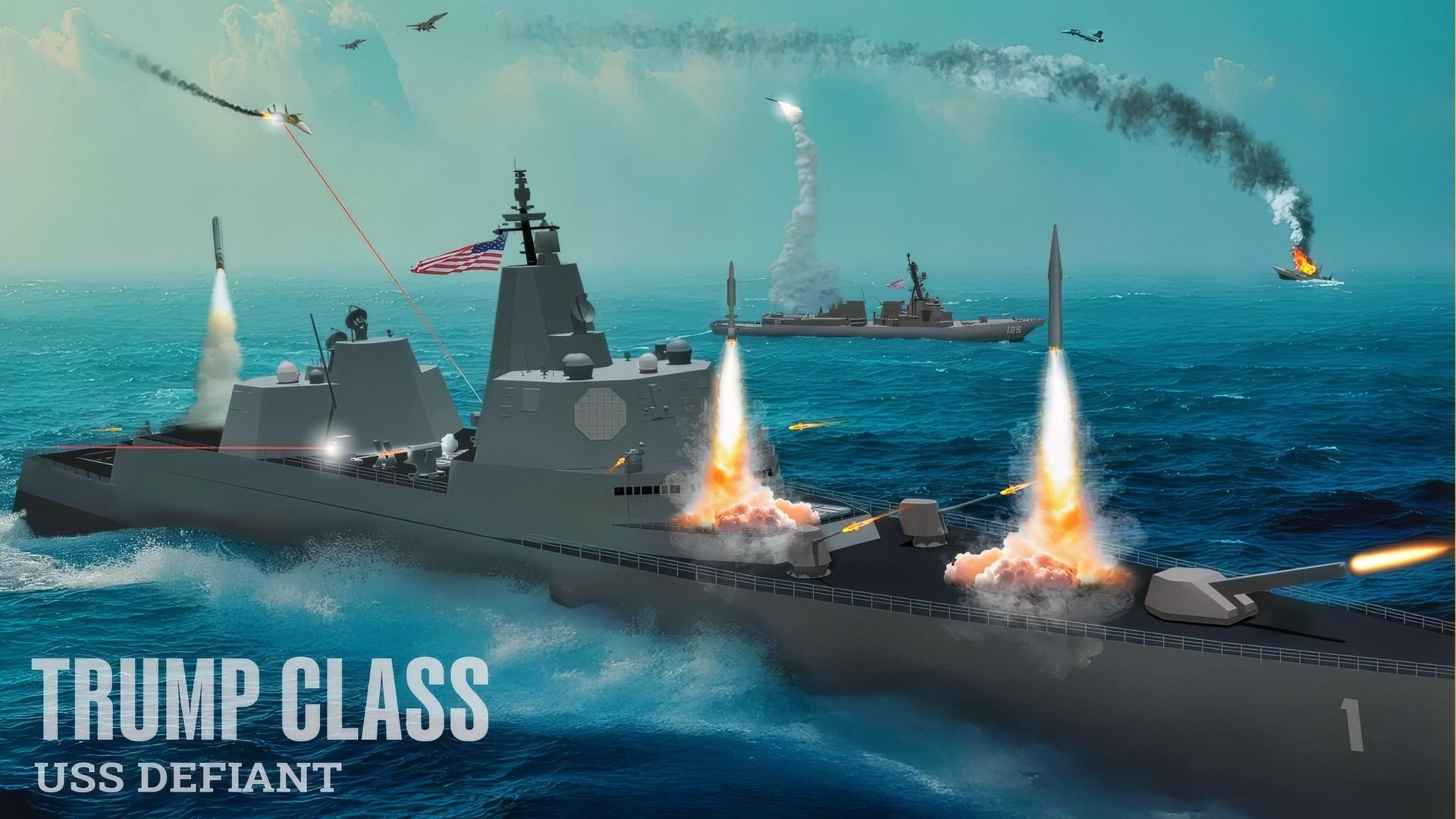
Trump-Class Battleship USS Defiant. Image Credit: Creative Commons.
Allied Endeavours
According to reports on the event, Bucci also explained that the railgun had become a sort of multinational effort.
What he described as “working behind the scenes” on the problems encountered with the rail gun several years back has involved engaging “with some of those other companies and countries to keep the technology moving forward to some level, some of it we kind of have put on the back shelf, but it’s ready to be pulled back out. We’ve used some of that technology in other areas of our portfolio, and so we can easily pull some of that back,” Bucci explained.
The GA executive did not elaborate on any companies or foreign countries with which the company was cooperating in the railgun program.
However, it is known that some US allies – namely Japan, Germany, and France – have been working on their own railgun systems as well.
In September 2025, Japanese media reported that a vessel of its Maritime Self-Defense Force (JMSDF) conducted its first successful test firings of a ship-mounted railgun against a target vessel at sea.
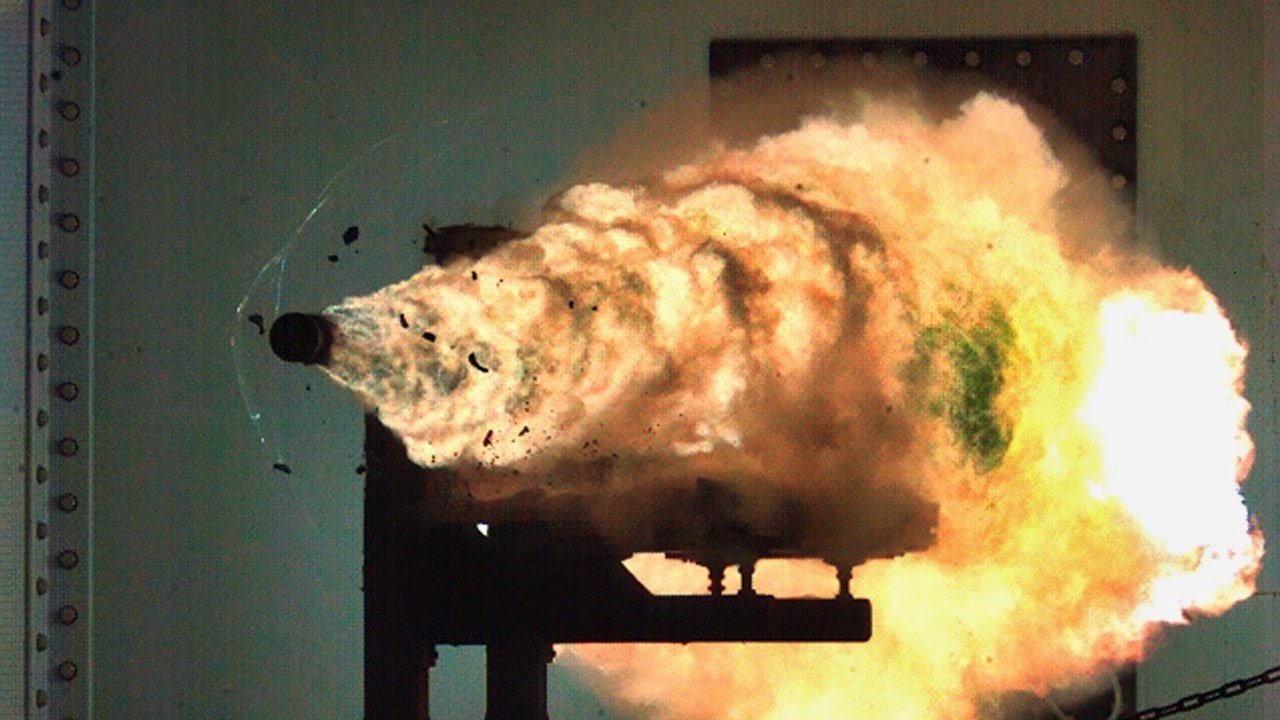
(Jan. 31, 2008) Photograph taken from a high-speed video camera during a record-setting firing of an electromagnetic railgun (EMRG) at Naval Surface Warfare Center, Dahlgren, Va., on January 31, 2008, firing at 10.64MJ (megajoules) with a muzzle velocity of 2520 meters per second. The Office of Naval Research’s EMRG program is part of the Department of the Navy’s Science and Technology investments, focused on developing new technologies to support Navy and Marine Corps war fighting needs. This photograph is a frame taken from a high-speed video camera. U.S. Navy Photograph (Released)
Japan’s Ministry of Defense’s Acquisition, Technology & Logistics Agency (ATLA) revealed that the actual firing tests had taken place between June and early July.
The tests were conducted using a prototype railgun deployed aboard the test ship JS Asuka.
“It’s the first time that a ship-mounted railgun was successfully fired at a real ship,” ATLA reported on its social media platform X. Four images were released of the multiple test firings that took place during these trials, all of which were carried out with the support of the JMSDF.
Pacing Threat
One reason Japan has picked up where the US Navy left off in developing railguns is the Chinese People’s Liberation Army Navy’s (PLAN) activities in this area. Intelligence estimates in the US and Japan indicate that Beijing is rapidly advancing its own development of a similar railgun system.
The PLAN has also reportedly achieved breakthroughs, including sustained firing during its own testing. But to date, Beijing’s military is not known to have deployed this weapon operationally. Testing of the Chinese system is reportedly still in process.
Another reason for several countries developing railguns and directed-energy weapons is to support the use of existing-technology interceptor missiles.
Railguns can provide another tier within the traditional layered approach to air and missile defense architectures, said Masashi Murano, a Japanese defense expert at the Hudson Institute think tank.
Kinetic projectiles fired from railguns are much more cost-effective when compared with the cost per round of conventional air defense missiles.
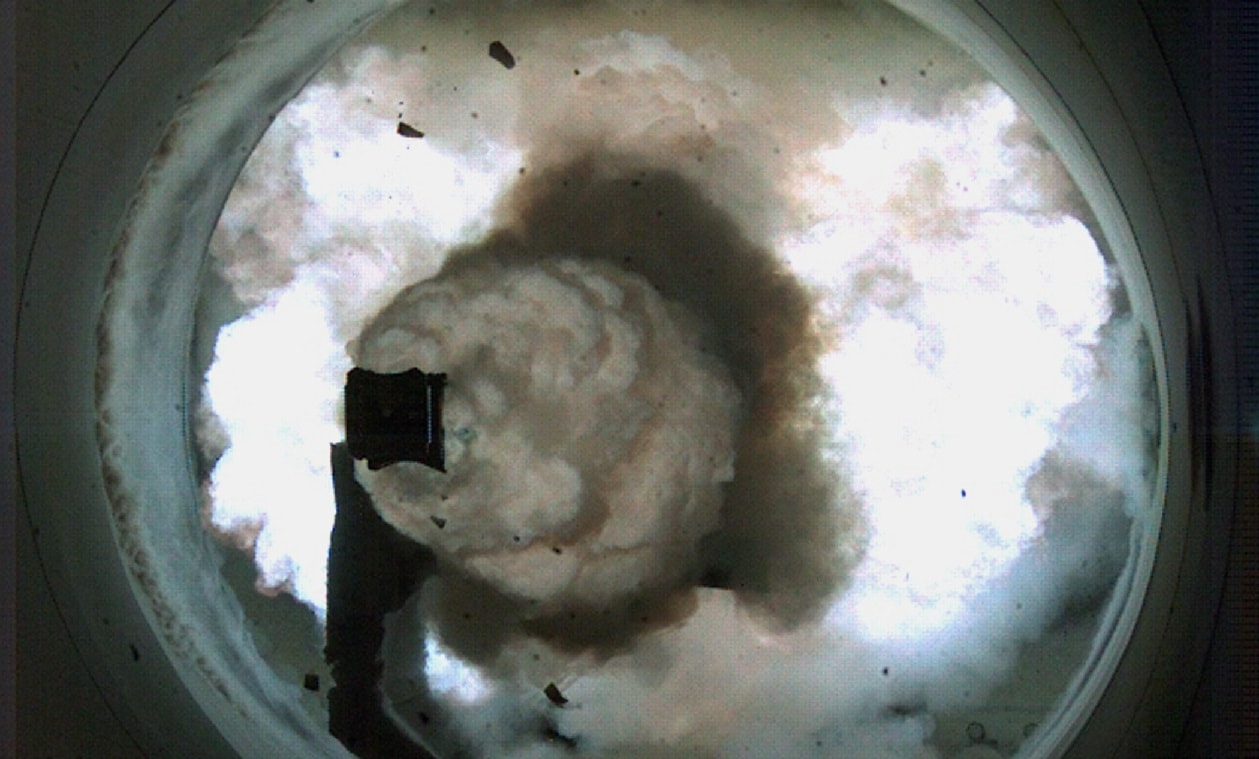
DAHLGREN, Va. (Dec. 10, 2010) High-speed camera image of the Office of Naval Research Electromagnetic Railgun located at the Naval Surface Warfare Center Dahlgren Division, firing a world-record setting 33 mega-joule shot, breaking the previous record established Jan. 31, 2008. The railgun is a long-range, high-energy gun launch system that uses electricity rather than gunpowder or rocket motors to launch projectiles capable of striking a target at a range of more than 200 nautical miles with Mach 7 velocity. A future tactical railgun will hit targets at ranges almost 20 times farther than conventional surface ship combat systems. (U.S. Navy photo/Released)
Each hypersonic tungsten round fired from a railgun costs between US$ 25,000 and US$ 50,000. In comparison, Patriot PAC-3 MSE interceptor missiles cost $4.2 million each, according to FY2025 Army budget documentation.
Export pricing and full-support packages frequently reach $6.25–7 million per unit when storage canisters, warranty provisions, and logistics are included.
Odds are, says more than one naval analyst, that the US Navy will come to realize this technology must be on its ships. “Cost-effective issues make it the best solution for future fleet air defense,” said a US industry expert on the technology.
About the Author: Reuben F. Johnson
Reuben F. Johnson has thirty-six years of experience analyzing and reporting on foreign weapons systems, defense technologies, and international arms export policy. Johnson is the Director of Research at the Casimir Pulaski Foundation. He is also a survivor of the Russian invasion of Ukraine in February 2022. He worked for years in the American defense industry as a foreign technology analyst and later as a consultant for the U.S. Department of Defense, the Departments of the Navy and Air Force, and the governments of the United Kingdom and Australia. In 2022-2023, he won two consecutive awards for his defense reporting. He holds a bachelor’s degree from DePauw University and a master’s degree from Miami University in Ohio, specializing in Soviet and Russian studies. He lives in Warsaw.