
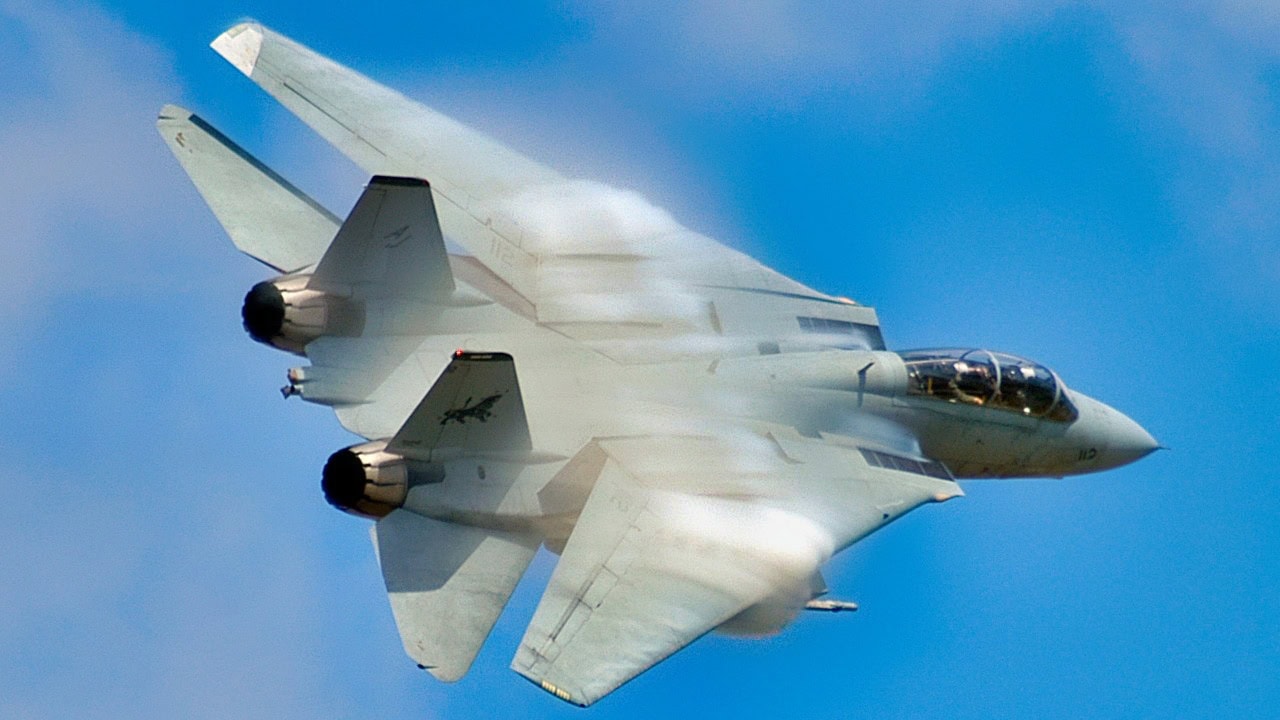
The F-14 Tomcat Shot Down 5 Enemy Aircraft and Never Lost a Single Jet in Air-to-Air Combat
Thanks to the blockbuster Top Gun film franchise (and, to a lesser extent, 1980 sci-fi movie “The Final Countdown,” starring Kirk Douglas), the Grumman F-14 Tomcat is a fighter plane that needs no introduction to most Americans, even the ones that aren’t hardcore aviation military history buffs.
But beyond all the Hollywood hokum, what is the real backstory of how and why the Tomcat (1) came into existence in the first place and (2) lasted as long as it did.
F-14 Tomcat. Image Taken by 19FortyFive.com
Initial Premise and Promise of the F-14
Though the Tomcat gained fame with Western moviegoers in the 1980s (“The Final Countdown” in 1980, the original “Top Gun” in 1986), the inspiration for the F-14 dates back to the mid-1960s, in the midst of the Vietnam War.
Robert Strange McNamara (yes, you read his middle name correctly), who served as U.S. Secretary of Defense (SECDEF) under both JFK and LBJ, conjured up (true to form for his “Whiz Kids” nickname) the Tactical Fighter Experimental program, intended to meet the U.S. Air Force’s requirement for a long-range ground-attack and close-air-support (CAS) plane as well as the Navy’s requirement for a loitering interceptor to protect the aircraft carriers.
The end result was the General Dynamics F-111 Aardvark, which ended up succeeding brilliantly in the former role but failing miserably in the latter role.
As noted by Dario Leone of The Aviation Geek Club in a March 26, 2018 article with the very lengthy but also very catchy title of “’There isn’t enough thrust in all Christendom to make a Navy fighter out of that airplane: how F-111B’s death led to the birth of the iconic F-14 Tomcat,” the Navy began test flights of the “Vark” in mid-1966, whereupon they discovered that the warbird was too overweight and underpowered to be compatible with carriers ops.
F-14 Tomcat. Image Taken by 19FortyFive.com
So, as can be gleaned from the self-explanatory title of Signore Leone’s article, the nixing of the Aardvark as a Navy fighter led to the creation of the Tomcat.
Okay, great, but who to build it for?
Grumman: The Logical Choice to Build the Tomcat
With the benefit of 20/20 hindsight, this one seems like a no-brainer.
After all, the Grumman Corporation (which didn’t become Northrop Grumman until 1994) already had a fantastic track record of producing successful fighter planes for the U.S. Navy, from the F4F Wildcat and F6F Hellcat that took the fight to the Axis powers in World War II, to the F8F Bearcat and F9F Panther that killed Commies in the Korean War. And notice the “feline” naming tradition there?
F-14 Tomcat. Image Taken by 19FortyFive.com
Thus it came to pass that the F-14 Tomcat would continue the Grumman “catbird” (so to speak) tradition when she made her maiden flight on Dec. 21, 1970, and officially entered service on Sept. 22, 1974 (with the USS Enterprise [CVN-65], aka “The Big E,” as her first “flattop” host).
Tomcats Into the Fray: Combat Performance
USN Tomcat drivers ended up with a total air-to-air kill tally of 5: two Libyan Sukhoi Su-22 Fitter jets downed during the 1981 Gulf of Sidra incident; two Libyan MiG-23 Floggers killed during the 1989 Gulf of Sidra incident; and one Iraqi Mi-8 Hip helicopter downed during Operation Desert Storm in 1991.
No USN F-14s were ever lost in air-to-air combat, though one F-14 was lost to enemy ground fire during Desert Storm. Its pilot, Lt. Devon Jones, was rescued the next day by U.S. Air Force pararescuemen (“PJs”), while his radar intercept officer (RIO), Lt. Lawrence Slade, ended up as a prisoner for the remainder of the war.
Tomcat Teething Issues
However, not all was smooth sailing for the F-14 in its early years.
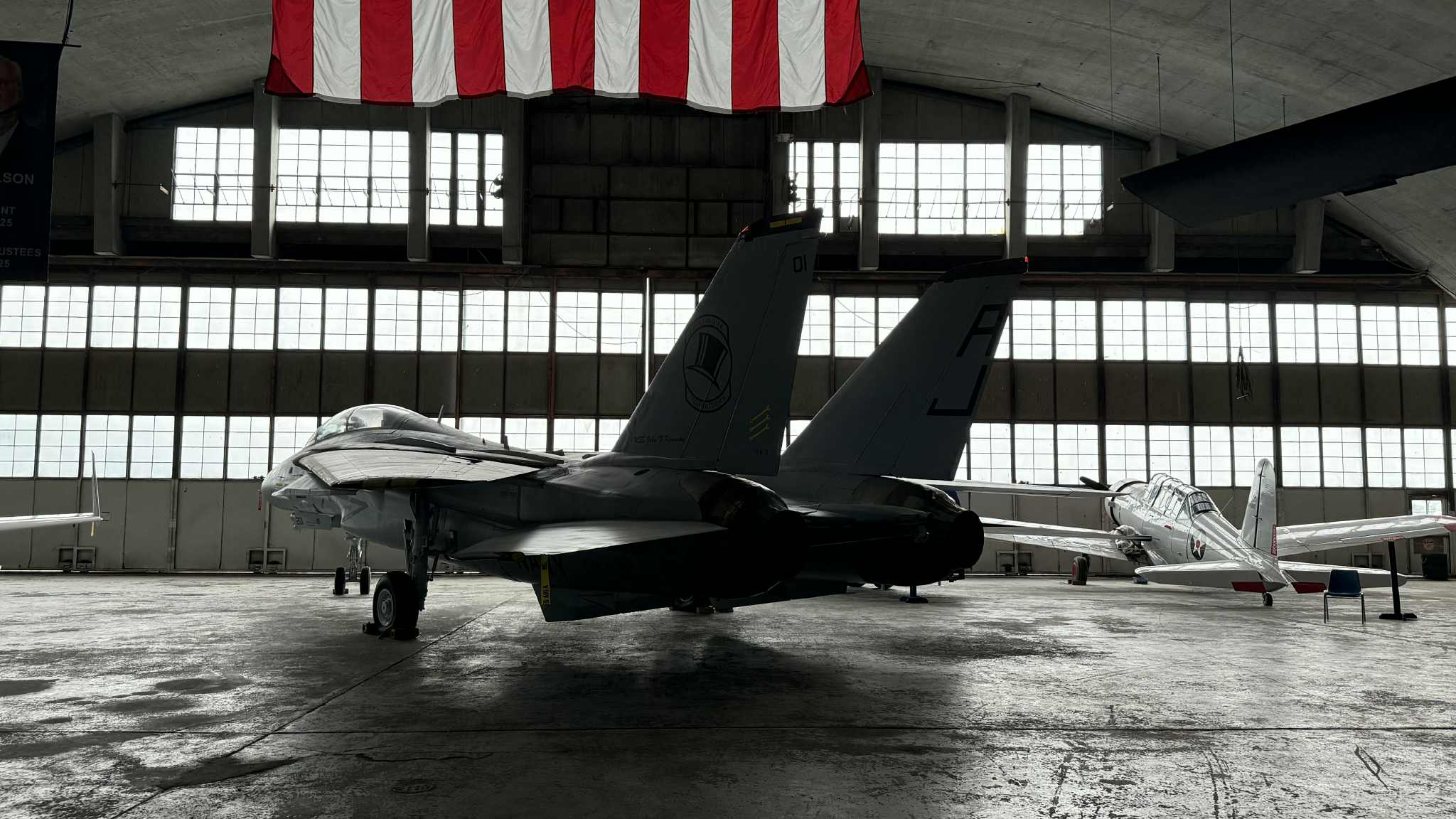
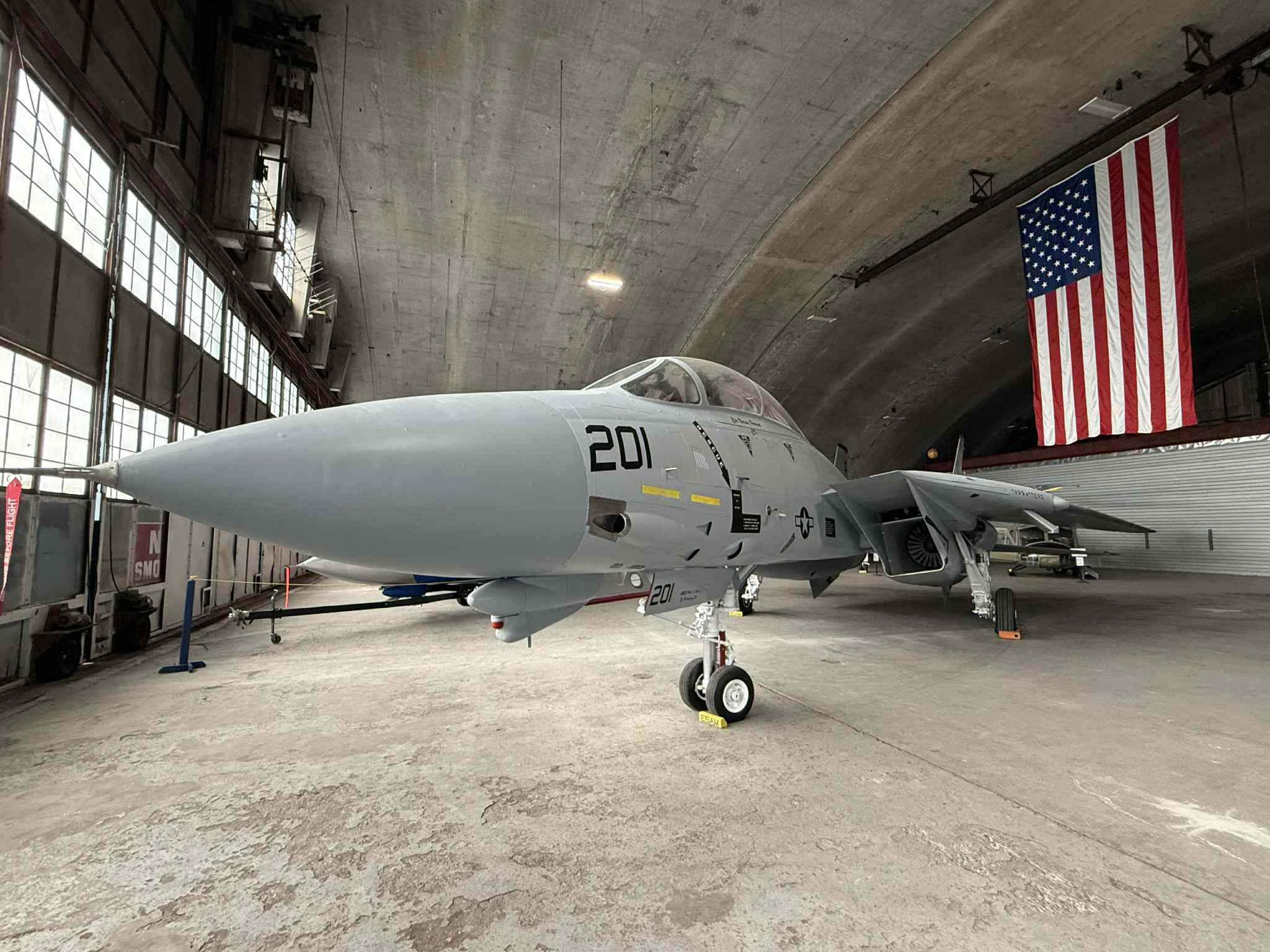
On the same day (coincidentally) that Operation Epic Fury kicked off, this writer had the tremendous honor and pleasure of visiting the Aviation Museum of Kentucky (AMK), located on the grounds of Blue Grass Airport in Lexington, Kentucky, which happens to have a Tomcat static display.
I was blessed with a top-notch docent to guide me on my tour: Mr. Orrin Messinger, a retired U.S. Army Chief Warrant Officer 2 (CW2) who flew Huey helicopters during the Vietnam War.
Orrin gave me these fascinating insights on the Tomcat:
“When they first came out with the F-14, it had a Pratt & Whitney TF30 engine in it, and they were having problems with engine stalls. You get into a dogfight, and there’s a pilot trying to clear a stall while he’s trying to dogfight!…They were gonna retire it in ’86. But General Electric worked out a deal with the Navy, and they re-engined it with the F110-400, and they finally retired it in 2006. The one pilot I talked to, I say, ‘Can you compare the two airplanes for me?’, and he said, ‘I used to have to fly the engines, now I fly the airplane! If I want power, I push the lever; if I don’t, I pull ‘em back; otherwise, I forget they’re there. And the one engineer from Grumman I talked to, he said, ‘Finally, the aircraft will fly to its designed specification.’ It’s a whale of an airplane!”

Aviation Museum of Kentucky F-14 Tomcat. Image Taken on March 1, 2026 by Christian D. Orr.

F-14 Tomcat at Aviation Museum of Kentucky. Taken on March 1, 2026. By Christian D. Orr.
While many would argue that the U.S. Navy might not have retired the F-14 so early in its career, the point remains that the Tomcat went on to achieve even greater victories.
Querying Orrin further, like both the aviation history geek and movie buff that I am, I presented this follow-up inquiry: “The flat spin that killed Goose in the movie [the original “Top Gun”], that was a real-life danger?”
CW2 (Ret.) Messinger replied, “Oh yeah, especially with the TF30s in it, because you could flame one out, and of course, the engines sit side-by-side, so you’ve got that asymmetrical thrust problem, which could very easily throw into the flat spin.”
Thankfully, with the improved engines, the Tomcat survived the proverbial axe of ’86 and lasted an additional two decades in U.S. Navy service, finally retiring on the 32nd anniversary of its debut, Sept. 22, 2006.
The F-14 Tomcat: A Photo Essay
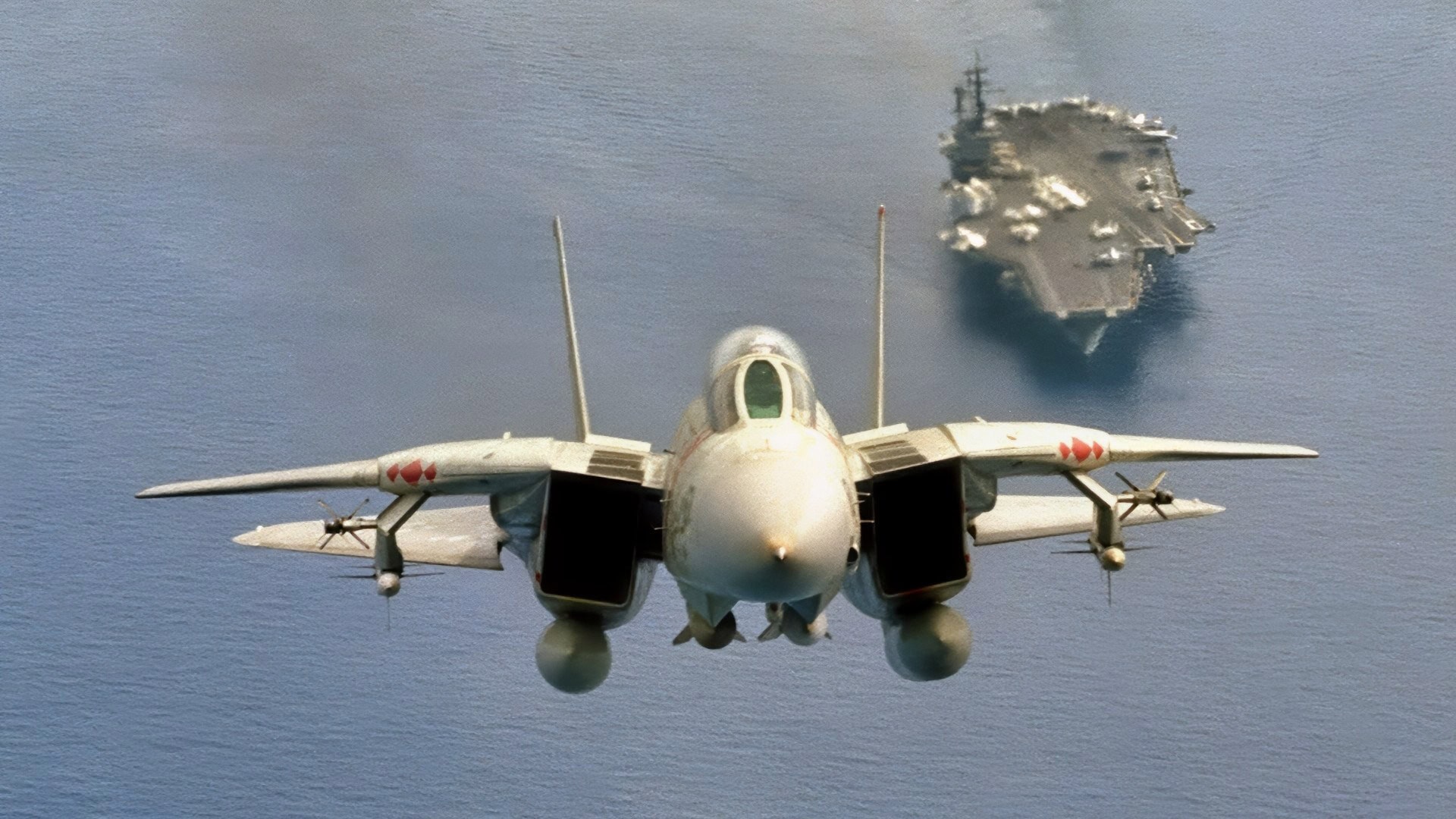
F-14 Tomcat Flying Near Aircraft Carrier. Image Credit: Creative Commons.
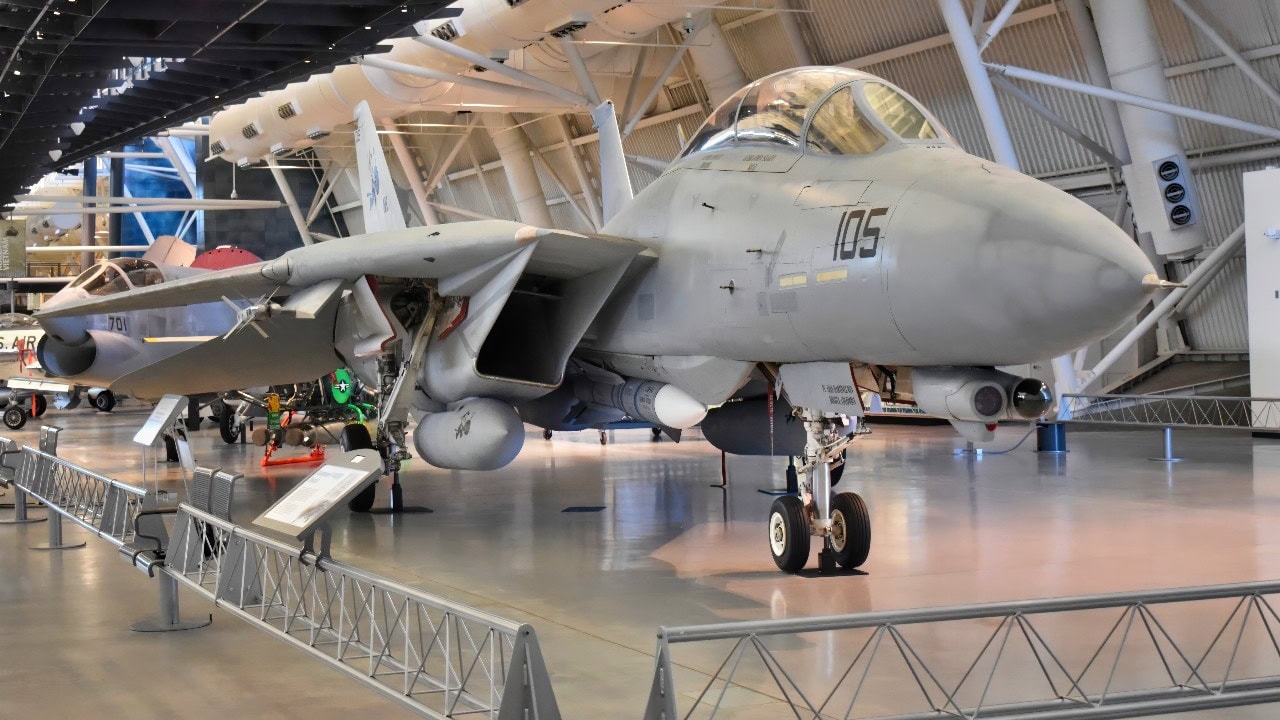
F-14 Tomcat. Image by 19FortyFive.com

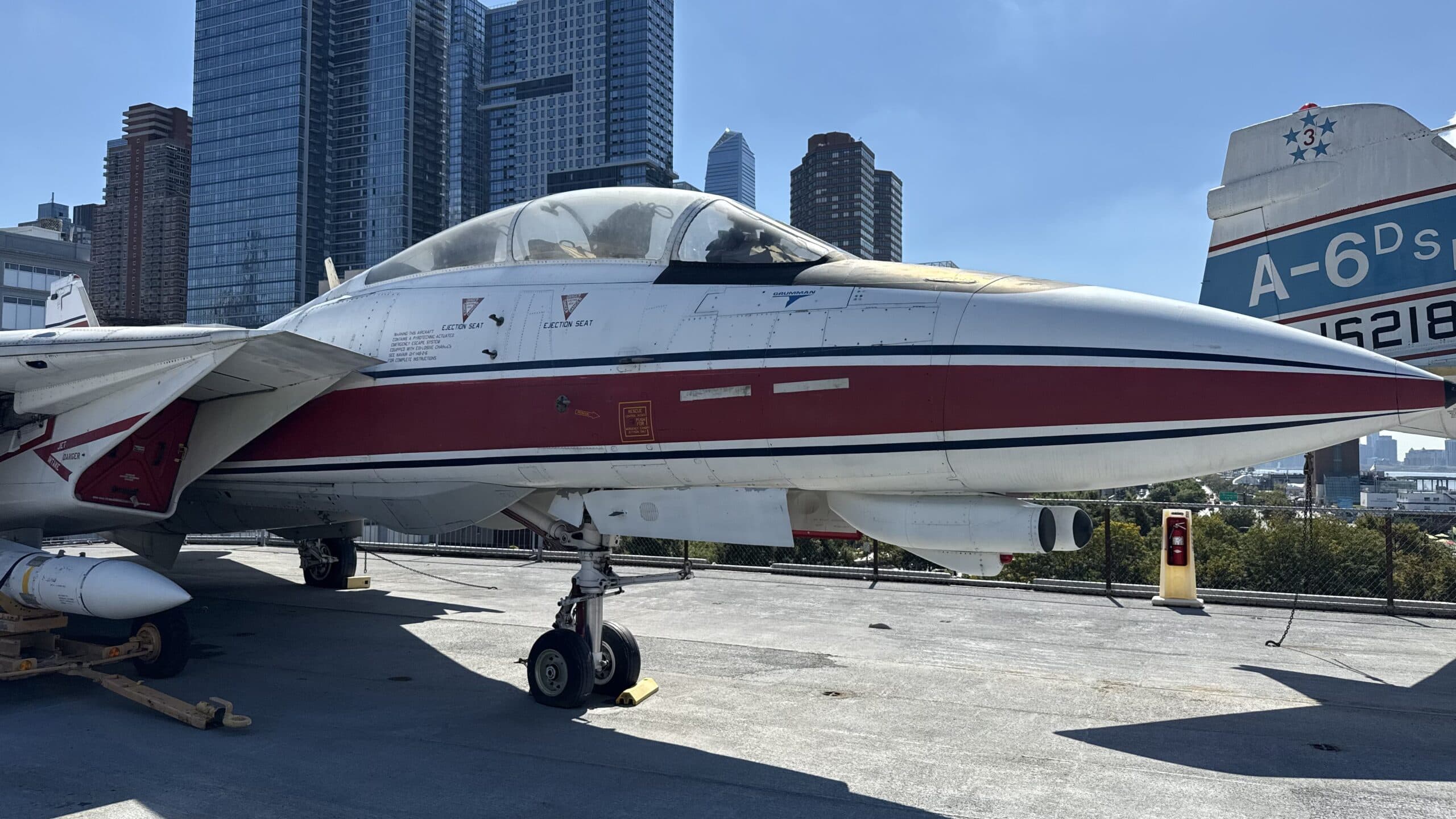
F-14 Tomcat Fighter in USS Intrepid Deck. Image taken late on 2025 by Jack Buckby for 19FortyFive. All Rights Reserved.
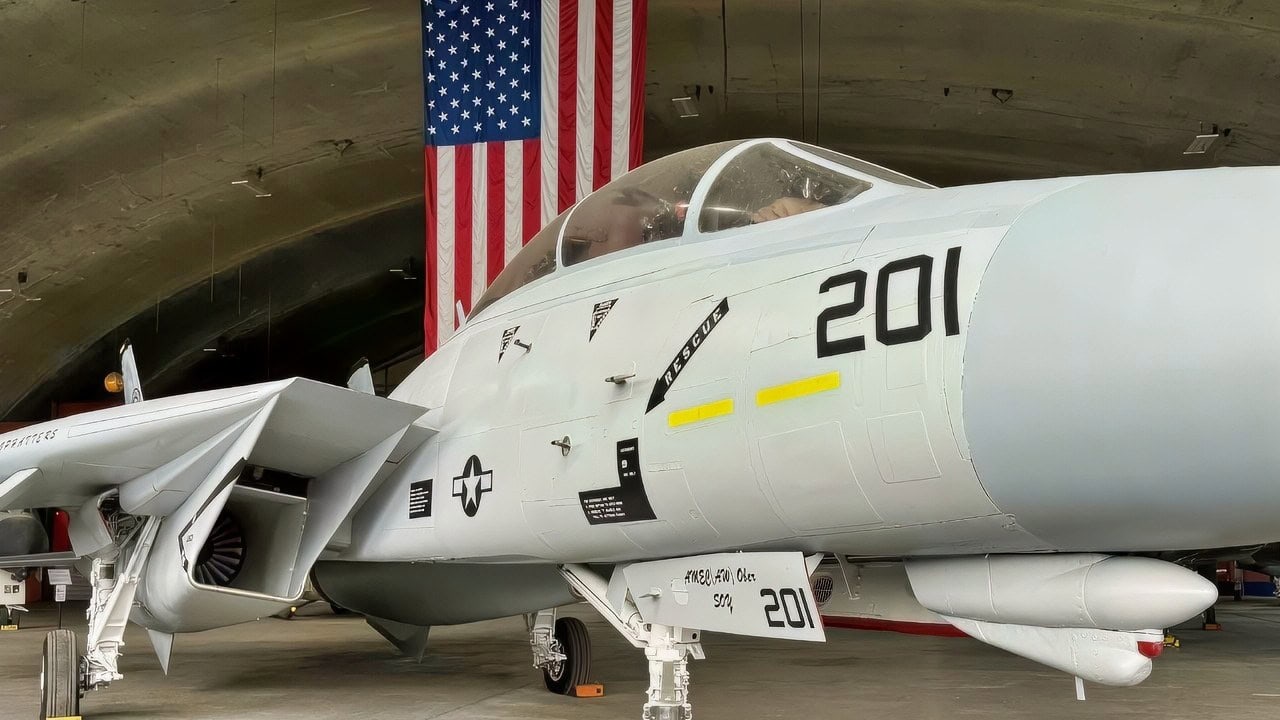
F-14 Tomcat Fighter U.S. Navy. 19FortyFive Field Research Image.

F-14 Tomcat in Museum. Image was taken by Jack Buckby for 19FortyFive.com. All rights reserved.

F-14 Tomcat Fighter In a Museum Hanger

National Naval Aviation Museum F-14. Image Credit: Creative Commons.
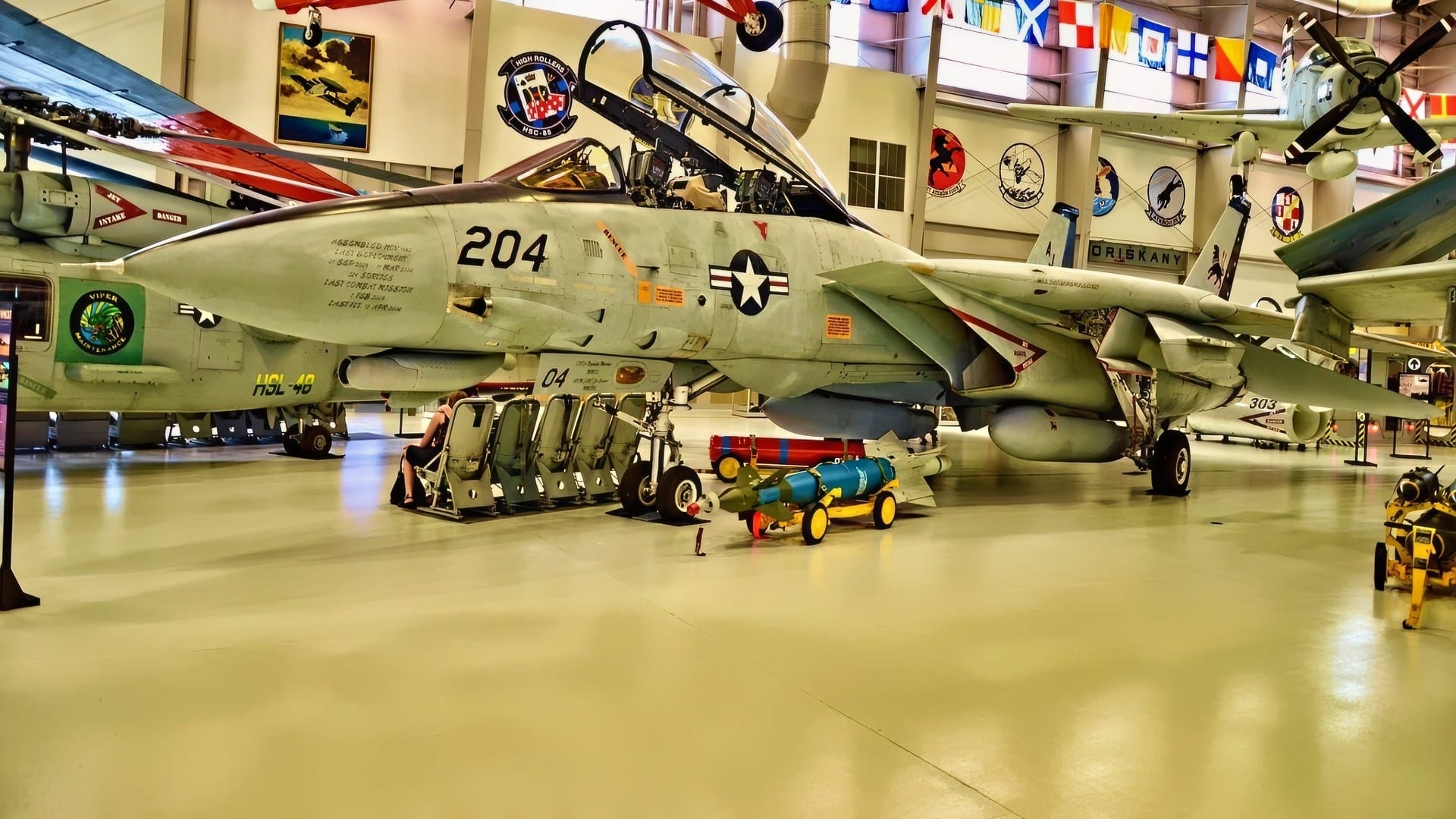
National Naval Aviation Museum. Image Credit: Creative Commons.
About the Author: Christian D. Orr, Defense Expert
Christian D. Orr is a Senior Defense Editor. He is a former Air Force Security Forces officer, Federal law enforcement officer, and private military contractor (with assignments worked in Iraq, the United Arab Emirates, Kosovo, Japan, Germany, and the Pentagon). Chris holds a B.A. in International Relations from the University of Southern California (USC) and an M.A. in Intelligence Studies (with a concentration in Terrorism Studies) from American Military University (AMU). He is also the author of the book “Five Decades of a Fabulous Firearm: Celebrating the 50th Anniversary of the Beretta 92 Pistol Series,” the second edition of which was recently published.