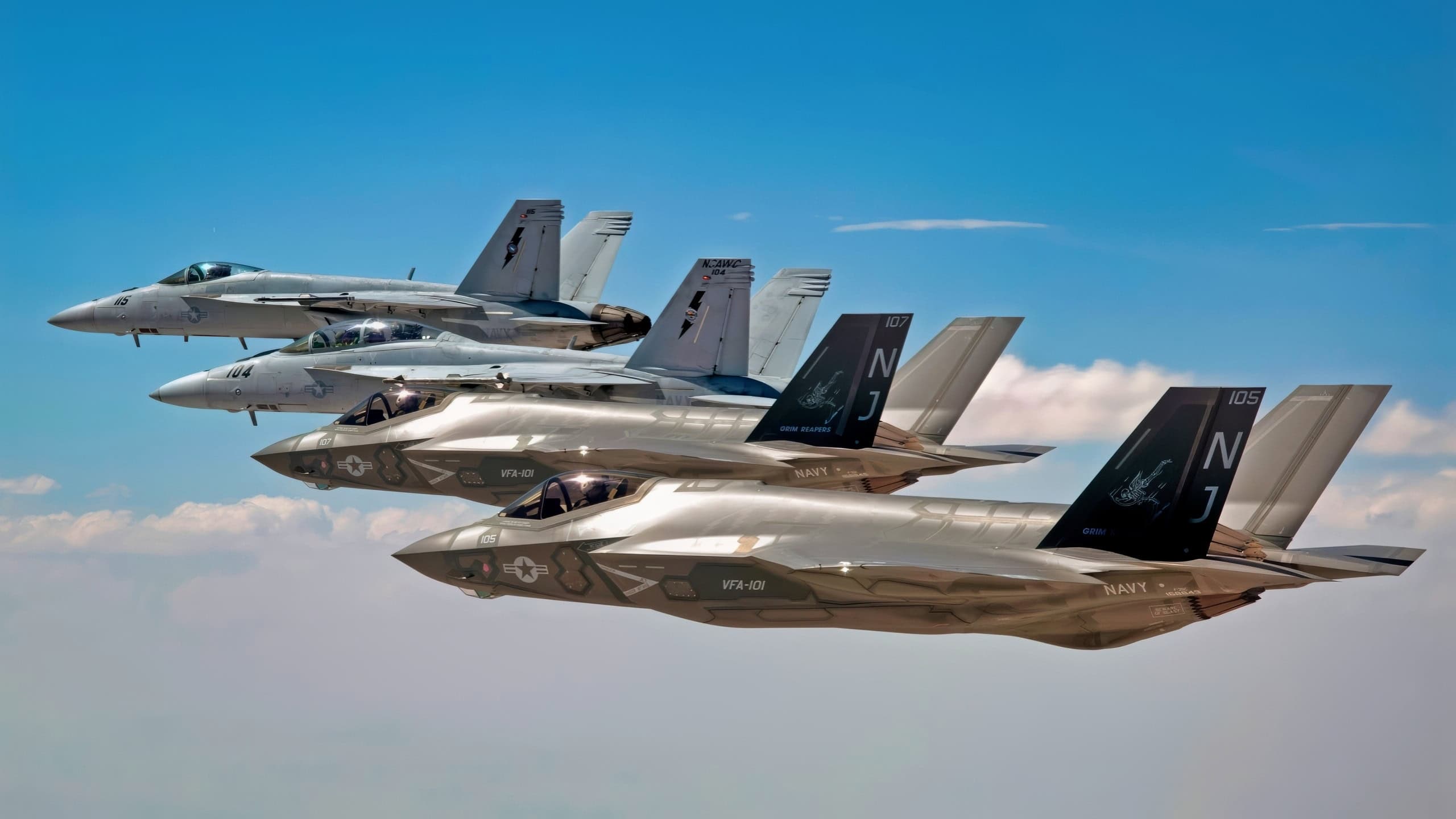
Too Hot for the USS Gerald R. Ford: Why the Navy’s Newest Aircrat Carrier Still Can’t Fully Operate the F-35C
The USS Gerald R. Ford was meant to mark a new chapter in naval aviation for the United States Navy, but the lead ship of its new class of American aircraft carriers still lacks the full modifications necessary for consistent F-35C operations.
The issue, of course, is larger than just hot exhaust.
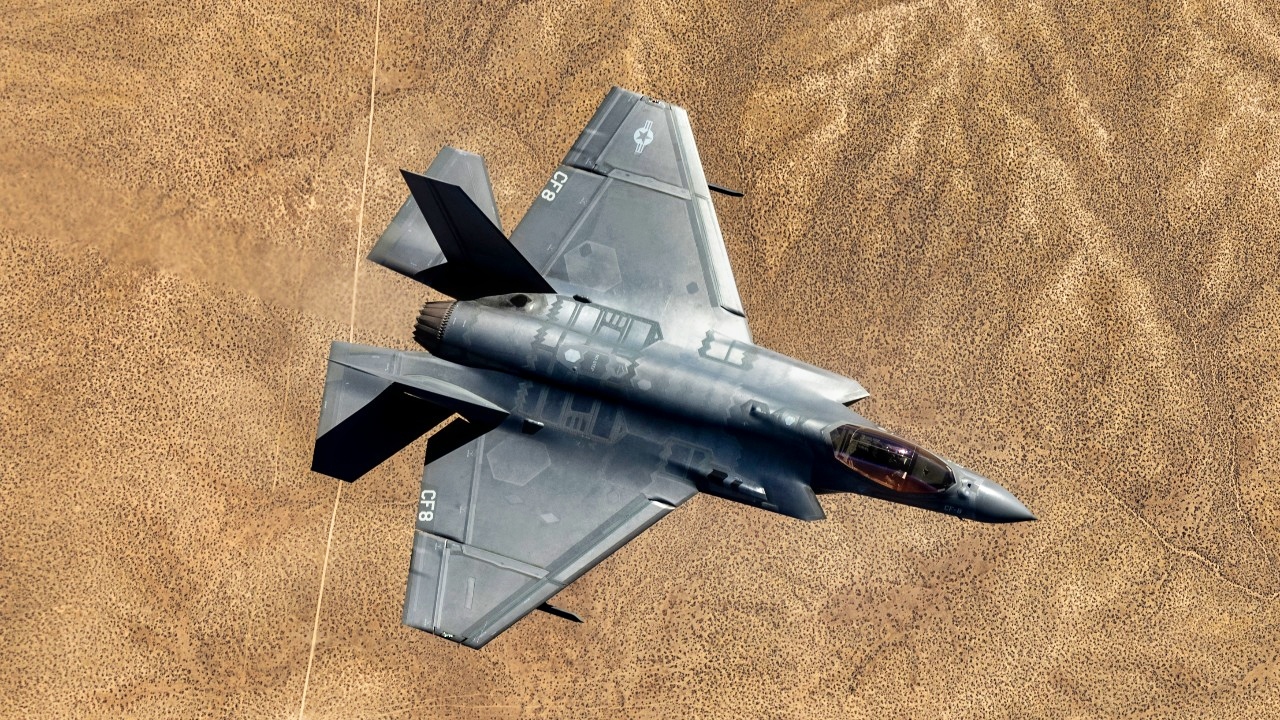
Maj. Nicholas Helmer conducts a mission over the Mojave Desert on October 8, 2024. The F-35C aircraft is assigned to the 461st Flight Test Squadron, F-35 Integrated Test Force at Edwards Air Force Base, California. The aircraft’s dual markings of United States Navy Air Test and Evaluation Squadron Nine (VX-9) and 461st FLTS represents the joint mission of the Integrated Test Force. The F-35 ITF includes people and aircraft from the United States Air Force, United States Navy, United States Marine Corps, foreign partners, Air Force Reserve Command 370th FLTS, and the Air Force Operational Test and Evaluation Center’s 31st TES. (Courtesy Photo, Lockheed Martin Edwards Team)
It reveals the Navy’s tendency to introduce impressive platforms before the supporting system around them is fully ready.
Flawed from the Start
Just think about what it took to build the Gerald R. Ford. It is the largest aircraft carrier ever constructed. The Navy integrated a host of new technologies to support the carrier and ensure it stayed ahead of American rivals.
Everything from the Electromagnetic Aircraft Launch System (EMALS) to the Advanced Arresting Gear (AAG), and even the ship’s onboard plumbing, was reimagined in a way that the Pentagon believed would make the Ford-class the dominant class of carriers—unmatched, really—for decades to come.
After high cost and schedule overruns, the Ford was finally launched. It cost taxpayers $13 billion to build, and many of the new onboard systems—including the EMALS and AAG—did not function correctly.
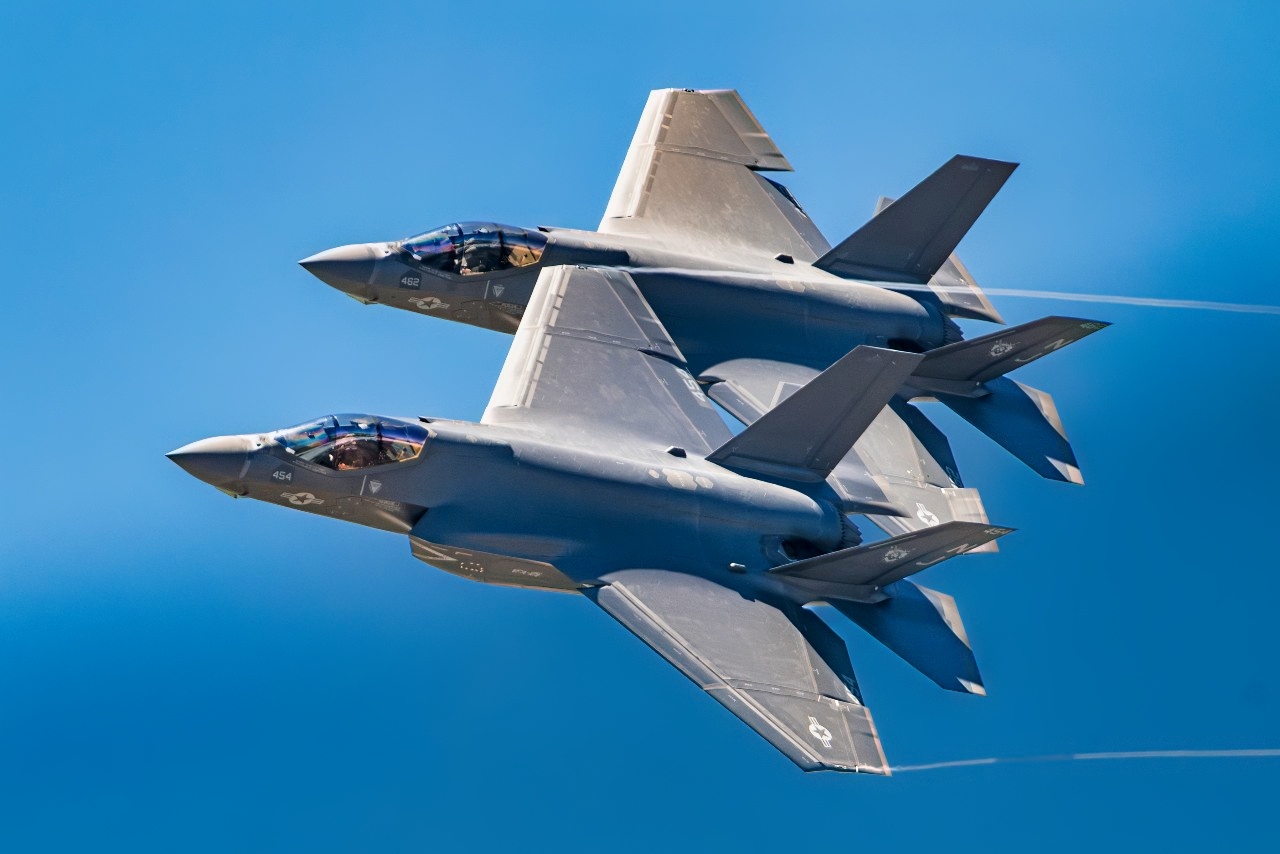
The U.S. Navy F-35C Lighting II Demo Team performs a flight demonstration at the Wings Over South Texas Air Show. This year’s air show marks Wings Over South Texas’s first return to Naval Air Station Corpus Christi since 2019.
The Navy adopted a trial-and-error approach to fixing issues with the ship’s baseline systems, problems that should never have occurred given the amount of money and time invested in building the Gerald R. Ford.
The problems with Gerald R. Ford apparently go much deeper, too.
Catastrophic Displays at Sea
Since entering the US Central Command (CENTCOM) area of responsibility (AOR) in the lead-up to the current War for the Greater Middle East between the United States, Israel, and Iran (and its proxies), the Ford has displayed a notably problematic list of issues.
First, the ship’s sewage system experienced a complete failure upon arrival in the theater.
Then, an alleged laundry fire essentially took the great ship out of action for over a week.
Currently, the Navy is refusing to send the damaged ship back to its homeport in the United States for extensive repairs.
Instead, the Navy is keeping the Ford in CENTCOM’s AOR while likely rushing the USS George H.W. Bush to bolster the USSAbraham Lincoln, which has been on station the longest of the three carriers underway.
Why Can’t Ford Launch F-35Cs
But the most frustrating aspect of the various failures and performance issues with the USS Gerald R. Ford stems from the fact that the Navy’s newest, supposedly most advanced carrier has yet to deploy the F-35C Lightning II, its fifth-generation multirole stealth warplane.
It’s shocking that the Navy is still working to optimize the Ford to better accommodate the F-35C years after its launch from the shipyard, even though the Ford was originally designed to serve as an F-35C mothership.
This supposedly next-generation carrier is limited to launching the previous generation of warplanes, leading some analysts to question why it was necessary to spend money and resources on building the Ford-class carrier to replace the Nimitz-class if the newer carriers can’t even operate the Navy’s next-generation warplanes.
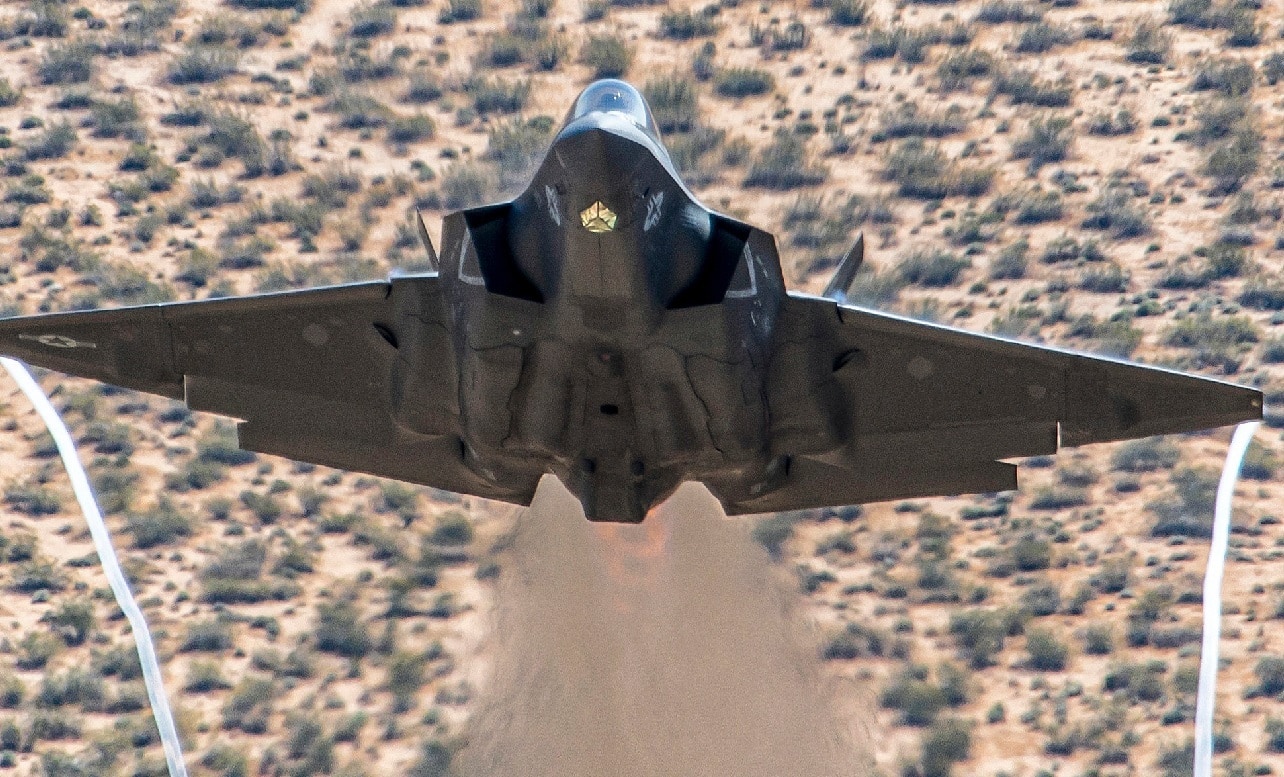
Two F-35C’s from VFA-125 “Rough Raiders”, based at NAS Lemoore, piloted by Major Derek “Shootsbe” Heinz A/C 430 and LT Alex “MoM” Daie A/C 411, Fly Low Level around Freemont Peak near Edwards AFB, Ca., 7 May 2019. The “Rough Raiders” are a Fleet Replacement Squadron flying F-35C Lightning II.
According to multiple sources, including the Navy, the F-35C’s engine exhaust and thrust profile impose different thermal demands than those of the legacy F/A-18E/F Super Hornets.
The USS Gerald R. Ford’s jet blast deflectors and associated deck infrastructure require reinforced materials and upgraded cooling to withstand the high-tempo launches of F-35Cs.
Let’s clarify this: the F-35C was built for carrier operations.
The Ford was meant to lead the Navy’s future air wing revolution, which the F-35C is supposed to represent. However, the lead ship of the new carrier class, now involved in major combat operations in the Middle East, did not receive all the modifications in time to make the Ford fully compatible with the F-35C.
The issue with the Ford and its inability to deploy the F-35C is not about whether the F-35 is as effective a warplane as its supporters claim. Instead, it highlights a major failure of the US Navy’s surface warfare fleet.
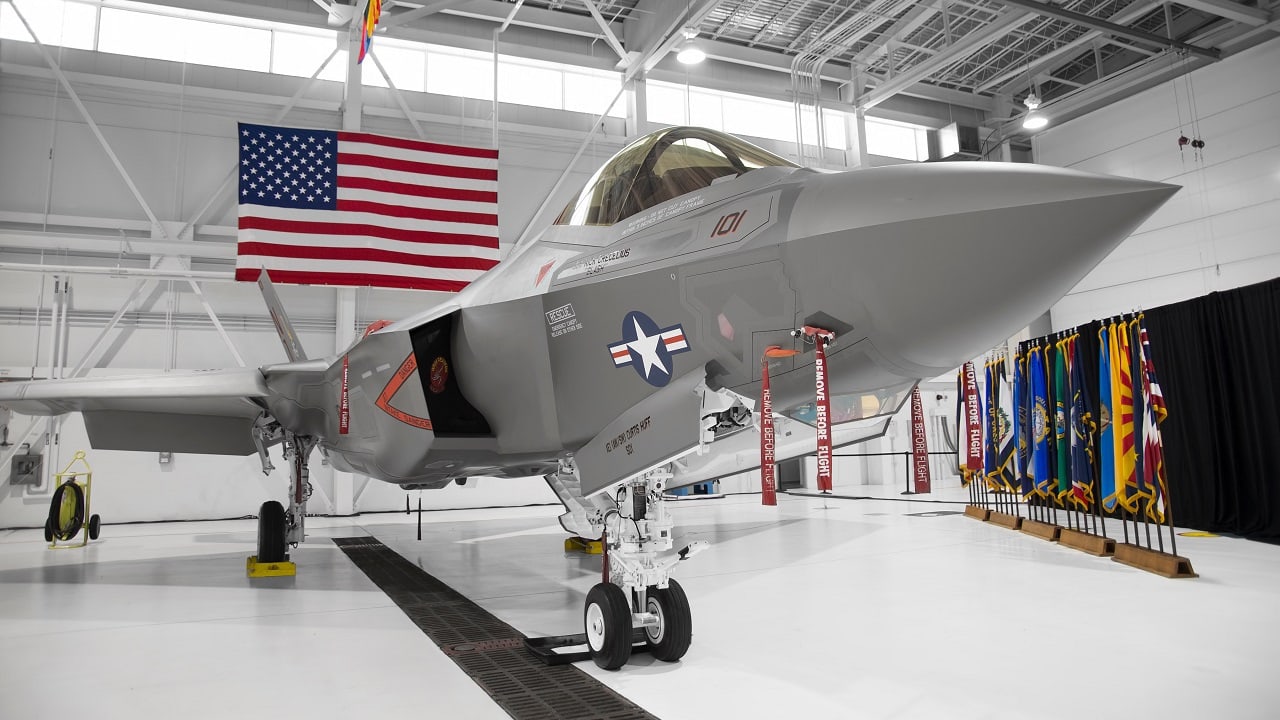
US F-35. Image Credit: Lockheed Martin.
The Navy deployed a subpar carrier, like the USS Gerald R. Ford, before its engineers had fully completed its integration.
More importantly, the F-35C requires shipboard support systems tailored specifically for the fifth-generation warplane. They particularly need secure maintenance and logistics infrastructure, such as ODIN (OE Data Integration Network) and other specialized workspaces for low-observable upkeep.
The fifth-generation naval aviation revolution isn’t just about having a carrier capable of launching these advanced jets.
Those carriers must also be able to reliably maintain and regenerate those fighters at sea.
Currently, the USS Gerald R. Ford is missing those enablers.
Building the Future in (Very Messy) Pieces
Essentially, the Navy tried to develop the future of naval aviation and surface warfare in separate parts and is now working to connect those parts.
They are piecing the future together while those parts are enduring the current warzone wear and tear.
That’s a symbol of a fleet stretched between today’s crises and tomorrow’s hopes.
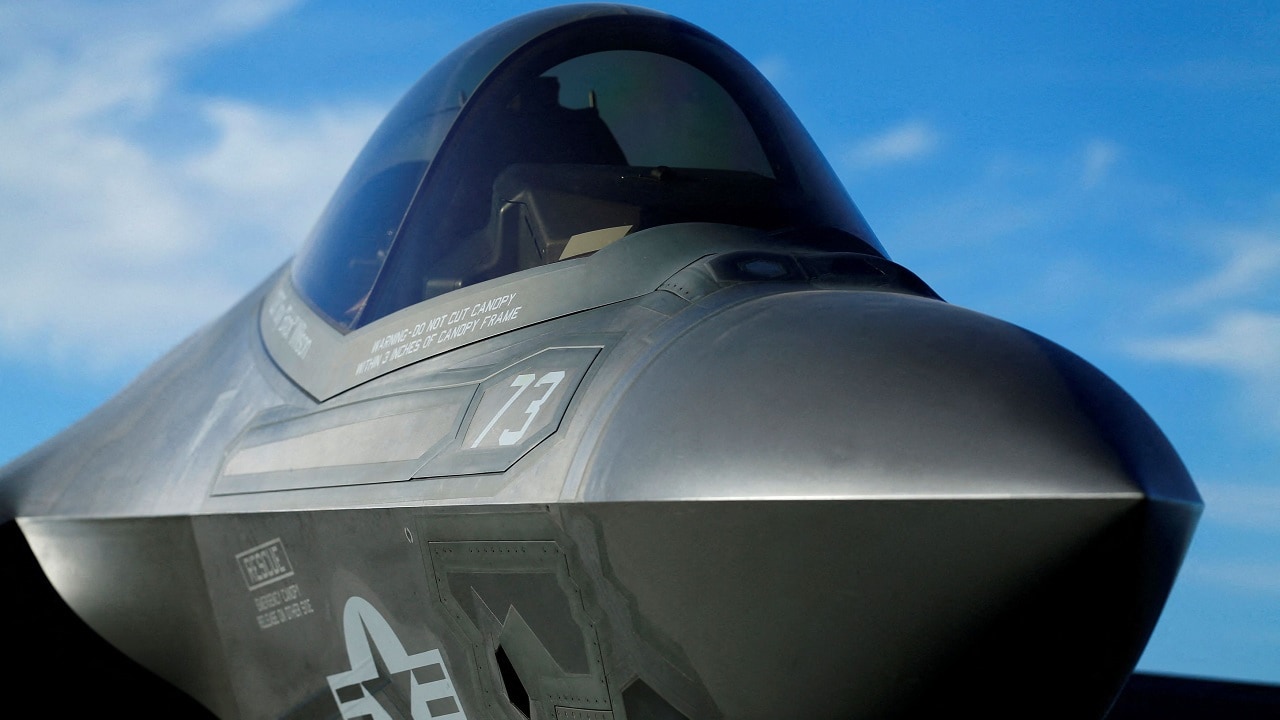
A Lockheed Martin Corp’s F-35C Joint Strike Fighter is shown on the deck of the USS Nimitz aircraft carrier after making the plane’s first ever carrier landing using its tailhook system, off the coast of California, November 3, 2014. REUTERS/Mike Blake (UNITED STATES – Tags: TRANSPORT MILITARY)/File Photo
The USS Gerald R. Ford’s F-35C problem highlights the threat that America’s defense acquisition poses to the US Navy’s overall national security goals.
You see, America’s defense sector keeps building costly platforms based on the promise of future integration.
Once constructed, the defense community learns that the components needed to make these advanced platforms effective have not yet been added, turning these supposedly cutting-edge weapons into wasted assets in combat.
No Winning a Real War
In any confrontation with a peer adversary like China, the Navy cannot afford a carrier that is, in theory, a fifth-generation warplane launcher but is operationally only bridging the gap between the fourth and fifth generations.
Not when China has developed its own fleet of increasingly advanced carriers capable of integrating its fifth-generation warplanes.
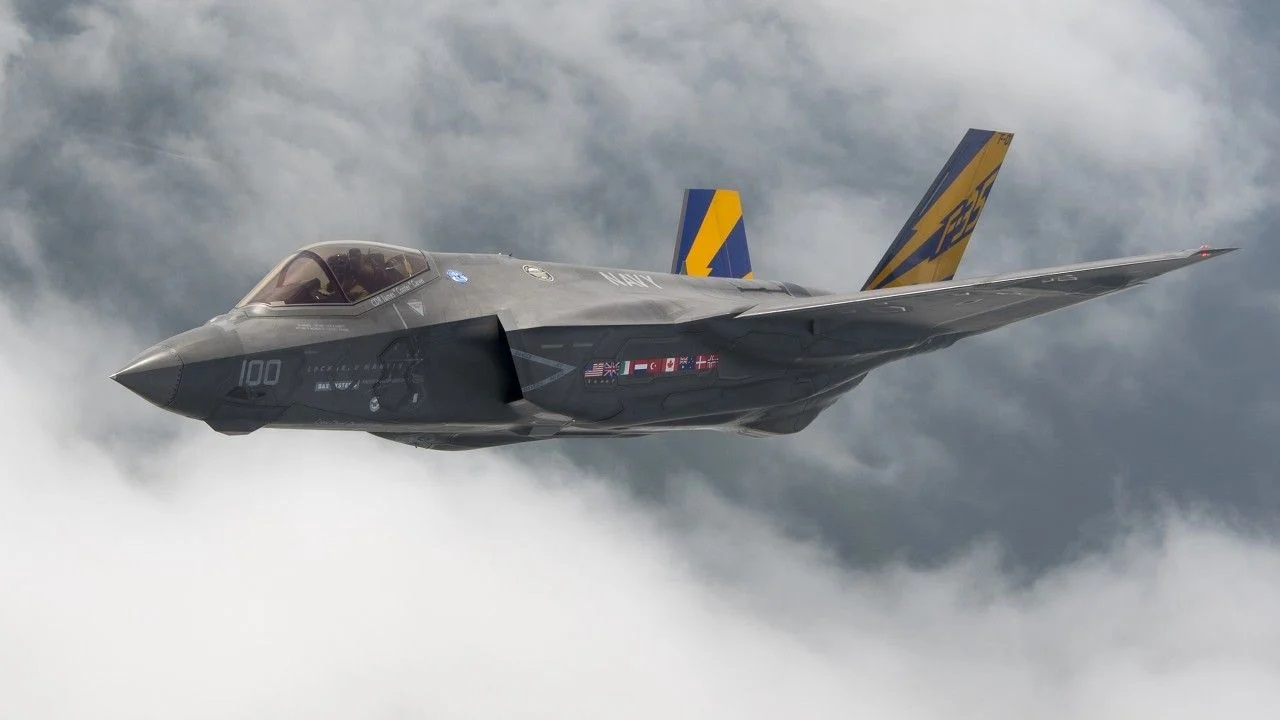
Stealth F-35C. Image Credit: Creative Commons.
The real scandal, then, is not that the F-35C runs too hot. It’s that the Navy’s newest supercarrier entered frontline service without the full modifications needed to effectively operate the Navy’s top-line stealth fighter at sustained operational tempos.
The USS Gerald R. Ford was built for the future, but it is still living in the past.
In a real war, that is less a design flaw to fix and more an indictment of America’s broken defense acquisition process, which could easily lead to defeat.
About the Author: Brandon J. Weichert
Brandon J. Weichert is the Senior National Security Editor at 19FortyFive.com. Recently, Weichert became the editor of the “NatSec Guy” section at Emerald.TV. He was previously the senior national security editor at The National Interest. Weichert is the host of The National Security Hour on iHeartRadio, where he discusses national security policy every Wednesday at 8pm Eastern. He hosts a companion show on Rumble entitled “National Security Talk.” Weichert consults regularly with various government institutions and private organizations on geopolitical issues. His writings have appeared in numerous publications, among them Popular Mechanics, National Review, MSN, and The American Spectator. And his books include Winning Space: How America Remains a Superpower, Biohacked: China’s Race to Control Life, and The Shadow War: Iran’s Quest for Supremacy. Weichert’s newest book, A Disaster of Our Own Making: How the West Lost Ukraine, is available for purchase wherever books are sold. He can be followed via Twitter/X @WeTheBrandon.