
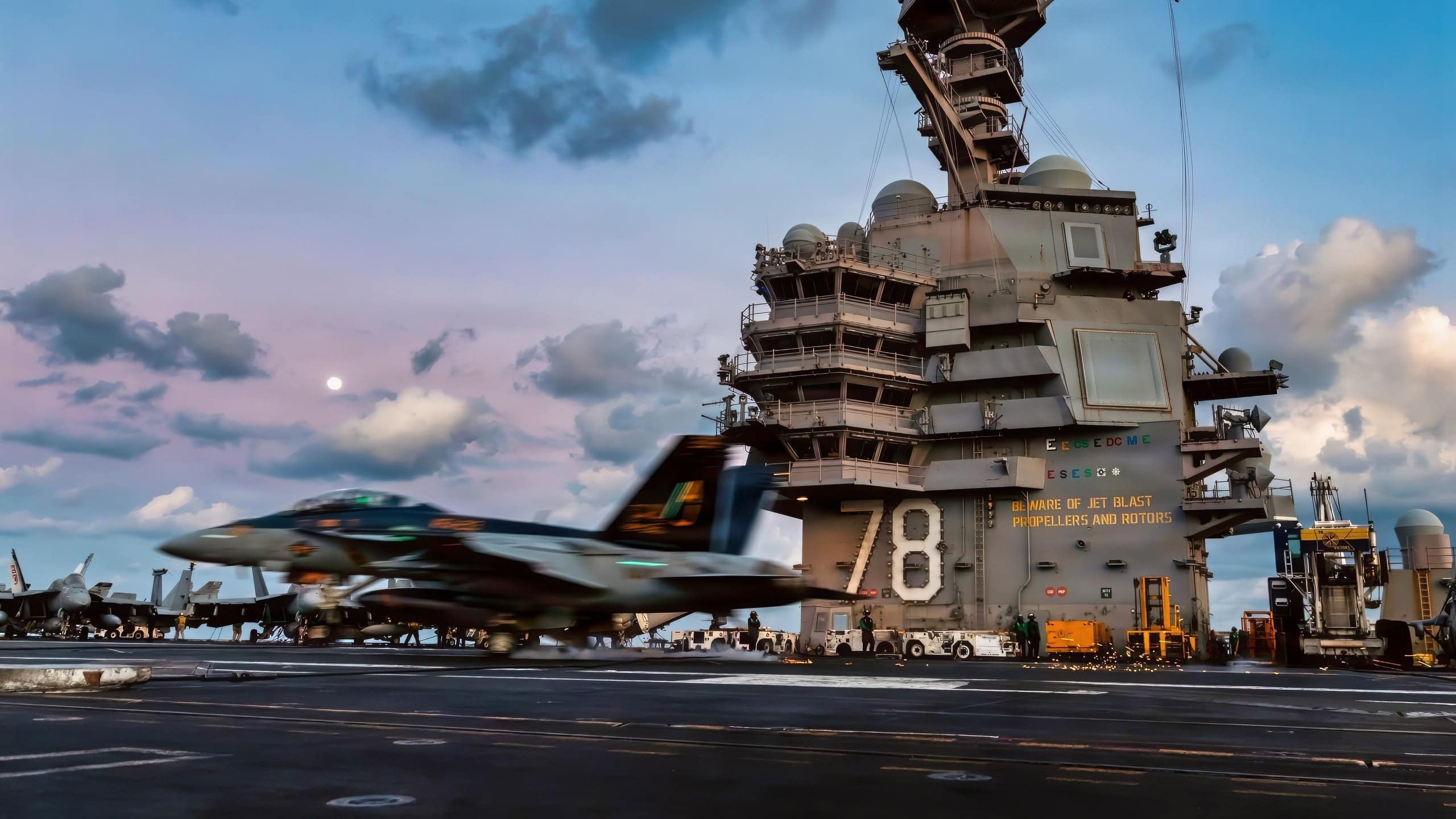
The Aircraft Carrier Ford Spent 5 Days in Split, Croatia — The Navy Declared It Combat-Ready and Sent It Back to the Middle East
In March 2026, I wrote that the U.S. Navy aircraft carrier USS Gerald R. Ford could be out of action for a year or longer following a fire on board and nearly nine months of sustained high-tempo operations.
That assessment was based on the assumption that the Navy may choose to address not only the fire damage, but also the total maintenance backlog and known system issues usually associated with a first-in-class aircraft carrier.
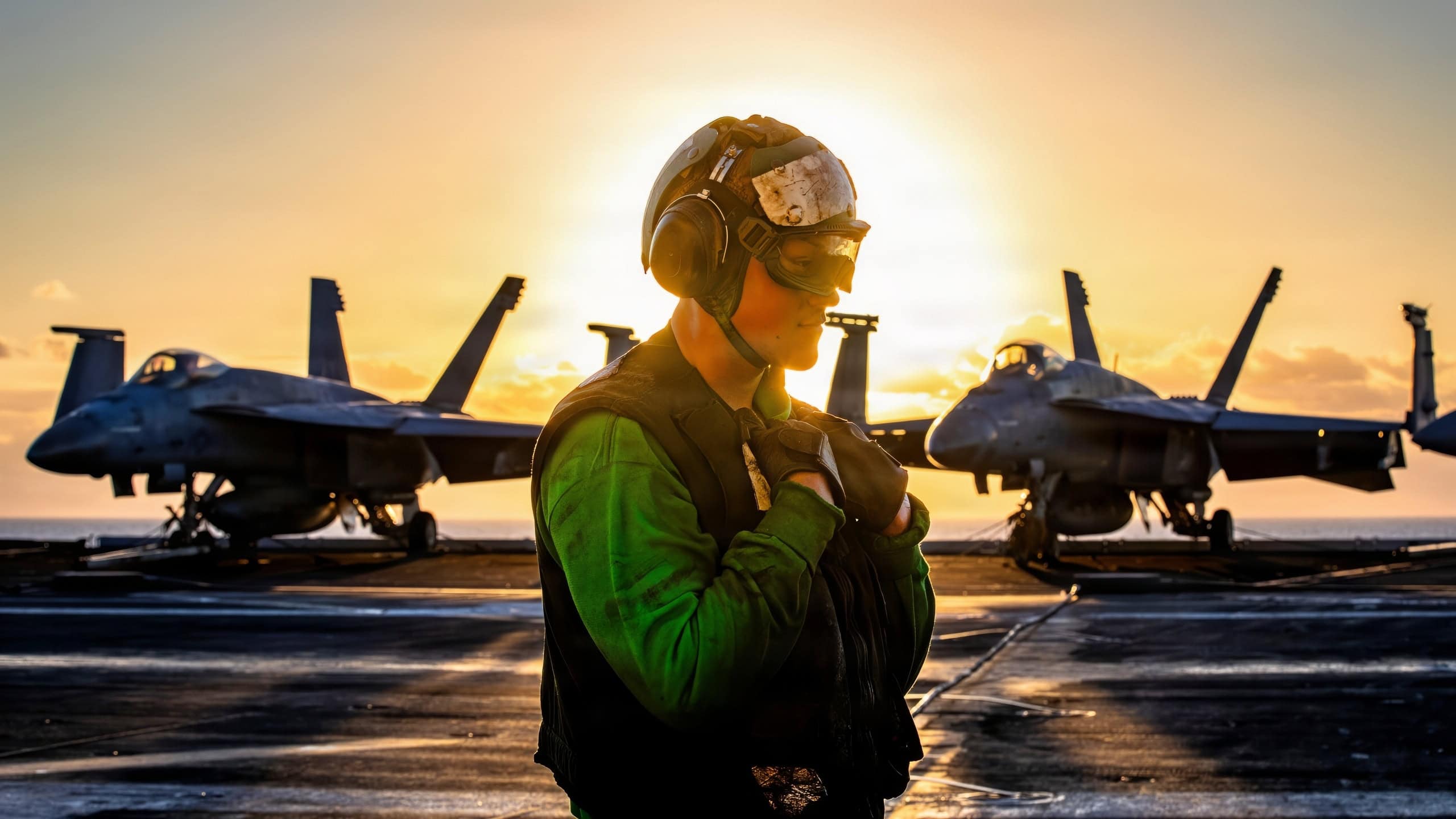
A U.S. Sailor observes flight deck operations on the flight deck of the world’s largest aircraft carrier, USS Gerald R. Ford (CVN 78), during Operation Epic Fury, Feb. 28, 2026. (U.S. Navy photo)
Evidently, that is not what happened.
On Thursday, April 2, the Navy issued a statement confirming that repairs had been completed and that the ship had received supplies to sustain operations while it was docked in Split, Croatia. The statement also confirmed that Ford will return to the Middle East amid the ongoing conflict with Iran.
“Gerald R. Ford remains poised for full mission tasking in support of national objectives in any area of operation,” the statement reads.
The decision seems to indicate that the Navy has prioritized immediate operational availability over conducting full maintenance.
The question now is whether the underlying issues identified before the recent fire have simply been deferred, and what that means for the ship’s role in an escalating conflict with Iran.
What Was and Wasn’t Fixed – As Far As We Know
The available reporting on Ford’s repairs points to a limited scope of work focused primarily on restoring habitability and addressing the immediate effects of the March 12 fire.
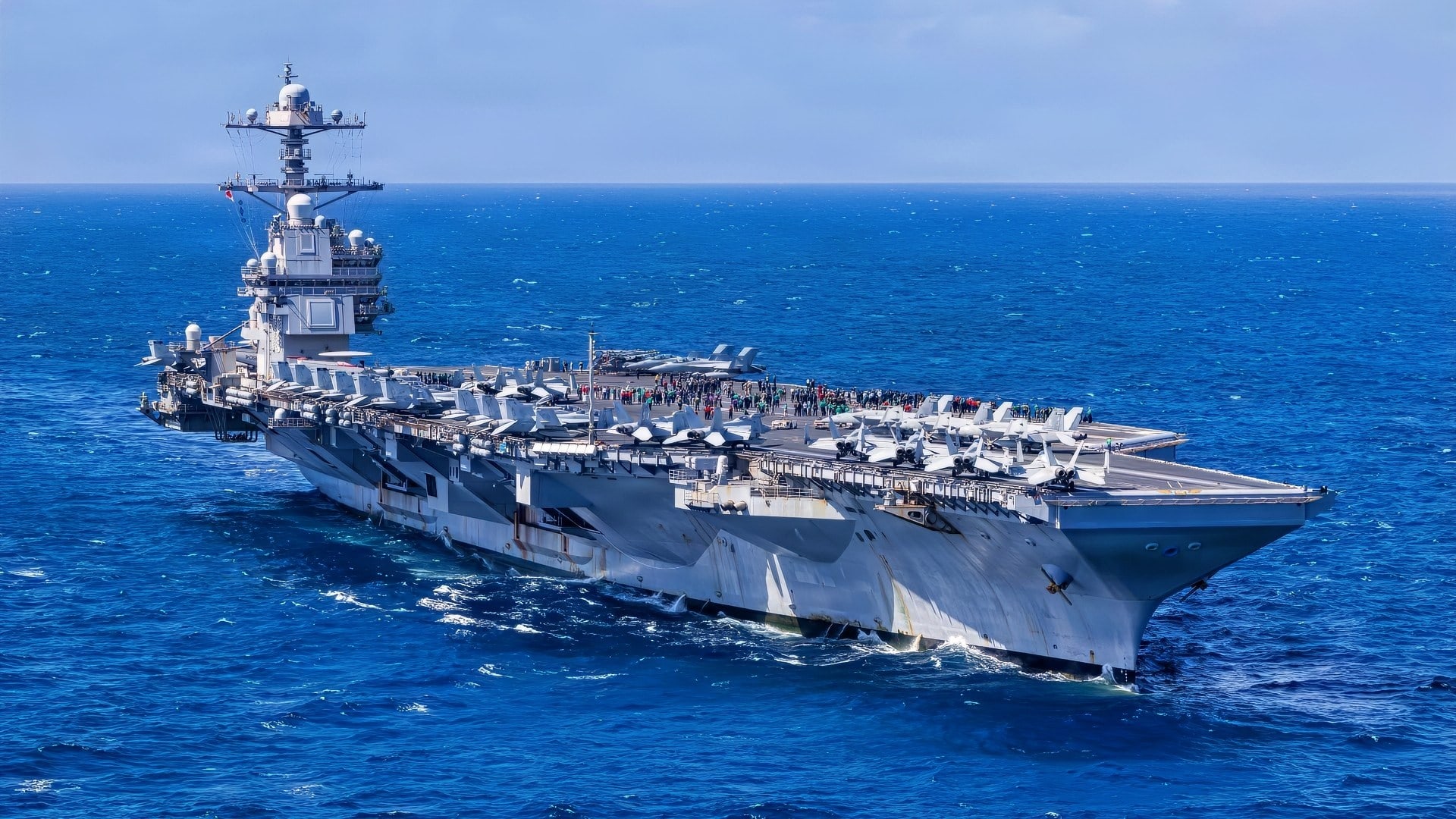
The world’s largest aircraft carrier, Ford-class aircraft carrier USS Gerald R. Ford (CVN 78), transits the Caribbean Sea during Carrier Air Wing 8’s aerial change of command ceremony, Jan. 19, 2026. U.S. military forces are deployed to the Caribbean in support of the U.S. Southern Command mission, Department of War-directed operations, and the president’s priorities to disrupt illicit drug trafficking and protect the homeland. (U.S. Navy photo)
That blaze originated in the ship’s laundry and berthing areas and forced the carrier to leave the region for repairs following sustained operations in the Red Sea. The ship underwent repairs during a five-day port visit in Split, Croatia, after which the Navy declared the carrier ready to resume operations.
Earlier reporting indicated the fire damaged living spaces and affected roughly 100 sleeping berths, with 200 sailors treated for smoke exposure and at least one requiring evacuation. While propulsion systems were not affected, the scale of the incident required firefighting efforts lasting more than a day and prompted a temporary withdrawal from the Red Sea.
The reporting does not indicate that the Ford underwent any deeper maintenance.
Aircraft Carrier Under Sustained Strain
The Ford Carrier Strike Group has been deployed since June 2025, operating across multiple theaters, including the Arctic, Mediterranean, Caribbean, and ultimately the Red Sea.
The ship has been operating continuously for roughly 9 months, making it one of the longest and most demanding deployments in recent Navy history.
During that period, the Ford played a central role in U.S. operations against Iran.
The ‘Wall of Fire” detonates behind two U.S. Navy Blue Angels F/A-18 Super Hornets during the 2022 Kaneohe Bay Air Show, Marine Corps Air Station Kaneohe Bay, Marine Corps Base Hawaii, Aug. 13, 2022. The air show provided an opportunity to demonstrate the capabilities of a Joint Force in the Indo-Pacific Region. The Kaneohe Bay Air Show, which contained aerial performances, static displays, demonstrations and vendors, was designed to express MCBH’s appreciation to the residents of Hawaii and their continued support of the installation. (U.S. Marine Corps photo by Cpl. Patrick King)
Since the launch of joint U.S.-Israeli strikes in late February 2026, U.S. forces have conducted thousands of strike sorties against Iranian targets, relying heavily on carrier-based aviation to sustain the campaign.
This level of sustained sortie generation places a significant strain on the carrier’s systems.
Flight deck operations and catapult launches both contribute to accelerated wear, particularly on a first-in-class platform still working through early lifecycle issues. The Ford’s EMALS system, for example, has faced reliability concerns in past testing and during early deployment, requiring numerous iterative fixes and redesigns.
During 2022-2023 testing, Ford’s EMALS achieved roughly 600 cycles between operational failures, far short of its design requirement of 4,000 cycles.
Earlier operational testing was even more problematic.
During 2019-2020 trials, the system averaged just 181 cycles between failures. Additional data analyzed by the Congressional Research Service also showed that EMALS experienced 10 critical failures within its first 747 launches, again failing to meet required reliability thresholds.
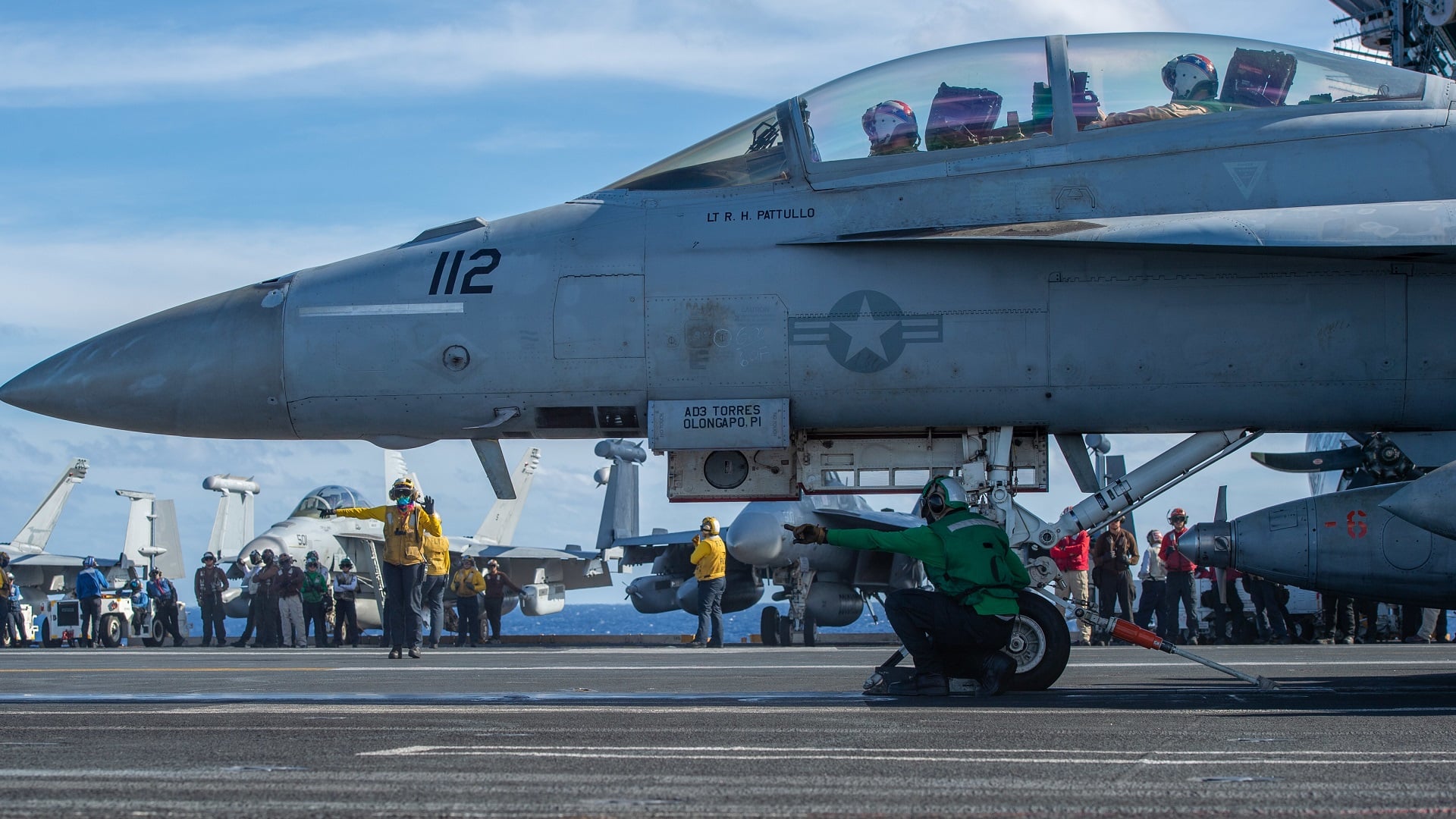
221227-N-DU622-1227 PHILIPPINE SEA (Dec. 27, 2022) An F/A-18F Super Hornet from the “Fighting Redcocks” of Strike Fighter Squadron (VFA) 22 prepares to launch from the flight deck of the aircraft carrier USS Nimitz (CVN 68). Nimitz is in 7th fleet conducting routine operations. 7th Fleet is the U.S. Navy’s largest forward-deployed numbered fleet, and routinely interacts and operates with 35 maritime nations in preserving a free and open Indo-Pacific region. (U.S. Navy photo by Mass Communication Specialist 2nd Class Justin McTaggart)
The Pentagon’s Director of Operational Test and Evaluation has also warned that reliability problems with EMALS and its paired AAG continue to adversely affect sortie generation and flight operations.
While real-world performance during recent combat operations has not been confirmed, these are exactly the kind of issues that are likely to require additional maintenance after such a prolonged period at sea.
And beyond its aviation systems, the ship has also experienced more mundane but operationally significant issues, including persistent plumbing problems. While less visible than major system failures, these problems are indicative of the broader strain placed on a ship operating at high tempo without extended maintenance periods.
Ultimately, the fire that forced the Ford to withdraw occurred at the end of a prolonged deployment during which both the ship and its crew had been operating under sustained pressure.
From One Fight to Another
Despite the pressure on Ford, the Navy chose to return the vessel to the fight. The decision to move Ford to the Red Sea reflected the operational demands of the ongoing conflict with Iran rather than an assessment that the ship’s maintenance needs had been fully addressed. They had not.
But Ford is not operating in isolation. It is part of a U.S. naval buildup in the region that includes the USS Abraham Lincoln, the USS George H.W. Bush, and a full carrier strike group of more than 6,000 personnel.
The decision to deploy multiple carriers into the region was made to support sustained airpower, with aircraft carriers providing not only strike capability but also flexibility, enabling the United States to launch operations without relying on regional basing.
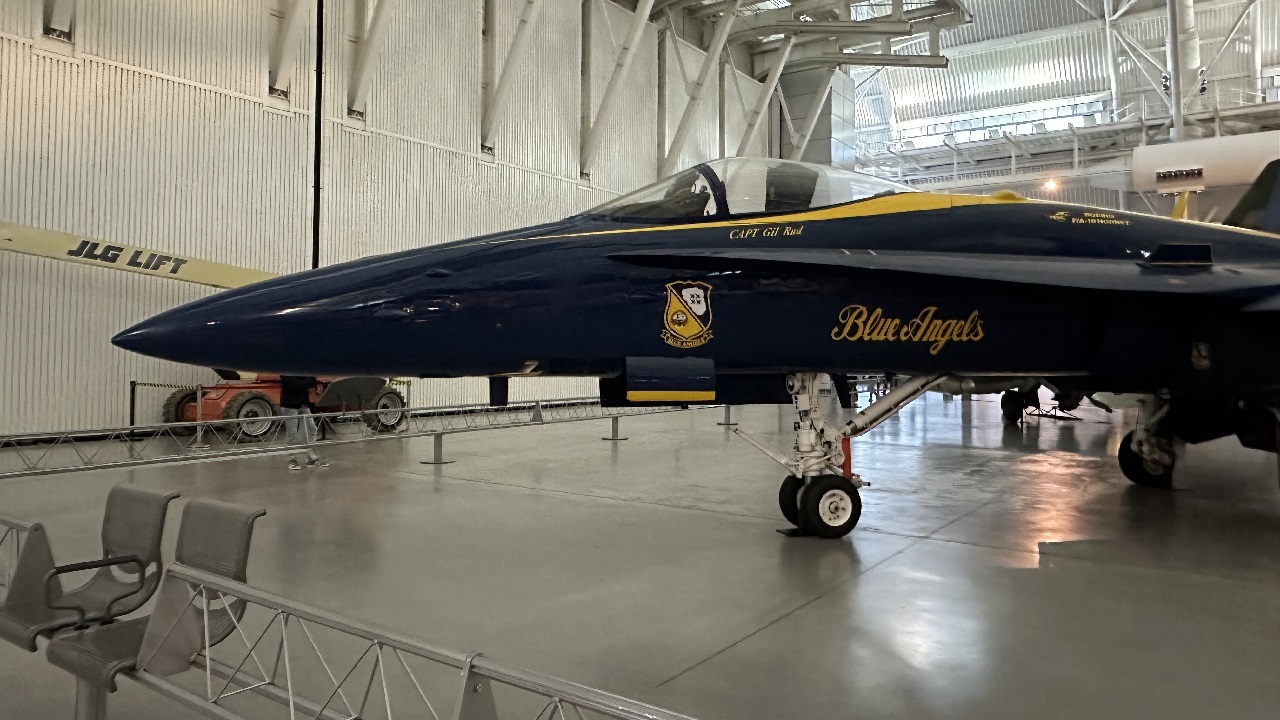
F/A-18 Hornet. Image taken at National Air and Space Museum on October 1, 2022. Image by 19FortyFive.
The Ford departed Naval Station Norfolk in May 2025 as part of a scheduled deployment with Carrier Strike Group 12, initially conducting operations in the U.S. 2nd Fleet and 6th Fleet areas of responsibility, including the Atlantic and Mediterranean.
During those early days of the deployment, it conducted Group Sail exercises, integrated air wing operations, and various NATO-linked activities, all of which are standard for a carrier entering its operational cycle.
From there, Ford moved across multiple theaters. By mid-to-late 2025, it had operated in the Arctic Circle and participated in European and Mediterranean exercises.
By November, it was operating in what became the largest U.S. force posture in the Caribbean in decades, supporting operations near Venezuela. On December 10, 2025, special operations forces launched by helicopter from the carrier participated in the seizure of a sanctioned oil tanker off the Venezuelan coast, part of a broader effort to disrupt illicit oil flows linked to both Venezuela and Iran.
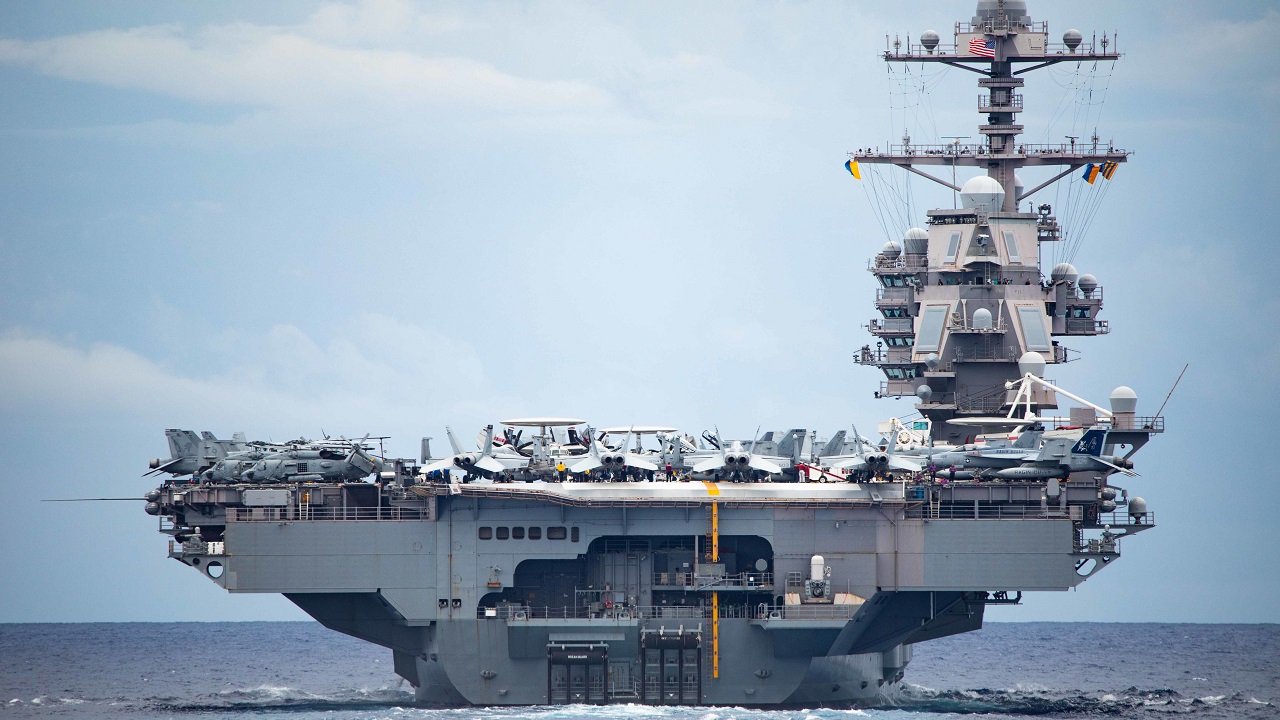
A view of the first-in-class aircraft carrier USS Gerald R. Ford (CVN 78) from aboard the Ticonderoga-class guided-missile cruiser USS Normandy (CG 60) as Normandy participates in a Tactical Force Exercise as part of the Gerald R. Ford Carrier Strike Group, Oct. 13, 2022. Ford is on its inaugural deployment conducting training and operations alongside NATO Allies and partners to enhance integration for future operations and demonstrate the U.S. Navy’s commitment to a peaceful, stable and conflict-free Atlantic region. (U.S. Navy photo by Mass Communication Specialist 2nd Class Malachi Lakey)
Why Ford Was Needed In the Middle East
Despite being placed under extreme strain, the Ford was required in the Middle East because it provides capabilities that cannot be easily replicated by other platforms in the region.
Carrier-based aircraft from the USS Gerald R. Ford have been used to conduct sustained strike operations and suppression of enemy air defenses as part of the U.S.-Israeli campaign against Iran. Unlike land-based aircraft, these operations do not depend on host-nation basing agreements, which remain politically sensitive and vulnerable to missile attack.
And while other carriers, like the USS Abraham Lincoln, were deployed, maintaining continuous sortie generation at this scale requires overlapping carrier presence to avoid coverage gaps and allow maintenance cycles between strikes.
What Now for USS Gerald R. Ford?
President Donald Trump promised in recent days to wrap up the conflict with Iran in two to three weeks, warning also that he will take decisive action against Iran unless the Strait of Hormuz is opened by Tuesday at 8 pm Eastern Time.
Trump has warned that failure to comply could result in strikes on critical infrastructure, including power plants and bridges.
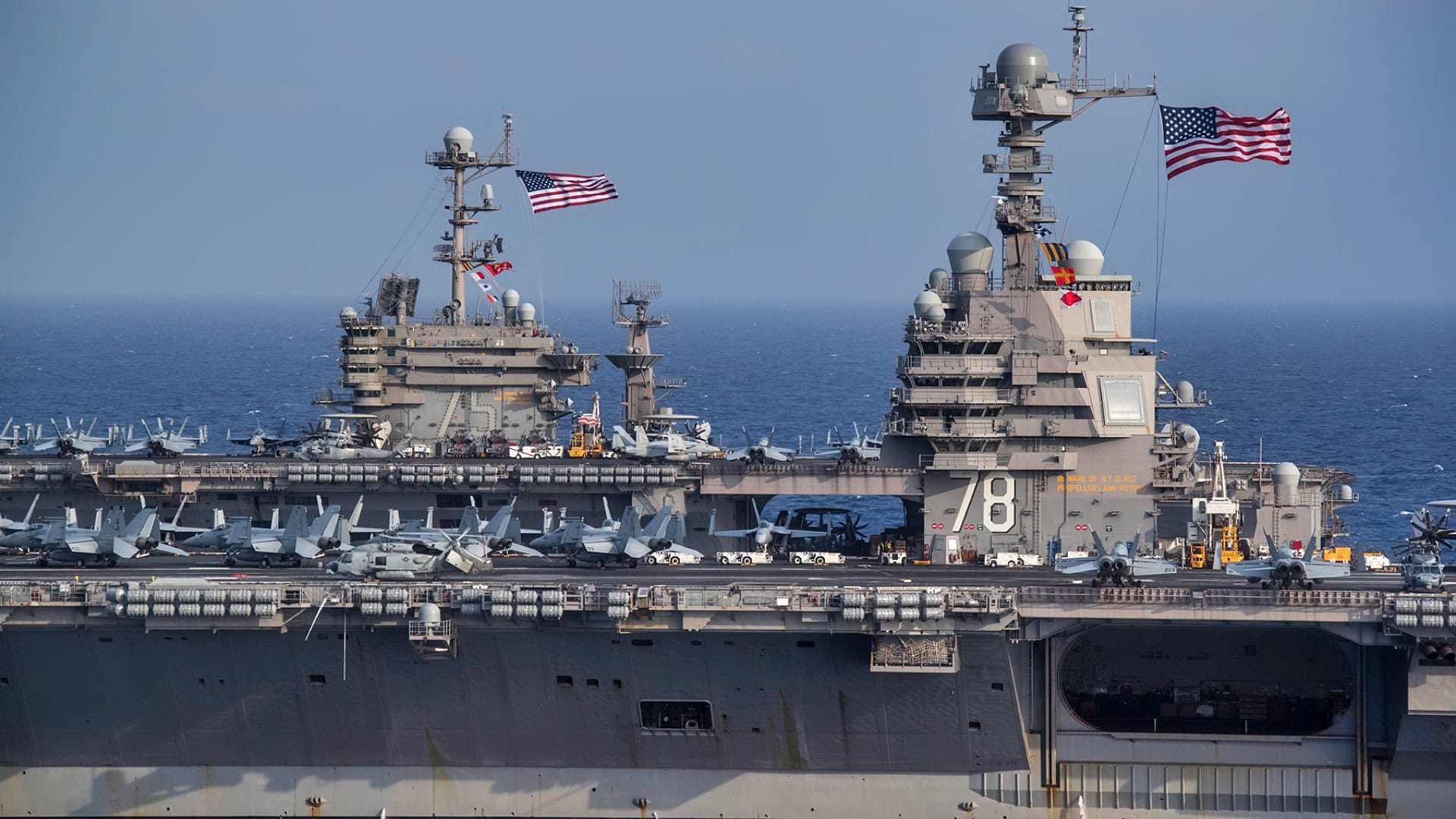
The Ford-class aircraft carrier USS Gerald R. Ford (CVN 78) and the Nimitz-class aircraft carrier USS Harry S. Truman (CVN 75) transit the Atlantic Ocean June 4, 2020, marking the first time a Ford-class and a Nimitz-class aircraft carrier have operated together underway. Ford is underway conducting integrated air wing operations, and the Harry S. Truman Carrier Strike Group remains at sea in the Atlantic as a certified carrier strike group force ready for tasking in order to protect the crew from the risks posed by COVID-19, following their successful deployment to the U.S. 5th and 6th Fleet areas of operation. (U.S. Navy photo by Mass Communication Specialist 2nd Class Ruben Reed)
If Trump’s timeline holds, the Ford may be able to enter its planned post-deployment maintenance period – likely a Selected Restricted Availability originally expected following its extended 2025-2026 deployment cycle, which should involve deferred repairs, system inspections, and servicing of its aviation systems.
For U.S. Navy nuclear-powered aircraft carriers, mid-level maintenance periods like this typically last between 6 and 12 months, with longer durations more likely after extended deployments.
About the Author: Jack Buckby
Jack Buckby is a British researcher and analyst specializing in defense and national security, based in New York. His work focuses on military capability, procurement, and strategic competition, producing and editing analysis for policy and defense audiences. He brings extensive editorial experience, with a career output spanning over 1,000 articles at 19FortyFive and National Security Journal, and has previously authored books and papers on extremism and deradicalization.