
Iran War: The Missiles Keep Coming. The Strait Stays Closed. Something Has to Change.
More than a month since the beginning of Operation Epic Fury, and the Strait of Hormuz remains closed. Ever since the Iranians decided to close the Strait in March, a major goal of this conflict has ironically become to reverse the consequences of the initial attacks.
After weeks of bombardment, the Straits appear no closer to opening up than they were originally. Considering how much global trade relies on transit through the Strait, establishing control is vital for the interests of the U.S. and the rest of the world.
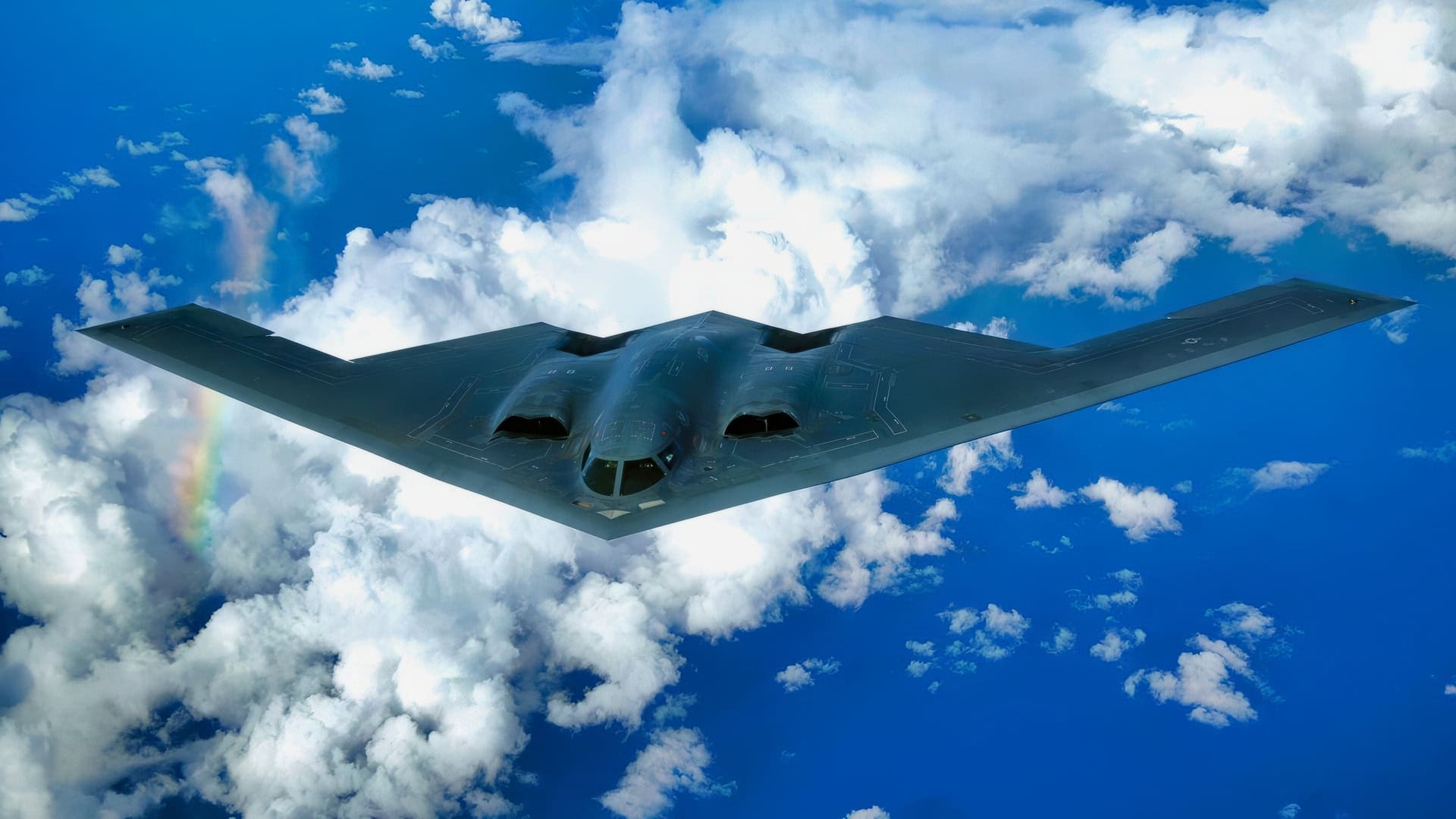
A B-2 Spirit soars after a refueling mission over the Pacific Ocean on Tuesday, May 30, 2006. The B-2, from the 509th Bomb Wing at Whiteman Air Force Base, Mo., is part of a continuous bomber presence in the Asia-Pacific region. (U.S. Air Force photo/Staff Sgt. Bennie J. Davis III)
The U.S. military has a number of options, some better than others, at its disposal to ensure compliance from Iran and ensure the continuation of maritime shipping through the region.
The Iranian Threat:
The biggest problem currently facing the U.S.-Israeli coalition is the number of underground “ballistic missile cities” in Iran that continue to produce ballistic missiles.
These missiles are the cornerstone of Iran’s A2/AD strategy, along with its degraded but still operational air defense network.
Despite efforts to destroy these missile production efforts, the U.S. cannot do much more than strike the entrances of these facilities.
As long as they continue to operate, Iran will continue to receive a steady supply of munitions, which it can use to slowly degrade allied missile defense stockpiles as it has done so throughout the duration of this conflict.
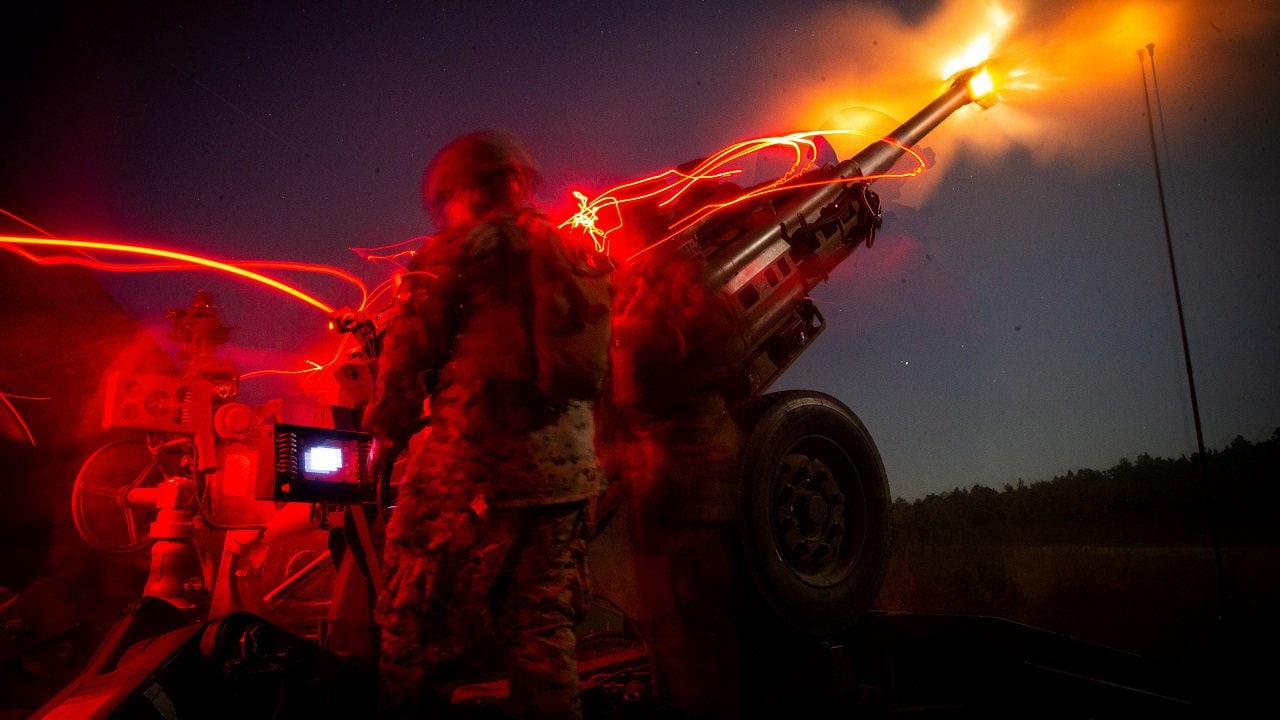
U.S. Marines fire an M777 Howitzer during Exercise Rolling Thunder 1-22 at Fort Bragg, North Carolina, U.S. October 19, 2021. Picture taken October 19, 2021. U.S. Marine Corps/Lance Cpl. Brian Bolin Jr./Handout
As long as the missile threat remains, any attempts by the U.S. and its allies to seize control of the Strait of Hormuz will be met with fierce resistance.
Therefore, when considering how the U.S. might take control of the Strait, one must also consider how to deal with the operational missile cities.
Despite taking significant losses, Iranian air defenses still pose a threat to any aircraft trying to penetrate Iranian airspace.
The ground component of the IRGC also remains decentralized and well-motivated to fight if the need arises. With all of this in mind, let us explore some options that are available to the U.S.
Option One: Continued Air Campaign Against Iran
The first option that the U.S. has is to continue its sustained air campaign against Iran. This is a relatively low-risk yet high-cost option that allows the U.S. to refrain from putting boots on the ground while slowly degrading Iran’s offensive capabilities.
It requires the USAF to use up large stocks of long-range munitions like Tomahawks and JASSMs, which, unfortunately, cannot be easily replaced.
This strategy has the advantage of minimizing potential losses, as even if expensive airframes are shot down, the pilots can still eject and be safely recovered.
One downside of this strategy is that it is not fully risk-free. As we have already seen, Iranian air defenses have not yet been completely degraded.
Several air assets have been shot down or damaged in and around Iranian airspace, including an F-35 fifth-generation stealth fighter. Resources stationed in allied countries are not safe either, as demonstrated by the strikes on Prince Sultan Air Base in Saudi Arabia, which destroyed one highly valuable AWACS aircraft.
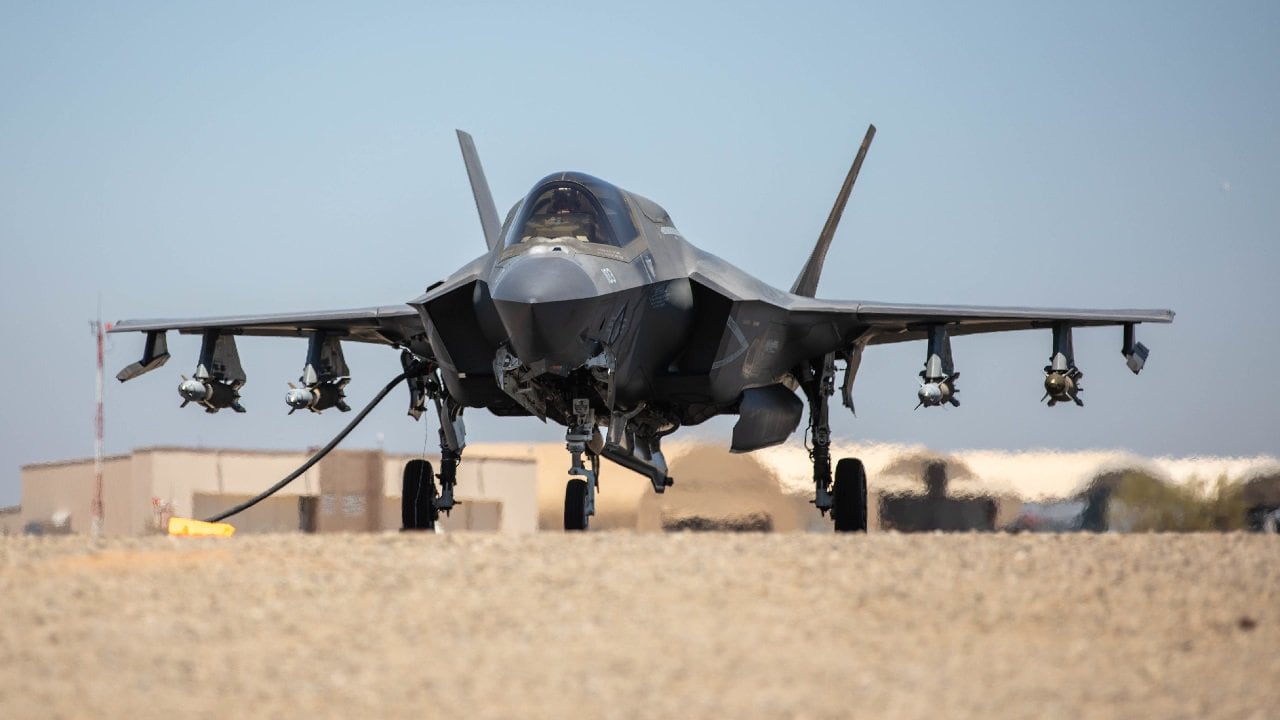
U.S. Marines with Marine Wing Support Squadron 371 , Marine Air Control Group 38, 3rd Marine Aircraft Wing (MAW), refuel a U.S. Marine Corps F-35B Lightning II with Marine Fighter Attack Squadron 225, Marine Aircraft Group (MAG) 13, 3rd MAW, on a Forward Arming and Refueling Point at U.S. Army Yuma Proving Grounds, Yuma, Arizona, May 23, 2022. The weapons configuration consists of six inert GBU-12 bombs, four mounted onto the wings and two loaded into the weapons bay, as well as an AIM-9X air-to-air training missile. MAG-13 forces are capable of conducting Offensive Air Support, Antiair Warfare, and Aviation Reconnaissance from expeditionary sites in any clime and place. (U.S. Marine Corps photo by Sgt. Samuel Ruiz)
This strategy also has the risk of degrading long-range strike munitions, which cannot be quickly replaced by the U.S.’ current domestic industry. When the JASSAMs inevitably run out, the U.S. will be forced to position its strike aircraft closer to Iran, thereby increasing the risk of potential shootdowns.
Option Two: Ground Invasion
The next option available to the U.S. is a full-on ground invasion. As history has shown time and again, strategic bombing campaigns excel at degrading enemy capabilities but rarely succeed in breaking the enemy’s will and forcing them into submission.
This is the direction that the administration seems to be moving towards as more and more assets are relocated into the area. According to some reports, as many as 5,000 marines have already been relocated toward the Middle East, with more expected to follow.
The advantage of this strategy is that it would enable full control over the Strait of Hormuz if the IRGC is completely neutralized on the ground.
While air campaigns have their limits, ground control, at best, ensures that the U.S. achieves its objectives in the region, whatever those may be.
However, a ground invasion is by far the riskiest option on the table. For starters, the terrain in Iran is rugged and mountainous, similar to that of Afghanistan.
The one lowland area suitable for large-scale landings is surrounded by mountains and is easily controlled by the defenders. With the IRGC still in fighting shape, any ground invasion would almost certainly result in heavy casualties.
Drone attacks have already been a significant issue for hardened U.S. military installations in the region, and invading Iran on its home turf would likely be akin to poking a hornet’s nest.
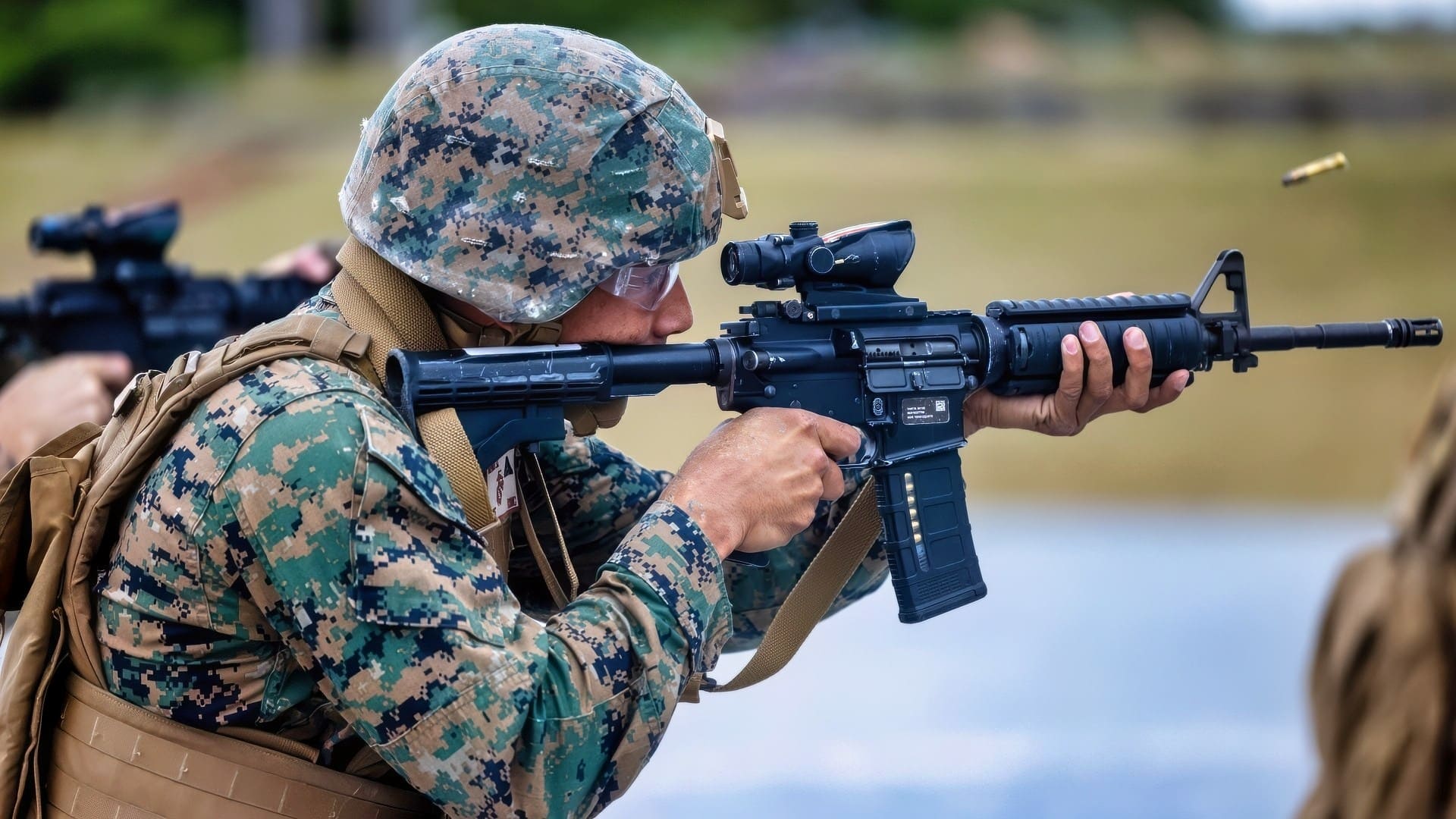
U.S. Marine Corps Lance Cpl. Elijah Geiwitz fires an M4 carbine in the short bay during a live-fire rifle range for the combat marksmanship course on Camp Hansen, Okinawa, Japan, March 13, 2025. CMC refines Marines marksmanship fundamentals and enhances their lethality through advanced marksmanship training. Geiwitz, a native of Wisconsin, is an automotive maintenance technician with 3rd Landing Support Battalion, 3rd Marine Logistics Group. (U.S. Marine Corps photo by Cpl. Michael Taggart)
The administration has thus far managed to avoid any mass casualty events, but if a ground invasion does go south, the political consequences will be immediate and severe for Trump. A full-scale invasion would likely achieve all of the U.S. goals, but it is unlikely that America has the political will to continue fighting if the Iranians manage to protract the conflict.
Diplomacy
The third option is diplomatic de-escalation. This is the preferred option, but it is becoming less and less likely with each passing day. A peaceful de-escalation would ideally allow the U.S. to withdraw while still claiming some level of strategic success, whether through the Reopening of the Strait of Hormuz or other changes in the Iranian regime.
Unfortunately, according to some reports, diplomatic ties between the U.S. and Iran have more or less collapsed, and any reports of talks between the two are likely false.
Nuclear War on Iran
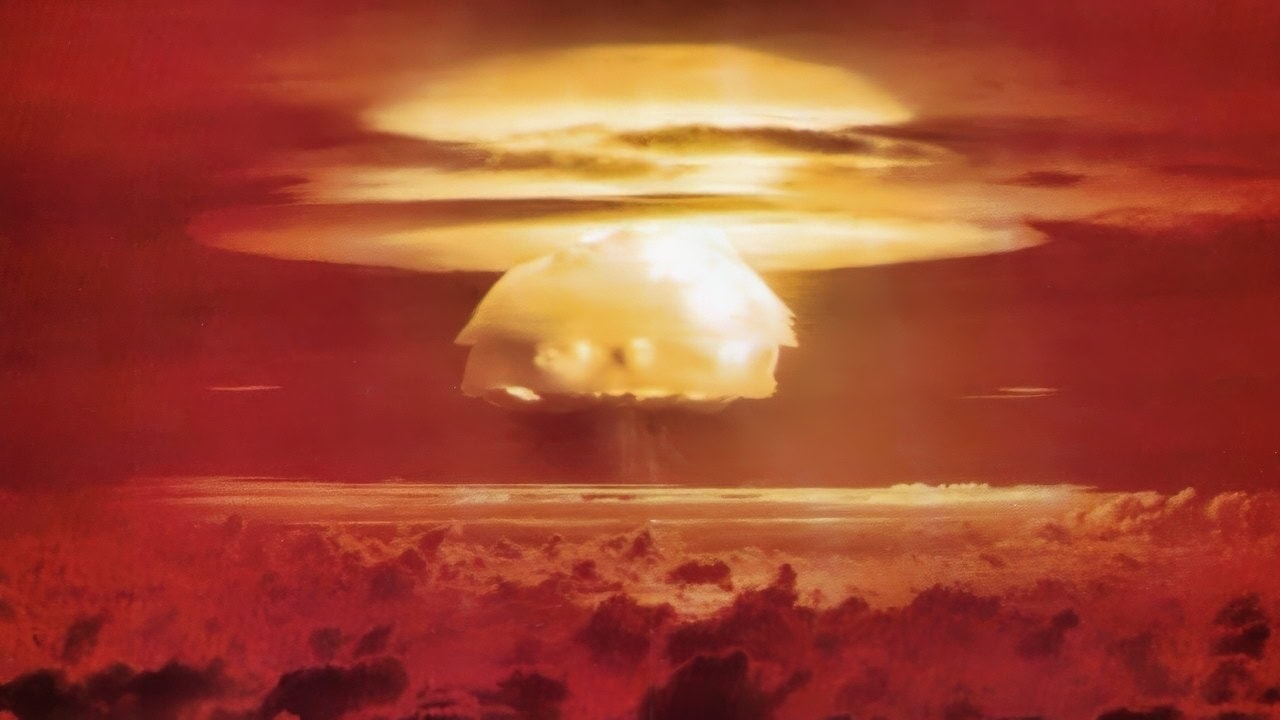
The final option is a nuclear strike on Tehran. This is the worst-case scenario and should not be utilized. A nuclear strike would ensure the deaths of hundreds of thousands of innocent civilians, the ones on whose behalf the U.S. supposedly intervened in the first place.
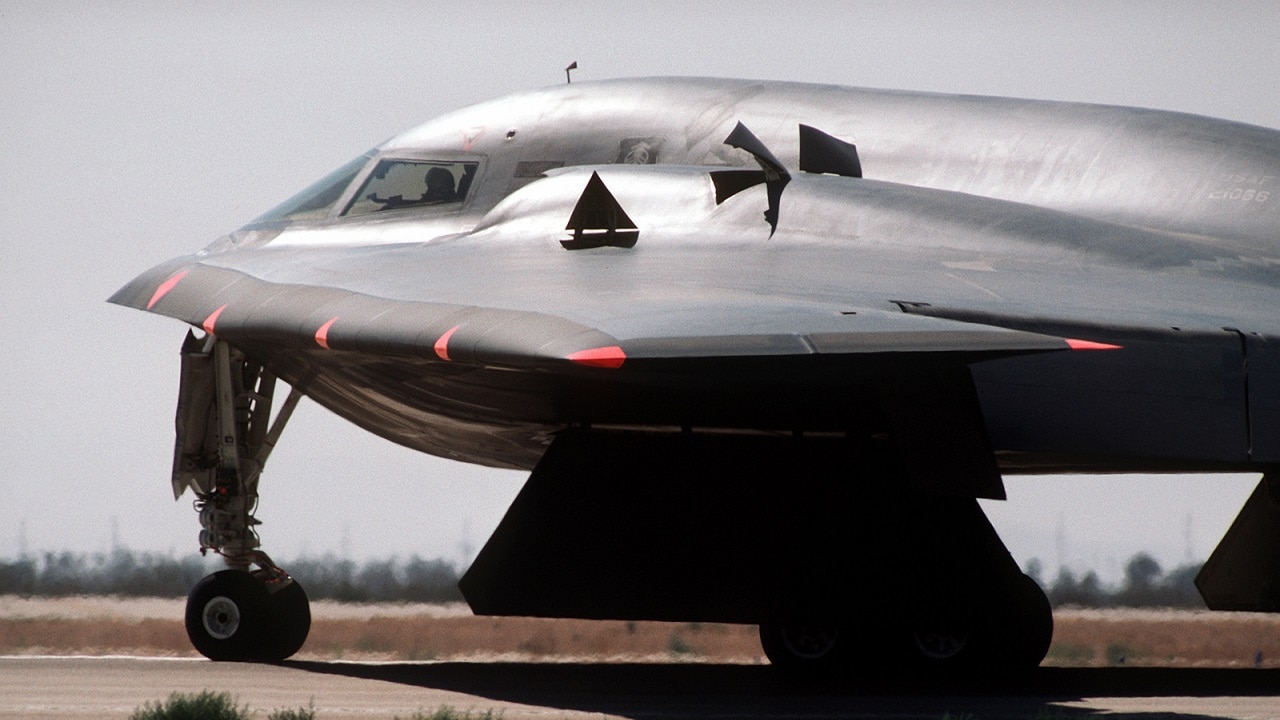
A left side view of the front of a B-2 advanced technology bomber aircraft as it prepares for its first flight, at the Air Force Flight Test Center.
There is also no reason to resort to nuclear weapons in this conflict. While Iran is still a threat to U.S. assets in the region, it poses no strategic threat to the mainland U.S.
A nuclear attack would be a political disaster and risk alienating public support both at home and abroad. Under no circumstances should nuclear weapons be used in this conflict unless absolutely necessary.
About the Author: Isaac Seitz
Isaac Seitz, a Defense Columnist, graduated from Patrick Henry College’s Strategic Intelligence and National Security program. He has also studied Russian at Middlebury Language Schools and has worked as an intelligence Analyst in the private sector.