Trump declared ‘total and complete victory’ over Iran. Russia’s newspapers are laughing, China brokered the deal he couldn’t, and the U.S. burned through 18 months of Patriot missile production in four days.
The Iran War Doesn’t Look Like Victory
The United States and Iran have agreed to a two-week ceasefire. Looking at how that ceasefire came to be helps judge how accurately the Trump administration has been describing the situation on the ground. But success can be measured even better by examining what has transpired in the aftermath of the announcement.
Patriot Missile. Image Credit: Lockheed Martin.
On April 8, as multiple news outlets reported, U.S. President Donald Trump began to threaten Iran with “annihilation” if the regime failed to bend to his will. However, he soon proclaimed that the Islamic Republic’s leadership had presented him with a “workable” plan that convinced him to agree to a 14-day ceasefire that could end the war.
It is no easy task to assess what Washington has gained and lost through the war. While some tangible tactical objectives were met, there are reasons to believe the United States’ overall strategic influence is diminished.
That conclusion is fed by administration officials providing sometimes contradictory justifications for starting this war in the first place.
At different junctures, the war was presented as being fought to support the Iranian people’s revolt and bring down the Islamic regime; to prevent Iran from obtaining a nuclear weapon; or to degrade the internal security forces and the Islamic Revolutionary Guard Corps. None of these objectives has been achieved.
Details of the ceasefire negotiations are also opaque. Based on available data, U.S. and Israeli forces chalked up no end of battlefield victories. These include nearly eliminating Iran’s naval, air force, and air defense systems, and taking out most of the launchers the regime uses for ballistic missile and drone strikes.
Declining Military Might
Yet there are reasons to say that Operation Epic Fury has had unintended consequences and exposed weaknesses in the U.S. defense posture. These are deficiencies that have been worsening for some time but have been kept largely out of sight until now.
Patriot Missile. Image Credit: Creative Commons.
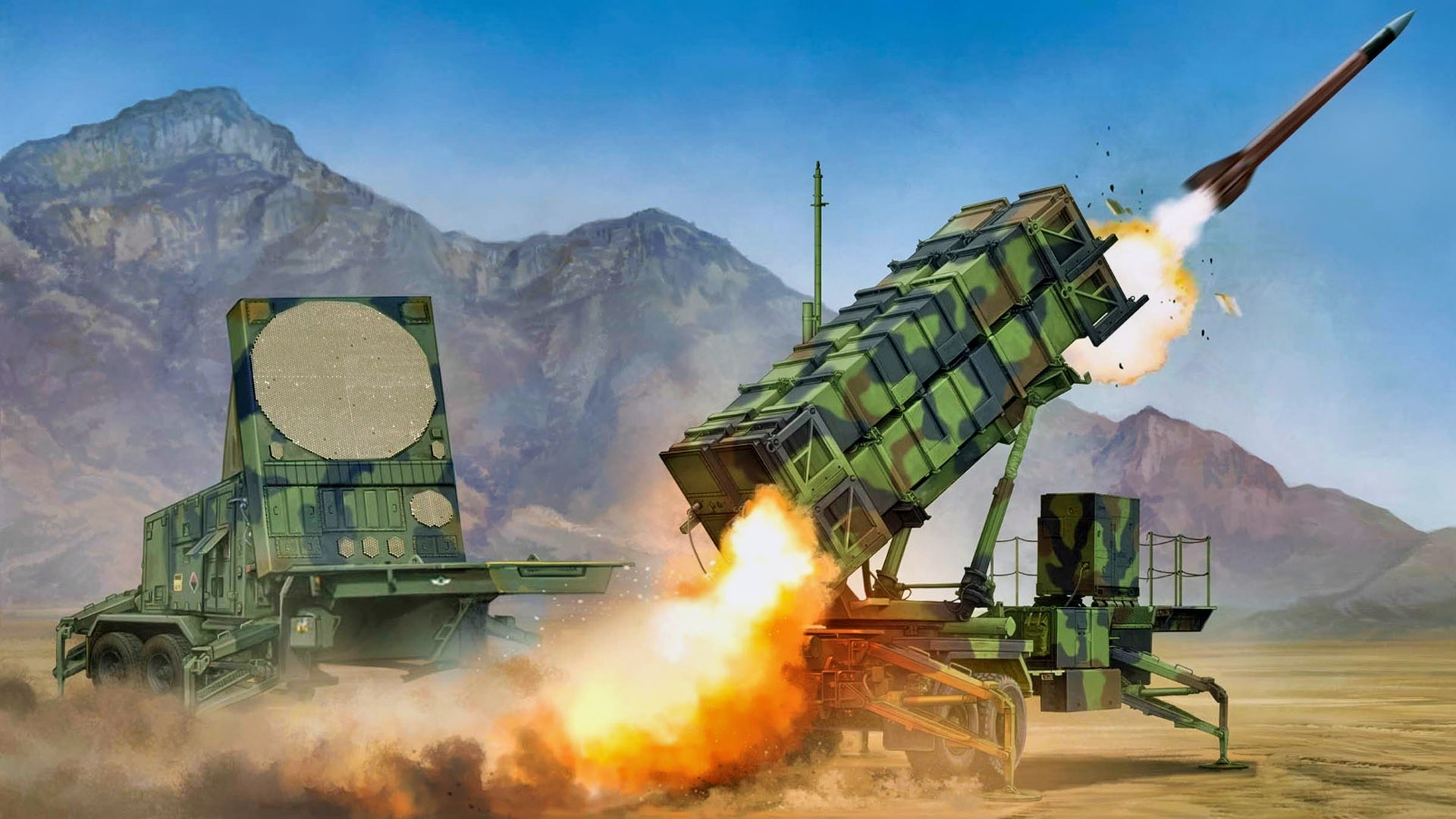
One of these is the embarrassing question of just how many months will be required for the United States to restock a depleted arsenal of precision weapons. Despite the largest European war in more than three-quarters of a century reaching its fifth year, production rates of some of the most effective and sought-after munitions have barely budged. The result today is a U.S. military woefully unprepared for a sustained, high-intensity military conflict.
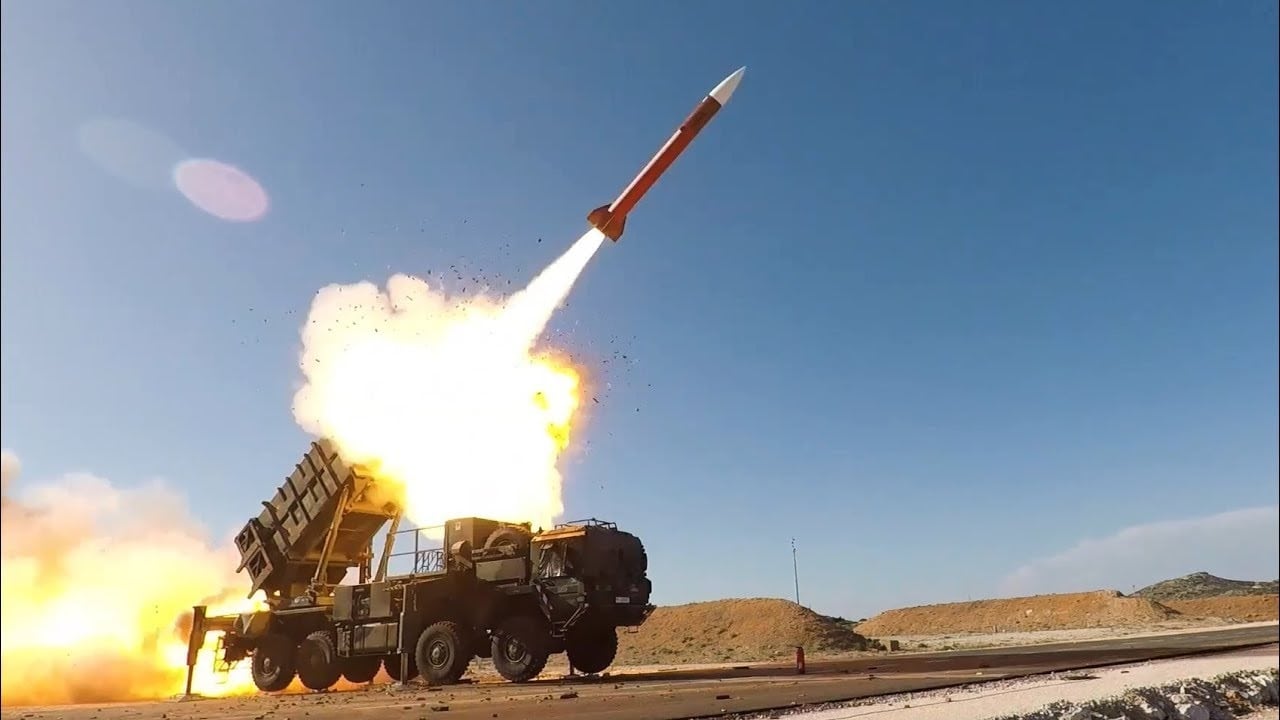
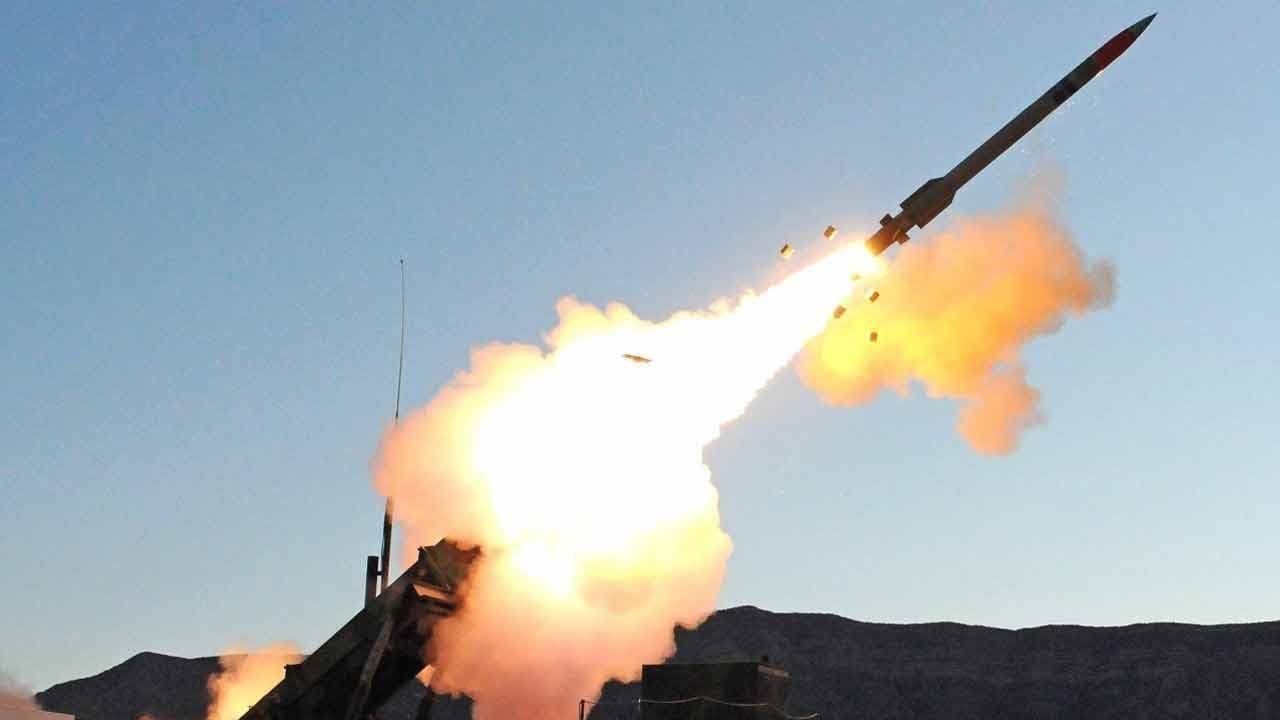
The Lockheed Martin Missile Segment Enhancement interceptor is the top-end missile for the Patriot air and missile defense system.
It is generally the first item on the shopping list for any country that has acquired the Patriot. In addition to Ukraine, Romania, Poland, and Switzerland have become new customers of the Patriot in recent years. Yet, MSE production has remained at little more than 500 per year.
Recent assessments of consumption vs production for this weapon record that in the first four days of the Iran war, some 5,000 rounds of various munitions were fired, including 18 months’ worth of MSE production. Other reports point out that the number of MSE and other Patriot-system missiles fired in those four days exceeded those expended during more than three years of war in Ukraine.
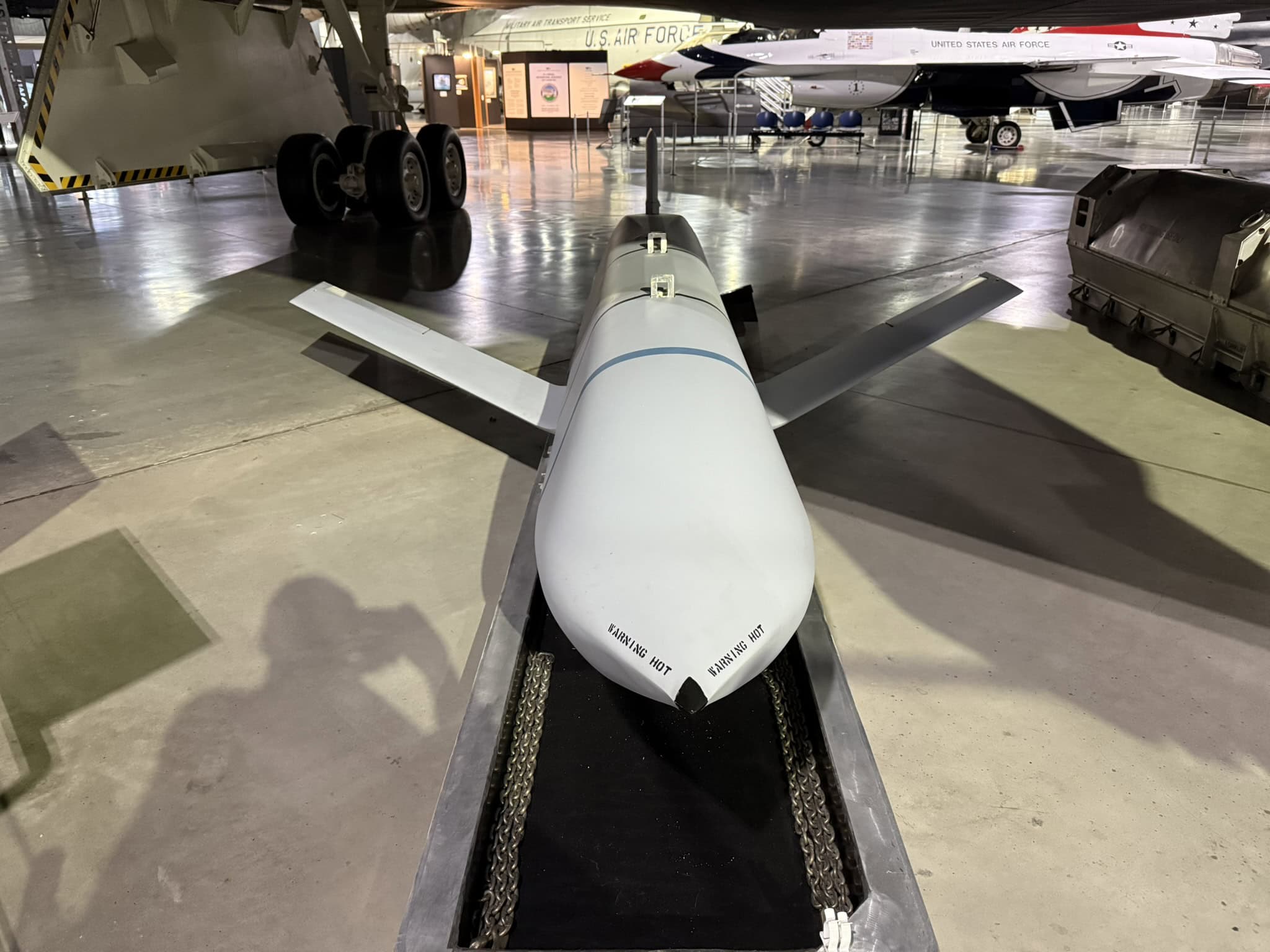
And this is not the only weapon system in dire straits, said a U.S. defense industry source who spoke with 19FortyFive. “It’s the same story with most of the top-flight weapons we have in our arsenal, like the AGM-158 Joint Air-to-Surface Standoff Missile (JASSM),” which is another Lockheed Martin weapon.
JASSM. Image Credit 19FortyFive.com
Similar complaints about low production have been raised about the M142 High Mobility Artillery Rocket System, which has also been extensively used in Ukraine. Efforts to double production of that system have begun, but they did not move forward in earnest until 2025.
Trump posted on social media that “the reason for [the ceasefire] is that we have already met and exceeded all Military objectives and are very far along with a definitive Agreement concerning long-term peace with Iran, and PEACE in the Middle East.” This statement came about 90 minutes before his deadline for Tehran to open the critical Strait of Hormuz or see its power plants and other critical infrastructure obliterated.
But the Iran war’s exposure of the U.S. military’s declining might suggests that proclamations of “total victory” overlook significant strategic setbacks.
Political Clout Diminishing
There appears to be a further decline in Washington’s political clout. Iran reportedly agreed to a ceasefire not because of Trump’s threats, but because China, which usually takes great pains to avoid such diplomatic entanglements, uncharacteristically intervened.
This turn of events may have come about in part because Iran is one of Beijing’s primary sources of oil imports. But people familiar with Chinese diplomacy tell NSJ that the Chinese “rarely miss a chance to upstage their number one economic and military competitor, and this is why they were working behind the scenes to steer the negotiations towards at least a temporary ceasefire.”
This was later confirmed in statements Trump himself made to AFP, telling the news service that Beijing was responsible for convincing Iran to come to the negotiating table.
On Wednesday, the New York Times reported that three Iranian officials admitted Beijing had asked Tehran to show flexibility and dial back the tensions with the United States. China has said little about its role in securing the ceasefire, with foreign ministry spokeswoman Mao Ning neither confirming nor denying Beijing’s involvement.
“China has consistently advocated for an immediate ceasefire and cessation of hostilities, as well as the resolution of disputes through political and diplomatic channels,” she said.
“This is Beijing’s soft-pedaled way of taunting the White House and saying ‘we have succeeded where you failed,’” said a former U.S. intelligence official. “They smell blood in the water, and they are likely to show it at the upcoming summit between Trump and Xi by doubling down on their demands for us to reduce support for Taiwan and the other usual ploys that they put forward at these interactions.”
Kremlin Star Falling
But the most significant public demotion of the U.S. administration by a foreign competitor has come from Russia. Moskosky Komsomolets, one of the more popular and sometimes controversial Moscow dailies, opened up a broadside on Trump in its Tuesday op-ed section.
Trump may have escaped from a trap of his own, said the paper.
Trump may have declared “total and complete victory” after a ceasefire with Iran—but the Russian newspapers don’t agree, said the BBC’s long-time Moscow Bureau Chief, Steve Rosenberg.
The MK story reads that, “Only the feverish mind of the American president himself can consider this a triumphant victory.” The paper also identified what it called a mass of political bonuses for Iran. Referring to Tehran’s 10-point ceasefire proposal, the paper stated that “the only thing missing from the 10-point list is the demand that the arrogant American leader himself personally come to Tehran, crawl ten kilometers, periodically kissing the bombed asphalt, and then publicly repent.”
MK was not the only paper to take such a line. Rosenberg shows in a short video on his X account how every single major daily has launched insulting attacks on the U.S. president.
These articles show what is clearly a Kremlin-directed decision to order all news outlets to embark on an offensive against the White House. This is a practice that dates back to Soviet times, meaning the Russian state is reverting to some of its worst practices from previous decades.
Given that these papers are largely for domestic consumption in Russia, this propaganda is not a foreign policy initiative, say expert Russia-watchers in both Washington and London. But up to this point, the Kremlin had either taken a positive line toward Trump or remained silent, a correspondent from The Daily Telegraph in London commented.
These attacks appear to mean that Putin and his cadre no longer necessarily regard Trump as a leader “friendly” to Russian interests. One of the only stories about the U.S. president in recent days that was not decidedly negative was a TASS report on his support for Hungarian Prime Minister Viktor Orban, who is seen as a Kremlin ally, for his re-election bid this weekend.
In sum: There is a ceasefire that is tentative at best, a U.S. military that looks increasingly hollow thanks to anemic production rates, and foreign adversaries that now feel emboldened to use their news outlets to take potshots at Trump. “If this is what ‘total victory’ looks like,” said the former U.S. intelligence official, “I would hate to see what constitutes defeat.”
About the Author: Reuben F. Johnson
Reuben F. Johnson has thirty-six years of experience analyzing and reporting on foreign weapons systems, defense technologies, and international arms export policy. Johnson is the Director of Research at the Casimir Pulaski Foundation. He is also a survivor of the Russian invasion of Ukraine in February 2022. He worked for years in the American defense industry as a foreign technology analyst and later as a consultant for the U.S. Department of Defense, the Departments of the Navy and Air Force, and the governments of the United Kingdom and Australia. In 2022-2023, he won two consecutive awards for his defense reporting. He holds a bachelor’s degree from DePauw University and a master’s degree from Miami University in Ohio, specializing in Soviet and Russian studies. He lives in Warsaw.